Skip to content
    • About

SOCIAL PERSPECTIVES

  • “Democracy Has Switched to “Airplane Mode”: Only Performance Will Connect”

    May 6th, 2026

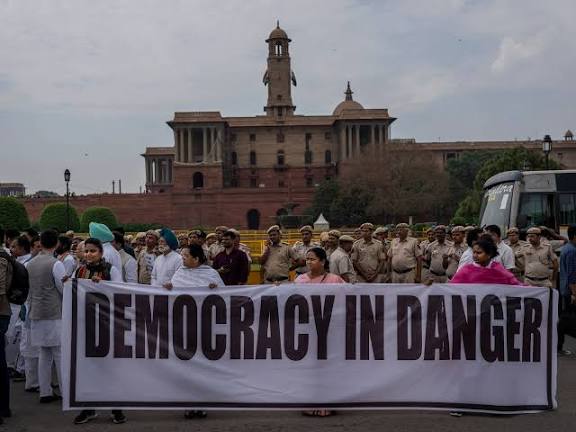
    India’s recent Assembly election outcomes are not merely a story of winners and losers; they are warning signals of a deeper behavioural mutation in the Indian voter. Beneath the spectacle of rallies, slogans, caste arithmetic, and welfare announcements, Indian democracy is undergoing a structural transformation. The system is shifting from identity-driven loyalty to performance-driven accountability. The older electoral formula—regional pride, emotional symbolism, welfare declarations, and charismatic leadership—has begun to collapse under the weight of a new voter psychology. In its place, a harder and more unforgiving model is emerging, where governance is judged like a quarterly audit and leadership survives only through continuous proof of delivery.

    This transformation is not theoretical; it is statistically visible. In West Bengal’s 2026 contest, despite the existence of over forty welfare schemes and high public awareness, the incumbent reportedly lost in at least twenty-two constituencies where scheme visibility was strong but last-mile delivery was weak. The message is brutally clear: citizens no longer reward announcements; they reward outcomes. Tamil Nadu reflects the same shift. Survey-based constituency assessments showed nearly a 37% drop in trust wherever delivery timelines were missed, even when the welfare narrative remained politically attractive. Welfare has not vanished as an electoral instrument—but it has been downgraded. It is now the baseline expectation, not the decisive advantage.

    This is a dangerous reality for regional political parties that built legitimacy on emotional identity politics and state-versus-centre narratives. Regionalism once functioned as a protective wall against volatility. Today, it increasingly functions as an excuse that voters are no longer willing to accept. The modern voter is not impressed by speeches about pride; they demand measurable governance.

    They want hospitals that work, schools that teach, streets that feel safe, clean drinking water that arrives without protest, electricity that is predictable, police response that is reliable, and jobs that are real. They want governance that is experienced, not governance that is advertised.

    One of the most striking signals from these elections is the rise of hyper-local accountability. The defeat of prominent leaders in their own constituencies demonstrates that state-wide charisma is no longer sufficient to override neighbourhood anger. The political imagination of the voter has shrunk geographically but deepened psychologically. Earlier, leaders could win by projecting themselves as symbols of a larger cause. Today, symbols collapse when the local drain remains overflowing for three monsoons, when unemployment silently destroys household stability, or when corruption becomes a daily tax on ordinary life. In Assam, the defeat margin of a Chief Ministerial face—around 8,000 votes—was strongly correlated with unresolved drainage and employment grievances accumulating over eighteen months. The lesson is sharp: a leader may dominate television screens and still lose the street outside the constituency office.

    Post-poll behavioural assessments increasingly suggest that personality now accounts for less than 15% of voting decisions when measurable delivery indicators are available. That statistic is humiliating for politics built on charisma. It means even the most dramatic public speaker is now competing against something more persuasive: lived experience. A pothole becomes more powerful than a manifesto. A delayed ambulance becomes more memorable than a rally. A police station refusing to register a complaint destroys legitimacy faster than any opposition speech. Governance failure has become the most effective campaign material.

    What makes this era particularly brutal is the third force reshaping Indian democracy: digital scrutiny. Every decision is now recorded, dissected, circulated, and weaponised in real time. The leader no longer controls the narrative; the citizen does. Social media has transformed governance into a public courtroom where evidence travels faster than explanations. In West Bengal, a tragic incident involving a medical student reportedly triggered a 52% spike in negative digital sentiment within 48 hours. That spike was not merely emotional noise—it translated into an estimated 9% vote swing in affected constituencies. In this new ecosystem, delay in empathy and action is not a communication problem; it is an electoral suicide note.

    This is the new politics of emotional accountability.

    Citizens do not only evaluate policies; they evaluate how leaders respond to pain. A government can survive mistakes, but it cannot survive perceived arrogance, indifference, or delay. The modern voter is not asking, “Did you announce?” The modern voter is asking, “Did you act immediately?” In the age of smartphones, even a one-day delay feels like betrayal. Silence becomes guilt. Excuses become insult.

    The defeats of Smt. Mamata Banerjee and Shri M.K. Stalin carry symbolic weight because they represent two established political styles now facing fatigue. In West Bengal, Mamata Banerjee’s long tenure created a predictable anti-incumbency wave sharpened by allegations of corruption, syndicate culture, and political violence. Her administration appears to have misread voter psychology by assuming welfare schemes such as Lakshmir Bhandar could permanently guarantee loyalty. But the emerging electorate—especially educated women—wants more than monthly transfers. They want jobs for graduates, dignity in public life, and safety for daughters. Welfare without upward mobility is increasingly perceived not as empowerment, but as containment.

    Tamil Nadu reflects a different rejection but the same deeper pattern. Shri M.K. Stalin faced a disruption wave powered by celebrity politics and frustration with entrenched corruption narratives. The state’s youth—over 2.5 crore voters under forty—were less interested in ideological federalism debates and more obsessed with everyday governance failures, corruption networks, liquor-system controversies, and dynastic stagnation. Stalin’s leadership, despite appearing administratively engaged, was punished for failing to neutralise the perception that the system had become predictable, complacent, and morally tired. The modern voter does not merely punish corruption; they punish boredom. A government may survive inefficiency for some time, but it rarely survives a reputation for stagnation.

    Across states, a deeper psychological pattern emerges: the “What have you done for me lately?” syndrome. Long tenure has become a liability unless accompanied by constant reinvention. The electorate now expects political narratives to refresh every five years, shifting from past achievements to future aspirations. Leaders cannot endlessly sell yesterday’s development. The voter is no longer impressed by old bridges and old slogans; they want tomorrow’s opportunity.

    Most importantly, Gen Z has disrupted traditional political loyalty. These voters were born after many older political battles were fought. They carry no emotional debt to legacy narratives. They are impatient, digitally connected, and psychologically allergic to hypocrisy. They demand speed, transparency, visible integrity, and aspirational growth. They do not vote like their parents. They vote like consumers choosing a service provider. Government is evaluated like a product: if it performs poorly, it is replaced.

    In this new democratic environment, the survival manual for political leadership is brutally simple. Welfare must become outcome-based. Publishing funds released is meaningless; governments must publish monthly dashboards showing jobs created, crime clearance rates, hospital waiting times, school learning outcomes, and infrastructure completion percentages. Grievance redressal must become real-time. A 72-hour mandatory response system with public tracking is no longer an innovation—it is the minimum credibility requirement.

    Constituency-level accountability must be institutionalised: ministers and MLAs should hold fortnightly open forums with published attendance, complaints received, and resolution rates. Crisis response must be immediate and visible. Empathy delayed is legitimacy destroyed.

    India’s elections are no longer periodic rituals. They are becoming continuous referendums. Governments are now judged not once in five years, but every day. This is the birth of a new democratic contract: legitimacy is renewable, trust is conditional, and power is rented—not owned. Regional parties can survive in this era, but only if they abandon the comfort of identity politics and adopt the discipline of governance performance. The age of publicity stunts is dying. The age of the report card has begun.

    VISIT ARJASRIKANTH.IN FOR MORE INSIGHTS
  • “THE AGE OF PERMANENT VERDICT: India’s 2026 Elections Turned Politics into a Live Performance Audit of Power, Presence, and Peoplehood”

    May 5th, 2026

    India’s 2026 electoral cycle marks a quiet but profound transformation in democratic behaviour—one that goes far beyond state-specific victories or defeats. Beneath the surface of competing mandates lies a structural reordering of political logic itself. Ideology, inherited loyalty, and even charismatic mobilisation are no longer sufficient currencies of power. Instead, politics has entered an era of continuous validation, where legitimacy is not granted once every five years but recalibrated every day through lived experience, digital scrutiny, and grassroots feedback loops.

    Across West Bengal, Assam, Tamil Nadu, and Kerala, a common democratic grammar has emerged: performance is permanent, trust is conditional, and authority is renewable only through constant public verification. The voter is no longer a passive recipient of political messaging but an active auditor of governance outcomes. This shift has quietly dismantled older assumptions of Indian electoral politics and replaced them with a more unforgiving, but arguably more mature, democratic ecosystem.

    In West Bengal, the BJP’s strategic experiment—often described as Operation Coromandel—represents the evolution of electoral politics from spectacle to system. Having already expanded its footprint in previous cycles, the party in 2026 moved decisively into micro-engineering territory. The emphasis shifted away from mass rallies toward granular voter management structures, booth-level data classification, and hyper-localised mobilisation units. The deployment of Panna Pramukh networks symbolised this transition: politics was no longer about persuading crowds but about activating individuals. Yet the most significant recalibration was cultural rather than organisational. Recognising that Bengal cannot be governed through imported political idioms, the BJP attempted a deeper localisation of identity narratives, embedding its ideological messaging within Bengal’s own religious and civilisational frameworks. This dual movement—technical precision combined with cultural adaptation—signals a broader transformation in Indian politics where success requires both infrastructural discipline and emotional resonance.

    Assam presents a contrasting but equally instructive paradigm. Under Himanta Biswa Sarma, the BJP’s dominance is not merely electoral; it is managerial. The defining feature of this model is controlled incumbency—the conscious decision to prevent anti-incumbency from accumulating by periodically renewing the political workforce itself. Sitting legislators were replaced, younger leaders were elevated, and performance rather than seniority became the currency of candidature. This willingness to sacrifice political comfort for electoral sustainability reflects a rare institutional discipline in Indian politics. At the same time, welfare delivery was integrated into electoral strategy with remarkable precision, transforming governance into a continuous feedback loop rather than a periodic exercise. The Assam model demonstrates that long-term political dominance is no longer about ideological rigidity but about organisational elasticity and constant recalibration.

    Tamil Nadu, by contrast, illustrates political disruption rather than consolidation. The rise of Vijay’s Tamilaga Vettri Kazhagam represents a structural break in the Dravidian binary that has defined the state for decades. Unlike traditional parties anchored in ideological lineage or organisational depth, TVK’s ascent is driven by emotional mobilisation, celebrity legitimacy, and an aggressive welfare imagination designed to neutralise established advantages. Its decision to contest independently across constituencies created a third axis in a historically bipolar system. Yet the absence of a clear majority also exposes the limits of personality-driven politics: disruption can reshape electoral arithmetic, but governance still demands institutional negotiation. Tamil Nadu’s verdict therefore signals a transitional moment where political imagination has expanded faster than institutional consolidation.

    Kerala, meanwhile, reaffirms a different democratic instinct altogether—electoral maturity rooted in cyclical accountability. Here, ideology is secondary to administrative performance. The return of the UDF reflects not ideological conversion but the reassertion of Kerala’s long-standing alternation principle. The electorate’s decision is less about allegiance and more about audit: governments are evaluated, rotated, and re-evaluated in a predictable rhythm that prioritises governance credibility over narrative dominance. The UDF’s success lay in disciplined coalition management, internal cohesion, and the ability to translate welfare promises into measurable commitments. In Kerala, politics functions less as ideological theatre and more as institutional review, reinforcing the idea that in highly literate democracies, governance is the only durable language of persuasion.

    Across these diverse contexts, a deeper convergence becomes visible. Welfare has become universal but no longer decisive; every major political actor now promises redistribution, subsidies, and direct transfers. The differentiator is no longer intent but execution credibility. Simultaneously, digital transparency has collapsed the distance between policy and perception. Every administrative decision is instantly interpreted, circulated, and judged in real time, compressing the traditional lag between governance and accountability. Leadership itself has also become decentralised: voters evaluate not just central figures but the entire ecosystem of governance, from local representatives to institutional behaviour.

    What emerges from this is a new form of democratic consciousness that can be described as grassroots epistemology—a system where lived experience outweighs ideological abstraction. Whether it is Assam’s engineered stability, Bengal’s cultural recalibration, Tamil Nadu’s disruptive emergence, or Kerala’s cyclical correction, the underlying principle remains consistent: proximity generates trust, arrogance triggers rejection, and responsiveness determines survival.

    The implication for all political formations is both simple and unforgiving. Electoral victory is no longer a mandate of permanence but an invitation to continuous justification. Historical legacy offers diminishing returns. Organisational inertia is punished. Narrative dominance evaporates quickly in the face of visible governance gaps. In this environment, governments that fail to embed themselves in everyday public experience risk rapid erosion, while those that maintain adaptive structures and institutional humility are more likely to endure successive electoral stress tests.

    India’s 2026 elections, therefore, are not a collection of regional stories but a single systemic signal. They mark the transition from episodic democracy to continuous democracy—from periodic judgement to permanent audit. The electorate has become simultaneously more informed and less forgiving, more connected and more exacting. In this new political order, ideology has not disappeared, but it has been demoted. Organisation remains essential, but insufficient. Governance has become the final arbiter. And politics itself has transformed into what it was always becoming: not a promise of power, but a constantly renewed contract between the state and the citizen—signed not once, but every single day in the court of public experience.

    VISIT ARJASRIKANTH.IN FOR MORE INSIGHTS
  • Steel Highways with Silent Supremacy: India’s Dedicated Freight Corridor Rewired the Nation Without Making Noise

    May 4th, 2026

    Some national achievements arrive with fireworks. Missiles are launched, elections are won, stock markets surge, and headlines declare history has been made. But the most consequential revolutions rarely arrive with spectacle. They arrive quietly, buried under routine government notifications, dismissed as “another infrastructure project,” and only later recognized as the moment a nation’s internal machinery changed forever.

    India’s Dedicated Freight Corridor (DFC) belongs to this second category. It is not simply a railway achievement. It is a structural rewrite of Indian economic geography—an attempt to alter the physics of movement itself: how raw material reaches factories, how finished goods reach ports, how coal reaches power plants, how agriculture reaches markets, and how industry reaches the world. In a country of continental scale, logistics is not a supporting sector. Logistics is destiny.

    The completion of India’s Dedicated Freight Corridor marks something rare in Indian governance: the execution of a mega-infrastructure project whose impact is larger than its ribbon-cutting ceremony. India has now built two dedicated freight arteries—the Eastern Dedicated Freight Corridor (EDFC) and the Western Dedicated Freight Corridor (WDFC)—with a combined length of 2,843 km, spanning 9 states and 77 districts, at a cost of nearly ₹1,25,000 crore. Over 11,000 hectares of land were acquired and compensation exceeding ₹1,000 crore was paid. These numbers are not mere statistics. They are evidence of a rare administrative feat: a large-scale national project executed across multiple political terrains, legal environments, and local negotiations without collapsing into paralysis.

    The DFC’s most radical feature is also its simplest: freight finally has its own tracks. For decades, Indian Railways operated on a structural compromise that no serious logistics economy would accept for long: passenger trains and freight trains shared the same network. Predictably, the system became a permanent bottleneck. Passenger trains were politically sensitive, so freight was routinely sacrificed in scheduling. When freight volume increased, passenger punctuality suffered. The result was a chronic condition of congestion, delay, inefficiency, and wasted national productivity. The rail network became a crowded marketplace where two incompatible priorities fought for the same space.

    Dedicated Freight Corridors break this deadlock. Freight trains no longer compete with passenger trains. They move on exclusive tracks, supported by purpose-built terminals and freight stations designed for container handling, rapid loading, and faster turnaround. This is not merely “new rail lines.” It is a new philosophy of national mobility. It is the separation of two lifelines so both can function at optimal capacity.

    The economic implications are enormous because logistics is not about speed alone—it is about predictability. On traditional routes, freight trains averaged a sluggish 24–25 km/h. On the DFC, operational speeds exceed 50 km/h. This doubling of speed is not a transport upgrade; it is an industrial multiplier. When goods move faster, inventory holding costs fall, warehousing requirements reduce, production becomes leaner, supply chains become predictable, and industrial planning becomes less speculative. In practical terms, what earlier took 4–5 days—such as freight movement between Mumbai and Delhi—can now be completed in under 48 hours.

    The hidden power of logistics lies in one invisible tax: the cost of waiting. India has long suffered from an economy where trucks wait at tolls, containers wait at ports, wagons wait for track clearance, and factories wait for inputs. Waiting is not a delay; it is a cost that accumulates silently into inflation, inefficiency, and lost competitiveness. The DFC does not merely move cargo faster. It attacks the cost of waiting itself.

    The Eastern Corridor, running from Ludhiana in Punjab to Sonnagar in Bihar, covers 1,337 km and connects major industrial clusters to raw material and coal belts. Its impact is already visible in coal logistics—coal movement that earlier crawled through congested passenger-heavy routes now reaches northern power plants with far greater reliability. Around 68% of freight movement has already shifted onto the Eastern corridor, with roughly 400 trains operating daily. This is not adoption. It is migration. Industry has voted with its cargo.

    The Western Corridor is equally consequential. Stretching 1,506 km from Dadri (near Noida) to India’s western ports, it passes through Haryana, Rajasthan, Gujarat, and Maharashtra, linking industrial zones like Sanand to export gateways such as Mundra, Pipavav, and Jawaharlal Nehru Port. If the Eastern corridor strengthens India’s internal industrial bloodstream, the Western corridor strengthens India’s export pipeline. It effectively connects the factory floor of North India to the global marketplace with fewer delays, lower uncertainty, and higher volume capacity.

    In that sense, the DFC is not a railway project. It is an export competitiveness project disguised as transport infrastructure. This matters because India’s freight imbalance had become strategically unsustainable. In 1960, rail carried nearly 68% of India’s freight. By 2021–22, that share had collapsed to about 26%, while highways absorbed the majority. Road freight is flexible, but it is diesel-intensive, pollution-heavy, and expensive over long distances. It also damages highways, increases congestion, raises accident risks, and deepens import dependence for fuel. The DFC offers a structural correction: shifting bulk freight back to rail, where it is cheaper, cleaner, and scalable.

    But scale is the real story. India’s average freight train earlier carried about 5,400 tonnes. Global benchmarks range from 20,000 to 37,000 tonnes. The DFC changes India’s freight ambition from “adequate” to “world-class.” The arrival of mega-trains such as Rudra—4.5 km long, powered by seven synchronized locomotives, hauling over 25,000 tonnes—signals that India has entered the era of heavy logistics. Another record-setting train, Super Vasuki, carried nearly 26,000 tonnes. These are not publicity gimmicks. They are economic multipliers. Larger loads reduce unit costs, reduce congestion, reduce turnaround time, and improve national productivity.

    This is why the DFC must be understood not as a transport reform but as a productivity revolution. When logistics improves, everything improves: manufacturing costs decline, agricultural markets expand, power supply stabilizes, and inflation pressure weakens. The DFC is essentially India building an economic spine strong enough to carry the weight of its own growth ambitions.

    The DFC’s history also reveals the complexity of executing national ambition. Conceived in the early 2000s, approved in 2006, and implemented through the Dedicated Freight Corridor Corporation of India Limited (DFCCIL), the project faced long delays due to land acquisition complexities and outdated legal frameworks. For nearly a decade, progress was slow and costs escalated from an early estimate of ₹26,000 crore to nearly five times that figure. But the project survived because its strategic logic was too strong to abandon. International financing from the World Bank and JICA strengthened execution capacity, reinforcing how modern infrastructure increasingly requires not only engineering, but financing architecture and institutional discipline.

    Yet the DFC story is still incomplete. The Eastern corridor was originally planned to extend up to Dankuni in West Bengal near Kolkata, a critical logistics gateway. Due to acquisition and coordination challenges, a 538 km gap remained. That gap represents not merely missing track, but missing opportunity. The good news is that the Sonnagar–Andal and Andal–Dankuni segments are now progressing in phases, with land acquisition nearing completion. India is also planning additional corridors—East Coast, North-South, and East-West—many still in DPR stages. These will determine whether the DFC remains two impressive lines or evolves into a national logistics grid.

    Even in its current form, the Dedicated Freight Corridor has already achieved what few policy initiatives can claim: it has compressed distance, reduced time, improved reliability, cut fuel consumption, lowered emissions, and strengthened India’s industrial competitiveness. It is India’s quiet revolution in steel. It does not shout like a political slogan. It does not sparkle like a skyscraper. It simply moves—faster, heavier, smarter—carrying the economy forward one container at a time. In a world where economic power increasingly belongs to nations that can move goods quickly, predictably, and cheaply, the DFC is not just infrastructure. It is India’s silent declaration that the age of logistical helplessness is ending.

    VISIT ARJASRIKANTH.IN FOR MORE INSIGHTS
  • The Republic of Queues: India Made the Poor Pay in Hours Instead of Rupees

    May 3rd, 2026

    India debates inequality with obsessive passion—income inequality, caste inequality, gender inequality, rural-urban inequality. Every budget speech contains at least one paragraph on inclusion. Every policy document is coated in the language of empowerment, dignity, and access. Yet one of the most brutal forms of deprivation remains almost entirely invisible, precisely because it does not show up in balance sheets or fiscal deficit calculations. It does not appear in poverty ratios or GDP graphs. It appears in queues. It appears in the hours lost outside hospitals, ration shops, transport offices, police stations, municipal counters, and government portals that promise “seamless service” while quietly manufacturing delay.

    This is temporal inequality: the unequal distribution of time as a cost of survival. For the affluent, time is elastic. It can be purchased, outsourced, and monetized. A wealthy citizen can pay for convenience, book appointments, access private healthcare, hire agents, use premium delivery services, and navigate digital platforms with ease. Even bureaucratic friction becomes a negotiable inconvenience. But for the poor, time is not money. It is life itself—traded daily for wages, food, caregiving, and dignity. Every hour spent waiting is not a mild inconvenience. It is an hour stolen from income, health, sleep, and the fragile arithmetic of survival. In India, the poor do not just earn less. They also wait more.

    Temporal inequality is therefore not a soft sociological concept. It is a hard economic and political fact. It functions like a silent tax—imposed not by legislation, but by administrative design. Unlike monetary poverty, time poverty cannot be recovered later. A missed day’s wage cannot always be compensated. A delayed diagnosis cannot be reversed. A lost day spent chasing signatures is not merely wasted time; it is a slow erosion of agency. The poor are not only underpaid. They are systematically over-delayed.

    This is why temporal inequality produces what sociologists call a hierarchy of belonging. The privileged citizen experiences the city as responsive, navigable, and negotiable. The poor citizen experiences the city as delayed, uncertain, humiliating, and exhausting. Citizenship is not only a constitutional status; it is also temporal access—the right to be served without losing half one’s life in the process. In that sense, the Indian state does not merely distribute welfare. It distributes waiting.

    And waiting is not an exception. It is the operating system. Consider public hospitals in Patna. Average waiting times range between 60 and 90 minutes. PMCH records 75–85 minutes, AIIMS Patna around 90 minutes, and IGIMS—handling 7,000 to 7,500 patients daily—forces patients into queues of 60–70 minutes. Bihar’s rural average touches 80 minutes. Meanwhile, Katihar district reports just 29 minutes, proving that long waits are not inevitable. They are not fate. They are often the predictable result of overload, poor design, and administrative indifference. Waiting time is governance quality made visible.

    Bengaluru reveals an even sharper cruelty. Elderly patients reportedly wait 90 minutes merely to obtain registration tokens at Namma Clinics. QR-based registration systems and ABHA-linked authentication create digital queues, but those without smartphones or digital literacy are forced into a second layer of waiting: waiting to access the queue itself. Many seniors struggle with OTP authentication, adding 15–20 minutes per transaction. For a poor elderly citizen, even a basic consultation becomes a marathon. Modernity arrives as a screen, but access is still rationed by literacy, device ownership, and bandwidth. The state calls it “digital empowerment.” The citizen experiences it as digital exhaustion.

    Chandigarh’s experience provides an even clearer diagnosis. GMSH-16 receives 3,500 OPD patients daily within a narrow morning window. When an evening OPD pilot was introduced in February 2026, 395 patients arrived in six days. This was not random footfall. It was suppressed demand—citizens who could not afford to lose wages during the day finally found time-accessible healthcare. Nearly 30% of evening OPD patients came for medicine consultations, suggesting something profound: people were not avoiding care because they were healthy, but because they were time-poor. Healthcare was not inaccessible only due to money; it was inaccessible because of time.

    Then came the great promise that was supposed to end this humiliation: Digital India. Digital governance was marketed as the great equalizer. Remove middlemen, reduce corruption, accelerate service delivery, reduce waiting. But across sectors, digital systems have often produced the opposite effect. They have created a new architecture of exclusion—one that does not abolish waiting, but relocates it into digital bottlenecks while multiplying barriers for those with limited access.

    This is the digital queue paradox: technology does not eliminate waiting; it reorganizes it. Smartphone dependency is the first trap. QR-based systems assume device ownership, stable internet, data packs, and familiarity with apps. But millions still use basic phones or share devices within families. The result is predictable: those who cannot register digitally must stand aside, seek assistance, and lose time even before entering the formal process. The queue now begins outside the queue. The poor must first prove they deserve to stand in line.

    OTP authentication becomes the second trap. A system designed for security becomes a time penalty for the elderly, visually impaired, and digitally unfamiliar. ABHA frameworks may be visionary on paper, but on the ground they become procedural mazes when failed OTPs, repeated logins, and multiple-step verification dominate the experience. The poor are not resisting technology; they are being defeated by it. The state calls it “paperless.” The citizen experiences it as paperwork without paper.The third trap is infrastructure inequality. Despite the expansion of Common Service Centres, persistent issues remain: unreliable connectivity, power interruptions, weak rollout of services, low digital literacy, and corruption that adapts rather than disappears. Digitization, without capacity-building, becomes a sophisticated gatekeeping machine. The counter has not vanished. It has simply migrated into a portal.

    The Lancet Commission’s citizen survey across 50,000 households confirms this pattern: access has expanded, but delivery assurance remains weak due to governance gaps and uneven district-level capacity. In other words, platforms may exist, but functioning service ecosystems often do not. India built the website, but not the reliability. It built the app, but not the doctor. It built the dashboard, but not the queue discipline. Temporal inequality is not accidental. It is produced by structure. The first driver is chronic underinvestment. Public health spending remains below 2% of GDP, while insurance schemes focus heavily on hospitalization rather than OPD, diagnostics, and medicines—the very services that generate the longest queues. The poor wait because free services are under-resourced.

    The second driver is geographic concentration. Tertiary hospitals in cities like Patna serve entire states. IGIMS receives volumes far beyond its design capacity. Rural PHCs may have shorter queues but lack specialists, forcing referrals to overcrowded urban hubs. The poor do not travel because they want better care; they travel because the system funnels them into collapse zones. The third driver is workforce shortage and broken referral systems. Digital registration cannot create doctors. Apps cannot manufacture nurses. QR codes cannot expand hospital wards. Technology cannot substitute for staffing.

    For daily wage workers, a 90-minute wait is not a delay. It is a wage cut. Multiple visits for certificates, ration disputes, hospital follow-ups, and transport documentation create compounded income loss. The poor therefore delay care until emergencies, further overloading emergency departments and deepening system collapse. This becomes a vicious cycle: the poor wait longer, lose income, delay services, fall sicker, and then require costlier interventions. Waiting becomes both cause and consequence of poverty.

    Digital governance adds an even deeper political dimension. Those with time can research policies, question governance, file RTIs, attend hearings, and participate in democracy. Those trapped in survival queues often cannot. Temporal inequality is therefore not only economic; it is democratic. It silently manufactures a two-tier republic: one class with time to live and decide, another class with time only to endure. India does not lack solutions. Chandigarh’s e-Sampark model shows assisted digital systems reduce multiple visits. Punjab’s faceless transport system shows how doorstep delivery reduces repeated travel. Katihar’s efficiency proves management reforms can outperform sheer spending. International models sharpen the lesson: Estonia’s integrated digital identity prevents repeated paperwork; Rwanda’s WhatsApp-based triage works even on basic phones; Brazil integrates telemedicine with primary care; the UK enforces maximum wait standards.

    The strategic shift required is simple but revolutionary: India must stop measuring success in digital transactions and start measuring success in minutes saved for the poorest citizen. Temporal inequality is perhaps the most humiliating form of deprivation because it consumes life silently. The poor are not only economically disadvantaged; they are forced to surrender time, wages, health, and dignity in exchange for services that should be rights. If India wants to build a modern welfare state, it must recognize that governance is not only about schemes and portals. Governance is also about queues. And until the Republic reduces the waiting time of its poorest citizens, India’s digital transformation will remain incomplete—not because technology failed, but because equity was never made the design principle.

    VISIT ARJASRIKANTH.IN FOR MORE INSIGHTS
  • Cruise Missiles and Court Files: Washington Bombs Abroad to Silence the Basement at Home 

    May 2nd, 2026

    In the age of high-definition warfare and low-attention democracies, the most decisive weapon is no longer the missile, the drone, or the stealth bomber. It is the news cycle—the invisible artillery of modern governance. This is the unsettling lesson emerging from the February 2026 U.S.–Iran conflict: a confrontation that did not merely ignite the Gulf, but also ignited a far more corrosive suspicion inside American political consciousness. The suspicion is not that war was invented out of thin air, but that war—whether deliberately initiated or opportunistically exploited—has become the most efficient solvent for dissolving domestic accountability.

    The timing was too elegantly aligned to be dismissed as innocent coincidence. Just as renewed scrutiny of the Epstein Files began resurfacing in late 2025 and early 2026—shifting from the biography of a single predator into allegations of a wider ecosystem of elite protection involving financiers, politicians, celebrities, and institutional gatekeepers—America plunged into a two-month military escalation that devoured not only missile inventories but the public’s cognitive bandwidth. It is difficult to prove that the overlap was intentional. Yet it is equally difficult to deny how flawlessly it functioned. Suspicion in democracies thrives not because citizens are irrational, but because incentives are.

    By April 2026, the Pentagon disclosed that the conflict had cost roughly $25 billion in just two months (February 28 to April). That figure alone reads like a financial obituary for strategic restraint. Spread across the U.S. population, it translates into approximately $75 per American—reportedly more than what the country spends annually on NASA. But even this number carries the familiar scent of bureaucratic sanitization. Analysts argue the true cost is closer to $40–50 billion once the hidden receipts are included: repairs to U.S. bases in Bahrain, Iraq, and the UAE; replenishment of depleted interceptor stockpiles; replacement of a destroyed E-3 Sentry aircraft; restoration of damaged THAAD radar systems; and the inevitable procurement aftershocks that trail every modern conflict like a shadow economy. Wars rarely reveal their full invoice at the moment of consumption. They deliver it later through maintenance contracts, readiness decay, and emergency appropriations disguised as necessity.

    But the fiscal delirium does not stop at tens of billions. The war has begun rewriting America’s imagination of what “normal” defense spending looks like. The administration has floated a staggering $1.5 trillion defense budget for 2027—a figure so enormous it no longer resembles governance but dependency. When a two-month conflict can push trillion-dollar budgets into mainstream policy discourse, national defence stops being strategy and becomes a solvent-destroying habit. The issue is no longer security; it is solvency. It is not military planning anymore—it is institutional addiction dressed in the uniform of patriotism.

    Yet the most humiliating feature of this conflict is not that the U.S. faced a technologically superior enemy. It faced a financially superior logic. Iran did not attempt to defeat America through conventional battlefield dominance. Instead, it weaponized what analysts now call cost-exchange warfare—a strategy designed not to destroy the U.S. military, but to bankrupt its reflexes. Cheap drones costing between $2,000 and $20,000 were launched in waves, compelling the U.S. to respond with Patriot and THAAD interceptors priced between $1 million and $4 million per shot. This was not war in the heroic tradition of battlefield triumph. This was arithmetic sabotage. Tehran turned America’s defensive doctrine into an economic liability, forcing Washington to repeatedly overpay simply to avoid embarrassment. The battlefield became an Excel sheet, and the casualty was the U.S. treasury.

    Then came the Strait of Hormuz, the geopolitical pressure point that functions like a trigger attached to the global economy’s throat. By constraining a corridor through which roughly 20% of global oil supply flows, Iran weaponized the bloodstream of globalization. Oil surged above $100 per barrel, exporting inflation and economic discomfort across continents. Households from Bangladesh to the United States absorbed the price of a war fought in Gulf waters. In earlier eras, empires fought wars to secure oil. In 2026, oil itself became the lever through which a middle power could impose strategic pain on a superpower without capturing a single city or winning a single conventional battle.

    America paid not only in money but in legitimacy. Thirteen American service members have been killed, with the toll likely to rise. More damaging still, the conflict has unfolded without a meaningful coalition—an astonishing reversal from the Gulf War era when Washington could summon allies as easily as it summoned aircraft carriers. Saudi Arabia and the UAE signaled discomfort rather than solidarity, unwilling to be trapped in a confrontation that could destabilize their economies and internal security. International outrage escalated after reports that a U.S. strike killed 170 schoolgirls in Minab, allegedly due to outdated targeting data. Tactical mistakes in modern war do not remain mistakes. They metastasize into propaganda multipliers, converting operational errors into diplomatic disasters that outlive the war itself.

    Even Washington’s stated objectives appear to have collapsed. The attempt to “decapitate” Iran’s leadership failed. Iran replaced its Supreme Leader within days and pivoted into a war of attrition with chilling institutional efficiency. This revealed the modern paradox of American power: the U.S. retains the ability to destroy, but increasingly struggles to control. It can still strike targets, but it cannot reliably translate strikes into political outcomes. Tactical dominance has become detached from strategic coherence—like a machine that still runs but no longer remembers what it was built to accomplish.

    And then comes the most politically radioactive dimension: Epstein. The resurfacing of Epstein-related scrutiny was no longer a scandal about one criminal predator. It was mutating into something far more corrosive: a narrative about elite immunity, institutional complicity, and the architecture of protection that shields powerful networks from consequence. Epstein stopped being the headline. The operating system behind Epstein became the true object of suspicion. And that is precisely why the scandal carried existential danger: it threatened not an individual reputation, but the legitimacy of an entire governing class.

    This is where war becomes suspiciously useful. The diversionary war theory is not internet folklore; it is a studied political framework. Leaders facing internal crisis have historically used external conflict to compress public attention into fear and unity—the two emotions most hostile to investigative appetite. War manufactures a moral hierarchy of urgency: corruption becomes “secondary,” abuse allegations become “divisive,” and accountability becomes “unpatriotic.” Scandals require oxygen—time, repetition, relentless coverage. War suffocates oxygen.

    Then came February 2026. “Operation Epic Fury” erupted with a name that sounded less like strategic planning and more like cinematic branding. Media ecosystems snapped into their default crisis ritual: missile maps, breathless panels, patriotic framing, and nonstop emergency rhetoric. Whether by design or by instinct, the machinery of state and media performed the same function—Epstein coverage shrank, fragmented, and faded without ever being disproven. In the modern media economy, what is not repeated is not merely forgotten; it is politically buried.

    The cycle intensified further when an assassination attempt reportedly wounded Donald Trump during the White House Correspondents’ Dinner. Few events can override public attention more efficiently than blood on screen. Victimhood becomes political armour. Scrutiny becomes “inappropriate.” Investigation becomes postponed. Crisis replaces crisis, ensuring that no scandal is allowed the time to mature into consequence.

    To claim with certainty that the war was launched specifically to bury Epstein scrutiny would be intellectually dishonest. Iran is a real geopolitical actor with independent motivations, and its regional posture has long generated conflict potential. The war’s drivers cannot be reduced to a single domestic motive without documentary proof. But politics does not operate only on proof—it operates on incentives. And here the incentives align with disturbing neatness. A war that generates unlimited headlines is the perfect camouflage for scandals that require sustained attention. Even if the war was not launched as a distraction, it functioned as one with near-perfect efficiency.

    The deeper truth may be more frightening than conspiracy: modern democracies have evolved into systems where distraction is not an accident but a governing instrument. A $25 billion war is not merely a foreign policy event—it is a domestic attention weapon. It can bankrupt missile inventories abroad while bankrupting accountability at home. It can empty defence stockpiles while also emptying the public sphere of investigative stamina. The bombs fall in Tehran, but the smoke rises in Washington.

    The way forward is not outrage but institutional surgery: enforceable war-powers oversight, independent investigations insulated from executive interference, transparency mechanisms that cannot be suspended by crisis, and a media culture capable of holding two truths simultaneously—security threats abroad and criminal accountability at home. Otherwise, the republic risks entering a new era where bombs become the universal solvent: dissolving budgets, dissolving legitimacy, and dissolving justice whenever the powerful feel cornered. If democracies can be hypnotized by missile footage every time elite scandals surface, then law becomes theatre, elections become ritual, journalism becomes spectacle, and truth becomes the first casualty—long before soldiers fall on the battlefield.

    VISIT ARJASRIKANTH.IN FOR MORE INSIGHTS
  • The Sun Starts Auditing India: Heat Waves Are Burning Humans, Boiling Animals, Scorching Crops, and Billing the Economy !!!

    May 1st, 2026

    India’s pre-monsoon heat wave is no longer a harsh phase of the calendar. It has evolved into a civilisational stress test—an unforgiving audit of public health capacity, agricultural resilience, energy security, labour productivity, and administrative preparedness. The Indian Meteorological Department’s repeated warnings across Delhi, Punjab, Haryana, Maharashtra, Gujarat, and even Himachal Pradesh confirm a new and unsettling truth: extreme heat is no longer geographically loyal, seasonally predictable, or regionally containable. When temperatures touch 42°C to 45.6°C well before summer reaches its traditional peak, the crisis is no longer about discomfort. It is about a climate order where survival is beginning to function like privilege.

    The record-breaking numbers—Amravati at 45.6°C, Kolhapur at 45.5°C, Patiala at 45.2°C—are not mere statistics. They represent a drift toward the outer edge of human tolerance. But the most dangerous element of this new heat regime is not what happens under the afternoon sun. The real rupture begins after sunset. The rise of warm nights has transformed heat waves from daytime suffering into a continuous assault—an environment where the human body is denied its most basic defence mechanism: recovery.

    For centuries, Indian summers were brutal but negotiable because the night offered relief. Cooling temperatures acted as nature’s free reset button, allowing the body to lower its core temperature, reduce cardiovascular strain, restore hydration balance, and rebuild endurance for the next day. That natural recovery window is now collapsing. Warm nights mean the body begins each day already overheated, already strained, already depleted. Heat stress becomes cumulative. After three or four days, dehydration stops being temporary and begins to resemble organ distress. Fatigue stops being manageable and becomes systemic collapse. Heatstroke stops being accidental and begins to look inevitable.

    This is the true evolution of the heat wave: it is no longer a spike in temperature, but a continuous pressure system. India is not merely facing hot afternoons—it is facing a climate condition that operates like a siege, grinding down resilience slowly, silently, and repeatedly.

    The health consequences are immediate, but they also unfold invisibly. Emergency rooms record the obvious: heat exhaustion, fainting, dehydration, and heatstroke. But the more lethal impacts arrive quietly—heart attacks triggered by thermal strain, strokes accelerated by dehydration, kidney failure due to electrolyte collapse, and worsened outcomes for diabetics and hypertensive patients. Warm nights deepen the damage because they destroy sleep. And sleep deprivation is not an inconvenience; it is physiological sabotage. It weakens immunity, elevates blood pressure, destabilizes metabolic function, and reduces the body’s ability to regulate heat.

    For outdoor workers—construction labourers, delivery personnel, sanitation staff, street vendors—the heat wave is not “weather.” It is an unannounced workplace hazard operating without compensation, protection, or institutional acknowledgement. In this context, the phrase “work as usual” becomes quietly violent.

    The administrative response—advancing summer vacations in several states—is not a policy choice as much as a warning signal. When schools shut early not due to examinations but due to unsafe commuting conditions, it reveals something deeper: governance itself is being forced to negotiate with climate. Children are uniquely vulnerable because their bodies heat faster, dehydrate quicker, and recover slower. A school bus, a crowded classroom, or a short walk under peak heat becomes a medical risk. In effect, the State is being compelled to choose between education and survival. That is not normal governance. That is climate-induced disruption.

    But the heat wave is not attacking humans alone. It is collapsing an entire biological economy, beginning with animals—an invisible crisis that rarely appears in economic headlines but directly shapes inflation, rural livelihoods, and food security.

    Livestock, especially cattle and buffaloes, experience severe heat stress when nights remain hot because their recovery cycle disappears. Milk output drops sharply—not due to disease, but due to thermal stress, dehydration, and reduced feed intake. Poultry farms face increased mortality when ventilation systems fail, while egg production, fertility, and immunity decline. In rural India, livestock is not simply agriculture; it is household insurance, emergency capital, and economic dignity. Heat stress becomes a silent rural shock, draining stability at the family level long before it becomes visible in national statistics.

    Urban stray animals face dehydration, burnt paws on overheated roads, and collapse near traffic corridors. Wildlife suffers even more brutally. Birds drop mid-flight. Deer, monkeys, and small mammals enter human settlements searching for water, increasing human-animal conflict. Drying water sources turn forests into heat traps. The heat wave does not only kill animals—it destabilizes ecological behaviour, intensifies stress migration, and expands the conditions for disease spill over.

    Then comes the third casualty: plants—the silent victims whose suffering does not appear in breaking news, but eventually arrives in markets as inflation. Plants do not collapse dramatically. They fail quietly. Extreme heat forces crops to close their stomata to prevent water loss, reducing photosynthesis and slowing growth. When heat arrives early, flowering cycles are disrupted, pollen viability weakens, and grain formation declines. Warm nights are especially destructive because plants respire more at night under high temperatures, consuming stored energy instead of conserving it. In simple terms, the crop begins burning its own reserves just to survive the night.

    The result is lower yields, weaker grains, reduced fruit size, and higher probability of crop failure. Horticulture suffers disproportionately: vegetables wilt faster, fruits ripen prematurely, and shelf life collapses. Heat-stressed crops also become vulnerable to pests and disease, forcing farmers to increase pesticide and irrigation use. Costs rise precisely when productivity falls. This is an economic double blow: higher inputs, weaker output.

    Perhaps the most disturbing signal is the heat creeping into Himachal Pradesh, crossing 41°C. Hill states were historically India’s natural climate refuge—ecologically, socially, and agriculturally. If even these regions begin overheating, the nation loses its thermal safety zones. Worse, hill infrastructure is designed to retain warmth, not shed it. Homes lack cooling architecture, hospitals lack heatwave protocols, and communities lack institutional memory of such temperatures. Heat arriving in these regions is not merely intense—it is structurally unfamiliar, like flooding in a desert town.

    All these layers—human strain, animal stress, and plant decline—translate into a direct economic invoice. The first casualty is productivity. Heat waves reduce labour output, slow construction activity, disrupt logistics, and increase workplace accidents. In informal sectors, where paid leave does not exist, this becomes invisible economic bleeding. India’s growth model still relies heavily on physical labour. Extreme heat taxes that labour base like a silent income cut.

    The second casualty is food inflation. Crop stress reduces supply. Livestock stress reduces milk output. Spoilage increases. Prices rise not because demand grows, but because survival weakens supply. This is climate-driven inflation, and it is far harder to control because monetary policy cannot cool the atmosphere or revive scorched crops.

    The third casualty is energy security. Heat increases electricity demand for cooling while simultaneously stressing grids and weakening hydropower potential through falling reservoirs. The paradox is brutal: climate change increases cooling needs while weakening clean energy reliability. The system falls back on expensive thermal generation, raising costs and emissions, deepening the feedback loop.

    Finally comes the monsoon risk. Forecasts such as 94% of the Long Period Average may sound manageable, but India’s economy does not run on averages—it runs on timing and distribution. The “missing 6%” can become a fiscal earthquake if rainfall becomes erratic. Erratic monsoons destabilize agriculture, destabilized agriculture fuels rural distress, rural distress reduces demand, and food inflation expands subsidy burdens. The RBI then faces a policy trap: tighten rates and slow growth, or tolerate inflation and risk social pressure.

    India’s heat wave crisis is therefore not a seasonal inconvenience. It is a multi-sector breakdown where humans lose recovery, animals lose resilience, plants lose productivity, and the economy loses stability. The monster is not the sun. The monster is continuity—heat that does not pause, does not cool, and does not forgive. If India continues treating warm nights and ecological stress as environmental footnotes rather than economic threats, every summer will become a national audit—paid not in weather reports, but in weakened bodies, lost incomes, rising prices, and a republic increasingly governed not by policy, but by temperature.

    VISIT ARJASRIKANTH.IN FOR MORE INSIGHTS
  • “Degrees Without Destinations: India’s Broken Learning-to-Earning Pipeline” 

    April 30th, 2026

    India is witnessing one of the most unsettling labour market paradoxes in modern economic history: the more educated a young person becomes, the more likely they are to remain unemployed. For illiterates, unemployment is roughly 3%. For graduates in the 15–24 age group, it approaches 40%. At first glance, this seems like an indictment of education itself. But the truth is harsher and more revealing: education is not failing because it is useless, it is failing because it manufactures aspirations faster than the economy can manufacture dignified jobs. A degree today is not merely a qualification—it is a promise made by society. And India’s economy is increasingly unable to honour that promise.

    What makes this contradiction dangerous is its stubborn permanence. The State of Working India 2026 report, drawing on four decades of labour market evidence, shows that graduate unemployment among the youngest cohort has remained trapped between 35% and 40% since 1983. Through liberalisation, the IT boom, Make in India, and the startup era, the figure barely moved. This is not a cyclical downturn that will heal with better growth numbers. This is structural dysfunction embedded in the architecture of India’s development model. It signals a deep mismatch between what the education system produces and what the labour market is structurally designed to absorb.

    7This dysfunction arrives at a moment of historic demographic pressure. India has about 36.7 crore people between the ages of 15 and 29, the largest youth population on Earth and nearly one-third of its working-age citizens. If we exclude those still studying, roughly 26.3 crore young Indians must be productively absorbed into the economy. The demographic dividend is not a permanent asset; it is a time-bound economic window. The dependency ratio is expected to reach its most favourable point around 2030 and then begin declining permanently as the population ages. India is therefore racing against a biological clock. If the pipeline from learning to earning continues to leak at every stage, the dividend will not disappear quietly—it will mutate into a generational crisis of frustration, underemployment, and wasted potential.

    To be fair, education is not the only determinant of employment outcomes. Nutrition, geography, caste networks, household wealth, and social capital all shape opportunity. Yet education and skilling remain the two levers that both the state and the market have attempted to pull most aggressively for decades. If even these levers fail to generate mobility, the implications are profound: India’s development story begins to resemble a system that expands access without expanding outcomes. Since liberalisation, India has built one of the world’s largest higher education systems. Institutions multiplied nearly 42 times, with almost 80% of the expansion driven by private providers. Institutional density improved from 29 per lakh population in 2010 to 45 per lakh by 2021. Enrolment surged: among men aged 15–19, it rose from 49% in 1983 to 73% in 2023; among women, from 38% to 68%. With a gross enrolment ratio close to 28%, India is no longer a laggard. It has achieved mass higher education at scale—an extraordinary national achievement.

    But the report delivers a brutal diagnosis: quantity has been purchased at the cost of quality, and expansion has been purchased at the cost of equity. The quality crisis is visible in the classroom. AICTE norms recommend 15–20 students per teacher, yet private colleges average around 28, while public institutions average nearly 47. This is an education system running two to three times beyond its design capacity. Predictably, attendance may rise, but learning collapses. The India Skills Report 2026 suggests only about 43% of graduates are job-ready. India is therefore producing degrees faster than it is producing competence—turning education into credential inflation. When a degree becomes common but skills remain scarce, the degree loses signalling value and graduates enter the labour market not as assets but as disappointed applicants.

    Equity is the second fracture, and perhaps the most politically explosive. Between 2007 and 2017, enrolment from the poorest quarter of households doubled from 8% to 15%. This looks like progress until one examines the distribution of opportunity. Wealthier families dominate high-return professional courses such as engineering and medicine. Poor households are crowded into low-cost humanities and commerce degrees with weak employment outcomes. The median cost of an engineering degree—around ₹1.3 lakh per year—exceeds the annual per capita expenditure of India’s poorest families. For millions, professional education is not difficult; it is mathematically impossible. This creates a new injustice: the poor are entering higher education, but they are entering the part of higher education that offers the least mobility. Inclusion is occurring, but it is inclusion into low-return tracks.

    The consequences are now visible in behavioural shifts. Young men are beginning to abandon the system. Between 2017 and 2024, male enrolment declined from 38% to 34%. When asked why, 72% cited the need to support household income, up from 58% in 2017. This is not cultural regression; it is economic rationality. For many families, the cost-benefit calculation of a tier-three private degree has collapsed. The tragedy deepens after education. Between 2004–05 and 2023, nearly 50 lakh graduates entered the labour market annually. Only around 28 lakh found employment of any kind, and only a fraction entered salaried work. Among young male graduates who begin unemployed, about half find work within a year—but only 7% secure permanent salaried employment, and barely 3.7% obtain regular jobs. The rest are absorbed into informal, temporary arrangements that do not reward education and do not build long-term stability.

    India’s labour market thus functions like parallel universes. One is a small formal sector that offers stability, dignity, and upward mobility. The other is a vast informal economy where workers cycle between self-employment, daily wages, and joblessness. The bridge between these worlds is weak, and young people respond through two survival strategies. The first is withdrawal: exiting the labour force to prepare for government exams. Government jobs offer prestige and security unmatched by private employment, turning them into the ultimate aspiration. But this is a lottery with collapsing odds—millions invest years of youth into preparation, accumulating neither earnings nor work experience. The second strategy is immediate compromise: taking informal work because waiting is unaffordable. But informal work often becomes permanent, trapping individuals in low productivity sectors where skills stagnate and formal transition becomes even harder.

    Migration offers partial relief but creates a new layer of imbalance. Poor states like Bihar carry the youth bulge but lack job creation capacity; richer states like Maharashtra, Delhi, and Haryana have jobs but aging workforces. Migration improves individual prospects, yet it drains poorer states of the human capital required to build their own economies, deepening regional inequality. Structural transformation is occurring, but imperfectly. Young Indians are leaving agriculture rapidly—young men in agriculture fell from 57% in 1983 to 27% in 2023, and young women from 75% to 49%. This is the right direction. The problem lies in the destination. Instead of manufacturing absorbing youth as it did in China or South Korea, India’s workers are flowing into construction, retail trade, and transport—low productivity sectors historically designed for older, less educated labour.

    Women’s employment trends provide one rare bright spot. Education is enabling young graduate women to enter higher productivity sectors such as IT services, healthcare, business support services, and advanced textile manufacturing. The gender wage gap among graduates has narrowed significantly, and young graduate women now earn nearly as much as men. Yet this progress rests on a stubborn national reality: female labour force participation remains around 35%, and the rise in women’s self-employment since 2017 reflects distress more than entrepreneurship. Even caste-based occupational rigidity has weakened—SC/ST concentration in leather and footwear fell from 40% in 1983 to 24% in 2023—suggesting aspiration is slowly replacing inheritance. But whether these transitions consistently deliver dignity and higher wages remains unresolved.

    In the end, India’s pathway from learning to earning resembles an Indian highway: wide in promise, narrow in execution, and full of potholes. The country is producing credentials without capabilities, aspirations without absorption, and education without mobility. If this trajectory continues, the demographic dividend will not become a dividend at all—it will become a demographic liability. Between now and 2030 lies India’s decisive window. Either the economy builds the capacity to absorb 26 crore young workers into productive, formal employment, or the nation risks a historic outcome: growing old before growing rich.

    VISIT ARJASRIKANTH.IN FOR MORE INSIGHTS
  • THE MAID KNEW THE PASSWORD: India’s Urban Trust Economy Turns Into a Crime Scene

    April 29th, 2026

    The alleged sexual assault and killing of a twenty-year-old girl inside her home in Southeast Delhi has ignited outrage not merely because of its cruelty, but because of what it exposes: the collapse of the “safe home” illusion. The victim was the daughter of an IRS officer, living in an upscale locality guarded by gated entry points, apartment security, and the invisible comfort of social privilege. Yet the crime did not unfold in a deserted alley or an unsafe street. It occurred inside the home, in the morning, without forced entry. That is the defining horror. The threat did not invade from outside—it emerged from familiarity.

    The accused, 23-year-old Rahul Meena, was arrested within hours. Police sources indicate he had worked at the family’s residence for nearly 18 months and had been terminated around six weeks earlier. Investigators suggest the termination was linked to financial misconduct and unpaid debts arising from online gambling. This detail is not peripheral—it reflects a widening urban crisis. Across metropolitan India, addiction-driven debt spirals are quietly expanding within informal labour ecosystems, invisible to employers until desperation erupts into violence.

    What makes the incident especially disturbing is its structural precision. The reconstruction of events suggests the crime was not impulsive; it was engineered around routine. The accused reportedly arrived around 6 AM, when household patterns were predictable. He allegedly waited nearly half an hour before entering around 6:30 AM. That waiting period signals calculation, confidence, and psychological preparedness. Crimes of this magnitude are rarely spontaneous—they are rehearsed long before they are executed.  He did not rely on brute force. He relied on architectural memory. Investigators state he knew of a rooftop room and initially attempted entry through deception. When the door was not opened, he reportedly shifted tactics—moving through an adjoining bathroom, removing a shaft panel, and entering through an internal breach point. This was not random burglary. This was familiarity weaponised. The home’s layout became a blueprint for intrusion.

    Inside, he allegedly demanded money and attempted to force the child to open a biometric locker using her fingers. This detail is chilling because it reflects intimate awareness of household security arrangements and the location of valuables. It shows a mind that understood the private infrastructure of trust—where the family stored wealth, how access functioned, and how vulnerability could be exploited. Investigators believe a struggle followed, after which he allegedly stole cash and committed the assault and murder. The crime occurred in a premium neighbourhood at a socially “safe” hour, shattering the myth that danger belongs only to midnight streets.

    The accused’s profile highlights a modern paradox of urban employment. Reports indicate he had completed a distance-learning graduation in economics, history, and sociology—credentials that would appear reassuring to most employers. Yet investigators suggest he was trapped in online gambling addiction, with liabilities reportedly nearing ₹7 lakh. Such addiction produces a volatile mix of shame, financial panic, resentment, and reckless risk-taking. The governance lesson is stark: domestic employment in India is not a regulated labour market; it is a trust-based informal economy. When trust collapses, the home becomes the crime scene.

    The police response was swift. The accused was reportedly tracked through CCTV and field intelligence, arrested within hours, and found to have attempted escape via railway routes towards Rajasthan. He allegedly took brief shelter in a hotel in Dwarka, indicating a desperate but calculated attempt to disappear before law enforcement sealed the perimeter. While motive appears linked to theft, investigators will now determine whether the violence was an escalation or premeditated. The sequence suggests a mindset prepared to eliminate witnesses.

    This case reflects a larger national vulnerability. Domestic workers are implicated in urban crimes not because domestic labour is inherently criminal, but because informal employment grants unchecked access. The greatest risk often lies not with strangers, but with insiders—caretakers, former staff, and workers who possess informational power: routines, blind spots, spare keys, passcodes, and family behaviour. India’s urban middle class has outsourced domestic life to an informal labour ecosystem without building corresponding security discipline.

    The solution is not paranoia—it is procedure. Police verification must become non-negotiable. Employers must insist on identity checks, reference verification, written agreements, and clear exit protocols. Most importantly, locks, access codes, and security permissions must be changed immediately after termination, especially following misconduct. RWAs must maintain staff registries, coordinate verification drives with police, and strengthen surveillance in common areas. A modern home cannot run on emotional trust alone; it must operate on verified trust.

    The murder of a twenty two-year-old child is not only a tragedy—it is a warning to India’s urban governance culture. Modern locks, elite neighbourhoods, and prestigious designations cannot substitute for basic due diligence. The real collapse is not just of one household, but of institutional caution across thousands of homes still living under the illusion that familiarity equals safety. In the 21st century, the safest home is not the one with the strongest door. It is the one with the strongest verification.

    VISIT ARJASRIKANTH.IN FOR MORE INSIGHTS
  • India Built 2,000 km of Metro… But Forgot to Build the City Around It !!

    April 28th, 2026

    By 2025, India is projected to cross nearly 2,000 kilometres of operational metro rail tracks across 26 cities, positioning itself as the third-largest metro network in the world. It is the kind of statistic that triggers applause, national pride, and infrastructure bragging rights. From Delhi’s dense web to Mumbai’s expanding lines, Bengaluru’s corridors, and newer systems in cities like Agra, Surat, Bhopal and Patna, India appears to be engineering an urban mobility revolution at continental scale. Yet the uncomfortable truth is this: metros are not trophies. They are instruments of productivity. The real measure of success is not kilometres built, but time saved, congestion reduced, and commuter behaviour transformed. Otherwise, metros risk becoming expensive steel monuments to ambition.

    In urban economics, mobility is destiny. Cities rise or fall depending on how efficiently people can move between homes, jobs, schools, markets, and hospitals. India’s urbanisation is colliding with a dangerous imbalance: vehicle ownership is rising sharply, far faster than population growth, while road capacity remains finite and poorly managed. The results are already visible—gridlock, pollution, rising accident rates, and a growing epidemic of wasted hours. In such a context, the metro boom is not merely impressive; it is necessary infrastructure for national competitiveness. But necessity does not guarantee effectiveness. A metro line can exist and still fail to function as a true mobility backbone.

    The most revealing evidence lies in ridership performance. Reports indicate that many metro systems operate at only 25–30% of the ridership projected in their DPRs. Delhi stands apart largely because it has achieved what most other cities have not: the network effect. With a vast track length, multiple interchange stations, and integrated corridor density, Delhi Metro is not a showcase—it is a daily dependency. Most other metros remain corridor projects rather than citywide systems, meaning they cannot generate commuter habit at scale. A metro without network density behaves like a luxury option: useful occasionally, but not indispensable.

    The biggest reason for this underperformance is brutally simple: metros are built in isolation. Stations are inaugurated, trains are polished, and ribbon-cutting becomes the climax, but the supporting ecosystem—feeder buses, safe pedestrian access, cycling infrastructure, proper interchange design, and reliable last-mile connectivity—remains absent or weak. A metro is not a transport mode; it is a transport chain. If the first and last kilometre is inconvenient, unsafe, or humiliating, commuters will not abandon their two-wheelers and cars. The irony is painful: India has built world-class stations, but commuters often reach them through broken footpaths, chaotic junctions, and unsafe crossings. The metro is modern. The approach road is medieval.

    This exposes India’s most damaging urban contradiction. Indian cities still have a high walking mode share—roughly one-third of daily trips happen on foot—yet pedestrian infrastructure is treated like an afterthought. Footpaths are encroached, discontinuous, or absent. Street design prioritises vehicle speed over human safety. The first casualty of this planning culture is metro ridership itself, because a commuter is not travelling “by metro alone.” They are walking to the station, navigating access points, waiting, transferring, and walking again at the destination. If this chain is broken, the metro becomes irrelevant—especially for women, the elderly, and lower-income groups who depend on safe, predictable public spaces.

    The second constraint is behavioural and aspirational. Private vehicles in India represent not just convenience but status, autonomy, and dignity. Cars and two-wheelers offer flexibility that public transport often fails to match. Therefore, metros cannot succeed through engineering alone; they require a push-and-pull strategy. High-quality public transport must be matched with demand management: parking restrictions near metro corridors, rational road pricing, congestion controls, and enforcement against illegal encroachments. Without these, metros end up competing against heavily subsidised private mobility and lose. Even worse, the DPR projections often collapse because they assume transit-oriented development, feeder systems, and multimodal integration—assumptions that remain on paper while concrete is poured elsewhere.

    Ultimately, the metro crisis is not a technology problem—it is a governance problem. Urban transport in India is fractured across multiple agencies: metro corporations, municipal bodies, traffic police, road authorities, bus corporations, and planning departments, each acting in silos. One agency builds a station; another designs a high-speed road that makes walking to it suicidal. Bus stops are shifted away. Auto stands are removed. Commuters are left stranded between departments that do not coordinate. This is why Unified Metropolitan Transport Authorities are no longer optional reforms but survival mechanisms. If India builds metros without building integration—walkable streets, feeder buses, fare integration, and unified planning—then the country will achieve a historic milestone: the world’s third-largest metro network, and possibly the world’s largest collection of underused stations.

    VISIT ARJASRIKANTH.IN FOR MORE INSIGHTS
  • The Blue Tick Mafia: WhatsApp Turned India’s Daily Life into a Pay-to-Breathe Trap !!

    April 27th, 2026

    India did not merely download WhatsApp; it surrendered to it. What began as a simple chat application slowly evolved into the country’s invisible operating system for daily life. Weddings are negotiated inside family groups, school instructions arrive through class broadcasts, bank updates travel via WhatsApp forwards, businesses run customer service without call centres, and entire neighbourhoods conduct their loudest democracy inside resident groups. WhatsApp did not become powerful because it entertained people. It became powerful because it replaced coordination itself. And once a platform becomes the default mechanism of human functioning, it stops being an app. It becomes infrastructure. That is precisely where the danger begins, because infrastructure is not supposed to behave like a private landlord. Yet WhatsApp increasingly does.

    The first stage of WhatsApp’s dominance was not technological innovation; it was behavioural conquest. It arrived at a time when SMS was expensive and calls were rationed like luxury. WhatsApp offered unlimited messaging at near-zero marginal cost and packaged it with a clean, ad-free interface that looked almost ethical compared to the noisy world of social media. The platform didn’t shout for attention. It quietly embedded itself into daily habits—first messaging, then group chats, then media sharing, then WhatsApp Web, then voice and video calls. Slowly, Indians were trained to treat WhatsApp not as one choice among many but as the default gateway to human coordination. Its brilliance lay in how smoothly it turned convenience into dependency. By the time people realized they were addicted, quitting felt like amputating social life.

    Then came the deeper and more alarming development: the silent institutional collapse of governance communication. During Covid, WhatsApp became the de facto channel for health updates, vaccine coordination, and community information. Banks, schools, police stations, local officials, and welfare networks began leaning on it as an unofficial service pipeline. This outsourcing happened without public contracts, without service guarantees, and without any accountability mechanism. A foreign private platform became the informal communication backbone of Indian civic life. This was not innovation; it was digital surrender. A state that regulates petrol pumps, ration shops, and municipal tenders with obsessive paperwork casually allowed a private platform to become a parallel ministry of communication without demanding transparency, fairness, or citizen protection.

    The trap tightened the moment WhatsApp shifted from free utility to monetised empire. The arrival of WhatsApp Business looked friendly and empowering—catalogues, automated replies, business profiles, small entrepreneur tools. But this was merely the sugar coating. The real machinery was the Business API ecosystem: conversation-based pricing, marketing charges that can approach ₹1 per message cycle, and intermediaries that add their own markups. In plain terms, WhatsApp is no longer merely hosting communication. It is charging rent for access to customers. Small Indian entrepreneurs who once built entire micro-economies through free WhatsApp engagement are now being pushed into a toll-based ecosystem where growth depends on how much “Meta rent” they can afford. This is classic corporate colonization: first build dependency through free access, then monetize the dependence through paid gateways.

    But the most dangerous weapon is not pricing. It is fear. WhatsApp’s account-banning culture has introduced a new kind of digital terror: algorithmic punishment without due process. In January 2026 alone, WhatsApp reportedly banned over 8 million Indian accounts. The number is staggering, but the method is worse. Many bans occur without complaint, without warning, and without meaningful human review. In the old world, if your phone line was disconnected, you could visit the telecom office and demand answers. In the WhatsApp world, you are judged by an invisible machine and told to “request review” like a beggar asking permission to exist. This is not content moderation. It is digital authoritarianism disguised as “community standards.” A platform that controls daily life has quietly acquired the power to erase people from communication overnight.

    And this is where the suspicion becomes unavoidable: the ban culture is not only about safety enforcement. It increasingly resembles commercial pressure. When WhatsApp blocks accounts irrationally, it destabilizes users and businesses, creating panic and helplessness. A small trader losing WhatsApp access does not lose an app; he loses his customers, suppliers, logistics coordination, and daily income. A housing society admin loses community control. A school loses its communication pipeline. A doctor loses patient follow-ups. The platform has effectively made itself so essential that a ban feels like social exile. Once people experience that trauma, they become more willing to seek “verified” pathways, business API accounts, paid solutions, or platform-approved systems. This is not direct extortion, but it is extortion economics: not demanding money openly, but making survival expensive.

    The most cynical layer of this system is WhatsApp’s growing push toward payments. WhatsApp Pay remains underutilized compared to UPI giants, yet the company continues nudging users toward payment integration—recharges, merchant features, payment prompts—while tightening controls over messaging behaviour. The pattern is disturbingly familiar: restrict the free layer, destabilize access, and then market the paid ecosystem as the safer and more stable alternative. In physical terms, it is like blocking a public road and then offering a private toll bridge as “premium convenience.” Users do not shift to the paid ecosystem out of love. They shift out of fear. That is not market competition. That is coercion engineered through dependency.

    The tragedy is not only WhatsApp’s strategy. The tragedy is India’s silence. WhatsApp operates like a near-monopoly communication utility, yet it provides no meaningful customer support, no transparent grievance redressal, no independent oversight, and no constitutional accountability. The platform behaves like public infrastructure but is treated legally like a private toy. This is regulatory blindness in the digital age. India urgently needs digital consumer rights protections that enforce warning systems before bans, mandate transparent reasons for action, create time-bound grievance redressal, and establish independent appeal mechanisms with human review. No society can allow a private platform to function like an invisible government—punishing citizens instantly, controlling communication channels, and offering no accountability.

    WhatsApp’s story in India is no longer a technology success story. It is a power story. It is the story of how a free chat app quietly became a habit, then a dependency, then an institutional necessity, and finally a monetisation weapon. Today, WhatsApp resembles less a messenger and more a mafia system: first offering protection for free, then charging for peace, and finally punishing those who do not comply. India must wake up before its citizens are forced to pay not for communication, not for convenience, but for something far more humiliating—permission to exist digitally.

    VISIT ARJASRIKANTH.IN FOR MORE INSIGHTS
←Previous Page
1 … 4 5 6 7 8 … 151
Next Page→

Blog at WordPress.com.

Loading Comments...

    • Subscribe Subscribed
      • SOCIAL PERSPECTIVES
      • Join 108 other subscribers
      • Already have a WordPress.com account? Log in now.
      • SOCIAL PERSPECTIVES
      • Subscribe Subscribed
      • Sign up
      • Log in
      • Report this content
      • View site in Reader
      • Manage subscriptions
      • Collapse this bar