Skip to content
    • About

SOCIAL PERSPECTIVES

  • “The Republic of Redistribution: The Supreme Court Asked Whether Social Justice Can Become an Inherited Dynasty”

    May 26th, 2026

    The recent observations of the Supreme Court of India on the creamy layer doctrine within OBC reservations may eventually be remembered as one of the most consequential constitutional conversations of contemporary India. Far from weakening affirmative action, the remarks made by Justice B.V. Nagarathna and Justice Ujjal Bhuyan seek to protect its original constitutional soul: ensuring that reservation continues reaching those who remain trapped in the deepest layers of social and educational disadvantage. At the heart of the debate lies a difficult but necessary question confronting every modern democracy: when empowerment begins to succeed, how should the State prevent opportunity from becoming permanently concentrated within a small internal elite? The judiciary’s intervention therefore is not an attack on reservation, but an attempt to preserve its moral legitimacy, institutional credibility, and transformative purpose in a rapidly changing India.

    India’s reservation framework was never conceived merely as a mechanism of arithmetic distribution or electoral management. It was designed as a civilizational corrective to centuries of exclusion, humiliation, and structural inequality embedded within social hierarchies. The framers of the Constitution visualized affirmative action not as charity, but as democratic restructuring — a constitutional bridge enabling historically marginalized communities to enter education, administration, governance, and national decision-making. Reservation was intended to democratize dignity itself. The creamy layer doctrine, evolved through the landmark Indra Sawhney judgment of 1992, emerged precisely to preserve this integrity. The principle recognized that if a relatively advanced section within backward communities continued monopolizing opportunities generation after generation, the constitutional ladder of mobility could gradually harden into a system of inherited advantage.

    The present observations of the Court must therefore be understood within this larger constitutional architecture. Justice Nagarathna’s pointed question — if both parents are highly placed officers with significant educational and social capital, should reservation benefits automatically continue indefinitely for their children — is fundamentally a question of distributive justice within backward communities themselves. It reflects institutional anxiety that affirmative action must not merely survive politically, but remain socially dynamic and morally targeted. Across India today, there are thousands of first-generation beneficiaries of reservation who have entered civil services, medicine, engineering, academia, law, administration, and corporate sectors. Their success represents one of independent India’s greatest democratic achievements. The Constitution worked. Social mobility became possible. Entire families escaped historical deprivation because affirmative action created access where exclusion once existed.

    Yet this success also creates a new constitutional challenge. If reservation benefits continue concentrating primarily within socially mobile and institutionally secure sections of backward categories, millions of poorer, geographically isolated, and educationally vulnerable families may continue waiting outside the gates of empowerment. In remote villages, tribal belts, backward districts, urban slums, and fragile rural households, there remain countless deserving young Indians who still lack educational exposure, coaching access, financial stability, social networks, and institutional guidance. For such families, even one government job or one professional degree can transform the destiny of an entire generation. The Court’s observations seek to ensure that reservation remains a circulating instrument of empowerment rather than becoming a permanently inherited entitlement concentrated among the relatively secure sections within beneficiary groups.

    The significance of the debate lies in its attempt to align social justice policy with evolving realities of mobility and aspiration. India in 2026 is not the same India that existed in 1950 or even 1992. Social transformations, urbanization, educational expansion, and economic mobility have produced new internal inequalities even within historically backward communities. Constitutional policy therefore cannot remain frozen while society itself changes dynamically. Justice requires recalibration. Reservation survives not merely by preserving entitlements, but by continuously widening access toward those who remain structurally excluded. This reflects a deeper transition within Indian democracy — from a politics of access to a politics of deeper inclusion. The next stage of social justice may not simply involve expanding quotas numerically, but ensuring that constitutional benefits penetrate the last layer of deprivation within every backward category.

    Importantly, the Court’s observations also signal a more mature evolution in India’s reservation discourse. Earlier debates often collapsed into ideological confrontation between defenders and critics of affirmative action. The present judicial approach is markedly different. It accepts reservation as an indispensable constitutional commitment while simultaneously examining how benefits can percolate more equitably within beneficiary communities themselves. This distinction is critical. The judiciary has not questioned the legitimacy of reservation. Instead, it has emphasized the necessity of equitable redistribution inside the architecture of social justice. By gradually moving socially advanced sections out of the reservation net after substantial mobility is achieved, the State may potentially widen constitutional opportunity for newer and more vulnerable families who continue remaining invisible within mainstream development narratives.

    The issue acquires even greater significance because of the stature and constitutional philosophy of the judges involved. Justice B.V. Nagarathna, widely expected to become India’s first woman Chief Justice, has consistently articulated a jurisprudential vision rooted in institutional balance, democratic accountability, and constitutional morality. Her observations carry weight not because they emerge from ideological opposition to affirmative action, but because they arise from concern regarding its long-term effectiveness, fairness, and public credibility. In many ways, the Court is reminding the nation that the legitimacy of reservation depends not only on political defense but also on continuous moral renewal.

    Ultimately, the Supreme Court’s observations represent an attempt to preserve the living spirit of the Constitution rather than merely its procedural framework. The judiciary appears to be asking a profoundly uncomfortable yet necessary question: should social justice become hereditary within sections that have already achieved significant advancement, or should constitutional opportunity continuously travel downward toward those still waiting for their first real chance? The answer will shape not only the future of reservation policy, but the moral direction of Indian democracy itself. For the true success of affirmative action lies not in how long benefits remain concentrated at the top, but in how effectively they continue reaching the weakest citizen standing at the bottom of the social pyramid.

    VISIT ARJASRIKANTH.IN FOR MORE INSIGHTS

  • “The Cockroach Republic: A Humiliated Generation Turned Memes Into a Political Earthquake”

    May 25th, 2026

    Across India and much of South Asia, a silent political mutation is underway—not through armed revolutions, ideological uprisings, or charismatic mass leaders, but through memes, sarcasm, internet absurdity, and digitally amplified frustration. The emergence of the so-called “Cockroach Janata Party” was far more than a fleeting online joke. It was a sociological signal. Beneath the humor lay a profound generational rupture between traditional political establishments and millions of young citizens who increasingly feel economically stranded, emotionally exhausted, and politically invisible. What appeared comic on the surface carried the psychological force of rebellion underneath. The insult of being labelled “cockroaches” by sections of the elite was transformed into a collective badge of survival. The symbolism was devastatingly effective: if the system treats young people as disposable pests, those pests will organize, multiply, and become impossible to ignore.

    This inversion of humiliation into identity reveals the defining political instinct of Gen Z across South Asia. Unlike earlier generations shaped by ideological conviction, today’s youth operate through irony, emotional intelligence, and digital agility. They are not marching with manifestos; they are weaponizing attention itself. The old political vocabulary of socialism, nationalism, secularism, capitalism, and ideological purity increasingly feels disconnected from the lived anxieties of contemporary youth. A young graduate in Patna, Dhaka, Colombo, Kathmandu, or Lahore is not spending sleepless nights debating twentieth-century political philosophy. He is worrying about unemployment, delayed examinations, shrinking middle-class stability, migration opportunities, rising living costs, algorithmic visibility, and mental survival in an economy where aspiration grows faster than opportunity.
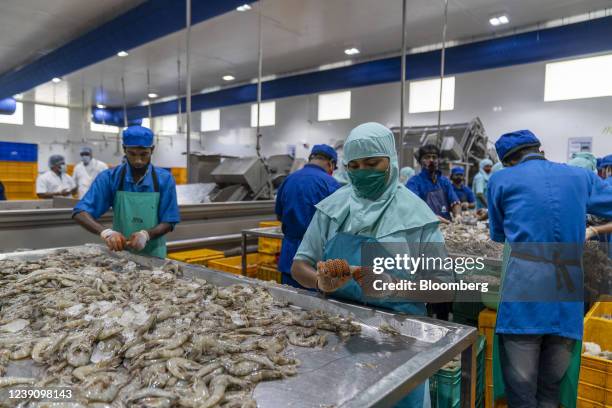
    This is precisely why satire has become more politically powerful than speeches. Memes now function as pamphlets of the digital era. Irony has become the language of mass political communication because humor allows despair to travel without appearing weak. The “Cockroach Janata Party” understood this psychology brilliantly. Its intentionally absurd membership conditions—being “chronically online,” “professionally ranting,” or “physically inactive but mentally overloaded”—were not random jokes. They were sharp social commentary disguised as internet comedy. The movement held a mocking mirror before society and exposed the hypocrisy of established elites who inherited institutions, wealth, or political access while lecturing an anxious generation about discipline, patriotism, and hard work.

    What truly unsettled conventional political structures was not the ideology of such movements, but their structurelessness. Traditional systems understand organized opposition. They know how to negotiate with unions, contain protests, suppress ideological adversaries, or absorb party-based dissent. But leaderless digital virality behaves differently. It spreads emotionally rather than organizationally. In the social media age, emotional resonance itself has become political capital. A single meme page, influencer, or anonymous account can suddenly shape national discourse more effectively than parties possessing decades of organizational machinery. Relevance has become the new form of power. Attention has become a parallel currency of legitimacy.

    This phenomenon is no longer confined to India. Across South Asia, frustrated youth populations are reshaping political discourse through unconventional methods. In Sri Lanka, digitally amplified youth anger against dynastic excess triggered one of the most dramatic political upheavals in recent regional history. In Bangladesh, student-led mobilizations demonstrated how networked digital outrage can challenge even deeply entrenched systems. In Nepal, younger political figures gained traction not through ideological sophistication but through perceived authenticity and direct online engagement. These movements differ in outcomes and political direction, yet they share one defining reality: the younger generation increasingly distrusts traditional political intermediaries, media gatekeepers, and inherited authority structures.

    The deeper crisis is economic as much as political. South Asia possesses one of the youngest populations in the world, yet its economies continue producing degrees faster than dignified employment. Governments celebrate digital connectivity while millions use the internet less for innovation and more for emotional escape. Social media has become both narcotic and weapon—a space where frustration is temporarily anesthetized through entertainment while simultaneously being transformed into collective anger. Ironically, states expanded digital infrastructure expecting empowerment and connectivity, but also ended up creating mass political consciousness without institutional containment. Young citizens now compare lifestyles, corruption scandals, governance failures, and global opportunities in real time. Every official narrative collides instantly with meme culture. Authority itself has become vulnerable to ridicule.

    Yet there is danger within this transition. Anti-establishment energy can expose institutional decay, but exposure alone does not create governance. Viral politics can destabilize systems without necessarily building sustainable alternatives. The “Cockroach Janata Party” displayed extraordinary emotional intelligence but little ideological coherence. Its frustrations were authentic—anger at political opportunism, distrust of institutions, resentment toward perceived elite capture, and exhaustion with performative governance. But virality cannot replace constitutional architecture. Satire may mobilize attention, yet societies still require administrative competence, policy continuity, and institutional discipline to function. Meme culture can ignite rebellion; it cannot independently run states.

    Still, dismissing such movements as immature internet theatrics would be a catastrophic mistake for established political elites. History repeatedly demonstrates that when formal institutions fail to absorb generational anxiety, unconventional political forms emerge with disruptive force. The youth are no longer waiting for ideological saviors. They are constructing emotional coalitions instead. The real significance of the “cockroach” phenomenon lies not in whether it wins elections or survives beyond the news cycle, but in what it revealed: a vast generation across South Asia feels unseen, unheard, economically cornered, and politically exhausted. They are mocking the system because they no longer believe the system respects them. And when cynicism reaches scale, satire stops being entertainment. It becomes rebellion.

    VISIT ARJASRIKANTH.IN FOR MORE INSIGHTS

  • “Two Engines, One Dream: Naidu–Lokesh and Andhra Pradesh’s Swarnandhra Resurrection”

    May 24th, 2026

    There are leaders who govern states, and then there are leaders who rebuild states after history dismantles them. Andhra Pradesh after bifurcation was not merely a state without Hyderabad—it was a body without its economic brain. Its revenue spine snapped, its institutional confidence weakened, and an entire generation began treating migration as the default career plan. In such moments, governance is no longer about administration; it becomes an act of resurrection. Chandrababu Naidu’s return for a record fourth term is not simply a political comeback—it is the return of an architect to a structure left half-built and exposed to storms. What makes this phase more consequential is that the architect is no longer working alone. Beside him stands Nara Lokesh, not as ceremonial inheritance but as operational horsepower. Andhra Pradesh is witnessing a rare political phenomenon in India: a father-son leadership system functioning like a true double engine—one supplying memory and blueprint, the other delivering speed and execution.

    Naidu’s political struggle has never been about power alone. It has been a long battle against India’s most dangerous administrative disease: short-termism. In the early 1990s, when most Indian states were still learning the grammar of liberalisation, Naidu was already writing the vocabulary of the future. His decision to seed nearly 700 engineering colleges was not merely an education reform—it was an industrial wager. He understood that the most decisive infrastructure of a modern economy is not highways, but skills. His push for fibre-optic connectivity was equally futuristic, at a time when governance across India still thought in terms of canals and concrete rather than digital highways. This was the Naidu doctrine: a state must run ahead of the present, not limp behind it. Cyberabad was not an accident—it was the product of policy imagination meeting institutional courage.

    But bifurcation created a harsher test. Unlike Telangana, which inherited Hyderabad, Andhra inherited a vacuum. Amaravati was not a city; it was an idea waiting for cement. Visakhapatnam was not a tech capital; it was a port with unrealised potential. Rayalaseema was not an industrial hub; it was a region historically associated with drought, distress, and departure. The challenge was not to develop a state in the normal sense. It was to prevent a state from slipping into permanent dependency—on remittances, welfare distribution, and political sentiment. Andhra’s greatest enemy was not underdevelopment alone; it was the risk of becoming structurally irrelevant in India’s growth story.

    This is why Swarnandhra 2047 is not just a slogan—it is a declaration of reinvention. Naidu has elevated his agenda from state-building to state-reengineering, aiming for a $2.4 trillion economy and a poverty-free Andhra Pradesh. It sounds almost unreal until one observes the early signals: under his current term, Andhra Pradesh has reportedly attracted investments worth nearly 25% of India’s total in under two years. That statistic is not only economic—it is psychological. It suggests Andhra Pradesh is no longer pleading for capital; it is competing for it. The state is repositioning itself not as a claimant for compensation but as a destination for confidence.

    Yet vision without execution is merely a speech in a loud hall. That is where Nara Lokesh enters as a political disruptor. Lokesh represents a different leadership energy—one shaped by global corporate language, startup ecosystems, and the impatient logic of digital governance. As Minister for IT, Electronics, and Education, he has operated less like a routine administrator and more like an aggressive market-maker for Andhra Pradesh. His presence on global platforms such as the World Economic Forum at Davos is not cosmetic diplomacy; it is strategic positioning. In the modern world, investment follows narratives before it follows infrastructure. Lokesh is attempting to sell Andhra Pradesh as a future-ready brand, not merely a state with incentives.

    His role is best understood as a translator of ambition into transactions. The $15 billion Google-backed AI hub in Visakhapatnam is not merely a project—it is a signal that Andhra wants a seat inside the global AI supply chain. The projection of two lakh direct and indirect jobs from a single hub is not incremental employment; it is an economic shockwave designed to alter migration patterns. Similarly, agreements worth ₹9.35 lakh crore involving players such as ArcelorMittal, TCS, Cognizant, LG Electronics and others indicate a deliberate attempt to build a multi-sector growth engine rather than a single-city miracle. The objective is unmistakable: generate 20 lakh jobs for youth and convert migration into retention, opportunity into stability, and aspiration into local livelihoods.

    The phrase “double engine governance” is often used in Indian politics as a slogan. In Andhra Pradesh, it is being operationalised as a governance architecture. Naidu argues that alignment with the Centre has enabled rapid implementation of development programmes within 15 months. Lokesh goes further, describing the double-engine framework as guiding Andhra “from darkness to light.” Beneath the poetry lies practical meaning: faster clearances, smoother coordination, stronger investor confidence, and the ability to mobilise national institutions for state ambitions. In India’s federal structure—where even good projects often suffocate under procedural delays—political alignment becomes administrative acceleration. It is not ideology; it is logistics.

    Yet the road ahead remains steep. Andhra Pradesh carries fiscal stress, operates under a primary deficit, and faces opposition attacks alleging mismanagement and notional losses of ₹13,667 crore. More worrying is the reported 3.22% decline in State Own Tax Revenue growth in FY26, an indicator that revenue mobilisation and real economic activity must strengthen. Investment announcements cannot remain PowerPoint prosperity; they must translate into factories, payrolls, exports, and tax bases. The political environment is equally combustible. The YSRCP opposition under Jagan Mohan Reddy accuses the government of authoritarianism and misuse of police machinery. Whether these allegations are accepted or rejected, the political heat is undeniable—and governance in such an atmosphere becomes harder because every administrative decision is filtered through suspicion. Naidu and Lokesh are therefore not merely executing projects; they are fighting a parallel narrative war where credibility is as valuable as capital.

    Swarnandhra 2047, ultimately, is a wager on transformation at scale: a multi-city industrial ecosystem, a technology-led growth model, and a measurable social mission through Zero Poverty and population management policy. But to make this real, Andhra must borrow ruthlessly from global best practices. It needs Singapore-like strategic focus, choosing high-impact niches such as AI, quantum computing, and advanced manufacturing rather than scattering resources. It needs an Israel-style innovation engine—venture funds, accelerators, regulatory sandboxes, and startup-friendly incentives—so job creation is not hostage only to large corporates.

    It needs Gujarat-like plug-and-play infrastructure and single-window clearances that are not symbolic but ruthless. And it must learn from Tamil Nadu’s balanced industrialisation across cities, ensuring that growth does not concentrate in one corridor while other regions remain trapped in stagnation. The Naidu-Lokesh partnership is not merely a family leadership story; it is a governance experiment where experience meets urgency, where Cyberabad’s memory meets Swarnandhra’s ambition. One engine draws the blueprint; the other provides horsepower. If this double engine survives fiscal stress, political confrontation, and execution risks, Andhra Pradesh may achieve something historic: transforming an orphaned post-bifurcation state into India’s next great economic powerhouse.

    VISIT ARJASRIKANTH.IN FOR MORE INSIGHTS

  • “From Hindenburg to Hyper-Scale: Inside Adani’s Reinvention of Power, Capital, and Corporate Survival”

    May 23rd, 2026

    The Adani story is no longer merely the story of a conglomerate defending itself against allegations. It has evolved into one of the defining case studies of modern global capitalism—where corporate resilience, political economy, financial engineering, institutional navigation, and reputational warfare collide in real time. What began in January 2023 as one of the fiercest attacks ever mounted against an Indian business empire has, by 2026, transformed into an equally dramatic story of recalibration and survival. In many ways, the Adani episode now reflects something much larger than one corporation. It reveals the changing architecture of Indian capitalism itself: a system increasingly defined by giant infrastructure ecosystems, concentrated capital, geopolitical risk, and the brutal speed of digital-era scrutiny.

    When the short-seller Hindenburg Research released its explosive 106-page report accusing the Adani Group of stock manipulation, offshore opacity, governance failures, and accounting irregularities, the shockwaves were immediate and global. Markets erased nearly $150 billion in value within weeks. International investors panicked. Analysts questioned not only the future of the conglomerate, but also the credibility of India’s regulatory institutions and the sustainability of politically connected infrastructure capitalism. For a brief period, the crisis appeared existential. The narrative hardened quickly: a rising corporate empire had been exposed, global confidence had cracked, and one of India’s most ambitious industrial expansions seemed trapped in reputational freefall. Yet capitalism, especially at scale, rarely collapses in straight lines. It adapts, absorbs shocks, and reinvents itself under pressure.

    Three years later, the landscape looks dramatically different. The group not only survived but emerged operationally leaner, financially more disciplined, and strategically more adaptive. Regulatory pressures gradually softened. Liquidity improved. Debt structures were recalibrated. Billions of dollars in borrowings were prepaid. International investors cautiously returned, with firms such as GQG Partners signaling renewed confidence in the conglomerate’s long-term viability. What initially appeared to be a near-fatal reputational collapse ultimately became a stress test that forced restructuring at extraordinary speed. The crisis accelerated internal reforms that may otherwise have taken a decade to implement. In a strange irony, the attack that threatened the empire may have strengthened its institutional survival instincts.

    But the real significance of the Adani episode lies beyond balance sheets and market capitalization. It exposes the deeper mechanics of India’s economic transformation in the 21st century. India is no longer merely nurturing standalone companies; it is building infrastructure ecosystems of continental scale. Ports, airports, renewable energy corridors, logistics chains, mining networks, transmission grids, industrial parks, and data infrastructure require unprecedented concentrations of capital and coordination. In such sectors, success depends not only on operational efficiency but also on the ability to simultaneously manage finance, regulation, geopolitics, technology, state relationships, and public perception. Modern infrastructure capitalism is no longer simply industrial—it is systemic. And systemic corporations increasingly behave less like businesses and more like parallel governance architectures embedded inside the economy itself.
    The group’s post-crisis response reflected this emerging reality. Rather than retreating into defensive conservatism, it reportedly accelerated restructuring and organizational redesign. Analysts increasingly compare this shift to an “orchestrator model” similar to the ecosystem architecture associated with companies like Apple. Under such a framework, the corporation retains strategic command over finance, standards, integration, branding, and long-term direction while outsourcing execution-intensive activities to specialized operational partners. This represents a profound shift away from the older Indian conglomerate philosophy of complete vertical ownership. In the modern economy, scale is no longer achieved merely by owning everything. It is achieved by controlling networks, coordinating systems, and accelerating execution through strategic integration. The future belongs less to industrial empires of possession and more to institutional empires of coordination.

    The crisis also revealed a harsher truth about corporate survival in the digital age: reputation itself has become infrastructure. Financial strength alone is no longer enough. ESG credibility, governance standards, cyber resilience, disclosure systems, regulatory engagement, and institutional trust now influence valuation almost as much as profitability. The Hindenburg episode demonstrated how rapidly global narratives can damage legitimacy in interconnected capital markets. But it also forced Indian conglomerates to recognize that compliance is no longer a legal checkbox—it is strategic armor. In the age of algorithmic finance and instant information warfare, credibility compounds like capital, and distrust spreads faster than infrastructure can be built. A corporation may spend years constructing ports and power plants, yet a single global narrative can vaporize billions in valuation within days.

    At the same time, the controversy triggered a deeper democratic debate inside India about the relationship between corporate scale and public fairness. Many smaller entrepreneurs believe the regulatory ecosystem functions asymmetrically, where large conglomerates possess access to elite legal networks, institutional influence, crisis-management capacity, and capital buffers unavailable to ordinary businesses. Whether entirely accurate or not, these perceptions matter profoundly because markets function not only on money but also on legitimacy. Citizens become uneasy when survival appears linked more to proximity and scale than to equal opportunity. Yet the opposite argument is equally important. No modern nation can build globally competitive infrastructure ecosystems without close alignment between state policy and large private capital. From the United States and China to the Gulf economies and Europe, strategic sectors everywhere operate through varying forms of political-economic coordination. The challenge for India is therefore not preventing the rise of mega-conglomerates, but ensuring that their growth strengthens institutional trust instead of weakening democratic confidence.

    Ultimately, the Adani saga is neither a simple story of corporate victimhood nor merely a tale of excess and controversy. It is the story of a rising economy wrestling with ambition, governance, global scrutiny, political proximity, and institutional maturity all at once. It exposes both the strengths and vulnerabilities embedded within India’s development model. India’s future will inevitably produce giant corporate ecosystems competing globally across infrastructure, energy, logistics, technology, and finance. The real question is whether these empires evolve into institutions respected not only for their scale and execution speed, but also for their transparency, resilience, and public legitimacy. The Adani crisis may therefore be remembered not as the moment Indian capitalism was exposed, but as the moment it was forced to evolve under the unforgiving pressure of global visibility.

    VISIT ARJASRIKANTH.IN FOR MORE INSIGHTS

  • “The Three-Body Diplomacy:   Washington and Moscow Beg for Beijing’s Gravity”

    May 22nd, 2026

    In modern geopolitics, noise often disguises weakness while silence conceals power. For nearly a decade, the world remained hypnotized by the spectacle of Donald Trump’s diplomacy—tariffs announced like television cliffhangers, sanctions delivered through political theatre, alliances questioned publicly, and negotiations conducted with the rhythm of a corporate takeover. Trump transformed geopolitics into a permanent live broadcast. Yet while Washington dominated headlines through disruption and unpredictability, another leader was operating with far less noise but far greater structural ambition. Xi Jinping did not attempt to dominate the news cycle. He attempted something far more consequential: to quietly redesign the operating system of global power itself. The defining geopolitical story of the 2020s may therefore not be the age of Trumpian turbulence, but the era in which Xi silently repositioned China from participant in the international order to one of its principal architects.

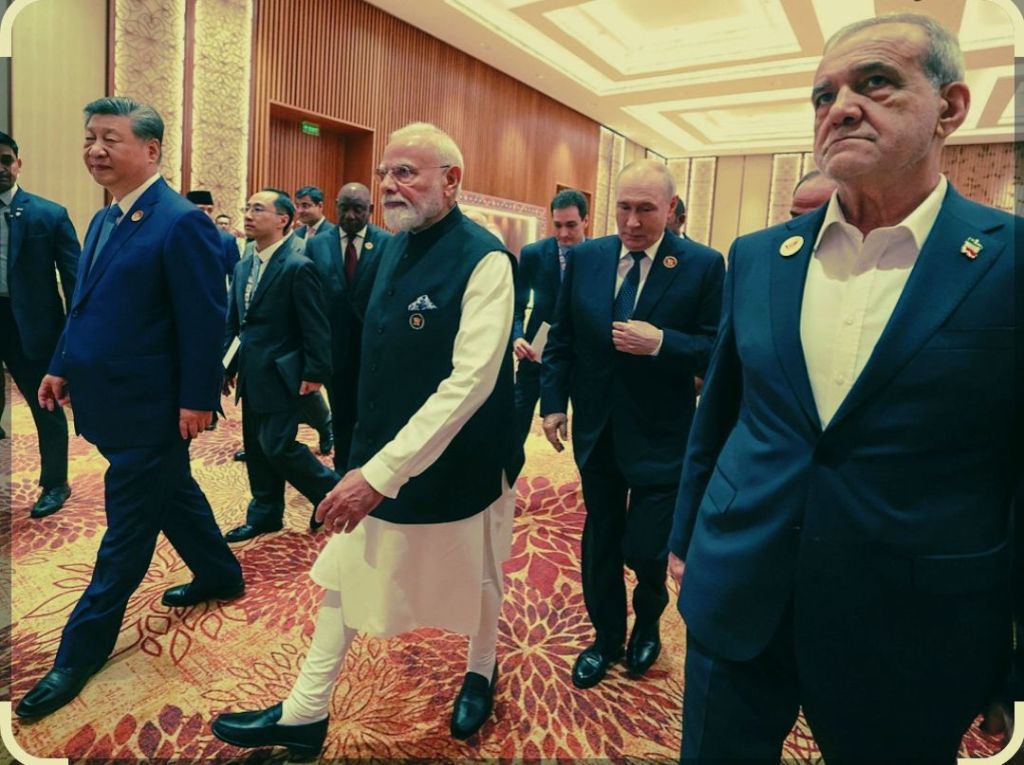
    The contrast became especially visible during the back-to-back Beijing visits of Donald Trump and Vladimir Putin in May 2026. Trump arrived with global media attention, familiar unpredictability, and the optics of high-stakes diplomacy between the world’s two largest economies. The meetings were choreographed carefully, filled with ceremony and strategic symbolism designed to prevent further deterioration in U.S.-China relations. Yet beneath the spectacle, the fundamentals barely moved. Trade disputes remained unresolved, Taiwan continued to hover like a geopolitical landmine, and strategic mistrust survived every smiling photograph. Days later, Putin arrived in Beijing to a quieter atmosphere but a far more consequential outcome. More than forty agreements emerged across artificial intelligence, technology, energy, logistics, and strategic coordination. A joint declaration supporting a “multipolar world order” reinforced the unmistakable signal that Beijing and Moscow were not merely cooperating—they were attempting to reshape the architecture of global governance itself. Trump produced attention. Xi produced alignment.

    This difference reveals the deeper contrast between the two leaders. Trump approaches geopolitics like a high-voltage television event, where leverage comes from disruption, emotional intensity, and unpredictability. Xi approaches geopolitics like a civilizational engineering project, where power is accumulated patiently through continuity, infrastructure, and layered influence. Trump seeks immediate tactical pressure; Xi seeks long-term strategic gravity. One dominates headlines. The other quietly reshapes systems. Trump’s diplomacy often resembles improvisation amplified by personality. Xi’s diplomacy resembles institutional choreography designed decades in advance. This distinction matters because history is rarely shaped by the loudest actor in the room. More often, it is shaped by the actor who controls the room’s architecture.

    That architecture increasingly runs through Beijing. Countries no longer engage China merely for trade opportunities; they engage because nearly every major geopolitical equation now intersects with Chinese economic centrality. Russia requires Chinese markets, technology access, and energy purchases to offset Western sanctions. Europe remains deeply dependent on Chinese manufacturing ecosystems and green technology supply chains despite political tensions. Even the United States, after years of “decoupling” rhetoric, remains economically intertwined with Chinese production networks. Xi understands a defining truth of the 21st century: modern power is no longer exercised only through military alliances or ideological blocs. It flows through ports, supply chains, rare earth minerals, semiconductors, digital infrastructure, battery technologies, financial systems, and industrial dependencies. China’s rise has therefore not been theatrical. It has been infrastructural. While Washington loudly debated containing Beijing, Beijing quietly embedded itself into the bloodstream of globalization.

    The Xi-Putin relationship perfectly illustrates this transformation. The two leaders have met more than forty times, cultivating an image of warmth, strategic trust, and political solidarity. Symbolic gestures—shared celebrations, carefully staged camaraderie, public affirmations of friendship—create the appearance of geopolitical equality. Yet beneath the symbolism lies a striking asymmetry. Since Russia’s invasion of Ukraine and the resulting Western sanctions, Moscow has become increasingly dependent on Beijing economically and technologically. China purchases enormous volumes of Russian fossil fuels, sustains trade flows, and provides Moscow with an economic lifeline that Western isolation sought to sever. Russia still possesses military power and nuclear parity, but economically it is drifting toward junior-partner status. Xi does not need to publicly dominate Putin because dependence itself has become the mechanism of influence. In modern geopolitics, silent leverage often matters more than visible control.

    Xi’s broader strategic genius lies in his refusal to trap China inside rigid ideological alliances. Beijing avoids Cold War-style blocs and instead prefers selective alignment combined with maximum strategic flexibility. It supports Russia without fully inheriting Russia’s wars. It competes fiercely with America while maintaining economic interdependence. It strengthens ties with the Global South while avoiding direct ideological confrontation with the West. This ambiguity is not confusion; it is deliberate maneuverability. China can simultaneously champion globalization while building alternative institutions such as BRICS and the Shanghai Cooperation Organisation to dilute Western dominance. It can cooperate and compete at the same time. Xi has effectively transformed diplomacy into systems engineering—creating overlapping networks of influence rather than fixed camps of loyalty.

    Ironically, Trump’s confrontational style often accelerated the very strategic shifts Xi desired. Every tariff war pushed China toward greater technological self-reliance. Every unpredictable policy shift encouraged allies and developing nations to diversify away from excessive dependence on Washington. Every loud confrontation reinforced Xi’s image as the calmer and more disciplined statesman. In international politics, predictability itself becomes a form of power. Nations do not merely align with strength; they align with stability. America still retains unmatched military reach, financial depth, and technological innovation. Yet China increasingly appears more institutionally coherent and strategically patient. In a century driven less by territorial conquest and more by economic connectivity, calm continuity attracts long-term partnerships more effectively than permanent volatility.

    This does not mean Xi Jinping has already “won” the geopolitical contest. China faces serious internal vulnerabilities: demographic decline, mounting debt pressures, slowing economic growth, technological restrictions from the West, and rising suspicion from neighboring states. Taiwan remains the most dangerous flashpoint in global politics, capable of destabilizing everything Beijing has carefully built. Yet Xi’s real strength lies in his understanding that history is rarely transformed through dramatic victories alone. More often, it is transformed through silent accumulation—of infrastructure, dependency, institutional influence, and strategic patience. Trump’s voice filled the room. Xi quietly rearranged the furniture, rewired the walls, and changed who controlled the exits. That may ultimately become the defining geopolitical lesson of this century: the loudest power is not always the one shaping the future.

    VISIT ARJASRIAKNTH.IN FOR MORE INSIGHTS

  • “Invisible, Indifferent, Invincible: The Virus That Outruns Human Pride” 

    May 21st, 2026

    Humanity often behaves like a proud superpower. We build skyscrapers, conquer space, invent artificial intelligence, and speak as if nature has finally been domesticated. Yet again and again, a microscopic organism—too small to be seen with an ordinary microscope—has forced the entire planet to kneel. A virus is not a nation, not a religion, not an ideology. It has no army, no flag, no currency, and no manifesto. Still, it has repeatedly achieved what missiles, sanctions, and wars could not: it has shut down borders, frozen markets, emptied streets, collapsed hospitals, and exposed how fragile “progress” truly is. The most humiliating truth of modern civilization is that it can be destabilized by something that does not even qualify as a complete living organism.

    In the last century alone, humanity has been chased by a procession of viral nightmares. COVID-19, which emerged from China, was the loudest reminder. It travelled faster than diplomacy, faster than scientific certainty, and faster than public trust. It made the world experience a rare collective fear: the fear of breath itself. Oxygen became a commodity. The handshake became a threat. Airports became deserted monuments of globalization. The virus did not merely infect lungs; it infected systems—public health capacity, governance discipline, economic resilience, and social cooperation. COVID-19 was not only a medical crisis. It was a global examination of administrative preparedness, and many countries failed it not because they lacked intelligence, but because they lacked readiness.

    But COVID was only one chapter in a longer and darker book. In Africa, Ebola has remained a symbol of viral brutality. It does not spread through casual air contact like COVID. It spreads through intimacy—blood, bodily fluids, caregiving, and even funerals. Yet despite being “less contagious,” Ebola has repeatedly caused terror because it combines high lethality with deep social complexity. Ebola outbreaks in the Democratic Republic of Congo and other regions reveal a painful truth: viruses thrive not merely on biology, but on weak governance, poverty, conflict zones, mistrust, and logistical collapse. Where hospitals are scarce and institutions are distrusted, even a virus that can be controlled becomes a disaster. Ebola proves that disease is never just a health problem—it is also a political and administrative crisis.

    Then comes the quieter killer: Hantavirus. It has appeared in Argentina and other parts of the Americas, and it spreads not through global air passengers or crowded cities, but through rodents and their invisible waste. Its cruelty lies in stealth. It enters through dust, through inhalation, through cleaning a storage room or an abandoned cabin. Symptoms begin like ordinary flu, but suddenly the lungs start collapsing. Unlike COVID, it does not need crowds to spread. It only needs neglect—poor sanitation, uncontrolled rodent populations, and low awareness of environmental hygiene. In some incidents, even cruise ships and tourist spaces have turned into quarantine zones. A ship built for leisure becomes a floating laboratory of fear. That is the modern condition: even comfort is now vulnerable to invisible infection.

    Viral threats also remind us that humanity has always been haunted by small biological enemies, even when they are not viruses. Malaria, for instance, is not viral, but it belongs to the same story of humiliation. A mosquito, a tiny insect, has drained economies, weakened generations, and quietly killed millions across centuries. Malaria does not create dramatic lockdown headlines; it creates slow suffering. It is a permanent burden on the tropical world and a constant tax on the poor. Its lesson is the same: civilization is not always defeated by grand enemies; it is exhausted by persistent invisible ones. Some disasters are loud, but the most dangerous ones are silent.

    Rodents too have historically served as biological accomplices in human collapse. The plague, one of history’s most terrifying pandemics, travelled through rats and fleas. It proved that urban planning, sanitation, and food storage are not lifestyle issues but survival strategies. Even today, rodents remain underestimated agents of public health instability. Whether through plague bacteria or hantavirus families, they remind us that nature does not respect urban boundaries. A single rat is not just a pest—it is a possible emergency in motion. Modern cities may have metro rail systems and smart governance dashboards, but a weak sanitation ecosystem can still turn them into biological minefields.

    What makes viruses uniquely dangerous is not only their fatality, but their adaptability. A virus mutates without ideology, without morality, and without fatigue. Humans debate; viruses evolve. Humans negotiate; viruses replicate. Humans declare victory; viruses return in new forms. COVID itself demonstrated this cruel principle. Just when vaccines arrived and confidence returned, new variants emerged. The pandemic turned into a long war of adjustment rather than a single decisive battle. This is the new pattern: not one enemy, but multiple redesigned versions, each exploiting loopholes in immunity, governance, and public behaviour. A virus does not require intelligence agencies—it requires only opportunity.

    The greatest threat posed by viruses is not death alone. It is disruption. A virus attacks the nervous system of civilization: supply chains, workforce stability, education continuity, institutional trust, and political legitimacy. It turns hospitals into war zones and transforms doctors and nurses into front-line soldiers without armour. It also creates secondary epidemics—misinformation, stigma, conspiracy theories, and vaccine distrust. In Ebola outbreaks, unsafe funerals and community mistrust fuel spread. In COVID, denial and fake cures prolonged waves. In hantavirus, ignorance about sanitation turns routine cleaning into fatal exposure. Every virus is partly biological and partly behavioural. The pathogen may be microscopic, but human behaviour becomes its amplifier.

    The lesson is brutally clear: humanity cannot afford episodic panic followed by collective amnesia. Preparedness cannot be seasonal. Surveillance systems, genomic tracking, rapid response teams, vaccine research pipelines, sanitation infrastructure, and public health communication must become permanent national security assets. Health is no longer merely a welfare subject; it is strategic defence. The battlefield is not always at borders—it is inside lungs, bloodstreams, and communities. A virus does not invade with tanks; it invades with silence. And it wins not by power, but by speed.

    In the end, the virus is the ultimate equalizer. It punishes arrogance and exposes inequality. It thrives where governance is weak, where sanitation is ignored, where science is politicized, and where communities distrust institutions. It is the smallest creature with the largest power: the power to collapse certainty. As the world enters an era of climate instability, ecological disruption, and rapid urban crowding, viral threats will not disappear—they will multiply, mutate, and travel faster than human confidence. The future will not be shaped only by technology and economic growth, but by whether humanity learns to respect its most consistent enemy: the invisible emperor that needs no permission to rule.

    VISIT ARJASRIKANTH.IN FOR MORE INSIGHTS

  • The Three Kings of Debt: Bengal’s Rust, Kerala’s Welfare Gravity, and Tamil Nadu’s Borrowed Machine

    May 20th, 2026

    Elections are often narrated like epics of virtue and vengeance. A leader is crowned, a party is buried, a dynasty is “taught a lesson,” an ideology is declared “rejected.” Victory speeches inflate with moral certainty, supporters treat ballot outcomes as divine verdicts, and politics performs its familiar theatre of triumph and humiliation. But when the slogans dissolve into silence and the garlands begin to wilt, governance returns to its most merciless judge: arithmetic.

    In West Bengal, Tamil Nadu, and Kerala, three governments have stepped into office through three different political climates. Yet each has inherited the same invisible constitution—debt contracts, interest schedules, pension liabilities, subsidy commitments, and fiscal ceilings that no manifesto can repeal. Democracy changes faces. Fiscal reality changes only deadlines. The ballot may decide who occupies the chair; the balance sheet decides what that chair can actually command.

    The first truth these governments must confront is that debt itself is not a sin. Debt is an instrument. The ethical question is not whether a state borrows, but what it borrows for. Borrowing to build productive assets is fundamentally different from borrowing to preserve political comfort. One expands tomorrow’s revenue base; the other simply delays tomorrow’s crisis. In a federal economy like India’s, where states must function simultaneously as welfare providers and growth engines, the distinction between these two forms of borrowing is the difference between development and decline.

    A useful lens is long-term prosperity: real per capita income growth over the last fifteen years. Tamil Nadu stands out as the clearest performer. Indexed to 2011–12, its per capita income has nearly doubled, approaching around 210. This is not a statistical coincidence. It is the compounded outcome of industrial clustering, infrastructure discipline, and sustained integration with private investment. Kerala has grown steadily, broadly tracking national momentum, but without extraordinary acceleration. West Bengal, despite beginning from a lower base, reveals the weakest growth trajectory—precisely the opposite of what catch-up growth theory predicts for lagging economies. A state that starts behind should grow faster if structural reforms are unlocking productivity.

    Bengal, however, has remained trapped in slow-motion progress.

    This divergence is not cosmetic. Per capita income is the long shadow of policy choices. It reflects what a state prioritised, what it financed, and what it failed to build. And that is why the next question is not merely “how much debt,” but what kind of debt architecture has been constructed beneath the surface.

    All three states are borrowers. None is fiscally pure. The difference lies in design.

    Tamil Nadu’s debt-to-GSDP ratio has risen but stabilised around 29–30 percent—manageable by Indian standards. Yet the more significant feature is that Tamil Nadu’s capital expenditure has expanded in parallel. This parallel rise is the signature of productive borrowing. Roads, ports, industrial corridors, power systems, and urban infrastructure are not decorative trophies for election brochures. They are fiscal investments designed to generate returns through higher growth and a stronger tax base. In Tamil Nadu’s model, debt has behaved more like an engine than a chain. The incoming government inherits not merely a budget, but an economic machine with momentum.

    West Bengal entered this period with a heavier burden, once exceeding 40 percent of GSDP—among the highest in India. The state has increased capital expenditure in recent years, which is a positive shift. But the investment base was low to begin with, and the private investment multiplier has not followed with sufficient force. Bengal has started building, but not at a scale large enough to escape its own gravitational pull. Its inheritance is therefore incomplete transformation: the opening chapters of an infrastructure story without the full ecosystem that makes infrastructure profitable. It resembles constructing a railway line without ensuring industries will ever use it.

    Kerala’s fiscal inheritance is the most structurally alarming. Debt has climbed to nearly 37–38 percent of GSDP, but capital expenditure has not risen proportionately. Borrowing has continued, but asset creation has not kept pace. This is the difference between borrowing to build a bridge and borrowing to fund the daily traffic on an old one. Borrowing to finance salaries, pensions, welfare transfers, and interest payments may be politically stabilising, but it does not expand productive capacity. It expands only future obligations. Kerala increasingly resembles a state consuming its tomorrow to preserve its today.

    The most brutal indicator of constraint is not total debt, but the interest burden—how much of revenue receipts is swallowed before the government can even make a single fresh policy decision. Interest payments are the silent tax on ambition. They do not build schools, roads, hospitals, or jobs. They merely pay yesterday’s invoice.

    West Bengal once carried an interest burden nearing 28–29 percent of revenue receipts, meaning over a quarter of its income was pre-committed to creditors. Over time, Bengal reduced this burden to levels closer to Tamil Nadu and Kerala. That is a genuine fiscal achievement. But it arrived with an unforgiving trade-off: interest reduction was partly achieved through restrained development spending. Bengal lowered pressure by building less. For a state already behind in infrastructure and industrial competitiveness, this stabilisation came at a developmental cost that now haunts its future.

    Kerala has moved in the opposite direction. Since around 2018, interest payments have climbed sharply, remaining above 22 percent of revenue receipts. That number is not a statistic—it is a cage. When interest consumes one-fifth or more of state revenue, fiscal sovereignty begins to evaporate. The government becomes an administrator of old promises rather than an architect of new growth. Tamil Nadu, despite its ambitious borrowing, has kept its interest burden comparatively contained—suggesting that productive borrowing has protected its revenue capacity.

    But fiscal health cannot be separated from the structure of the economy itself. The ability to repay debt is not created by speeches. It is created by industries, jobs, exports, and taxable growth.

    Tamil Nadu holds a rare Indian advantage: a large services economy anchored to a robust manufacturing base, with manufacturing contributing roughly 22–25 percent of output. This matters because manufacturing produces dense economic linkages—suppliers, logistics, ancillaries, skilled labour markets, export channels. It creates scalable tax revenues and stable employment. Tamil Nadu’s industrial ecosystem is not merely an economic success; it is a fiscal shield. The new government inherits an economy capable of paying for its ambitions.

    Kerala’s structure is the opposite: services dominate at over 55 percent, while manufacturing stagnates around 10–12 percent. Kerala’s prosperity has leaned heavily on remittance-supported consumption and public expenditure. Remittances are real, but consumption does not create industrial depth. It does not permanently expand the tax base required to finance a high-welfare state. Kerala’s fiscal stress is therefore not merely a short-term liquidity problem—it is a structural contradiction between welfare ambition and productive capacity.

    West Bengal sits between these two worlds. Manufacturing has improved since 2016, reaching around 17–18 percent. That is encouraging, but it has not yet produced the investment ecosystems that generate sustained multipliers. Bengal’s new government inherits not only a budget but the long shadow of industrial decline. Its challenge is existential: can political change reverse economic path dependence, or will it merely administer stagnation with a different face?

    Yet even Tamil Nadu, the apparent winner in this comparison, carries a warning label. Subsidies have expanded sharply since 2021–22, nearing ₹60,000 crore, exceeding both Kerala and West Bengal in absolute terms. This reflects India’s new fiscal reality: competitive welfare politics, where every election adds another permanent entitlement—free transport, subsidised electricity, cash transfers. Such measures may be socially meaningful, but they accumulate into structural weight. Tamil Nadu’s advantage is that its industrial base gives it greater capacity to absorb the burden. But even Tamil Nadu faces the central question: will welfare begin to crowd out capital expenditure, slowly weakening the very engine that made it strong?

    This is the true inheritance across these three states. Tamil Nadu receives the strongest fiscal architecture, but also the greatest temptation to overextend. Kerala inherits the most dangerous contradiction: rising debt, rising interest burden, and a growth model tilted toward consumption rather than production. West Bengal inherits a fragile industrial foundation and the hard task of proving that political change can become economic transformation.

    The deeper lesson is brutally simple: debt is not destiny. What matters is whether debt builds assets that generate returns, or finances consumption that generates only obligations. Elections decide who governs. But the quality of borrowing decides whether governance can deliver at all. And in the end, the harshest election is not held at the ballot box—it is held every year in the budget.

    VISIT ARJASRIKANTH.IN FOR MORE INSIGHTS

  • “The Billion-Dollar Superpower We Keep Wasting Every Night”

    May 19th, 2026

    Modern society has achieved something extraordinary. It has placed global knowledge inside a pocket, turned homes into offices, made entertainment infinite, and converted time into a commodity that can be traded, scheduled, and monetised. Yet in the middle of this progress, one ancient biological system has been quietly damaged—sleep. Not sleep as comfort, not sleep as laziness, but sleep as the high-performance engine that fuels intelligence, emotional stability, leadership ability, hormonal balance, and physical excellence. The tragedy is not that people are sleeping less. The deeper tragedy is that people have normalised sleeping poorly, as if exhaustion is the natural tax of ambition. In reality, poor sleep is not a lifestyle choice—it is a silent decline in human performance dressed up as “being busy.”

    Sleep is not a pause button. It is the most sophisticated repair program nature ever designed. When we sleep, the brain does not shut down; it reorganises memory, clears metabolic waste, recalibrates emotional circuits, strengthens immunity, and stabilises the hormonal signals that determine hunger, stress response, and physical recovery. Sleep is not downtime. It is prime-time biological work. The brain is essentially running maintenance updates, sorting data, discarding irrelevant noise, and strengthening learning pathways. Without sleep, the mind becomes like a high-powered computer forced to operate without system reboot—still functioning, but increasingly unstable, error-prone, and vulnerable to crash under pressure. In a world obsessed with productivity, sleep remains the only performance tool that improves nearly every system simultaneously.

    When sleep is reduced, the first visible casualty is cognition. Decision-making becomes slower, attention becomes fragmented, and judgment becomes impulsive. The brain loses its ability to manage complexity and begins to prefer shortcuts. This is why sleep deprivation is not just tiredness; it is a distortion of intelligence. Reaction times slow down, accuracy declines, and mental flexibility shrinks. Even minor sleep loss produces measurable decline in professional performance, whether in boardrooms, classrooms, hospitals, or sports arenas. Many people assume they are “working fine” on six hours. They are not. They are working while cognitively compromised, often unaware of the damage because the brain is too tired to accurately evaluate itself. The most dangerous part of sleep deprivation is that it reduces insight while simultaneously increasing confidence—an unfortunate combination for leadership and decision-making.

    But cognitive decline is only the surface. Beneath it lies a deeper breakdown: emotional instability. Poor sleep weakens patience, increases irritability, and makes small problems feel like major threats. Empathy drops, tolerance collapses, and interpersonal friction rises. Many modern conflicts—at home, at work, and even in governance—are not purely ideological problems. They are sleep-debt problems disguised as personality traits. A sleep-deprived brain becomes emotionally reactive because the internal braking system weakens. This is why stressed leaders make harsh decisions, why families argue over minor issues, and why workplace environments become toxic even without obvious causes. Sleep is not just personal health; it is social stability.

    Physiology pays an even heavier price. Sleep regulates hormones that govern strength, appetite, stress response, and metabolic efficiency. Testosterone drops with inadequate sleep, weakening recovery and physical resilience. Cortisol, the stress hormone, becomes dysregulated, placing the body in a constant state of internal emergency. Appetite hormones become distorted: leptin, which signals fullness, decreases, while ghrelin, which signals hunger, increases. The outcome is predictable—fatigue-driven overeating, cravings for sugar, weight gain, and metabolic damage. Many people assume their diet is the primary culprit behind obesity or low energy. Often, the hidden architect is a broken sleep schedule. Sleep deprivation does not merely make people tired; it rewires the body into storing fat, craving junk, and resisting recovery.

    The modern world has become especially hostile to biological rhythm. Sleep patterns have declined not because humans became weaker, but because the environment became louder, brighter, and psychologically addictive. Bedtimes have drifted later, sleep duration has reduced, and weekends have become a second time zone. This “social jetlag,” where sleep timing shifts by two hours or more on weekends, confuses the circadian clock the same way international travel confuses the body. The internal rhythm loses its anchor. The major driver is artificial light—especially screen light. Blue wavelengths suppress melatonin, the hormone that signals night to the brain. A phone held inches from the face becomes a portable midnight sun. Add endless scrolling, constant notifications, anxiety-driven consumption of news, and a culture that glorifies busyness. Exhaustion has been turned into a badge of ambition, but biology does not reward ambition. It rewards alignment.

    The consequences of circadian disruption are not theoretical. Chronic sleep damage is linked to metabolic disease, cardiovascular strain, immune dysfunction, mental health deterioration, gastrointestinal problems, and even increased cancer risk in long-term shift workers. A disrupted biological clock is not a lifestyle inconvenience—it is slow sabotage of lifespan. Yet the solution is not heroic discipline or unrealistic perfection. It is intelligent design. Sleep improvement does not require dramatic overnight transformation; it requires small, repeatable rituals that create predictable signals for the brain. A short wind-down routine of 5–10 minutes—reading, breathing exercises, journaling, or calm music—acts as a transition that tells the nervous system the day is ending. Dimming lights is a powerful cue because bright light tells the brain it is still daytime. Sleep begins not in bed, but in the evening environment.

    Cognitive offloading is another high-impact tool. A racing mind is often not anxiety; it is unfinished mental accounting. Writing down tasks, worries, or tomorrow’s priorities clears mental RAM and prevents the bed from becoming a negotiation table for stress. Environmental conditioning matters too. The bedroom should not become an extension of the office or cinema. When people work, eat, and scroll in bed, the brain stops associating the bed with sleep, and sleep becomes optional rather than automatic. Even temperature plays a strategic role. A hot shower or bath about 90 minutes before bedtime helps because the body cools afterward, and this drop in core temperature triggers sleep onset. Sleep is not only psychological—it is thermodynamic.

    For peak performance, sleep extension is one of the most powerful interventions. It means deliberately increasing sleep beyond the usual baseline to repay accumulated debt. Many people assume weekend sleep compensates for weekday deprivation, but the math rarely works. If the body needs eight hours and receives six for five nights, the deficit becomes massive. Two long weekend nights cannot repay five days of biological borrowing. Even adding 15 to 30 minutes per night creates measurable improvement in reaction time, mood stability, and focus. For acute boosts, there is the famous “napachino”—caffeine followed immediately by a 20–30 minute nap. Since caffeine activates in about 15 minutes, the nap ends just as caffeine begins working, creating sharper recovery than either method alone. Used wisely, it becomes a legal performance enhancer for professionals, athletes, and travellers.

    Ultimately, the modern world is obsessed with productivity tools, leadership strategies, and mental hacks, but sleep remains the most powerful performance system available to humans. It is the cheapest medicine, the strongest cognitive enhancer, the most ethical performance booster, and the most underestimated leadership advantage. When sleep improves, thinking becomes sharper, emotions become steadier, the body becomes more resilient, and decision-making becomes cleaner. In a competitive world, sleep is not rest. It is quiet dominance.

    VISIT ARJASRIKANTH.IN FOR MORE INSIGHTS

  • “The Surname Syndrome: When Power Raises Heirs Who Forget the Republic”

    May 18th, 2026

    In every society, power creates its own private universe. Around public representatives and famous personalities—politicians, bureaucrats, judges, industrialists, celebrities—there grows an invisible ecosystem that quietly changes the way a family lives. It is not only security staff, drivers, and assistants. It becomes a complete “house society”: a circle of loyalists, gatekeepers, flattering visitors, opportunists, and constant observers who treat the family like a moving institution. Inside this ecosystem, children are not raised like ordinary citizens. They are raised like inherited authority. And the first lesson they absorb is dangerous: rules are flexible if your surname is powerful.

    The real tragedy is not wealth. It is the moral emptiness that wealth often disguises. Ordinary children are shaped by daily friction. Teachers scold them, neighbours criticize them, classmates mock arrogance, and society gives instant feedback when someone behaves badly. But in powerful households, friction is removed systematically. The driver speaks softly. The staff laughs at rude jokes. The school principal becomes extra polite. The police officer becomes overly respectful. Even relatives hesitate before correcting the child. Slowly, the child stops hearing the word “no.” And when “no” disappears, discipline collapses. When discipline collapses, character begins to rot quietly.

    The spoiling of VIP children is not just a parenting failure. It is an institutional outcome. Wealth removes the need for patience. Influence removes the fear of consequences. Busy parents, trapped in public life, often compensate emotional absence with gifts, confusing luxury with love. Household staff are trained to obey, not to correct. Visitors praise the child not for good behavior but for proximity to power. In such an environment, arrogance is not taught like a subject—it is inhaled like air.

    Then the pattern unfolds with frightening predictability. First comes indulgence: special admissions, special permissions, rules bypassed casually, and misbehavior forgiven as “childish.” Then adolescence arrives, and experimentation begins. But without boundaries, experimentation becomes recklessness. Late-night parties, drunk driving, bullying, rude treatment of service staff, public aggression, and humiliating ordinary citizens become common. At this stage, the child is not simply spoiled. He is practicing tyranny in small installments.

    Eventually, the public incident happens. A video goes viral. A complaint is filed. A victim speaks out. And the headline appears with surgical cruelty: “Son of…” or “Daughter of…”. In one moment, years of speeches on morality collapse under the weight of domestic reality. What the parent preached in public is exposed as absent in private.

    After that begins the familiar damage-control drama. Lawyers arrive. Apologies are drafted without shame. Victims are pressured into silence. Influence is tested quietly. Media management begins. Sometimes the child escapes legal punishment, but public judgment is often harsher than any court order. Society may forgive mistakes, but it rarely forgives hypocrisy. The family’s image becomes stained, and every future achievement is viewed through suspicion.

    India has seen this story repeatedly. Sometimes it ends in catastrophe—cases involving murder, assault, culpable homicide, or brutal violence, where public outrage forces the system to act. Sometimes the disgrace comes through intimidation and arrogance: public beatings, threatening behavior, misuse of security, or treating common citizens as disposable objects. Financial fraud has also become a common route of collapse, because privilege without competence creates shortcuts. When children inherit networks they do not understand, they try to succeed through manipulation rather than merit. Even family feuds—siblings fighting publicly, inheritance battles, emotional outbursts on social media—turn private pain into public ridicule. When a powerful family begins fighting itself openly, society reads it not as tragedy but as moral bankruptcy.

    Reform is difficult because such households are designed to resist correction. Denial becomes a disease. Parents interpret warning signs as “youthful energy,” refusing to admit that arrogance is not a phase but a culture. The home becomes a protected black box. Institutions hesitate to intervene. The media adds distortion—sometimes exaggerating, sometimes shielding—but either way, normal accountability is disturbed. Meanwhile, elite peer circles accelerate the decay. Rich children compete not in achievement but in audacity, turning privilege into a contest of who can violate boundaries more dramatically.

    This is why the arrogance of VIP children is not merely a family embarrassment. It is a governance issue. Every scandal involving a public figure’s child damages institutional legitimacy. When citizens watch influence bury wrongdoing, they stop believing in law. And when law is no longer believed, the state loses moral authority even if it still holds power. In that sense, the spoiled child becomes a small but powerful agent of national corrosion.

    The solution is not speeches, apologies, or moral lectures after the damage is done. It requires structural discipline inside powerful families. The first reform is moral clarity: parents must practice accountability, not privilege. If the child commits an offence, the parent must not interfere. A powerful parent who allows legal consequences is not being harsh; he is protecting the family’s dignity and the state’s credibility. Second, privilege must be controlled: fixed allowances, earned luxuries, real responsibilities, and exposure to real hardship. Third, children must be placed in environments where their surname has no market value—schools, sports, and social circles where merit matters and identity does not. Fourth, families must restore emotional presence: time, conversation, and real parenting instead of outsourced affection. Finally, children must be trained in consequences early—small punishments today, so that life does not deliver irreversible punishments tomorrow.

    Children of powerful families must understand one brutal truth: society does not hate them for their privilege. Society hates them for their contempt. A surname is not an achievement. It is a loan taken from history. If it is not repaid with humility, discipline, and service, the same name that opened doors will eventually become the headline that destroys them.

    In the end, famous families are rarely ruined by enemies. They are ruined by children who were never taught limits, never made to earn respect, and never reminded that power is not inheritance—it is responsibility. Dynasties do not collapse because the world is unfair. They collapse because their children confuse privilege with immunity, and arrogance with destiny. And when that confusion spills onto the street, the disgrace does not belong only to the child. It belongs to the entire “house society” that raised someone who believed he was above citizenship itself.
    VISIT ARJASRIKANTH.IN FOR MORE INSIGHTS

  • Modi Is the Firework, BJP Is the Nuclear Reactor: The Booth-Level Machine That Manufactures Victories

    May 17th, 2026

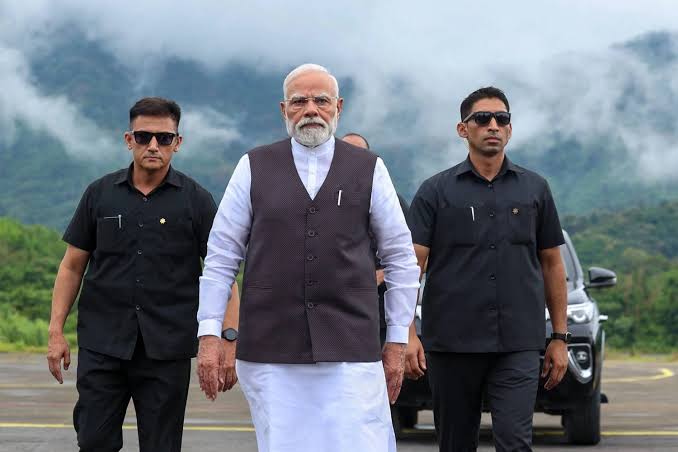
    The biggest political misunderstanding in India today is the lazy assumption that the Bharatiya Janata Party’s dominance is simply the by-product of Narendra Modi’s personal popularity. Modi is undeniably a towering political brand, perhaps the most potent electoral personality India has produced in decades. But reducing BJP’s rise to one charismatic face is not just intellectually shallow—it is politically suicidal for those who oppose it. The BJP of 2026 is not merely a leader-driven party; it is a multi-layered electoral corporation engineered with ideological cement, operational discipline, and a grassroots engine that works like a permanent election-time government. Modi is the headline. The BJP is the newsroom, the printing press, and the distribution network. The real story is not Modi’s speeches; it is the silent machinery beneath him.

    Recent victories in West Bengal and Assam reveal this deeper transformation. These wins were not achieved through Modi’s charisma alone but through local leadership ecosystems that BJP has deliberately cultivated. Assam was driven by Chief Minister Himanta Biswa Sarma’s aggressive state-level command and narrative crafting. West Bengal saw Amit Shah’s tactical management and a coordinated “Team BJP” style execution. Haryana offered an even clearer signal of strategic evolution: the party consciously projected collective leadership and local credibility under Nayab Singh Saini. Maharashtra, too, reflected a campaign where the state unit carried much of the weight. These patterns are not accidental. They represent a structural shift where BJP is decentralising electoral performance while maintaining centralised ideological control.

    This is precisely where BJP’s uniqueness lies: it is centralised in command but decentralised in execution. It functions like a military hierarchy where the national leadership sets the mission and the local units win the terrain. One senior leader’s phrase captures this philosophy with uncomfortable clarity: “We have an army of soldiers led by a commander-in-chief.” That is not poetic exaggeration; it is the BJP’s organisational doctrine. Unlike parties that wake up six months before elections, BJP operates in permanent campaign mode. Its workers remain active year-round, maintaining networks, tracking public sentiment, managing community-level influence, and embedding party presence into everyday civic life. Their political calendar does not begin with election notification; it begins the morning after the previous election results.

    The BJP’s sharpest innovation is its booth-level engineering, a system that turns elections into disciplined mathematics rather than emotional improvisation. While other parties still depend heavily on rallies, caste arithmetic, and last-minute candidate bargaining, BJP treats every polling booth like a battlefield unit. Booth committees, panna pramukhs, and micro-level coordinators create an architecture where voter lists are audited, households are mapped, grievances are recorded, and turnout is engineered with near-industrial precision. This is where BJP defeats its opponents: not on television debates, but in voter mobilisation and micro-targeting. The voter is not treated as a crowd; the voter is treated as a data point with a social identity, a local complaint, and a predictable probability of voting.

    This machinery becomes even more lethal when combined with narrative discipline. BJP does not run random messaging driven by emotional outbursts or leader-centric slogans alone. It runs synchronised storytelling where local pride, regional identity, welfare schemes, and anti-incumbency are woven into one umbrella of “development plus nationalism.” Odisha demonstrated this model vividly. The campaign leaned heavily on “Odia Asmita” (regional pride) and anti-incumbency against the long-ruling BJD, with Modi as an amplifier rather than the sole anchor. Tripura followed a similar template. In both cases, the Centre’s development narrative played like background music while the foreground was local identity politics, leadership deployment, and targeted social coalition building.

    Another uncomfortable truth for the opposition is that BJP has institutionalised the science of selecting states as targets. The party does not contest elections as isolated events; it treats them as phases in a long-term expansion project. It identifies a state, diagnoses local political conditions, builds cadre capacity, deploys leaders with region-specific credibility, and gradually creates an ecosystem capable of competing. This is why Bengal 2026 looked structurally different from Bengal 2021. In 2021, Modi’s face existed, but the organisational depth was insufficient. By 2026, groundwork had matured: cadre expansion, alliance calibration, narrative penetration, and booth-level consolidation. Modi became a multiplier, not the only pillar.

    Technology has further strengthened this political engine. BJP began with social media dominance but has now upgraded into the era of digital war rooms, micro-targeted communication, and AI-assisted feedback loops. This is not simply “modern campaigning.” It is an operational upgrade where the party collects public mood signals faster, shifts slogans quicker, amplifies selective narratives more effectively, and maintains real-time campaign intelligence. In short, BJP behaves less like a traditional party and more like an organisation with corporate-grade operational discipline. It understands that elections are not just about persuasion; they are about controlling information speed, narrative saturation, and mobilisation efficiency.

    Yet it would be dishonest to suggest Modi is irrelevant. Modi remains BJP’s emotional glue and symbolic superpower. Even small gestures—eating street food, taking a boat ride, meeting beneficiaries—become national narrative events. Modi’s presence energises cadre psychology, shapes media cycles, and produces what political strategists call “emotional transfer,” where the leader’s popularity spills into local candidates. He also performs a critical internal function: he neutralises factionalism. Many Indian parties collapse due to internal rivalries, but BJP’s command culture and Modi’s authority suppress the rise of local warlords and reduce the cost of internal dissent.

    However, BJP’s post-2024 strategic shift is revealing. The slogan “Modi ki Guarantee,” aggressively used in the 2024 Lok Sabha election, was softened or reduced in several state elections such as Haryana and Maharashtra. Haryana’s tagline was not Modi-centric; it leaned on local continuity and trust: “Bharosa Dil Se BJP Phirse.” This indicates BJP is consciously testing a future where the party brand and organisational machine can carry electoral weight even when Modi is not the central weapon. Delhi remained an exception, proving that BJP still deploys Modi like a political battering ram when urban volatility demands maximum emotional appeal.

    The deepest strength of BJP lies in ideological continuity and cadre culture, reinforced through the RSS ecosystem. BJP is not dynastic, and therefore does not suffer the “death of leadership” syndrome common in Indian politics, where parties weaken when families fracture or successors fail. BJP’s model builds leadership layers—national, state, district, booth—ensuring organisational survival even through transitions. It has faced defeats in Jharkhand, Tamil Nadu, Kerala, Karnataka, and Telangana, proving it is not invincible. Yet the trajectory is unmistakable: BJP is evolving into India’s first industrial-scale electoral organisation. Modi may be the billboard, but the BJP is the factory. And defeating a billboard is easy; defeating a factory requires building one of your own.

    VISIT ARJASRIKANTH.IN FOR MORE INSIGHTS

←Previous Page
1 2 3 4 5 6 … 151
Next Page→

Blog at WordPress.com.

Loading Comments...

    • Subscribe Subscribed
      • SOCIAL PERSPECTIVES
      • Join 108 other subscribers
      • Already have a WordPress.com account? Log in now.
      • SOCIAL PERSPECTIVES
      • Subscribe Subscribed
      • Sign up
      • Log in
      • Report this content
      • View site in Reader
      • Manage subscriptions
      • Collapse this bar