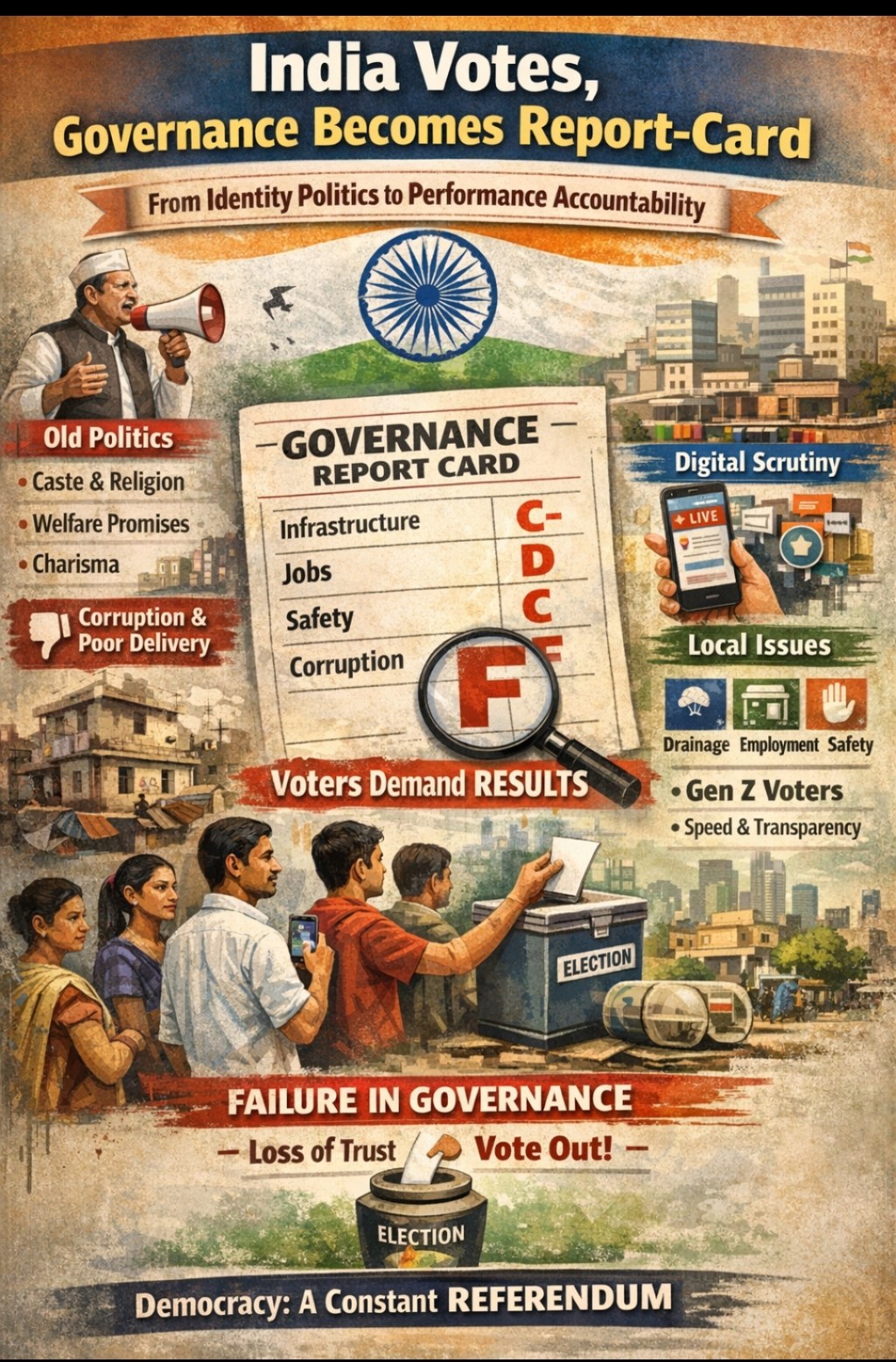
India’s recent Assembly election outcomes are not merely a story of winners and losers; they are warning signals of a deeper behavioural mutation in the Indian voter. Beneath the spectacle of rallies, slogans, caste arithmetic, and welfare announcements, Indian democracy is undergoing a structural transformation. The system is shifting from identity-driven loyalty to performance-driven accountability. The older electoral formula—regional pride, emotional symbolism, welfare declarations, and charismatic leadership—has begun to collapse under the weight of a new voter psychology. In its place, a harder and more unforgiving model is emerging, where governance is judged like a quarterly audit and leadership survives only through continuous proof of delivery.
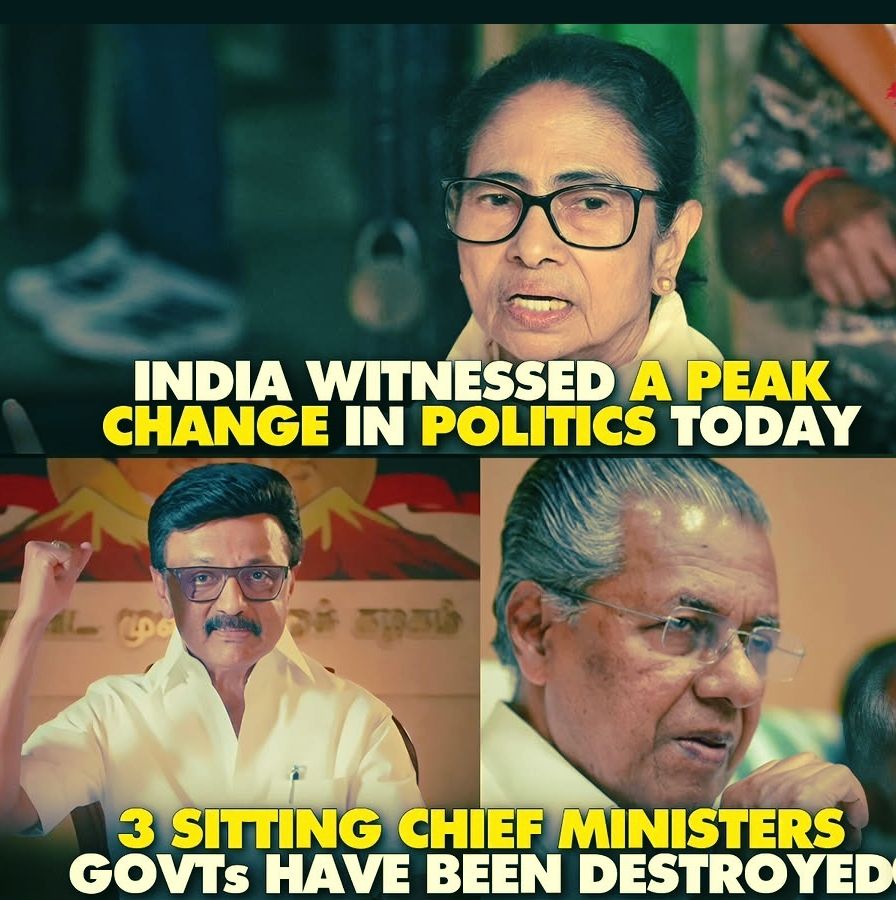
This transformation is not theoretical; it is statistically visible. In West Bengal’s 2026 contest, despite the existence of over forty welfare schemes and high public awareness, the incumbent reportedly lost in at least twenty-two constituencies where scheme visibility was strong but last-mile delivery was weak. The message is brutally clear: citizens no longer reward announcements; they reward outcomes. Tamil Nadu reflects the same shift. Survey-based constituency assessments showed nearly a 37% drop in trust wherever delivery timelines were missed, even when the welfare narrative remained politically attractive. Welfare has not vanished as an electoral instrument—but it has been downgraded. It is now the baseline expectation, not the decisive advantage.
This is a dangerous reality for regional political parties that built legitimacy on emotional identity politics and state-versus-centre narratives. Regionalism once functioned as a protective wall against volatility. Today, it increasingly functions as an excuse that voters are no longer willing to accept. The modern voter is not impressed by speeches about pride; they demand measurable governance.
They want hospitals that work, schools that teach, streets that feel safe, clean drinking water that arrives without protest, electricity that is predictable, police response that is reliable, and jobs that are real. They want governance that is experienced, not governance that is advertised.
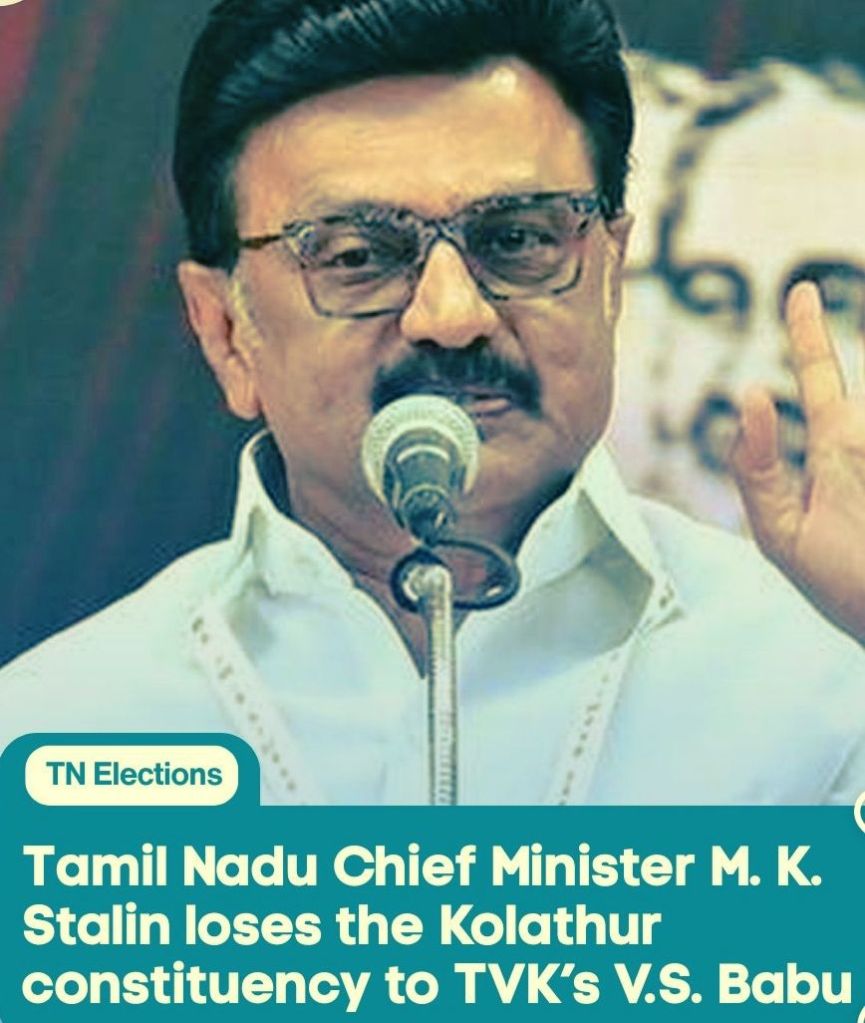
One of the most striking signals from these elections is the rise of hyper-local accountability. The defeat of prominent leaders in their own constituencies demonstrates that state-wide charisma is no longer sufficient to override neighbourhood anger. The political imagination of the voter has shrunk geographically but deepened psychologically. Earlier, leaders could win by projecting themselves as symbols of a larger cause. Today, symbols collapse when the local drain remains overflowing for three monsoons, when unemployment silently destroys household stability, or when corruption becomes a daily tax on ordinary life. In Assam, the defeat margin of a Chief Ministerial face—around 8,000 votes—was strongly correlated with unresolved drainage and employment grievances accumulating over eighteen months. The lesson is sharp: a leader may dominate television screens and still lose the street outside the constituency office.
Post-poll behavioural assessments increasingly suggest that personality now accounts for less than 15% of voting decisions when measurable delivery indicators are available. That statistic is humiliating for politics built on charisma. It means even the most dramatic public speaker is now competing against something more persuasive: lived experience. A pothole becomes more powerful than a manifesto. A delayed ambulance becomes more memorable than a rally. A police station refusing to register a complaint destroys legitimacy faster than any opposition speech. Governance failure has become the most effective campaign material.
What makes this era particularly brutal is the third force reshaping Indian democracy: digital scrutiny. Every decision is now recorded, dissected, circulated, and weaponised in real time. The leader no longer controls the narrative; the citizen does. Social media has transformed governance into a public courtroom where evidence travels faster than explanations. In West Bengal, a tragic incident involving a medical student reportedly triggered a 52% spike in negative digital sentiment within 48 hours. That spike was not merely emotional noise—it translated into an estimated 9% vote swing in affected constituencies. In this new ecosystem, delay in empathy and action is not a communication problem; it is an electoral suicide note.
This is the new politics of emotional accountability.
Citizens do not only evaluate policies; they evaluate how leaders respond to pain. A government can survive mistakes, but it cannot survive perceived arrogance, indifference, or delay. The modern voter is not asking, “Did you announce?” The modern voter is asking, “Did you act immediately?” In the age of smartphones, even a one-day delay feels like betrayal. Silence becomes guilt. Excuses become insult.
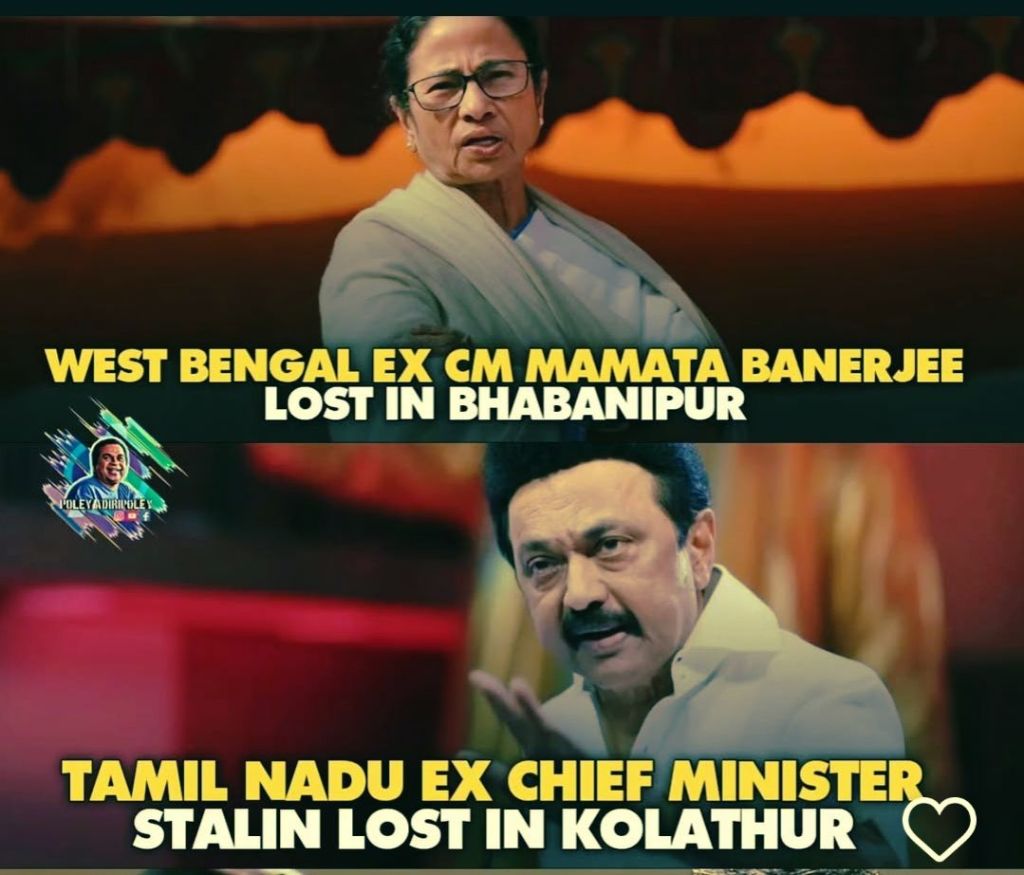
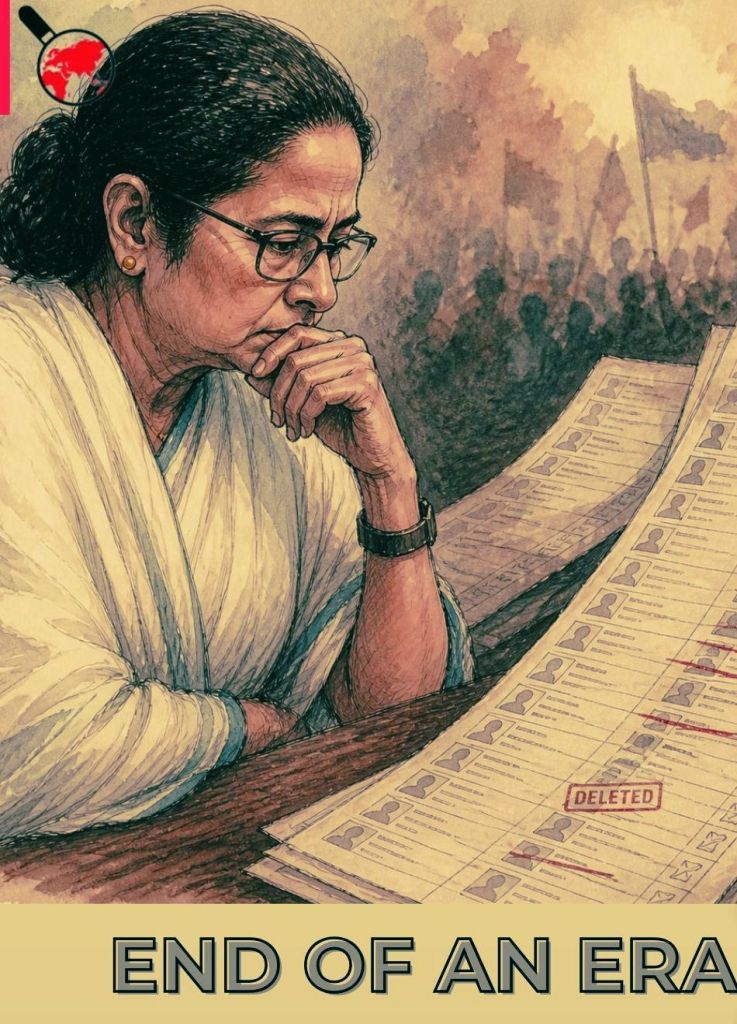
The defeats of Smt. Mamata Banerjee and Shri M.K. Stalin carry symbolic weight because they represent two established political styles now facing fatigue. In West Bengal, Mamata Banerjee’s long tenure created a predictable anti-incumbency wave sharpened by allegations of corruption, syndicate culture, and political violence. Her administration appears to have misread voter psychology by assuming welfare schemes such as Lakshmir Bhandar could permanently guarantee loyalty. But the emerging electorate—especially educated women—wants more than monthly transfers. They want jobs for graduates, dignity in public life, and safety for daughters. Welfare without upward mobility is increasingly perceived not as empowerment, but as containment.
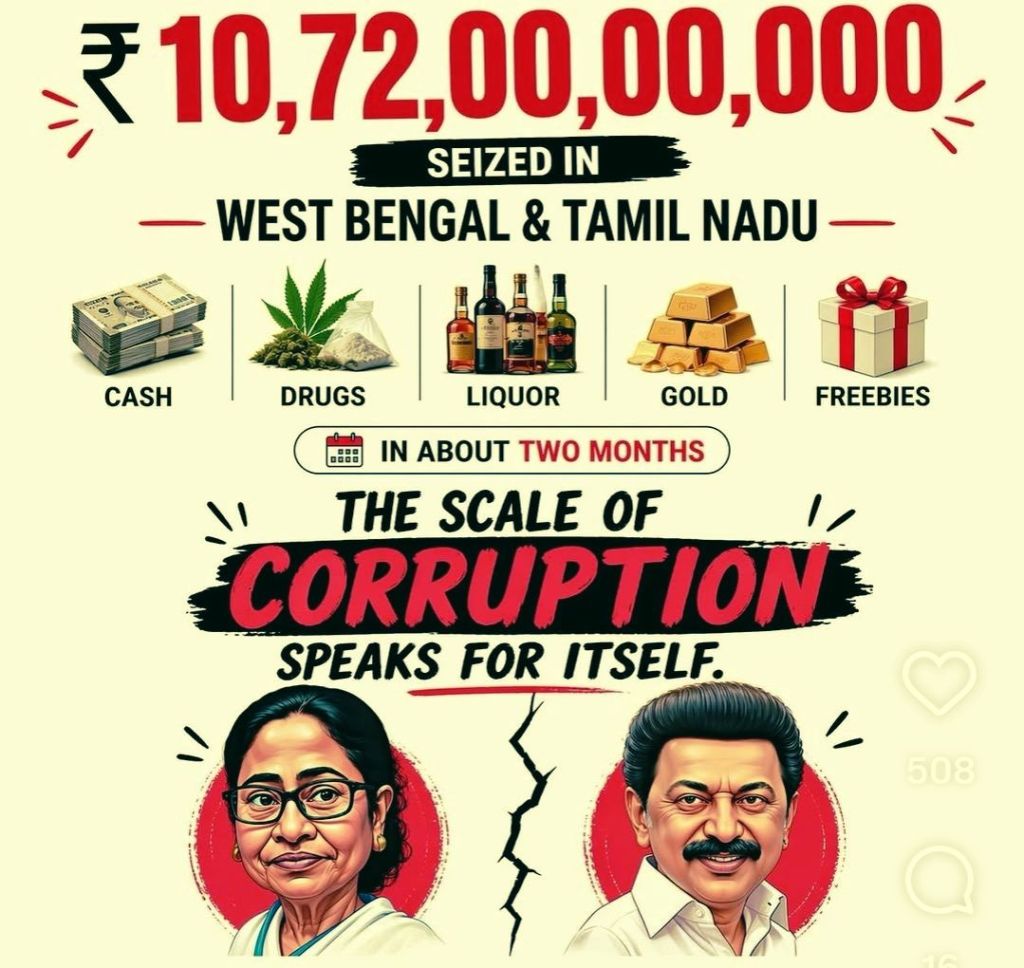
Tamil Nadu reflects a different rejection but the same deeper pattern. Shri M.K. Stalin faced a disruption wave powered by celebrity politics and frustration with entrenched corruption narratives. The state’s youth—over 2.5 crore voters under forty—were less interested in ideological federalism debates and more obsessed with everyday governance failures, corruption networks, liquor-system controversies, and dynastic stagnation. Stalin’s leadership, despite appearing administratively engaged, was punished for failing to neutralise the perception that the system had become predictable, complacent, and morally tired. The modern voter does not merely punish corruption; they punish boredom. A government may survive inefficiency for some time, but it rarely survives a reputation for stagnation.
Across states, a deeper psychological pattern emerges: the “What have you done for me lately?” syndrome. Long tenure has become a liability unless accompanied by constant reinvention. The electorate now expects political narratives to refresh every five years, shifting from past achievements to future aspirations. Leaders cannot endlessly sell yesterday’s development. The voter is no longer impressed by old bridges and old slogans; they want tomorrow’s opportunity.
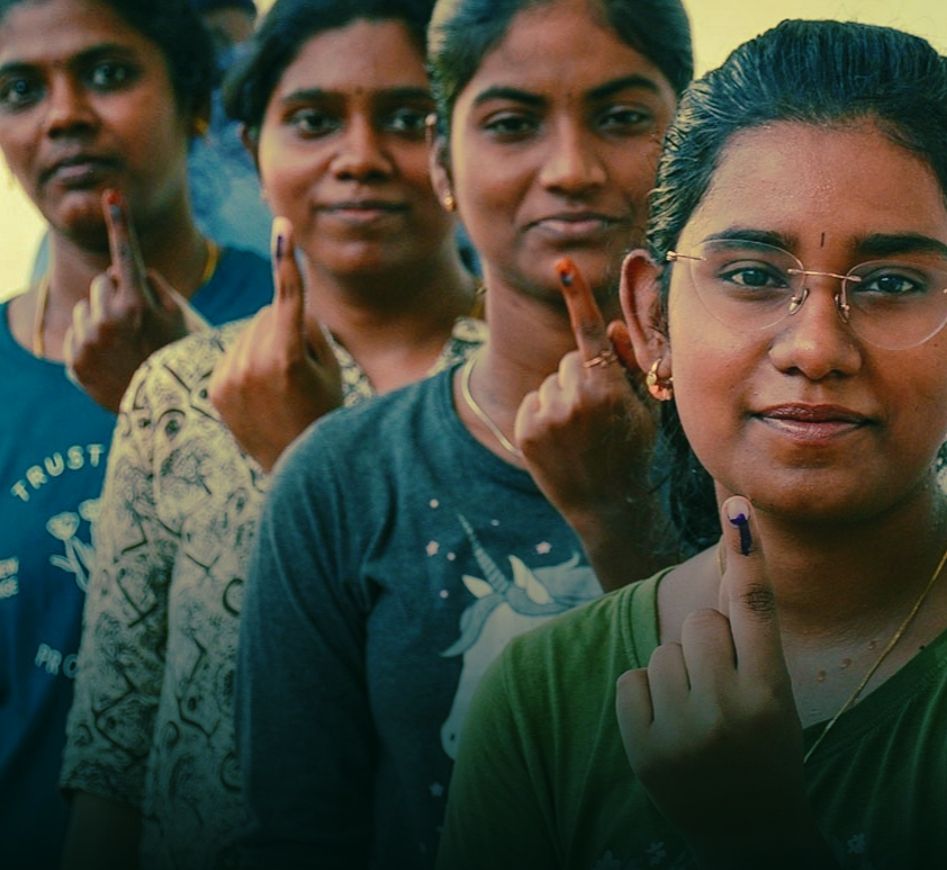
Most importantly, Gen Z has disrupted traditional political loyalty. These voters were born after many older political battles were fought. They carry no emotional debt to legacy narratives. They are impatient, digitally connected, and psychologically allergic to hypocrisy. They demand speed, transparency, visible integrity, and aspirational growth. They do not vote like their parents. They vote like consumers choosing a service provider. Government is evaluated like a product: if it performs poorly, it is replaced.
In this new democratic environment, the survival manual for political leadership is brutally simple. Welfare must become outcome-based. Publishing funds released is meaningless; governments must publish monthly dashboards showing jobs created, crime clearance rates, hospital waiting times, school learning outcomes, and infrastructure completion percentages. Grievance redressal must become real-time. A 72-hour mandatory response system with public tracking is no longer an innovation—it is the minimum credibility requirement.
Constituency-level accountability must be institutionalised: ministers and MLAs should hold fortnightly open forums with published attendance, complaints received, and resolution rates. Crisis response must be immediate and visible. Empathy delayed is legitimacy destroyed.
India’s elections are no longer periodic rituals. They are becoming continuous referendums. Governments are now judged not once in five years, but every day. This is the birth of a new democratic contract: legitimacy is renewable, trust is conditional, and power is rented—not owned. Regional parties can survive in this era, but only if they abandon the comfort of identity politics and adopt the discipline of governance performance. The age of publicity stunts is dying. The age of the report card has begun.
VISIT ARJASRIKANTH.IN FOR MORE INSIGHTS

