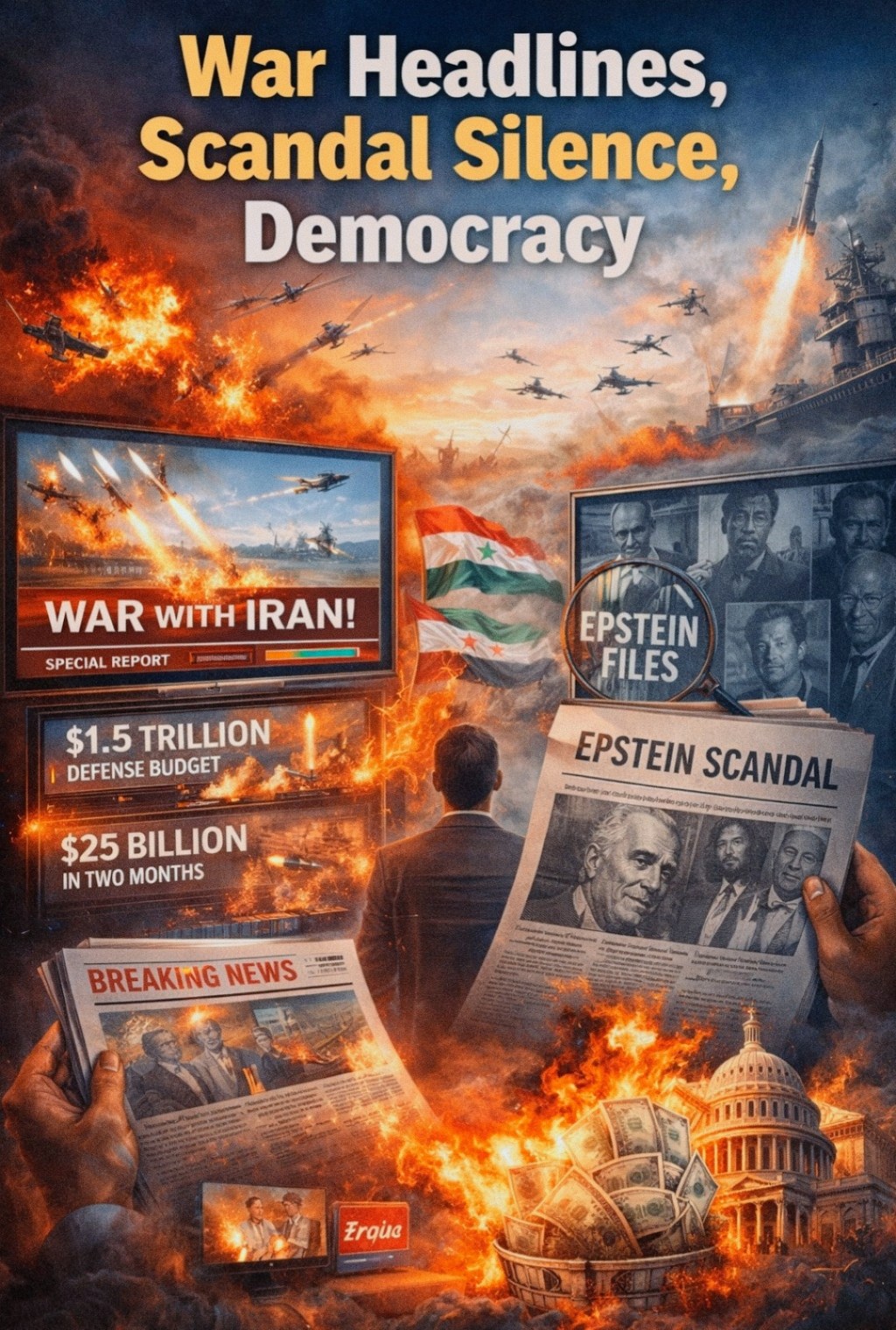
In the age of high-definition warfare and low-attention democracies, the most decisive weapon is no longer the missile, the drone, or the stealth bomber. It is the news cycle—the invisible artillery of modern governance. This is the unsettling lesson emerging from the February 2026 U.S.–Iran conflict: a confrontation that did not merely ignite the Gulf, but also ignited a far more corrosive suspicion inside American political consciousness. The suspicion is not that war was invented out of thin air, but that war—whether deliberately initiated or opportunistically exploited—has become the most efficient solvent for dissolving domestic accountability.
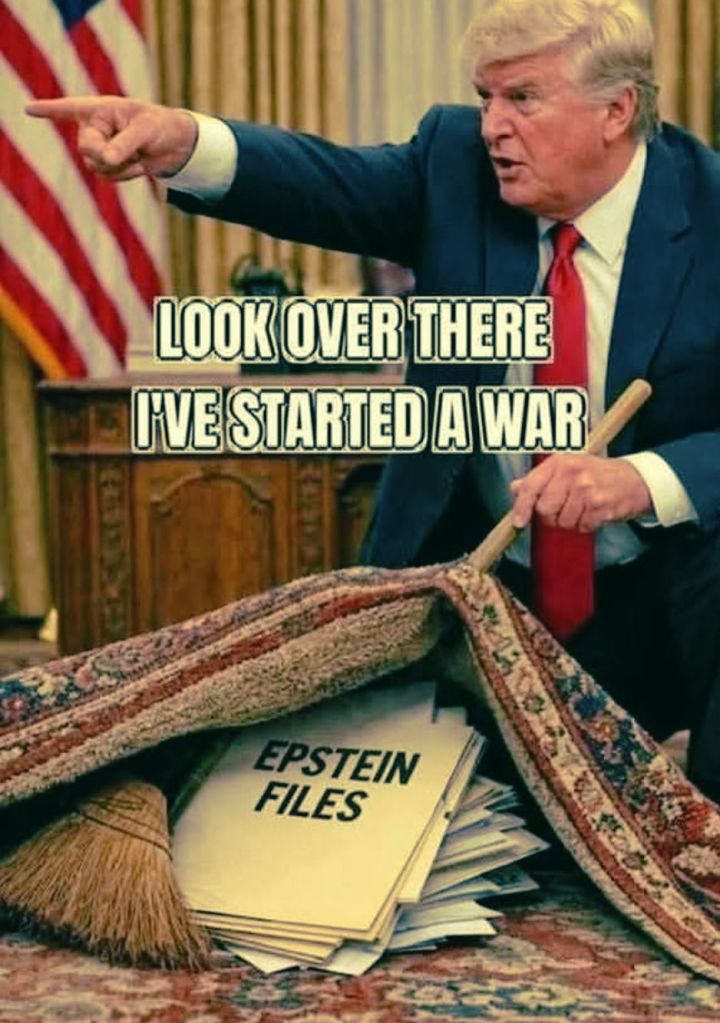
The timing was too elegantly aligned to be dismissed as innocent coincidence. Just as renewed scrutiny of the Epstein Files began resurfacing in late 2025 and early 2026—shifting from the biography of a single predator into allegations of a wider ecosystem of elite protection involving financiers, politicians, celebrities, and institutional gatekeepers—America plunged into a two-month military escalation that devoured not only missile inventories but the public’s cognitive bandwidth. It is difficult to prove that the overlap was intentional. Yet it is equally difficult to deny how flawlessly it functioned. Suspicion in democracies thrives not because citizens are irrational, but because incentives are.
By April 2026, the Pentagon disclosed that the conflict had cost roughly $25 billion in just two months (February 28 to April). That figure alone reads like a financial obituary for strategic restraint. Spread across the U.S. population, it translates into approximately $75 per American—reportedly more than what the country spends annually on NASA. But even this number carries the familiar scent of bureaucratic sanitization. Analysts argue the true cost is closer to $40–50 billion once the hidden receipts are included: repairs to U.S. bases in Bahrain, Iraq, and the UAE; replenishment of depleted interceptor stockpiles; replacement of a destroyed E-3 Sentry aircraft; restoration of damaged THAAD radar systems; and the inevitable procurement aftershocks that trail every modern conflict like a shadow economy. Wars rarely reveal their full invoice at the moment of consumption. They deliver it later through maintenance contracts, readiness decay, and emergency appropriations disguised as necessity.
But the fiscal delirium does not stop at tens of billions. The war has begun rewriting America’s imagination of what “normal” defense spending looks like. The administration has floated a staggering $1.5 trillion defense budget for 2027—a figure so enormous it no longer resembles governance but dependency. When a two-month conflict can push trillion-dollar budgets into mainstream policy discourse, national defence stops being strategy and becomes a solvent-destroying habit. The issue is no longer security; it is solvency. It is not military planning anymore—it is institutional addiction dressed in the uniform of patriotism.
Yet the most humiliating feature of this conflict is not that the U.S. faced a technologically superior enemy. It faced a financially superior logic. Iran did not attempt to defeat America through conventional battlefield dominance. Instead, it weaponized what analysts now call cost-exchange warfare—a strategy designed not to destroy the U.S. military, but to bankrupt its reflexes. Cheap drones costing between $2,000 and $20,000 were launched in waves, compelling the U.S. to respond with Patriot and THAAD interceptors priced between $1 million and $4 million per shot. This was not war in the heroic tradition of battlefield triumph. This was arithmetic sabotage. Tehran turned America’s defensive doctrine into an economic liability, forcing Washington to repeatedly overpay simply to avoid embarrassment. The battlefield became an Excel sheet, and the casualty was the U.S. treasury.
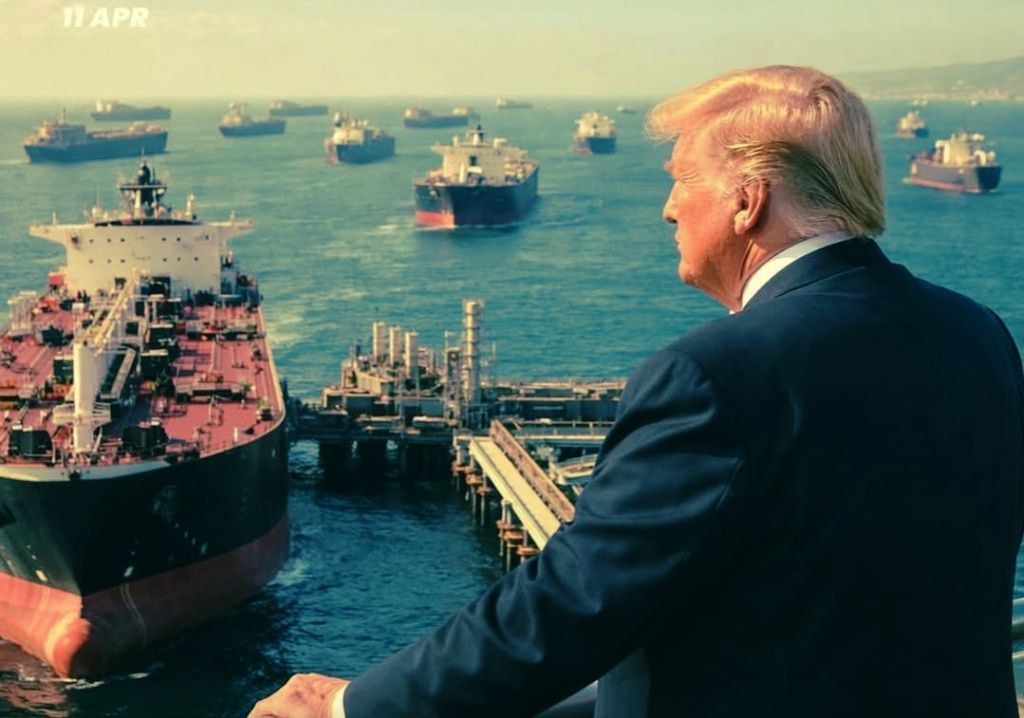
Then came the Strait of Hormuz, the geopolitical pressure point that functions like a trigger attached to the global economy’s throat. By constraining a corridor through which roughly 20% of global oil supply flows, Iran weaponized the bloodstream of globalization. Oil surged above $100 per barrel, exporting inflation and economic discomfort across continents. Households from Bangladesh to the United States absorbed the price of a war fought in Gulf waters. In earlier eras, empires fought wars to secure oil. In 2026, oil itself became the lever through which a middle power could impose strategic pain on a superpower without capturing a single city or winning a single conventional battle.
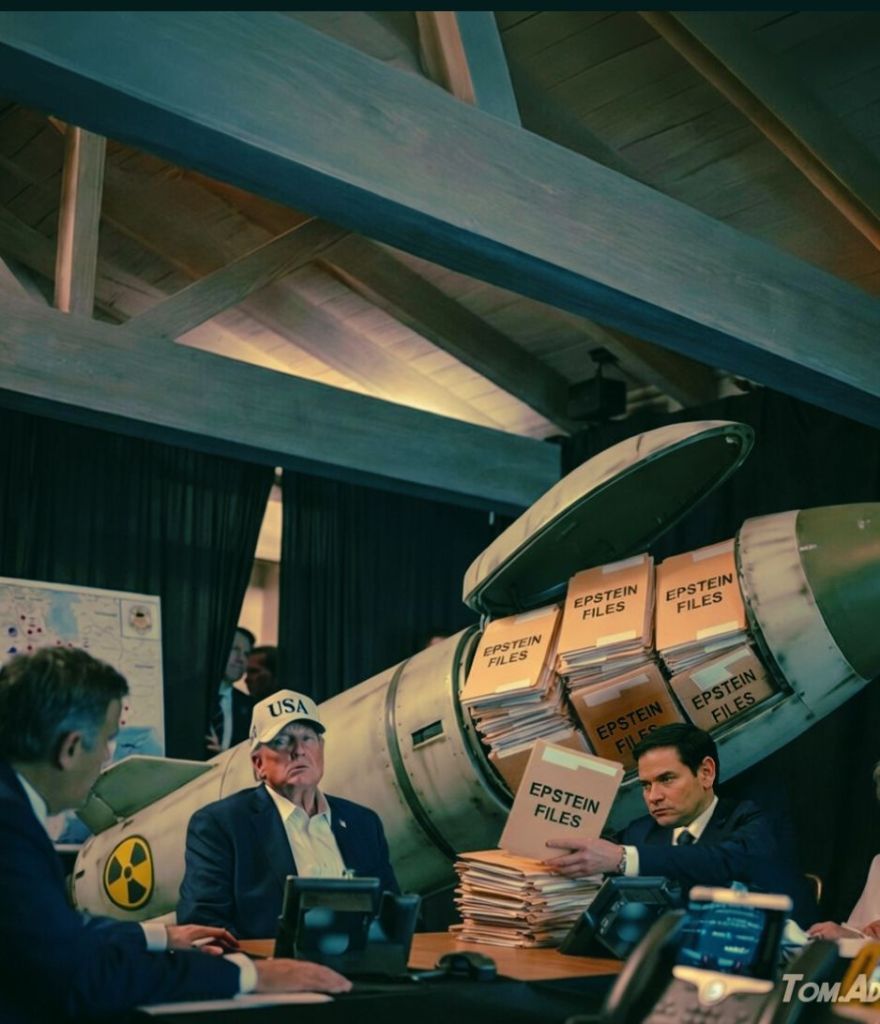
America paid not only in money but in legitimacy. Thirteen American service members have been killed, with the toll likely to rise. More damaging still, the conflict has unfolded without a meaningful coalition—an astonishing reversal from the Gulf War era when Washington could summon allies as easily as it summoned aircraft carriers. Saudi Arabia and the UAE signaled discomfort rather than solidarity, unwilling to be trapped in a confrontation that could destabilize their economies and internal security. International outrage escalated after reports that a U.S. strike killed 170 schoolgirls in Minab, allegedly due to outdated targeting data. Tactical mistakes in modern war do not remain mistakes. They metastasize into propaganda multipliers, converting operational errors into diplomatic disasters that outlive the war itself.
Even Washington’s stated objectives appear to have collapsed. The attempt to “decapitate” Iran’s leadership failed. Iran replaced its Supreme Leader within days and pivoted into a war of attrition with chilling institutional efficiency. This revealed the modern paradox of American power: the U.S. retains the ability to destroy, but increasingly struggles to control. It can still strike targets, but it cannot reliably translate strikes into political outcomes. Tactical dominance has become detached from strategic coherence—like a machine that still runs but no longer remembers what it was built to accomplish.
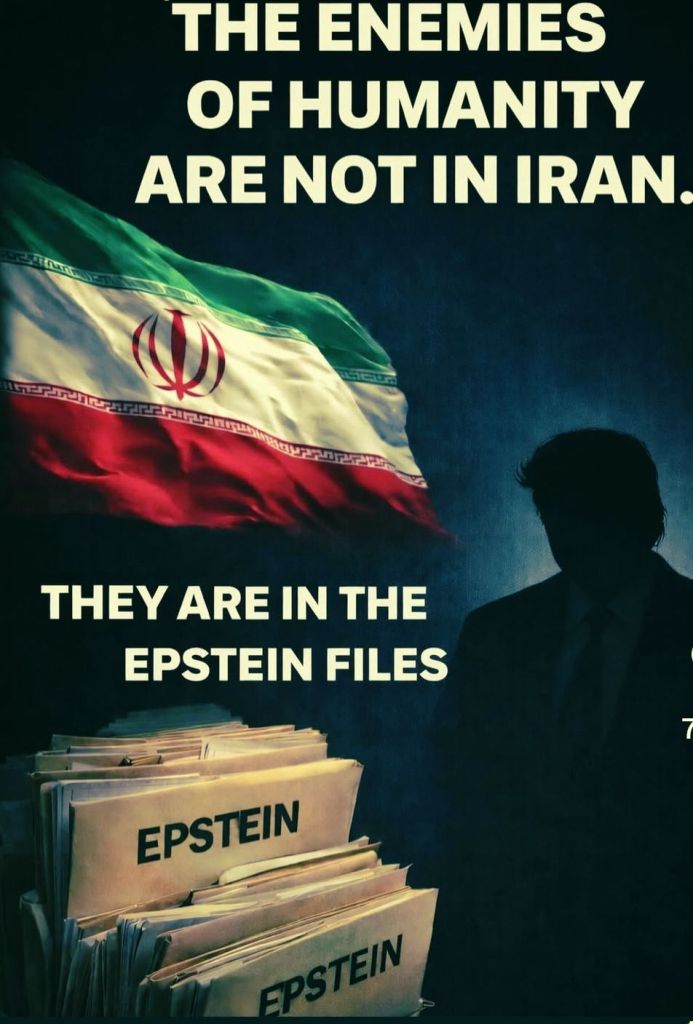
And then comes the most politically radioactive dimension: Epstein. The resurfacing of Epstein-related scrutiny was no longer a scandal about one criminal predator. It was mutating into something far more corrosive: a narrative about elite immunity, institutional complicity, and the architecture of protection that shields powerful networks from consequence. Epstein stopped being the headline. The operating system behind Epstein became the true object of suspicion. And that is precisely why the scandal carried existential danger: it threatened not an individual reputation, but the legitimacy of an entire governing class.
This is where war becomes suspiciously useful. The diversionary war theory is not internet folklore; it is a studied political framework. Leaders facing internal crisis have historically used external conflict to compress public attention into fear and unity—the two emotions most hostile to investigative appetite. War manufactures a moral hierarchy of urgency: corruption becomes “secondary,” abuse allegations become “divisive,” and accountability becomes “unpatriotic.” Scandals require oxygen—time, repetition, relentless coverage. War suffocates oxygen.
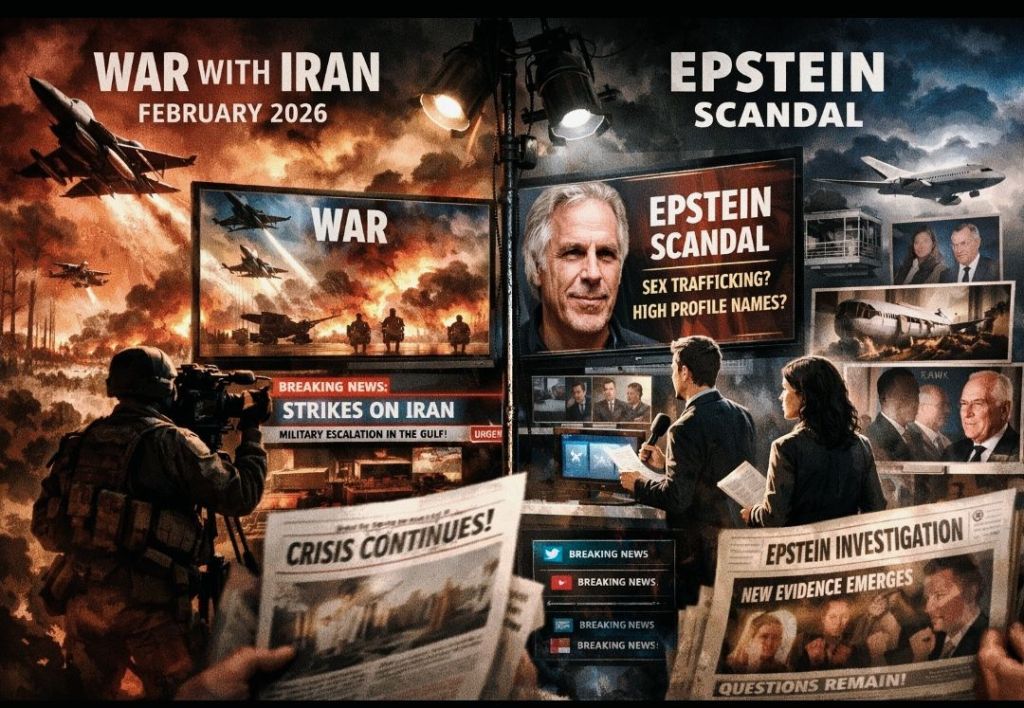
Then came February 2026. “Operation Epic Fury” erupted with a name that sounded less like strategic planning and more like cinematic branding. Media ecosystems snapped into their default crisis ritual: missile maps, breathless panels, patriotic framing, and nonstop emergency rhetoric. Whether by design or by instinct, the machinery of state and media performed the same function—Epstein coverage shrank, fragmented, and faded without ever being disproven. In the modern media economy, what is not repeated is not merely forgotten; it is politically buried.
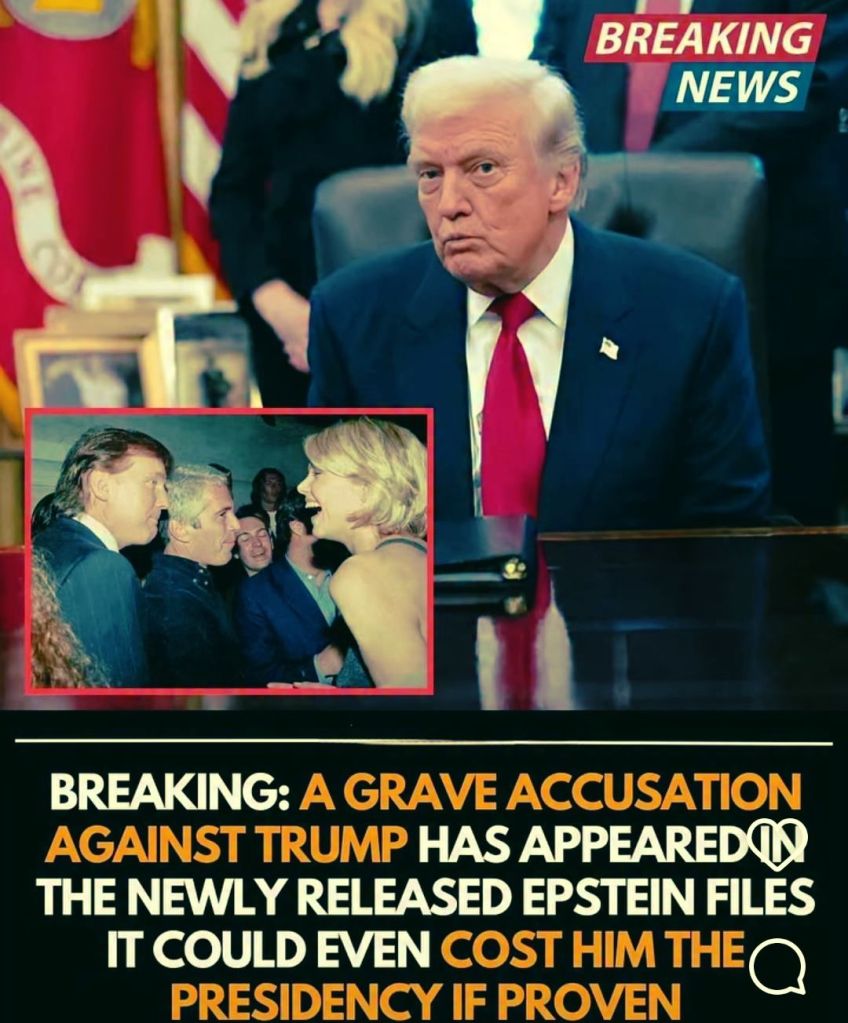
The cycle intensified further when an assassination attempt reportedly wounded Donald Trump during the White House Correspondents’ Dinner. Few events can override public attention more efficiently than blood on screen. Victimhood becomes political armour. Scrutiny becomes “inappropriate.” Investigation becomes postponed. Crisis replaces crisis, ensuring that no scandal is allowed the time to mature into consequence.
To claim with certainty that the war was launched specifically to bury Epstein scrutiny would be intellectually dishonest. Iran is a real geopolitical actor with independent motivations, and its regional posture has long generated conflict potential. The war’s drivers cannot be reduced to a single domestic motive without documentary proof. But politics does not operate only on proof—it operates on incentives. And here the incentives align with disturbing neatness. A war that generates unlimited headlines is the perfect camouflage for scandals that require sustained attention. Even if the war was not launched as a distraction, it functioned as one with near-perfect efficiency.
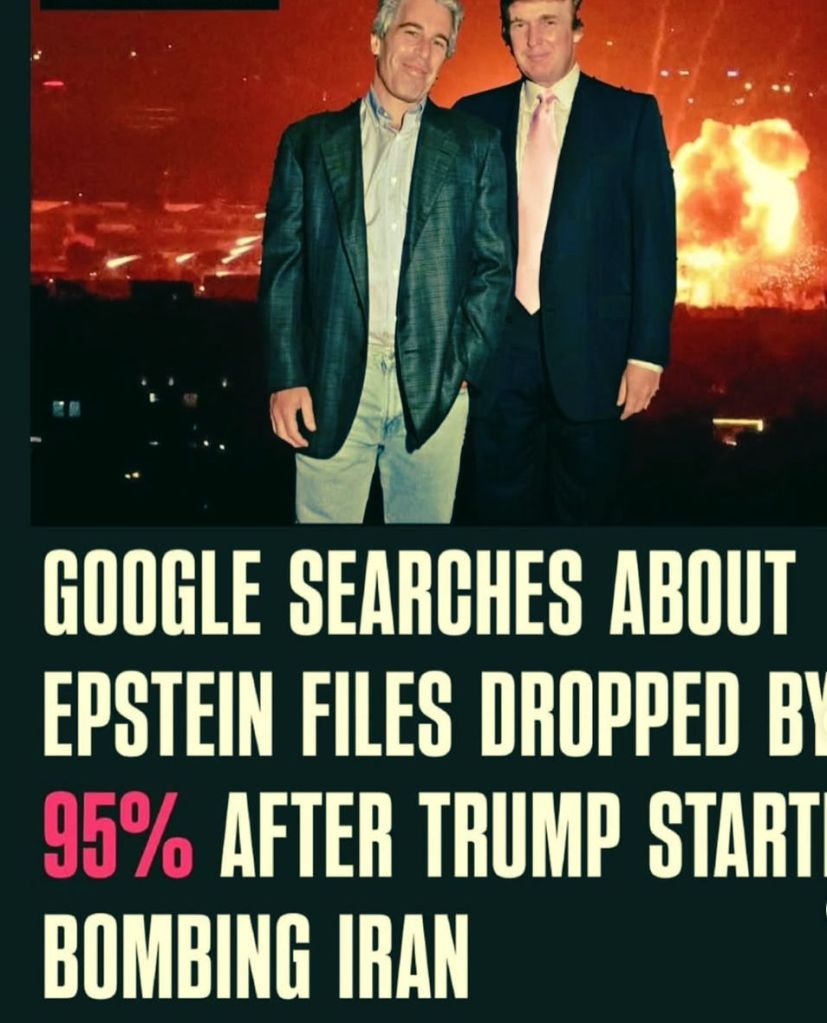
The deeper truth may be more frightening than conspiracy: modern democracies have evolved into systems where distraction is not an accident but a governing instrument. A $25 billion war is not merely a foreign policy event—it is a domestic attention weapon. It can bankrupt missile inventories abroad while bankrupting accountability at home. It can empty defence stockpiles while also emptying the public sphere of investigative stamina. The bombs fall in Tehran, but the smoke rises in Washington.
The way forward is not outrage but institutional surgery: enforceable war-powers oversight, independent investigations insulated from executive interference, transparency mechanisms that cannot be suspended by crisis, and a media culture capable of holding two truths simultaneously—security threats abroad and criminal accountability at home. Otherwise, the republic risks entering a new era where bombs become the universal solvent: dissolving budgets, dissolving legitimacy, and dissolving justice whenever the powerful feel cornered. If democracies can be hypnotized by missile footage every time elite scandals surface, then law becomes theatre, elections become ritual, journalism becomes spectacle, and truth becomes the first casualty—long before soldiers fall on the battlefield.
VISIT ARJASRIKANTH.IN FOR MORE INSIGHTS


One response to “Cruise Missiles and Court Files: Washington Bombs Abroad to Silence the Basement at Home ”
NATO also not showing any solidarity
LikeLike