Some national achievements arrive with fireworks. Missiles are launched, elections are won, stock markets surge, and headlines declare history has been made. But the most consequential revolutions rarely arrive with spectacle. They arrive quietly, buried under routine government notifications, dismissed as “another infrastructure project,” and only later recognized as the moment a nation’s internal machinery changed forever.
India’s Dedicated Freight Corridor (DFC) belongs to this second category. It is not simply a railway achievement. It is a structural rewrite of Indian economic geography—an attempt to alter the physics of movement itself: how raw material reaches factories, how finished goods reach ports, how coal reaches power plants, how agriculture reaches markets, and how industry reaches the world. In a country of continental scale, logistics is not a supporting sector. Logistics is destiny.
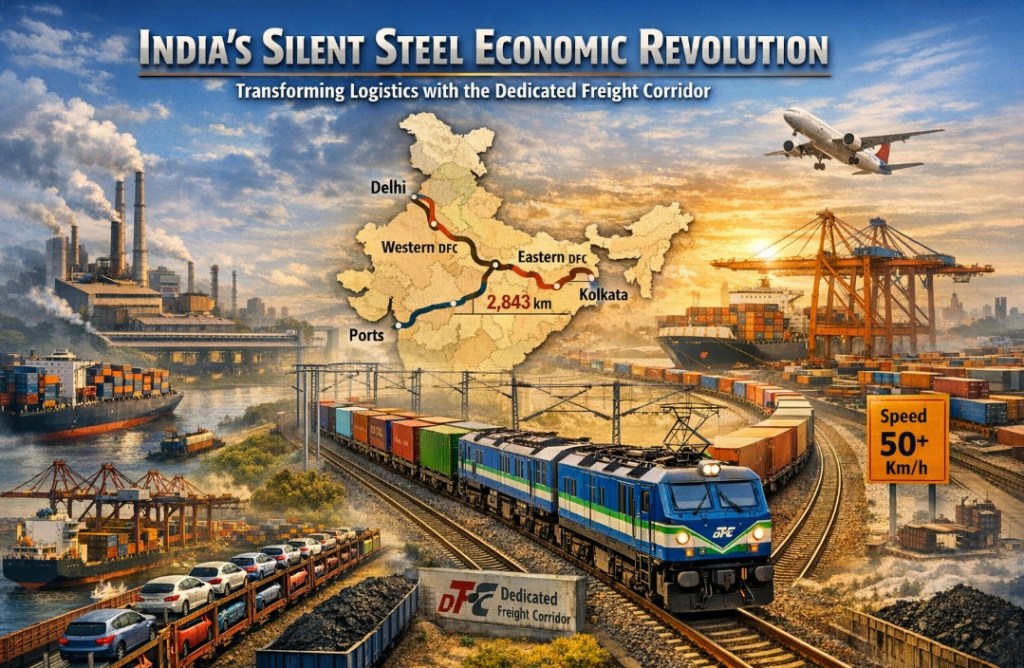
The completion of India’s Dedicated Freight Corridor marks something rare in Indian governance: the execution of a mega-infrastructure project whose impact is larger than its ribbon-cutting ceremony. India has now built two dedicated freight arteries—the Eastern Dedicated Freight Corridor (EDFC) and the Western Dedicated Freight Corridor (WDFC)—with a combined length of 2,843 km, spanning 9 states and 77 districts, at a cost of nearly ₹1,25,000 crore. Over 11,000 hectares of land were acquired and compensation exceeding ₹1,000 crore was paid. These numbers are not mere statistics. They are evidence of a rare administrative feat: a large-scale national project executed across multiple political terrains, legal environments, and local negotiations without collapsing into paralysis.
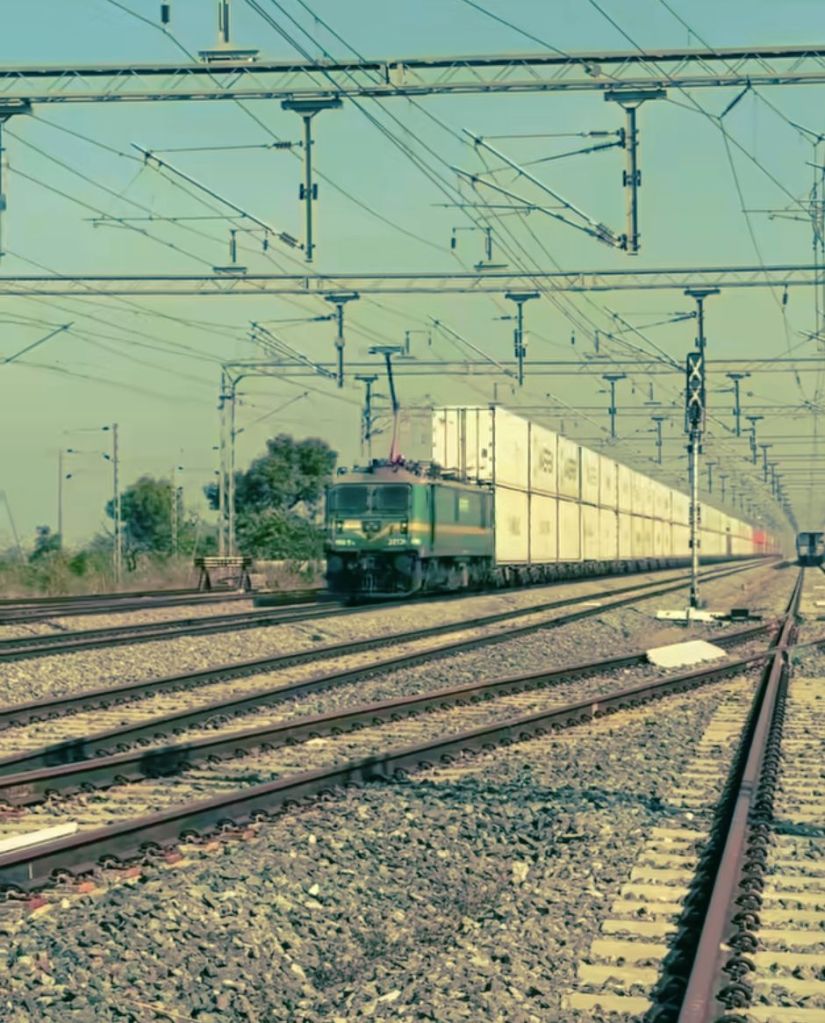
The DFC’s most radical feature is also its simplest: freight finally has its own tracks. For decades, Indian Railways operated on a structural compromise that no serious logistics economy would accept for long: passenger trains and freight trains shared the same network. Predictably, the system became a permanent bottleneck. Passenger trains were politically sensitive, so freight was routinely sacrificed in scheduling. When freight volume increased, passenger punctuality suffered. The result was a chronic condition of congestion, delay, inefficiency, and wasted national productivity. The rail network became a crowded marketplace where two incompatible priorities fought for the same space.
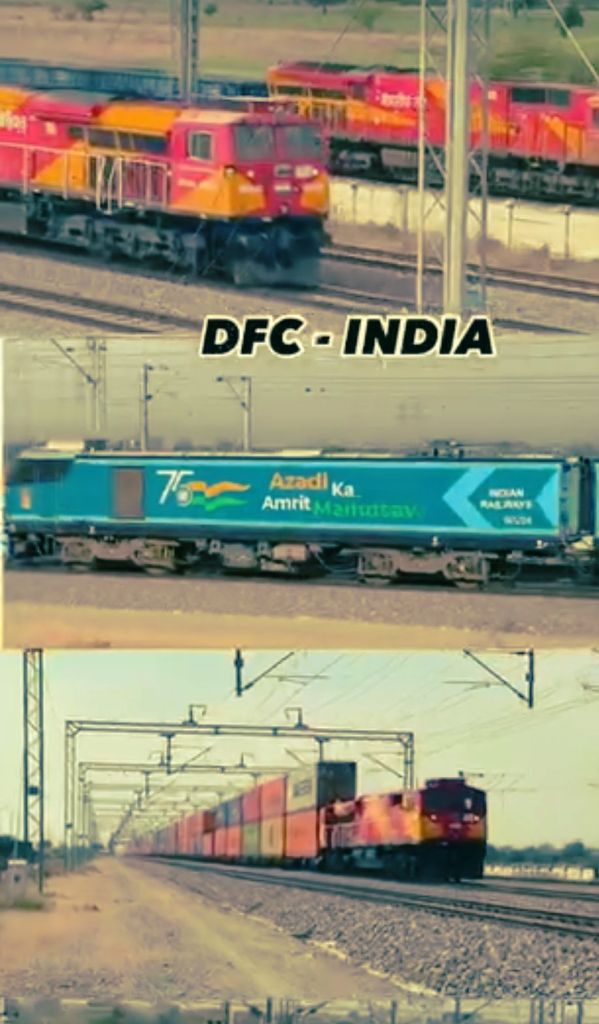
Dedicated Freight Corridors break this deadlock. Freight trains no longer compete with passenger trains. They move on exclusive tracks, supported by purpose-built terminals and freight stations designed for container handling, rapid loading, and faster turnaround. This is not merely “new rail lines.” It is a new philosophy of national mobility. It is the separation of two lifelines so both can function at optimal capacity.
The economic implications are enormous because logistics is not about speed alone—it is about predictability. On traditional routes, freight trains averaged a sluggish 24–25 km/h. On the DFC, operational speeds exceed 50 km/h. This doubling of speed is not a transport upgrade; it is an industrial multiplier. When goods move faster, inventory holding costs fall, warehousing requirements reduce, production becomes leaner, supply chains become predictable, and industrial planning becomes less speculative. In practical terms, what earlier took 4–5 days—such as freight movement between Mumbai and Delhi—can now be completed in under 48 hours.
The hidden power of logistics lies in one invisible tax: the cost of waiting. India has long suffered from an economy where trucks wait at tolls, containers wait at ports, wagons wait for track clearance, and factories wait for inputs. Waiting is not a delay; it is a cost that accumulates silently into inflation, inefficiency, and lost competitiveness. The DFC does not merely move cargo faster. It attacks the cost of waiting itself.
The Eastern Corridor, running from Ludhiana in Punjab to Sonnagar in Bihar, covers 1,337 km and connects major industrial clusters to raw material and coal belts. Its impact is already visible in coal logistics—coal movement that earlier crawled through congested passenger-heavy routes now reaches northern power plants with far greater reliability. Around 68% of freight movement has already shifted onto the Eastern corridor, with roughly 400 trains operating daily. This is not adoption. It is migration. Industry has voted with its cargo.
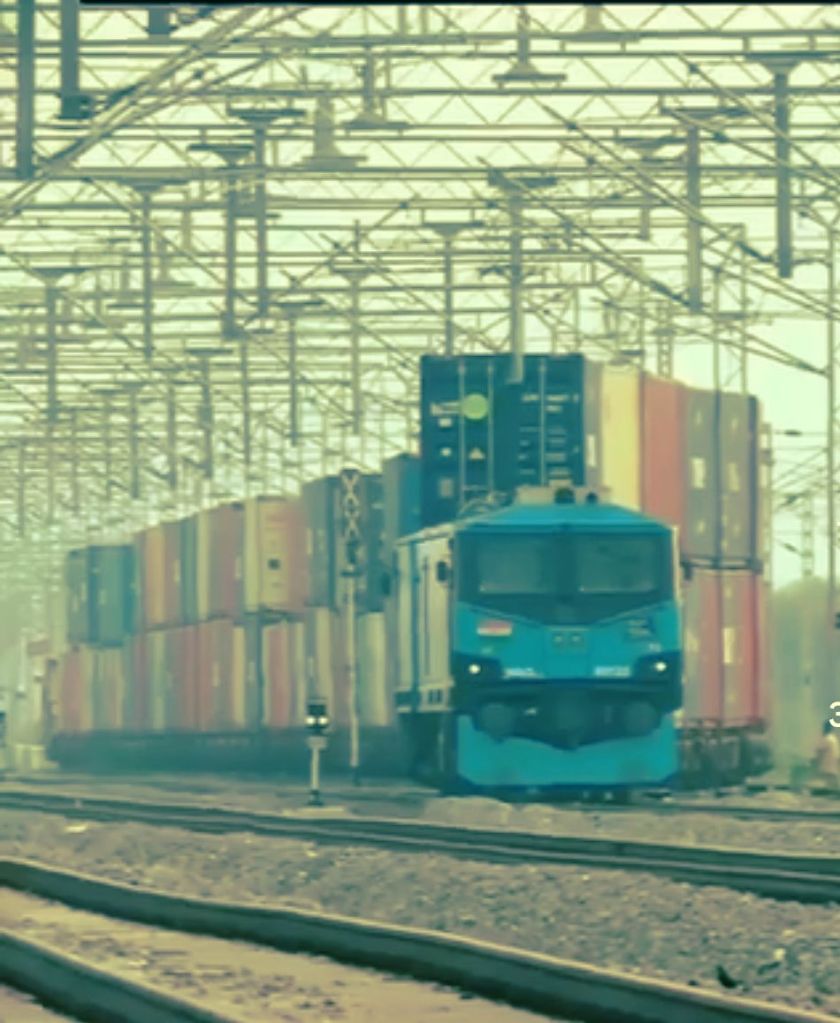
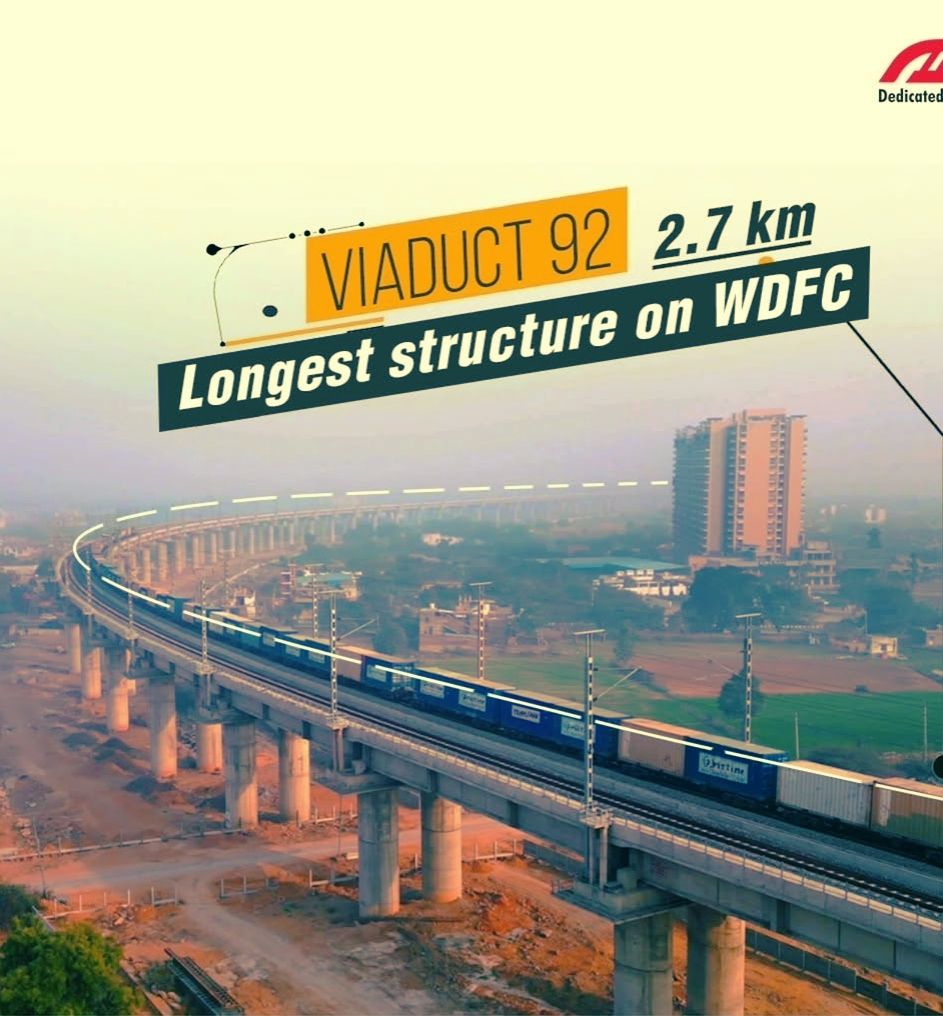
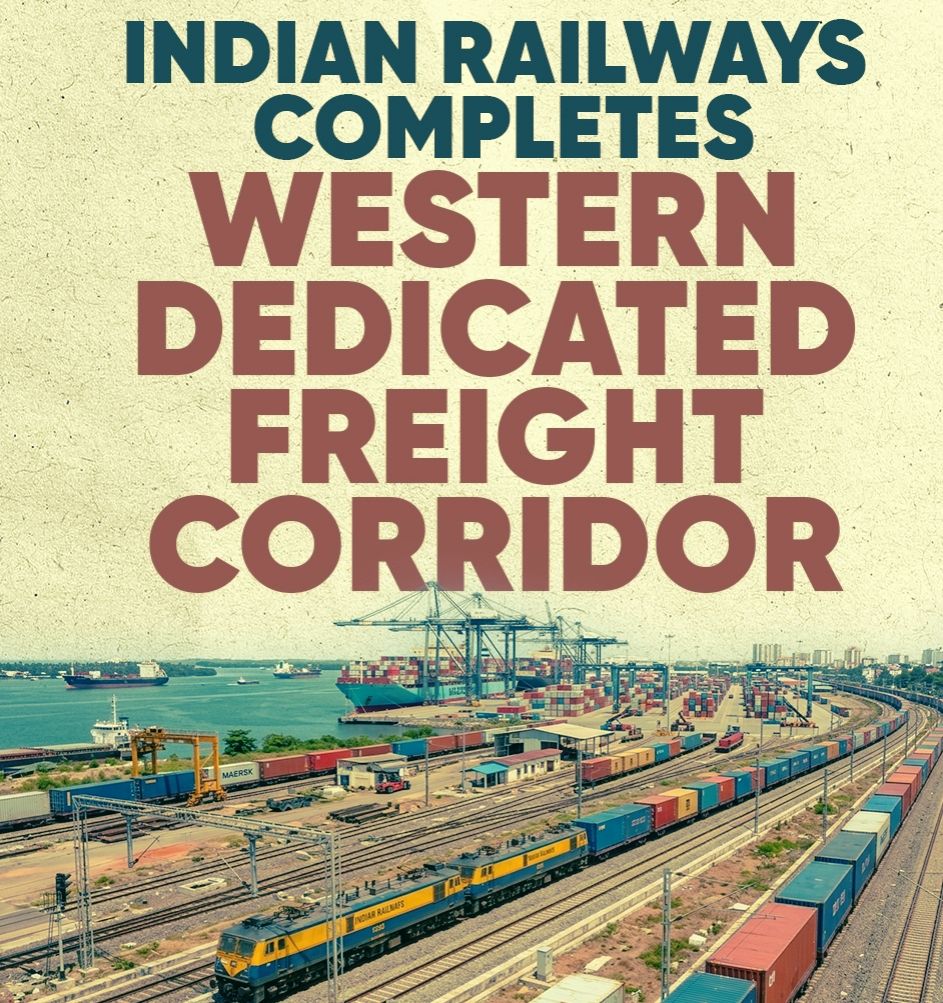
The Western Corridor is equally consequential. Stretching 1,506 km from Dadri (near Noida) to India’s western ports, it passes through Haryana, Rajasthan, Gujarat, and Maharashtra, linking industrial zones like Sanand to export gateways such as Mundra, Pipavav, and Jawaharlal Nehru Port. If the Eastern corridor strengthens India’s internal industrial bloodstream, the Western corridor strengthens India’s export pipeline. It effectively connects the factory floor of North India to the global marketplace with fewer delays, lower uncertainty, and higher volume capacity.
In that sense, the DFC is not a railway project. It is an export competitiveness project disguised as transport infrastructure. This matters because India’s freight imbalance had become strategically unsustainable. In 1960, rail carried nearly 68% of India’s freight. By 2021–22, that share had collapsed to about 26%, while highways absorbed the majority. Road freight is flexible, but it is diesel-intensive, pollution-heavy, and expensive over long distances. It also damages highways, increases congestion, raises accident risks, and deepens import dependence for fuel. The DFC offers a structural correction: shifting bulk freight back to rail, where it is cheaper, cleaner, and scalable.
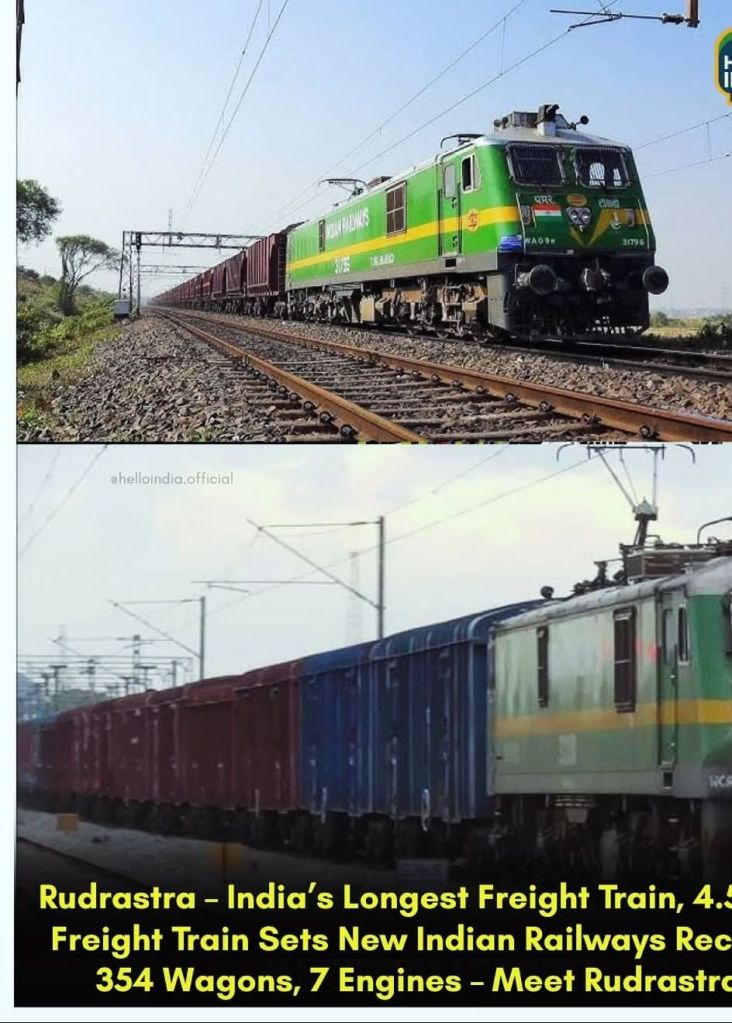
But scale is the real story. India’s average freight train earlier carried about 5,400 tonnes. Global benchmarks range from 20,000 to 37,000 tonnes. The DFC changes India’s freight ambition from “adequate” to “world-class.” The arrival of mega-trains such as Rudra—4.5 km long, powered by seven synchronized locomotives, hauling over 25,000 tonnes—signals that India has entered the era of heavy logistics. Another record-setting train, Super Vasuki, carried nearly 26,000 tonnes. These are not publicity gimmicks. They are economic multipliers. Larger loads reduce unit costs, reduce congestion, reduce turnaround time, and improve national productivity.
This is why the DFC must be understood not as a transport reform but as a productivity revolution. When logistics improves, everything improves: manufacturing costs decline, agricultural markets expand, power supply stabilizes, and inflation pressure weakens. The DFC is essentially India building an economic spine strong enough to carry the weight of its own growth ambitions.
The DFC’s history also reveals the complexity of executing national ambition. Conceived in the early 2000s, approved in 2006, and implemented through the Dedicated Freight Corridor Corporation of India Limited (DFCCIL), the project faced long delays due to land acquisition complexities and outdated legal frameworks. For nearly a decade, progress was slow and costs escalated from an early estimate of ₹26,000 crore to nearly five times that figure. But the project survived because its strategic logic was too strong to abandon. International financing from the World Bank and JICA strengthened execution capacity, reinforcing how modern infrastructure increasingly requires not only engineering, but financing architecture and institutional discipline.
Yet the DFC story is still incomplete. The Eastern corridor was originally planned to extend up to Dankuni in West Bengal near Kolkata, a critical logistics gateway. Due to acquisition and coordination challenges, a 538 km gap remained. That gap represents not merely missing track, but missing opportunity. The good news is that the Sonnagar–Andal and Andal–Dankuni segments are now progressing in phases, with land acquisition nearing completion. India is also planning additional corridors—East Coast, North-South, and East-West—many still in DPR stages. These will determine whether the DFC remains two impressive lines or evolves into a national logistics grid.
Even in its current form, the Dedicated Freight Corridor has already achieved what few policy initiatives can claim: it has compressed distance, reduced time, improved reliability, cut fuel consumption, lowered emissions, and strengthened India’s industrial competitiveness. It is India’s quiet revolution in steel. It does not shout like a political slogan. It does not sparkle like a skyscraper. It simply moves—faster, heavier, smarter—carrying the economy forward one container at a time. In a world where economic power increasingly belongs to nations that can move goods quickly, predictably, and cheaply, the DFC is not just infrastructure. It is India’s silent declaration that the age of logistical helplessness is ending.
VISIT ARJASRIKANTH.IN FOR MORE INSIGHTS

