Skip to content
    • About

SOCIAL PERSPECTIVES

  • From Silver Screen Thunder to Street-Level Power: Can Jana Sena Reignite Its Political Fire on Its 13th Formation Day? 🔥🎭🏛️ 

    March 14th, 2026

    On 14 March 2014, the political theatre of Andhra Pradesh witnessed the birth of an unconventional experiment when Pawan Kalyan, film icon turned political crusader, launched the Jana Sena Party. The moment carried the unmistakable electricity of cinema—dramatic speeches, emotional crowds, and a promise to cleanse politics of corruption and complacency. A decade later, the party has travelled through turbulence, skepticism, and eventual validation. Its success in the 2024 elections, achieved within the National Democratic Alliance alongside the Telugu Desam Party, has propelled Jana Sena into the machinery of governance. Yet twelve years after its formation, a deeper intellectual question lingers: has the party matured into a durable political institution, or does it still exhibit the classic traits of charisma-driven politics—the lingering “silver screen syndrome”?

    The idea of the “silver screen syndrome” is not unique to Andhra Pradesh. Across the world, celebrity-led political movements often surge with emotional energy but struggle to evolve into structured organizations. Charismatic leaders attract loyalty and attention, but institutional depth—cadre networks, ideological frameworks, and administrative structures—frequently remains underdeveloped. Jana Sena’s rise is inseparable from the personal magnetism of Pawan Kalyan. His cinematic legacy and rebellious rhetoric have resonated strongly with youth and disenchanted voters seeking a moral voice in politics. Yet democratic institutions ultimately survive not on charisma but on organizational resilience and ideological clarity.

    The 2024 electoral breakthrough marked a turning point in Jana Sena’s political journey. After years of marginal representation, the party entered the corridors of power with significant influence within the coalition government. For supporters, it symbolized the culmination of a decade-long struggle against entrenched political forces. However, the very success that brought Jana Sena into governance has also introduced new complexities. As Pawan Kalyan assumed the responsibilities of Deputy Chief Minister, the demands of administration inevitably reduced his day-to-day engagement with the party’s grassroots machinery. Cadres who once thrived on direct interaction with their leader now sense a growing institutional distance.

    This evolving gap between leadership and cadre has begun to influence internal morale. Political workers operate most energetically when they feel recognized and connected to the leadership structure. During election campaigns, enthusiasm peaks as volunteers rally behind a common objective. Once governance begins, however, the absence of structured organizational engagement can create uncertainty. Within Jana Sena, sections of grassroots supporters believe that their sacrifices during years of political struggle have not been proportionately reflected in appointments or institutional recognition within government.

    Coalition politics adds another layer of complexity to this evolving narrative. Alliances strengthen electoral prospects but often dilute ideological identity. Within the ruling arrangement, some members of the Jana Sena cadre worry that their party risks being perceived as a junior partner rather than an independent political force. In coalition governments, identity is sustained not merely through positions of power but through a clearly articulated ideological voice. Without such clarity, even successful alliances can gradually blur the distinctiveness of smaller partners.

    Ideological coherence remains another area demanding attention. Jana Sena emerged with a strong anti-corruption narrative and a promise of transparent governance and social justice. Over time, however, shifting alliances and political pragmatism have occasionally blurred the ideological contours of the movement. For political workers, ideology functions as a compass that transforms electoral enthusiasm into sustained civic engagement. Without a clearly articulated mission—whether focused on youth empowerment, economic transformation, or social equity—cadres struggle to translate political messaging into durable public mobilization.

    The internal evolution of the party also reflects the growing pains typical of emerging political organizations. Episodes of factional disagreements among leaders highlight the absence of robust institutional mechanisms for conflict resolution. Mature parties often rely on established disciplinary frameworks and consultative bodies to manage such tensions. In contrast, younger movements frequently experience disputes in public view, which can undermine the perception of unity and organizational discipline.

    The central challenge before Pawan Kalyan, therefore, is not electoral popularity but institutional transformation. His charisma has been the party’s most powerful asset, drawing vast crowds and energizing supporters across Andhra Pradesh. Yet the next phase of Jana Sena’s journey demands a shift from personality-centric politics to institution-centric governance. This transition requires cultivating a strong second line of leadership capable of managing district structures, coordinating policy outreach, and sustaining grassroots engagement independent of the central figure.

    Strengthening grassroots architecture could become the decisive turning point. Political history demonstrates that durable parties invest deeply in local networks—neighbourhood committees, leadership training platforms, and community engagement forums. Such mechanisms convert passionate supporters into disciplined political workers who remain active beyond electoral cycles. By establishing structured training and ideological discussions across districts, Jana Sena can nurture a new generation of leaders rooted in public service and political philosophy. Equally important is consistent communication between leadership and cadre. Regular consultations, grievance redressal systems, and recognition of grassroots contributions can restore morale among party workers. Political loyalty is sustained not only by ideology but also by emotional connection and acknowledgment of effort.

    Another transformative step would be the creation of a professional policy think tank within the party. By developing independent policy proposals on industrial development, employment generation, education reform, and digital governance in Andhra Pradesh, Jana Sena could cultivate intellectual credibility and policy depth. Such a platform would equip cadres with a coherent narrative to articulate the party’s role in governance and distinguish its vision from that of its allies.

    Ultimately, the destiny of Jana Sena lies in its ability to transcend the silver screen syndrome that shadows many celebrity-driven movements. Twelve years after its dramatic birth, the party stands at a historical crossroads. If it successfully converts charisma into institutional strength, it could evolve into one of the most transformative political forces in Andhra Pradesh. But if it continues to rely solely on the aura of its leader, it risks remaining what it began as—a powerful spectacle rather than a permanent pillar in the architecture of democracy.

    VISIT ARJASRIKANTH.IN FOR MORE INSIGHTS
  • The Speaker, the Storm, and the Silence Between: A Democratic Drama in the House of 543

    March 14th, 2026

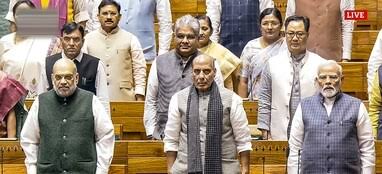
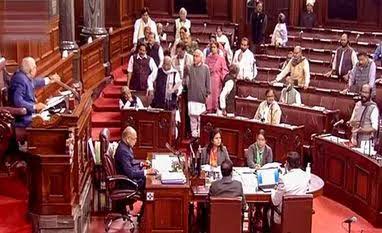
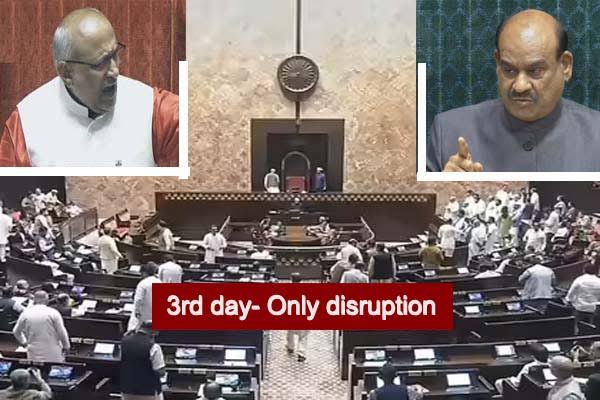
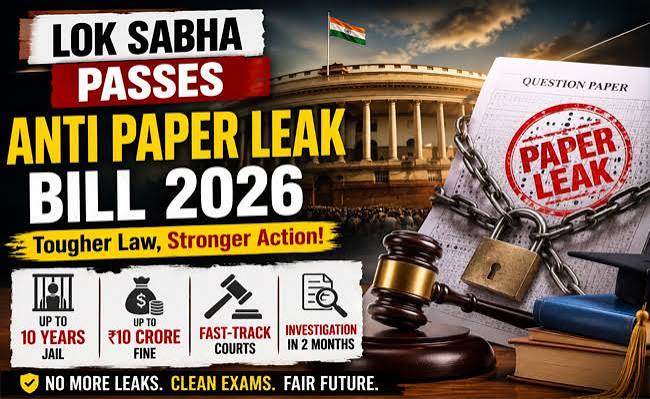
    Democracy is often imagined as a grand conversation—an arena where disagreement is not merely tolerated but institutionalized through debate, persuasion, and procedure. Yet the vitality of such a system depends less on the loudness of its arguments than on the integrity of its institutions. Recent events inside the Lok Sabha offer a revealing moment of reflection. What unfolded during the dramatic attempt to remove the Speaker was not merely a procedural skirmish; it was an illuminating glimpse into how democratic architecture begins to strain when trust between the government and the opposition begins to erode. When the institutional referee itself becomes a subject of political contention, the health of parliamentary democracy inevitably comes under scrutiny.

    The immediate trigger was a rare parliamentary motion targeting the office of the Speaker, held by Om Birla. Within India’s constitutional design, the Speaker occupies one of the most delicate positions in governance. Although elected from a political party, the Speaker is expected to transcend partisan loyalties and function as the neutral guardian of parliamentary procedure. Under the Constitution of India, the removal of a Speaker requires a resolution supported by a majority of the House, preceded by formal notice and backed by at least fifty Members of Parliament before it can even be debated. These safeguards were intentionally designed to preserve the dignity and independence of the office, ensuring that the Speaker’s authority does not become hostage to momentary political passions.

    Yet in this instance, the outcome of the motion was never truly in doubt. The ruling National Democratic Alliance commanded a clear numerical majority in the House, while opposition parties within the INDIA bloc lacked the arithmetic strength to alter the final result. When the vote was ultimately conducted through a voice vote rather than a recorded electronic division, the government’s numerical advantage translated into a powerful auditory display. Parliamentary democracy occasionally carries theatrical overtones, and voice votes illustrate this phenomenon vividly. In a chamber echoing with slogans, interruptions, and partisan enthusiasm, whoever commands the louder chorus appears to prevail. The ritual of procedure, while constitutionally valid, often mirrors the dramatic instincts of political contest.

    However, the controversy was never solely about numbers. The opposition framed the motion as a protest against what it perceived as the gradual erosion of neutrality in the Speaker’s office. The Leader of the Opposition, Rahul Gandhi, articulated concerns that opposition voices were increasingly curtailed during debates. According to several members, attempts to raise politically sensitive issues were interrupted, and microphones were occasionally switched off while opposition leaders such as Shashi Tharoor attempted to address the House. For critics, these incidents symbolized a deeper institutional shift in which the legislative chamber risked transforming from a forum of scrutiny into a space where procedural control determined who could speak and who could not.

    The government’s narrative, however, presented a starkly different interpretation. Senior leaders, including Amit Shah, defended the authority of the Speaker and argued that disciplinary measures were necessary responses to repeated disruptions by opposition benches. From the government’s perspective, the core challenge facing Parliament was not censorship but disorder. Protests, slogan shouting, and interruptions had frequently disrupted proceedings, compelling the Chair to enforce rules more firmly in order to preserve legislative discipline. In this narrative, strong procedural intervention was not a sign of bias but a safeguard for institutional functioning.

    This clash of narratives reveals a deeper structural dilemma within modern parliamentary democracy. The presiding officer must possess enough authority to maintain order while simultaneously commanding the trust of all political sides as a neutral arbiter. Once that delicate balance weakens, every procedural decision becomes politically charged. The opposition interprets discipline as suppression, while the government interprets protest as obstruction. The resulting cycle becomes self-reinforcing: disruptions invite stricter enforcement, and stricter enforcement fuels further protest. Gradually, the chamber designed for deliberation begins to resemble a battleground of competing interpretations of fairness.

    Compounding this tension is a structural anomaly within the parliamentary framework itself—the prolonged vacancy in the office of the Deputy Speaker. By convention, debates concerning the removal of the Speaker are presided over not by the Speaker but by the Deputy Speaker. Yet the absence of this crucial office has created an institutional gap in the functioning of the Lok Sabha. When the responsibility falls instead to a member from the panel of chairpersons, even a technically valid arrangement can generate perceptions of partiality. In a democracy, perceptions often matter nearly as much as procedures, for legitimacy ultimately rests on public trust.

    The broader lesson emerging from this episode is both sobering and instructive. Democracy is not sustained solely by elections or numerical majorities; it also relies on unwritten norms—mutual restraint, respect for institutional roles, and a shared commitment to preserve the credibility of deliberative forums. As parliamentary debates increasingly intersect with the hyper-amplified world of television and social media, the temptation to transform legislative proceedings into performative spectacles grows stronger. Yet the resilience of democratic institutions depends on the willingness of political actors to treat parliamentary rules as guardians of the republic rather than instruments of temporary advantage. Only when that spirit is restored can the theatre of democracy once again serve its highest purpose: illuminating national choices rather than drowning them in noise.

    VISIT ARJASRIKANTH.IN FOR MORE INSIGHTS
  • From Living Rooms to Boardrooms: The Silent Revolution in India’s Property Wealth

    March 13th, 2026

    For generations, the Indian imagination of prosperity has revolved around a single milestone—owning a home. Families saved patiently for decades, convinced that property ownership guaranteed financial security, stability, and social respectability. Even today, nearly 50–55 percent of Indian household wealth is tied to real estate, making it the largest asset class in the country. Yet beneath this cultural consensus lies a financial paradox. Much of this wealth is locked inside residential property that functions more as consumption than investment.

    A house undoubtedly provides emotional comfort and social identity, but financially it often delivers modest returns. Quietly, another segment of the property market—commercial real estate—is beginning to reshape how wealth is created and sustained in modern India.

    The contrast between residential and commercial property begins with the economics of rental yield. In most Indian cities, residential properties typically generate annual yields of only 2–3 percent of their market value. After accounting for maintenance, taxes, and loan interest, the effective income often becomes negligible. Commercial properties present a different financial reality. Office spaces, retail outlets, and warehouses commonly produce 6–7 percent yields, while prime business districts may generate 8–9 percent returns. The gap is not simply numerical; it reflects the structural differences in how these markets function. Residential property is often held for long-term appreciation, whereas commercial real estate is primarily designed to generate steady income.

    Lease structures further deepen this divergence. Residential rental agreements in India are usually short-term, frequently renewed every eleven months, with tenants moving frequently and leaving properties vacant for extended periods. Commercial leasing, by contrast, revolves around long-term contracts with corporate tenants. Companies often sign leases spanning five to ten years, with built-in annual escalation clauses of 5–10 percent. For investors, this creates a predictable and steadily rising stream of income. Such contractual stability transforms commercial property into a structured financial asset rather than merely a physical possession.

    Economic cycles also reveal important differences between the two sectors.

    Residential property markets can experience prolonged stagnation; between 2013 and 2019, housing prices in several Indian cities remained flat or even declined in real terms despite inflation. While the post-pandemic years have witnessed renewed momentum in housing demand, the episode highlighted a structural limitation: residential property depends heavily on capital appreciation, which may take years to materialise.

    Commercial real estate, however, generates income regardless of price fluctuations. Even when valuations fluctuate, rental streams continue, making commercial assets behave somewhat like a hybrid between equity and fixed-income investments.

    Historically, access to commercial real estate was restricted to large investors because purchasing office buildings or retail complexes required enormous capital. This barrier has begun to dissolve with the emergence of Real Estate Investment Trusts (REITs) in India since 2019. REITs allow investors to buy units in professionally managed portfolios of income-generating properties such as technology parks, corporate offices, malls, and logistics hubs. By regulation, these trusts must invest at least 80 percent of their assets in completed properties and distribute 90 percent of their cash flows to investors. India now has five listed REITs managing assets exceeding ₹2.5 lakh crore, and in the December 2025 quarter alone they distributed over ₹2,450 crore to more than 3.8 lakh investors, signalling the growing institutionalisation of commercial property investments.


    The broader implication is philosophical as much as financial. As India’s economy formalises and corporate activity expands, demand for high-quality commercial spaces—from technology parks and global capability centres to organised retail and logistics hubs—continues to rise. Residential real estate will always hold cultural and emotional significance, but its financial role is gradually being reassessed. Increasingly, wealth advisors urge investors to distinguish between emotional assets and productive assets. A home may symbolise stability, but commercial property generates economic productivity and recurring income. In the evolving architecture of Indian wealth, prosperity may no longer be measured by the number of houses owned, but by the offices, malls, and warehouses quietly producing cash flows behind the glass skylines of India’s growing cities.

    VISIT ARJASRIKANTH.IN FOR MORE INSIGHTS
  • The ₹200-Lakh-Crore Elephant: India’s Debt Quietly Drinks From Citizens’ Savings

    March 12th, 2026

    India’s public debt numbers are so vast that they often defy ordinary comprehension. Yet behind these staggering figures lies a story deeply connected to the financial lives of millions of citizens. Over the last few years, government borrowing has expanded dramatically. Between 2020–21 and 2024–25, the outstanding stock of central government securities surged from about ₹4.5 lakh crore to over ₹115 lakh crore, marking an increase of nearly 25 percent. According to Union Budget projections, the total central government debt may approach ₹200 lakh crore by the end of the current financial year, while the government plans to borrow around ₹17 lakh crore in the next fiscal cycle alone. These figures inevitably provoke a crucial question: who ultimately finances this enormous debt, and how does it affect the ordinary citizen whose savings sustain the financial system?

    At first glance, the situation appears reassuring. When governments borrow heavily, investors usually demand higher interest rates as compensation for increased risk. Surprisingly, India has witnessed the opposite trend. Over the past two decades, interest rates on government borrowing have fallen from around 12 percent in 2000 to nearly 6 percent today. At the same time, the maturity profile of government debt has lengthened, with the share of ten-year bonds rising from roughly 25 percent to nearly 40 percent. In practical terms, the government is borrowing larger sums at cheaper rates and repaying them over longer periods. On the surface, this suggests strong investor confidence in India’s fiscal stability and economic prospects.

    A closer examination, however, reveals a more complex reality. Studies of India’s government bond market indicate that only about 5 percent of public debt is held by genuinely voluntary investors who choose to lend purely on market considerations. The remaining 95 percent is largely absorbed by domestic financial institutions such as banks, insurance companies, pension funds, and provident funds. Many of these institutions operate under regulatory frameworks that encourage or require them to invest heavily in government securities. As a result, a substantial portion of the country’s financial savings is automatically channelled toward financing the state’s borrowing requirements.

    Understanding this structure requires examining how governments normally fund deficits. One option is for the central bank to create money and purchase government debt, a method known as monetisation of deficits, which risks long-term inflation. India largely ended this practice in 1994 through an agreement between the Ministry of Finance and the Reserve Bank of India. Another model is a fully market-based system where private investors—domestic and foreign—decide whether to lend based on risk and return. Such systems impose fiscal discipline because reckless borrowing pushes interest rates upward. India’s approach lies somewhere between these two models, relying heavily on regulated financial institutions whose investment decisions are partly shaped by policy mandates.

    This framework effectively creates what economists describe as financial repression, where the domestic financial system becomes a stable funding source for government borrowing. Banks, for example, must maintain a Statutory Liquidity Ratio (SLR), requiring them to hold a portion of their assets in government securities. Although this requirement has declined from about 33 percent in the late 1980s to around 18 percent today, other institutions have gradually filled the gap.

    Insurance companies and pension funds together now hold nearly 40 percent of government securities, up from about a quarter two decades ago, while the Reserve Bank of India itself holds roughly 11 percent. In essence, India’s financial architecture ensures that a large share of national savings finds its way into government bonds.


    For the ordinary citizen, this arrangement carries subtle but important implications. A significant portion of money deposited in banks, provident funds, pension schemes, or life-insurance policies is indirectly invested in government securities. When individuals believe they are saving for retirement or financial security, part of those funds is effectively financing public borrowing. Government bonds are generally considered safe investments, but if financial institutions are compelled to hold them in large quantities, competitive market forces that normally determine interest rates become weaker. In such a system, India’s massive public borrowing may operate as an “invisible tax” on savings, quietly mobilising household wealth to sustain government finances. Thus, the towering structure of India’s ₹200-lakh-crore debt ultimately rests not only on fiscal policy but also on the savings habits of millions of citizens.

    VISIT ARJASRIKANTH.IN FOR MORE INSIGHTS

  • The Invisible Hands That Feed a Nation: India’s Tenant Farmers Cultivate Risk, Not Rights

    March 11th, 2026

    Indian agriculture is animated by a profound paradox: millions who cultivate the soil are not legally recognized as farmers. Tenant cultivators operate in the penumbra of ownership, generating output from land they do not possess and investing labour and capital on the fragile assurance of informal arrangements. A substantial proportion of operational holdings are believed to be cultivated under tenancy—far exceeding what official statistics reveal—yet these cultivators remain institutionally invisible. This invisibility is not incidental; it is structurally embedded in a fragmented legal framework that privileges title over toil and ownership over actual cultivation.

    Tenancy in India is predominantly informal, sustained through oral agreements and deliberately excluded from formal land records. The roots of this informality lie in post-independence land reforms that sought to protect tenants but, in some instances, conferred ownership rights upon long-standing cultivators. Over time, apprehensions among landowners about potential loss of title incentivized concealment of lease arrangements. The result has been a system where land is leased in practice but denied in law. Without documentary recognition, tenant farmers are deprived of eligibility for institutional credit, crop insurance, disaster compensation, and input subsidies, effectively excluding them from the protective architecture of the state.

    The economic consequences of this legal vacuum are severe. Formal financial institutions generally require land records as collateral for crop loans and Kisan Credit Cards. In the absence of recognized tenancy, cultivators are compelled to rely on informal lenders at onerous interest rates, eroding already thin margins. Insurance schemes frequently compensate the recorded landowner rather than the actual cultivator, leaving tenants exposed to climatic shocks and market volatility. Subsidy regimes linked to ownership databases similarly bypass them. Thus, the cultivator assumes production risk while the institutional safety net remains tethered to titleholders.

    Tenure insecurity further amplifies vulnerability. Seasonal and unwritten agreements render tenants susceptible to eviction without recourse, discouraging long-term investments in soil health, irrigation, or productivity-enhancing technologies. Fixed rents, often detached from actual yields, compress returns and transfer disproportionate risk to the tenant. In adverse seasons marked by crop failure or price crashes, losses are internalized by the cultivator alone. Such a framework incentivizes short-term extraction rather than sustainable stewardship, constraining agricultural modernization and undermining national productivity. Policy responses have historically oscillated between restrictive prohibition and cautious liberalization. In several states, leasing was either banned or heavily regulated to prevent exploitation, inadvertently driving the practice underground.

     Elsewhere, provisions enabling tenants to acquire ownership after continuous cultivation intensified landowner anxieties, encouraging frequent rotation of tenants to preclude legal claims. Given that agriculture is constitutionally a State subject, the absence of a coherent national approach has produced a patchwork of inconsistent regimes. The cumulative effect is persistent ambiguity that satisfies neither landowners seeking security of title nor cultivators seeking security of tenure.

    A principled reform agenda must therefore disentangle ownership from cultivation. Legalizing and formalizing lease agreements of fixed duration—while unequivocally safeguarding ownership rights—can reconcile competing interests. Registered leases, maintained in a distinct tenancy registry without altering title records, would provide tenants documentary proof necessary to access credit, insurance, and procurement systems. Complementary measures, including streamlined dispute resolution, recognition of tenants as cultivators for institutional purposes, and systematic data capture of actual land use, are equally vital. Ultimately, the predicament of tenant farmers is less an agrarian anomaly than a governance deficit. Correcting it requires structural recognition that aligns law with lived rural realities, transforming invisibility into dignity and precarious risk into institutional resilience.

    Visit arjasrikanth.in for more insights

  • Eleven Demigods and the Lonely Goalpost: Cricket Became India’s Empire While Football Fights for Oxygen

    March 10th, 2026

    The conclusion of the ICC Men’s T20 World Cup, with India securing its third title, once again underscored cricket’s unrivalled dominance in the country’s sporting and commercial landscape. Television ratings surged to extraordinary levels, advertising inventories were exhausted weeks in advance, and corporate discussions mirrored the seriousness of economic policy debates. In stark contrast, the Indian Super League (ISL), which commenced its season on February 14, did so amid deep administrative uncertainty. The impending expiry of master rights agreements between the All India Football Federation (AIFF) and Football Sports Development Limited (FSDL), along with the absence of a confirmed commercial partner, has created apprehension among clubs, referees, coaches, and players whose professional stability depends on institutional continuity. This juxtaposition reveals a profound asymmetry: while cricket functions with the confidence and economic gravity of an entrenched empire, Indian football continues to navigate structural fragility and existential uncertainty.

    Cricket in India is not merely a competitive discipline; it is a civil religion fortified by mythology, memory, and market architecture. Its institutional coherence—anchored by the Indian Premier League (IPL)—has engineered a self-reinforcing ecosystem where excellence fuels consumption and consumption finances excellence. Broadcast revenues, sponsorship portfolios, digital engagement metrics, and franchise valuations converge into a virtuous cycle. The aspirational pathway from gully cricket to global arena is visible and economically rational. International success across formats cements narrative coherence: India wins, therefore India watches; India watches, therefore India invests. Cricket does not compete for cultural oxygen—it manufactures the atmosphere in which Indian sport breathes.

    Football occupies a paradox. It is widely acknowledged as India’s second-favourite sport, with estimates placing its fan base at nearly 305 million—an audience exceeding the population of most sovereign nations. Urban neighbourhoods and schoolyards testify to rising participation, while viewership of global tournaments—whether the Premier League, La Liga, FIFA World Cup, or UEFA Champions League—is emotionally intense and digitally vibrant. Yet this fandom is externally oriented. Allegiance flows to Manchester, Madrid, or Munich, rarely to Mumbai or Mohali. The emotional capital generated abroad has not been fully domesticated into sustainable domestic economics. Unlike cricket—where national team dominance validates domestic leagues—Indian football lacks a catalytic moment of collective triumph to anchor its narrative.

    Performance creates coherence. Consider Croatia, a nation of modest population whose footballing pipeline, integrated with competitive European leagues, propelled it to consecutive deep runs at the World Cup. India’s demographic scale offers a vastly larger talent reservoir, yet it also introduces administrative complexity. Cultural diversity generates varied regional styles and skill sets; harmonising them into a synchronised national pathway demands institutional depth and patience. Here lies football’s structural dilemma: scale without synchronisation. The challenge is not talent scarcity but developmental continuity—scouting systems, youth academies, coaching certifications, sports science integration, and league stability aligned across tiers.

    The ISL, launched in 2014 with franchise optimism reminiscent of the IPL template, was never destined to be an instant revolution. Consumer ecosystems mature gradually. Over a decade, however, the league has professionalised club management, attracted foreign technical expertise, and cultivated Indian coaches exposed to global best practices. Sports science, analytics, and structured youth academies have entered mainstream conversation. Cumulative reach reportedly touched 150 million fans—an indicator of latent appetite. These gains represent institutional learning, often invisible in headline narratives yet foundational for credibility. What football lacks is not evidence of progress but assurance of permanence.

    Administrative volatility periodically interrupts momentum, weakening investor and fan confidence.

    The deeper inquiry is whether cricket is “crowding out” other sports or whether India’s sporting economy is simply asymmetrical. Cricket projects inevitability; football projects possibility. Families making rational risk assessments perceive cricket’s financial security against football’s uncertainty. Governance structures in cricket appear cohesive and commercially clear, while football periodically navigates litigation, federation disputes, and broadcast vacuums. The asymmetry is therefore psychological as much as fiscal. Yet the sporting pie itself is expanding. Youth demographics display multi-sport affinities; leagues in kabaddi, badminton, and hockey demonstrate that parallel ecosystems can coexist. India’s future need not be zero-sum.

    Cricket will remain the empire—its eleven demigods commanding devotion and capital. But empires can coexist with republics of aspiration. If football converts dispersed admiration into anchored participation—through credible governance, sustainable club economics, grassroots investment, and domestic heroes—it will not dethrone cricket, but it will claim durable territory. The field is not abandoned; it is awaiting alignment. And when alignment arrives, India’s sporting narrative may evolve from monoculture to mosaic—where cricket reigns supreme, yet no longer alone.

    Visit arjasrikanth.in for more insights

  • The Dravidian Orbit Disturbed: Can Vijay Convert Stardom into a Political Supernova?

    March 9th, 2026

    For more than half a century, Tamil Nadu’s electoral universe has revolved around two colossal gravitational forces—the Dravida Munnetra Kazhagam and the All India Anna Dravida Munnetra Kazhagam. These Dravidian titans have consistently commanded nearly 70–80 percent of the vote share, transforming elections into cyclical referendums within a stable yet rigid duopoly. The entry of actor-turned-politician Vijay and his fledgling formation, Tamilaga Vettri Kazhagam (TVK), represents perhaps the most consequential political disruption in a generation. The central question confronting Tamil Nadu is not whether Vijay commands popularity—his cinematic charisma is beyond dispute—but whether such popularity can be translated into durable political architecture within a system that rewards organisation, ideological signalling, and booth-level discipline far more than spectacle.

    Tamil Nadu’s politics has long shared a symbiotic relationship with cinema. The legendary M. G. Ramachandran demonstrated that cinematic mythology, when fused with welfare populism and an organised cadre base, could generate an enduring political edifice. His successor J. Jayalalithaa institutionalised that legacy by combining administrative consolidation with a commanding political personality that bordered on monarchical authority. Yet history also records the failures of several cultural icons whose immense popularity failed to translate into electoral permanence. Vijay’s political moment differs both in texture and timing. His appeal is not rooted in nostalgia but in contemporary resonance—digitally amplified, socially networked, and anchored among younger voters who matured alongside his cinematic persona. In a demographically dynamic state where first-time voters increasingly influence outcomes, such generational connectivity may prove decisive.

    However, fandom does not automatically evolve into franchise. The rallies of the Tamilaga Vettri Kazhagam are marked by a distinctive performative intensity: crowds gather as much for proximity to the star as for political discourse. Politics, in this context, risks transforming into an experiential spectacle. While this energy unsettles entrenched parties, it also exposes a structural vulnerability. Tamil Nadu’s electoral arithmetic privileges meticulous micro-organisation—booth committees, caste equations, welfare delivery networks, and relentless grassroots coordination. Visibility creates momentum; organisation secures victory. The decisive test for Vijay will therefore lie in converting emotional mobilisation into a disciplined electoral machinery capable of translating applause into votes across thousands of polling booths.

    Strategically, Vijay has attempted a careful triangulation within Tamil Nadu’s evolving political landscape. His party critiques the governance record of Chief Minister M. K. Stalin and the ruling Dravida Munnetra Kazhagam while simultaneously maintaining distance from the ideological thrust of the Bharatiya Janata Party. This positioning attempts to exploit a moment of political fluidity characterised by mild anti-incumbency, leadership uncertainties within the All India Anna Dravida Munnetra Kazhagam, and the relatively limited expansion of the BJP’s social base in the state.

    Analysts suggest that even a modest vote share of 15–20 percent could disrupt established calculations within Tamil Nadu’s first-past-the-post electoral framework. Crossing the 25 percent threshold would fundamentally recalibrate coalition arithmetic. Anecdotal evidence from constituencies already reveals subtle generational fissures within households—traditional party loyalties coexisting with a solitary “Vijay vote,” signalling deeper psychological churn within the electorate.

    Demographically, the nucleus of TVK’s support appears strongly youth-centric. Many supporters belong to a generation that encountered Vijay not merely as an entertainer but as a cinematic moral protagonist embodying justice, dignity, and resistance to corruption. The ethical vocabulary of his films seamlessly migrates into political expectations. Yet emotional loyalty cultivated through cultural affinity rarely translates automatically into ideological coherence. On election day, voters weigh a complex calculus involving caste alignments, welfare delivery records, local candidate accessibility, and alliance viability. For TVK, therefore, the imperative is institutionalisation: transforming fan clubs into structured political cadres, converting social media enthusiasm into sustained grassroots outreach, and evolving charitable networks into organised electoral logistics capable of operating effectively at the booth level.

    Alliance arithmetic presents both opportunity and hazard. Tamil Nadu’s electoral history reveals that coalitions are frequently less ideological than arithmetical mechanisms designed to optimise vote transfer. For a new entrant like TVK, premature alliances could dilute the insurgent authenticity that currently energises its supporters. Conversely, rigid isolation might restrict geographic penetration in a state where alliances often determine victory margins. Political maturity will be measured not by rhetorical flourish but by calibrated negotiation—balancing outsider appeal with pragmatic engagement, managing seat-sharing dynamics, and demonstrating strategic patience across electoral cycles.

    Ultimately, Vijay’s political emergence signals something deeper than a celebrity’s ambition—it reflects a psychological inflection within Tamil Nadu’s electorate. Voters increasingly appear willing to interrogate the inherited binaries of Dravidian politics. Whether this moment evolves into structural realignment depends on a single transformation: the conversion of charisma into credibility. If Tamilaga Vettri Kazhagam succeeds in embedding its cultural radiance within resilient organisational foundations, Tamil Nadu may witness the first substantive recalibration of its Dravidian order in half a century. If not, Vijay risks becoming yet another luminous interlude in a political theatre where spectacle is plentiful—but enduring power ultimately belongs to structure.

    VISIT ARJASRIKANTH.IN FOR MORE INSIGHTS
  •  “The MLA as Maharaja: Electoral Investment, Rent-Seeking, and the Hijacking of Local Democracy in India”

    March 8th, 2026

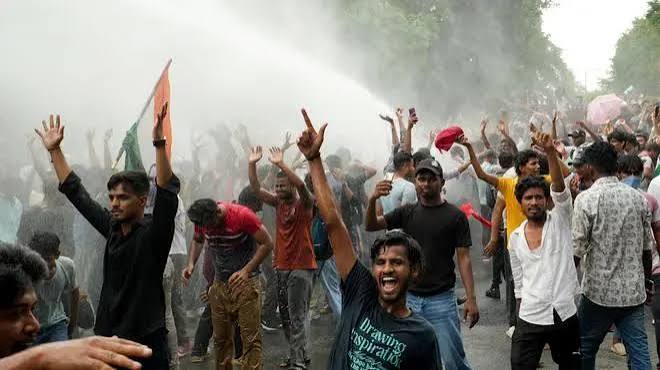
    Indian democracy, often celebrated for its staggering scale, cultural diversity, and ritualistic electoral vibrancy, now confronts a troubling structural paradox. The very instruments designed to empower citizens increasingly operate as conduits of extraction and transactional politics. Elections in several regions resemble high-risk financial ventures, where candidates routinely outspend statutory ceilings to secure office. The legal cap—₹28 lakh for a state assembly contest and ₹70 lakh for a Lok Sabha campaign—appears modest when contrasted with the realities of modern campaigning: mass mobilization, media amplification, digital outreach, and constituency logistics.

    The inevitable consequence is a recoupment imperative. Political office becomes not merely a mandate of representation but an investment awaiting recovery. Representatives, particularly at the state level, often face intense pressure to offset campaign expenditures through influence over contracts, transfers, and administrative discretion. The constitutional design thus undergoes a subtle distortion: the legislator evolves into a localized power centre , mediating governance through patronage rather than through law. Over time, this transformation erodes fiscal prudence, weakens the rule of law, and chips away at citizen trust in democratic accountability.

    The political economy of campaign finance reveals the deeper architecture of this distortion. While statutory expenditure limits bind individual candidates, political parties face no comprehensive cap on spending. Historically, opaque funding channels compounded this asymmetry, most visibly through instruments such as electoral bonds. Corporate contributions and indirect spending structures widened informational gaps between political actors and the electorate.

    In 2024, the Supreme Court of India invalidated the electoral bonds scheme, asserting that anonymity in large-scale political donations undermines democratic equality and violates the citizen’s right to information. The judgment marked a landmark moment in constitutional jurisprudence, reaffirming transparency as a democratic imperative. Yet the decision also exposed how years of opacity had already entrenched structural advantages for well-funded actors and incumbents. When financial flows escape public scrutiny, democratic competition becomes asymmetrical and accountability retreats behind formal legality.

    The need to recover electoral investments fuels a pernicious governance cycle. Candidates who deploy substantial personal or borrowed capital depend on access to executive machinery and party hierarchies to balance their political books. Administrative processes—from police postings to infrastructure contracts—gradually become instruments of political economy. Bureaucratic neutrality, once the cornerstone of Weberian governance, yields to informal networks of loyalty and patronage.

    Over successive electoral cycles, the local Member of Legislative Assembly evolves into a hybrid actor: part creditor, part regulator, part intermediary. Citizen entitlements—licenses, welfare benefits, development works—are filtered through political proximity rather than delivered through rule-based processes. Public services transform into negotiable favors. Such mediation corrodes institutional impartiality and converts democratic participation into a transactional exchange where access eclipses rights and loyalty substitutes for legality.

    The metamorphosis of the legislator’s role amplifies the distortion. Constitutionally, MLAs are lawmakers entrusted with debate, oversight, and policy articulation. In practice, they frequently function as de facto executives within their constituencies—approving development works, influencing transfers, and orchestrating welfare delivery. Media narratives reinforce this personalization of governance, projecting legislators as guarantors of individual grievance redressal rather than architects of systemic reform.

    Citizens, conditioned by this political culture, approach elected representatives for hospital admissions, land disputes, and regulatory approvals. The boundary between legislative oversight and executive execution blurs dangerously. Instead of strengthening institutional processes, governance becomes personalized and discretionary. The rule-based architecture envisioned by constitutional framers gradually gives way to a culture of patronage.

    Fiscal consequences are equally profound. Electoral competition encourages visible, short-term benefits—subsidies, cash transfers, tax exemptions—often announced without sustainable revenue frameworks. The phenomenon colloquially described as “revdi culture” reflects this trajectory, where immediate electoral dividends eclipse long-term fiscal responsibility. Development contracts risk politicization, law enforcement becomes selectively assertive, and businesses navigate a regulatory environment shaped as much by political alignment as by compliance norms.

    Federal dynamics further complicate the picture. Narratives of “double-engine governance” sometimes align resource flows with partisan synchronization between state and central governments. Meanwhile, local governments—constitutionally empowered through the 73rd and 74th Amendments—often remain fiscally constrained and politically overshadowed. Instead of decentralized governance, discretionary power concentrates around state-level political actors, weakening grassroots democracy.

    Dynastic politics deepens these structural distortions. High entry costs and organizational dependency encourage parties to privilege familial continuity over open competition. Political science research suggests that dynastic representation occupies a significant share of legislative seats across India. The phenomenon embodies a paradox. On one hand, dynastic networks may enable representation for communities lacking independent financial resources. On the other, they entrench barriers for new aspirants and restrict meritocratic mobility. What appears as social inclusion may simultaneously operate as political gatekeeping.

    Reclaiming democratic fidelity therefore demands structural reform rather than rhetorical indignation. Transparency in political finance must become comprehensive—extending expenditure caps to parties, mandating real-time disclosure of donations, and establishing independent auditing mechanisms. Administrative neutrality can be restored through transparent transfer policies and fixed bureaucratic tenures. Empowering local governments with genuine fiscal autonomy would dilute the concentration of discretionary power in legislative offices.

    Equally crucial is internal party democracy. Mentorship pipelines, transparent candidate selection, and institutionalized debate can widen entry pathways beyond dynastic networks. Comparative experiences—from Brazil’s public funding frameworks to Canada’s stringent contribution limits—demonstrate that campaign finance reform is both feasible and effective when backed by political will.

    Ultimately, democracy’s resilience lies not merely in the periodic conduct of elections but in the integrity of the incentives that shape them. When political mandates begin to resemble financial assets, democratic legitimacy quietly erodes. India’s constitutional promise can still be renewed—if the ballot ceases to function as a balance sheet and returns to its intended role: a moral contract between citizens and those entrusted to govern them.

    VISIT ARJASRIKANTH.IN FOR MORE INSIGHTS
  • The Last Alchemist of Bihar: Nitish Kumar and the Politics of Perfect Timing

    March 7th, 2026

    In the grand theatre of Indian politics, many leaders blaze briefly like meteors—spectacular but fleeting. A few endure like constellations, shaping the political sky for decades. And then there is Nitish Kumar, a political artisan who not only survived the turbulence of coalition politics but frequently appeared to engineer the weather itself. His decision to file nomination papers for the Rajya Sabha marks more than a personal transition; it represents a symbolic turning point in Bihar’s political narrative. For over three decades, Bihar’s electoral logic, governance style, and alliance structures were deeply intertwined with Kumar’s political craft. His shift toward the national legislature signals the gradual twilight of a political epoch that he both inherited and reshaped.

    The timing of this move has unsettled observers across the political spectrum. In a 243-member Bihar Assembly, the Janata Dal (United) holds only 43 seats, far fewer than its principal ally, the Bharatiya Janata Party, which commands 89 seats. The arithmetic of power had long hinted that the balance within the coalition was shifting. The question was never whether Nitish Kumar would eventually step aside, but when he would choose to orchestrate the transition. True to his political temperament, he preserved suspense until the final moment, sustaining the aura of strategic unpredictability that has long defined his leadership.

    This calibrated unpredictability forms the central grammar of Kumar’s politics. Sworn in as Chief Minister ten times, he perfected the art of navigating volatile mandates and fragile coalitions. His political journey began in the socialist ferment inspired by Jayaprakash Narayan, eventually intersecting—and competing—with the formidable influence of Lalu Prasad Yadav. Over decades marked by ideological realignments and shifting alliances, Kumar displayed a rare blend of ideological inheritance and pragmatic adaptation. For him, survival was never merely defensive; it became a form of political craftsmanship in which timing, restraint, and calculation were elevated to strategy.

    Yet politics ultimately obeys the passage of time as much as the brilliance of its practitioners. In recent months, murmurs about declining political energy and reduced public engagement have circulated quietly within administrative and party circles. Access to the Chief Minister reportedly became tightly regulated, media interactions infrequent, and public appearances increasingly scripted. Such developments are not unusual for veteran leaders approaching the end of long tenures, yet they subtly reinforced the perception that Bihar’s governance apparatus had begun operating more through institutional inertia than through the personal command that once characterised Kumar’s leadership.

    Inside the JD(U) itself, the question of succession has gradually emerged from whispers into open speculation. Occasional discussions regarding the possible political entry of Kumar’s son, Nishant Kumar, have lacked clarity and formal articulation. For a party whose identity has long been inseparable from a single individual, the prospect of a post-Nitish future introduces both anxiety and strategic ambiguity.

    Personality-driven parties often confront a fundamental dilemma: whether organisational identity can survive beyond the gravitational pull of their founding leader.

    The arc of Nitish Kumar’s career remains remarkable by any political standard. After early electoral setbacks during the 1970s and early 1980s—when he reportedly contemplated leaving politics altogether—his trajectory eventually evolved into one of the longest and most consequential leadership tenures in modern Indian state politics. When he consolidated power in 2005, Bihar was widely portrayed as a symbol of administrative breakdown. Over the following two decades, Kumar attempted to reconstruct governance through improved law enforcement, expansion of infrastructure, and social welfare initiatives such as the bicycle scheme for girls’ education. These measures reshaped public perception and earned him the enduring sobriquet “Sushasan Babu.”

    At the heart of this governance model lay an attempt to reconfigure Bihar’s social contract. By mobilising women, extremely backward classes, and marginalised communities, Kumar expanded the political constituency of governance itself. This coalition-building strategy not only stabilised his rule but also altered the relationship between state institutions and citizens. For many Biharis—particularly women and historically disadvantaged groups—the Nitish era symbolised a transition from the politics of spectacle to a politics anchored in administrative delivery.

    Yet structural realities eventually constrain even the most skilful strategists. Bihar’s electoral landscape has long revolved around three major poles: the JD(U), the BJP, and the Rashtriya Janata Dal. Alliances between any two of these forces could decisively defeat the third, and Nitish Kumar mastered the tactical geometry of this triangular contest. By shifting alliances with remarkable timing, he repeatedly redrew Bihar’s political map and preserved his centrality within it.

    Today, however, that equilibrium appears to be gradually eroding. The BJP’s expanding electoral strength across the Hindi heartland has reduced its strategic dependence on Kumar’s leadership. The long-held ambition of installing a BJP Chief Minister in Bihar no longer seems remote. Kumar’s movement toward the Rajya Sabha may therefore accelerate a generational shift within the state’s political hierarchy, opening space for new leadership configurations and ideological contests.

    For the opposition—particularly figures such as Tejashwi Yadav—this transition presents both opportunity and uncertainty. Nitish Kumar’s carefully cultivated support base among women, Mahadalits, and extremely backward classes remains politically influential. Whether these voters remain loyal to the JD(U), migrate toward the BJP, or consolidate behind the RJD will significantly shape Bihar’s next electoral cycle and its evolving political narrative.

    The symbolism of this moment extends beyond the arithmetic of alliances. For over thirty years, Bihar’s politics revolved around the rivalry between Lalu Prasad Yadav and Nitish Kumar—a bipolar drama that defined the state’s ideological debates and electoral battles. As Kumar moves toward the Rajya Sabha, that long-standing political duel approaches its twilight. The stage is gradually being cleared for a new generation of leaders and perhaps a different ideological conversation about Bihar’s future.

    For Nitish Kumar himself, the Rajya Sabha offers a dignified transition rather than a dramatic retreat. After decades spent managing one of India’s most politically intricate states, a parliamentary role allows him to remain intellectually engaged with national politics without bearing the daily administrative burdens of governance. It is, fittingly, the final strategic pivot of a leader who treated reinvention as an art form.

    History will likely remember him through a dual lens: as the reformer who attempted to rebuild Bihar’s governance architecture and as the tactician who repeatedly reshaped alliances to retain power. As he gradually steps away from the centre stage of Patna’s politics, a lingering question drifts across the Gangetic plains: is this the graceful retirement of a master strategist—or the quiet closing of an era that ultimately outlived its own architect? Either way, Nitish Kumar has once again managed to choreograph the narrative of his own transition. In Bihar’s endlessly dramatic political theatre, even the curtain call appears meticulously scripted.

    VISIT ARJASRIKANTH.IN FOR MORE INSIGHTS

  • “The Martyr Paradox: Killing a Leader Makes Him Immortal”

    March 6th, 2026

    The assassination of Ali Khamenei—allegedly through coordinated strikes attributed to the United States and Israel—may have been conceived as a decisive geopolitical stroke. Yet history repeatedly warns that eliminating ideological leaders rarely produces the tidy strategic outcomes planners imagine. Instead, such acts frequently generate the opposite effect: martyrdom, emotional mobilisation, and political consolidation. In the case of Iran, the death of its long-serving Supreme Leader has triggered precisely this paradox, transforming a controversial political figure into a symbol capable of unifying forces that were previously fragmented.

    For more than three decades, Khamenei represented the ideological backbone of the Islamic Republic. Rising from a modest clerical background in Mashhad after the revolution led by Ruhollah Khomeini, he fused religious authority with state power in a uniquely durable political arrangement. To his supporters, he was the guardian of Islamic sovereignty and resistance against Western domination; to critics, he embodied the rigidity and repression of clerical rule. Yet beyond these competing narratives, Khamenei had become an institutional symbol—an embodiment of the revolutionary state itself rather than merely its administrator.

    The geopolitical reverberations of his death became visible almost immediately. Iran declared forty days of mourning, a deeply symbolic ritual within Shia political culture that elevates grief into collective memory. Demonstrations erupted not only across West Asia but also in distant communities. In India, gatherings were reported in cities such as Kashmir, Lucknow, Hyderabad, and Bhopal, where thousands expressed solidarity and mourning. These reactions revealed an often underestimated dimension of Iranian influence: Khamenei’s authority extended far beyond national borders, resonating across transnational religious and political networks.

    For many within Shia communities and sections of the broader Muslim world, the assassination was not interpreted simply as the removal of a political leader. It was reframed as an assault on a civilisational symbol. This narrative shift is strategically significant. Governments can survive criticism of individual leaders, but the perceived humiliation of a collective identity often produces emotional unity that transcends political disagreement. The assassination therefore transformed Khamenei from a contested ruler into a rallying point of resistance against perceived external domination.

    Ironically, this unity emerged at a moment when Iran itself had been experiencing internal fractures. The country had witnessed significant protests in recent years, particularly following the death of Mahsa Amini, which ignited nationwide demonstrations over women’s rights, economic hardship, and generational frustration. These movements exposed deep dissatisfaction among younger Iranians and highlighted the vulnerabilities of the Islamic Republic. Yet external attack possesses a powerful psychological effect: when a nation perceives itself under siege, internal criticism often recedes before the instinct of collective defence. In that sense, the assassination inadvertently supplied the regime with what it most urgently required—temporary national cohesion.

    This outcome raises profound questions about the strategic logic of leadership “decapitation.” While such tactics can disrupt militant organisations, they rarely dismantle entrenched political systems. Iran’s power structure is deeply institutionalised, anchored in bodies such as the Islamic Revolutionary Guard Corps, clerical councils, and security institutions built over decades. Removing one leader does not dismantle that architecture. Instead, the immediate consequence appears to be the opposite of what its architects may have intended: the transformation of Khamenei into a martyr whose symbolic authority may outlive his physical presence. In geopolitical terms, the strike meant to weaken Iran may ultimately have strengthened the emotional legitimacy of the very system it sought to destabilise.

    VISIT ARJASRIKANTH.IN FOR MORE INSIGHTS

←Previous Page
1 2 3 4 5 … 142
Next Page→

Blog at WordPress.com.


Loading Comments...
 

    • Subscribe Subscribed
      • SOCIAL PERSPECTIVES
      • Join 102 other subscribers
      • Already have a WordPress.com account? Log in now.
      • SOCIAL PERSPECTIVES
      • Subscribe Subscribed
      • Sign up
      • Log in
      • Report this content
      • View site in Reader
      • Manage subscriptions
      • Collapse this bar