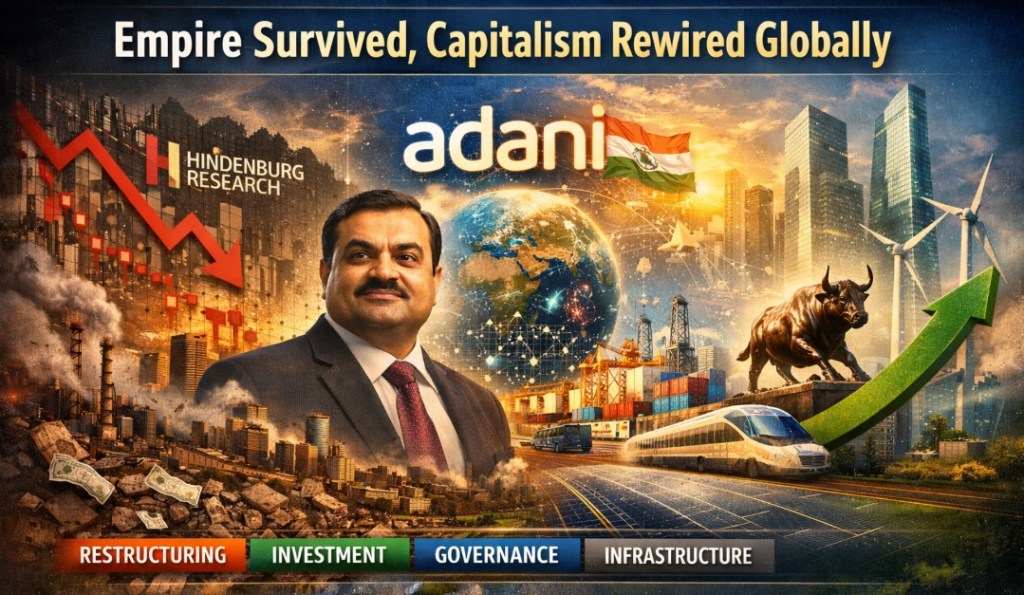
The Adani story is no longer merely the story of a conglomerate defending itself against allegations. It has evolved into one of the defining case studies of modern global capitalism—where corporate resilience, political economy, financial engineering, institutional navigation, and reputational warfare collide in real time. What began in January 2023 as one of the fiercest attacks ever mounted against an Indian business empire has, by 2026, transformed into an equally dramatic story of recalibration and survival. In many ways, the Adani episode now reflects something much larger than one corporation. It reveals the changing architecture of Indian capitalism itself: a system increasingly defined by giant infrastructure ecosystems, concentrated capital, geopolitical risk, and the brutal speed of digital-era scrutiny.
When the short-seller Hindenburg Research released its explosive 106-page report accusing the Adani Group of stock manipulation, offshore opacity, governance failures, and accounting irregularities, the shockwaves were immediate and global. Markets erased nearly $150 billion in value within weeks. International investors panicked. Analysts questioned not only the future of the conglomerate, but also the credibility of India’s regulatory institutions and the sustainability of politically connected infrastructure capitalism. For a brief period, the crisis appeared existential. The narrative hardened quickly: a rising corporate empire had been exposed, global confidence had cracked, and one of India’s most ambitious industrial expansions seemed trapped in reputational freefall. Yet capitalism, especially at scale, rarely collapses in straight lines. It adapts, absorbs shocks, and reinvents itself under pressure.

Three years later, the landscape looks dramatically different. The group not only survived but emerged operationally leaner, financially more disciplined, and strategically more adaptive. Regulatory pressures gradually softened. Liquidity improved. Debt structures were recalibrated. Billions of dollars in borrowings were prepaid. International investors cautiously returned, with firms such as GQG Partners signaling renewed confidence in the conglomerate’s long-term viability. What initially appeared to be a near-fatal reputational collapse ultimately became a stress test that forced restructuring at extraordinary speed. The crisis accelerated internal reforms that may otherwise have taken a decade to implement. In a strange irony, the attack that threatened the empire may have strengthened its institutional survival instincts.
But the real significance of the Adani episode lies beyond balance sheets and market capitalization. It exposes the deeper mechanics of India’s economic transformation in the 21st century. India is no longer merely nurturing standalone companies; it is building infrastructure ecosystems of continental scale. Ports, airports, renewable energy corridors, logistics chains, mining networks, transmission grids, industrial parks, and data infrastructure require unprecedented concentrations of capital and coordination. In such sectors, success depends not only on operational efficiency but also on the ability to simultaneously manage finance, regulation, geopolitics, technology, state relationships, and public perception. Modern infrastructure capitalism is no longer simply industrial—it is systemic. And systemic corporations increasingly behave less like businesses and more like parallel governance architectures embedded inside the economy itself.
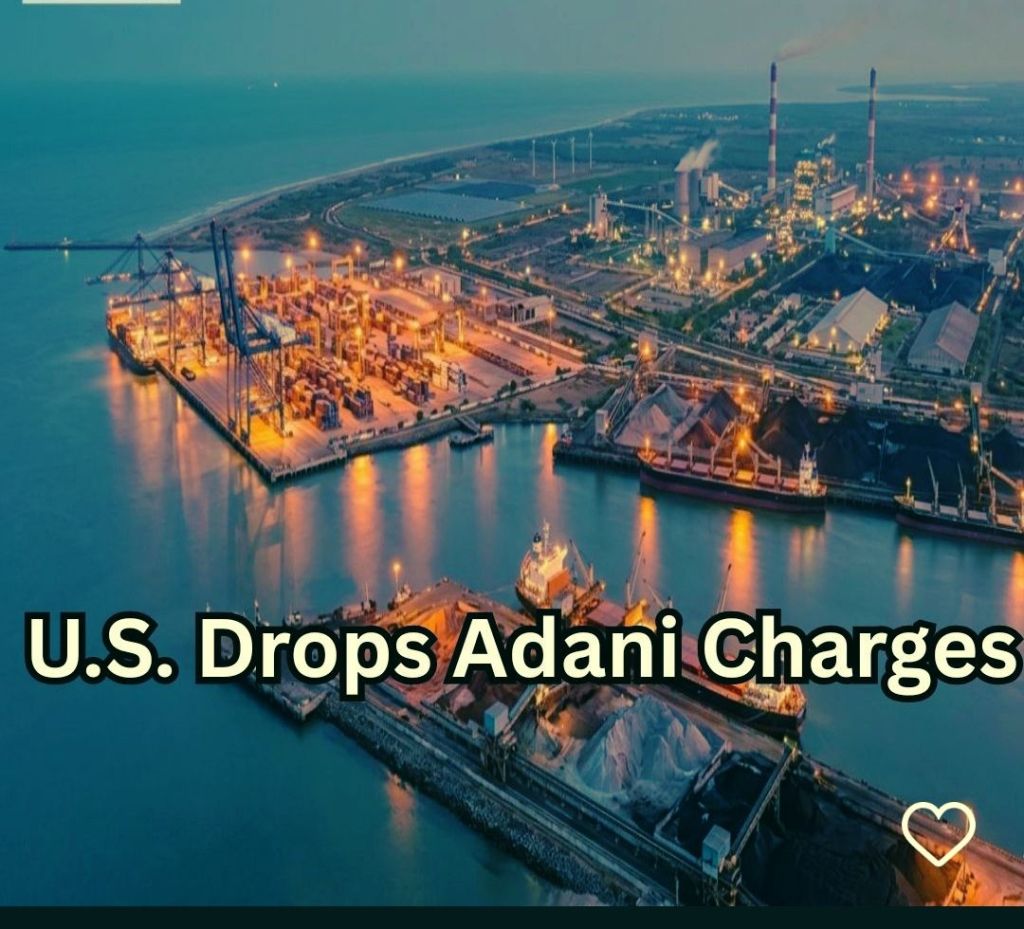
The group’s post-crisis response reflected this emerging reality. Rather than retreating into defensive conservatism, it reportedly accelerated restructuring and organizational redesign. Analysts increasingly compare this shift to an “orchestrator model” similar to the ecosystem architecture associated with companies like Apple. Under such a framework, the corporation retains strategic command over finance, standards, integration, branding, and long-term direction while outsourcing execution-intensive activities to specialized operational partners. This represents a profound shift away from the older Indian conglomerate philosophy of complete vertical ownership. In the modern economy, scale is no longer achieved merely by owning everything. It is achieved by controlling networks, coordinating systems, and accelerating execution through strategic integration. The future belongs less to industrial empires of possession and more to institutional empires of coordination.
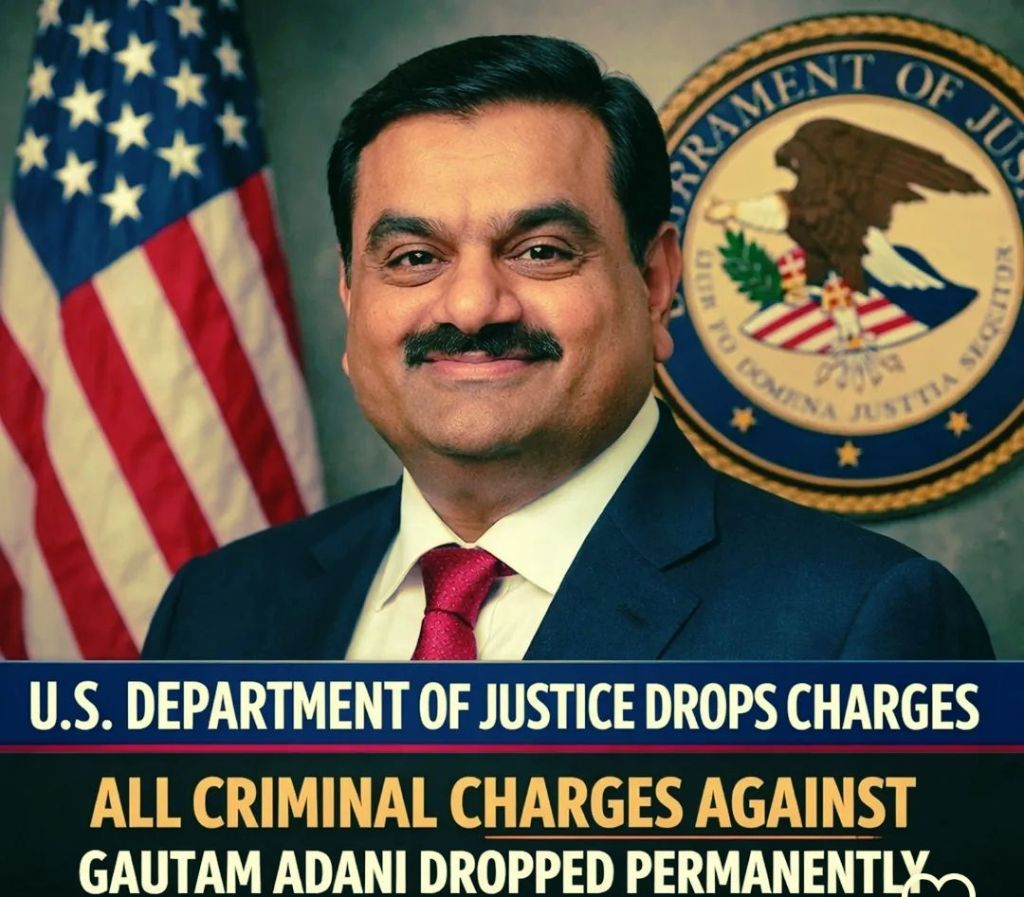
The crisis also revealed a harsher truth about corporate survival in the digital age: reputation itself has become infrastructure. Financial strength alone is no longer enough. ESG credibility, governance standards, cyber resilience, disclosure systems, regulatory engagement, and institutional trust now influence valuation almost as much as profitability. The Hindenburg episode demonstrated how rapidly global narratives can damage legitimacy in interconnected capital markets. But it also forced Indian conglomerates to recognize that compliance is no longer a legal checkbox—it is strategic armor. In the age of algorithmic finance and instant information warfare, credibility compounds like capital, and distrust spreads faster than infrastructure can be built. A corporation may spend years constructing ports and power plants, yet a single global narrative can vaporize billions in valuation within days.
At the same time, the controversy triggered a deeper democratic debate inside India about the relationship between corporate scale and public fairness. Many smaller entrepreneurs believe the regulatory ecosystem functions asymmetrically, where large conglomerates possess access to elite legal networks, institutional influence, crisis-management capacity, and capital buffers unavailable to ordinary businesses. Whether entirely accurate or not, these perceptions matter profoundly because markets function not only on money but also on legitimacy. Citizens become uneasy when survival appears linked more to proximity and scale than to equal opportunity. Yet the opposite argument is equally important. No modern nation can build globally competitive infrastructure ecosystems without close alignment between state policy and large private capital. From the United States and China to the Gulf economies and Europe, strategic sectors everywhere operate through varying forms of political-economic coordination. The challenge for India is therefore not preventing the rise of mega-conglomerates, but ensuring that their growth strengthens institutional trust instead of weakening democratic confidence.
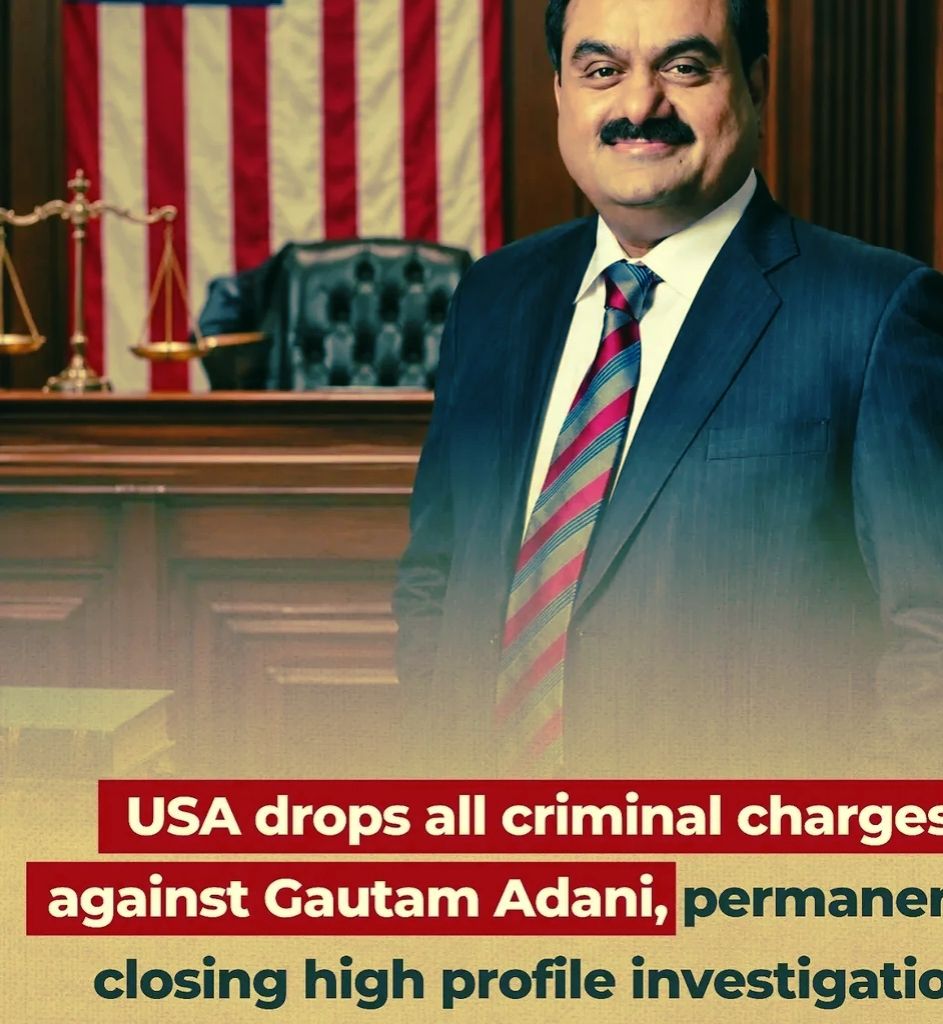
Ultimately, the Adani saga is neither a simple story of corporate victimhood nor merely a tale of excess and controversy. It is the story of a rising economy wrestling with ambition, governance, global scrutiny, political proximity, and institutional maturity all at once. It exposes both the strengths and vulnerabilities embedded within India’s development model. India’s future will inevitably produce giant corporate ecosystems competing globally across infrastructure, energy, logistics, technology, and finance. The real question is whether these empires evolve into institutions respected not only for their scale and execution speed, but also for their transparency, resilience, and public legitimacy. The Adani crisis may therefore be remembered not as the moment Indian capitalism was exposed, but as the moment it was forced to evolve under the unforgiving pressure of global visibility.
VISIT ARJASRIKANTH.IN FOR MORE INSIGHTS

