Skip to content
    • About

SOCIAL PERSPECTIVES

  • The Great Indian Welfare Illusion: Feeding the Poor,  Starving Their Future !!!

    April 22nd, 2026

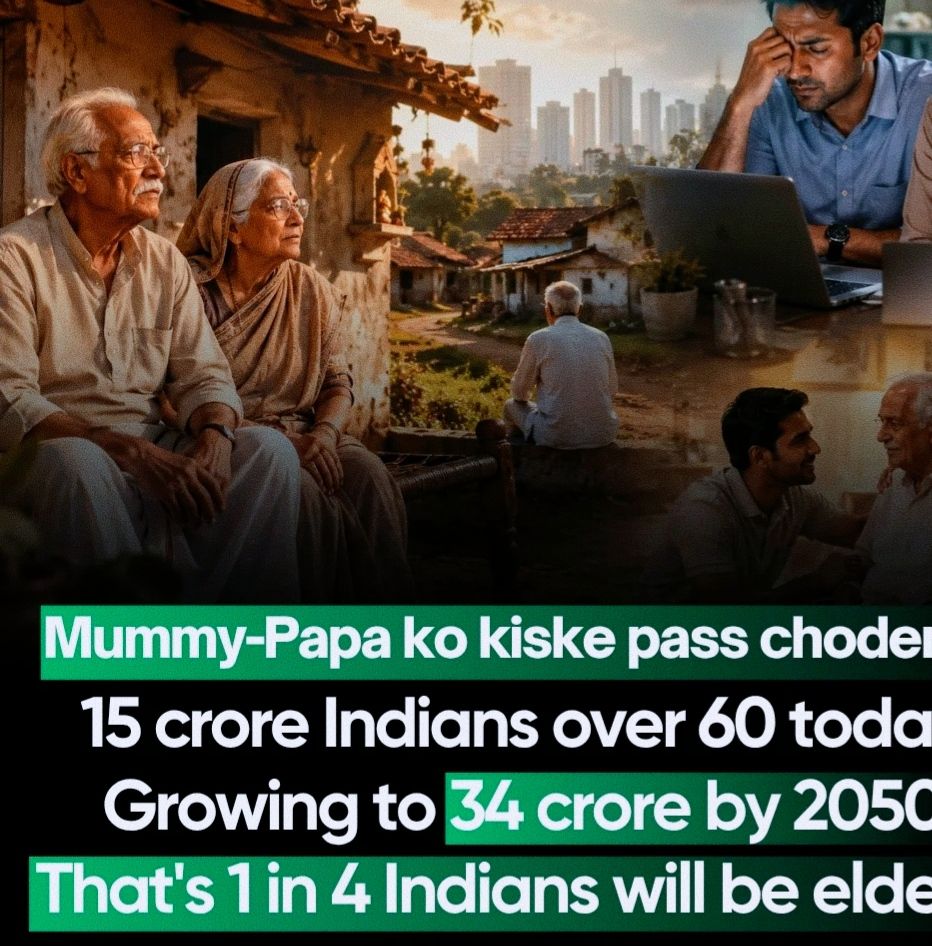
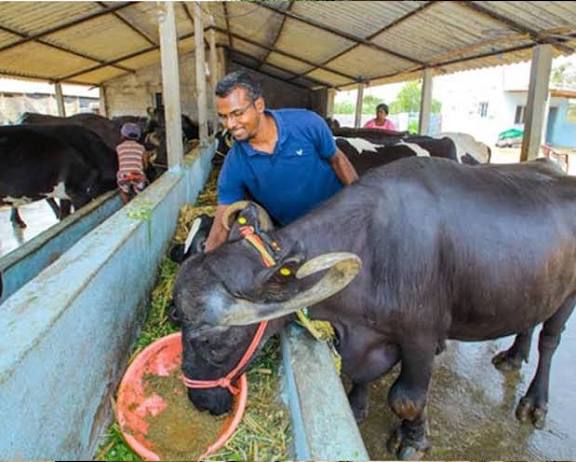
    India has never been short of welfare schemes. It has been short of something far more uncomfortable: a development model that enables the marginalized to own wealth, access stable employment, and escape structural dependency. This is precisely why the backwardness of Scheduled Castes (SCs), Scheduled Tribes (STs), and Other Backward Classes (OBCs) persists despite decades of subsidies, reservations, food security programmes, and targeted benefits. The truth is blunt—welfare has expanded, but mobility has not kept pace. The result is a paradoxical India where poverty indicators improve statistically, yet deprivation remains socially entrenched.

    The clearest empirical mirror to this reality comes from Telangana’s Socio-Economic, Educational, Employment, Political and Caste (SEEEPC) Survey (2025), arguably one of the most comprehensive caste-based datasets produced in independent India. Covering nearly 97% of the state’s population, the survey developed a Composite Backwardness Index using 42 indicators—income, education, employment, land ownership, assets, civic access, and social infrastructure. Its conclusions were politically unsettling but analytically predictable: SCs and STs were found to be nearly three times more backward than general castes, while OBCs were 2.7 times more backward. Even more revealing was the discovery that 135 caste groups, comprising 67% of the population, were more backward than previously assessed. Backwardness was not shrinking quietly in the shadows; it was reproducing itself as a system.

    The Telangana data also exposes the anatomy of inequality. Nearly half of SC households remain trapped in daily wage labour, compared to around 10% among general castes. Only about 5% of STs were found in private sector employment, while general castes held around 30% representation. Income patterns resemble two different countries living under one flag: only 2.1% of SC/ST households earn above ₹5 lakh annually, while a far higher share of general castes occupy the ₹5–50 lakh bracket. More than 78% of backward caste households survive around ₹1 lakh per year—not merely “low income,” but a dangerously thin line between survival and collapse.

    National trends do show progress. India’s Economic Survey 2025–26 reports that about 248 million people were lifted out of multidimensional poverty between 2013–14 and 2022–23, with poverty declining from 29.17% to 11.28%. Yet even this success hides a caste-weighted truth: five out of every six multidimensionally poor Indians belong to SC, ST, or OBC categories. ST communities remain the worst affected, with over half still living in multidimensional poverty in recent estimates, while SC poverty remains alarmingly high. India is reducing poverty, yes—but it is not dismantling deprivation hierarchies. Poverty is falling, but inequality is fossilizing.

    This is where the welfare-state illusion begins. Welfare schemes often succeed in preventing starvation, but they rarely succeed in creating ownership. They stabilize survival without enabling transformation. The most devastating gap is asset inequality. Rural SC and ST households possess average assets of around ₹9 lakh, nearly half the national average and barely a third of upper-caste households. Welfare can provide rations, but it cannot provide land. It can issue subsidies, but not collateral. It can offer benefits, but not generational capital. As long as asset-building remains absent, backwardness becomes a recurring season, not a solvable problem.

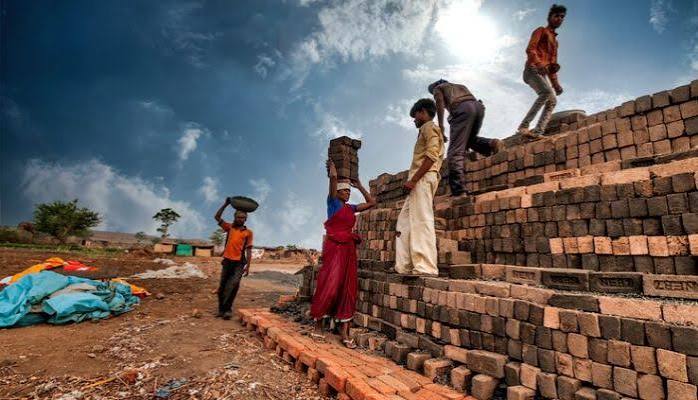
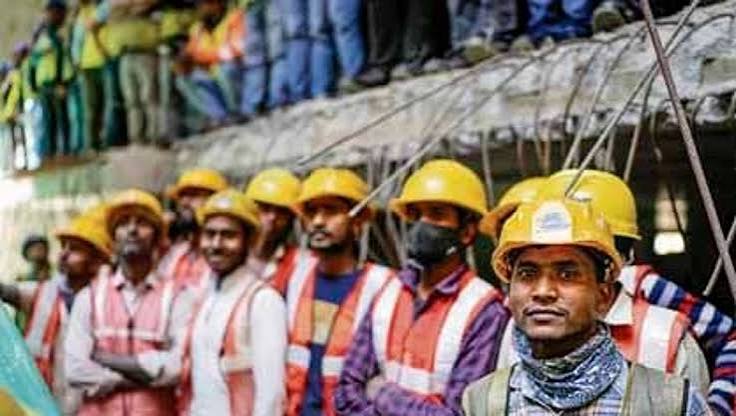
    The welfare approach also fails because it ignores occupational entrapment. Many SC communities remain locked in landless casual labour—a double disadvantage where social exclusion meets economic insecurity. Their income fluctuates daily, employment remains informal, and bargaining power is negligible. This is not merely poverty; it is a structural placement at the bottom of the economic ladder. Under such conditions, welfare payments become consumption bridges between two crises, not ladders to a new life.

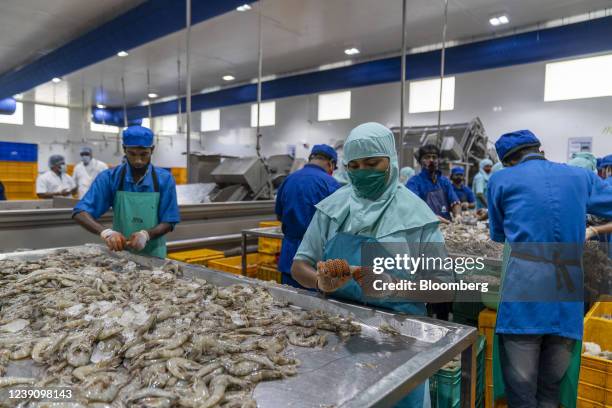
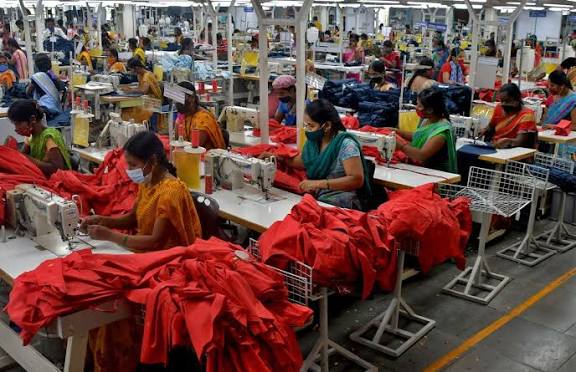
    Then comes the employment crisis—the central engine of backwardness. Data from CMIE shows unemployment at 8.1% in December 2024, with nearly 40% youth unemployment and about 30% graduate unemployment. Even among those employed, work is increasingly marked by underemployment, irregular hours, and low productivity engagement. Wage growth remains stagnant, and gender wage gaps continue to be structurally embedded. In the informal sector—where SC/ST participation is disproportionately high—real wages have barely kept pace with inflation, ensuring that employment often fails to translate into dignity or stability. A widely cited public estimate that nearly 70% of Indians survive on ₹100–150 per day captures the brutal reality: India’s welfare state is attempting to manage hunger, while the economy simultaneously produces mass low-paying insecurity at scale.

    The most lethal factor worsening this trap is the cost-of-living explosion. Welfare schemes focus heavily on food security, but food inflation is not the real killer anymore. Healthcare inflation runs close to 14%, and education inflation around 11%. A family may eat, but one hospitalization can erase years of stability. For marginalized communities with limited savings and weak insurance coverage, medical emergencies often mean debt traps—moneylenders, mortgaged assets, or permanent economic setbacks. Welfare does not prevent that spiral; it merely delays the fall.

    Infrastructure deprivation further exposes the limits of welfare. Telangana’s survey shows that 21.2% still lack tap water access, 13.3% lack toilets, and 5.8% lack proper electricity connections. These are not symbolic deficits. Water access affects women’s time poverty, health expenditure, and livelihood productivity. A girl walking hours for water is not just facing inconvenience—she is losing education, skills, and future income. In such conditions, welfare is not empowerment; it is a bandage on an untreated wound.

    Water, in fact, is the most revealing case study of intersecting deprivation. Jal Jeevan Mission has improved coverage, but uneven implementation ensures marginalized settlements remain last-mile casualties. Water scarcity reduces livelihood options, increases disease burden, and forces dependence on casual labour. A welfare system that distributes food without securing water infrastructure is effectively feeding people while draining their productive potential.

    The global lesson is clear: welfare must be fused with jobs. The UN Global Accelerator on Jobs and Social Protection argues that social protection and employment must be mutually reinforcing. Albania invests in care economy reforms to boost women’s labour participation. Indonesia aligns skill training with private sector demand through Sector Skills Councils. Senegal integrates employment outcomes into macroeconomic planning so public investment generates decent jobs. Uzbekistan aims to formalize hundreds of thousands of informal workers while expanding legal social insurance. Cambodia’s graduation-based social protection model explicitly transitions households from welfare dependence to sustainable livelihoods.

    India’s future cannot be built on welfare as permanent compensation. Welfare must become a launchpad, not a lifestyle arrangement. MGNREGA, for instance, must evolve from a wage guarantee into a skills-to-employment pipeline. Public investment must undergo employment impact assessments so infrastructure spending generates real livelihoods for marginalized groups. Social protection databases must integrate with labour-market platforms so beneficiaries are not merely registered for subsidies but matched to training and formal jobs. Healthcare and education inflation must be tackled through systemic regulation and public provisioning, because backwardness today is as much about rising costs as it is about low income.

    The persistence of backwardness is not proof that welfare is meaningless. It is proof that welfare without wealth creation is a sophisticated form of stagnation. Telangana’s survey numbers—SC/ST communities nearly three times more backward, half of SC households trapped in wage labour, only 5% ST presence in private employment—are not administrative failures. They are structural outcomes of an economy where growth is real but mobility is rationed.

    India faces a civilizational policy choice. It can continue distributing welfare to manage poverty indefinitely, or it can confront the harder truth that dignity is built through assets, employment, and economic power. Welfare can prevent collapse, but only structural transformation can deliver escape. If India wants to bridge its development divide, it must stop treating backwardness like a hunger problem and start treating it like an ownership problem.

    VISIT ARJASRIKANTH.IN FOR MORE INSIGHTS
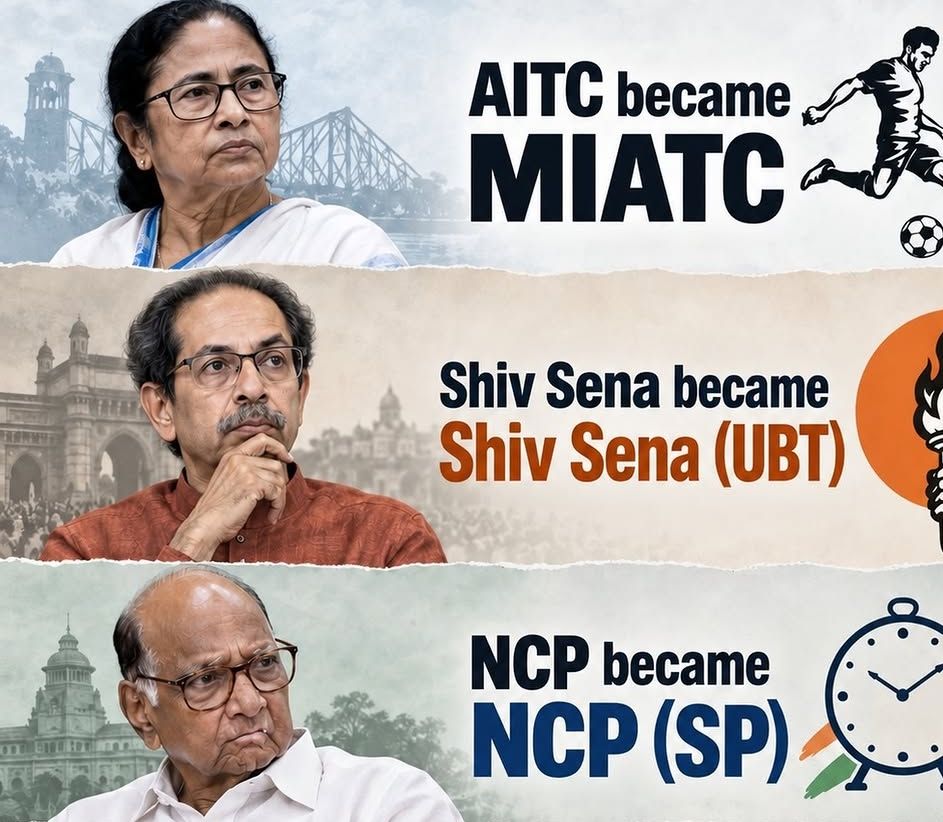
  • “From Trophy Candidate to Transfer Pawn: The IAS Life Cycle of Slow-Burning Exhaustion”

    April 21st, 2026

    India’s civil servants are born twice: once in their family, and once in the merit list. The first birth gives them identity; the second grants them authority. Yet somewhere between the celebration of selection and the silence of retirement, the Indian civil servant becomes a paradox—highly educated, highly trained, highly visible, and yet deeply isolated, chronically stressed, politically cornered, and increasingly detached from the very citizens they were meant to serve. The tragedy is not that the system fails to produce talent. The tragedy is that it produces talent and then slowly drains its humanity.

    The journey begins with a recruitment process that is globally admired and domestically worshipped. The competitive examination is not merely a test; it is a cultural obsession where youth is exchanged for hope and family expectations become sacred burdens. The selection process filters for analytical intelligence, memory, articulation, and endurance. But it does not filter for empathy, patience, emotional stability, or the capacity to absorb public anger without internal collapse. The result is predictable: the Republic recruits brilliant minds, but often emotionally untrained personalities.

    Then comes the academy phase, where the State stamps authority onto the recruit. Discipline is polished, confidence is manufactured, and the mythology of the “steel frame” is reinforced through ceremonial culture. Yet this stage carries a hidden psychological cost. The parade grounds, etiquette drills, and officer-like conditioning often produce an invisible distance from ordinary life—a subtle superiority that is not always taught, but is quietly absorbed. The young officer begins to believe that he is not merely employed by the Republic; he is the Republic. This is where humility becomes optional and detachment becomes a habit.

    Reality arrives in the first district posting like a cold slap. The officer steps out of controlled training into chaotic governance: broken roads, overcrowded hospitals, angry farmers, dysfunctional local bodies, and a public that expects miracles within weeks. Here the officer discovers the first brutal truth of Indian administration: authority is formal, but power is political. Rules exist, but networks decide. Files move, but influence moves faster. The district becomes a classroom where idealism is tested not by problems, but by pressures—and stress stops being an episode and becomes a permanent lifestyle.

    From this point onward, governance becomes a continuous stress-test loop. Targets must be achieved, reviews must be attended, narratives must be managed, and political expectations must be satisfied. Administration gradually shifts from solving problems to surviving optics. The officer learns that upward management is rewarded more than downward service. Over time, the citizen becomes an “issue” while political comfort becomes a “priority.” Not because officers are weak, but because institutions punish those who insist on being strong in the wrong direction.

    Transfers then emerge as the system’s most brutal weapon. An officer can spend months understanding a district’s complexities only to be uprooted overnight due to political discomfort or bureaucratic rivalry. This destroys continuity, kills motivation, and trains officers to stop investing emotionally in their work. When stability disappears, sincerity becomes irrational. The safest posture becomes neutrality—avoid controversy, avoid innovation, avoid confrontation. In a democracy, neutrality is necessary; in excess, it becomes administrative cowardice disguised as professionalism.

    The appraisal structure deepens the distortion. Performance is measured through outputs—files cleared, meetings held, compliance reported. Outcomes such as reduced suffering, improved trust, and citizen satisfaction rarely enter the formal evaluation space. Empathy has no column. Accessibility has no score. Consequently, governance becomes an Excel-sheet culture: progress is recorded, but pain remains unchanged. Meanwhile, personal life becomes the most ignored casualty—long hours, crisis calls, and the inability to switch off create emotionally unavailable partners, distant parents, and exhausted individuals. The officer appears powerful in public, yet privately many live with loneliness, burnout, and silent identity collapse.

    The way forward is not to romanticize civil services or demonize them, but to humanize them. Training must shift from parade culture to immersion culture. Transfers must be regulated through fixed tenures to restore accountability and continuity. Appraisal must include citizen feedback metrics, a genuine “People’s APAR” that rewards trust-building. Mental health must be institutionalized through confidential counselling, peer support, and family integration. Most importantly, the system must break the generalist trap by enabling early domain specialization so that competence becomes deep, not merely broad. Otherwise, the Republic will continue producing trophy candidates who slowly turn into transfer pawns—and retire as decorated files with exhausted souls.

    VISIT ARJASRIKANTH.IN FOR MORE INSIGHTS
  • “Netflix Crossed the Border Without a Passport: The WTO’s 28-Year Tax Pause Just Died” 

    April 20th, 2026

    For centuries, taxation was an obedient creature of geography. Goods crossed borders, customs officials stamped papers, tariffs were calculated, and sovereign states extracted revenue from the visible movement of value. The logic was brutally simple: if something enters the territory, it can be taxed. Borders were not just political lines; they were fiscal checkpoints. Sovereignty, in that world, had gates—and gates had toll collectors.

    Then value learned to travel without a body. Software crossed borders without ships. Music travelled without discs. Data moved without containers. A film entered a country without passing through any port. A video game was “imported” without a single truck arriving at the frontier. The customs officer—the traditional guardian of national revenue—was suddenly staring at emptiness. And emptiness became a policy crisis: if nothing physically crosses the border, what exactly is the border taxing?

    In the late 1990s, this dilemma seemed almost academic. The internet was still young, digital commerce was marginal, and today’s platform empires were either unborn or in their infancy. Global trade rules were designed for steel, wheat, automobiles, and textiles; they had no vocabulary for electronic transmissions. The WTO faced a classification nightmare: if software is downloaded from abroad, is it a “good,” a “service,” or something that collapses the entire architecture of trade categories?

    In May 1998, at the WTO Ministerial Conference in Geneva, members adopted what looked like a temporary compromise: a moratorium on customs duties on electronic transmissions. It was framed as a short pause, not a permanent ideology. The WTO simultaneously launched a work programme to study the issue, promising to determine how digital trade should be classified. Yet what was meant to last two years quietly became the foundation of the global digital economy, repeatedly extended because the world feared disrupting what had become the invisible highway of modern commerce.

    But by 2026, the world no longer resembles 1998. Digital trade is no longer a niche—it is a central artery of capitalism. A rising share of cross-border consumption now arrives without ever meeting a customs gate. For developing economies, this has triggered an unavoidable suspicion: the rules were written when the internet was small, but they now function as a permanent advantage for those who already dominate digital markets. The moratorium, once a pause, began to resemble a structural privilege.

    Countries like Brazil, Turkey, and increasingly India started questioning the moratorium not as ideology but as arithmetic. As trade shifts from physical imports to digital delivery, tariff revenues shrink. A government can tax televisions entering a port, but it cannot tax Netflix entering a living room. The anxiety is fiscal, but also industrial: tariffs historically provided breathing space for domestic industries, while digital markets leave local firms exposed to global platform giants with scale, capital, and data power. Yet the counter-risk is equally severe—digital tariffs could fragment the internet into national toll booths, raise costs, revive piracy, and disrupt cross-border digital supply chains.

    This deadlock persisted for nearly three decades because the WTO requires consensus. When some demanded permanence and others demanded termination, postponement became the default strategy. But postponement finally collapsed. On 30 March 2026, at the WTO’s 14th Ministerial Conference in Cameroon, the moratorium expired for the first time in 28 years after Brazil and Turkey blocked its extension. Digital tariffs may not appear immediately, but the real damage is already done: legal certainty has evaporated. The world is now entering an era where value travels at the speed of light—while governments still chase it with tools built for ships, stamps, and borders.

    VISIT ARJASRIKANTH.IN FOR MORE INSIGHTS
  • “33% for Women… or 100% Insurance for Men? The Great Parliament Seat-Expansion Game”

    April 19th, 2026

    On 17 April 2026, Indian democracy witnessed something rare: a constitutional amendment defeat in the Lok Sabha. The Constitution (131st Amendment) Bill, 2026—projected as a historic instrument of women’s empowerment—collapsed on the floor of the House. It secured 298 votes in favour and 230 against, yet failed to cross the constitutional two-thirds threshold of roughly 352 votes. In a system where governments usually bulldoze amendments through brute arithmetic, this was not merely a legislative defeat. It was a political unmasking—an institutional moment where Parliament briefly refused to sign a cheque it did not fully understand.

    Because behind the grand slogan of “33% reservation for women” lay an uncomfortable truth: the political class does not fear women entering politics. It fears men leaving it. The anxiety was never about empowerment; it was about displacement. And that is where the entire drama becomes less about Shakti and more about survival. India’s Parliament was not debating justice alone—it was negotiating its own future occupancy.

    The promise of women’s reservation is not new. It has circulated in India’s political bloodstream for decades like an unfinished sentence. Even the Women’s Reservation Act, 2023, carried a brilliant political escape hatch: reservation would come into effect only after delimitation. Meaning, women were offered a promise wrapped in procedural barbed wire. First census. Then delimitation. Then a commission. Then new boundaries. Then implementation. In Indian politics, “after delimitation” is the most sophisticated way of saying: not now, not soon, and preferably not before the next election cycle.

    But the 2026 proposal was not one bill—it was a coordinated trio, like a constitutional magic trick performed with legislative paperwork. The Constitution (131st Amendment) Bill would enable the framework for reservation and delimitation. The Delimitation Bill, 2026 would establish the machinery for a Delimitation Commission. And the Union Territories Laws Amendment Bill, 2026 would extend women’s reservation to assemblies in Delhi, Puducherry, and Jammu & Kashmir. On paper, it resembled accelerated gender justice. In political reality, it resembled a strategic redesign of India’s electoral map under the moral umbrella of empowerment.

    That is why opposition voices argued that women’s representation was being held hostage to delimitation. Delimitation is not a technical exercise; it is a redistribution of political power. Redrawing constituencies based on population growth means states with higher population growth gain seats while those that successfully controlled population growth lose representation. For southern states that consciously pursued family planning since the 1970s, delimitation appears less like reform and more like punishment for governance discipline. The fear was not imaginary—it was structural: the federal balance could be rewritten through arithmetic, not debate.

    The controversy deepened because delimitation discussions appeared tied to outdated population datasets, effectively redesigning the Republic using numbers already stale by 2026. Yet the real political earthquake was not about census dates—it was about scale. The Lok Sabha strength is expected to rise from 543 to around 850 seats, a jump so massive it feels like Parliament is preparing for a population of another planet. And here lies the silent brilliance of the design: if 33% reservation is implemented on 543 seats, around 180 seats must be reserved—meaning 180 sitting male MPs face uncertainty. But if Parliament expands to 850 seats, around 307 new seats appear, allowing reservation to be implemented largely through new constituencies. Women receive representation, while incumbents retain comfort. Reform happens, but without sacrifice.

    This is not empowerment. This is accommodation. It is like announcing “reservation in the dining hall” but building a new dining hall so the old diners never have to share their plates. It is diversity without discomfort, justice without consequences, reform without political pain. The government defended the move under the language of “one person, one vote,” but experts pointed out the contradiction: increasing seats does not automatically resolve constituency size inequality. It delays structural imbalance while still shifting political gravity over time. The defeat of 17 April, therefore, was not simply the failure of a bill—it was Parliament resisting a political earthquake disguised as a gender reform package.

    In the end, the House did not reject women’s empowerment. It rejected empowerment being used as camouflage for redrawing the Republic. India’s women have waited long enough. They do not need representation packaged as a constitutional puzzle with hidden clauses. If the political class truly believes in 33%, it should begin with the seats it already holds—not with an expansion designed to ensure the same incumbents return smiling, congratulating themselves for empowering women while quietly securing their own next term. That is not democracy evolving. That is democracy being reupholstered.

    VISIT ARJASRIKANTH.IN FOR MORE INSIGHTS

  • “Skyscrapers Above, Begging Bowls Below”: India’s Property Tax Farce and the Municipal Bankruptcy of a Rising Nation

    April 18th, 2026

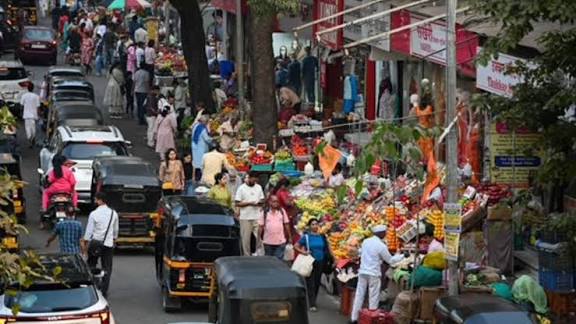
    India’s metropolitan skyline now resembles a permanent construction festival. Glass towers rise where empty plots once stood, gated colonies expand like urban empires, and real estate prices behave as if they are driven by speculative rocket fuel. Yet beneath this visual triumph lies one of India’s most quietly irrational economic failures: urban local bodies are sitting on a mountain of private wealth, but collecting property tax like a bankrupt medieval kingdom. Our cities look global, but their finances remain feudal.

    For nearly two decades, India’s property market has grown dramatically in value and volume. But property tax—the most stable, predictable, and locally accountable revenue stream available to a city—remains stuck at around 0.15% of GDP, a number that is not just low but globally humiliating. It is barely half of what even low-income nations manage and roughly a quarter of middle-income norms. Worse still, in 10 of India’s 24 largest cities, real per capita property tax collections have declined over the last decade. This is not a small governance defect. It is the fiscal equivalent of running an international airport on the revenue logic of a roadside tea stall.

    A working paper by Bapi Roy (CSEP) provides the sharpest diagnosis of this paradox: the money exists, the buildings exist, and the taxable base is exploding—but the institutional design is engineered for failure. India’s property tax crisis is not a technical puzzle. It is a structural illness rooted in political control, administrative weakness, and deliberate underdevelopment of local government. Cities are expected to deliver world-class infrastructure while being denied the financial oxygen needed to breathe.

    The irony is that India already tried to solve this problem in 1992 through the 74th Constitutional Amendment, which promised genuine decentralisation by creating a third tier of government. Municipal corporations were meant to function as urban governments with elected councils, defined responsibilities, and independent revenues. In theory, this would have created city-level accountability: citizens pay taxes, and city governments deliver services. But in practice, India’s political reality never allowed urban autonomy to mature. State governments retained control over staffing, valuation rules, approvals, and even the timing of municipal elections. Municipal bodies were left responsible for roads, drains, sanitation, and water supply—but denied the authority and stability required to finance them. They became administrators of expectation, not governments of capacity.

    Property tax was supposed to be the one exception. It is one of the few major taxes that naturally belongs to cities, and as other local taxes were absorbed into GST, property tax became even more central to municipal survival—often contributing nearly 30% of own-source revenue. Yet even this lifeline has been weakened at every stage through state interference and municipal incapacity. Roy simplifies the crisis into three sequential failures: identifying properties, valuing them, and collecting what is due. India collapses at all three stages, repeatedly and predictably.

    The first collapse begins at the most basic level: many cities do not even know how many properties exist within their jurisdiction. Property enumeration requires surveys, inspections, and continuous updating—exactly the kind of routine administrative work that underfunded municipalities cannot sustain. Bengaluru’s BBMP, for instance, is estimated to have 20 lakh properties listed against a real base of 42 lakh, meaning half the city is effectively invisible to taxation. Pune performs better at around 78–83% coverage, but even that means a large portion of the urban economy remains outside the fiscal map. Technology is often marketed as a magic cure, but GIS mapping is not a one-time miracle. Pune’s GIS reforms boosted property roll growth sharply, but such mapping must be repeated every few years. BBMP’s last remote-sensing survey was done over a decade ago. A smart system without human capacity is not reform—it is simply an expensive illusion.

    The third stage—collection—exposes the same rot. Nominal revenues may rise, but collection efficiency has declined in several cities. Pune’s arrears have crossed ₹9,000 crore, while Ghaziabad’s collection efficiency fell from 60% to 50% over recent years. This is not merely citizen dishonesty; it is municipal weakness. When penalties are not enforced, defaulters are not tracked, and deterrence is absent, compliance becomes optional. A city that cannot enforce its own tax regime is not governing—it is requesting.

    But the second stage—valuation—is where India’s property tax system becomes almost self-sabotaging. Most Indian cities still use Area-Based Valuation (ABV), where a base rate per square foot is fixed and then adjusted through formulae. The flaw is structural: the base rate does not automatically rise with market value. It remains frozen until someone politically dares to revise it. Land prices may double, apartments may triple, but tax rates remain trapped in an administrative time capsule. A more rational alternative is the Capital Value System, linking taxation to guidance values used for stamp duty. Under such a model, revenue grows automatically with market appreciation. But this reform is politically radioactive. Property owners protest, backlash erupts, and state governments retreat. Bengaluru’s attempt to shift towards capital value guidelines faced strong resistance and was effectively diluted. The city remained trapped in ABV—like a modern economy forced to calculate taxes with a colonial ruler.

    This is where the system becomes self-reinforcing. ABV requires periodic revisions, but revisions require political legitimacy, stability, and functioning elected councils. And across India, many major cities do not have them. Pune revised its base rate multiple times between 2012 and 2022 and saw collections rise by nearly 290%. Bengaluru’s collections grew by only 121%, despite its far larger economy. The difference was not administrative intelligence—it was political structure. Pune had elected local leadership willing to take unpopular decisions. Bengaluru’s municipal elections have been delayed for years, leaving the city effectively governed by bureaucratic arrangements rather than democratic mandate. Without elections, there is no mandate. Without mandate, there is no revision. Without revision, the tax base stagnates while the city expands.

    Even accounting practices reveal the dysfunction. Ideally, municipalities should use accrual accounting to record total demand and track arrears transparently. Yet many still follow cash-based accounting, recording only what is collected. More than half of India’s municipal corporations operate this way. BBMP attempted an accrual transition but ended up with a confusing hybrid. When a city cannot even measure its real tax demand accurately, efficiency becomes mathematically unknowable and politically convenient. In such a system, fiscal weakness is not an accident—it becomes a design feature.

    The solutions are straightforward but politically uncomfortable: routine GIS surveys, smaller and frequent rate revisions instead of explosive jumps, full publication of demand and collection data, strengthened staffing, and credible enforcement. But the deeper truth remains: property tax reform is not primarily a technology project. It is a democracy project. A city without an elected council is not a government—it is a contractor colony managed for state convenience. It cannot revise rates, cannot enforce compliance, and cannot build trust in the social contract that makes citizens pay.

    India’s potholes, broken drains, and chronic water stress are not merely engineering failures. They are revenue failures disguised as urban destiny. Property tax will not solve everything, but it is the most direct lever cities possess to finance their own survival. Right now, India’s urban economy is growing upward, but its municipal finances are sinking downward. Skyscrapers rise like symbols of prosperity, while city governments remain trapped in fiscal starvation.

    Until this contradiction is corrected, India will keep building global-looking cities that function like underfunded districts—modern in skyline, medieval in governance, and permanently dependent on grants instead of strength.

    VISIT ARJASRIKANTH.IN FOR MORE INSIGHTS
  • “Garbage to Geopower: The Scrap Republic Powering India’s Silent Industrial Coup” 

    April 17th, 2026

    India’s most underappreciated industrial revolution is not unfolding inside semiconductor fabs, defence corridors, or polished smart-city corridors. It is unfolding in landfills, alleyways, scrapyards, and dismantling clusters where discarded objects are quietly converted into industrial capital. The scrap economy is not a peripheral survival activity; it is India’s invisible circular backbone, supplying raw material to steel plants, automobile supply chains, electronics manufacturing, and even renewable energy systems. Yet this gigantic engine remains politically invisible—noticed only when a landfill burns, an e-waste hub turns toxic, or a regulatory scandal forces the state to act surprised.

    What makes this sector remarkable is its paradoxical architecture: enormous in scale, indispensable to national interest, and yet structurally informal. At its foundation is a workforce of nearly 4–5 million people, including around 2.5 lakh wastepickers, who operate as India’s cheapest and most efficient environmental infrastructure. They collect, segregate, transport, and monetise what cities discard, reducing landfill pressure and preventing municipal collapse. They are not scavengers; they are an unpaid public utility. Their labour forms the first stage of a national industrial pipeline, yet their contribution is treated as a social inconvenience rather than a strategic economic asset.

    The scrap ecosystem is most visible in hubs like Seelampur in Delhi, one of Asia’s largest informal e-waste dismantling markets. These zones function like shadow industrial districts—unregistered, undocumented, but astonishingly efficient. Their existence exposes an uncomfortable truth: India’s recycling success was not built by municipal planning or sophisticated policy design, but by informal entrepreneurship, migrant resilience, and survival economics. India did not design its recycling system; it inherited one built by poverty and improvisation, and then allowed it to scale without safety, dignity, or legality.

    The economic value trapped inside this “waste civilisation” is staggering. India’s annual e-waste economy alone is estimated at ₹51,000 crore, with nearly 60%—around ₹30,600 crore—embedded in recoverable metals such as copper, aluminium, and traces of gold. This is not garbage; it is an urban mineral reserve hidden inside obsolete smartphones, discarded laptops, and broken appliances. Yet India currently captures only about 18% of this extractable value. That is not merely an efficiency gap—it is a national loss of strategic material, industrial leakage, and disguised import dependency.

    This is where scrap stops being an environmental story and becomes geopolitics. Copper, aluminium, lithium, and rare earths are no longer just commodities; they are strategic minerals that determine the future of electric vehicles, battery storage, defence electronics, renewable energy, and manufacturing competitiveness. Every tonne of recycled metal is a tonne not imported. Every circuit board recovered domestically is one less vulnerability to global supply-chain shocks. In this sense, recycling is not a climate gesture—it is resource sovereignty. A nation that cannot recycle cannot claim true strategic independence, regardless of how loudly it speaks about self-reliance.

    Yet India’s scrap economy suffers from distortions that appear almost designed to keep it trapped in informality. The most lethal distortion is fiscal: the GST paradox. Scrap metal attracts 18% GST, which looks administratively neutral but functions as a formalisation barrier in practice. Informal aggregators operate on razor-thin margins—often ₹50–₹80 per kg—and rely heavily on cash. They cannot easily register, invoice, and file returns. The crisis emerges at the interface: when informal suppliers sell to formal recyclers, the buyer risks losing Input Tax Credit, effectively punishing formal industry for purchasing from the very network that supplies most of India’s scrap. The tax regime, unintentionally, criminalises the supply chain that keeps recycling alive.

    The second distortion is technological and human. Informal networks are skilled in collection but dangerously primitive in recovery. Copper is extracted by burning wires, circuit boards are dismantled manually without protective equipment, and toxic chemicals are handled casually. The result is predictable: respiratory illness, skin disorders, neurological damage, and long-term organ failure among workers, while soil and groundwater absorb heavy metals and chemical residue. India gains recycling volume but loses public health and environmental stability. This is not circular economy—it is circularity built on slow poisoning. The third distortion is traceability: undocumented, cash-driven scrap flows make material origins invisible, weakening EPR enforcement and preventing the creation of a transparent recycled-material market. Worse, formalisation without inclusion becomes displacement, as seen in hubs like Seelampur where earnings reportedly dropped from ₹700 to ₹300 per day when flows shifted toward licensed plants.

    India now stands at a critical policy junction. The Solid Waste Management Rules 2026, effective from April 1, 2026, mandate four-stream segregation—wet, dry, sanitary, and special waste—at source, signalling that India is finally attempting to clean the pipeline before building the market. Parallelly, new EPR rules for non-ferrous metals such as aluminium, copper, and zinc will raise recycling targets from 10% in 2026–27 to 75% by 2032–33, effectively creating a compliance-driven recycling economy where certificates become monetisable assets. Alongside, the push for industrial use of Refuse Derived Fuel (RDF) compels cement and other industries to increase substitution from 5% to 15% over six years, ensuring waste becomes industrial input rather than landfill poison. Most importantly, schemes like NAMASTE, supported by UNDP, attempt to formalise wastepickers through digital enumeration, ID cards, PPE kits, and Ayushman Bharat coverage—an effort not of welfare, but of economic restructuring with dignity.

    If executed intelligently, India’s scrap economy can become a national growth engine—creating dignified employment, strengthening Make in India, reducing dependence on imported critical minerals, expanding tax revenues, and delivering cleaner cities. The real question is not whether India has waste. India has abundance. The real question is whether India has the administrative imagination to treat waste not as a municipal embarrassment, but as industrial capital. Because in the 21st century, the richest nations will not be those with the most oil reserves—they will be those with the most efficient recycling systems. And India, sitting on mountains of scrap, is sitting on a mine it has not yet fully learned to own.

    VISIT ARJASRIKANTH.IN FOR MORE INSIGHTS
  • Chabahar: India’s Geopolitical Lifeboat Stuck in a Sanctions Whirlpool

    April 15th, 2026

    In the global hierarchy of ports, some exist for commerce, some for ambition, and a rare few for national survival. Chabahar belongs to the last category. It is not merely an Iranian port on the Gulf of Oman; it is India’s carefully engineered geopolitical bypass around Pakistan, a strategic counterweight to China’s Gwadar, and a corridor into Afghanistan and Central Asia. Yet in 2026, as the US–Iran conflict escalates and Washington’s sanctions deadline of 26 April 2026 approaches like a guillotine, Chabahar has stopped being a connectivity project and has become a strategic hostage—trapped between war, finance, and geopolitical optics.

    India’s investment in Chabahar is rooted in a blunt geographic reality: Pakistan will not provide India transit access to Afghanistan or Central Asia. Without Chabahar, India’s northern outreach collapses into blocked borders and hostile chokepoints. Chabahar was conceived precisely to puncture that wall. It provides India an alternative access route into Afghanistan and onward into Central Asia, turning geography into strategy. This is why Chabahar is not a “port project” in bureaucratic language—it is a geopolitical instrument, a lever of autonomy built in concrete and cranes.

    Its location makes the symbolism sharper. Chabahar lies in Iran’s Sistan–Balochistan province, barely 170 km from Gwadar, the China-built port anchoring the China–Pakistan Economic Corridor. This proximity transforms Chabahar into a quiet strategic statement: Gwadar represents China’s maritime encirclement architecture; Chabahar represents India’s refusal to be geographically strangled. In the chessboard of the Indian Ocean, it is a deliberate counter-piece placed beside Beijing’s rook. The port’s relevance expands further because it is central to the International North–South Transport Corridor (INSTC)—a trade route linking India with Iran, Russia, and Europe, potentially cutting transit time by up to 40% compared to the Suez route. In an era where supply chains have become instruments of state power, saving weeks is not efficiency—it is resilience.

    But Chabahar is now caught in a double bind: war and sanctions feeding each other like a self-reinforcing storm. The US decision in September 2025 to revoke the earlier sanctions waiver removed the diplomatic oxygen that once allowed India to operate there under the banner of Afghan reconstruction. India secured only a conditional six-month waiver in October 2025, and that waiver expires on 26 April 2026, turning the calendar itself into a strategic countdown. New Delhi’s response has been cautious and surgical: the February 2026 Union Budget allocated zero funds for Chabahar, the first such omission since 2017–18. This is not necessarily abandonment—it resembles a tactical freeze, meant to avoid leaving financial footprints that could trigger secondary sanctions. In modern geopolitics, budgets are not just fiscal documents; they are strategic signals.

    The deeper problem is structural: a port cannot survive on ships alone. Chabahar’s success depends on the arteries feeding it—particularly the Chabahar–Zahedan railway, meant to connect the port to Iran’s interior and to the INSTC. That project remains delayed, and in a wartime environment rail construction becomes vulnerable to funding shocks, security risks, and contractor withdrawal. A port without rail connectivity becomes an impressive lung with no bloodstream. Meanwhile, global shipping lines operate on risk mathematics, not diplomacy. Insurers and vessel operators are increasingly inserting sanctions exclusion clauses, enabling instant withdrawal if OFAC enforcement tightens. Enhanced due diligence—AIS tracking, ownership verification, and SDN screening—has become routine. This means even if India wants to route cargo through Chabahar, vessel availability may shrink because private shipping prefers predictable profit over sanction-triggered catastrophe.

    Complicating the picture further is the emergence of IMEC—the India–Middle East–Europe Corridor—which haunts Chabahar’s long-term relevance. If Washington and its allies dominate the post-conflict order, IMEC may become the preferred Western-backed connectivity narrative, relegating Chabahar to an “Iran-linked relic.” In that scenario, Chabahar does not collapse because it fails operationally; it collapses because it becomes geopolitically inconvenient. Tehran remains optimistic, calling disruptions “speed bumps,” expecting rapid expansion after hostilities end. Washington, however, has returned to maximum pressure logic: the Afghan humanitarian argument no longer holds the same political weight after 2021. For the US, any sustained financial activity in Iran looks like strategic leakage.

    New Delhi therefore sits between two tectonic forces. Abandoning Chabahar would be geopolitically catastrophic, because China would fill the vacuum, turning India’s retreat into Beijing’s expansion. But defying Washington risks secondary sanctions that could hurt India far beyond one port—impacting finance, technology access, and trade credibility. The choice is no longer between a port and a project; it is between strategic autonomy and economic exposure. The only workable approach is controlled survival: keeping Chabahar alive without inviting punishment. This demands legal and operational redesign—minimizing India’s sanction footprint through restructuring, strengthening non-dollar payment mechanisms, and possibly creating sovereign-backed insurance support to offset private insurer withdrawal. Ultimately, Chabahar is India’s geopolitical lifeboat, and in 2026 it is sailing through a sanctions whirlpool, battered by war, financial panic, and global power politics. India’s objective is not immediate triumph, but intelligent endurance—maintaining a skeletal presence, preventing strategic takeover by rivals, and staying ready to expand the moment the guns fall silent. Because if India abandons Chabahar, it will not remain empty. In geopolitics, vacuums are not left unoccupied—they are inherited.

    VISIT ARJASRIKANTH.IN FOR MORE INSIGHTS

  • “The World Is on Fire, and India Just Found a Five-Year Oxygen Tank (2026–2030)”

    April 15th, 2026

    India has entered one of those rare geopolitical intervals where global turbulence becomes national advantage—not because the international system has turned benevolent, but because it has turned distracted. The world order is no longer anchored in predictable alliances or stable deterrence. It is being shredded by transactional diplomacy, collapsing trust, and the unapologetic return of brute power. In this churn, India has unexpectedly been handed the one strategic resource it has historically desired but rarely received: time. Not time as comfort, but time as leverage.

    The 2026–2030 period is not a peace dividend; it is a strategic pause created by the preoccupations of others. The United States is gravitating toward a revived “deal-first” diplomacy where foreign policy is negotiated like a business settlement—fast bargains, reduced burdens, shifting commitments, and rapidly changing red lines. Europe remains trapped in internal recalibration, torn between security urgency and economic fragility. Russia is fixated on its near abroad, seeking buffers and coercive influence. Meanwhile, China—the most consequential variable for India—may increasingly divert attention toward Iran’s reconstruction, a potential contract universe of hundreds of billions that could reshape West Asia’s economic geography. Beijing’s focus would drift not out of goodwill, but out of profitable obsession.

    Yet this “window” is not comfort; it is a countdown clock. India’s post-Independence record warns against trusting long stretches of calm. Major disruptions have arrived with unsettling regularity: 1947–48, 1962, 1965, 1971, Kargil in 1999, Mumbai in 2008, Pulwama in 2019, and Galwan in 2020. This is not random history; it is structural rhythm. India’s rise invites periodic testing, and regional instability generates flashpoints the way factories generate smoke. If this historical cadence holds, the next disruption could arrive around 2030–2032—dangerously aligned with leadership transitions, domestic pressures in Pakistan, and recalibrations within China’s strategic posture.

    Pakistan, meanwhile, is enjoying what can only be described as a diplomatic “moment in the sun.” It is attempting to sell itself as a broker-state—useful to the Gulf, indispensable to China, and occasionally relevant to Washington whenever crisis diplomacy requires a convenient intermediary. Yet its fundamentals remain brittle: a fragile economy, chronic foreign exchange weakness, and survival dependent on IMF cycles and external cash injections. Military adventurism against India is difficult to sustain without outside financing, and even Gulf support is increasingly conditional, transactional, and politically risk-aware. Pakistan’s posture is loud, but its structure is weak—an actor performing strength while negotiating solvency.

    This creates India’s most counterintuitive opportunity: Pakistan’s posturing does not require India’s reaction. In fact, reaction is precisely what Pakistan’s system historically needs to manufacture domestic legitimacy. The smarter Indian strategy is strategic patience—allow Pakistan to travel, broker, and perform its diplomacy while India quietly builds capacity. Pakistan’s leverage is theatre; India’s advantage must become architecture. The contest is not about speeches, media cycles, or momentary outrage. It is about endurance, resilience, and institutional momentum.

    China remains the deeper long-term challenge, but it too is entering a phase of recalibration. Iran’s reconstruction is not merely a development project—it is a geopolitical gold rush. Hundreds of billions in contracts will generate enormous demand for construction inputs, heavy machinery, energy systems, port logistics, and financing pipelines. If reconstruction accelerates, global shortages in materials and capital could emerge, forcing Beijing to prioritise profit zones over opening new strategic fronts. This does not mean China will abandon Pakistan or reduce long-term pressure on India; it means China may temporarily avoid escalating confrontation while its bandwidth is absorbed elsewhere. India must not mistake Chinese preoccupation for Chinese restraint. A distracted rival is still a rival.

    The central question is brutally simple: if India has five years of relative breathing space, what does it build before the air disappears? It must modernize deterrence with urgency rather than ceremony—because future conflict will not arrive as declared war, but as drone swarms, cyber strikes, satellite disruption, disinformation offensives, and hybrid infiltration. India must expand drones, anti-drone shields, cyber defense units, and space-based surveillance with measurable outcomes—such as a minimum 30% increase in integrated surveillance coverage along the northern and western borders within three years, linked to real-time fusion and rapid-response capability. Intelligence resilience must become a national mission, shifting from reactive reporting to predictive fusion across agencies—closer to Israel’s doctrine where speed of interpretation becomes as decisive as firepower.

    Energy vulnerability must be treated as strategic weakness, not an economic inconvenience. Electrification is not climate idealism; it is national defense. Domestic exploration must rise from roughly 15% toward 25% by 2030. Ethanol blending must reach 20%, but through second-generation sources rather than ecological self-destruction. Minerals and fertilizers must be recognized as national security assets, requiring stockpiles of at least six months for fertilizers and twelve months for critical minerals, alongside aggressive reforms in mining governance, recycling capacity, and domestic exploration. Above all, India must treat economic depth as deterrence—raising manufacturing from around 13% of GDP toward 20%, preserving fiscal space, and resisting the temptation of symbolic escalation.

    The hardest strategy is non-reaction: not winning the news cycle, but winning the decade. This is the doctrine of the rare window—use temporary calm to build permanent strength, because history does not retire its storms. It only reschedules them.

    VISIT ARJASRIKANTH.IN FOR MORE INSIGHTS

  • Islamabad’s 21-Hour Mirage: America Offered a Deal and Iran Heard a Surrender !!

    April 14th, 2026

    The third round of face-to-face US–Iran negotiations in Islamabad in April 2026 ended the way rushed peace efforts usually do: with exhausted diplomats, weaponised headlines, and an “agreement” that existed only in the imagination of those desperate for one. After 21 hours of marathon talks conducted under the fragile cover of a two-week ceasefire, US Vice President JD Vance publicly declared failure. His statement carried both finality and theatre: “The bad news is that we have not reached an agreement — and I think that’s bad news for Iran much more than it’s bad news for the United States of America.” It was the language of bargaining, but also the language of a verdict. For Iran, the talks were about dignity and survival; for Washington, they were about compliance, containment, and projecting strength.

    What made Islamabad historically significant was not its failure, but the fact that it happened at all. These were the first direct high-level engagements since the 1979 Islamic Revolution, a rupture that has shaped Middle Eastern geopolitics for nearly half a century. The absence of structured diplomacy has produced a system where deterrence is expressed through sanctions, proxies, and symbolic strikes rather than negotiations. Islamabad briefly promised to disrupt that pattern. Instead, it reaffirmed it: when diplomacy is attempted too late and too fast, it does not heal hostility—it exposes it.

    The collapse was not accidental; it was embedded in structural mistrust. Tehran remembers decades of sanctions and, more importantly, the 2018 US withdrawal from the JCPOA—proof that agreements can be cancelled by electoral cycles. Washington, meanwhile, sees Iran as a state that negotiates to delay rather than to compromise. When both sides assume bad faith, every clause becomes a trap, every concession becomes political suicide, and every handshake becomes a future accusation. Trust, once broken, does not return through dialogue; it returns through proof.

    Timing also ensured failure. These talks occurred after more than forty days of US–Israeli strikes beginning February 28, 2026. Diplomacy after bombardment rarely produces generosity; it produces defensiveness. Iran entered Islamabad not as a state seeking peace, but as a state ensuring it would never again be strategically cornered. In that psychological environment, the American “final offer” posture was not a proposal—it was an ultimatum. Nations under siege do not sign deals; they sign survival doctrines.

    Equally damaging was procedural chaos disguised as urgency. Reports suggested conflicting draft frameworks, including confusion over whether Lebanon would fall under ceasefire provisions. In high-stakes diplomacy, ambiguity is not flexibility—it is sabotage. The parties arrived to debate fundamentals rather than finalize outcomes. Iran’s spokesperson had already cautioned that no agreement should be expected in a single session, yet the process was structured like a deadline-driven corporate merger. Diplomacy does not reward speed; it rewards sequencing, patience, and disciplined preparation.

    At the core were five disputes too fundamental to be solved in one dramatic meeting. The nuclear issue was existential: Washington demanded abandonment of enrichment; Iran insisted enrichment is a sovereign right under the NPT. Hormuz became a geopolitical tariff dispute, with the US demanding free passage while Iran treated geography as leverage. Sanctions relief created sequencing paralysis—each side demanded guarantees without offering the first step. The proxy network question struck Iran’s deterrence architecture, and reparations became a battle of narrative and moral responsibility. 

    These were not negotiable items; they were competing definitions of power. Islamabad failed because both sides treated negotiation as dominance-management rather than risk-reduction. The US demanded strategic surrender; Iran demanded economic relief without binding constraints. A way forward requires abandoning the fantasy of a single grand bargain and adopting phased diplomacy: ceasefire stabilization, partial sanctions-for-verification trade-offs, and only then broader regional security architecture. Islamabad will not be remembered as a missed handshake. It will be remembered as a warning: when diplomacy becomes performance, war becomes the default sequel.

    VISIT ARJASRIKANTH.IN FOR MORE INSIGHTS
  • The Sodium Sun Has Ignited: India’s Fast Breeder Reactor Just Lit the Fuse on a 100-Gigawatt Destiny

    April 13th, 2026

    India has officially achieved criticality in the Prototype Fast Breeder Reactor (PFBR) at Kalpakkam. The phrase sounds technical, almost bureaucratic, but criticality is not a routine milestone—it is the moment a machine begins to behave like a controlled star. It marks the establishment of a self-sustaining nuclear chain reaction, where each fission event produces neutrons that trigger further fissions in a stable and continuous loop. In nuclear science, this is the dividing line between a facility that is merely engineered and one that is alive with physics. A reactor that reaches criticality stops being an infrastructure project; it becomes a functioning organism of controlled destruction and controlled power.

    To understand why PFBR matters, one must begin with India’s geopolitical handicap: electricity is the bloodstream of development, but India’s energy ambitions are constrained by fuel insecurity. If India genuinely intends to move toward a developed-economy trajectory by 2047, it must expand reliable base-load power generation at intimidating scale—far beyond the current nuclear capacity of around 8,180 MW. Yet nuclear expansion is not merely about constructing plants; it is about controlling the fuel pipeline that feeds them. That pipeline, for most countries, is uranium. And uranium is precisely where India’s geological reality becomes strategically cruel: India holds only 1–2% of global uranium reserves, making a large uranium-based nuclear future a potential trap of permanent import dependence.

    In an era where supply chains are weaponized and sanctions can function like economic chokeholds, uranium dependency is not an energy issue—it is a sovereignty issue. A nation that cannot secure its long-term nuclear fuel supply cannot secure its industrial future. This vulnerability was identified long ago by Dr. Homi Bhabha, who did not design India’s nuclear program as a set of reactors, but as a strategic architecture. His famous three-stage nuclear programme was not merely science—it was geopolitical foresight disguised as physics. It was built around the assumption that India must not merely generate electricity; it must manufacture its own energy destiny.

    And here comes the twist that makes India unique: while uranium is scarce, India possesses over 25% of the world’s thorium reserves, resting like a buried jackpot along coastal black sands. Thorium looks like a civilizational gift—until one confronts its inconvenient truth: thorium is not fissile. Thorium-232 cannot sustain a chain reaction on its own. It is fertile, not fissile. It cannot power a reactor directly like uranium-235 or plutonium-239. To unlock thorium’s promise, India must first transmute thorium into uranium-233, a fissile isotope capable of sustaining nuclear fission. That transformation requires neutron bombardment and an entire ecosystem of fuel-cycle mastery. Thorium is not fuel; it is potential energy waiting for nuclear alchemy.

    This is where the PFBR becomes not just important but historically central. The fast breeder reactor is the bridge between scarcity and abundance—Stage Two of Bhabha’s blueprint. Stage One uses India’s limited uranium in pressurized heavy water reactors to generate electricity and produce plutonium-239 as a by-product. Stage Two then uses that plutonium as fuel in a fast breeder reactor. Unlike thermal reactors, which slow neutrons using moderators, fast breeder reactors allow neutrons to remain fast and violent—high-energy particles that make breeding possible. The PFBR will generate about 500 MW of electricity, but electricity is only its visible output. Its deeper function is strategic: it converts fertile uranium-238 into additional plutonium-239, effectively producing more fuel than it consumes. It is the closest thing modern engineering has created to a machine that prints its own energy currency.

    But intellectual honesty demands resisting pure triumphalism. Fast breeder reactors globally have not been miracle machines; they have often been engineering nightmares. The physics is elegant, but the engineering is unforgiving. Water cannot be used as coolant because it slows neutrons. Hence PFBR uses liquid sodium, a superb heat conductor and a terrifying chemical liability. Sodium reacts violently with air and explodes on contact with water, meaning the reactor demands near-flawless sealing systems and absolute containment discipline. Perfection is not a philosophical ideal here—it is a safety requirement. This explains why PFBR has taken decades, with repeated deadline slippages and cost escalation reportedly reaching around ₹8,181 crore. Critics question whether such a technology, delayed and expensive, risks becoming economically obsolete in an era where solar and wind costs have fallen dramatically.

    Yet the debate cannot be reduced to unit economics alone. Renewable energy is essential, but it is also intermittent. Grid-scale storage remains a structural challenge, and the supply chains of batteries and rare minerals carry their own geopolitical vulnerabilities. A nuclear reactor, by contrast, delivers 24/7 base-load power, immune to monsoon variability, nightfall, or wind droughts. In strategic terms, base-load electricity is not merely a convenience—it is the invisible foundation of heavy industry, rail freight, defense manufacturing, data centers, and national resilience. India’s investment in PFBR is therefore not just a technological decision; it is a civilizational wager that long-term sovereignty is worth short-term cost.

    PFBR criticality is thus more than a scientific milestone. It is a declaration that India is attempting to become not merely a consumer of nuclear technology but an architect of the entire fuel cycle. It signals a shift from operating reactors to designing an energy ecosystem that cannot be externally strangled. The sodium sun has ignited at Kalpakkam, and the reactor is no longer a promise trapped in files and foundation concrete—it is alive. Now the real question begins: can India scale this controlled star into an affordable national grid reality, or will PFBR remain a brilliant machine whose greatest output is symbolism? Either way, criticality has rewritten the story. India has crossed the most difficult bridge in its nuclear destiny—and the future will no longer be decided only by how much power it produces, but by how much independence it breeds.

    VISIT ARJASRIKANTH.IN FOR MORE INSIGHTS
←Previous Page
1 2 3 4 … 145
Next Page→

Blog at WordPress.com.

Loading Comments...

    • Subscribe Subscribed
      • SOCIAL PERSPECTIVES

      • Join 106 other subscribers
      • Already have a WordPress.com account? Log in now.
      • SOCIAL PERSPECTIVES
      • Subscribe Subscribed
      • Sign up
      • Log in
      • Report this content
      • View site in Reader
      • Manage subscriptions
      • Collapse this bar