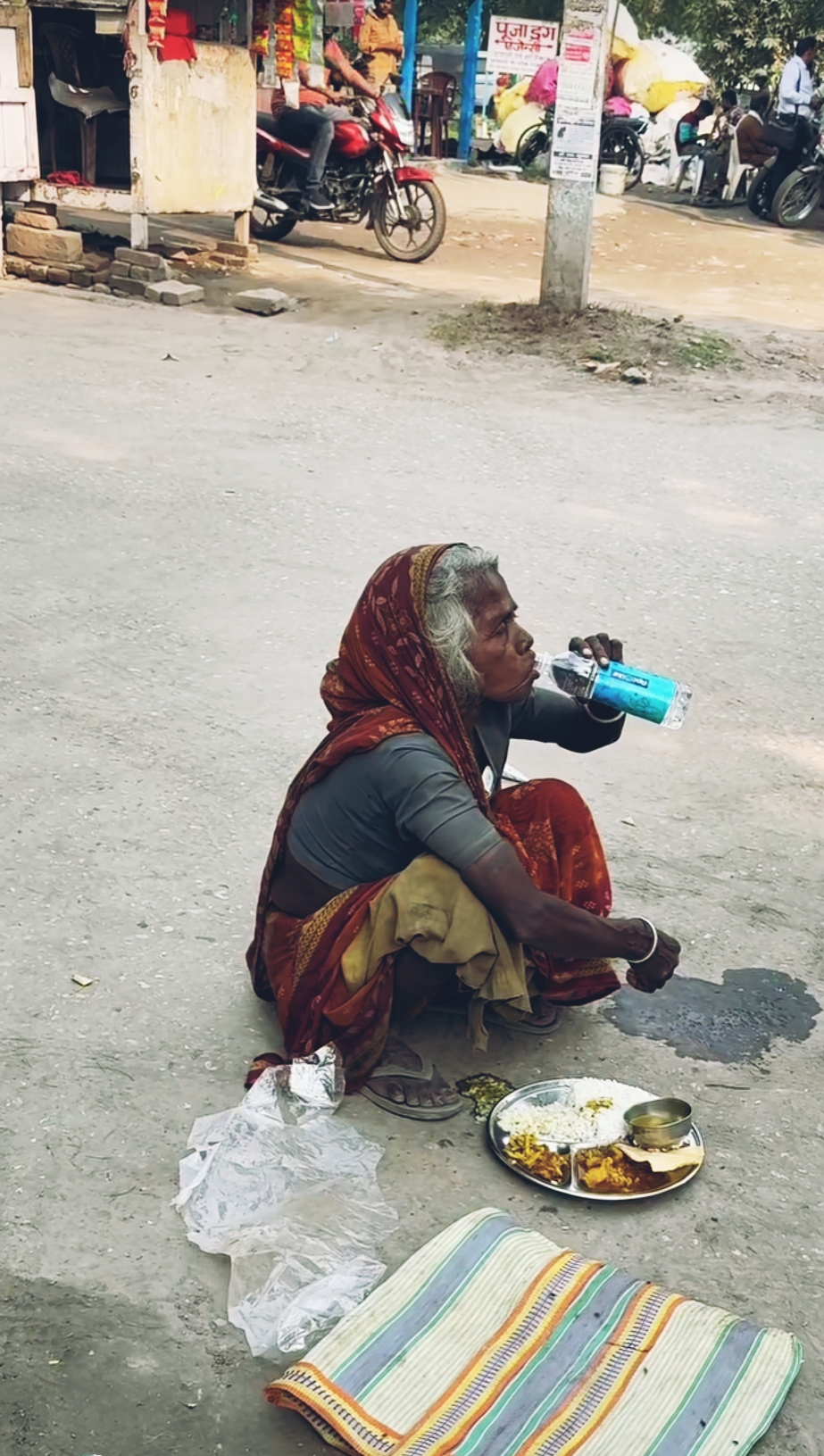
India has never been short of welfare schemes. It has been short of something far more uncomfortable: a development model that enables the marginalized to own wealth, access stable employment, and escape structural dependency. This is precisely why the backwardness of Scheduled Castes (SCs), Scheduled Tribes (STs), and Other Backward Classes (OBCs) persists despite decades of subsidies, reservations, food security programmes, and targeted benefits. The truth is blunt—welfare has expanded, but mobility has not kept pace. The result is a paradoxical India where poverty indicators improve statistically, yet deprivation remains socially entrenched.
The clearest empirical mirror to this reality comes from Telangana’s Socio-Economic, Educational, Employment, Political and Caste (SEEEPC) Survey (2025), arguably one of the most comprehensive caste-based datasets produced in independent India. Covering nearly 97% of the state’s population, the survey developed a Composite Backwardness Index using 42 indicators—income, education, employment, land ownership, assets, civic access, and social infrastructure. Its conclusions were politically unsettling but analytically predictable: SCs and STs were found to be nearly three times more backward than general castes, while OBCs were 2.7 times more backward. Even more revealing was the discovery that 135 caste groups, comprising 67% of the population, were more backward than previously assessed. Backwardness was not shrinking quietly in the shadows; it was reproducing itself as a system.
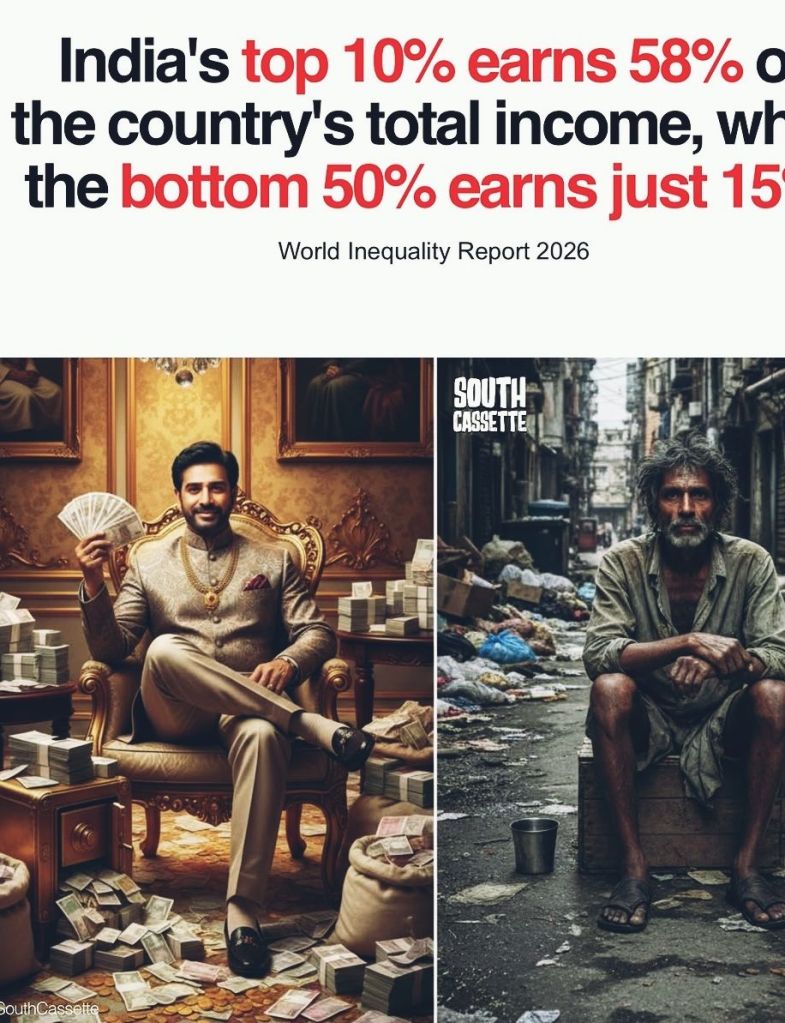
The Telangana data also exposes the anatomy of inequality. Nearly half of SC households remain trapped in daily wage labour, compared to around 10% among general castes. Only about 5% of STs were found in private sector employment, while general castes held around 30% representation. Income patterns resemble two different countries living under one flag: only 2.1% of SC/ST households earn above ₹5 lakh annually, while a far higher share of general castes occupy the ₹5–50 lakh bracket. More than 78% of backward caste households survive around ₹1 lakh per year—not merely “low income,” but a dangerously thin line between survival and collapse.
National trends do show progress. India’s Economic Survey 2025–26 reports that about 248 million people were lifted out of multidimensional poverty between 2013–14 and 2022–23, with poverty declining from 29.17% to 11.28%. Yet even this success hides a caste-weighted truth: five out of every six multidimensionally poor Indians belong to SC, ST, or OBC categories. ST communities remain the worst affected, with over half still living in multidimensional poverty in recent estimates, while SC poverty remains alarmingly high. India is reducing poverty, yes—but it is not dismantling deprivation hierarchies. Poverty is falling, but inequality is fossilizing.
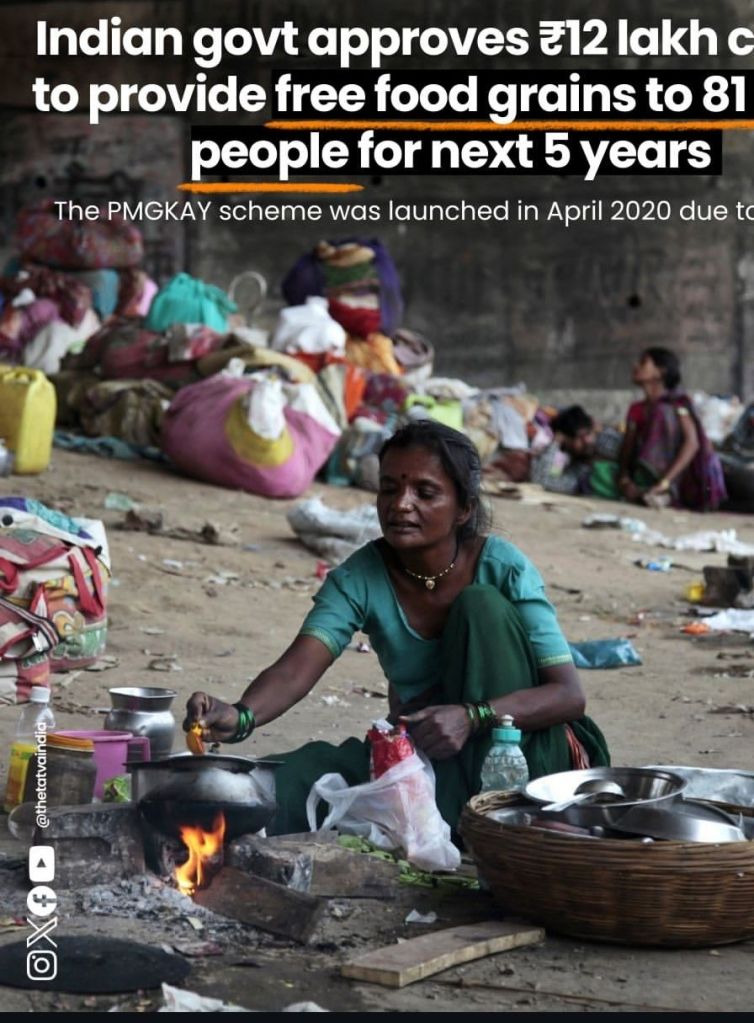
This is where the welfare-state illusion begins. Welfare schemes often succeed in preventing starvation, but they rarely succeed in creating ownership. They stabilize survival without enabling transformation. The most devastating gap is asset inequality. Rural SC and ST households possess average assets of around ₹9 lakh, nearly half the national average and barely a third of upper-caste households. Welfare can provide rations, but it cannot provide land. It can issue subsidies, but not collateral. It can offer benefits, but not generational capital. As long as asset-building remains absent, backwardness becomes a recurring season, not a solvable problem.
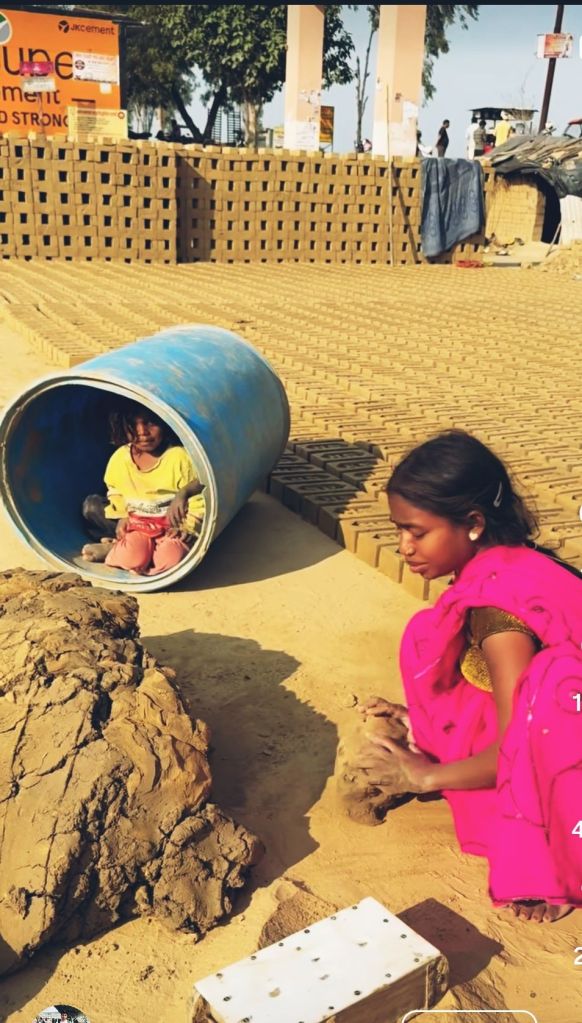
The welfare approach also fails because it ignores occupational entrapment. Many SC communities remain locked in landless casual labour—a double disadvantage where social exclusion meets economic insecurity. Their income fluctuates daily, employment remains informal, and bargaining power is negligible. This is not merely poverty; it is a structural placement at the bottom of the economic ladder. Under such conditions, welfare payments become consumption bridges between two crises, not ladders to a new life.
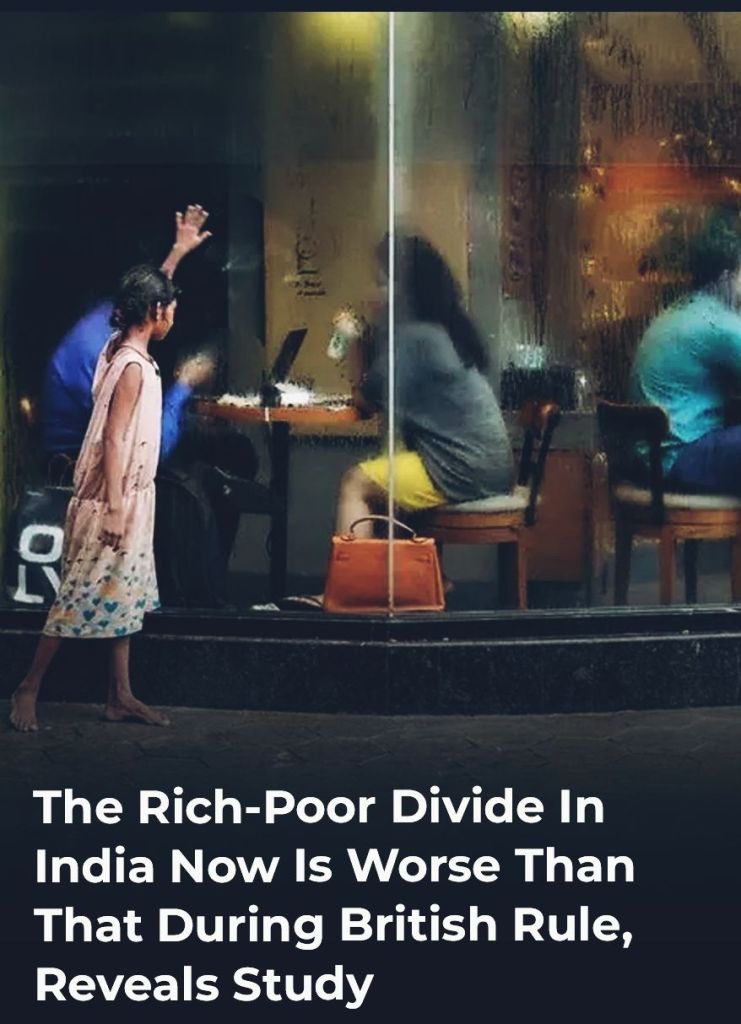
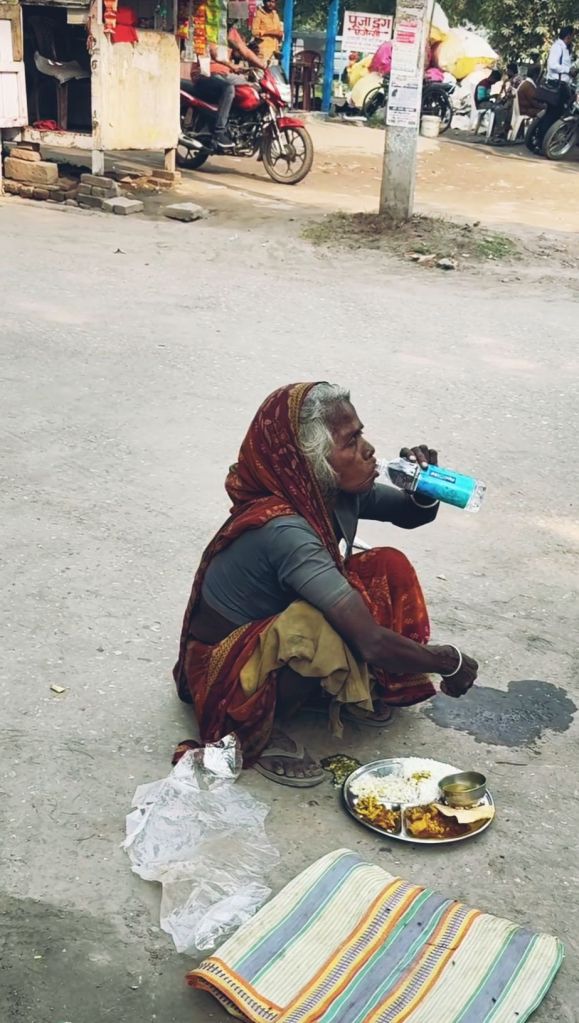
Then comes the employment crisis—the central engine of backwardness. Data from CMIE shows unemployment at 8.1% in December 2024, with nearly 40% youth unemployment and about 30% graduate unemployment. Even among those employed, work is increasingly marked by underemployment, irregular hours, and low productivity engagement. Wage growth remains stagnant, and gender wage gaps continue to be structurally embedded. In the informal sector—where SC/ST participation is disproportionately high—real wages have barely kept pace with inflation, ensuring that employment often fails to translate into dignity or stability. A widely cited public estimate that nearly 70% of Indians survive on ₹100–150 per day captures the brutal reality: India’s welfare state is attempting to manage hunger, while the economy simultaneously produces mass low-paying insecurity at scale.
The most lethal factor worsening this trap is the cost-of-living explosion. Welfare schemes focus heavily on food security, but food inflation is not the real killer anymore. Healthcare inflation runs close to 14%, and education inflation around 11%. A family may eat, but one hospitalization can erase years of stability. For marginalized communities with limited savings and weak insurance coverage, medical emergencies often mean debt traps—moneylenders, mortgaged assets, or permanent economic setbacks. Welfare does not prevent that spiral; it merely delays the fall.
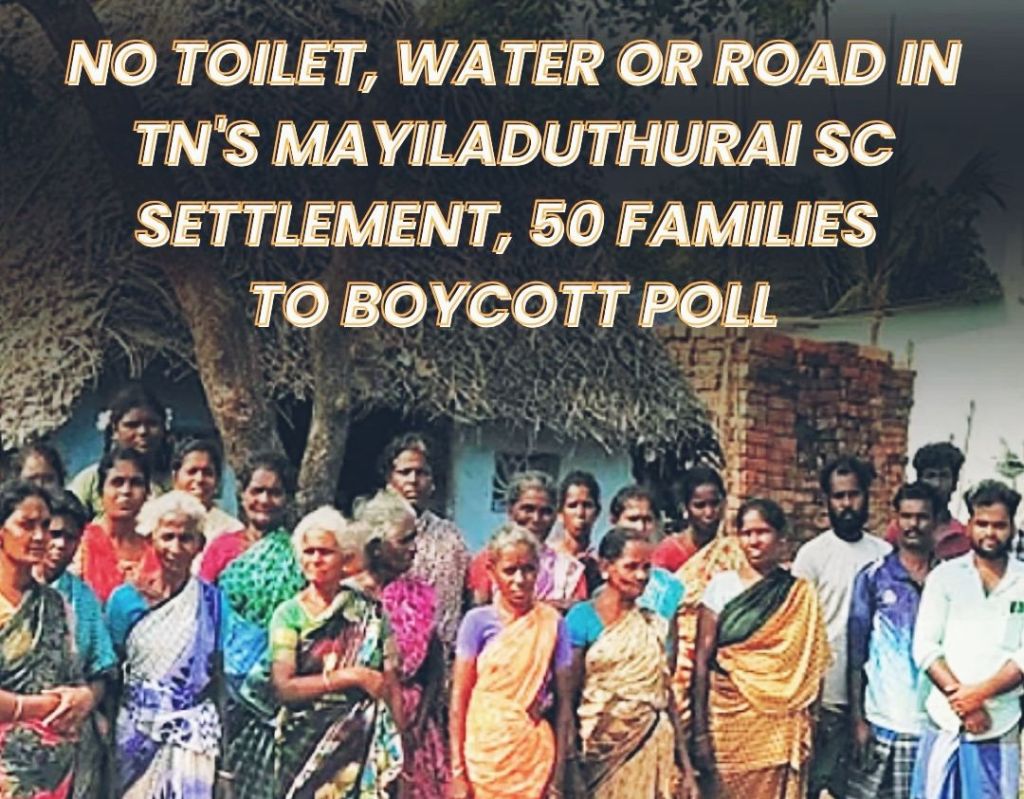
Infrastructure deprivation further exposes the limits of welfare. Telangana’s survey shows that 21.2% still lack tap water access, 13.3% lack toilets, and 5.8% lack proper electricity connections. These are not symbolic deficits. Water access affects women’s time poverty, health expenditure, and livelihood productivity. A girl walking hours for water is not just facing inconvenience—she is losing education, skills, and future income. In such conditions, welfare is not empowerment; it is a bandage on an untreated wound.
Water, in fact, is the most revealing case study of intersecting deprivation. Jal Jeevan Mission has improved coverage, but uneven implementation ensures marginalized settlements remain last-mile casualties. Water scarcity reduces livelihood options, increases disease burden, and forces dependence on casual labour. A welfare system that distributes food without securing water infrastructure is effectively feeding people while draining their productive potential.
The global lesson is clear: welfare must be fused with jobs. The UN Global Accelerator on Jobs and Social Protection argues that social protection and employment must be mutually reinforcing. Albania invests in care economy reforms to boost women’s labour participation. Indonesia aligns skill training with private sector demand through Sector Skills Councils. Senegal integrates employment outcomes into macroeconomic planning so public investment generates decent jobs. Uzbekistan aims to formalize hundreds of thousands of informal workers while expanding legal social insurance. Cambodia’s graduation-based social protection model explicitly transitions households from welfare dependence to sustainable livelihoods.
India’s future cannot be built on welfare as permanent compensation. Welfare must become a launchpad, not a lifestyle arrangement. MGNREGA, for instance, must evolve from a wage guarantee into a skills-to-employment pipeline. Public investment must undergo employment impact assessments so infrastructure spending generates real livelihoods for marginalized groups. Social protection databases must integrate with labour-market platforms so beneficiaries are not merely registered for subsidies but matched to training and formal jobs. Healthcare and education inflation must be tackled through systemic regulation and public provisioning, because backwardness today is as much about rising costs as it is about low income.
The persistence of backwardness is not proof that welfare is meaningless. It is proof that welfare without wealth creation is a sophisticated form of stagnation. Telangana’s survey numbers—SC/ST communities nearly three times more backward, half of SC households trapped in wage labour, only 5% ST presence in private employment—are not administrative failures. They are structural outcomes of an economy where growth is real but mobility is rationed.
India faces a civilizational policy choice. It can continue distributing welfare to manage poverty indefinitely, or it can confront the harder truth that dignity is built through assets, employment, and economic power. Welfare can prevent collapse, but only structural transformation can deliver escape. If India wants to bridge its development divide, it must stop treating backwardness like a hunger problem and start treating it like an ownership problem.
VISIT ARJASRIKANTH.IN FOR MORE INSIGHTS


One response to “The Great Indian Welfare Illusion: Feeding the Poor, Starving Their Future !!!”
Poverty is depends on their stratgy also. Many were using , and depends on free services only. Cast is one major factor, but reservations are not using properly, who get a job with reservation, their families were getting more chances from first onwards. Crimi layer system need to impliment purely not only OBC, but all reserved catogiries. Then they were also improved step by step. In forward cast also many were the poor and needy .
LikeLike