Skip to content
    • About

SOCIAL PERSPECTIVES

  • From Silence to Sovereignty: Pawan Kalyan’s Fiery Quest to Revive Sanatana Dharma in “Secular Modern India!”

    November 30th, 2024

    “From ‘Varahi Declaration’ to the Sanatana Dharma Protection Board, a Vision for Secular Justice and Cultural Revival”

    In the vibrant tapestry of India, where diverse threads weave a rich cultural and spiritual narrative, Sanatana Dharma stands as the cornerstone of the nation’s identity. This ancient tradition, symbolizing continuity and timelessness, has profoundly influenced the ethos of the Indian subcontinent. From its philosophical depth to its vibrant rituals and festivals, Sanatana Dharma has been integral to shaping Indian civilization. Yet paradoxically, Hindus, who form the majority of the population, often find themselves navigating a hostile landscape where their temples, traditions, and rituals face persistent threats. This glaring contradiction raises critical questions: How can the majority faith, foundational to India’s heritage, find itself vulnerable in a secular democracy?

    The Indian Constitution enshrines secularism as one of its core principles, guaranteeing equality for all religions. However, the lived reality diverges sharply from this ideal. Minority communities enjoy robust protections, special provisions, and significant state support, while Hindus frequently encounter bureaucratic hurdles and institutional biases. This imbalance undermines their ability to freely practice their religion and preserve their heritage. Secularism, conceived as a unifying principle, has often been wielded as a double-edged sword, marginalizing Sanatana Dharma. This has led to the unfortunate portrayal of Hindu traditions as regressive or politically inconvenient, diminishing their rightful place in India’s pluralistic framework.

    Amidst this backdrop, actor-turned-politician Pawan Kalyan, now Deputy Chief Minister of Andhra Pradesh, has emerged as a resolute advocate for Hindu rights. His impassioned efforts to preserve and protect Sanatana Dharma resonate with millions of Hindus across India. At a public rally in Tirupati, Kalyan unveiled the Varahi Declaration, a bold manifesto aimed at reclaiming the rights of Hindus and fortifying their cultural identity. This declaration outlines a comprehensive vision to safeguard the religious, cultural, and spiritual aspects of Hinduism, which are increasingly under threat from both internal and external forces.

    Central to Kalyan’s vision is the establishment of a Sanatana Dharma Protection Board, operating at both national and state levels. This body would be tasked with preserving Hindu temples, rituals, and properties, offering protection comparable to safeguards enjoyed by other religious communities. The board’s creation marks a vital step toward institutional support for Hinduism, ensuring that it receives the attention and care it deserves in a country where it is often sidelined.

    Another cornerstone of the Varahi Declaration is the introduction of a Sanatana Dharma Certification system, designed to oversee the sanctity of temple rituals and offerings. This initiative addresses longstanding controversies surrounding temple governance, including the mismanagement of temple properties and the declining quality of religious services. By enforcing adherence to traditional practices, the certification system would safeguard against corruption, restore trust among devotees, and ensure that temples remain centres of genuine spiritual practice rather than commercialized institutions.

    Kalyan has been an outspoken critic of pseudo-secular ideologies that selectively deride Hindu traditions while shielding other faiths from scrutiny. He challenges the tolerance levels of such narratives, asking pointedly, “Would the same leniency exist if similar criticism were directed at other religions?” This question underscores the selective outrage dominating India’s public discourse. By confronting political figures like opposition leader over dismissive remarks about Hindu traditions, Kalyan has exposed the cultural insensitivity embedded in political narratives. His statement—“You might hate Modi ji, hate us, but don’t dare to hate Lord Ram”—resonates deeply with Hindus who feel their spiritual beliefs are under constant attack.

    Kalyan’s advocacy transcends rhetoric, calling for a unified Hindu community that rises above caste, region, and language divisions. In his vision, solidarity is essential for reclaiming the rightful place of Hindus in India’s political and cultural landscape. To this end, he proposes a National Ministry for Religious Affairs, aimed at minimizing governmental interference in Hindu matters and ensuring cohesive policies for preserving Hindu traditions. This ministry would address issues like temple property mismanagement and governance inefficiencies, providing a structured approach to protecting Hindu heritage.
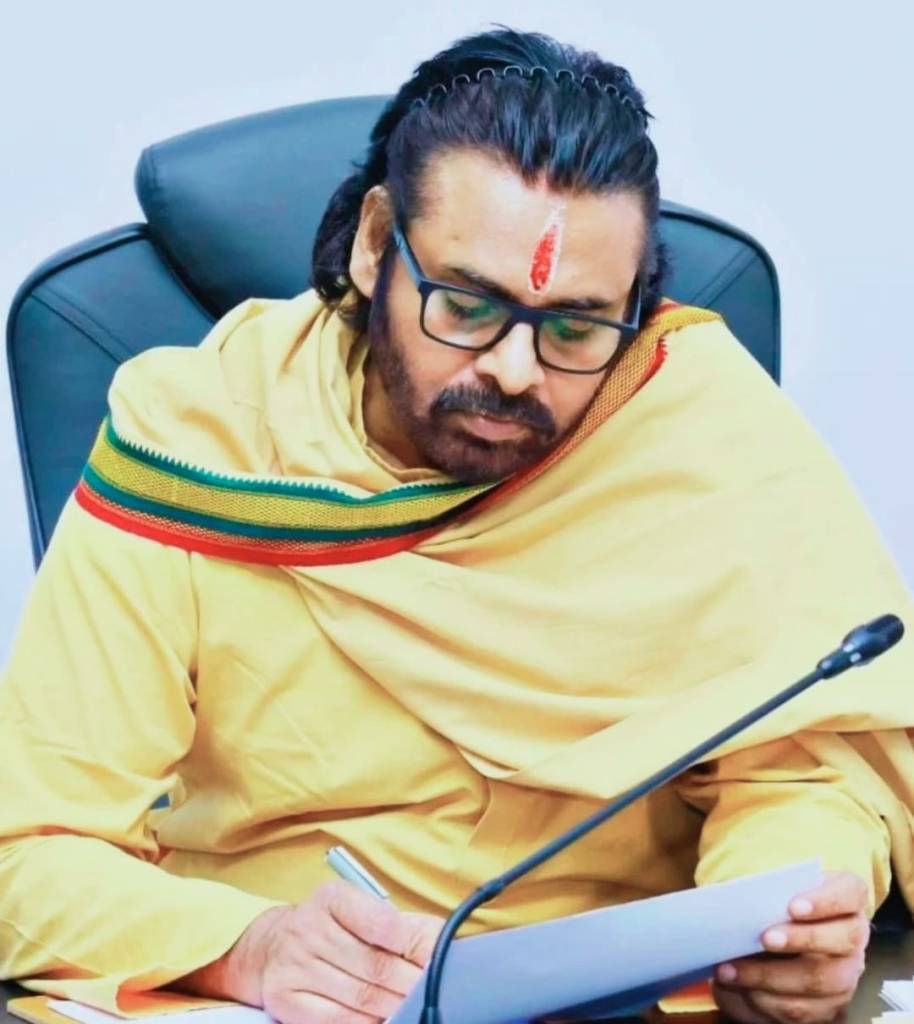
    Kalyan envisions temples as more than places of worship; he sees them as community hubs fostering education, art, culture, environmental stewardship, and economic development. This holistic approach reclaims the ancient role of temples as centres of knowledge and social welfare, ensuring they contribute to the broader well-being of society.

    One of the most pressing challenges Kalyan addresses is the systemic bias against Hindus under the guise of pseudo-secular ideologies. He argues that these narratives embolden anti-Hindu rhetoric while silencing Hindu voices, creating an environment where Hindu religious practices are scrutinized or vilified. Kalyan’s critique extends to the judiciary, which he accuses of unequal treatment in addressing attacks on Hindu traditions. “The law appears weaker toward the strong and stronger toward the weak,” he observes, highlighting disparities in justice application.

    Kalyan’s scrutiny of the Tirumala Tirupati Devasthanams (TTD) serves as a case study for the lack of transparency in temple governance. He has condemned the mismanagement of temple assets and called for reforms to ensure accountability. Addressing derogatory remarks likening Sanatana Dharma to a “virus,” Kalyan likened such attacks to futile attempts to diminish the grandeur of the Himalayas, reaffirming the enduring strength of Hindu traditions.

    The plight of Hindus in India, despite their majority status, underscores the urgent need to protect their rights, rituals, and cultural heritage. The selective application of secularism undermines the equality enshrined in the Indian Constitution, creating a hostile environment for the majority community. Kalyan’s visionary proposals—from the Sanatana Dharma Protection Board to the National Ministry for Religious Affairs—offer a comprehensive roadmap for addressing these inequities. His call for unity, mutual respect among faiths, and genuine secularism presents an inclusive vision for India.

    Sanatana Dharma, the timeless spiritual foundation of India, has profoundly shaped its culture and ethos. However, Hindus often face challenges in freely practicing their faith, as secularism sometimes marginalizes their traditions. Actor-turned-politician Pawan Kalyan, Andhra Pradesh’s Deputy Chief Minister, has emerged as a passionate advocate for Hindu rights. His Varahi Declaration outlines initiatives like a Sanatana Dharma Protection Board and Certification System to safeguard temples, rituals, and heritage. Highlighting institutional biases and political insensitivity, Kalyan calls for unity across caste and regional lines. His bold leadership underscores the critical need to preserve India’s spiritual identity and cultural heritage.

    Visit arjasrikanth.in for more insights

    Also @DrArjasreekanth on X

  • “From Zenith to Phoenix: The Unfolding Drama of the Anil Ambani Dynasty”

    November 29th, 2024

    Anil Ambani’s Fall and Anmol Ambani’s Rise Transformed Debt into Destiny, Restoring the Family Empire and Rewriting the Rules of Resilience

    The saga of the Ambani dynasty is nothing less than a cinematic masterpiece, marked by dramatic highs and lows that would make any screenwriter envious. At the centre of this story is Anil Ambani, once one of the wealthiest individuals on the globe, whose journey took a perilous plunge into staggering debt and financial disarray. However, as fate would have it, this narrative is not merely one of downfall; it is a tale of resilience and revival, with Anil’s son, Anmol Ambani, emerging as a beacon of hope and ingenuity, proving that where there is a will, there’s a way.

    Anil Ambani’s empire reached its zenith as he presided over a vast conglomerate that encompassed telecommunications, power, infrastructure, and entertainment. With ambitious aspirations and grand expansions, he aimed to carve a niche in multiple sectors. Yet, the very ambition that once propelled him to greatness became the catalyst for his decline. Miscalculations led to massive financial obligations, and soon, flagship companies like Reliance Infrastructure and Reliance Power found themselves buried under a mountain of debt, eroding investor confidence. As ventures in defense and media stretched resources thin, the situation spiralled out of control. By 2020, Anil’s empire, once a symbol of prosperity, was teetering on the brink of obliteration, burdened by billions in liabilities and facing mounting legal challenges.

    But just as the sun sets, it can also rise again. The turnaround phase began, marked by Anil’s strategic moves aimed at restoring his key enterprises. The cornerstone of this revival was an aggressive approach to debt reduction. Reliance Power, which had once seemed hopelessly trapped in obligations, achieved a remarkable debt-free status. Reliance Infrastructure followed suit, slashing its debt by an astounding 87%. These monumental changes were not mere strokes of luck; they were the result of meticulous planning and determined fundraising efforts. Global investment firms began to inject capital into the beleaguered companies, buoyed by equity offerings and Foreign Currency Convertible Bonds (FCCBs). This influx of funds provided the much-needed lifeline for the businesses to shift their focus towards new projects and growth opportunities.

    A pivotal aspect of this resurgence has been a strategic pivot towards renewable energy. Recognizing the global shift towards sustainability, Reliance Power embraced this trend, securing significant orders such as a 500 MW battery storage system in collaboration with Battery Storage Systems Solutions (BSSS). This bold foray into renewable energy has not only positioned Reliance as a frontrunner in the green sector but has also rekindled investor interest. The subsequent rise in market confidence was palpable, with Reliance Power’s market capitalization soaring past ₹167 billion, marking a striking reversal of fortunes.

    Yet, the remarkable restructuring of debt was just one chapter in this extraordinary comeback. The emergence of Anil Ambani’s sons, Jai Anmol and Jai Anshul, as key figures in steering the family business towards stability and growth represents another layer of this compelling narrative. Their ascension has infused fresh energy and innovative thinking into the family legacy. Anmol Ambani, in particular, has taken on critical responsibilities, starting his journey at Reliance Mutual Fund in 2014 and quickly climbing the ranks to become the Executive Director of Reliance Capital. His strategic foresight and business acumen have been instrumental in reviving Reliance Capital and launching new ventures such as Reliance Life Insurance and Reliance Capital Asset Management.

    Anmol’s influence is evident in every strategic decision made under his leadership. He has played a significant role in fortifying the group’s partnerships, notably assisting Japan’s Nippon firm in increasing its stake in Reliance Nippon Life Asset Management. These alliances not only injected much-needed capital but also enhanced the credibility of the Reliance Group. The impact of Anmol’s endeavours is reflected in his impressive personal net worth of over ₹20,000 crore, highlighting his capability to reverse the tide and restore the family’s stature.

    The ripple effect of the Ambani revival extends beyond financial metrics; it embodies a story of resilience, tenacity, and the courage to dream again in the face of adversity. Six years ago, Anil Ambani’s empire appeared destined for the annals of history as a cautionary tale of overreach and mismanagement. Today, the resurgence of Reliance Power and Reliance Infrastructure stands as a testament to recovery and reinvention. The involvement of the younger Ambanis assures that this legacy is in capable hands, with a bright future on the horizon.

    As the Anil Ambani dynasty writes its latest chapter, it serves as an inspiring lesson about determination and adaptability. Anmol Ambani has demonstrated that setbacks are not the end of the road but rather opportunities to rebuild with renewed vigour. By confronting past mistakes head-on, embracing innovation, and capitalizing on emerging opportunities, the Anil Ambanis have illustrated that resilience is not merely a trait but a way of life.

    The Ambani story transcends the confines of a single family; it is a narrative that resonates with anyone who has faced challenges and dared to rise again. Anil Ambani’s descent into financial turmoil, which once seemed irreversible, has transformed into a saga of strategic decisions and spirited involvement from his son Anmol. Together, they have not only turned sceptics into believers but also redefined the parameters of success in the business realm.

    With their eyes set on the future, the Anil Ambani family is poised to continue their legacy of innovation and leadership. From overcoming debt to pioneering initiatives in renewable energy, they have demonstrated that no challenge is insurmountable when determination and strategy align. The Anil Ambani dynasty, once characterized by financial struggles, now stands as a beacon of hope and inspiration for those navigating the tumultuous waters of the business world.

    As the curtains rise on this new act in the Ambani saga, the world watches with bated breath, eager to see how this family, marked by resilience and reinvention, will continue to shape the landscape of business and beyond. The rise, fall, and phoenix-like revival of the Ambani dynasty is a narrative that will echo through the ages, a reminder that where there’s a will, there’s always a way.

    Visit arjasrikanth.in for more insights

  • When Power Blinds: A Tale of Torture, Karma, and Lessons for Bureaucracy

    November 28th, 2024

    Tyranny, Torture, and Karma: The Bureaucratic Betrayal That Backfired
    In the corridors of power, where authority often blinds reason, there are times when the abuse of power becomes so rampant that it leads to its inevitable downfall. One such story emerges from the state of Andhra Pradesh, where a former Member of Parliament endured an unimaginable ordeal at the hands of law enforcement officers. This harrowing tale, which stands as a stark reminder of the dangers of unchecked power, not only highlights the extreme abuses that can occur when political loyalty outweighs legal and ethical standards, but also the karmic consequences that ultimately follow.

    The nightmare began in May 2021, when the man, a sitting MP at the time, was arrested by the state’s Crime Investigation Department (CID) under highly questionable circumstances. The arrest lacked the necessary legal procedures, with no medical examination conducted, and no respect for due process. The reason for his arrest was alleged sedition, stemming from remarks he made that were critical of the ruling government. But the political motivations behind the arrest were just the beginning. What followed was far more horrific than a simple political retaliation; it was a descent into barbarism.

    Once in custody, He was subjected to brutal physical and psychological torture. The details of his suffering are difficult to fathom. He was beaten with rubber belts and sticks, his legs were bound with ropes, and officers sat on his chest, trying to suffocate him. His health, already compromised by a previous heart surgery, was disregarded in the cruelty of his treatment. The officers, apparently acting on orders from their political superiors, went so far as to livestream his agony to the state’s then Chief Minister. This was not just a case of torture; it was an attempt to destroy a man physically, emotionally, and politically.

    Denied even basic human rights such as water or medical care, his pleas for mercy were ignored. The inhumane treatment was so severe that it seemed designed to end in his death, which could then be conveniently attributed to a heart attack. The situation escalated to a point where the system, designed to uphold justice, had instead become an instrument of oppression.

    Adding to the corruption, there were further attempts to cover up the abuse. The superintendent of a major government hospital allegedly conspired with CID officers to falsify medical reports, declaring the man’s body injury-free despite the obvious signs of torture. This falsification of medical evidence was a critical part of the conspiracy, as it ensured the abuse went unreported and unpunished, extending the reach of those in power to manipulate facts and stifle dissent.

    However, this dark chapter in his life took a turn when the judiciary stepped in. India’s Supreme Court, recognizing the gross violation of human rights, ordered an independent medical examination at a military hospital. The examination, conducted under the watchful eyes of the judiciary, confirmed the extent of his torture. This intervention not only brought much-needed attention to the case but also marked the beginning of a shift in the tide. The courts granted him bail, imposing strict conditions to ensure his rights were protected and that he would be treated fairly moving forward.

    With a change in government came a renewed effort to seek justice for the man who had been wronged. The new administration, different from the one that had condoned the abuse, reopened investigations into the case, holding those responsible for the torture accountable. Several senior officers who had been directly involved in the unlawful treatment now faced serious criminal charges. Among them were a number of police officials who had once wielded significant power, but were now facing arrest and subsequent legal battles. Their fall from grace was a direct consequence of their blind allegiance to political orders, showing that no matter how high one climbs, the abuse of power will eventually lead to ruin.

    This saga provides a crucial lesson for bureaucrats and government officials everywhere. It demonstrates the inherent dangers of blind obedience to political orders, especially when those orders contravene the rule of law and basic ethical standards. Politicians may come and go, but the bureaucrats who implement such orders must live with the consequences of their actions. The officers who participated in the torture, once secure in their positions of power, are now being forced to defend their actions in courts and in the court of public opinion. Their downfall serves as a reminder that justice, though delayed, will always catch up with those who misuse their authority.

    The broader implications of this case are far-reaching. It serves as a cautionary tale for bureaucrats and public servants everywhere. Upholding the rule of law and maintaining ethical standards is not only a professional duty, but also a safeguard against political instability and transitions. When law enforcement is used as a tool of political expediency, it erodes public trust in the system and undermines the very foundations of democracy. It is a reminder that power, when unchecked, can lead to corruption and tyranny.

    This story also underscores the vital role that civil society and the judiciary play in protecting the rights of individuals and ensuring justice is served. Public awareness, activism, and judicial intervention were instrumental in bringing the truth of this case to light. It was the vigilance of the public and the intervention of the courts that prevented this abuse from being swept under the rug, and ensured that the perpetrators faced the consequences of their actions. The case emphasizes the need for continued activism and vigilance to protect human rights and ensure accountability at all levels of governance.

    For the man who endured these horrors, the scars remain, both physical and emotional. But his resilience and pursuit of justice have transformed him into a symbol of resistance against tyranny. From a victim of abuse to a figure who now inspires hope and resilience, his journey proves that no one, no matter how powerful, is beyond the reach of justice.

    The eventual downfall of the officers involved in the torture also reflects a broader shift in societal attitudes. There is a growing intolerance for the misuse of power and a rising demand for accountability from those who are entrusted with positions of authority. This shift is an encouraging sign for the future, as it suggests a move towards a more just and equitable society where the rule of law prevails, and political expediency does not override justice.

    In conclusion, this story is not merely about one individual’s fight for justice. It is a clarion call for systemic change, one that exposes the dangers of unchecked power and the importance of maintaining integrity in positions of authority. For bureaucrats, it is a stark reminder to prioritize the rule of law over political loyalty, as the karmic consequences of their actions are often inevitable. Justice may be delayed, but it can never be denied.

    Visit arjasrikanth.in for more insights

  • COP29: Climate Clash or Cooperation? The High-Stakes Fight for Earth’s Survival

    November 27th, 2024

    Unmet Promises, Fossil Fuel Feuds, and the Quest for Equity in a World on the Brink

    In a world increasingly ravaged by the effects of climate change, the significance of international gatherings focused on environmental issues cannot be overstated. Recently, representatives from nearly every country convened at COP29 to negotiate critical strategies aimed at addressing global warming and ensuring that the Earth does not exceed the crucial threshold of 1.5 degrees Celsius above pre-industrial levels. This limit is a vital point of concern for scientists, who warn that crossing it could lead to catastrophic consequences such as devastating floods, prolonged droughts, and extreme heat waves. As discussions unfolded, the stakes became clearer, particularly for countries on the front lines of climate impacts and the citizens who inhabit them.

    Among the myriad of topics that dominated the agenda, three key issues emerged as focal points: climate finance, the fate of fossil fuels, and the intricacies of carbon markets. Climate finance, in particular, has become a contentious battleground. The question at hand is how much financial assistance wealthier nations should extend to poorer countries grappling with the dual challenges of combating climate change and transitioning to cleaner energy sources. A significant proposal emerged during the discussions: a commitment of $300 billion annually by 2035 to support developing nations. However, the proposal was met with skepticism, especially from India, which perceived it as another politically convenient figure rather than a genuine commitment to climate justice.

    The backdrop of this negotiation reveals a history of unmet promises. In 2009, during COP15, developed nations pledged to provide $100 billion annually by 2020 to assist developing countries. This fund was intended to facilitate two primary objectives: mitigation—preventing further climate change through investments in renewable energy projects like solar farms and wind turbines—and adaptation, which involves helping vulnerable countries prepare for the realities of climate change through measures such as constructing flood defences and developing drought-resistant crops. Unfortunately, the reality fell short of expectations; by 2020, only $83.3 billion had been mobilized, and even by 2021, this figure had only increased to $89.6 billion. The target was finally achieved in 2022, but discrepancies arose over the true nature of these funds. Critics, including organizations like Oxfam, argue that the actual amount available for climate adaptation is significantly lower when loans and exaggerated claims about private sector contributions are taken into account.

    India’s response to the proposed $300 billion target was unequivocal. Officials from the countries dismissed it as a “joke,” citing the lack of seriousness behind such a commitment. They argued that the proposal simply shifted the financial responsibility onto developing countries, relying heavily on loans rather than grants. This perspective reflects a broader frustration with the historical pattern of climate finance, where promises often remain unfulfilled and the burden of climate action falls disproportionately on those least equipped to handle it.

    The discourse around fossil fuels further complicated negotiations at COP29. The pivotal question was whether to phase out fossil fuels altogether or to seek a phasedown approach, which entails gradually reducing their use over time. Many developed nations, particularly the United States, advocated for a complete phase-out, while countries like India and China supported a more gradual reduction. India’s position is rooted in historical responsibility; developed nations have amassed wealth through centuries of fossil fuel exploitation, and now expect developing nations to halt their reliance on these energy sources while still striving for economic growth.

    The economic realities of transitioning away from fossil fuels cannot be overlooked. Currently, coal accounts for approximately 50% of India’s electricity generation. A rapid phase-out could jeopardize industries, escalate energy costs, and hinder economic growth, particularly in developing regions. Instead, India has pushed for a phasedown approach, advocating for financial and technological support from wealthier nations that would enable a smoother transition towards renewable energy.

    Negotiations took a contentious turn when Saudi Arabia faced accusations of altering official texts to favour its agenda. Traditionally, negotiation documents are shared in non-editable formats to ensure fairness; however, allegations arose that Saudi delegates modified the language from “phase out fossil fuels” to “phase down fossil fuels.” This controversy exemplified the broader tensions within the negotiations, as oil-exporting nations sought to protect their interests at the expense of ambitious climate action.

    Ultimately, the outcome of COP29 fell short of binding commitments regarding the fate of fossil fuels, marking a significant setback for global climate action. The lack of decisive agreements reflects a troubling trend where oil-exporting nations continue to wield disproportionate influence over negotiations, undermining the urgency required to address the climate crisis.

    As the dust settles on COP29, the implications of these discussions extend beyond financial commitments and energy transitions. The future of global climate action hangs in the balance, with the next COP meeting set to take place in Brazil. The central question remains: will the international community muster the political will to bridge the gap between wealthy and poor nations, or will the cycle of unmet promises continue? The urgency of climate change demands a concerted global response, one that prioritizes equity and justice for all, particularly those most vulnerable to its impacts.

    As citizens, the stakes in this dialogue are personal. The decisions made at these high-level meetings can determine the quality of life for future generations. Climate change is not an abstract issue; it is a reality that affects food security, health, and livelihoods around the world. The outcomes of COP29 serve as a stark reminder that the fight against climate change requires not only international cooperation but also a commitment to accountability and transparency.

    In conclusion, the discussions and decisions stemming from COP29 encapsulate the complexities of global climate negotiations. The rejection of the $300 billion annual target by India, the debates on fossil fuel usage, and the controversies surrounding negotiation tactics highlight the challenges facing the international community. As the world looks ahead to future meetings, the hope remains that a genuine commitment to equitable climate action will prevail, ensuring that nations stand together in the face of an existential threat. The urgency to act is now, and the responsibility lies with all of us to advocate for a sustainable and just future for our planet.

    Visit arjasrikanth.in for more insights

  • “The Phantom Fricassee Phenomenon: Cloud Kitchens Are Taking Over the Culinary Cosmos”

    November 26th, 2024

    No Tables, No Waiters—Just Pure Culinary Convenience Delivered to Your Doorstep!

    In today’s fast-paced world, convenience reigns supreme, and the way we experience food is undergoing a seismic shift. Traditional dining, with its familiar atmosphere of waitstaff, menus, and brick-and-mortar restaurants, is being gradually overtaken by a new and innovative model: the cloud kitchen. Also known as ghost kitchens or dark kitchens, these delivery-only food hubs are rapidly gaining ground due to their efficiency, cost-effectiveness, and the ability to offer an extensive range of cuisines—all without the need for a physical restaurant or in-person service.

    The cloud kitchen market in India, valued at approximately USD 969.5 million in 2023, is projected to see tremendous growth, reaching around USD 2.9 billion by 2032. This growth is fuelled by the surge in demand for online food delivery services, further amplified by the expansion of food delivery platforms like Swiggy, Zomato, and Uber Eats. As consumer habits evolve, the cloud kitchen market is estimated to grow at a compound annual growth rate (CAGR) of 13.2%. Rebel Foods, one of the largest players in the sector, operates a variety of popular brands, including Faasos and Behrouz Biryani, showing the industry’s potential to scale and cater to diverse culinary preferences.

    At the heart of the cloud kitchen revolution is the idea of a kitchen without a traditional restaurant space. These “ghost kitchens” operate from behind the scenes in industrial spaces or warehouses, focusing solely on cooking and packaging meals for delivery. In contrast to conventional dining venues, cloud kitchens do not require prime real estate, fancy décor, or large waitstaff, allowing them to save costs on rent and other overhead expenses. This allows them to allocate more resources towards creating high-quality food and delivering it with speed, offering an unparalleled level of convenience.

    The low overhead costs of cloud kitchens make them an attractive business model for aspiring entrepreneurs. Without the need for a physical storefront, they can rent kitchen space and tap into a vast market through delivery platforms. A single cloud kitchen can house multiple brands, serving an array of dishes—from pizza and burgers to sushi and vegan bowls—all from the same location. This flexibility allows them to respond to consumer trends and test new concepts with lower financial risk. Unlike traditional restaurants that are tied to a specific cuisine or location, cloud kitchens can adapt quickly and experiment with diverse offerings.

    India, with its rapidly growing middle class, tech-savvy population, and appetite for diverse cuisines, has become a key battleground for cloud kitchens. The COVID-19 pandemic further accelerated this trend by forcing many people to rely on online food delivery due to restrictions on physical dining. Cloud kitchens, with their scalable and efficient model, were perfectly poised to meet this surge in demand. Consumers, increasingly comfortable with the convenience of ordering food online, turned to cloud kitchens for quick, reliable, and diverse meal options.

    One of the key selling points of cloud kitchens is their ability to offer a wide range of food options from a single location. Whether a customer is in the mood for a traditional Indian thali, a slice of New York-style pizza, or a plant-based smoothie bowl, they can easily access global flavors and cuisines with just a few taps on their smartphone. Cloud kitchens, relying on food delivery apps, ensure customers have real-time access to tracking information and fast delivery times, making the entire process seamless and stress-free.

    For food entrepreneurs, cloud kitchens offer a low-cost entry into the food business. With minimal upfront investment required for a physical location or large staff, entrepreneurs can rent kitchen space, partner with delivery platforms, and focus on perfecting their food offerings. Rebel Foods, which started as Faasos, has become a pioneer in this space, offering multiple virtual brands from a single kitchen. This model enables small businesses to scale quickly and affordably, democratizing access to the food industry for a new generation of chefs and restaurateurs.

    Despite their many advantages, cloud kitchens do face certain challenges. The delivery experience remains crucial to their success. Factors such as delivery time, packaging quality, and food presentation directly impact customer satisfaction. Even the most efficient kitchen system can falter if the meal arrives late or poorly packaged. Therefore, cloud kitchens invest heavily in technology and logistics to ensure smooth and timely deliveries. Third-party delivery partners like Swiggy and Zomato play a pivotal role in ensuring that meals reach customers promptly and in perfect condition.

    Another challenge is inventory management and maintaining food quality. Without the physical presence of a restaurant front, managing inventory and ensuring fresh ingredients can become tricky. Cloud kitchens must rely on integrated inventory systems to prevent wastage and maintain efficiency. Additionally, ensuring compliance with food safety regulations, including obtaining necessary licenses such as FSSAI (Food Safety and Standards Authority of India), is paramount to maintaining hygiene and food safety standards.

    The future of cloud kitchens looks promising, with the market expected to reach a size of $4 billion by 2030. As consumer preferences shift further towards convenience, speed, and variety, cloud kitchens are poised to become an integral part of the global food landscape. This shift signifies not just a change in where we eat, but also how we eat. In the coming years, the cloud kitchen model will likely become the dominant force in the food industry, providing food lovers with more options and faster delivery than ever before.

    In conclusion, cloud kitchens represent a revolutionary shift in the food industry, offering a cost-effective and scalable model that meets the demands of modern consumers. The model prioritizes convenience, variety, and speed, signalling a departure from traditional dining experiences. While challenges remain, the future of cloud kitchens is bright, and this innovative approach to dining is poised to redefine the culinary world for years to come.

    visit arjasrikanth.in for more insights

  • “Rural Rubbish Revolution: Pawan Kalyan’s Waste-to-Wealth Masterplan”

    November 25th, 2024

    “From Polluted Pastures to Prosperous Villages – Andhra Pradesh’s Bold Step Toward Sustainability“

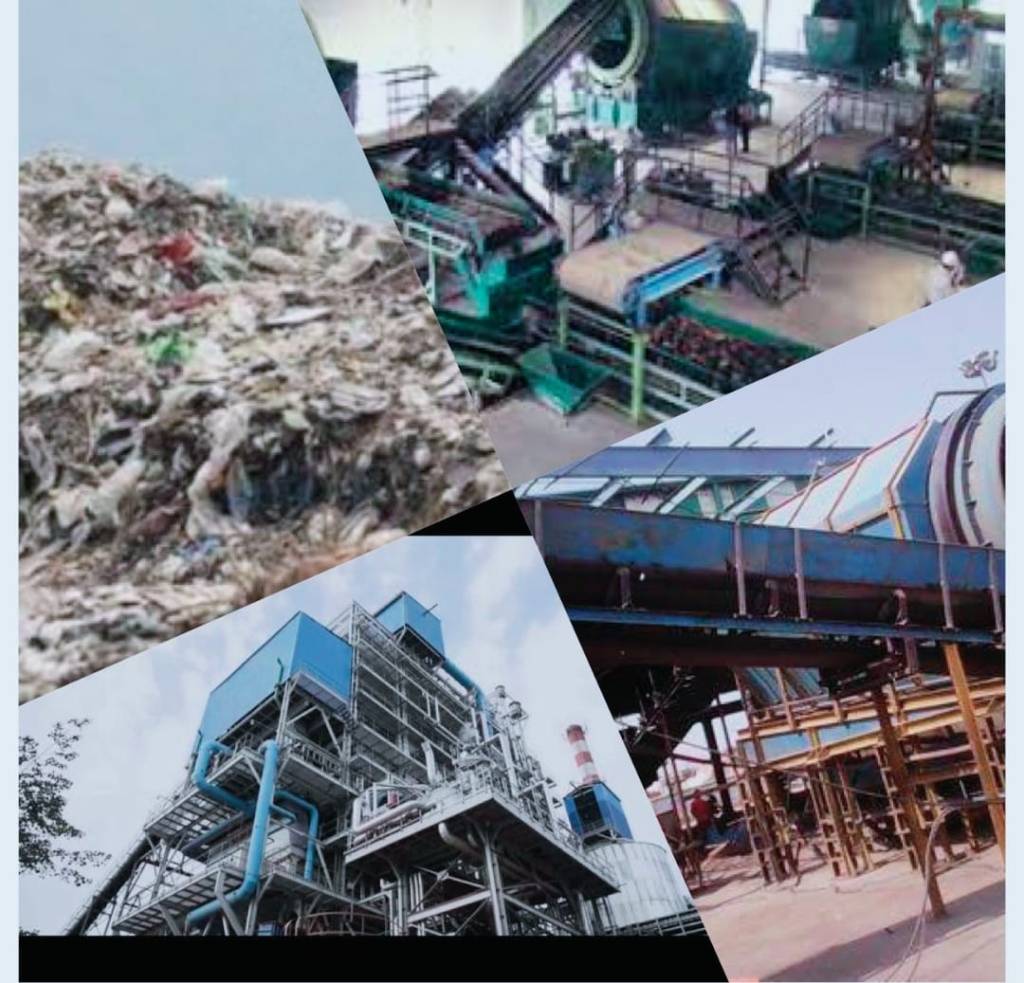
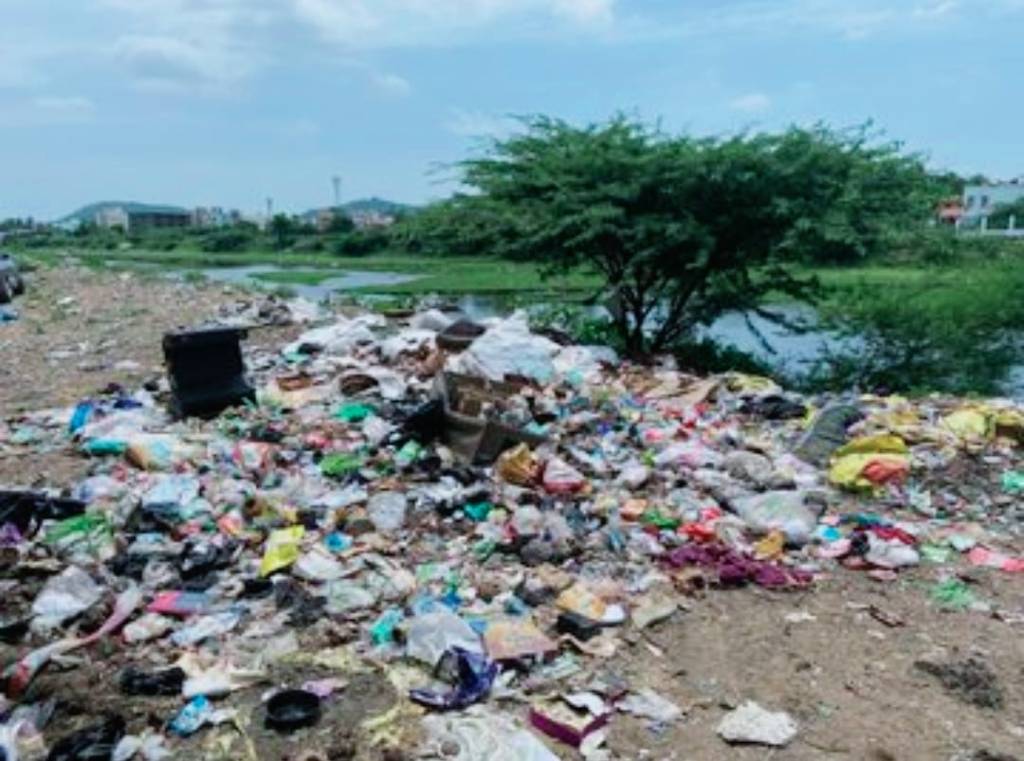
    Waste is not merely an environmental challenge; it is a lost economic opportunity. In Andhra Pradesh, the reality of rural waste management underscores this paradox. While urban conglomerates leverage recycling units to create wealth, over 70% of the 6,500 tonnes of daily waste in the state is generated across its 13,000 villages. Most of this rural waste ends up polluting water bodies, canals, and village outskirts, exposing rural and animal populations to severe health risks.

    Deputy Chief Minister Pawan Kalyan has championed a ground-breaking initiative to bridge this gap, bringing a vision of economic viability to rural waste management. With a proactive plan to establish cluster dump yards and create wealth from waste, Kalyan’s strategy represents a turning point for Andhra Pradesh’s rural development. The comprehensive initiative is rooted in infrastructure development, environmental sustainability, and an inclusive approach to community well-being.

    Andhra Pradesh, with 16,152 inhabited revenue villages and 689 hamlets, has 96.03% of its villages populated. The state’s 26 districts include over 13,324 village panchayats, many of which lack structured waste management systems. The significance of addressing rural waste lies not just in its volume but also in its composition and effects.

    India as a whole generates 1.15 lakh metric tons of municipal solid waste daily, with only 23% processed or treated. Andhra Pradesh contributes a significant portion, with 6,440 tonnes per day generated by urban local bodies alone. However, the rural areas, home to 70.53% of the state’s population, contribute the lion’s share of the state’s overall waste. Yet, unlike urban centres with established recycling facilities, rural areas are left behind due to economic constraints and infrastructural gaps.

    One of the most transformative aspects of Kalyan’s vision is the concept of **cluster dump yards**. This approach involves establishing centralized waste disposal facilities for groups of 10–15 gram panchayats. The move addresses a persistent issue: the unavailability of adequate government land for individual dumping yards in each village. By pooling resources and fostering collaboration among neighboring gram panchayats, this model offers a scalable and sustainable solution.

    The benefits of cluster dump yards extend beyond waste management. These shared facilities promote inter-village cooperation, reduce land use for waste disposal, and enable the creation of centralized recycling and composting units. Moreover, they form the backbone of a system that ensures waste is seen not as a problem but as an opportunity to generate wealth.

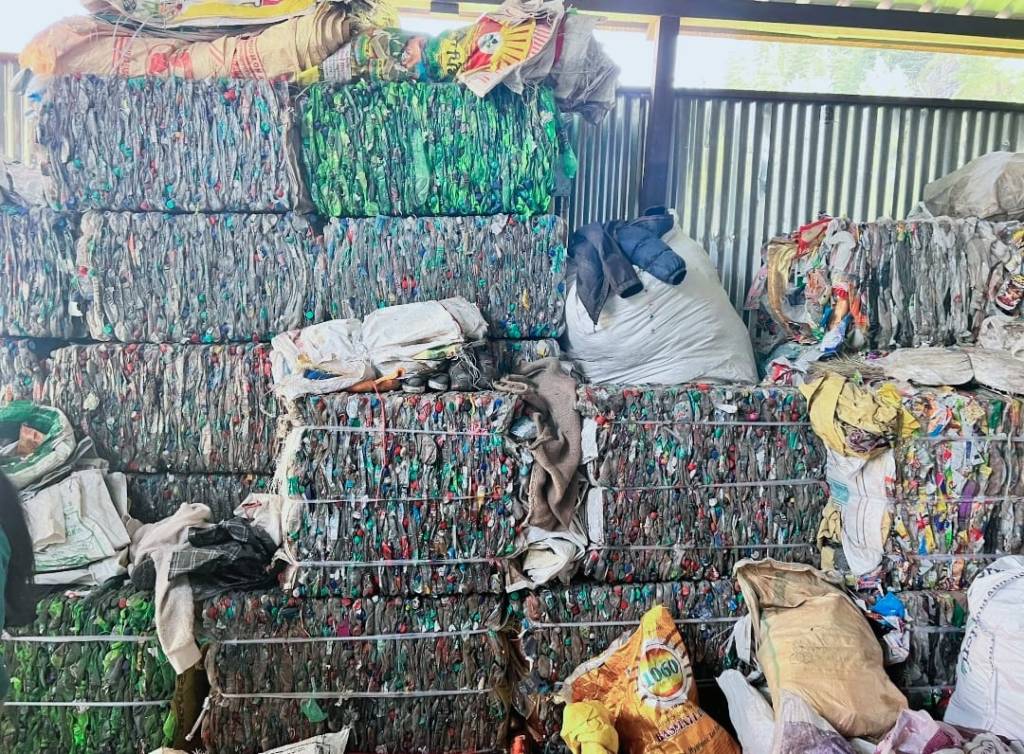
    The cluster dump yard initiative complements Andhra Pradesh’s existing waste management programs, particularly the establishment of Solid Waste Processing Centres (SWPCs). Under the Mahatma Gandhi National Rural Employment Guarantee Scheme (MGNREGS), the state has constructed 10,808 SWPCs, of which many are made non functional during last five years. These centres process waste into compost and segregate recyclables, demonstrating the economic potential of waste.

    The state’s flagship branded compost, “Amaravathi Gold,” highlights the innovative outcomes of these centres. Derived from biodegradable waste, the compost is sold to agricultural communities, creating a circular economy. By expanding the functionality of SWPCs and linking them with cluster dump yards, Kalyan’s strategy aims to ensure a seamless system from collection to wealth generation.

    One of the key barriers to rural waste management has been economic feasibility. Recycling and waste processing have traditionally been concentrated in urban areas where economies of scale justify the investment. Rural areas, with their dispersed populations, struggle to attract such initiatives.

    Kalyan’s plan tackles this challenge head-on by emphasizing self-sustainability and resource optimization. The cluster model reduces costs by sharing facilities, while compost and recycled materials provide revenue streams. Additionally, the government’s commitment to funding operations and seeking financial support from the 15th Finance Commission ensures the initiative’s long-term viability.

    Improving rural waste management is not just an economic exercise—it is a social and environmental imperative. The improper disposal of waste in rural areas often leads to the contamination of water bodies and agricultural fields, threatening livelihoods and public health. Pawan Kalyan’s initiative directly addresses these concerns, offering a cleaner, healthier environment for rural communities.

    The initiative also highlights inclusivity. By involving local communities in waste collection and processing, the program fosters a sense of ownership and responsibility among residents. Green Ambassadors and village volunteers play a pivotal role, ensuring community engagement and accountability.

    The vision of Pawan Kalyan is ambitious but achievable. By March 2025, his plan includes reviving 1,426 non-functional SWPCs and ensuring that partially functional ones are fully operational. The goal of making all Gram Panchayats self-sustainable by 2026 reflects a commitment to long-term success. This timeline emphasizes action and results, not just policy.

    Moreover, the initiative serves as a blueprint for other states grappling with similar challenges. By proving that rural waste management can be economically viable and socially impactful, Andhra Pradesh is setting a precedent for sustainable rural development nationwide.

    Rural waste management in Andhra Pradesh is no longer a neglected issue, thanks to the visionary leadership of Pawan Kalyan. By creating wealth from waste, establishing cluster dump yards, and strengthening SWPCs, the state is on the path to a cleaner, healthier, and more prosperous future. The initiative transforms waste from a burden to a resource, highlighting the interconnectedness of environmental sustainability, economic growth, and community well-being. Andhra Pradesh is not just managing waste—it is redefining it as an asset. In the words of Deputy Chief Minister Pawan Kalyan, the ultimate goal is to ensure that “no rural community is left behind in the journey towards sustainable development.”

    Visit arjasrikanth.in for more insights

  • Galactic Gambits: Adani’s Solar Saga Amidst a Cosmic Courtroom Clash

    November 24th, 2024

    Celestial Crossroads: Adani’s Bold Voyage from Legal Maelstroms to Solar Milestones
    A tempestuous tale has erupted from American courtrooms, buzzing with sensational claims that the Adani Group engaged in bribery, allegedly shelling out $250 million to certain non-BJP Indian state governments between 2021 and 2022. This exposé ripples through the media, painting a complex picture that warrants a closer examination of the facts. The states named—Chhattisgarh, Tamil Nadu, Andhra Pradesh, and Odisha—are all governed by parties other than the BJP, making the accusations more a story of tangled political webs than straightforward malfeasance. As the smoke begins to scatter, it becomes evident that blame is as much directed at accepting politicians as it is at those allegedly offering bribes.

    Amidst this tempest, Gautam Adani stands on a summit of significant achievement. The accolade of winning the world’s largest solar award is a testament to the group’s expansive vision, one that promises to create 400,000 direct and indirect jobs while displacing an astonishing 900 million tonnes of CO2 emissions. This landmark venture showcases not only the positive environmental and economic impact but also reflects Adani’s role in spearheading India’s transformation toward renewable energy. The vision encapsulated in this project aligns with the global shift toward sustainable practices, positioning India as a key player in the renewable landscape.

    Despite these developments, whispers of fraud echo in the corridors of U.S. legal institutions. Accusations of a $3 billion sleight of hand regarding loans and bonds, allegedly masked from lenders and investors, have surfaced like ghosts. Adani rebuffs these claims as baseless—mere castles in the air lacking evidentiary foundation—and vows to take all legal recourse necessary to clear its name. This defiance signifies not only the resilience of the Adani Group but also a broader narrative about the interplay between corporate power and regulatory scrutiny in an increasingly interconnected world.
    Speculation crescendos with its own share of drama: the U.S. allegedly does not want Adani raising funds, reminiscent of the Hindenburg saga that had disrupted plans previously. Now, with Adani poised to issue USD-denominated bonds, voices claim the company clandestinely curtailed power supply to Bangladesh—suggesting a geopolitical chess game rather than corporate subterfuge. Observers posit that these allegations could dissipate should Adani choose to waive off Bangladesh’s pending electricity dues, indicating a strategic entanglement driven by broader international designs.

    When contemplating the dynamics of bribery, a global phenomenon, it is imperative to question the roles of those on the receiving end. Political intermediaries and high-ranking bureaucrats worldwide often maneuver as gatekeepers, facilitating project approvals. If entrepreneurs stand accused, equity demands scrutiny of politicians fostering environments where graft thrives. By examining the broader context of political corruption, we uncover a narrative that implicates not only corporate entities but also the very structures that allow such practices to flourish.

    Predictably, the Indian opposition seized upon the U.S. indictment, rallying for a Joint Parliamentary Committee (JPC) probe against Gautam Adani and his associates. Figures like Rahul Gandhi fueled public frenzy, alleging malfeasance without firm footing, underscoring political agendas over substantiated evidence. Meanwhile, the Solar Energy Corporation of India (SECI) maintains there are no grounds to predicate a probe, rendering the furor largely rhetorical. This dichotomy highlights the political motivations underlying the accusations, as opposition leaders leverage sensational claims to undermine the ruling government.

    Noteworthy is who benefits from this convoluted courtroom narrative. In the labyrinthine U.S. legal ecosystem, settlements typically hinge on financial negotiations, hence savvy lawyers recognize perennial cases like Hindenburg as lucrative ventures. The palpable perception is one of opportunism, with speculators deploying allegations as tools to negotiate larger stakes. It is widely acknowledged that Hindenburg represents a strategic proxy potentially leveraged by oppositional forces to recalibrate political alignments against the Modi administration.

    Nonetheless, the repercussions for Adani have been significant. The litigation has precipitated financial turbulence, wiping out $34 billion following Kenya’s revocation of airport and power contracts. Furthermore, a $600 million bond offering was withdrawn, illustrating financial institutions’ sensitivities amid ongoing legal uncertainties. These tensions lay bare not just risk management predicaments for corporates but also the cascading economic consequences of cross-border legal engagements, revealing the vulnerability of even the most robust corporations to external pressures.

    In the eye of the storm, it becomes crucial to reiterate the imperative support for Adani. Beyond the crucible of controversy, Adani symbolizes an infrastructural dynamo critical to India’s future trajectory. The infrastructure being cultivated by Adani is not merely for today but is scaffolding for tomorrow—paramount in elevating both national capacity and the Indian populace. This vision aligns with national aspirations, where infrastructure development serves as a pathway to broader socio-economic upliftment.

    To castigate solely based on allegations, ignoring the substantive infrastructural contributions, is to overlook a wider narrative where Adani’s initiatives align with national development goals. Adani is not just a corporate entity but personifies an instrumental element within the cleaving edge of Indian domestic and foreign policy, where infrastructure acts as a lever of widespread upliftment.

    As financial turbulence and legal challenges continue, reflection must embrace discernment, acknowledging both the vitality of Adani’s contributions and the necessity of a fair examination within allegations. Amid accusations and achievements, what stands clear is that Adani’s endeavor is larger than legal dramas—it represents an essential cornerstone to India’s ambition and future, where the narrative of adversity transforms into one of advantageous progression. Adani’s story, interwoven with the fate of India’s renewable energy landscape, invites a holistic understanding that transcends mere scandal, focusing instead on the potential for transformative change.

    Visit arjasrikanth.in for more insights

  • Echoes of the Lambadi Legacy: Dr. A. Sharath’s IAS , Defiance of Limits

    November 24th, 2024

    “From the Heart of a Village to the Soul of a Nation: Dr. A. Sharath’s Journey of Unyielding Resolve and Compassion”

    History often echoes the inspiring journeys of individuals who dare to dream and defy limits, reshaping the world with vision and courage. Throughout time, we’ve seen figures, despite their varied backgrounds and missions, embody a relentless resolve to challenge the status quo, leaving legacies that endure for generations. Their stories encapsulate the essence of true leadership—not merely through power, but by making a tangible impact on humanity. In contemporary India, a remarkable figure embodies this spirit of service and change: Dr. A. Sharath, an IAS officer whose life journey from the modest tribal landscapes of Telangana to the heights of public service reflects an extraordinary tale of triumph over adversity. Driven by an unwavering commitment to uplift the marginalized, he strives tirelessly to transform lives and inspire hope. This narrative serves as a powerful reminder that with vision, dedication, and courage, one can ignite change and foster a brighter future for their community.

    Emerging from the Lambadi tribal community in Nalgonda district, this journey has turned obstacles into stepping stones, navigating the murky waters of socio-economic challenges to stand as a beacon of hope for many. Born into a world where opportunities were few and challenges aplenty, he charted a path that defied expectations. His ascent to the prestigious Indian Administrative Service (IAS) was not merely the culmination of personal ambition; it was a testament to the power of perseverance and vision aimed at societal transformation.

    This narrative is a masterclass in resilience and service. His upbringing in a tribal family, far from the bustling corridors of power and privilege, was characterized by limited access to resources. Yet, these very limitations became the seeds of his resolve to initiate change. What began as a personal journey swiftly transformed into a broader mission to enhance the lives of those who need it most. His rise to the IAS didn’t just symbolize a personal victory; it marked the beginning of a career wherein every achievement would be carefully oriented towards expansive community welfare.

    From his initial roles interacting directly with tribal communities, he set a new standard in public service. As a Tribal Project Officer, he addressed core issues plaguing tribal areas—from education and healthcare to livelihoods—through tailored programs leveraging local strengths while focusing on long-term solutions rather than transient fixes. The models he implemented, especially in the realms of education, health, and livelihood, soon gained recognition, influencing policies within India and encouraging similar approaches in neighboring regions.

    His tenure as District Magistrate and Collector further crystallized his reputation as an innovative leader. “Together we will win,” his mantra, wasn’t just a slogan but a call to collaborative action. By cultivating a participatory environment, he mobilized communities towards collective progress, revolutionizing aspects of governance ranging from land rights to healthcare delivery. Under his visionary leadership, various districts became benchmarks of efficient administration. Educational institutions saw remarkable improvement, becoming top performers in state rankings, while healthcare services were restructured to prioritize accessibility and quality.

    The accolades he has received are numerous, reflecting the breadth and depth of his contributions. Community members, recognizing his unwavering dedication, have honoured him by naming infrastructure and landmarks after him—a rare tribute for any public servant. Furthermore, the numerous awards from regional and national authorities, including two coveted national awards from the President of India for exemplary performance as District Magistrate, underscore the significant, life-changing impact of his work.

    His diverse roles, spanning Commissioner of Panchayat Raj and Rural Development to Secretary of the Tribal Welfare Department, showcase his systemic approach to public administration. Leveraging technology, he has relentlessly pursued improvements in service delivery, enhancing transparency and efficiency across various governmental tiers. As the Vice Chairman and Managing Director of the Girijan Cooperative Corporation (GCC), his innovative leadership style came to the fore. By forging market linkages and promoting tribal produce, he has facilitated economic empowerment while ensuring cultural preservation—a balancing act achieved with remarkable deftness.

    Central to his illustrious career is his steadfast commitment to tribal welfare. Understanding the multifaceted challenges these communities face—often entrenched in systemic complexities—he has embarked on initiatives ranging from educational upliftment and healthcare access to fostering economic independence. His strategies extend beyond temporary solutions; they emphasize sustainable development. By fostering skill development, supporting entrepreneurship, and ensuring equitable access to resources, he is laying a foundation that promises enduring progress.

    More than a civil servant, he stands as a forward-thinking leader whose work intersects public service and sustainability. His initiatives embrace a circular economy mindset, ensuring that development does not compromise ecological balance. Such initiatives speak to his foresight—recognizing paths to harmonize growth with ecological stewardship, which safeguard the interests of future generations.

    In a career spanning over three decades, he exemplifies tireless service and passionate commitment. His work ethic mirrors that of a newcomer—persistently enthusiastic and motivated by the belief that the mission of public service is ever-evolving. A purpose-driven approach has consistently informed his actions, seen not merely as duties, but as components of a grander plan inspired by a calling to uplift humanity.

    This journey is a resounding testament to the transformative power that value-oriented leadership can effect. His work demonstrates that enduring impact is achieved through a fusion of compassion, integrity, and innovation. As he continues to lead with unmatched zeal, his legacy not only stands as a source of inspiration but also challenges the next wave of public servants to pursue change with similarly resolute determination.

    In the chronicles of Indian public service, Dr. A. Sharath’s IAS story serves as a beacon, marking a shift towards governance that genuinely prioritizes the welfare of the marginalized. His leadership reaffirms an eternal truth—that the truest form of leadership is measured not by accolades or titles, but by the quality of life uplifted, the systems refined, and the baton carried forward towards a more just and compassionate society. His narrative, while remarkable in its own right, is ultimately a collective one—championing a newfound ethos of hope, equity, and sustainability across India’s socio-economic landscape.

    Visit arjasrikanth.in for more insights

  • Galaxies of Gold: NASA, the Space Economy, and the $1.8 Trillion Cosmic Frontier

    November 23rd, 2024

    NASA’s Innovations, Satellite Revolution, and a Thriving Space Economy are Powering Earth’s Future

    Imagine an organization that generates three times its budget in revenue. This is not a financial giant like Apple or Amazon, but NASA, the pulse of America’s cosmic exploration. Last year, NASA ignited waves of innovation, created high-paying jobs, and developed technologies that not only reshaped the aerospace industry but rippled across healthcare, telecommunications, and more. Financial experts predict these developments alone might generate $75 billion for the United States—enough to fund Spotify or even match India’s entire defense budget for a year.

    So why all eyes on NASA? Because it represents a slice of the broader space economy, a domain poised to become the bedrock of global growth. Forecasts suggest that by 2035, this economy may reach a staggering $1.8 trillion—nearly triple its current valuation. With its boundless expanse and untapped potential, could space be humanity’s next frontier for economic development?

    The answer lies in the way space impacts nearly every facet of life on Earth. Beyond the allure of rockets and satellites, the true economic magic of space happens within our own atmosphere. Consider the Global Positioning System (GPS), the backbone of navigation apps like Uber, weather forecasts, and even planning weekend getaways. By 2023, nearly half of the space economy focused on such earthbound applications, and by 2035, this reliance is projected to rise to two-thirds, underscoring our daily dependence on satellite-based technology.

    As space’s influence on Earth continues to grow, the world is catching on. Countries and companies worldwide are channelling billions into satellite advancements, often for crucial tasks such as national security, disaster response, and environmental monitoring. Since the early 2000s, the number of space agencies has surged from 40 to 75, with newcomers like the United Arab Emirates joining the elite club with bold projects. The UAE recently sent an astronaut into space and launched a probe to Mars, signalling that space exploration is no longer reserved for superpowers.

    One particularly exciting development in this movement is satellite communications. Companies like SpaceX and Amazon are racing to bring high-speed internet to underserved and remote areas through satellites. By 2035, satellite communications could be worth an estimated $218 billion, a leap from its current valuation of $40 billion. This growth could make affordable and accessible internet a reality for millions, democratizing communication and bridging digital divides worldwide.

    In India, a quieter space revolution is unfolding. Over the past decade, India’s space economy has contributed an impressive $24 billion to the nation’s GDP, largely through satellite launches, exploration, and advancements in communications. India’s space agency, ISRO, now aims for a 10% share of the global space market by 2040, marking a growing understanding that space technology can be an economic catalyst and innovation driver.

    But with the immense promise of space comes serious challenges. The surge in satellites raises concerns about space traffic and the risk of collisions. Satellite collisions could generate dangerous debris fields that threaten other operational satellites and future missions. Today, approximately 34,000 pieces of space debris larger than 10 cm drift in orbit, along with 128 million smaller fragments—all posing significant hazards to space operations.

    Efforts to tackle these issues are underway. Space agencies and private companies are exploring solutions to minimize and manage space debris through initiatives focused on debris removal, automated collision avoidance, and advanced tracking systems. However, these are only first steps in ensuring the long-term sustainability of space operations.

    Besides physical challenges, regulatory issues loom large. As space becomes increasingly crowded, the lack of robust regulations for space traffic management, launch coordination, and international collaboration creates a governance gap. Without effective regulations, new players may find it difficult to enter the market, especially if existing rules favour established companies.

    Cybersecurity is yet another pressing concern. Satellites underpin essential sectors like communication, banking, and defense, making them prime targets for cyberattacks. A single successful breach could disrupt banking, internet services, and even national security. As the space economy becomes more integral to daily life, addressing these vulnerabilities is crucial to protecting critical infrastructure.

    Equity concerns also come into play as more countries and companies venture into space. Ensuring that the benefits of space technology extend beyond a select few nations and corporations will be key. Inclusive policies and international collaborations will be essential for making space-related resources, knowledge, and opportunities accessible to all, promoting a fairer, more equitable space economy.

    Despite these challenges, the future of the space economy remains bright. New regulations should create safe and sustainable practices while encouraging competition and innovation. Although the path forward is filled with obstacles, the collaborative spirit of nations and companies can guide us toward a promising future. Together, they can harness the potential of the space economy to enhance life on Earth and unlock unprecedented opportunities across diverse sectors.

    As we look ahead to this vast frontier, it’s essential to remember that space exploration is more than a journey; it’s a platform for creativity, collaboration, and global betterment. The burgeoning space economy has the power to fuel global growth and drive innovation, but realizing this potential requires concerted global efforts to overcome the outlined challenges. By working collectively, we can transform space into a sustainable, equitable, and revolutionary frontier for humanity.

    The space economy holds extraordinary promise for global development, opening doors for innovation, collaboration, and economic expansion. Despite obstacles like space debris, cybersecurity risks, and equity concerns, the scale and potential of the space economy are too vast to ignore. With an expected valuation of $1.8 trillion by 2035, this sector could redefine life on Earth, driving technological advances, connectivity improvements, and resource management breakthroughs. As investments and international collaborations continue to grow, the space economy could evolve into a cornerstone of global infrastructure, creating opportunities that benefit all. By maintaining a commitment to safety, regulation, and inclusivity, we ensure that humanity’s journey into the cosmos is as much about uplifting each other as it is about exploring the stars.

    Visit arjasrikanth.in for more insights

  • “The BSNL Paradox: From Relic to Revolution in India’s Telecom Arena”

    November 22nd, 2024

    BSNL’s Phoenix Rise: From Tariff Ashes to Telecom Titan on India’s Digital Playground

    In the volatile saga of India’s telecommunications sector, where private giants like Reliance Jio and Bharti Airtel have shaped the narrative for years, an unexpected contender has risen from the shadows. Bharat Sanchar Nigam Limited (BSNL), once dismissed as an aging relic of public sector inefficiency, is rewriting the rules of the game. Its resurgence is not merely a corporate turnaround; it is a spectacle—a phoenix emerging from the ashes to challenge the titans of one of the most competitive industries in the world.

    This dramatic revival is powered by an alchemy of strategic foresight, technological innovation, and unwavering government backing. At a time when Jio and Airtel chose to hike tariffs, alienating cost-sensitive consumers, BSNL made a bold counter-move. It steadfastly maintained affordable pricing, resonating deeply with customers facing rising telecom bills. The results were immediate and staggering: BSNL gained over 55 million new users between July and August alone, a testament to the enduring power of affordability in a price-sensitive market like India. This was not merely a business strategy; it was a masterstroke that turned adversity into opportunity.

    Affordability, however, is just one piece of the puzzle. BSNL’s comeback is also a story of embracing technology and infrastructure expansion on an unprecedented scale. The company has rolled out over 41,000 4G towers, with plans to deploy an additional one lakh by June 2025. This massive investment is not merely about catching up with its competitors; it’s about bridging connectivity gaps in underserved areas and setting the stage for future growth. The adoption of satellite-to-device communication technology, which offers SIM-free connectivity, positions BSNL at the forefront of innovation. This is not the BSNL of yesteryears; this is a telecom player ready to redefine the industry’s technological landscape.

    The Indian government’s steadfast support has been pivotal in BSNL’s transformation. In a sector dominated by private players, the state-run operator has received a lifeline through three monumental revival packages totaling ₹3.2 lakh crore. The 2019 package of ₹69,000 crore focused on operational restructuring and laying the groundwork for modernization. The 2022 package, worth ₹1.64 lakh crore, facilitated infrastructure upgrades, viability gap funding, and the merger of Bharat Broadband Network Limited (BBNL) with BSNL. Finally, the 2023 package allocated ₹89,047 crore to procure 4G/5G spectrum and expand connectivity to remote areas, drastically reducing the company’s debt from ₹32,944 crore to ₹22,289 crore. Since FY 2021-22, BSNL has even achieved operational profitability—a remarkable feat in a sector known for its razor-thin margins.

    Beyond financial restructuring, BSNL’s role as a vehicle for digital inclusion underscores its broader significance. The Union Communications Minister has positioned BSNL as a linchpin in India’s vision for bridging the digital divide. By extending connectivity to remote and rural areas, BSNL has transcended its identity as a mere telecom provider, becoming a catalyst for socio-economic transformation. Its services empower marginalized communities, facilitating access to education, healthcare, and economic opportunities in regions long overlooked by private operators.

    Yet, the challenges ahead are formidable. The telecom battleground is marked by rapid innovation, aggressive competition, and ever-evolving consumer demands. Jio’s unmatched infrastructure and Airtel’s premium services remain significant threats. For BSNL, sustaining its momentum requires an unrelenting focus on customer experience, technological upgrades, and operational efficiency. Legacy issues, including financial liabilities and bureaucratic inertia, still linger, threatening to undermine its long-term sustainability.

    However, BSNL’s future is as much about opportunity as it is about challenge. Its re-entry into the broadband and enterprise solutions markets opens up lucrative revenue streams. Collaborations with tech innovators and private enterprises could accelerate its growth, while strategic partnerships might enhance its service portfolio. With its 5G rollout planned for 2025, BSNL has the potential to redefine its role in India’s digital ecosystem, from being a service provider to becoming a central player in the country’s technological ambitions.

    BSNL’s story is a compelling reminder of what is possible when resilience meets vision. It has defied conventional wisdom, proving that even the most beleaguered entities can stage extraordinary comebacks. As the state-run telecom giant squares off against private behemoths, it is not merely competing; it is reshaping the very contours of the industry. For consumers, BSNL’s resurgence promises affordability, choice, and innovation—a much-needed antidote to the oligopolistic tendencies of the sector. For the industry, it is a cautionary tale that no player can be written off in an ever-evolving market.

    The rise of BSNL is more than a comeback—it is a revolution. It embodies the spirit of reinvention, the power of strategic acumen, and the impact of government support in a hyper-competitive landscape. As the phoenix continues to soar, BSNL’s journey serves as an emblem of hope and a testament to the enduring potential of public sector enterprises in India’s dynamic economy.

    Visit arjasrikanth.in for more insights

←Previous Page
1 … 52 53 54 55 56 … 143
Next Page→

Blog at WordPress.com.


Loading Comments...
 

    • Subscribe Subscribed
      • SOCIAL PERSPECTIVES
      • Join 104 other subscribers
      • Already have a WordPress.com account? Log in now.
      • SOCIAL PERSPECTIVES
      • Subscribe Subscribed
      • Sign up
      • Log in
      • Report this content
      • View site in Reader
      • Manage subscriptions
      • Collapse this bar