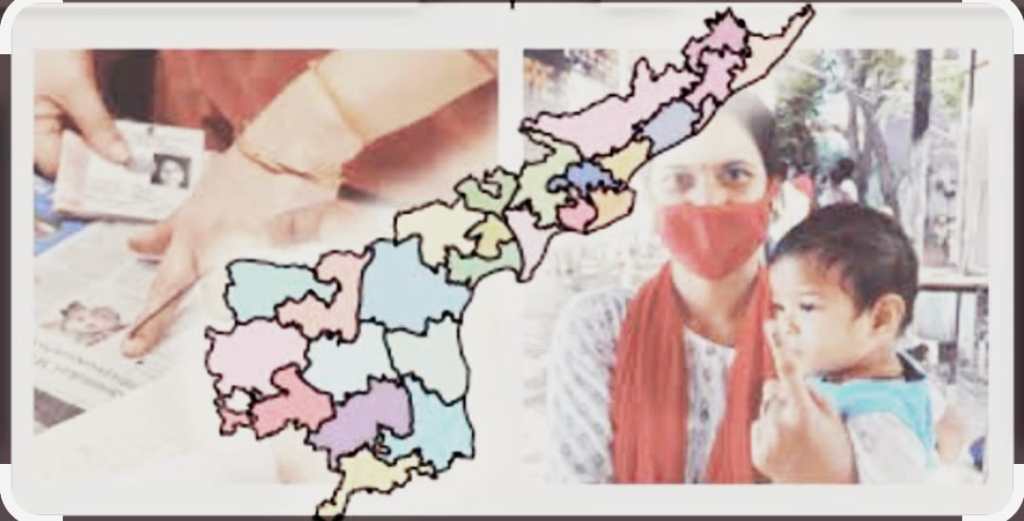
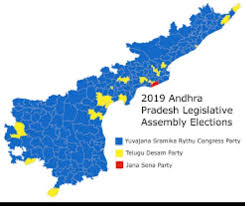
Andhra Pradesh, nestled in southern India, has undergone significant political transformations in recent years. The ascension of the Yuvajana Sramika Rythu Congress Party (YSRCP) to power in the 2019 assembly elections marked a paradigm shift in the state’s political landscape. However, the party now confronts multifaceted challenges, both within the state and at the national level, as formidable opponents like the Telugu Desam Party (TDP), Janasena Party, and Bharatiya Janata Party (BJP) assert their presence. In this comprehensive analysis, we delve into the myriad issues influencing Andhra Pradesh’s political dynamics and scrutinize the evolving political milieu.
Led by Chief Minister Y.S. Jaganmohan Reddy, the YSRCP garnered substantial rural support in the 2019 elections, owing to the effective implementation of welfare schemes tailored to benefit the agrarian populace. Nevertheless, urban constituencies voiced concerns over development deficits, dearth of government employment opportunities, and infrastructural inadequacies. Furthermore, the BJP’s strategic alliances with the TDP and Janasena Party have reconfigured electoral dynamics, posing intricate challenges for the ruling party.
While the YSRCP initially exuded confidence in securing victory across all 175 assembly seats in Andhra Pradesh, certain contentious issues have emerged. Instances of misconduct by local YSRCP MLAs towards constituents, government officials, and law enforcement officers have precipitated discontent among the populace. Moreover, an overemphasis on welfare initiatives, coupled with a relative neglect of other developmental facets, has engendered apprehensions regarding the state’s overall progress.
Caste affiliations wield substantial influence in Andhra Pradesh’s political landscape, particularly in districts like East Godavari. The Kapu community, constituting approximately 25% of the populace and commanding sway over 34 assembly seats, remains a pivotal demographic bloc. While the community predominantly supported the TDP in the 2014 elections, a significant shift towards the YSRCP transpired in 2019. However, recent electoral outcomes suggest a fragmentation of the community’s allegiance, attributed partially to the emergence of actor-politician Pawan Kalyan’s Janasena Party.
The coalition comprising the TDP, BJP, and Janasena Party has levied sundry allegations against the YSRCP, ranging from, illegal sand mining & Liquor sales, allegations of corruption to accusations of stagnated developmental initiatives. Moreover, the YSRCP’s pledge to elevate Amaravati as the state’s capital has encountered considerable delays and uncertainties, fostering public disillusionment.
The development of Amaravati, envisaged as Andhra Pradesh’s new capital, has encountered impediments, impeding progress toward transitioning from a shared capital with Telangana. Chief Minister Jaganmohan Reddy has recently intimated his inclination towards prioritizing the development of Visakhapatnam as the administrative capital, contingent upon securing a renewed mandate.
The dynamics of the Lok Sabha elections in Andhra Pradesh are anticipated to diverge from those of the state assembly polls, with voters potentially prioritizing regional entities for the latter and gravitating towards national parties like the BJP for the former. Prime Minister Narendra Modi’s popularity in the state, underscored by his extensive campaign trails, augments the BJP’s electoral prospects.
Rahul Gandhi, spearheading the Indian National Congress, has castigated the YSRCP, TDP, and Janasena Party as the “BJP-B Team,” insinuating collusive undertones and mutual support during electoral contests. This accusation underscores the purported symbiotic relationship between these parties and the BJP, resonating with claims of a coordinated political front.
Andhra Pradesh’s political terrain is undergoing a seismic transformation, characterized by an interplay of dynamics encompassing rural-urban divides, caste equations, corruption allegations, and developmental impasses. As the state braces for the Lok Sabha elections, the ascendancy of national entities like the BJP and the spectre of being labelled a “BJP-B Team” loom large, exerting palpable influence on the unfolding political narrative. The trajectory of Andhra Pradesh’s political trajectory remains fluid, shaped by the capricious currents of shifting alliances and the discerning electorate’s aspirations.
Unveiling the Impact of Karnataka’s Revolutionary Initiative on Women’s Empowerment!!
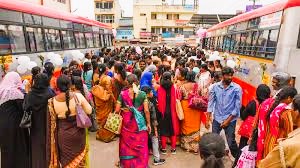
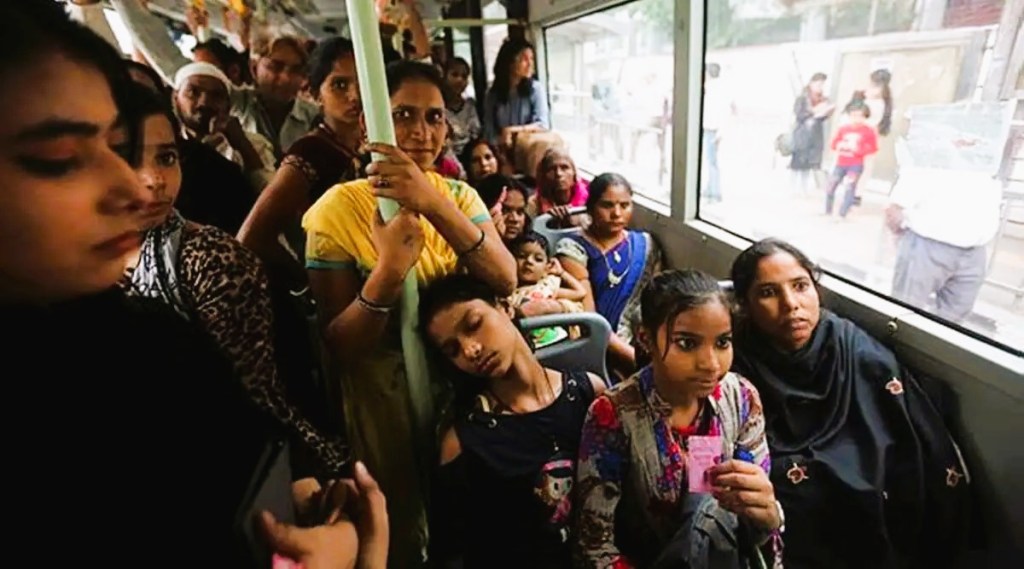
In May 2023, Karnataka embarked on a transformative journey with the launch of the Shakti Bus scheme, offering free bus rides to women across the state. Part of the Congress government’s manifesto, this initiative aimed to empower women by providing them with unrestricted mobility and access to public spaces. As we delve deeper into the remarkable journey of Shakti Bus, we uncover its profound impact on women’s lives and societal dynamics.
The Shakti scheme stands as a ground breaking endeavour that has redefined public transportation for women within Karnataka. By offering free bus travel, this initiative has facilitated women’s mobility, enhanced their safety, and fostered economic empowerment. A survey conducted post-implementation revealed that nearly 96% of respondents reported traveling more frequently by bus since the scheme’s introduction, highlighting its effectiveness and popularity among women across the state.
Moreover, the Shakti scheme is hailed for its cost-effectiveness and convenience. Women, particularly those residing in areas without metro service, find bus travel to be the cheapest and most convenient mode of transportation. This accessibility has opened up new avenues for women, enabling them to reach educational institutions, workplaces, and other destinations with ease.
Additionally, the scheme has contributed to enhanced safety for women commuters. With a higher number of female passengers on board, many women feel safer traveling by bus. This increased presence of women fosters a sense of security and vigilance, mitigating concerns regarding safety during transit.
The Shakti scheme, offering free bus travel for women in Karnataka, has positively impacted the Bangalore Metropolitan Transport Corporation (BMTC) by boosting its revenue and ridership. BMTC’s average daily earnings surged to Rs 5.3 crore in 2023 from Rs 4.4 crore in 2022-23, alongside a notable increase in women passengers, prompting BMTC to expand its daily trips. However, the scheme has brought forth challenges for BMTC, including a staff crunch with shortages of drivers and conductors, potentially limiting the optimal utilization of existing fleets.
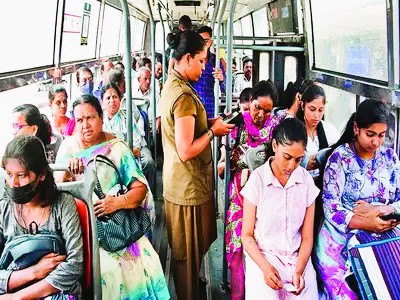
Additionally, there’s a concern about inadequate buses to accommodate the rising passenger count, leading to overcrowded buses, especially during peak hours. Conductors face the burden of managing passengers traveling without tickets, adding to operational challenges. Despite these hurdles, the scheme has also positively impacted the daily earnings of Karnataka’s other three state-run road transport corporations.
Despite these commendable outcomes, the scheme has encountered challenges that warrant attention and resolution. One such challenge is the increased workload faced by BMTC conductors due to the surge in passengers availing free travel. Verifying digital IDs and issuing zero tickets has become more time-consuming, particularly during peak hours, posing operational challenges for conductors.
Another significant challenge lies in the difficulty of verifying digital IDs, leading to instances of ticketless travel and disputes between conductors and passengers. Conductors often struggle to authenticate digital IDs, especially when photos are unclear or when passengers attempt to travel without valid tickets. This issue compromises the integrity of the scheme and necessitates streamlined verification processes to ensure compliance and accountability.
Looking ahead, it is imperative to assess the long-term impact of the Shakti scheme and address existing challenges to maximize its benefits. While the scheme has empowered women by enhancing their mobility and economic independence, its effect on female labour force participation rates requires further examination. Economists stress the importance of comprehensive assessments to evaluate the scheme’s cost-effectiveness and its efficacy in increasing women’s workforce participation.
Despite these challenges, the Shakti scheme stands as a testament to Karnataka’s commitment to promoting gender equality and empowering women. By facilitating free bus travel, the scheme has democratized access to transportation, enabling women to pursue education, employment, and other opportunities. As Karnataka continues to evolve, ongoing efforts to address challenges and optimize the scheme’s implementation are essential for realizing its full potential and advancing gender equity state-wide.
The Shakti Bus scheme, one of the five guarantees by the Congress government, revolutionized public transportation for women in Karnataka. Uma Vishnu’s investigative report for The Indian Express sheds light on the scheme’s inception and objectives. Launched alongside the Lakshmi scheme, Shakti Bus aimed to empower women by facilitating their mobility and enhancing their participation in public life.
Shakti Bus opened doors to economic opportunities and social interactions for women across Karnataka. By offering free bus rides, the scheme encouraged women to reclaim public spaces and engage in various activities, from commuting to work to visiting pilgrimage centers. Uma Vishnu’s first hand experience on a cross-country bus journey highlighted the overwhelming response and positive impact of the scheme on women’s lives.
The implementation of Shakti Bus not only facilitated women’s mobility but also challenged gender norms and societal perceptions. Women from diverse backgrounds, including Muslims and Hindus, embraced the opportunity to travel together, fostering friendships and shared experiences. The scheme’s success challenged traditional gender roles and encouraged women to assert their presence in public spaces.
Despite the scheme’s overwhelming success, challenges such as overcrowded buses and infrastructure limitations surfaced. Karnataka’s transport minister acknowledged these issues and pledged to address them, emphasizing the government’s commitment to enhancing public transportation for women. Additionally, experts highlighted the broader societal impact of Shakti Bus in promoting gender equality and women’s empowerment.
Karnataka’s Shakti Bus scheme stands as a beacon of women’s empowerment and social transformation. By providing free bus rides and enabling women’s mobility, the initiative has empowered women to pursue economic opportunities, engage in social interactions, and reclaim public spaces. As the scheme continues to evolve, it underscores the pivotal role of innovative policies in advancing gender equality and fostering inclusive societies. Shakti Bus serves as a testament to Karnataka’s commitment to empowering women and building a more equitable future for all.
Elections in Peak Summer vs. January-February: A Clash of Seasons
India’s electoral process unfolds amidst unprecedented heatwaves during the General Elections of 2024, the timing of elections becomes a pressing concern. Historically held during the scorching summer months of April and May, the Lok Sabha elections now coincide with soaring temperatures, raising questions about the feasibility of conducting elections during peak summer. This article delves into the challenges posed by extreme heatwaves, explores potential alternatives, and highlights the urgent need for climate-conscious decision-making in India’s democratic framework.
The country has been grappling with extreme heatwaves, with temperatures surpassing 40°C and reaching 45°C in some regions. This oppressive heat not only deters voters from participating in the electoral process but also poses health risks to both voters and election officials. With climate change exacerbating the frequency and intensity of heatwaves, re-evaluating the timing of elections becomes imperative to safeguard the well-being of citizens.
India has witnessed a consistent rise in temperature records in recent years, with 2024 expected to continue this trend. The escalating temperatures, coupled with global warming and oceanic influences, underscore the urgency of reassessing the election calendar. While historically elections were rarely held during summer until 2004, a government bill shifted the election window to April and May. However, this decision warrants re-evaluation in light of evolving climate patterns and their impact on electoral logistics.
Shifting the elections to the cooler months of February, or March may not present logistical challenges, as technological advancements and the prevalence of social media allow campaign strategies to adapt to accommodate shorter durations. Prioritizing the well-being of voters, election officials, and political entities is paramount in determining the optimal timing for elections.
The clash between conducting elections in peak summer versus shifting them to January-February raises critical questions for India’s democracy. As heatwaves intensify and temperature records are shattered, the imperative to reassess election timing becomes evident. Balancing the logistical challenges with voter comfort is crucial for a successful electoral process. Moreover, acknowledging the impact of climate change on India’s political landscape is essential for informed decision-making.
The 2024 Lok Sabha elections, spanning 44 days during peak summer, present formidable challenges amidst severe heatwaves. The Indian Meteorological Department’s prediction of prolonged heatwaves in April and May amplifies concerns about voter turnout and public health risks. Compared to previous elections, the prolonged duration exacerbates the strain on voters and election officials, particularly in regions susceptible to extreme heat.
The impact of the heatwave on the electoral process cannot be underestimated, with rising temperatures posing significant challenges to voter participation and public health. Reports of heat-related fatalities and illnesses underscore the urgent need for mitigation measures. The absence of pre-monsoon rain exacerbates the situation, emphasizing the role of climate change in intensifying heatwaves.
In conclusion, the 2024 Lok Sabha elections unfold amidst unprecedented heatwaves, presenting unique challenges for stakeholders. Mitigation measures, strategic planning, and climate-conscious decision-making are essential to uphold the electoral process’s integrity. As India navigates this electoral season, addressing weather-related risks and fostering resilience will be crucial for preserving democratic principles. The General Elections of 2024 underscore India’s resilience amidst formidable weather conditions. As citizens exercise their voting rights amidst extreme heat, the nation confronts the challenge of conducting elections under such conditions. The prolonged 44-day, 7- phase electoral process highlights Indian democracy’s resilience. However, with climate change expected to worsen weather extremes, reconsidering the election schedule in February-March is imperative. The 2024 elections emphasize India’s enduring democracy and the collective responsibility of every citizen in shaping their nation’s future.
The recent amendments to India’s Prevention of Corruption Act, specifically the introduction of Section 17A, have severely impeded the Anti-Corruption Bureau’s ability to combat corruption effectively. Previously, the bureau could register complaints, conduct investigations, and file charges against corrupt officials based on evidence. However, Section 17A now requires government approval before initiating an investigation against any public servant. This bureaucratic obstacle allows for potential political interference and delays in investigations, resulting in a disparity among states. As a result, the bureau’s autonomy and credibility have been compromised, shielding corrupt officials from scrutiny. To restore the bureau’s effectiveness, clear guidelines must be established to prevent political interference and ensure unbiased investigations. It is also crucial for the central and state governments to collaborate closely to implement anti-corruption measures consistently. Revisiting and strengthening the provisions of Section 17A is vital to effectively combat corruption in India.
Before delving into the repercussions, it’s essential to grasp the nature of the amendments. Section 17A mandates seeking permission from Department Heads even before initiating a First Information Report (FIR), significantly hindering the ACB’s ability to probe corruption cases independently. This shift in protocol has brought about a myriad of consequences, shedding light on the inherent flaws in the system.
The amendments have dealt a severe blow to the ACB’s efficacy, evident in the staggering backlog of pending cases and the alarmingly low rate of approvals for investigations. In Maharashtra itself, out of 547 requests made post-amendment, a meagre 51 received clearance, leaving a whopping 354 cases in limbo. This bureaucratic bottleneck has not only impeded justice but has also emboldened corrupt elements within the government. This may be the same with other states too.
The three-month timeframe prescribed for granting permissions has often been flouted, leading to prolonged delays in investigations. Furthermore, the lack of clarity on the course of action in case of non-response within four months has exacerbated the situation, rendering the ACB powerless in the face of bureaucratic red tape or political will.
Allegations of political interference loom large over the implementation of Section 17A, with permissions often being denied as a means to shield government officials from scrutiny. This abuse of power not only undermines the fight against corruption but also erodes public trust in the integrity of governmental institutions.
In the wake of these amendments, legal challenges have emerged, with activists and legal luminaries petitioning the Supreme Court for redressal. Notably, the Court has acknowledged the need to safeguard the act’s integrity and has censured the misuse of Section 17A for ulterior motives.
The recent move by the Karnataka government to curtail the powers of the Lokayukta in favour of establishing a new ACB underscores the disjointed approach to combating corruption across states. While some states have bolstered their anti-corruption units, others have diluted their powers, creating a patchwork of enforcement mechanisms marred by inconsistency and inefficiency.
Amidst these challenges, the impending Lokpal Bill offers a glimmer of hope for reform. As discussions around its scope, powers, and composition gain momentum, it is imperative to address the systemic flaws that have rendered the ACB toothless. Only through concerted efforts to fortify anti-corruption measures can India hope to overcome the scourge of corruption and uphold the principles of accountability and transparency.
India lacks a single, autonomous anti-corruption agency. Three bodies, namely the Central Vigilance Commission (CVC), departmental vigilance units, and the Central Bureau of Investigation (CBI), are tasked with combating corruption. The CVC and departmental vigilance focus on disciplinary actions, while the CBI handles criminal proceedings. However, the absence of a unified, independent agency raises concerns about the effectiveness and coordination of anti-corruption efforts. the developments in Karnataka reflect broader challenges within India’s anti-corruption landscape. While efforts to combat corruption are underway, the effectiveness and autonomy of key institutions remain under scrutiny. The forthcoming Lokpal Bill presents an opportunity to address these concerns and strengthen anti-corruption measures at both the national and state levels.
The trajectory of the Anti-Corruption Bureau in India reflects a tale of resilience and resilience against the backdrop of systemic challenges and political machinations. As the nation grapples with the scourge of corruption, the need for a robust and independent anti-corruption framework has never been more pressing. It is imperative for policymakers to heed the clarion call for reform and usher in an era of accountability and integrity, where the voices of the marginalized are heard, and justice prevails.
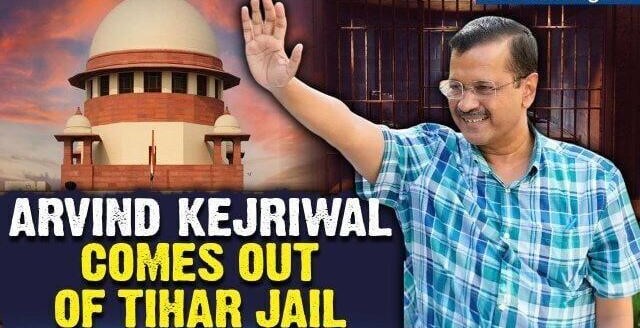
The recent decision to grant interim bail to Arvind Kejriwal until 1st June has brought immense relief to him and his party, especially considering the ongoing Lok Sabha elections. Kejriwal emerged from jail surrounded by supporters, declaring the need to unite and save the country from dictatorship. To understand the intricacies of the court’s decision, it is essential to examine the Enforcement Directorate’s case against Kejriwal and the Supreme Court’s observations. This article delves into the details of the case, the reasons for bail denial, the significance of the Supreme Court’s decision, and its potential implications for other political leaders facing similar situations.
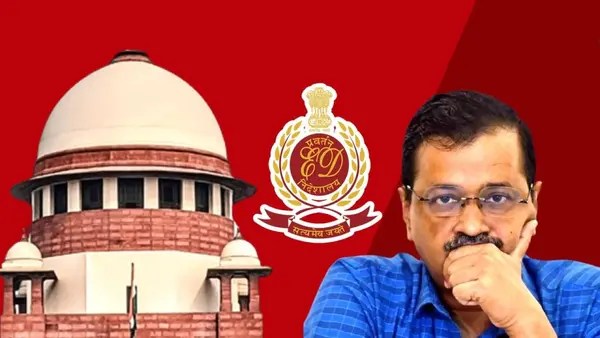
The Enforcement Directorate (ED) has accused Arvind Kejriwal of being vicariously liable in the excise policy scam case. The charge alleges kickbacks involved in the scam, with the funds being funneled for the Aam Aadmi Party’s election campaign in Goa. As the Chief Minister and the head of the state’s policy, Kejriwal is held liable for formulating the policy and enabling money laundering through it. However, the ED has yet to establish a direct connection between Kejriwal and the flow of money. Despite the lack of direct evidence, Kejriwal was denied bail multiple times, highlighting the stringent requirements under section 45 of the PMLA act.
The trial court and the High Court rejected Kejriwal’s bail plea based on the need to establish a prima facie case against him. The prosecution argued that there was sufficient evidence to support the charges. Kejriwal’s lawyers, however, challenged the legitimacy of his arrest, questioning whether he was summoned as an accused or a witness. They highlighted that Kejriwal had sent multiple letters to the ED seeking clarification but received no response. Additionally, they raised concerns about the timing of the arrest, suggesting political motives behind it.
The Supreme Court’s decision to grant interim bail to Kejriwal is significant, considering the timing of the Lok Sabha elections. The court acknowledged that the case would take time to reach a final resolution, and the elections would be over by then. The interim bail is not a finding on merit but rather an arrangement to allow Kejriwal to campaign. The court exercised its power to grant interim bail, emphasizing that campaigning for a political leader like Kejriwal is an essential aspect of a level playing field during elections.
The interim bail comes with certain conditions that Kejriwal must adhere to. These conditions include furnishing a bail bond, not visiting the office of the Chief Minister, and refraining from signing any files unless necessary for official communication with the Lieutenant Governor. These conditions provide Kejriwal with some relief, allowing him to focus on the elections while complying with the legal requirements.
The Supreme Court’s decision and observations open the door for considering political exigencies in similar cases. While each case will be evaluated based on its specific facts, the court’s emphasis on a level playing field for political parties suggests a potential shift in how bail applications of political leaders will be assessed. This decision may have implications for other leaders, such as Hemant Soren, who are facing arrest in money laundering cases.
The decision to grant interim bail to Arvind Kejriwal during the Lok Sabha elections is a momentous one, marking the Supreme Court’s intervention to ensure a level playing field for political candidates. While the interim bail is not a finding on merit, it acknowledges the significance of elections and the role of political leaders. The conditions imposed on Kejriwal provide him with some relief while maintaining legal requirements. This decision sets a precedent for considering political exigencies in bail applications and may have implications for other political leaders facing similar situations.
Sri Sri Ravi Shankar: A Journey of Spiritual Enlightenment and Humanitarian Contributions
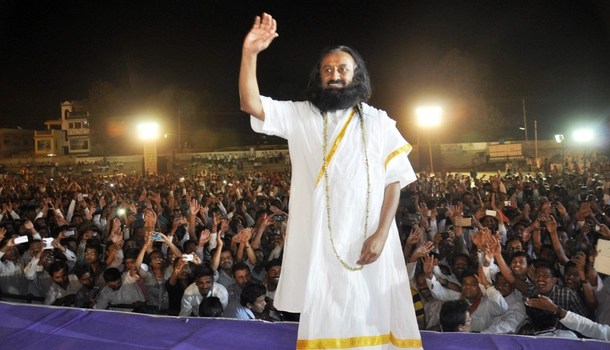
Today, the nation come together to commemorate the birthday of a spiritual luminary whose influence resonates far beyond the borders of India. Sri Sri Ravi Shankar, a guiding light of wisdom and compassion, has not only enriched the spiritual fabric of India but has also made a profound impact on the global stage. On this auspicious occasion, it is fitting to reflect on the remarkable journey of Sri Sri Ravi Shankar and the invaluable contributions he has made to India and humanity as a whole.
Born on May 13, 1956, in Papanasam, Tamil Nadu, Sri Sri Ravi Shankar embarked on a spiritual odyssey from a tender age. Nurtured by the profound teachings of his guru, Maharishi Mahesh Yogi, he immersed himself in the timeless wisdom of yoga, meditation, and Vedanta. These transformative experiences ignited within him a deep-seated commitment to share the profound teachings with the world, guiding countless souls towards inner awakening and fulfillment.
In 1981, Sri Sri Ravi Shankar laid the foundation of the Art of Living Foundation, a global nonprofit organization dedicated to fostering peace, happiness, and holistic well-being. Through a myriad of programs and initiatives, including the renowned Art of Living course, he has touched the lives of millions, empowering them to transcend stress, discover inner tranquility, and unlock their boundless potential.
Sri Sri Ravi Shankar’s vision transcends the confines of religious and cultural boundaries, advocating for the intrinsic unity of all faiths. He has been a vocal proponent of interfaith harmony, fostering dialogue and mutual understanding among people of diverse beliefs. Through initiatives such as the Gift a Smile project and disaster relief efforts, he has exhibited an unwavering commitment to serving humanity and alleviating suffering, embodying the highest ideals of compassion and selflessness.
Recognizing the pivotal role of education in shaping the destiny of societies, Sri Sri Ravi Shankar has spearheaded initiatives aimed at promoting value-based education and nurturing leadership among the youth. The Sri Sri Ravi Shankar Vidya Mandir schools and the Youth Leadership Training Program stand as testament to his dedication to cultivating a generation of empathetic and conscientious leaders poised to effect positive change in the world.
As a beacon of spiritual leadership, Sri Sri Ravi Shankar has traversed the globe, disseminating the timeless message of love, peace, and harmony to diverse audiences. His teachings have ignited a spark of inspiration in countless individuals, empowering them to lead lives of purpose and service to humanity. Through his profound wisdom and compassionate guidance, he continues to sow the seeds of transformation and upliftment, kindling the flame of hope in hearts around the world.
As the nation rejoices in commemorating the birthday of Sri Sri Ravi Shankar, We not only honor the man but also the eternal values he represents. His steadfast dedication to disseminating love, peace, and compassion has impacted countless lives, transcending boundaries of geography and culture. May his lasting legacy illuminate the path for future generations, reminding us of spirituality’s transformative ability to unify humanity and foster a world steeped in harmony and empathy. Happy birthday, Sri Sri Ravi Shankar, and sincere appreciation for your priceless contributions to India and the global community.
Celebrating Democracy: A Glance at India’s Grand Festival of Elections
India, the largest democracy in the world, is currently in the midst of a grand spectacle – the general election for state and central elections in Andhra Pradesh. With over 97 crore people participating in this democratic process, the country is showcasing its greatness as a global leader. This article highlights the significance of democracy in India, emphasizing that the nation is truly governed by the people, for the people, and of the people.
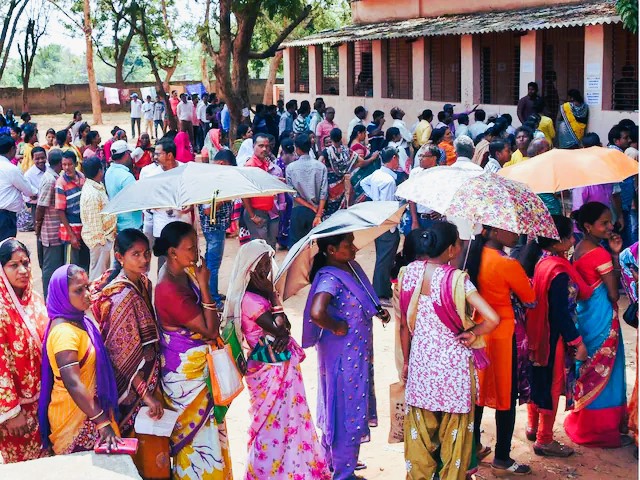
As the scorching summer sun rises, people across the country gather at polling booths to exercise their democratic rights. From as early as 7 AM, long queues of enthusiastic citizens form, eagerly waiting to cast their votes. The author, too, joined the queue at 7:30 AM, experiencing the exhilarating feeling of participating in this grand festival of democracy.
In the author’s village, Pedakallepalli, Krishna District, Andhra Pradesh, several positive changes were observed compared to previous elections. The roads leading to the villages were filled with scooters and vehicles carrying people to the polling booths. A notable difference was the absence of liquor distribution, indicating that the focus was solely on voting for the chosen leaders. Furthermore, it was surprising to witness minimal instances of money distribution. The overall atmosphere in the villages visited by the author was peaceful, with a systematic approach to the voting process. The presence of police was scarce, highlighting the trust and harmony amongst the people.
India’s democratic process stands as one of its greatest and most unique achievements. The nation takes pride in being a global leader in democracy, where the power lies with the people. The ongoing election showcases the strength and unity of the Indian populace, as millions of citizens exercise their right to vote. The enthusiasm and dedication displayed by the people, including students, in completing their voting franchise are a testament to the democratic values ingrained in the hearts of the Indian population.
The ongoing general election in Andhra Pradesh serves as a reminder of India’s greatness as a democratic nation. With over 90 crore people participating in this monumental process, the country stands tall as a global leader in democracy. The peaceful and systematic environment observed in villages, coupled with the minimal instances of malpractices, exemplify the powerful democratic spirit that permeates every corner of the nation. As proud citizens, we celebrate and cherish our role in this grand festival of democracy, knowing that India truly embodies the principle of being a government of the people, by the people, and for the people.
In conclusion, the ongoing general election in Andhra Pradesh symbolizes India’s unwavering commitment to democracy. It serves as a testament to the nation’s strength, unity, and collective will to uphold democratic principles. As citizens, it is our responsibility to continue nurturing and protecting this precious gift of democracy for future generations. Let us celebrate India’s democratic spirit and strive to ensure that the voice of every citizen is heard, respected, and valued in the governance of our great nation. For in the end, it is the people who truly hold the power to shape the destiny of India.
The race for technological supremacy between the United States and China reshapes global dynamics.
In the relentless pursuit of technological dominance, the United States and China emerge as principal contenders, engaging in a fierce competition across various sectors like green technology and semiconductors. This rivalry, often termed the “tech war,” transcends mere economic competition, encompassing issues of intellectual property theft, cyber espionage, and restrictions on technology transfer. It mirrors broader geopolitical tensions, reflecting the struggle for dominance between these two superpowers on the world stage. While some analysts predict continued US hegemony, others foresee China’s ascendancy challenging the established international order, raising concerns of a potential Thucydides Trap scenario.
This multifaceted relationship defies simplistic categorization, as evidenced by the complexities of the tech war. While US policymakers broadly agree on the need to confront China, there’s divergence in strategies, ranging from engagement to containment. The US prioritizes maintaining technological primacy amid fears of China’s military advancements, employing geo=economic tools to curb its influence. However, the efficacy of such measures remains uncertain, given the interconnectedness of the global economy. Despite efforts towards decoupling, particularly in high-tech sectors, Chinese resilience poses challenges to US objectives. Ultimately, the US appears willing to recalibrate its traditional role to safeguard national interests and sustain its global primacy amidst the rise of China.
The conflict between the United States and China, catalyzed during Donald Trump’s presidency, revolved around concerns regarding China’s burgeoning influence. Trump enacted measures to restrict the export of advanced technology to China and limit its utilization of artificial intelligence. However, President Biden’s approach has been more conciliatory, advocating for cooperation while safeguarding American interests.
The tech war between the two nations has evolved from a mere trade dispute into a fierce competition for supremacy in critical sectors such as 5G, artificial intelligence, and semiconductors. While the US has traditionally led in technological innovation, China’s aggressive initiatives, backed by significant state funding, aim to narrow the gap. Tensions heightened as Washington imposed restrictions on China’s access to crucial US-controlled technologies, prompting Beijing to pursue self-sufficiency and reduce dependence on American suppliers.
The COVID-19 pandemic exacerbated these tensions, prompting President Biden to order a review of essential supply chains. Bipartisan support for bills increasing investment in core technologies underscores US apprehensions regarding China’s Made in China 2025 initiative, which seeks to elevate the country’s status to a global manufacturing powerhouse. The tech war gained momentum through various events, including sanctions on Chinese firms and concerns over intellectual property theft and Huawei’s dominance in 5G technology.
Decoupling, once deemed unrealistic, gained traction as calls mounted to lessen reliance on Chinese supply chains. President Biden’s executive order signaled a shift towards reassessing critical product supply chains. In response, China emphasized tech self-sufficiency, intensifying efforts to attain semiconductor independence despite skepticism from analysts regarding its feasibility.
The battle for technological supremacy encompasses critical industries such as green energy and semiconductors, where China has made substantial progress, particularly in solar panel production, battery manufacturing, and electric vehicles. In contrast, the United States has been bolstering its chip market through subsidies and enticing leading chip companies to establish advanced factories domestically. This competition is not only reshaping global supply chains but also influencing the affordability and accessibility of these advanced technologies.
The conclusion of the post-Cold War era has ushered in a new phase of geopolitical competition, notably between the United States and China. This rivalry, reminiscent of the Cold War, encompasses nuclear tensions, ideological differences, and proxy conflicts. A significant dimension of this contemporary struggle is the race for technological dominance, particularly in sectors like 5G, artificial intelligence (AI), and semiconductors.
Dubbed a “tech war” by the media, this competition highlights the pivotal role of technology in shaping global markets, military capabilities, and regulatory frameworks. The US, perceiving challenges to its technological leadership, has intensified efforts to strengthen its high-tech industries and counter China’s technological advancements. This entails substantial investments in domestic research and development (R&D) and measures aimed at restricting China’s access to advanced technologies.
However, framing this competition as a “war” raises concerns about the potential militarization of economic and scientific rivalries, which could foster nationalism and discrimination. Nevertheless, the urgency of maintaining technological leadership, particularly in the face of China’s ambitious initiatives like Made in China 2025 and the Belt and Road Initiative, necessitates significant action. Despite debates over the appropriateness of the war metaphor, the stakes are high, with far-reaching implications for global power dynamics and the future trajectory of emerging technologies.
Both China and the United States have leaned on subsidies as a key strategy to drive their technological advancements. China’s subsidization efforts, spanning over a decade, have propelled its success in green technology, particularly in sectors like semiconductors. Conversely, the US has offered significant subsidies to entice chip manufacturers to establish operations within its borders. While this subsidy-driven approach has intensified the technological competition, it has also sparked concerns regarding subsidy misuse and its potential impact on global economic dynamics.
The US CHIPS Act, for instance, proposes substantial subsidies exceeding USD 52 billion, coupled with a 25% tax credit, specifically aimed at bolstering the domestic semiconductor industry. In contrast, Chinese companies like BYD Co. have benefited from substantial government subsidies, totaling at least €3.4 billion ($3.7 billion), as part of Beijing’s endeavor to dominate the electric vehicle and clean technology sectors.
China’s advantages in tech-intensive industries stem from factors such as its larger population, lower wages, and robust government support for manufacturers. Production costs for chips in the United States remain significantly higher and more time-consuming compared to Asian counterparts, underscoring China’s competitive edge in this arena. The trajectory of the conflict between the United States and China will be heavily influenced by the approach of the next American administration, whether under Donald Trump or Joe Biden. Trump’s administration adopted an aggressive stance, aiming to impede technology flow into China, while Biden’s administration has pursued a more diplomatic approach, collaborating with allies to address the issue collectively. These differing strategies will impact trade, investment, and the pace of the energy transition.
Two significant dates from 2022 mark pivotal moments in geopolitical history. The first is Russia’s invasion of Ukraine on February 24, while the second, on October 7, saw the United States implement export controls aimed at stifling China’s progress in AI technology. These controls targeted China’s access to crucial computer chip hardware, essential for AI advancement. Subsequently, Japan and the Netherlands also imposed strict export controls on semiconductor manufacturing equipment, further restricting China’s access to essential technology.
The ongoing tech wars between the US and China are reshaping global relationships and supply chains, with substantial economic costs estimated at about 1.2% of global GDP annually. As the conflict intensifies, both American and Chinese leadership remain resolute, making it a central issue with strong bipartisan support in Washington and underscoring its significance as an “ethno-civilizational question” concerning control over energy and information technologies.
The technology war between America and China has far-reaching implications for global economic growth, energy transition, and the balance of technological power. As both nations aggressively pursue control over advanced technologies, industries like green tech and semiconductors become battlegrounds for supremacy. The strategies employed, including subsidies and export controls, have the potential to shape the future of these industries and impact the pace of global decarbonization. It remains to be seen how the conflict will unfold under the next American government, but one thing is clear: the battle for technological dominance will continue, with significant consequences for the future of the planet.
Preserving Pollinators: Sustaining Ecosystems and Agriculture**
In the intricate web of life, pollinators are the unsung heroes, vital threads sustaining ecosystems and bolstering agriculture. While honey bees often take centre stage for their pivotal pollination role, they represent just a fraction of the diverse array of species contributing to this essential ecological function. From moths to bats, a plethora of pollinators play crucial roles in facilitating plant reproduction, each facing distinct challenges in our increasingly human-dominated world.
Despite their importance, the dwindling populations of pollinators, including honey bees, pose significant threats to biodiversity and agricultural yield. This article explores the multifaceted domain of pollinators, shedding light on their significance, the hurdles they encounter, and the ramifications for human welfare. By understanding the intricate interplay between pollinators and their environment, we can cultivate strategies to safeguard these invaluable contributors to our ecosystems and food security, ensuring the flourishing of both nature and humanity in tandem.
The challenges confronting pollinators, including native and bumblebee species, are multifaceted and arise from various sources such as habitat loss, pesticide exposure, and diseases. While native bees diligently fulfil their role in pollinating flowers, bumblebees face hurdles akin to an outdated animation project from the 1950s. Bee pollination is indispensable for plant reproduction, as they transfer pollen between flowers, ensuring the continuation of plant species. However, these challenges extend beyond honey bees, affecting a wide range of pollinator species crucial for maintaining ecosystems and supporting agriculture. For instance, moths, vital for the pollination of wildflowers, face threats from artificial lights disrupting their nocturnal activities. Additionally, certain bat species play indispensable roles in pollinating mango trees, yet their populations are imperilled by the indiscriminate use of insecticides, disturbing the delicate balance of ecosystems. Addressing these challenges necessitates concerted efforts to mitigate habitat destruction, reduce pesticide usage, and promote conservation measures to safeguard these invaluable pollinators and preserve the health of our environment.
The introduction of honey bees to North America by European settlers marked a transformative moment in agriculture, significantly enhancing crop productivity. Despite their non-native status, honey bees have become indispensable for pollinating crucial crops in American agriculture. However, honey bees constitute only a fraction of North American ecosystems. Native pollinators, such as bumblebees and solitary bees, also play pivotal roles in pollinating indigenous plants, emphasizing the interconnectedness of ecosystems and the urgency of conserving biodiversity. Non-native bee species, while bringing benefits like agricultural pollination and opportunities for scientific research, also pose challenges such as competition with native species, spread of pathogens, and disruption of natural foraging patterns. These non-native species, including some invasive ones, extend beyond their historical territories, offering advantages but also imposing negative impacts, such as competition with natives and ecological changes, underscoring the necessity of balanced management and conservation efforts.
The global decline of pollinator populations presents significant challenges for ecosystems and agriculture. Threats like habitat loss, pesticide use, climate change, and disease outbreaks endanger pollinator species worldwide. The spread of aggressive Africanized honey bees poses safety risks for humans and livestock. Monoculture farming practices and loss of floral diversity exacerbate pollinators’ vulnerability, limiting food sources and nesting habitats. As pollinator populations decline, essential ecological services like crop pollination and ecosystem stability are jeopardized. Bees confront various challenges, including habitat loss, pesticides, air pollution, and disease, largely due to human activities. Urgent conservation efforts are imperative to mitigate these threats and safeguard pollinator populations, crucial for maintaining biodiversity and ensuring global food security.
Efforts to counteract the decline of pollinator populations require a comprehensive approach targeting the underlying causes of their dwindling numbers. Conservation initiatives, including habitat restoration, pesticide reduction, and public awareness campaigns, are critical for preserving pollinator habitats and promoting biodiversity. Encouraging sustainable agricultural practices, such as crop diversification and integrated pest management, can mitigate the adverse effects of intensive farming on pollinators. Furthermore, fostering community engagement and collaboration among stakeholders—such as farmers, beekeepers, researchers, and policymakers—is vital for implementing effective pollinator conservation strategies. Creating bee-friendly habitats, using bee-safe pesticides, and preserving wild habitats are actionable steps individuals can take to support pollinator populations. Advocating for ecological agriculture and researching stressors affecting bee populations are essential for long-term pollinator conservation efforts. Integrated pest management, coordinating various pest control methods for sustainable management, further contributes to safeguarding pollinator health and preserving their crucial ecological role.
In conclusion, protecting pollinators is vital for preserving biodiversity and ensuring sustainable food production. Despite honey bees often taking the spotlight, the decline of pollinator populations transcends one species, affecting a diverse range of insects, birds, and mammals crucial for plant reproduction and ecosystem balance. Amidst the complexities of environmental degradation and climate change, safeguarding pollinators emerges as a paramount concern for our collective well-being. Embracing holistic approaches to pollinator conservation offers a pathway to fostering a more resilient and harmonious relationship with nature. By safeguarding pollinator habitats, reducing pesticide use, promoting biodiversity, and raising public awareness, we can cultivate environments where pollinators thrive and ecosystems flourish, benefiting both nature and humanity. This concerted effort not only preserves the tapestry of life but also ensures the sustenance of future generations.
Breaking Silence, Building Equality: Calcutta High Court’s Landmark Ruling on Workplace Conduct!!
The recent ruling by the Calcutta High Court concerning the use of terms like ‘Sweety’ and ‘Baby’ in workplaces underscores the complexity of navigating appropriate behavior. While the Court upheld the dismissal of a sexual harassment complaint, it emphasized that terms such as “baby” and “sweety” may not inherently imply sexual connotations.
Despite allegations of misconduct, including stares and attempted intrusion, insufficient evidence cast doubt on the credibility of the claims. The Court stressed the importance of substantiated allegations and highlighted the need for fairness in adjudication. This ruling serves as a reminder of the importance of establishing clear boundaries to prevent sexual harassment in the workplace and underscores the significance of evidence-based decision-making in legal proceedings.
The recent ruling by the Calcutta High Court focused on a case concerning allegations of sexual harassment against a senior officer in the Coast Guard. The complainant accused the officer of using terms like ‘Sweety’ and ‘Baby’, which she perceived as having sexual undertones. However, the court emphasized the importance of considering the context and intent behind such language, acknowledging the complexities involved in assessing claims of harassment. This ruling highlights the need for a nuanced approach to addressing allegations of misconduct in the workplace, taking into account factors such as communication dynamics and social norms. By emphasizing the significance of context in determining the nature of verbal conduct, the Court provides valuable guidance for adjudicating bodies tasked with addressing sensitive issues of harassment.
The recent court ruling highlighted the significance of discerning between genuine instances of sexual harassment and misinterpretations of behavior. It emphasized the need for adjudicating bodies to carefully examine the entire evidence and context surrounding allegations, ensuring fair and just decisions. Sexual harassment encompasses a spectrum of behaviors, ranging from overtly inappropriate comments to subtle gestures and expressions, making it essential to approach each case with sensitivity and thoroughness. By upholding the principles of fairness and justice in their deliberations, adjudicating bodies can effectively address instances of harassment while safeguarding the rights of all parties involved. This ruling serves as a reminder of the complexities inherent in navigating issues of sexual harassment in the workplace and underscores the importance of clear policies and procedures for handling such cases.
Despite legislative measures like the Sexual Harassment of Women at Workplace Act, compliance gaps persist in Indian workplaces. Many organizations lack awareness of their legal obligations and fail to establish robust mechanisms for addressing complaints. Additionally, cultural norms and social dynamics often influence perceptions of acceptable behavior, complicating efforts to combat harassment effectively.
While legal frameworks aim to safeguard individuals from harassment, there’s a risk of these laws being misused or weaponized for personal gain. The Calcutta High Court’s caution against the indiscriminate application of anti-harassment provisions underscores potential unintended consequences, like reinforcing gender biases and impeding professional growth. Striking a balance between protection and prevention is crucial for fostering a workplace culture rooted in respect and accountability. It necessitates robust mechanisms to address genuine grievances while preventing the misuse of legal provisions. This nuanced approach is essential for creating an environment where individuals feel safe and empowered to report harassment without fear of reprisal, thereby promoting equality and fairness for all.
The Calcutta High Court’s ruling serves as a poignant reminder of the complexities inherent in addressing sexual harassment in the workplace. It highlights the importance of examining the nuances of behavior, understanding cultural norms, and promoting compliance with relevant legislation. Organizations must prioritize creating safer and more inclusive work environments by fostering a culture of mutual respect and clear communication. By doing so, they can effectively combat harassment and promote equality for all employees, ensuring that workplaces are places where everyone feels valued, respected, and able to thrive.