Basmati Rice: A Fragrant Legacy Amidst Cross-Border Controversies
Basmati rice, revered for its exquisite aroma and lengthy grains, is integral to the culinary heritage of the Indian subcontinent. However, recent controversies have arisen over its cultivation and trade, especially between India and Pakistan. This article delves into the nuanced world of Basmati rice production, addressing challenges like intellectual property rights violations and their geopolitical implications.
Cultivated in the fertile Indo-Gangetic plains spanning India and Pakistan, Basmati rice boasts a unique fragrance and texture, earning it global acclaim. Despite challenges like fluctuating production and competition from other rice-producing nations, both countries dominate the global market, exporting to destinations such as Saudi Arabia and Iran.
Institutions like the Indian Agricultural Research Institute (IARI) contribute significantly by developing and enhancing Basmati rice varieties. However, the unauthorized cultivation of IARI-bred varieties in Pakistan, such as Pusa Basmati 1121, raises concerns of intellectual property rights infringement.
Furthermore, India’s basmati rice exports are anticipated to decline in 2024 due to competition from Pakistan, whose rice exports are projected to soar. The smuggling of Basmati Rice 1121 seeds across borders exacerbates tensions and challenges bilateral relations.
India’s proactive measures, including diplomatic engagements and enforcement of intellectual property laws, are crucial to safeguarding its Basmati legacy and ensuring fair trade practices. By upholding principles of innovation and collaboration, India can preserve Basmati rice’s essence for future generations, securing its place in global cuisine.
Adani TotalEnergies Biomass (ATBL) pioneers clean energy production with the Barsana Biogas Plant, setting a new standard for sustainable waste Management in India
Adani TotalEnergies Biomass (ATBL) pioneers clean energy production with the Barsana Biogas Plant, setting a new standard for sustainable waste management in India. Launching phase one of the Barsana Biogas Plant in Uttar Pradesh represents a ground breaking step towards sustainable energy production for ATBL. Situated in Shri Mataji Gaushala, this project aims to convert organic waste into renewable biogas and fertilizer, with three phases planned to revolutionize India’s energy landscape and showcase Adani Group’s dedication to sustainability.
Nestled in Mathura, the plant utilizes advanced anaerobic digestion technology to convert agricultural waste and sewage sludge into biogas, aligning with India’s energy diversification goals and reducing carbon emissions. This innovative approach epitomizes environmental stewardship, offering a sustainable solution to waste management and energy production.
The Barsana Biogas Project exemplifies ATBL’s commitment to fostering a greener future by reducing reliance on traditional fossil fuels. By converting organic materials into Compressed Bio Gas (CBG), the plant not only provides clean fuel for electricity and transportation but also significantly reduces greenhouse gas emissions, contributing to India’s climate change mitigation efforts.
Upon reaching full capacity in phase three, the Barsana Biogas Plant is set to become India’s largest agri waste-based bio-CNG plant, further solidifying the Adani Group’s leadership in sustainable energy production. With a projected total capacity of 600 tons per day (TPD) of feedstock, the plant will generate over 42 TPD of CBG and 217 TPD of organic fertilizer, promoting circular economy principles and supporting local communities.
The Barsana Biogas Project underscores the broader sustainability goals of the Adani Group and TotalEnergies, aiming to lead the global transition to a low-carbon economy. By investing in renewable energy sources like CBG, the Adani Group drives innovation and creates tangible impact in mitigating climate change and fostering environmental resilience. As the project progresses, it will inspire future investments in clean energy infrastructure, reaffirming India’s commitment to sustainable development and green growth.
Painting the World Blue: Understanding Autism in 2024
Every year, World Autism Day sheds light on a crucial aspect of autism spectrum disorder (ASD), with themes set by the United Nations. In 2024, the focus turns to the color blue, symbolizing understanding and acceptance. As we delve into the depths of autism awareness, it’s essential to explore its prevalence, challenges, and the strides made towards inclusivity.
Autism, the third most common developmental disability globally, presents challenges in education, employment, and familial support. In India, where approximately 18 million individuals have autism, awareness and support remain crucial. Despite progress, many cases go undiagnosed, highlighting the need for heightened awareness among medical professionals and society at large.
India’s journey with autism awareness has seen advancements in services and general awareness. However, rural areas still lack adequate resources, leading to delayed detection and intervention. Initiatives like those by the Autism Society of India aim to bridge this gap, providing screenings and early intervention plans for at-risk children.
Statistics on Autism in India:
A 2021 study revealed that 1 in 68 children in India has autism, with boys being more commonly affected than girls. This underscores the need for early detection and intervention strategies to ensure affected individuals receive the necessary support to thrive.
Mental health stigma persists in India, especially in rural areas where autism is often misunderstood or misdiagnosed. Enhancing awareness and understanding is crucial to debunking misconceptions and providing support to affected individuals and their families.
Autism’s effects ripple through education, employment, and societal attitudes, underscoring the importance of inclusive policies and support systems. By fostering an environment of acceptance and understanding, society can create pathways for autistic individuals to thrive.
Factors contributing to the rising prevalence of autism in India include increased awareness, improved diagnostic capabilities, and environmental influences. Understanding these factors is crucial in developing targeted interventions and support systems.
As we commemorate Autism Awareness Day, it’s vital to celebrate progress while acknowledging the challenges that lie ahead. The theme of shifting from surviving to thriving emphasizes the need for holistic support systems that empower individuals with autism to reach their full potential.
A symposium featuring leading experts in autism research and sustainable development will showcase success stories and outline future endeavors. Tailored workshops focusing on autism awareness and Sustainable Development Goals (SDGs) will provide actionable insights for fostering inclusivity and support.
World Autism Day 2024 paints the world blue, signifying a commitment to understanding, acceptance, and support for individuals with autism. By embracing the theme of thriving, we embark on a journey towards creating a world where every individual, regardless of neurodiversity, has the opportunity to flourish and contribute meaningfully to society.
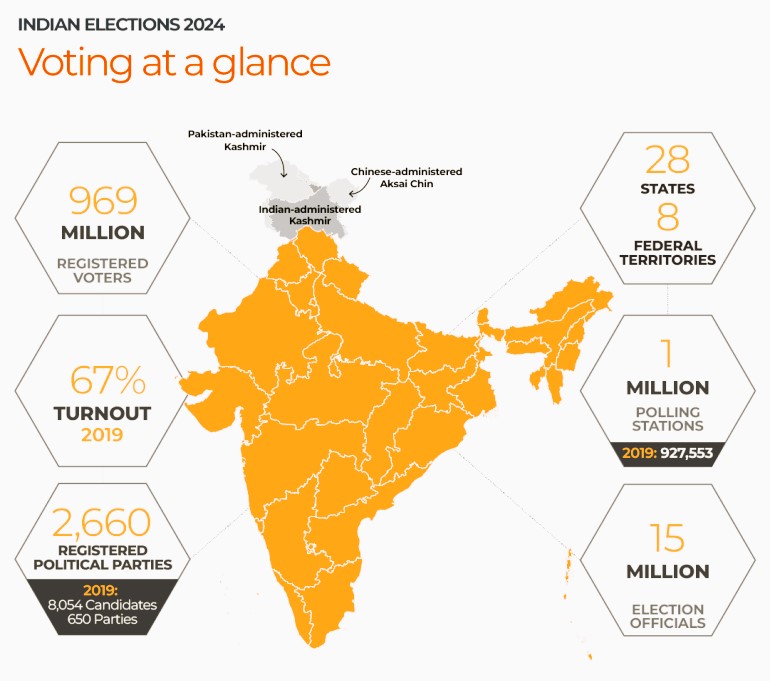
Unravelling the complexities of India’s electoral maze as the 2024 elections loom large, where the clash of ideologies and strategic manoeuvres will shape the nation’s political destiny.
As India braces itself for the much-anticipated 2024 elections, the political landscape resonates with fervour, fervent speculation, and strategic manoeuvrings. Within this realm of electoral dynamics lie three pivotal determinants: the resonance of political messages, the credibility of messengers, and the seamless operation of campaign mechanisms. Furthermore, the potency of financial resources injected into the fray adds another layer of complexity to the electoral equation. This comprehensive analysis navigates through the intricate contours of India’s electoral canvas, dissecting the clash of ideologies, the sway of influential players, and the cardinal role of public perception in sculpting the electoral outcome.
At the nucleus of any electoral endeavour reside three foundational pillars: the articulation and dissemination of political messages, the persona and credibility of leaders, and the efficacy of campaign machinery. In the unfolding drama of the 2024 elections, the interplay of these elements will wield immense influence in shaping the destiny of political contenders striving for ascendancy and influence.
Embedded within the electoral battlefield are contrasting ideological currents that epitomize the contemporary political milieu of India. On one end looms the towering figure of a leader whose persona embodies the tenets of Hindutva ideology, propelled by promises of economic resurgence and a fervent nationalist ethos. Central to this leader’s narrative is the emotive discourse surrounding a symbolically significant construct, which has ignited fervent support and reshaped the political discourse in recent years.
However, amidst the formidable arsenal and impassioned appeal of one faction, lurks an entrenched opposition characterized by a heterogeneous tapestry of voices representing the aspirations of minority groups and marginalized segments. Advocating for principles of social justice, affirmative action, and inclusive governance, this opposition, led by a collective movement, endeavours to challenge the hegemony of the reigning authority.
At the crux of the electoral calculus lies the enigmatic figure of a leader whose persona, policies, and promises have etched an indelible imprint on India’s political landscape over the preceding decade. As the linchpin of a formidable electoral machinery, this leader’s popularity and performance undergo relentless scrutiny and debate. The leader’s efficacy in fulfilling promises and addressing pressing challenges serve as linchpins that mould public opinion and electoral trajectories.
Despite the formidable machinery and organizational prowess wielded by one faction, the opposition has encountered sporadic openings to challenge the dominion of the ruling order. From the reverberations of transformative economic policies to the reverberations of socio-political upheaval precipitated by unforeseen crises, instances have arisen where the opposition could have seized upon public discontent and vulnerabilities to tilt the scales in their favour.
Yet, a landscape marred by discordant strategies, leadership vacuums, and internal strife has stymied the opposition’s ability to mount a credible challenge to the incumbent’s hegemony. Opportunities have been squandered, alliances left unformed, and strategic missteps have perpetuated the consolidation of power by the ruling authority despite moments of adversity.
As India stands on the precipice of another electoral crucible, the opposition stands tasked with assimilating lessons from past missteps and embracing a proactive, cohesive, and strategic approach. By addressing leadership lacunae, fostering alliances grounded in shared principles, and articulating a coherent vision for governance and societal upliftment, the opposition can mount a formidable challenge to the reigning authority’s narrative and present a compelling alternative to the discerning electorate.
In summation, the 2024 elections herald a pivotal juncture in India’s political odyssey, where ideological chasms, charismatic leadership, and strategic gambits will chart the trajectory of the nation’s destiny. As political factions brace for the electoral crucible, it behoves them to acknowledge the paramountcy of message, messenger, mechanics, and monetary might in shaping public sentiment and electoral outcomes. With judicious stratagems, visionary leadership, and unwavering commitment, India’s political tableau stands poised for a transformative metamorphosis towards a new era of governance and democratic ethos.
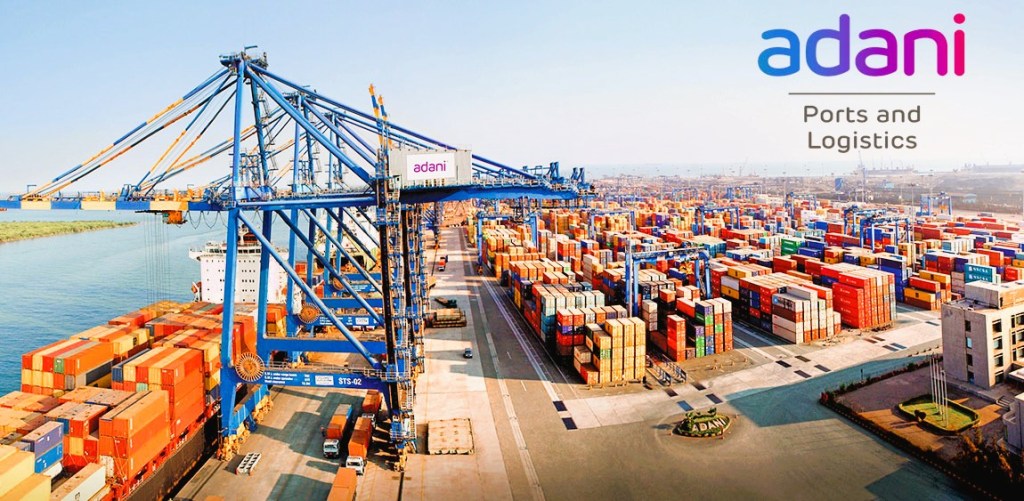
Adani Ports and Special Economic Zone Ltd (APSEZ) has achieved unprecedented success, reaffirming its position as an industry leader by handling a staggering 420 million metric tonnes (MMT) of cargo globally.
In the dynamic realm of maritime trade, Adani Ports and Special Economic Zone Ltd (APSEZ) has emerged as a symbol of triumph, showcasing extraordinary feats in the fiscal year 2023-24. With a stellar performance highlighted by the handling of 420 million metric tonnes (MMT) of cargo globally, marking a significant 24 per cent year-on-year increase, APSEZ continues to redefine excellence in India’s bustling port sector.
Amidst a backdrop of formidable challenges and operational setbacks, APSEZ has navigated through turbulent waters, steering towards unparalleled success. Despite grappling with disruptions caused by global trade fluctuations and natural calamities such as Cyclones Biparjoy and Michaung, APSEZ’s resilience and unwavering determination have propelled it to new heights, setting the stage for unprecedented achievements.
The hallmark of APSEZ’s performance in FY23-24 is its unprecedented handling of cargo volumes, soaring to over 38 MMT in March 2024 alone. Ten of its ports and terminals have witnessed record cargo volumes, with the illustrious Mundra Port leading the pack at an astounding 180 MMT. This exceptional performance underscores APSEZ’s steadfast commitment to operational excellence and unwavering dedication to customer satisfaction.
Karan Adani, the visionary Managing Director of APSEZ, attributes the company’s meteoric growth to its customer-centric philosophy and strategic alliances. By fostering enduring partnerships with key stakeholders and investing in state-of-the-art infrastructure, APSEZ has significantly enhanced operational efficiencies and bolstered its market share. This customer-centric approach has enabled APSEZ to surpass its cargo volume projections, reaffirming its status as a premier port operator.
The trajectory of APSEZ’s growth has been nothing short of remarkable, with milestones achieved at an unprecedented pace. While it took 14 years for APSEZ to reach the milestone of handling the first 100 MMT of annual cargo throughput, subsequent milestones of 200 MMT were achieved within significantly shorter timeframes. The latest milestone of handling 100 MMT was conquered in less than two years, a testament to APSEZ’s relentless pursuit of excellence and operational efficiency.
In addition to its remarkable cargo handling capabilities, APSEZ has been at the forefront of pioneering innovation and sustainability initiatives across its ports. From handling record container volumes to berthing the largest-ever vessel at an Indian port, APSEZ continues to push the boundaries of innovation and set new benchmarks of excellence. With a steadfast focus on sustainability, APSEZ is committed to minimizing its environmental footprint and fostering holistic societal well-being.
As APSEZ embarks on the voyage towards the future, its commitment to excellence, innovation, and sustainability remains unwavering. By harnessing its strengths and embracing new challenges, APSEZ is poised to continue its journey of growth and success, driving positive change and innovation in India’s vibrant port sector. With a resolute dedication to customer satisfaction and operational efficiency, APSEZ sets sail towards a brighter and more prosperous future, navigating uncharted waters with confidence and determination.
Celebrating Resilience: KIOCL’s Journey Towards Sustainable Development
As the sun rises over Karnataka’s verdant landscapes, April 2nd dawns as a beacon of celebration for the Kudremukh Iron Ore Company Limited (KIOCL). Established in 1976 under the aegis of the Ministry of Steel, Government of India, KIOCL has left an indelible mark on India’s iron ore industry. Join us on a journey through time as we trace KIOCL’s evolution and its enduring contributions to the nation’s economic landscape.
Nestled amidst the Western Ghats of Karnataka lies the magnificent Kudremukh mountain range, aptly named “Face of the Horse” in Kannada. This sacred peak, with its natural beauty and ecological significance, has been a source of wonder for centuries. Within its embrace lies the Kudremukh National Park, home to abundant flora and fauna, and the Kudremukh mines, which harbour vast reserves of iron ore. These mines, situated in the Ballari-Chitradurga-Chikkamagaluru-Tumakuru belt, have played a pivotal role in fuelling the growth of India’s steel industry and driving economic prosperity.
On April 2, 1976, KIOCL was established with a singular vision: to harness the potential of Kudremukh’s iron ore deposits. Armed with this vision, KIOCL embarked on a journey of innovation and excellence, pioneering the production of high-quality iron ore concentrate from low-grade Magnetite ore. Over the years, KIOCL has remained at the forefront of technological advancements, revolutionizing the process of palletisation and setting new benchmarks for efficiency and quality.
In 1987, KIOCL achieved a significant milestone with the commissioning of its state-of-the-art pellet plant in Mangalore. This plant, with a production capacity of 3.5 million tons per annum, marked a new chapter in India’s palletisation industry, catering to the burgeoning demand for iron ore pellets in domestic and international markets. Despite facing challenges along the way, KIOCL’s unwavering commitment to innovation and sustainability has enabled it to maintain its position as a global leader in pellet production.
KIOCL’s journey has been marked by numerous challenges, from environmental concerns to regulatory hurdles. However, each obstacle has only served to strengthen KIOCL’s resolve, driving it to greater heights of success. The closure of the Kudremukh mines in 2006, while a challenging moment in KIOCL’s history, marked a turning point, prompting the company to embrace sustainable mining practices and diversify its operations. Today, KIOCL’s legacy is one of resilience, determination, and adaptability, a testament to its enduring spirit.
Established as a 100% export-oriented unit, KIOCL has played a pivotal role in India’s economic development. Despite the closure of Kudremukh mines due to environmental concerns, KIOCL’s contributions to the nation’s economic growth have been significant. From paying dividends to remitting taxes and royalties, the company has fulfilled its corporate social responsibility towards local communities, leaving a lasting impact on India’s iron and steel industry.
Located in the heart of the Western Ghats, Kudremukh is a biodiversity hotspot, home to diverse flora and fauna. Despite threats from mining activities, Kudremukh remains a sanctuary for wildlife and a haven for nature enthusiasts. The declaration of Kudremukh as a National Park underscores its importance in conservation efforts, highlighting the delicate balance between human development and environmental preservation.
As we congratulate KIOCL on its 48th Company Day, let us applaud every staff member who has contributed to the company’s success. Their dedication and hard work have been instrumental in shaping KIOCL’s journey. Moving forward, let us continue to strive for sustainable development, ensuring a bright and prosperous future for generations to come.
In conclusion, KIOCL stands as a shining example of India’s industrial prowess and ingenuity. As we embark on a new chapter in KIOCL’s journey, let us do so with renewed vigour and determination, paving the way for a brighter, more prosperous tomorrow.
Celebrating Kapil Sharma: A Comedy Maestro’s Journey to Laughter and Success
On April 2nd, 1981, in the bustling streets of Amritsar, a legend was born. Kapil Sharma, originally named Kapil Punj, emerged as a multifaceted Indian entertainer, enchanting audiences with his quick wit, infectious humour, and heartwarming laughter. As he celebrates his birthday, the nation fondly reminisces about the remarkable journey of this comedy maestro and his invaluable contributions to spreading laughter and fostering happiness.
Born into a Punjabi family in Amritsar, Sharma’s path to stardom was paved with challenges. The untimely loss of his father to cancer in 2004 left a profound void in his life. However, fuelled by his unwavering passion for entertainment, Sharma persevered through personal setbacks, channelling his resilience into his pursuit of education at prestigious institutions. Amidst life’s trials and tribulations, he honed his comedic genius, laying the foundation for his future success.
Sharma’s ascent to fame commenced with his triumphant victory in the third season of “The Great Indian Laughter Challenge” in 2007, propelling him into the national spotlight. His innate talent for comedy and magnetic stage presence endeared him to audiences across the country. Subsequently, he captivated viewers with his stellar performances on shows like “Comedy Circus,” earning widespread acclaim and adoration.
Venturing into television hosting and production, Sharma introduced iconic shows such as “Comedy Nights with Kapil” and “The Kapil Sharma Show,” which swiftly became household favourites. With his unparalleled humor and remarkable ability to connect with viewers, Sharma revolutionized Indian comedy, setting new standards in television entertainment. His contributions garnered him five Indian Television Academy Awards, solidifying his status as a comedic icon.
Beyond the confines of the small screen, Sharma made significant strides in the world of cinema, marking his debut in “Kis Kisko Pyaar Karoon” and captivating audiences with his acting prowess. His versatility shone through as he embraced diverse roles in films like “Firangi” and “Zwigato,” showcasing his range as a performer. Additionally, his ventures into dubbing and live stand-up comedy-stage shows further underscored his status as a versatile entertainer.
Despite his meteoric rise, Sharma encountered challenges and controversies that tested his mettle. From engaging in Twitter spats with authorities to navigating disputes with journalists and fellow comedians, he weathered the storms with resilience and fortitude. Yet, amidst adversity, Sharma remained steadfast in his mission to spread laughter and joy, emerging as a beacon of positivity in tumultuous times.
Outside the realm of entertainment, Sharma’s activism for causes like animal rights and cleanliness earned him admiration and accolades. His unwavering commitment to initiatives like the Swachh Bharat Abhiyan showcased his dedication to social causes, amplifying his impact beyond the stage. Recognized as a prominent advocate for change, Sharma’s influence transcended entertainment, leaving an indelible mark of compassion and empathy.
As Sharma’s popularity soared, so did his earnings, surpassing even those of Bollywood’s biggest stars. His transition to Netflix heralds a new chapter in his illustrious career, with hopes that “The Great Indian Kapil Show” will continue to spread laughter and happiness to audiences worldwide. As we celebrate Sharma’s birthday, let us pay tribute to his invaluable contributions to brightening our lives with laughter and maintaining happiness amidst adversity.
As Kapil Sharma blows out the candles on his birthday cake, let us reflect on the joy he has bestowed upon us over the years. From humble beginnings to towering success, Sharma’s journey epitomizes resilience, passion, and the transformative power of laughter. As he embarks on new adventures with Netflix, the Nation cherishes his comedic brilliance and celebrates the enduring legacy of joy he has created. Happy Birthday, Kapil Sharma, may your laughter resonate for generations to come!
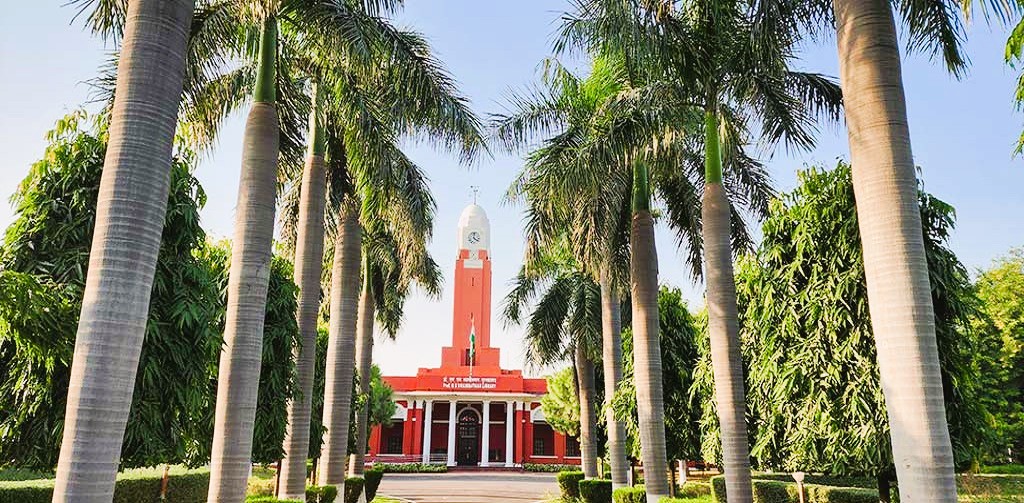
On its 118th Foundation Day, the Indian Agricultural Research Institute (IARI) shines as a beacon of innovation and excellence, propelling India’s agricultural economy forward.
Standing tall in the tapestry of India’s agricultural landscape, the IARI symbolizes excellence and innovation. As the nation commemorates its 118th Foundation Day on April 1st, it’s an ideal time to acknowledge the institute’s invaluable contributions to shaping India’s agricultural destiny. From spearheading the Green Revolution to leading cutting-edge research and technology, the IARI has been pivotal in driving India towards food security and prosperity.
The genesis of India’s Green Revolution can be traced to the corridors of the IARI. In the 1960s, amidst the looming spectre of famine, visionary scientists at the institute charted a new course for agricultural development. Through ground breaking research, they introduced high-yielding crop varieties, innovative farming techniques, and strategic policy interventions, ushering in a transformative era for Indian agriculture.
Beyond the Green Revolution, the IARI remains at the vanguard of agricultural innovation and sustainability. With a steadfast commitment to science-led sustainable agriculture, the institute pioneers efforts to tackle contemporary challenges such as climate change and food security. Through cutting-edge research, technology dissemination, and capacity-building initiatives, the IARI envisions a future where agriculture is not just productive but also environmentally sustainable and socially equitable.
Central to the IARI’s success is its dedication to education and human resource development. Through its comprehensive degree programs and training initiatives, the institute nurtures the next generation of agricultural leaders and innovators. By fostering inquiry, critical thinking, and entrepreneurship, the IARI equips students with the skills needed to address the complex challenges facing Indian agriculture.
The impact of the IARI extends beyond national borders, serving as a beacon of excellence for agricultural research worldwide. Through collaborative partnerships and knowledge-sharing initiatives, the institute contributes to global efforts in addressing food security and sustainable development.
On its 118th Foundation Day, the IARI is celebrated for its pivotal role in driving agricultural transformation through science and innovation. The dedication of its visionary scientists and researchers has positioned agriculture as a catalyst for sustainable development and inclusive growth. As the nation honour’s their contributions, there is a renewed commitment to invest in research, education, and technology to ensure the IARI’s legacy endures for generations. By honouring the institute’s legacy, India paves the way for a brighter future, enriching lives, strengthening communities, and nourishing the world through agricultural innovation.
The state of Assam has witnessed remarkable growth and development under the able leadership of civil servant Dr. Ravi Kota. As a highly esteemed member of the Indian Administrative Service (IAS) and a proud alumnus of the prestigious Indian Agricultural Research Institute (IARI), Dr. Kota has made invaluable contributions to the state’s progress. With his appointment as the first Chief Secretary with a Doctorate in Assam State since 1909, he has ushered in a new era of governance and innovation.
Dr. Ravi Kota, a 1993 batch IAS officer of the Assam-Meghalaya cadre, has been appointed as the Chief Secretary to the Government of Assam, effective from the superannuation of Mr. Paban Kumar Borthakur on March 31. This significant announcement comes after Mr. Borthakur’s tenure was extended for an additional three months in December 2023.
In addition to his role as Chief Secretary, Dr. Kota has also been entrusted with the responsibilities of Additional Chief Secretary for the Industries, Commerce & Public Enterprises Department, along with an additional charge of the Finance Department and the Office of Chief Secretary, Assam. Prior to this, he served as the Additional Chief Secretary for the Home & Political Department, which included Passport and Prisons.
Dr. Kota’s journey in public service began when he joined the Indian Administrative Service in 1993. His academic excellence is reflected in his gold medalist achievement in his Ph.D. in Agronomy. With over 30 years of leadership experience in both union and state governments, Dr. Kota has played a pivotal role in shaping public finance, fiscal practices, and macro-economic policies.
Throughout his career, Dr. Kota has worked tirelessly at various levels of state administration, from the grassroots to senior policy positions in the Union government. His expertise spans diverse sectors, including food and agriculture, human resources, urban infrastructure, and internal security. Notably, his tenure as Joint Secretary in the 15th Finance Commission, Ministry of Finance, Government of India, provided him with deep insights into the fiscal issues faced by states and union territories across the country.
As Principal Secretary for Finance in Assam, Dr. Kota successfully navigated the state’s finances through significant transitions such as the post-Planning Commission era, demonetization, and the implementation of the Goods and Services Tax (GST). He effectively managed internal resources through taxation, market borrowings, and multilateral development assistance.
Dr. Ravi Kota’s achievement as the first Ph.D. holder in Agriculture to hold the position of Chief Secretary in Assam is a testament to his dedication and expertise. His academic background from IARI, where he earned his Ph.D. in Agronomy, has equipped him with a unique perspective on agricultural practices and rural development. Today, Assam stands as the only state in the country to have both a Ph.D.-holder Chief Minister and Chief Secretary, reflecting the state’s commitment to excellence and innovation.
On March 31, 2024, Sri Paban Kumar Borthakur, a 1989 batch IAS officer, retired as the Chief Secretary of Assam, paving the way for Dr. Ravi Kota to assume the role. As the 51st Chief Secretary of the state, Dr. Kota’s appointment marks a significant milestone in Assam’s administrative history. This achievement highlights his unwavering dedication, sincerity, and hard work, which have propelled him to the forefront of administrative leadership.
Under Dr. Kota’s visionary leadership, Assam can look forward to a future marked by sustainable development, inclusive growth, and increased prosperity. His vast experience, academic prowess, and commitment to public service make him an exceptional civil servant and a true asset to the state of Assam.
In conclusion, Dr. Ravi Kota’s journey from being an esteemed alumnus of IARI to becoming the Chief Secretary of Assam showcases his remarkable achievements and unwavering dedication to public service. His contributions to the growth of Assam and his visionary leadership have set a new benchmark for civil servants across the nation. As Assam enters a new era of progress, Dr. Kota’s expertise and passion will continue to shape the state’s future, leaving a lasting legacy for generations to come.
The exemplary achievements of the Airport Authority of India (AAI) on its formation day deserve heartfelt applause. The AAI, established in 1995, has emerged as an instrumental force in managing and supervising India’s civil aviation infrastructure, propelling the nation’s air travel sector to remarkable heights. With its unwavering commitment to cutting-edge technology and strategic partnerships, the AAI has revolutionized the landscape of air travel in India.
The AAI shoulders the vital responsibility of creating, upgrading, maintaining, and managing civil aviation infrastructure across the country. Its extensive network encompasses a diverse range of airports, including national and international hubs, customs airports, and civil enclaves nestled within defense airfields. With an impressive portfolio of 81 domestic airports, 34 international airports, 10 customs airports, and 23 civil enclaves, the AAI exerts substantial influence over India’s thriving air travel industry.
At the heart of the AAI’s objectives lies the pursuit of efficient and secure air traffic management (ATM) services. Additionally, the AAI is dedicated to the development and supervision of aviation infrastructure, along with providing communication navigation surveillance (CNS) services within Indian airspace. The AAI’s organizational structure comprises board members, a chairman, a director-general, and part-time members. The operational units, headed by regional executive directors, are strategically located in Delhi, Chennai, Kolkata, Mumbai, and Guwahati.
The formation of the AAI in 1995 marked a significant milestone, born from the amalgamation of the National Airports Authority and the International Airports Authority of India. Under the auspices of the Ministry of Civil Aviation, Government of India, the AAI was established to replace the Civil Aviation Department, unifying the management of airport infrastructure under a single statutory body.
The AAI’s contributions to enhancing efficiency and safety in air traffic management are truly commendable. The adoption of the Automatic Dependent Surveillance System (ADSS) has revolutionized air traffic control, augmenting efficiency and accuracy to unprecedented levels. Real-time surveillance of aircraft facilitated by this advanced technology has resulted in enhanced safety and alleviated congestion, ensuring seamless operations across the skies.
Another remarkable feat achieved by the AAI is the development of the GPS-Aided Geo Augmented Navigation (GAGAN) project, accomplished in partnership with the esteemed Indian Space Research Organisation (ISRO). GAGAN empowers aircraft with precise navigation information, enabling optimized flight routes that are both accurate and efficient. The implementation of GAGAN has significantly contributed to the safety and efficiency of air travel in India, further solidifying the nation’s position as a global aviation powerhouse.
Infrastructure development has been a cornerstone of the AAI’s endeavours in the air travel sector. The AAI has undertaken numerous projects focused on modernizing and expanding existing airports, catering to the burgeoning demands of air travel. The introduction of Performance-Based Navigation (PBN) procedures at major airports has revolutionized navigation, resulting in reduced flight distances, fuel savings, and a commendable reduction in environmental impact.
Recognizing the pivotal role of public-private partnerships in fostering growth and progress, the AAI has actively engaged with private entities in the aviation industry. These synergistic collaborations have paved the way for the construction of world-class airports, equipped with cutting-edge facilities and amenities. The AAI ensures that these airports adhere to stringent international standards of quality and efficiency, further bolstering India’s reputation in the global aviation market.
In addition to its operational responsibilities, the AAI plays a paramount role in upholding national and international safety protocols. Engaging in regulatory activities, the AAI diligently approves repairs and oversees airport terminal and passenger vehicle safety. The AAI’s unwavering commitment to safety and security ensures that India’s airports maintain the highest standards of excellence, prioritizing passenger comfort and satisfaction.
The Airport Authority of India’s contribution to revolutionizing India’s air travel sector is truly praiseworthy. Through its impeccable management of airport infrastructure, strategic collaborations, and embrace of cutting-edge technology, the AAI has catapulted India to new heights in the global aviation market. With an unwavering focus on safety, efficiency, and passenger satisfaction, the AAI continues to make invaluable contributions to the growth and development of India’s air travel industry. As the AAI embarks on its exciting journey ahead, it remains steadfast in its commitment to providing world-class airports and services that evoke immense pride among every Indian.




























 SOCIAL PERSPECTIVES