• About

SOCIAL PERSPECTIVES

  • The Great Indian Cash Vanishing Act: A Billion Dreams Got Trapped in a Liquidity Mirage

    October 29th, 2025

    💸 The Great Indian Cash Vanishing Act: A Booming Economy Ended Up Starved of Its Own Money

    India’s liquidity crisis is not an accident—it is a slow-motion paradox born of reform, revolution, and the unintended consequences of progress. What began with the noble goal of purging black money and formalizing finance has now culminated in a system where money exists in plenty, yet movement is painfully scarce. The economy that once thrived on cash-led agility is now trapped in a high-tech liquidity drought.

    The first shock came in November 2016, when 86% of India’s currency was wiped out overnight. Demonetisation may have aimed to cleanse the system of unaccounted wealth, but it also drained the lifeblood of India’s informal economy. The street vendor, the small trader, the contractor—all saw their working capital vanish in a night. The “black money” that circulated rapidly through real estate, local trade, and small manufacturing—though outside the tax net—acted as a lubricant for economic activity. Once that cash was vacuumed into the formal system, it was taxed, locked in banks, or simply stopped moving. The velocity of money—the rhythm of India’s real economy—slowed down.

    Then came the UPI revolution, a technological triumph that changed how India transacts. In 2024, UPI processed over 14 billion transactions a month, a staggering feat of inclusion and efficiency. But beneath the celebration lies a subtle shift: money that once changed hands multiple times in a bazaar now sits in digital ledgers, subject to banking regulations and reduced velocity. The cash-in-circulation ratio, still below pre-2016 levels, tells the story of a behavioral transformation—India became more formal, but also more illiquid in its grassroots economy.

    The third act of this economic drama came with the collapse of the NBFC ecosystem in 2018–19. Giants like IL&FS and DHFL, once the oxygen suppliers for real estate and small businesses, imploded under bad debt. Non-banking lenders, which had bridged the gap between traditional banking and the informal sector, vanished. Public sector banks, burdened with over ₹10 lakh crore in NPAs, grew risk-averse. Credit to the real economy—the builders, traders, and MSMEs—was choked off.

    But liquidity did not disappear; it simply changed form. Capital migrated from the bazaars to the Bombay Stock Exchange. Venture capital, private equity, and institutional investors poured into equities, creating one of the world’s most exuberant stock markets. Yet this was liquidity without breadth—capital concentrated in the upper echelons of the economy. The informal and semi-formal sectors, employing over 80% of India’s workforce, were left parched.

    The fallout has been stark. Real estate, once contributing nearly 7% of GDP, remains frozen under stalled projects and unsold inventory. MSMEs face a credit gap exceeding $400 billion, their potential throttled by financing droughts. The informal economy, once 40% of GDP, has shrunk, leaving millions on the edge. What once circulated locally now floats globally, disconnected from the soil that once sustained it.

    This domestic liquidity paralysis has tethered India’s economy to the mood swings of global capital. The stock market’s movements now mirror the flows of Foreign Institutional Investors (FIIs). When FIIs buy, optimism reigns; when they withdraw, volatility and rupee weakness follow. India’s financial heartbeat, once driven by domestic consumption and cash flows, now responds to the pulse of Wall Street’s liquidity cycles.

    Yet this story need not end in despair. It is not a collapse—it is an evolution demanding recalibration. India’s challenge is not to reverse formalization but to redistribute liquidity intelligently. The next phase of reform must make capital flow as freely as data.

    Reviving a deep corporate bond market can open alternative financing channels for mid-sized firms and infrastructure. Strengthening Alternative Investment Funds (AIFs) can channel domestic savings—from insurance, pensions, and high-net-worth investors—into productive sectors like MSMEs and affordable housing. Revitalized and well-regulated NBFCs can once again serve as arteries for small borrowers.

    Technology, too, can play savior. The Open Credit Enablement Network (OCEN) can turn every digital footprint—from UPI transactions to GST invoices—into a credit trail. With consent-based data sharing, banks can underwrite trust digitally, extending credit even to small shopkeepers who were once invisible to the system. This is how India can resurrect its informal credit ecosystem—digitally, transparently, and sustainably.

    Government and RBI intervention must evolve from blanket liquidity infusions to targeted impact financing—funding the completion of stalled real estate projects, providing export credit guarantees for MSMEs, and incentivizing rural enterprise lending. Simultaneously, empowering domestic institutional investors like LIC, EPFO, and pension funds can create long-term capital reservoirs to buffer against global volatility.

    Ultimately, India’s liquidity crisis is not a story of scarcity—it’s a story of transition. The nation is moving from an economy of cash to an economy of code, from opacity to transparency, from hustle to structure. But in this march toward modernity, the small entrepreneur, the farmer, and the informal worker cannot be left stranded. Efficiency must coexist with empathy.

    If India can reconnect its financial plumbing—bridging the digital vaults of capital with the physical needs of its real economy—it will not just restore liquidity; it will redefine growth itself. The true success of India’s economic transformation will not be measured by stock indices or digital transactions, but by the heartbeat of money once again flowing through every lane, every mandis, every small workshop.

    Because the real miracle of the Indian economy was never its wealth—it was its movement. And until that movement resumes, the Great Indian Cash Vanishing Act will remain the grandest illusion of all: a trillion-dollar economy where the money’s everywhere, except where it’s needed most.

    Visit arjasrikanth.in for more insights
  • ⚠️ Digital Ghosts and Democratic Shadows: India’s Great Voter Roll Clean-Up Could Decide the Future

    October 28th, 2025

    As the Election Commission embarks on a nationwide overhaul of voter rolls, the line between cleansing democracy and corrupting it has never been thinner — and the fate of India’s elections may rest on a few lines of code.

    In the bustling theatre of the world’s largest democracy, where nearly a billion citizens prepare to vote, a silent revolution is unfolding — not in rallies or debates, but in databases. The Election Commission of India’s Special Intensive Revision (SIR) of electoral rolls is being hailed as one of the most ambitious administrative exercises in decades — a mission to scrub clean the foundation stone of democracy: the voter list.

    The logic is simple yet profound — one citizen, one vote. Nothing less, nothing more. But as the nation embarks on this mammoth digital purge, questions emerge: Can democracy survive a data war? And can technology, once meant to protect elections, become their most dangerous foe?

    At its heart, the SIR is democracy’s version of spring cleaning — removing the dead, deleting duplicates, and adding new, first-time voters to the rolls. With 950 million registered voters and millions turning 18 each year, such periodic revisions are essential. Migration, deaths, and clerical errors leave the lists swollen and unreliable. This time, however, the Commission isn’t merely tidying up — it’s pressing reset.

    Across Tamil Nadu, West Bengal, Kerala, Assam, and other states, voters are being asked to re-verify their details, re-submit forms, and re-establish their presence in the electoral system. For every polling booth with 1,200 voters, this means thousands of verifications — an administrative marathon powered by data entry, field work, and digital audits.

    But even as one arm of the state toils to protect the sanctity of the rolls, another front is opening in the shadows — one that threatens to undo the very credibility the SIR seeks to build.

    Earlier this year, Karnataka’s Special Investigation Team (SIT) uncovered a chilling case of digital election fraud. Using just a few mobile numbers and ₹5 worth of OTPs, hackers generated fake logins, filed Form-7 deletion requests, and erased over 6,000 legitimate voters from a single constituency. One-time passwords, once the symbol of security, became tools of theft. In a constituency decided by a 698-vote margin, democracy itself hung by a digital thread.

    The probe traced the network to political operatives, even reaching Dubai. The revelation was stark: the age of booth-capturing and ballot-stuffing had given way to server-capturing and database manipulation.

    This is the paradox of India’s digital democracy. The same technology that enables transparency also invites tampering. Every innovation comes with a new vulnerability. Every firewall creates a smarter hacker.

    That’s why the SIR is not merely an administrative challenge; it is a test of trust. In a country where perception is often stronger than proof, even a minor error in deletion or addition can ignite political chaos. Bihar’s recent verification drive, which saw 65 lakh names dropped, triggered a storm of accusations and counterclaims. Opposition leaders cried foul, alleging “systematic deletion” of valid voters — a charge the ECI denies. But perception, once poisoned, is hard to purify.

    Every missing name on a voter list is not just a statistic; it is a silenced voice. And in a democracy, silence is the most dangerous noise of all.

    As India gears up for the 2025 Bihar Assembly elections and beyond, the SIR carries both promise and peril. It could either strengthen democracy’s backbone or fracture its faith.

    Adding to the drama is India’s dynastic political landscape. While the Election Commission attempts to cleanse the voter lists, the political class recycles surnames — sons, daughters, and grandsons of former chief ministers returning to the ballot. In a nation where democracy was meant to be meritocratic, politics risks becoming hereditary. The contrast couldn’t be sharper: bureaucrats fight to purify the process, while politicians preserve the pedigree.

    The future, therefore, hinges not just on data hygiene but data integrity. The Election Commission must go beyond the rhetoric of reform. It must build digital firewalls, enforce multi-factor authentication, and create public verification dashboards where citizens can instantly check their voter status. Cybersecurity experts should sit alongside electoral officers; technology must be audited like ballots.

    And equally important — the Booth Level Officers (BLOs), the foot soldiers of Indian democracy, must be empowered with digital literacy to detect and report anomalies. They are the human bridge between the algorithm and the electorate.

    Because in the end, no technology can replace trust — and no democracy can survive without it.

    The success of this grand clean-up will not be measured in the number of deletions or new registrations, but in the confidence of citizens that their right to vote is secure, untampered, and sacred. If handled transparently, the SIR could become a global model for balancing digitization with democratic ethics. But if it falters, it could fuel alienation, distrust, and digital disenfranchisement.

    In an age when deepfakes shape truth, bots shape opinion, and algorithms influence elections, the battle for democracy is no longer fought in polling booths — it’s fought in databases, codes, and servers.

    India stands today at that razor’s edge — between digital empowerment and digital enslavement. The ghosts of data manipulation whisper warnings, but the shadows of democracy still hold light.

    And as the Election Commission embarks on this colossal exercise, one message must resonate from Delhi’s corridors to the smallest polling booth: the voter list is not just a document — it is democracy’s DNA. Protect it, or risk rewriting the future.

    Visit arjasrikanth.in for more insights

  • 🔥“Highway to Hell:  Greed, Forgery, and Fire Turned a Night Bus into a Moving Coffin”

    October 27th, 2025

    A spark on a rainy highway exposed a system on fire — where greed rode shotgun, rules lay dead, and 20 lives paid the price for a nation’s apathy.

    It was supposed to be a routine overnight journey — another bus gliding through the wet, sleepy highways from Hyderabad to Bengaluru. But for 44 passengers aboard the Vemuri Kaveri Travels coach, that night ended in unspeakable horror. Near Chinnatekuru village in Kurnool district, a collision, a spark, and a burst of flame turned comfort into chaos. Within minutes, the vehicle became a blazing coffin, claiming 20 lives — 19 passengers and a motorcyclist — in one of the most gut-wrenching road tragedies in recent memory.

    At first, public fury zeroed in on the driver, Miriyala Lakshmaiah. But as the smoke cleared, it became obvious that this was not a single man’s mistake — it was a crime scene built by a chain of greed, apathy, and official neglect. This was not an accident. It was a system-made massacre.

    The chain of tragedy began at 2:30 a.m. Two friends, Siva Shankar and Swami, were traveling on a motorcycle when they skidded on the rain-slick road. Siva Shankar died instantly; Swami, stunned and panicked, tried to pull the body and the fallen bike away from the road. Before he could, the Bengaluru-bound bus thundered toward them — and struck.

    The collision should have ended there. Instead, it triggered a firestorm. The bus dragged the bike for several meters, sparks flew as metal scraped asphalt, and leaking petrol met flame. In seconds, the undercarriage was ablaze. What should have been a small, containable fire turned catastrophic because of a deadly secret in the cargo hold: over 400 mobile phones packed in cartons, smuggled for profit.

    These weren’t just phones — they were time bombs. As the heat rose, the lithium-ion batteries began to detonate in a chain reaction so fierce that the bus’s steel skeleton buckled and melted. Forensic experts later called it a “thermal explosion event.” Passengers seated above the luggage compartment never had a chance. Within minutes, flames engulfed the front of the bus, trapping everyone in a furnace of smoke, screams, and molten metal.

    The fire didn’t come from fate — it came from greed. The operator had turned a passenger vehicle into a smuggling truck, violating every transport law that prohibits combustible goods in passenger carriers. This was a tragedy engineered by profit and sanctioned by silence.

    The negligence didn’t stop there. The driver, Lakshmaiah, should never have been behind that wheel. Investigations revealed that the 42-year-old had forged his educational documents to secure a heavy vehicle licence. Though official records claimed he passed Class 10, he had only studied till Class 5. The law requires at least Class 8 for a heavy licence — but corruption sold him a shortcut.

    This wasn’t a loophole — it was a gaping wound. A system that sells licences for cash and conducts no background verification handed over a 20-tonne machine to an unqualified driver. The regulator, the operator, and the enforcer all failed in a perfect symphony of indifference.

    The bus itself lacked basic safety features: no fire suppression system, no smoke detectors, no functioning emergency exits. Fitness certificates and safety audits were mere paper rituals, bought and stamped without inspection. This was a moving deathtrap certified by bureaucracy.

    So, who really killed those 20 people? Not destiny. Not the driver alone. But a corrupt ecosystem — an industry that prizes profit over protection, a regulatory machinery that confuses compliance with corruption, and a public conscience numbed by routine tragedy.

    Every passenger aboard had a destination — a family, a reason to live. They trusted the system to deliver them safely. Instead, the system delivered them to flames. When the pursuit of profit becomes the national ethic, every journey becomes a gamble with death.

    Justice cannot stop at condolences. It must rewrite the way India travels. The answers lie in reform, not ritual outrage. First, enforce independent safety audits for all private operators — verifying driver credentials, vehicle health, and cargo contents. Second, deploy AI-driven cargo scanning and digital driver verification to stop illegal goods and fake licences. Third, treat corporate negligence as a criminal offence, not an administrative lapse. Those who profit from risk must pay with more than money — they must face prison.

    The Kurnool bus fire must be remembered not as an accident but as evidence — proof that apathy kills faster than flames. The victims didn’t perish because destiny betrayed them. They died because greed drove them, forgery guided them, and governance abandoned them.

    As the ashes cool in Chinnatekuru, one truth must remain searingly alive — when negligence travels first-class, nobody ever reaches home.

    Visit arjasrikanth.in for more insights

  • The Velvet Noose:  Inner Circles Crown and Crucify Leaders

    October 26th, 2025

     Between whispers of flattery and walls of silence, power is never lost at the ballot box—it’s strangled in the echo chambers closest to the throne.

    In politics, defeat rarely begins with the ballot box—it begins with the inner circle. That intimate orbit of advisors and confidants around a political leader can either be the secret engine of good governance or the slow poison of misguidance. History shows us that more governments in India have collapsed not because of public revolt, but because the leader was misled, isolated, or flattered into blindness by their own court of loyalists.

    The inner circle is no casual accessory. It is the filter of information, the keeper of access, and the interpreter of reality for the leader. When composed of principled advisors, it sharpens decision-making, balances perspectives, and anchors governance in public service. But when crowded with sycophants or rent-seekers, it morphs into a dangerous echo chamber where dissent is silenced, truth is distorted, and governance drifts toward delusion.

    Consider West Bengal’s electricity sector under political capture. Billing was dictated not by consumption but by loyalty. Regions that voted for the ruling party magically saw reduced bills, while usage soared unchecked. Meter readers were coerced to fudge figures, leading to revenue collapse, shortages, and industrial stagnation. What seemed like short-term political reward devastated the long-term economic health of the state. This was not just corruption; it was the sabotage of governance by a circle that prized patronage over sustainability.

    Or look at Delhi after the 2025 attack on its political leader during a Jan Sunwai. Security protocols, though justified on paper, slowly turned into a fortress. Public hearings became ceremonial theatre with barriers and filters. Citizens’ voices no longer reached directly; they passed through a cordon of advisors who curated narratives. Governance became blindfolded not by enemies, but by its own guardians.

    This story repeats across states and decades. Maharashtra’s land scams in the 1990s or Uttar Pradesh’s caste-driven administrative paralysis in the 2010s—all bore the same stamp: inner circles that built walls instead of bridges. Leaders fed on flattery rather than facts inevitably walked into collapse.

    Psychology helps explain this pattern. Dr. David Hawkins’ “Map of Consciousness” illustrates that circles operating below the level of Courage function through fear, pride, and secrecy. They thrive on manipulation, suppressing truth while amplifying validation. Above that threshold, however, lies integrity, openness, and service. Leaders working with circles at higher consciousness levels make difficult yet necessary decisions, prioritize transparency, and win public trust. The circle then becomes not a shield of delusion but a mirror of reality.

    Yet human psychology resists this discipline. Constant validation seduces leaders into the yes-men syndrome. Ego flourishes, criticism shrinks, and symbolic projects substitute real solutions. Leaders are not deliberately isolated but subtly caged, until the distance between perception and reality is too wide to cross.

    The antidote lies in direct public engagement. Mechanisms like Jan Sunwai, Gram Vastavya in Karnataka, and the Peoples Plan Campaign in Andhra Pradesh prove that when leaders step outside their insulated bubble, they reconnect with the pulse of the people. Direct interaction bypasses filters, injects reality, and rebuilds trust.

    The benefits are clear. Citizens comply with policies more readily when they feel heard. Early warnings emerge when grievances surface before exploding into crises. Transparency erodes corruption. And, perhaps most importantly, leaders rediscover purpose. One political leader once admitted that speaking directly with citizens “fills me with new energy and deepens my commitment.” That emotional fuel sustains governance when bureaucratic machinery threatens to choke it.

    To institutionalize this, leaders must hardwire public engagement into governance. Regular hearings, grievance dashboards, surprise inspections, and digital town halls can dismantle echo chambers. Diverse advisory groups—academics, industry leaders, grassroots activists—must balance loyalists. Above all, transparency in how circles operate must be non-negotiable.

    The greatest threat to leadership is not the opposition, not hostile media, not even natural disasters. It is the silent coup of the inner circle. If that circle drags the leader into fear, pride, and illusion, collapse is inevitable. But if it lifts them toward truth, integrity, and service, governance rises beyond the ordinary and earns enduring trust.

    Ultimately, the people themselves must become the leader’s truest circle. They are the only advisors immune to the intoxications of power. When leaders listen not just to whispers in their chambers but to the cries of the street, governance ceases to be theatre. It becomes democracy in action—raw, imperfect, but alive.

    Visit arjasrikanth.in for more insights

  • ⚡ “The Power of Less” — India’s Next Energy Revolution Begins at the Switchboard

    October 25th, 2025

     Forget new power plants and gigawatt dreams — if every Indian household saved just 10% of its electricity, the nation could light up Delhi for ten months, save ₹25,000 crore, and prove that the brightest energy lies not in production, but in consciousness.

    India’s energy story is often told through the lens of production — new power plants, renewable expansions, gigawatt milestones. But perhaps the greatest untapped source of energy lies not beneath the earth or atop solar farms — it’s in our homes, humming quietly through every fan, fridge, and forgotten switchboard. What if, instead of endlessly producing more electricity, India simply learned to use a little less? Just 10% less.

    As of 2024, India has nearly 350 million households. Each one consumes, on average, 97 kilowatt-hours (kWh) of electricity every month. That may sound modest, but collectively, it adds up to a colossal 34 billion kWh per month, or 408 billion kWh per year — roughly equivalent to the annual power output of 15 large coal plants. Now imagine if every household conserved just 10% of that consumption. The result? A staggering 40 billion kWh saved every year, enough to power the entire city of Delhi for nearly 10 months.

    This isn’t an abstract exercise. It’s a call for a cultural revolution — an awakening of energy mindfulness at the grassroots level. India’s instinct, whenever faced with growing demand, is to build more — more coal plants, more solar parks, more transmission lines. Yet the truth is that producing more electricity from fossil fuels only deepens our dependence on carbon and drains public finances. A smarter path lies in conservation — in using what we already have, better.

    Electricity in India doesn’t come cheap, nor clean. A single unit (kWh) costs an average of ₹6.47, varying between ₹3 to ₹10 across states. So, a 10% reduction per household would save families around ₹600 to ₹1,000 annually, while collectively translating to ₹25,000 crore in national savings each year. And that’s just monetary savings. Environmentally, these 40 billion kWh of avoided generation would prevent nearly 30 million tonnes of CO₂ emissions annually — equivalent to planting over a billion trees.

    But conservation isn’t merely about numbers — it’s about awareness, habits, and the small decisions that shape our collective footprint. In Indian homes, a large portion of power is wasted silently: lights left on in empty rooms, chargers plugged in overnight, television sets humming to no one’s attention. Then there are “phantom loads” — appliances that continue to draw electricity even when turned off. Studies show these ghost loads can account for 5–10% of total household power use. Add to that outdated appliances — old refrigerators, inefficient air-conditioners, and incandescent bulbs — and you realize the true size of the hidden energy drain.

    The irony is that while India’s power utilities lose about 16.28% of generated electricity through transmission and distribution (T&D) losses, households waste nearly as much through inefficiency and neglect. In 2023–24 alone, Indian power distributors recorded a staggering ₹57,000 crore in aggregate losses — much of it due to theft, faulty billing, and technical dissipation. The government rightly focuses on upgrading grids and smart metering, but the more silent revolution must happen inside our homes.

    And in that domestic sphere, it is women — particularly housewives — who hold the keys to transformation. They are the daily energy managers of India’s 350 million households. Empowering them through awareness, training, and recognition can create a social movement that saves more energy than any single policy reform. Successful case studies prove it:

    In Odisha, women trained under the Solar Silk Reeling project shifted from hand-reeling to solar-powered machines, doubling their income and saving power.

    In Rajasthan, solar refrigerators in dairy cooperatives saved ₹15,000 a year while cutting electricity use dramatically.

    Across Nigeria and Tanzania, the Solar Sister model turned rural women into clean-energy ambassadors, creating a ripple of adoption that governments could never achieve alone.

    Imagine an “Energy Sakhi” network in India — women volunteers who conduct neighbourhood energy audits, share conservation tips, and demonstrate energy-efficient appliances. Supported by local DISCOMs, these “energy champions” could become the torchbearers of India’s conservation movement. Recognition programs — “Energy Smart Colony” or “Power Saver Family Awards” — could further motivate communities to compete for efficiency rather than consumption

    Behavioral change doesn’t happen by decree; it happens by design. Just as Swachh Bharat transformed sanitation habits through persistent messaging and emotional appeal, a nationwide “Save 10%” campaign could awaken households to the power of their own choices. The idea is simple: every kilowatt-hour saved is a kilowatt-hour generated — clean, instant, and without emissions.

    The campaign could blend science and storytelling — radio jingles reminding people to switch off fans, WhatsApp challenges rewarding efficient homes, schools teaching children to become “Energy Detectives.” And for every neighbourhood that achieves measurable savings, DISCOMs could offer small rebates or public acknowledgment, creating a culture where saving power becomes a badge of pride.

    The math speaks volumes: even a 5% reduction in household demand could offset the need for one massive coal plant. A 10% reduction could stabilize urban power shortages and free up capacity for industries. The environmental benefits multiply further — reduced coal burning means cleaner air, fewer respiratory illnesses, and lower national expenditure on energy subsidies and health costs.

    India’s power revolution won’t be won solely by engineers or policymakers. It will be won by ordinary citizens — by a mother who unplugs the mixer after use, by a student who studies under LED light, by a family that switches to solar water heating. Conservation isn’t a sacrifice; it’s a form of patriotism.

    In a world obsessed with megawatts and gigawatts, the real victory lies in negawatts — the energy we never needed to produce. If every Indian household saves just 10% of its electricity, the collective result would be enough to light up a nation — cleaner, brighter, and wiser.

    The next great power project of India doesn’t require turbines or transmission towers. It requires awareness, habit, and a social awakening. Because sometimes, the most revolutionary thing you can do for the planet is to simply — switch off.

    Visit arjasrikanth.in for more insights

  • India’s Forgotten Backbone: The Nation Must Stand Up for Its Small Businesses Before the Giants Eat It All

    October 24th, 2025

    Its billion-dollar empires steal the limelight, it’s the unseen small entrepreneurs who keep India alive. Time to turn the spotlight from glittering boardrooms to gritty backstreets—the real workshops of the nation’s growth.

    India’s economic story is often told through the glittering lens of its conglomerates—massive corporations that dominate headlines, attract foreign investors, and dictate the rhythm of industrial policy. Yet beneath that glossy surface lies the true foundation of the Indian economy: the unorganised and small business sector, a sprawling ecosystem of micro-entrepreneurs, traders, artisans, and local manufacturers who collectively employ nearly 90% of India’s workforce and contribute close to half of the GDP. And yet, this vast engine of livelihood and innovation remains chronically neglected.

    For decades, policy bias and financial systems have tilted in favor of big players—corporate houses with deep pockets, legal teams, and banking relationships that allow them to access credit and capital with ease. These conglomerates have mastered the art of navigating the banking maze, often siphoning massive loans from public sector banks under favorable terms, only to leave behind a trail of non-performing assets. Meanwhile, the corner shop owner, the small textile unit in Tiruppur, the brass artisan in Moradabad, or the weaver in Pochampally continues to struggle for even a modest line of credit.

    The tragedy is not that India lacks entrepreneurs; it is that it lacks the ecosystem to nurture them. In countries like China, South Korea, and Taiwan, small and medium enterprises (SMEs) were not treated as appendages but as core national assets. China’s township and village enterprises transformed its rural economy, South Korea’s chaebols grew alongside a dense network of supplier SMEs, and Taiwan’s manufacturing miracle was powered by family-run factories that became export champions. Their governments understood that broad-based growth begins with small hands, not boardrooms.

    India, by contrast, has allowed policy to be captured by large corporate interests. The Small Industries Development Bank of India (SIDBI), once envisioned as the financial lifeline for micro and small enterprises, remains underfunded compared to the capital inflows directed to corporate debt restructuring. Incentives like the Production-Linked Incentive (PLI) scheme, though well-intentioned, have largely favored large-scale manufacturers. The result is an economy that looks vibrant on paper but hollow in depth—a balloon inflated with corporate air, disconnected from the millions of small enterprises gasping for sustenance.

    The neglect of the unorganised sector has wide-ranging consequences. It weakens employment generation, distorts income equality, and stifles local innovation. Every unassisted micro-entrepreneur represents not just a lost business, but a missed opportunity for community-level resilience. When large corporations fail, the economy wobbles; when small businesses thrive, the nation stands firm. India’s recent unemployment figures and shrinking informal sector profits are warning signals that the imbalance has reached a critical point.

    What India needs now is not another corporate stimulus, but a structural renaissance—a complete reimagining of how the nation treats its small business sector. The first step must be to reform access to credit. Simplified collateral-free loans, expanded microfinance models, and digitally enabled lending platforms should be designed to reach every small entrepreneur, particularly women and rural artisans. Banking outreach must prioritize the last-mile entrepreneur as much as it does billion-rupee borrowers.

    Equally important are fiscal incentives and protection. Small units must be given preferential tax treatment, access to low-interest working capital, and reserved procurement quotas from government departments and public sector undertakings. These businesses also need technological hand-holding—digital literacy programs, access to automation tools, and partnerships that connect them to e-commerce platforms and digital supply chains.

    The regulatory web choking small entrepreneurs must also be addressed. A simplified compliance framework with one-stop portals for registrations, permits, and clearances can eliminate bureaucratic hurdles. Moreover, the government should foster local value chains by linking micro enterprises with larger industries, enabling them to upgrade quality, packaging, and branding to compete in domestic and global markets.

    Yet even beyond policy, what small businesses truly crave is institutional respect. Their resilience and adaptability must be acknowledged as the cornerstone of India’s development story. Every rupee invested in nurturing small enterprises yields exponential returns in employment, innovation, and social equity. The shift must be from corporate consolidation to entrepreneurial inclusion.

    India’s growth cannot remain a floating balloon—colorful but fragile, lofty but hollow. It must have roots, anchored by millions of small enterprises that give the economy depth and stability. This grounded model of inclusive growth is not idealistic; it is practical and proven. The world’s most dynamic economies built their success by empowering the many, not by enriching the few.

    The government must now recalibrate its industrial vision. Instead of chasing global giants with tax breaks and mega incentives, it must invest in empowering small Indian innovators—the kirana store owner adapting to digital payments, the local food processor exporting spices, the small-scale fabricator supplying to renewable energy firms. These are the real champions of India’s economic resilience.

    India’s true economic miracle will not be written in the skyscrapers of Mumbai or Gurugram, but in the small workshops of Coimbatore, the bustling streets of Surat, and the industrial clusters of Kanpur. The day the small entrepreneur feels seen, supported, and celebrated, India’s growth will no longer be a balloon drifting aimlessly—it will be a grounded, self-sustaining rocket, powered by the many, ready to soar.

    Visit arjasrikanth.in for more insights

  • “The Forgotten Half of War: When the World Burns and Women Bleed in Silence”

    October 23rd, 2025

    Across continents and conflicts, women bleed, build, and bear the weight of wars they never started — yet are denied a seat at the table to shape the peace they always rebuild. 

    The world today stands at a haunting crossroads — one where the map of conflict is not just drenched in blood, but soaked in the silent tears of women and girls who never chose these wars. Behind every frontline and every peace table dominated by men in suits, there exists another battlefield — invisible, unacknowledged, and unbearably brutal — where womanhood itself is under siege. History glorifies conquests and ceasefires, but the truest chronicles of war are etched in the shattered lives of women who lose homes, families, and often, themselves.

    We are now witnessing the highest number of active conflicts since 1946 — a grim testament to humanity’s failure to learn. Amid drone strikes, displacements, and diplomatic deadlocks, a quieter war rages on: a war against women’s bodies, rights, and dignity. Civilian casualties among women and children have quadrupled in just two years. Homes that once nurtured dreams have become graves of despair. Schools have turned into ruins, hospitals into targets, and refugee camps into waiting rooms of endless trauma.

    Across Gaza, Sudan, Myanmar, and Haiti, women are not victims by accident but by design. Conflict-related sexual violence has surged by a shocking 87%, turning women’s bodies into battlegrounds for revenge and ethnic cleansing. Every statistic hides a thousand silences — a child forced into motherhood, a survivor denied justice, a generation scarred beyond repair. And while the violence is visible, its echoes—mental health collapse, displacement, and loss of social identity—are often invisible, festering for decades after the guns fall silent.

    The tragedy deepens when peace itself becomes a men-only negotiation. In 87% of recent peace processes, not a single woman sat at the table; women made up barely 7% of negotiators. The irony is obscene — those who suffer most are shut out from deciding the peace they deserve. Yet, studies prove that peace agreements involving women last longer and heal deeper. The absence of women in peacebuilding is not a coincidence; it is a deliberate omission that weakens the very foundation of global recovery.

    Health, too, has become collateral damage. Fifty-eight percent of maternal deaths now occur in war-torn regions — a number driven not by biology but by bombs. Maternity wards crumble, health workers flee, and expectant mothers deliver amid rubble and fear. Without access to medicine, clean water, or midwives, pregnancy becomes a perilous act of resistance. The loss of healthcare is not merely a humanitarian failure; it is a moral collapse that exposes how little the world values women’s survival in times of war.

    The paradox grows starker when one considers money. Nations pour $2.7 trillion a year into weapons, yet women-led peace organizations — the true first responders — struggle for survival. These grassroots groups rebuild communities, document abuses, negotiate ceasefires, and offer refuge to survivors — often without protection or pay. Experts argue that even 1% of global aid reaching them could transform outcomes, but year after year, they are left invisible and underfunded.

    The Women, Peace, and Security (WPS) agenda, born 25 years ago through UN Security Council Resolution 1325, was supposed to rewrite this narrative. It promised participation, protection, and leadership for women in peacebuilding. But the global machinery has betrayed its own blueprint. The rhetoric remains loud, but resources remain scarce. Commitments exist on paper; accountability is a mirage. Worse still, a growing global backlash against gender equality seeks to push women back into silence, as if their demand for justice is somehow an act of defiance.

    If the world truly wishes to honour the WPS vision, it must shift from symbolism to substance. The goal is not to make war “safer” for women — it is to end wars altogether. Real peace cannot be brokered by drones, divisions, and denial. It must be built through dialogue, disarmament, and dignity. Women must no longer be invited as guests to peace tables; they must be hosts. Their inclusion is not an act of charity — it is a prerequisite for sustainable peace.

    The impact of conflict on women and children is not limited to violence. It rips apart their health, homes, and hopes. The collapse of infrastructure and displacement of healthcare workers cut off access to vaccinations, family planning, and emergency obstetric care. Diseases spread unchecked. Child marriages rise. Women and girls are trafficked, traded, and treated as spoils of war. Children lose education, innocence, and safety, often growing up in refugee camps where hope is rationed like food. The breakdown of economies leaves women with the impossible burden of feeding families amid hunger, inflation, and despair.

    Yet, amid this devastation, women remain the unbreakable thread holding societies together. Mothers crossing borders with infants in their arms. Teachers holding classes in ruins. Activists recording atrocities at the risk of death. They are the soldiers of peace, their weapons being courage and compassion. They are the first to suffer, but also the first to rebuild.

    The question is no longer whether women can survive war — they always do. The question is whether the world can survive without them in the peace that follows. Because every conflict that silences a woman’s voice is not just a political failure. It is a failure of humanity itself.

    Visit arjasrikanth.in for more insights

  • 🐍 When the Serpent Strikes Home: Pakistan’s Proxy Wars Backfire in Epic Irony

    October 22nd, 2025

    From puppeteer to petitioner, Islamabad pleads with its former protégés as decades of militant strategy turn inward, leaving chaos, carnage, and a nation at war with itself. 

    In the labyrinth of South Asian geopolitics, Pakistan’s latest ceasefire plea to Afghanistan reads like an epic of irony. The nation that once prided itself on mastering the dark arts of proxy warfare is now trapped by its own creation. After deadly border clashes, Pakistan’s Defence Minister announced a fragile truce brokered in Doha, with follow-up talks slated for Istanbul. The demand on the table is both urgent and tragic: that Afghanistan’s Taliban regime stop sheltering militants attacking Pakistan. Kabul, now ruled by the very Taliban Islamabad once nurtured, has responded with its own defiance—accusing Pakistan of meddling and demanding “mutual respect.” What looks like diplomacy is, in truth, desperation.

    For decades, Pakistan’s military-intelligence establishment played a high-stakes game with fire. During the Cold War and the subsequent “War on Terror,” Islamabad cultivated jihadist networks as instruments of regional strategy—arming, funding, and guiding the Taliban and the Haqqani Network to secure influence in Afghanistan and maintain “strategic depth” against India. It was a cynical doctrine, rooted in fear of encirclement but lubricated by opportunism. Those same groups, once the sharp edge of Pakistan’s foreign policy, have now turned their blades inward.

    The blowback has been catastrophic. The Tehrik-i-Taliban Pakistan (TTP), once a by-product of Pakistan’s Afghan adventure, now wages relentless war against the state itself. From the Red Mosque siege in 2007 to the Peshawar school massacre in 2014 that killed 132 children, to countless attacks on mosques, markets, and military bases—the group’s carnage has scarred generations. More than 80,000 Pakistanis have perished in terror-related violence since 2003. The nation’s economy, strangled by insecurity, has lost hundreds of billions of dollars. Foreign investment has fled. Faith in governance has withered. The fire once meant to destabilize Afghanistan now consumes Pakistan’s own soul.

    India, for decades, warned of this reckoning. From the Parliament attack in 2001 to Mumbai in 2008 , Pulwama in 2019 and Pahalgaon in 2025 , India’s list of grievances against Pakistan-based terror groups runs long and bloody.

    Lashkar-e-Taiba, Jaish-e-Mohammed—these names echo across international counterterrorism reports. When Pakistan was placed on the FATF grey list from 2018 to 2022 for terror financing, it dismissed the move as geopolitics. Yet today, Islamabad faces the same moral indictment it once denied: the monsters it fed no longer take orders.

    The lesson is as old as power itself—those who raise serpents cannot choose when they strike. Terrorism is not a controlled instrument; it is contagion. Once unleashed, it corrodes the very institutions that gave it birth. Pakistan’s pursuit of strategic depth has yielded only strategic decay. The Taliban, far from being a compliant client, now lectures its former patron about sovereignty and respect. Islamabad, once the puppeteer, now pleads for peace from its puppets.

    The pattern is universal. Iraq’s post-2003 collapse birthed ISIS, whose terror consumed both creators and neighbours. Libya’s fall fragmented the nation into militia fiefdoms. Afghanistan’s own trajectory—from U.S.-armed mujahideen in the 1980s to Taliban dominance today—proves that ideology weaponized always mutates beyond control. Nations that court extremists for expedience end up prisoners of the chaos they unleash.

    And yet, amid the ruins, one truth gleams: nations survive not by exporting fear but by cultivating legitimacy. Pakistan’s current crisis is not merely military—it is moral and institutional. Radicalization seeps through its schools and mosques, while governance cracks under corruption and economic decay. The ceasefire with Afghanistan may calm the border, but it cannot pacify the storm within. No truce can outlast the ideology that fuels it.

    In functioning democracies, conflicts are fought in parliaments, not through proxies. Power transitions through votes, not bullets. But in fragile states where the state itself sponsors violence, sovereignty becomes a shadow play. Pakistan’s tragedy lies not in its enemies but in its refusal to abandon the tools of its past.

    If there is redemption, it lies in reimagining strength—not as the ability to destabilize others, but to stabilize oneself. To build a state that commands loyalty through justice, not fear. To realize that influence earned through peace endures longer than dominance enforced through terror.

    History is merciless in its memory. It forgets the swagger of generals but remembers the ruin of nations that mistook militancy for strategy. Pakistan’s story, still being written in smoke and sorrow, carries a warning for every power that toys with fanaticism: when you unleash the serpent, you may not survive its return.

    Visit arjasrikanth.in for more insights

  • “Crackers, Conscience, and the Capital’s Curse:  Diwali Turns into Delhi’s Smog Symphony”

    October 21st, 2025

    Delhi’s Diwali Dilemma — where the Festival of Illumination turns into a night of smog, sorrow, and suffocated joy 

    Every year, as a million diyas flicker across India, Delhi braces for its darkest night. The Festival of Lights, once a quiet ode to victory of good over evil, now begins with celebration and ends with suffocation. The city wakes to a Gray dawn after Diwali—the air thick, the streets littered, and the irony piercing. The festival meant to illuminate now blinds and chokes the very heart of the nation.

    For Indians, Diwali isn’t just a festival—it’s an emotion that pulses through every family. The glow of lamps, the fragrance of sweets, and the laughter of homecomings embody its spirit. Firecrackers entered this tradition as symbols of joy, noise, and prosperity—a burst of light to banish evil. Yet in modern Delhi, these very bursts have turned into detonations of disaster, igniting an annual health emergency that leaves the city gasping.

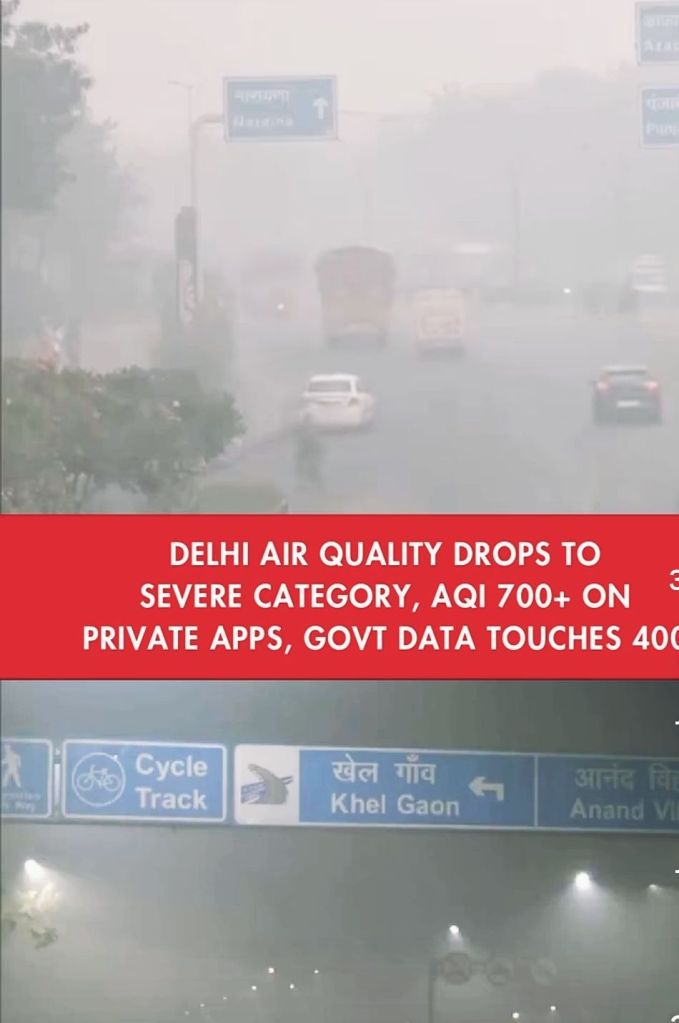
    When dawn breaks the morning after, Delhi resembles a dystopia. The Air Quality Index soars beyond 600, crossing “hazardous” thresholds that defy comprehension. The city coughs in unison—lungs coated with soot, eyes burning, and hearts heavy with the guilt of collective indulgence. Hospitals overflow with respiratory cases; schools close to protect children from the air they helped pollute the night before. Firecrackers aren’t the sole culprits—but they tip the scales in a city already burdened by vehicular fumes, industrial smoke, and stubble burning from neighboring states. The science is brutal: the sulphur dioxide, nitrogen oxides, and heavy metals from fireworks weave a toxic cloud, turning Delhi’s joy into its slow poison.

    Yet emotion overrules evidence. For many, the sparkle of fireworks is inseparable from childhood memories. “It’s just one night,” say many Delhiites, echoing a sentiment that blurs nostalgia with neglect. “Why blame Diwali when factories and farmers pollute every day?” This defiance transforms an environmental concern into a cultural clash—where logic collides with identity, and every conversation turns into a battle between heritage and health.

    The Supreme Court’s intervention attempted to find middle ground through “green crackers.” Developed by CSIR-NEERI, these fireworks promised 30–35% fewer emissions and lower noise levels, removing toxic metals like barium. Legal use was restricted to specific hours, and online sales of traditional crackers were banned. On paper, it was perfect—an enlightened compromise between faith and science. But on Delhi’s smoky streets, enforcement turned into farce. Black markets thrived, illegal fireworks flooded from neighboring states, and the rule of law evaporated in clouds of sulphur.

    This defiance isn’t fuelled by malice—it’s powered by emotion. In India, law bends before sentiment, and festivals are sacred. To many, the restrictions on Diwali feel like an assault on faith rather than a plea for public health. The issue quickly becomes politicized: activists are called elitists, courts accused of moral overreach, and governments blamed for hypocrisy—cracking down on fireworks while turning a blind eye to stubble fires. A scientific debate dissolves into a shouting match over culture and control.

    But beneath the noise, a quieter revolution is unfolding. Delhi’s younger generation is reimagining Diwali. “No Crackers, Only Diyas” has grown from a slogan into a social conscience. Schools educate children on green celebrations, offices promote eco-friendly campaigns, and residential societies replace fireworks with light shows and community feasts. A slow, silent shift is taking place—from loudness to mindfulness, from pollution to preservation.

    Still, the transformation cannot rest on citizens alone. The government’s responsibility extends beyond token bans and post-facto advisories. Asking citizens to give up fireworks must be matched by decisive action on other pollution sources. The stubble burning crisis demands real structural reform—machine subsidies, alternative crops, and interstate coordination. Vehicular pollution requires cleaner fuels, electrification, and public transport investment. Real change will come when people see shared accountability, not selective enforcement.

    Delhi’s Diwali crisis isn’t just about air—it’s about awareness. It challenges a society to evolve its traditions without erasing them, to seek joy without collateral damage. The real test lies in whether we can keep the festival’s spirit alive without letting it poison the city that celebrates it. The answer isn’t in bans but in balance, not in guilt but in collective awakening.

    Imagine a Diwali where the night sky glows with lamps instead of gunpowder, where children run free without masks, and where the air smells of sweets, not smoke. A festival where light truly triumphs over darkness—external and internal. That would be the Diwali Delhi deserves: one of illumination, not ignition.

    Until that day, the city will keep dancing this smoky waltz between devotion and destruction—its lamps flickering bravely against the haze. The question Delhi must now answer is simple yet profound: can the city that lights up the nation also learn to breathe through its own celebration? Because if the air grows darker each year, even the brightest lamp will one day fail to shine.

    Visit arjasrikanth.in for more insights

  • Crownless Republic: America Rose to Remind Power Who It Belongs To

    October 20th, 2025

    From silent footsteps to a symphony of defiance, 2025 became the year millions of Americans rose—not in anger, but in allegiance—to the idea that power belongs not to rulers, but to the ruled.

    It began not with fanfare, but with footsteps—quiet at first, scattered across parks, campuses, and courthouse lawns. Then, as dawn broke over Washington, New York, Los Angeles, and thousands of towns in between, those footsteps merged into a single, thunderous heartbeat. The message was unmistakable: “No Kings in America.” What started as civic anxiety erupted into a full-blown movement—millions of Americans flooding the streets to reclaim what they felt was slipping away: the essence of their democracy.

    This uprising was not driven by partisanship, but by principle. Citizens from every background—teachers, veterans, scientists, nurses, students—united under one conviction: no individual, however powerful, stands above the law. The protests, swelling to over seven million participants across 2,700 rallies, were the largest in modern U.S. history. Streets turned into rivers of yellow, the movement’s colour of unity and nonviolence, as protesters danced, sang, and waved flags that shimmered in defiance of fear.

    Yet beneath the creativity and colour lay deep urgency. Federal workers, many furloughed or targeted by administrative purges, rallied to defend the integrity of public institutions. Immigrant families protested sweeping deportations and raids that tore communities apart. Civil rights groups spoke out against policies that sought to roll back protections for women and minorities. Placards reading “Hands Off Our Democracy” and “We the People Means Everyone” captured the inclusive spirit of a nation rediscovering its collective voice.

    Observers likened it to a modern Boston Tea Party—only this time, the rebellion wasn’t against a foreign monarch, but against the creeping coronation of executive power. The people were not merely resisting policies; they were reasserting ownership of their republic. In many small towns, citizens donned Revolutionary War costumes, evoking the founders’ spirit not as nostalgia but as warning: democracy, once surrendered, rarely returns intact.

    The scale of civic energy surprised even seasoned organizers. The Indivisible network—born from earlier waves of democratic activism—channeled outrage into disciplined mobilization. Volunteers trained crowds in peaceful protest, de-escalation, and voter registration. Streets became classrooms of citizenship, where grandmothers linked arms with college students, veterans with teachers, immigrants with lifelong locals. What bound them together was not ideology but identity—the identity of a free people refusing to kneel.

    The impact rippled far beyond the rallies. State governments began openly challenging federal directives viewed as unconstitutional. Universities convened emergency forums on the erosion of democratic norms. Media houses debated the ethics of neutrality in times of institutional peril. Corporate leaders, often cautious in politics, issued statements reaffirming commitments to diversity, transparency, and free expression. America’s conscience was stirring—not as a whisper, but as a roar.

    Even as authorities dismissed the protests as “chaotic theatrics,” their tone betrayed unease. The sight of millions moving in disciplined unity unsettled those accustomed to division. “It’s hard to call something anarchy,” one commentator noted, “when it looks like a festival of democracy.” Indeed, families brought children to witness history first-hand, transforming anxiety into agency. The movement’s humour and creativity—people dressed as unicorns, waving banners shaped like constitutions—became its Armor against despair.

    Though largely peaceful, tensions occasionally flared. A handful of counter-protesters appeared, some armed, some angry. But incidents remained rare, thanks to meticulous organization and an unwavering code of nonviolence. Protest marshals formed human chains between opposing groups, chanting, “We protect even those who disagree.” That moral discipline turned what could have been chaos into choreography—an act of civic grace under pressure.

    By weekend’s end, “No Kings” had transcended protest. It became philosophy—a reawakening of the American creed that sovereignty flows upward, not downward. Plans for a follow-up mobilization, dubbed “No Kings 2,” were already underway. The message was clear: this was not a moment; it was a movement.

    Perhaps the most profound transformation was psychological. For years, cynicism had dulled civic engagement; now, conviction had reignited it. People who once scrolled past headlines now joined voter drives. Neighborhoods that rarely discussed politics now held weekly forums. “We realized democracy isn’t a noun,” said one organizer. “It’s a verb—you have to do it.”

    The implications stretched far beyond 2025. Political strategists began calling it a democratic reset. Analysts noted parallels with historical turning points—the civil rights marches, the anti-war movements, even the suffragist rallies of a century ago. Each had one thing in common: ordinary people standing between power and its abuse. The 2025 uprising joined that lineage, proving once again that democracy’s strongest defenders are not those in office, but those in the streets.

    By the time dusk settled on the final day of marches, something fundamental had shifted. The crowd’s chant—“No Kings in America!”—was less a slogan than a sacred vow. It reminded the world that in this republic, power is borrowed, not owned; that leadership is service, not sovereignty.

    History will remember 2025 as the year America looked in the mirror and saw both its fragility and its strength. Faced with creeping authoritarianism, it chose defiance over despair, participation over passivity. For all its divisions and doubts, the nation found common ground in a single, enduring truth: democracy, when defended by its people, has no crown—and needs none.

    Visit arjasrijanth.in for more insights

←Previous Page
1 … 7 8 9 10 11 … 135
Next Page→

Blog at WordPress.com.


Loading Comments...
 

    • Subscribe Subscribed
      • SOCIAL PERSPECTIVES
      • Join 99 other subscribers
      • Already have a WordPress.com account? Log in now.
      • SOCIAL PERSPECTIVES
      • Subscribe Subscribed
      • Sign up
      • Log in
      • Report this content
      • View site in Reader
      • Manage subscriptions
      • Collapse this bar