• About

SOCIAL PERSPECTIVES

  • The Silent Siege: India’s Kidneys Are Sounding the Alarm Before the Heart Stops Listening 

    November 21st, 2025

    When One in Ten Indians Lives with Failing Kidneys, It’s No Longer a Hidden Crisis — It’s a National Emergency Waiting to Be Named 

    India’s next major health crisis is unfolding quietly — inside its own people. Chronic Kidney Disease (CKD), once a peripheral concern, has now become a national emergency. According to the Institute for Health Metrics and Evaluation (IHME), India ranks second globally in CKD prevalence, with 138 million cases in 2023, just behind China’s 152 million. That means one in every ten Indians is living with damaged kidneys, many without even realizing it. This silent epidemic has placed India on the brink of a public health catastrophe.

    Globally, CKD was responsible for 1.5 million deaths in 2023, ranking as the ninth leading cause of mortality. In South Asia, it accounts for 16% of the total disease burden, exerting immense pressure on healthcare systems already burdened by diabetes and hypertension. CKD’s insidious nature allows it to progress undetected until irreversible damage occurs, earning it the label of a “silent epidemic.” But the scale and speed of its growth suggest something even more serious — a silent catastrophe that is already reshaping India’s health landscape.

    The IHME study identifies CKD as a “risk multiplier” — a disease that accelerates others. In 2023, it was linked to 12% of all cardiovascular deaths, making it the seventh leading cause of heart-related mortality worldwide. Far from being an isolated illness, CKD magnifies the dangers of diabetes and hypertension, transforming them into deadlier killers. India’s urbanization, sedentary lifestyles, and dietary transitions have only worsened this connection, making CKD not just a byproduct of modern life but one of its most dangerous consequences.

    Dietary and lifestyle patterns play a pivotal role in this crisis. Traditional Indian diets — once rich in fiber, lentils, and vegetables — are being rapidly replaced by high-salt, processed foods. Combined with rising obesity, physical inactivity, and stress, this has created a perfect storm for kidney damage. For low-income populations, the situation is grimmer: limited access to fresh food and healthcare means millions are unknowingly advancing toward renal failure. The country’s nutritional shift is quietly writing a long-term prescription for organ collapse.

    Yet, there remains a narrow window for intervention. Most CKD cases in India are detected at early stages, where timely diagnosis and management can slow or halt progression. Regular health screenings, strict control of diabetes and hypertension, and awareness about dietary habits could prevent millions from entering the costly phase of End-Stage Renal Disease (ESRD). Dialysis and kidney transplants — often costing ₹30,000 a month or more — remain beyond reach for most families, making prevention not just essential but economically non-negotiable.Ultimately, CKD is more than a medical crisis — it is a mirror reflecting India’s health inequity. The urban elite experiment with advanced therapies like GLP-1 agonists for metabolic protection, while the poor struggle to access basic tests. The path forward demands urgent investment in public education, low-cost screening, and integration of kidney care into national programs for diabetes and hypertension. India’s next great health battle won’t be fought in hospitals — it will be fought in homes and kitchens, against the invisible enemies of salt, sugar, and neglect. The real question isn’t whether India can act, but whether it can afford not to.

    Visit arjasrikanth.in for more insights
  • Sheikh Hasina’s Death Sentence Reopens a Region’s Oldest Wounds

    November 20th, 2025

     Verdicts, Vengeance, and the Vanishing of Democracy: South Asia’s Never-Ending Political Thriller
     

    South Asia has once again been dragged back to its most familiar—and most frightening—political script. The death sentence handed to former Bangladesh Prime Minister Sheikh Hasina has not merely ignited debate; it has reopened the region’s deepest psychological vaults.

    Convicted of crimes against humanity linked to the 2024 uprising, tried in India, and now entangled in a cross-border diplomatic storm, Hasina’s fate sits at the intersection of political loyalty, national trauma, and geopolitical fault lines. For many Bangladeshis, the verdict signals long-delayed accountability; for others, it is a chilling replay of a political culture where justice is inseparable from power. For India, her extradition request poses one of the most challenging diplomatic decisions in recent years.

    South Asia’s political history has never followed a peaceful arc. It is written not in ballots but in bullets, coups, trials, and untimely deaths. Pakistan and Bangladesh, in particular, resemble a political thriller that no citizen wishes to endure but cannot escape. The assassination of Pakistan’s first Prime Minister Liaquat Ali Khan in 1951 set a precedent that leadership in the region is rarely relinquished voluntarily. Power is seized, sabotaged, or eliminated. Zulfikar Ali Bhutto’s downfall in 1979—through a military coup followed by a judicial execution—remains one of the starkest examples of how legality can be weaponised. His daughter, Benazir Bhutto, was later assassinated in 2007, reinforcing Pakistan’s position as a polity where political violence is not episodic—it is structural.

    Bangladesh’s political legacy runs parallel but carries its own tragic intensity. The 1975 assassination of Sheikh Mujibur Rahman, the nation’s founding father, along with most of his family, shattered the country’s moral centre. Countercoups, ideological wars, and political vendettas defined the decades that followed. President Ziaur Rahman’s assassination in 1981 further entrenched the belief that power in Bangladesh is a battlefield, not a constitutional office. Even as democracy returned in the 1990s, the retributive culture deepened. The International Crimes Tribunal, while seen by many as a long-overdue correction of 1971’s horrors, became a lightning rod of partisanship. Executions of opposition leaders strengthened perceptions that justice was selective and political in intent.

    Against this backdrop, Sheikh Hasina’s death sentence becomes another chapter in a narrative defined more by revenge than reconciliation. As the daughter of an assassinated leader and the country’s longest-serving Prime Minister, her political journey is inseparable from Bangladesh’s collective trauma. For her supporters, the verdict reflects political targeting. For her critics, it is a long-delayed reckoning. For the region, it is a flashing red signal of institutions once again bending under the weight of politics.

    Why do these cycles persist? Because South Asian politics is existential, not ideological. Institutions remain fragile; personalities dominate; and power transitions are treated as life-or-death contests. In Pakistan, the military has entrenched itself as the final arbiter. In Bangladesh, the Awami League–BNP rivalry has hollowed out trust in electoral and judicial processes. Courts become stages for political combat, not impartial adjudication. Losing power is perceived not as a temporary democratic verdict, but as annihilation. As long as these structural distortions remain, the region remains hostage to its past.

    But alternatives exist. Other nations once trapped in similar cycles have rebuilt themselves through institutional reform, public accountability, and political courage. Germany fortified its democracy through strict constitutionalism. South Africa used truth-telling, not vengeance, to rebuild fractured society. Countries like Colombia and Northern Ireland showed that even long-standing internal conflicts can be softened through dialogue and restorative frameworks. Pakistan and Bangladesh can follow similar paths—but only if they stop recycling old hostilities and start rewriting the rules.

    South Asia’s future demands leaders who exit office, not the world, when times change; verdicts that heal, not harden divisions; institutions that outlast personalities; and political cultures where losing an election does not mean losing existence. For Bangladesh, how the Hasina verdict is handled will determine whether it becomes a step toward accountability or another scar in a long line of political tragedies. For India, the extradition dilemma will test both principle and partnership.

    The next generation of South Asians deserves a politics where headlines celebrate progress, not death sentences; where hope outshouts hysteria; where democracy is not theatre but trust. Breaking the cycle will be painful—but perpetual instability is far costlier. South Asia cannot afford another chapter of blood-soaked politics. It deserves a new narrative—one written not with vengeance, but with vision.

    Visit arjasrikanth.in for more insights

  • Decibels of Devotion: The Age of High-Voltage Faith in India 

    November 19th, 2025

    From cultural vibrance to civic strain,  India’s booming religiosity is redefining coexistence. 

    India has always lived its religion in full view of the world. The fragrance of morning incense drifting across neighbourhoods, the azaan rising over rooftops, and bhajans echoing through public parks have long defined a civilisation that instinctively blends the sacred with the social. Yet, over the past decade, public religiosity has undergone a marked escalation. Navratri dances erupting in airport terminals, Sikh Guru Jayanti processions bringing major avenues to a halt, azaans broadcast on competing loudspeakers, and all-night jagrans vibrating through densely packed colonies reflect a new cultural moment—one where private devotion increasingly manifests as high-volume assertion. Beneath this amplified soundscape lies not only contestation but also a profound human impulse: the need of communities to express identity, maintain continuity, and seek belonging in a rapidly shifting society.

    Public celebration of faith is not new to India, but the scale, frequency, and technological intensity of these expressions have changed significantly. Hindu festivals—from Navratri to Diwali—have expanded into citywide spectacles powered by elaborate lighting, large stages, and high-decibel sound systems. The proliferation of visual symbols such as the “angry Hanuman” decal signals a shift from inward devotion to outward identity expression. Muslim religious practice has also adapted: many mosques now conduct multiple Friday congregations post-COVID to manage crowds more efficiently—a pragmatic reform that has become routine. In culturally refined Kolkata, neighbourhoods like Raja Bazar and Circus Avenue turn into continuous sound chambers during festivals. These changes reflect not merely heightened piety but broader structural forces—urban density, rising mobility, political dynamics, and evolving economic aspirations.

    However, when religious expression flows unchecked into civic spaces, predictable tensions emerge. Emergency services in Delhi routinely face delays as processions immobilise arterial roads. Noise levels frequently surpass statutory limits, disturbing sleep patterns and harming vulnerable groups such as children, the elderly, and patients recovering at home. The environmental fallout—from cracker-driven pollution spikes during Diwali to waste generated by large gatherings—erodes public health. The clash of loudspeakers from temples and mosques creates an acoustic competition that neither tradition nor law endorses. These challenges are not indictments of faith but of inadequate civic management and diminishing social empathy. Authentic devotion enriches society; it does not suffocate it.

    India’s constitutional framework provides a nuanced guide for navigating these complexities. The right to freely profess, practise, and propagate one’s religion is fundamental, but it is not absolute. It is circumscribed by public order, health, morality, and the rights of others. Judicial interpretation has repeatedly differentiated essential practices from non-essential ones. Loudspeakers, for example, are not intrinsic to any faith tradition, even if they have historically served functional purposes. In an era where every individual has access to personal alarms, clocks, and mobile reminders, the functional necessity for public sound amplification stands significantly reduced. What remains essential is mutual respect—a civic duty as much as a moral obligation in a pluralistic society.

    Yet, the landscape is not without hope. Across India, communities are embracing innovation and self-regulation. Festival committees increasingly adopt eco-friendly practices such as clay idols, symbolic immersions, and low-noise celebrations. “Green Diwali” campaigns have gained remarkable traction. Interfaith dialogues and citizen-led agreements on procession timings and routes have reduced conflict in several cities. These bottom-up efforts demonstrate that coexistence cannot be mandated solely by law; it must emerge from collective negotiation and responsible citizenship. India’s spiritual adaptability—its ability to modernise rituals without eroding their essence—remains one of its greatest civilisational strengths.

    The task ahead is to strike a balance between vibrant public faith and functional civic life. Cities must establish designated celebration zones, deploy technology-enabled sound monitoring, and enforce regulations uniformly across communities. Religious organisations must cultivate sensitivity to shared urban spaces. Individuals, too, have a pivotal role—pausing processions to let an ambulance pass, moderating volume levels, or ensuring festivities do not infringe upon another’s peace. India’s public religiosity is not disappearing, nor should it. But as urban spaces grow tighter and lives more interconnected, the aspiration must be to celebrate responsibly rather than loudly.

    Ultimately, the real test of faith lies not in how dramatically it occupies public space but in how thoughtfully it accommodates others. India’s unique genius has always been its ability to harmonise the expansive with the intimate—to transform a neighbourhood lane into a festival ground while remembering that it is, above all, a shared civic space. If we achieve this equilibrium, we will not merely manage the rise of public religiosity; we will transform it into a global model of pluralistic coexistence.

    Visit arjasrikanth.in for more insights

  • Dry Cities, Fractured Futures

    November 18th, 2025

    Tehran, Cape Town, São Paulo, and Chennai Signal a New Era of Water-Driven Instability

    The global water crisis is no longer a distant environmental concern—it has become one of the defining civilizational challenges of the 21st century. From megacities to mountain villages, from oil-rich states to emerging economies, the world is confronting a profound scarcity that threatens stability, health, and human survival itself. This crisis is not rooted in a single failure but in a convergence of planetary forces: climate volatility, relentless urbanisation, groundwater depletion, and the chronic neglect of water infrastructure. The result is an accelerating wave of “Day Zero” scenarios that are reshaping geopolitics and redefining how nations plan for their futures. As extreme weather tightens its grip and populations expand, the question is no longer whether water scarcity will alter the global landscape, but how deeply it will carve into the social, political, and economic fabric of nations.

    Iran’s unfolding emergency captures the severity of this moment with alarming clarity. Tehran—home to more than ten million people—is teetering on the edge of running out of water, with officials warning that without imminent rainfall the capital’s reservoirs could hit critically low levels within two weeks. What once seemed unthinkable for a city with sophisticated aqueducts and mountain-fed catchments has become a stark reality. Nightly water pressure drops to zero, neighbourhoods endure hours without a drop, and authorities scramble to prepare rationing schedules that may soon become unavoidable. Tehran’s crisis reflects not just a meteorological misfortune but a systemic fragility: aquifers drained faster than they recharge, inefficient distribution networks, and climate patterns so erratic that historical rainfall models have lost meaning. The city’s near-collapse reveals how even well-established urban centres, armed with modern engineering, can be humbled by environmental unpredictability.

    The Iranian experience is echoed across continents. Cape Town came dangerously close to shutting off municipal water supplies in 2018 after a historic drought nearly emptied its reservoirs. São Paulo, one of the world’s largest urban economies, witnessed its main reservoir drop below 5% capacity, forcing emergency rationing and political panic. Mexico City, built upon a drained lakebed, now sinks under its own weight as groundwater extraction accelerates subsidence, shattering pipes and magnifying losses from a crippled distribution system. Beijing, suffering from chronic scarcity, relies on one of the world’s most complex and expensive water-transfer projects to move billions of cubic metres of water from southern China to its parched northern plains. And in South Asia, cities like Chennai—where all four main reservoirs ran dry in 2019—experience recurring cycles of flood and drought so violent and unpredictable that they defy conventional planning tools.

    Across these geographies, the patterns are disturbingly similar. Climate change disrupts rainfall, turning predictable monsoons into chaotic bursts of precipitation that evaporate before they replenish rivers. Explosive urbanisation paves over wetlands and natural recharge zones, leaving aquifers gasping for replenishment. Groundwater is pumped at unsustainable rates—India alone extracts more groundwater than China and the United States combined—pushing water tables deeper each year and forcing households to drill wells that tap deeper, older, and often contaminated reserves. Meanwhile, water infrastructure in many cities is too old or too damaged to cope: leaky pipes lose 30–50% of treated water before it even reaches consumers, meaning vast amounts of energy, investment, and stored water simply vanish into the soil. Pollution adds another layer of stress, contaminating rivers with industrial discharge, untreated sewage, and agricultural chemicals, transforming potential water sources into unusable hazards.

    Yet even amid this bleak landscape, some cities have demonstrated extraordinary resilience through innovation and disciplined governance. Singapore, once water-scarce, reinvented itself through recycling, desalination, rainwater harvesting, and a culture of conservation. Tel Aviv turned wastewater into a national asset, recycling nearly 90% of it for agriculture. Melbourne invested in integrated catchment management and stormwater reuse to buffer against intense droughts. These models show that scarcity is not destiny; strategic planning, investment, and adaptive technologies can bend the trajectory toward sustainability.

    However, what makes today’s water crisis particularly perilous is its intersection with social and political pressures. As supplies shrink and demand rises, inequality widens: affluent neighbourhoods secure private tankers and borewells while poorer communities wait in queues, sometimes for hours, for rationed water. Tensions simmer, protests erupt, and governments scramble to maintain public trust. For nations already burdened by economic stress or political instability, water scarcity acts as an accelerant, deepening divides and fuelling migration, conflict, and insecurity. The spectre of large-scale urban evacuation—now openly discussed in Tehran—was once a scenario reserved for war or natural disaster, not daily governance.

    Ultimately, the water crisis reveals a profound truth: humanity is entering an era where the most fundamental resource for life is under unprecedented threat. Technology can help, governance can mitigate, and public awareness can slow the decline—but without decisive collective action, many more cities will inch toward their own Day Zero. The world must treat water not as an infinite commodity, but as a fragile, finite foundation upon which civilisation rests. In the silence of a dry tap lies the loudest warning of our time—a reminder that the future will belong not to the most powerful or prosperous nations, but to those wise enough to manage the simplest of all elements: water.

    Visit arjasrikanth.in for more insights
  • Bihar’s Ballot Earthquake: A Landslide, a Legacy’s End, and a Warning Shot for a Fragmented Opposition

    November 17th, 2025

     A 202-seat political supernova driven by the silent revolution of women voters and a welfare machine that rewrote India’s electoral physics.

    The Bihar election did not simply produce a winner—it detonated a political moment so powerful that it has redrawn India’s electoral map, voter psychology, and the unwritten rules of political legitimacy. This was not an ordinary mandate. It was a seismic shift delivered with mathematical clarity: an NDA sweep of 202 out of 243 seats, signaling not just approval but a wholesale recalibration of public expectation. The state, often framed through cliches of backwardness and inertia, has instead emerged as the crucible of India’s next political grammar—one authored by the most formidable new force in Indian democracy: the empowered woman voter.

    This election registered a historic 71.6% turnout, the highest since 1951, reflecting not only heightened political participation but a deep societal transformation. The surge in women voters was not a sudden awakening; it was the cumulative effect of two decades of targeted welfare—financial inclusion, SHG support, mobility schemes, maternal health interventions, and neighborhood-level infrastructure that directly improved daily life. These were not abstract government announcements; they were lived benefits. Over time, they cultivated a constituency that evaluates politics through experience, opportunity, and dignity rather than caste loyalties or charisma. When this constituency consolidated, the electoral consequences were tectonic.

    The opposition, despite assembling a broad caste coalition and projecting a youthful leadership face, found itself outpaced on every front. Its reliance on constitutional anxiety, historical grievance, and identity mobilization stood in stark contrast to the incumbent’s results-driven governance pitch. Welfare architecture, delivery efficiency, and booth-level discipline operated for the NDA with the precision of a political machine. The opposition had passion; the NDA had organization. The outcome reflected that asymmetry.

    Even the pre-election controversy over the removal of 47 lakh names from the rolls failed to dent voter confidence. The opposition alleged targeted disenfranchisement, while the Election Commission insisted this was routine cleansing of duplicates and deceased entries. Regardless of political narratives, turnout patterns revealed robust participation across demographic segments. Yet, after the results, sections of the opposition attempted to invalidate the mandate by alleging manipulation, clinging to moral outrage rather than confronting structural weaknesses—weak ground presence, fractured messaging, and an inability to articulate a forward-looking agenda.

    Perhaps the most defining transformation, however, lies in Bihar’s shifting leadership axis. Two political titans who shaped the state for more than thirty years receded simultaneously—one due to age and health, the other constrained by legal and political battles. Their retreat marks the end of an era when Bihar’s politics revolved around towering personalities, volatile alliances, and ideological improvisation. What emerges in their place is a more disciplined, institutional, and nationalized political architecture. Power is now anchored in organizational coherence, welfare efficiency, and a stable leadership structure aligned with the national ruling party. This is not merely generational change; it is a structural re-foundation of political legitimacy.

    Nationally, Bihar’s verdict sends shockwaves far beyond the Ganga plains. It represents a significant setback to the broader opposition’s 2029 strategy, revealing a widening gap between opposition discourse and voter aspiration. Bihar’s demographic edge—median age 22—amplified this shift. Young voters rejected alarmist rhetoric, preferring measurable governance, economic mobility, and delivery credibility. Appeals rooted in constitutional fragility or caste nostalgia simply could not compete with the lived experience of welfare, roads, safety, and economic opportunity. This disconnect underscores the opposition’s steep uphill climb in states where it seeks to defend ground, including Tamil Nadu, Kerala, and West Bengal.

    The Congress, in particular, faces a sobering reckoning. The Bihar outcome exposes its organizational fragility: a weakened cadre network, limited vote-transfer efficiency, internal rigidity, and an outdated ideological narrative ill-matched to contemporary aspirations. Its inability to engage backward classes, women, and youth with a compelling social compact risks accelerating its political marginalization. Without serious structural reform, decentralized leadership empowerment, and a national narrative built around opportunity and governance, its role as a credible anchor in alliances will continue to diminish.

    Ultimately, what unfolded in Bihar is a national political moment disguised as a state election. It announces the arrival of an electorate that rewards delivery, distrusts rhetoric, and increasingly centers its political power within empowered communities—especially women. It shows that welfare is not charity; it is political capital. Delivery is not governance; it is legitimacy. And voters—assertive, aspirational, and acutely aware of their agency—now determine political destiny with unprecedented clarity.

    In the decade ahead, Indian politics will belong to those who can build systems, not slogans; who can deliver outcomes, not excuses; and who recognize that the most disruptive force in Indian democracy is no longer identity or ideology, but the empowered citizen. Bihar has rewritten the script. The rest of India is already reading the next chapter.

    Visit arjasrikanth.in for more insights
  • When the Future Blinked—and Andhra Pradesh Looked Back Without Fear

    November 16th, 2025

     A Single Summit Turned a Rebuilding State into India’s New Capital of Technology, Trust, and Global Ambition

    The 30th CII Partnership Summit held in Visakhapatnam on 14th November 2025 did not merely showcase investments—it detonated a new economic imagination for India. What should have been an annual forum for business matchmaking became, instead, a historic declaration that Andhra Pradesh has broken free of its post-bifurcation identity as a recovering state. It has re-emerged as India’s most futuristic investment frontier, where the next decade of the country’s technological rise, industrial expansion, and digital reinvention will be architected. Global corporations, sovereign partners, and technology giants converged with one unmistakable message: the future is being built in Andhra Pradesh.

    The announcements that thundered through the summit were nothing short of a national economic re-design. Hyperscale data centers rivaling global digital capitals, solar parks the size of small nations, next-gen quantum research districts, Asia’s largest drone ecosystem, deep-tech corridors, green logistics, integrated food processing hubs, and world-class tourism complexes—all found their place on Andhra Pradesh soil. Investors did not come with incremental upgrades; they came with visions that could tilt India’s technological balance.

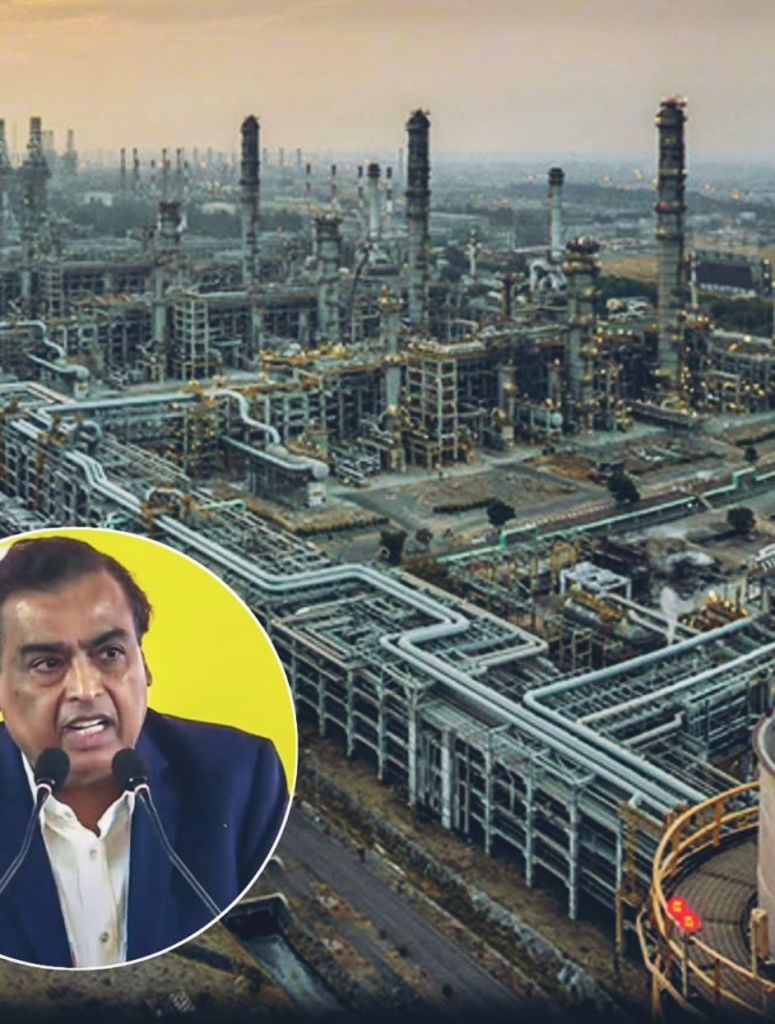
    Reliance Industries fired the opening salvo. Its announcement of a 1 GW AI Data Centre—fueled by cutting-edge GPUs, TPUs, and high-performance processors—instantly positioned Andhra Pradesh as an anchor of India’s AI revolution. Mirroring the scale of the Jamnagar AI facility, this digital powerhouse will shape the computational backbone of India’s next industrial chapter. To electrify this infrastructure sustainably, Reliance committed a 6 GWp solar park, doubling the state’s solar capacity and solidifying AP as a green-energy exemplar. But Reliance also demonstrated a deeply strategic social vision through its Greenfield Integrated Food Park in Rayalaseema—blending rural transformation with high-tech futures.

    Then came the Adani Group, amplifying the summit’s momentum from impressive to monumental. An additional ₹1 lakh crore investment—over and above its existing ₹40,000 crore—spanned ports, cement, logistics, energy, data centers, and manufacturing. But the true tectonic shift was the USD 15-billion Vizag Tech Park, a collaboration with Google. Green-powered hyperscale data centers, a global subsea cable grid, and gigawatt-scale AI campuses together will catapult Visakhapatnam into the rare league of digital gateway cities such as Singapore, Dublin, and Amsterdam. With additional green data centers from AdaniConneX, Andhra Pradesh is now set to emerge as India’s most strategic digital corridor.

    Yet the most defining feature of the summit was Andhra Pradesh’s willingness to think beyond the horizon. The foundation stones laid for Drone City and Space City mark two of the boldest ecosystem-led technology projects in India. Drone City, spread across 300 acres, will enable end-to-end drone manufacturing, design studios, innovation labs, and service hubs, while training 25,000 drone pilots—an unmatched national milestone. Space City will nurture satellite production, aerospace R&D, and deep-space innovation, giving Andhra Pradesh a frontline position in India’s exponential space economy.

    This future-facing arc extends further through the announcement of Quantum Valley, set for launch in January 2026. A dedicated deep-tech district for quantum computing research, it positions Andhra Pradesh alongside global knowledge hubs like Zurich, Toronto, and Singapore. Meanwhile, the Lulu Group expanded its footprint with its flagship mall project in Visakhapatnam and promised direct agricultural sourcing from AP farmers—bolstering rural incomes and strengthening value chains.

    International partnerships reached new heights at the summit. The Singapore Government signed a landmark MoU covering governance reform, green infrastructure, smart systems, and public administration transformation. The move symbolizes Andhra Pradesh’s emergence as a global governance laboratory. This was complemented by the announcement of direct Vijayawada–Singapore flights thrice a week, improving investor access and accelerating industrial corridor connectivity.

    These developments mark a dramatic departure from Andhra Pradesh’s early post-bifurcation years, when the state struggled with the absence of a capital, limited revenue, and a disrupted industrial base. Through strategic clarity, port-led economic design, plug-and-play industrial parks, and one of India’s fastest approval systems, the state engineered a turnaround that economists now cite as one of India’s most compelling governance success stories.

    The numbers are startling: over $120 billion in firm commitments at the summit and two lakh jobs created in just 16 months—the most rapid job-creation phase in Andhra Pradesh’s history. The state has shifted from the margins of India’s growth narrative to its epicenter.

    What makes Andhra Pradesh’s resurgence extraordinary is not just the quantum of investments, but the courage of its imagination. It turned its 974-km coastline from a symbol of vulnerability into a global economic gateway. It converted its disadvantages into leverage. It erased the distinction between aspiration and reality. From AI superclusters to quantum valleys, from space-tech to green-energy giga-projects, from port-led trade engines to smart governance partnerships—the state has declared that its future will not be inherited; it will be engineered.

    The coastline that once carried the anxiety of the past has now become India’s newest launchpad to global leadership.

    Visit arjasrikanth.in for more insights
  • The Great Delhi Denial: How the City is Quietly Choking Itself to Death

    November 15th, 2025

      The Capital’s Airpocalypse is Less About Policy Failure and More About Public Apathy

    Delhi—where winter arrives not with mist, but with mourning. Each year, as the temperature dips, the city’s skyline vanishes behind a poisonous veil. The Air Quality Index breaches “severe” levels, crossing the limits of measurement, and yet, life continues as usual. Joggers run through invisible toxins, children play under smoky skies, and the elite sip coffee in smog-soaked cafés. This quiet endurance of the unbearable has become Delhi’s defining tragedy. Air pollution here is no longer an environmental issue—it is a symptom of a deeper societal decay, a moral paralysis where survival itself has become normalized against the odds.

    For many residents, pollution is an annual ritual, much like Diwali lights or winter weddings. The city holds its breath—literally and figuratively—waiting for the winds to change or the government to act. The psychology of this apathy is deeply entrenched. Delhi’s citizens are not unaware; they are desensitized. Generations have grown up beneath a dull, jaundiced sky. Children no longer draw blue heavens—they draw grey clouds. Morning walkers glance at AQI readings the way one checks the temperature, as if toxicity were a trivial weather condition.

    The problem is not ignorance—it’s normalization. Delhi has adapted to suffocation as if it were destiny. The refrain “What can I do alone?” echoes across households and offices. Pollution is seen as a governmental failure, not a civic one. But the bitter truth is that the city’s collective comfort fuels its collective collapse. The individual choices that seem small—driving solo instead of carpooling, lighting fireworks despite warnings, or burning waste in back lanes—multiply into catastrophe. Convenience, in Delhi, is the real pollutant.

    Cars are convenient; buses are crowded. Crackers are joyous; restraint feels joyless. And pollution doesn’t sting like hunger or flood—it creeps in silently, corroding lungs cell by cell, year after year, until the damage is irreversible. The air may not scream, but it kills—slowly, systematically, and indiscriminately. Yet, because it doesn’t demand instant attention, Delhi keeps scrolling, posting, and partying through its own apocalypse.

    Misinformation compounds the crisis. Many citizens prefer to believe the smog comes from “outside”—from Punjab’s stubble burning or industrial emissions in Haryana. The blame is exported, and with it, responsibility. But science paints a harsher picture: nearly half of Delhi’s winter pollution is homegrown—from vehicles, construction dust, waste burning, and unchecked local emissions. This denial allows the illusion of innocence. It’s easier to point fingers than to put down car keys.

    Governments, for their part, oscillate between bans and blame games. Courts issue stern warnings, and committees issue thicker reports. Yet, policy without participation is just paper. The city’s lungs cannot heal unless its citizens exhale accountability. Delhi doesn’t need another task force—it needs a transformation of attitude.

    The real solution begins with ownership. Every resident must see clean air not as a privilege but as a shared responsibility. It starts with personal discipline: carpooling, cycling short distances, and saying no to crackers. Electricity consumption should be minimized, especially when it comes from coal-based sources. Composting organic waste, segregating garbage, and planting local trees can cumulatively turn neighbourhoods into micro-green lungs.

    Resident Welfare Associations can become hubs of change—organizing shared transport systems, monitoring construction dust, reporting violators, and spreading awareness into a community movement. The air belongs to everyone; its protection should, too.

    Equally vital is social mobilization. Delhi’s youth, with their digital power, can turn awareness into activism. Social media should not just host outrage but coordinate clean-up drives, promote eco-conscious behaviour, and celebrate positive change. From schools to corporate offices, a pollution-conscious culture must be cultivated—one that prizes prevention over lamentation. The city needs fewer complaints and more commitments.

    The cost of inaction is immense—and not just in human lives. Delhi’s economy is suffocating alongside its citizens. Outdoor markets, roadside eateries, and cafés suffer massive losses during smog season. Tourism declines, and healthcare costs skyrocket. Productivity dips as respiratory diseases become routine. One restaurateur lamented, “Cancer will eat out Delhi’s restaurants before inflation does.” It’s no exaggeration. Pollution isn’t just corroding lungs—it’s eroding livelihoods, relationships, and the very rhythm of the city.

    This is not an environmental crisis alone—it’s a public health emergency bordering on genocide. Studies reveal that prolonged exposure to Delhi’s air can shorten life expectancy by nearly ten years. Children develop stunted lungs; the elderly gasp for breath; and hospitals overflow with patients battling asthma, strokes, and cardiac issues triggered by toxic air. Yet, the collective silence is deafening. It’s as though Delhi has accepted death as a condition of living.

    And therein lies the final irony—the capital of the world’s largest democracy gasping for air, while its citizens remain muted spectators.

    Delhi now stands at a defining moment: to awaken or to asphyxiate. The technology to clean the air exists. Funds exist. Policies exist. What doesn’t exist is the will—the shared belief that change begins not in Parliament but in every home. Every car left unused, every violator reported, every cracker not burst, every sapling planted adds up to survival.

    If this apathy continues, Delhi will not just lose its skyline—it will lose its soul. The city that once echoed with poetry, politics, and passion will become a mausoleum of indifference. The choice remains stark: breathe or perish. Delhi’s story need not end in gasping silence—it can still script redemption, if only its people decide that existing is not enough; they must truly breathe.

    Because in the end, it’s not the smog that’s killing Delhi—it’s the silence of those who still can.

    Visit arjasrikanth.in for more insights

  • Twin Blasts, One Sky: When Terror Crossed the Line of Control

    November 14th, 2025

    How the Delhi and Islamabad explosions exposed the shared fragility and unhealed wounds of South Asia

    The skies over South Asia darkened this week with smoke and sorrow. Within 24 hours, two powerful explosions — one near Delhi’s historic Red Fort, the other outside a judicial complex in Islamabad — ripped through the fragile calm of the subcontinent. On what should have been an ordinary Monday, both India and Pakistan were jolted into mourning. The blasts were more than acts of terror; they were cruel reminders of a shared vulnerability that transcends borders, religion, and politics. For millions across the region, the echoes of those detonations were not just sounds of violence, but of history repeating itself — of peace deferred yet again.

    In Delhi, the November 10 explosion near the Lal Qila Metro Station shattered the evening bustle. A red hatchback, rigged with high-grade explosives, turned into a fireball that killed at least eight people and injured over twenty. The flames scorched vehicles, cracked windows, and tore through the capital’s confidence. The case has been registered under the Unlawful Activities (Prevention) Act, confirming terror involvement. Prime Minister Narendra Modi assured that those responsible “will be brought to justice,” as security agencies fanned across Delhi and adjoining Uttar Pradesh, tracing the vehicle’s origins. For a city that prides itself on surveillance and resilience, the attack was a brutal wake-up call — a reminder that even the most guarded capitals are not immune to chaos.

    Barely a day later, Islamabad faced its own nightmare. On November 11, a suicide bomber detonated himself outside the District Judicial Complex, killing twelve and injuring thirty others. The target appeared to be a police convoy near the courthouse. Eyewitnesses described scenes of horror — shattered glass, burning vehicles, and civilians stumbling through clouds of smoke. The Pakistani Interior Minister confirmed it was a suicide bombing and suggested the attacker may have intended to enter the judicial premises. Streets were sealed, investigations launched, and familiar statements of condemnation echoed across newsrooms. But the pattern was unmistakable — two blasts, two capitals, one message: South Asia remains hostage to terror’s unpredictable theatre.

    These twin attacks were not coincidences; they were coordinated signals of disruption aimed at both nations’ psychological core. Yet, the reactions followed a predictable script. Within hours, sections of Pakistan’s media echoed Prime Minister’s unsubstantiated claim blaming India for the Islamabad bombing — rhetoric that quickly inflamed tensions. In India, investigators focused on unmasking domestic operatives possibly linked to cross-border networks. Once again, dialogue was replaced by distrust. Such knee-jerk accusations have long been the poison in the veins of Indo-Pak relations — sabotaging every chance of cooperation against a common enemy. The truth remains: terrorism wears no uniform, and its victims bear no nationality. A bus conductor in Delhi or a police constable in Islamabad — both fall to the same ideology of hate.

    Analysts believe the timing of these explosions was no accident. They occurred months after the May 2025 military flare-up between India and Pakistan — a brief but intense confrontation involving drone incursions and artillery exchanges. With diplomatic channels frozen and tempers high, militant groups sensed opportunity. Pakistan continues to battle internal insurgents like the Tehreek-e-Taliban Pakistan (TTP) and its faction Jamaa-ul-Ahrar, while India grapples with infiltration attempts and transnational terror financing. Within this combustible environment, extremist networks thrive, exploiting mistrust between governments and disillusionment among the youth. Terrorism today in South Asia is not just a security issue; it’s a symptom of deeper political fatigue and institutional inertia.

    The global community cannot afford complacency. Two near-simultaneous blasts in nuclear-armed neighbors are not just regional tragedies; they are global alarms. The fight against terrorism requires international unity — real-time intelligence exchange, financial surveillance of extremist funding, and diplomatic isolation of states that shelter or excuse terror. India’s consistent call for a global anti-terror front must be heeded not as rhetoric but as a strategic necessity. The lessons are written in history — from the Good Friday Agreement to the ASEAN peace frameworks — reconciliation and resilience emerge only when nations prioritize humanity over hostility. South Asia, too, must reclaim its lost peace through courage and cooperation.

    For that to happen, both India and Pakistan must begin with transparency and accountability. Let the investigations into the Delhi and Islamabad blasts be guided by evidence, not emotion. Let perpetrators be punished by fact, not propaganda. The victims — whether Indian or Pakistani — deserve more than condolences; they deserve a future free from fear. When bombs explode in Delhi and Islamabad, the smoke does not respect borders; it rises into one shared sky. It’s a sky that has seen too much fire, too many tears. If there’s one truth these twin blasts reaffirm, it’s this: the war against terror in South Asia is not India’s burden or Pakistan’s shame — it is humanity’s collective test. And failure is not an option.

    Visit arjasrikanth.in for more insights

  • 💥Red Fort Under Fire: The Blast That Shook Delhi’s Nerves and Exposed India’s Fragile Urban Security Web💥

    November 13th, 2025

    A single car bomb near one of India’s most protected landmarks didn’t just shatter glass — it exposed the cracks in the nation’s urban security grid, where complacency proved deadlier than chaos.

    At precisely 6:52 p.m. on a bustling Monday evening, Delhi’s calm dissolved into chaos. A red hatchback, idling innocuously at a traffic signal near the Red Fort Metro Station — an artery pulsing with life, trade, and tourists — erupted into a thunderous explosion that tore through the heart of the capital. Flames devoured nearby vehicles, glass storefronts imploded, and within seconds, panic spilled across the streets like smoke itself. Eyewitnesses described the blast as surreal — the familiar hum of traffic replaced by screams, shattered glass, and an orange haze rising against the silhouette of one of India’s most enduring symbols of freedom.

    The precision of timing and location was chilling. The attack struck at peak traffic hour, in a zone secured by multiple layers of surveillance — within sight of a UNESCO heritage monument and steps away from one of Delhi’s most crowded metro corridors. That a vehicle laden with high-grade explosives could penetrate so deep into this high-security zone reveals not a gap, but a collapse in vigilance. The event was not just an act of terror — it was an indictment of India’s urban security apparatus, exposing a failure that was technological, institutional, and deeply human.

    Within minutes, the city’s emergency response apparatus was activated. Sirens wailed across central Delhi as bomb disposal squads, forensic experts, and elite anti-terror units converged on the scene. A high alert was declared across the National Capital Region — airports, metro networks, and government complexes fortified under an umbrella of fear. Yet beneath the swift mobilization lay a more haunting question: how did this happen in the first place? Despite thousands of CCTV cameras and layered security controls, early investigations hinted that the explosive-laden vehicle might have been parked near the site for hours before detonation — a damning sign of systemic inertia and broken coordination. Surveillance feeds that should have raised red flags apparently blended into the routine noise of urban life.

    Delhi’s vast security infrastructure — once heralded as a model for smart policing — revealed its fragmented underbelly. Jurisdictional overlaps between municipal police, heritage protection agencies, and intelligence units meant that no single entity held a complete picture. Real-time alerts were either missed or delayed. It’s a paradox that defines India’s urban security framework: immense hardware, minimal integration. Technology exists, but without synchronized data analytics, predictive intelligence, or unified command systems, it becomes mere surveillance theatre — watching everything, understanding little.

    The Red Fort blast has reignited the debate on how India perceives terrorism in its evolving, urban form. Today’s threats are no longer shaped by militants crossing borders with rifles; they are engineered through encrypted apps, digital wallets, and ideological radicalization that hides in plain sight. Counterterrorism agencies across the subcontinent have recently uncovered caches of explosives weighing several tonnes, scattered across northern states — often operated by educated professionals embedded within mainstream society. These new-age networks are neither rural nor visible; they are urban, informed, and technologically fluent. Their battleground isn’t remote terrain — it’s the city itself.

    This shift demands an equally sophisticated response — one that prioritizes prevention over reaction. India’s counterterror laws may be stringent, but legislation alone cannot outpace innovation in threat design. The system’s strength will depend on how effectively it integrates intelligence sharing, local policing, and digital surveillance into a single operational ecosystem. It also demands a cultural change — from bureaucratic complacency to continuous vigilance. Police stations in megacities like Delhi must evolve into data-driven control nodes, equipped not just with manpower but machine learning systems capable of recognizing patterns — vehicles parked abnormally long, license plates reused across locations, or communication signals clustering near sensitive sites.

    The tragedy outside the Red Fort is more than a momentary lapse — it’s a symptom of systemic fatigue. Each explosion, each attack, triggers an all-too-familiar sequence: a lockdown, a committee, a report, and a gradual fading of urgency until the next disaster resets the cycle. This reactive rhythm has dulled the nation’s strategic edge. Urban security can no longer be episodic. It must be predictive, adaptive, and continuous — where threat detection evolves faster than the threat itself.

    As the smoke cleared and the streets reopened, Delhi returned to its rhythm — but the illusion of safety had already cracked. The Red Fort, which once stood as a symbol of sovereignty, now stands as a reminder of fragility — of how modern terror no longer needs to cross borders to strike at the nation’s heart. It only needs one overlooked vehicle, one missed signal, one moment of administrative blindness.

    The blast near the Red Fort will be remembered not only for its destruction but for its revelation. It tore open the myth of infallible security and exposed a truth too long ignored — that in the war against urban terror, the greatest enemy is not the attacker outside, but the complacency within.

    Visit arjasrikanth.in for more insights
  •  “Bars, Wi-Fi, and Betrayal: The Prison That Forgot It Was a Prison”

    November 12th, 2025

     “Smartphones, Smugglers, and the Death of Discipline:   Bengaluru’s Most Secure Prison Turned Into a Digital Playground”

    If prisons are meant to lock danger away from society, Bengaluru’s Parappana Agrahara Central Prison just proved that walls, wires, and watchtowers are no longer enough. What began as a few leaked video clips has now spiralled into a scandal that reads like a dark thriller — except this one is horrifyingly real. The footage, reportedly recorded between 2023 and 2025, exposes a shocking breakdown of order inside one of India’s most secure jails, where convicted rapists, smugglers, and even an ISIS operative appear to enjoy privileges that mock the very notion of punishment.

    At the centre of this storm is a name India would rather forget — Umesh Reddy, a convicted serial rapist and murderer whose death sentence was commuted in 2022 to 30 years without remission. Yet, the leaked videos allegedly show Reddy lounging casually in his cell, juggling two Android smartphones and a keypad phone, scrolling through social media like any free citizen. In a facility where even a matchstick is supposed to be contraband, the sight of a convicted killer with multiple gadgets is not just indiscipline — it’s institutional decay.

    And Reddy wasn’t alone.

    Another inmate, Raju, accused in a high-profile gold smuggling case, was filmed not just using a phone but cooking his own meal inside prison — a scene more reminiscent of a kitchen vlog than a high-security lockup. Even more disturbing was footage of Johar Hamid Shakeel, an alleged ISIS operative, casually using a smartphone and accessing amenities far beyond his rights as a detainee. When terrorism suspects can stay digitally connected from inside a maximum-security prison, the issue ceases to be about lax supervision — it becomes a national security failure.

    Authorities responded quickly — at least on paper. The Additional Director General of Prisons ordered verification of the footage, directing a Deputy Inspector General to conduct an inquiry, and an FIR is reportedly being filed at the Parappana Agrahara Police Station. But these moves, though procedural, merely skim the surface. The scandal doesn’t lie in the footage itself — it lies in what it reveals: a system compromised from within.

    Three questions hang like a sword over this entire episode. First, how did so many phones enter a supposedly sealed facility? Occasional smuggling is one thing, but multiple smartphones circulating across multiple cells for years signals organized collusion, not coincidence. Second, who inside facilitated it? Phones don’t walk through gates on their own; they are bought, smuggled, charged, and protected — which implies complicity at several levels. And third, who leaked these videos — a brave whistleblower exposing rot or a rival inmate playing a dangerous game of digital blackmail?

    This isn’t Parappana Agrahara’s first brush with scandal. The same prison was recently in the news when Kannada actor Darshan was accused of receiving preferential treatment. The recurrence of such episodes is no accident — it’s the symptom of a culture where power and privilege seep even into cells. For those who can pay or pull strings, the prison becomes less a place of punishment and more a private retreat with restrictions negotiable by price.

    Adding to the irony is the issue of signal jammers. Parappana Agrahara is equipped with high-powered devices designed to block cellular communication. Residents in neighbouring areas have long complained that these jammers disrupt their mobile and internet connections. Yet, astonishingly, inmates inside seem to be livestreaming from their cells without interruption. Are these jammers outdated? Tampered with? Or deliberately switched off? Whatever the reason, it exposes a failure that is technical, moral, and administrative — a digital moat breached from within.

    This scandal is more than a headline — it’s a mirror reflecting how India’s penal system is crumbling under its own contradictions. Technology meant to enforce control has been hijacked to enable crime. The custodians of law appear to have become its weakest link. When public trust in the justice system is already brittle, such incidents hammer it further, reinforcing a grim perception: that the rich, powerful, or connected remain privileged even behind bars.

    India is no stranger to inquiries. But what Parappana Agrahara needs now isn’t another report destined for a dusty shelf — it needs accountability. Phones don’t sneak in; people let them in. Jammers don’t fail; they’re made to fail. Rules don’t erode overnight; they’re chipped away by apathy, greed, and silence. The scandal doesn’t just call for disciplinary action — it demands systemic cleansing, where technology, surveillance, and ethics are redefined to restore credibility.

    In its current state, Parappana Agrahara is no longer a correctional facility — it’s a two-way corridor between crime and power, where WhatsApp bridges the walls and Wi-Fi mocks the locks. If India’s prisons are the final frontier of justice, this one has been breached not by violence but by signal bars and moral bankruptcy. Until the system finds the courage to police itself, every smartphone smuggled in becomes another symbol of a state surrendering to corruption.

    In the end, Bengaluru’s high-security prison stands as a paradox — a fortress built to contain crime, now consumed by it. And in a digital age where control collapses with the tap of a touchscreen, Parappana Agrahara isn’t just a story about inmates breaking rules — it’s about a system breaking faith.

    Visit arjasrikanth.in for more insights

←Previous Page
1 … 4 5 6 7 8 … 134
Next Page→

Blog at WordPress.com.


Loading Comments...
 

    • Subscribe Subscribed
      • SOCIAL PERSPECTIVES
      • Join 99 other subscribers
      • Already have a WordPress.com account? Log in now.
      • SOCIAL PERSPECTIVES
      • Subscribe Subscribed
      • Sign up
      • Log in
      • Report this content
      • View site in Reader
      • Manage subscriptions
      • Collapse this bar