• About

SOCIAL PERSPECTIVES

  • Ballot Quake: Democracy’s Earth Shakes, Only Truth Can Steady It

    August 10th, 2025

    When whispers of stolen ballots, phantom voters, and vanishing trust force the Election Commission to choose between guarding its pride or baring its soul. 

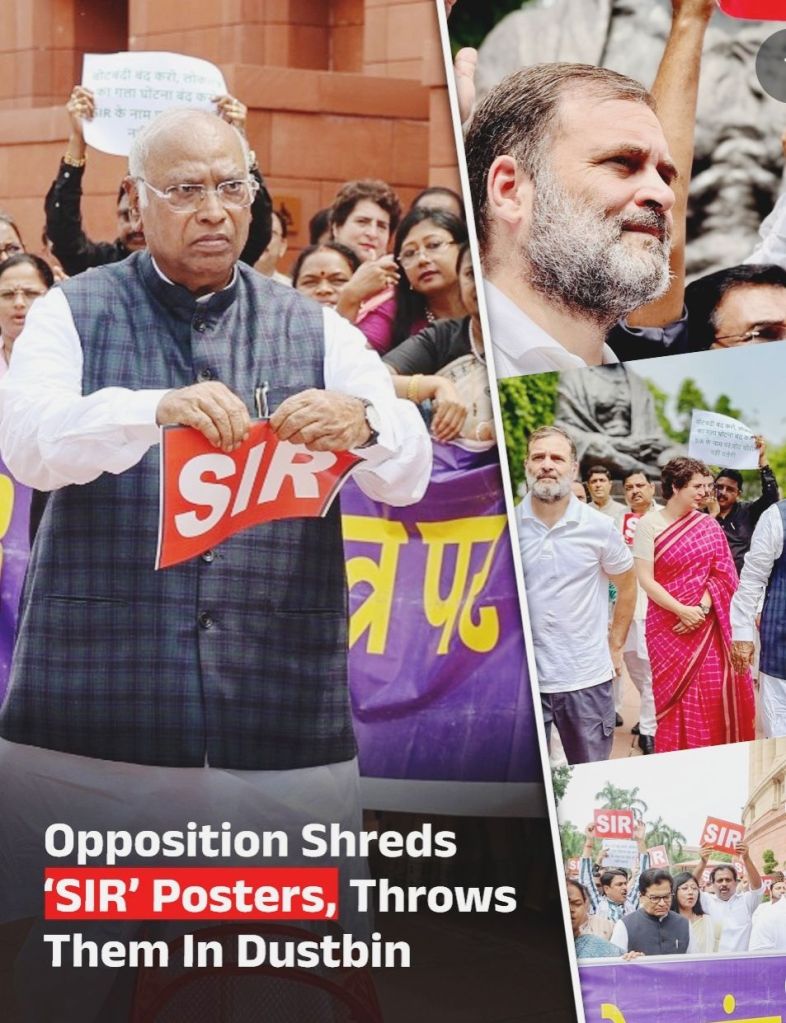
    India stands at a decisive juncture where accusations, counter-accusations, and gnawing doubts about electoral integrity threaten to overshadow the very spirit of democracy. In recent weeks, the Leader of the Opposition has made startling claims — alleging large-scale manipulation of voter lists during the last general elections. The numbers cited are staggering: lakhs of duplicate entries, voters with implausible ages, suspiciously clustered addresses, bulk registrations timed to perfection, and alleged misuse of legal provisions.

    In one Karnataka constituency alone, the charge is that over one lakh votes were “stolen.” If even a fraction of this proves accurate, such anomalies could have tilted results in closely fought constituencies, altering political outcomes and shaking the bedrock assumption that Indian elections are free and fair.

    The framing of these allegations is not just as partisan grievance but as an assault on the Constitution itself — a breach of the citizen’s fundamental right to a transparent vote. Detailed breakdowns, purportedly drawn from voter roll analysis, are being shared to bolster the claims. Whether these withstand rigorous verification is secondary to the immediate reality: the trust that underpins the Republic is now under visible strain.

    The Election Commission of India (ECI), custodian of this trust, finds itself at a defining moment. Its instinct may be to defend its systems, dismiss charges as politically motivated, and reiterate that procedures were followed. Yet in matters of democratic faith, perception often rivals proof in importance. A purely procedural defence will not suffice when public mood is restless and suspicion spreads faster than clarification.

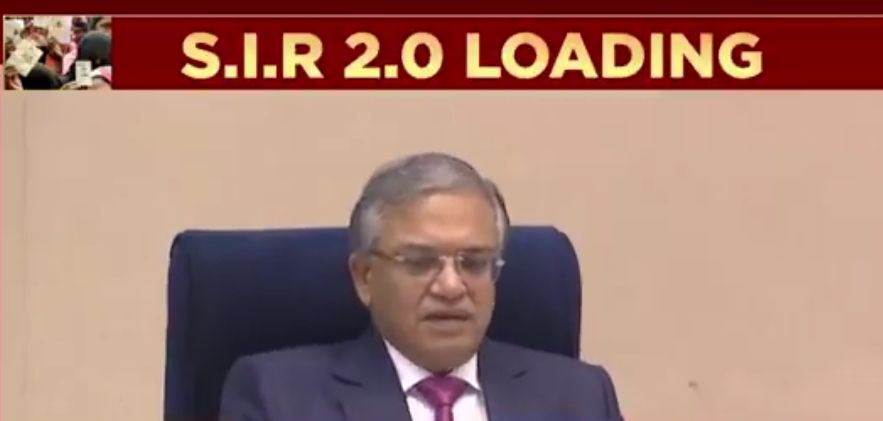
    Instead of treating the opposition leader’s statements as political theatre, the ECI has an opportunity — indeed, a duty — to respond in a scientific, methodical, and demonstrably transparent manner. That means more than a press note; it means inviting scrutiny. Release machine-readable voter roll data, allow independent audits, and explain each step of the electoral machinery in plain, accessible language.

    The public should see, not be told, how voter lists are compiled, verified, and updated; how errors are flagged and corrected; and what safeguards exist to prevent systemic abuse. The Commission must also engage with the allegations point by point, answering with the calm authority of an institution that has nothing to hide.

    This is not about one election alone. India’s electoral process has long been a global benchmark, lauded for its scale, reach, and perceived impartiality. That reputation will endure only if the system keeps pace with new challenges. Technology today is a double-edged sword — capable of exposing fraud but also enabling it. In such an environment, verification, auditing, and proactive public disclosure must not merely match global best practices; they must set them.

    Silence or opacity will only fuel conspiracy theories, deepen political fault lines, and erode the fragile social contract on which democracy rests. Once public trust cracks, no legal reassurance can fully mend it.

    For the voter, casting a ballot is not a mere formality. It is a personal reaffirmation of belonging to the nation’s shared story. When doubt creeps into that act, it corrodes civic confidence. This moment calls for leadership from the ECI — leadership marked by humility, openness, and a willingness to be questioned.

    If the allegations prove baseless, an open and verifiable inquiry will clear the air, vindicating both the institution and the process. If flaws are found, admitting and fixing them will strengthen democracy rather than weaken it. In either case, the outcome is better than leaving the nation in a fog of suspicion.

    The choice before the Commission is clear: close ranks and risk being seen as defending itself, or open the doors and be remembered for defending the people’s faith.

    Democracy’s foundation is not merely the counting of votes. It is the unshakeable belief that every single one counts. That belief must not be allowed to wither under the weight of accusation and counterclaim. It must be nourished with verifiable facts, radical openness, and — above all — respect for the citizens whose trust is the ultimate prize in any election.

    The ballot, after all, is not a sleight of hand. It is a covenant. And when that covenant is questioned, the only magic that works is the magic of truth in full public view.

    Visit arjasrikanth.in for more insights
  • Tariffs, Tantrums, and the Trumpocalypse: A 50% Tax Could Flatten India’s Middle Class and Set the World on Fire”

    August 9th, 2025

    A 50% Import Shock Could Turn iPhones into Luxury Relics, Flatten Indian Jobs, Crash Remittances—and Still Fail to Break the Chai-Drinking, Chaos-Loving Indian Spirit 

    In the soap opera of global trade, just when you think the drama couldn’t get wilder, Donald Trump walks back into the Oval Office with a megaphone in one hand and a sledgehammer in the other. His opening act? A proposed 50% tariff on all Indian imports—a move so economically violent, it might as well come with its own Bollywood villain soundtrack. This isn’t just trade policy. It’s economic war cosplay. And the casualties won’t be governments. They’ll be the everyday Indian citizens watching their wallets bleed out at checkout counters.

    Let’s break down what this economic grenade actually means. Picture this: iPhones skyrocketing to near-luxury status, washing machines priced like motorbikes, almonds becoming rarer than gold dust, and medicines once available over-the-counter now stuck behind price tags that punch you in the gut. Middle-class Indian families—already dancing a tightrope of inflation and EMIs—would be shoved into a financial chokehold as consumer prices explode overnight. That cheap Californian apple you enjoy? Now an aspirational fruit.

    But food is only the appetizer. The main course is jobs—millions of them. The sectors that form the heart of India’s export machine—textiles, seafood, pharmaceuticals, engineering goods—would feel the heat first. As American importers flee rising costs, Indian manufacturers would be left high and dry. Export orders would collapse. Factories would shutter. The hum of textile machines in Tiruppur and the clatter of engineering plants in Gujarat would go silent. We’re talking mass layoffs, especially in rural India where these industries are lifelines. The ripple effect? Migration chaos, unemployment spikes, and growing social unrest.

    Meanwhile, Trump’s tariff fireball would light another fuse—foreign investor anxiety. No sane global business wants to pour billions into a market suddenly caught in a tariff war. FDI flows would freeze. Start-ups would stall. Cross-border supply chains would clog like arteries. Even mega corporations like Apple, which invested heavily in Indian manufacturing, would start sweating bullets. The dream of India as a reliable “China-plus-one” destination? Thrown into jeopardy by a man in a red tie with a Twitter habit.

    And then there’s the digital dragon: India’s IT sector. While not directly slapped by tariffs, it won’t escape the fallout. A hostile U.S. trade environment would cool demand for offshore services. H-1B visa pipelines could tighten again, squeezing Indian tech talent. Major outsourcing deals might dry up, impacting Tier-1 tech cities like Bengaluru, Hyderabad, and Pune. This silent downturn won’t make front pages—but it’ll creep into annual reports, stock markets, and paychecks.

    Oh, and don’t forget the remittance collapse. Indian workers in the U.S.—from engineers in Silicon Valley to doctors in New Jersey—would face growing job insecurity if Trumpian volatility makes hiring foreigners politically toxic again. Layoffs and stricter immigration could slash the $100 billion-plus lifeline India gets annually from its diaspora. The rupee, already juggling oil prices and inflation, could go into freefall.

    So what’s India supposed to do? Sit back and take the hit? Absolutely not.

    This is the moment for New Delhi to rip up the old playbook and go full ninja mode. First, diversify. Fast. India’s over-dependence on U.S. markets must end. Europe, Africa, Latin America, ASEAN—India needs new trade BFFs. Just like Vietnam danced around China to build new export lanes, India must swerve the U.S. and deepen its footprint in emerging and less tantrum-prone economies.

    Second, double down on “Make in India 2.0”—not as a slogan, but as an economic doctrine. Invest in homegrown R&D. Incentivize domestic production of everything from semiconductors to EVs to paracetamol. South Korea rose from ashes to become a tech titan. India has the talent, the numbers, and the urgency. Build now—or bleed later.

    Third, go diplomatic, but with brass knuckles. Don’t just lobby Washington. Build coalitions. Use QUAD, BRICS, and every possible multilateral platform to show that weaponized tariffs are relics of a dying empire. India should also lead conversations on trade justice and alternative payment systems—hello rupee-Ruble, goodbye SWIFT. If the West wants to play empire games, India must be ready to write the rules for the post-dollar world.

    Trump’s 50% tariff fantasy isn’t just an attack on Indian trade. It’s a declaration that economic stability can be sacrificed on the altar of one man’s political theatre. The man wants a villain for his 2025 campaign. China is too risky. Europe is too aligned. India? Independent, calm, and inconvenient. Perfect target.

    But here’s the kicker: India isn’t kneeling. It’s adapting.

    This isn’t just survival—it’s reinvention. If the tariff tsunami comes, India won’t be found clinging to American shores. It’ll be building bridges in every other direction. Because while Trump might slap, sulk, and scream—India? India just sips its chai, smiles at the chaos, and gets to work.

    Visit arjasrikanth.in for more insights
  • Goldzilla Unleashed: Wall Street, Weddings, and AI All Worship the Same Metal

    August 8th, 2025

    From ETF tsunamis to dowry downgrades, gold isn’t just rallying—it’s rewriting the rules of fear, faith, and finance in one glittering, unpredictable quarter.

    In a world where fear fuels fortunes and algorithms spot safe havens faster than central banks can blink, gold has emerged as the unlikely rockstar of global capital flows. Think Taylor Swift moves crowds? Try gold. In a single quarter, global gold demand surged to an eye-popping $132 billion—a 45% spike from the same period last year—even though physical consumption barely ticked up 3%. This isn’t a love story; it’s an economic thriller where price and perception drive the plot, and every character—from hedge funds to Hindu festivals—plays a dramatic role.

    The headline number was blinding: an average international price of $3,280 per ounce (or ₹8,750 per gram), a staggering 40% jump year-on-year. While tonnage didn’t move much, the cash certainly did. This isn’t irrational exuberance—it’s strategic panic. The world isn’t just buying gold. It’s putting faith in it. And that belief, like all contagious market manias, is both dangerous and decisive.

    Gold defies definition. It’s a hedge, a dowry, a semiconductor component, and your grandmother’s insurance policy all at once. It absorbs geopolitical anxiety and cultural rituals in equal measure. And this quarter, every facet of gold’s identity was triggered.

    Let’s start with the suits: ETFs and OTC trades. Gold-backed ETFs added 397 tonnes in the first half of 2025, the highest since the COVID-rattled 2020. Meanwhile, OTC trades—the quiet lanes where institutional giants and high-net-worth players roam—returned with a roar, adding 170 tonnes after two dormant quarters. This isn’t noise. This is consensus. When hedge funds, institutions, and retail investors all rush the same gate, it means one thing: the world is bracing for volatility.

    Investment demand soared 78% year-on-year. Gold has stopped being a fallback; it’s become the global pause button for anxious capital. And when money pauses, gold rallies.

    Enter the grown-ups: central banks. They bought 166 tonnes this quarter. Not as aggressive as last quarter’s 244 tonnes or the 333-tonne binge in December, but still 41% above pre-pandemic norms. Here’s the twist: nearly 90 tonnes of these purchases were “unreported.” That means actual buying could be 54% higher than declared. It’s like seeing people hoard umbrellas on a sunny day—you know the forecast isn’t great.

    But not all glitters equally. In India and China—gold’s heavyweight consumers—jewellery demand fell 17% and 20% respectively. The global jewellery market dropped to its lowest level since the COVID lockdowns. Even Akshaya Tritiya, India’s sacred gold-buying festival, couldn’t stop the retreat. People spent more rupees but took home fewer grams. Why? Sticker shock. Traditional buyers stepped back, and budget-conscious shoppers downgraded to 18-carat, or even gold-plated silver—a move that would have horrified any self-respecting Indian matriarch a decade ago.

    The Indian market is mutating. The Bureau of Indian Standards (BIS) is even pushing hallmarking for 9-carat gold—less than 40% purity. It’s not just inflation. It’s a cultural recalibration driven by affordability, aspiration, and ruthless price sensitivity.

    Yet, while consumers are buying less, they aren’t selling either. Recycled gold supply rose a mere 4% to 347 tonnes. Despite record prices, there’s no liquidation frenzy. Why? Three reasons: many already sold during last year’s price spike; most expect further price gains; and above all, in India, gold isn’t a tradable asset—it’s emotional insurance.

    Instead of selling, they’re pledging. Between 90 and 120 tonnes of household gold was used as collateral for loans last quarter. That gold is “consumed” without leaving the locker. It isn’t just sentimental anymore—it’s financial strategy.

    Even technology has a golden subplot. Demand for gold in tech fell 2% to 79 tonnes—not because gold lost its conductivity, but because global chip demand slowed. Trade restrictions, especially against China, hurt exports. But AI is the unexpected golden goose. As demand for AI servers grows, gold’s role in advanced chips is quietly gaining momentum. One part of tech slumps; another hums with promise.

    So, what’s really happening here? We’ve entered a quarter where gold became everything, everywhere, all at once. Hedge. Hope. Hardware. Hairpin. It’s both ornament and oracle. The tonnage may seem tame, but the dollars—and the decisions—scream otherwise.

    This is not just a rally. It’s a revelation. ETFs are surging, while bangles shrink. Central banks buy in the dark, while families pledge with faith. Tech demand dips, but AI breathes life into new use cases. The only unifying thread is uncertainty. And when the world’s mood turns jittery, gold becomes the one language every investor—be it a Wall Street quant or a rural bride—understands.

    Gold has always had a story. This quarter, it became the story. A geopolitical whisper. A financial seatbelt. A cultural touchstone. A strategic signal. All packed into one shiny bar.

    Goldzilla isn’t roaring. It’s resonating. And in a world searching for certainty, that echo is worth its weight in—well, gold.

    Visit arjasrikanth.in for more insights

  • Crude Calculations & Diplomatic Combustion: When India Sips Oil, Uncle Sam Sweats

    August 7th, 2025

     Discounted Russian Barrels Fuelled an Economic Surge, Triggered American Heartburn, and Put India in the Driver’s Seat of 21st-Century Geopolitics

    When oil becomes cheaper than bottled water, disruption is inevitable—and in India’s case, the tremors are being felt across continents. Ever since India began sourcing discounted Russian crude oil in large volumes, it has not only reaped substantial economic gains but also drawn unease, if not ire, from its long-standing strategic partner, the United States. The fundamentals are clear: deeply discounted oil translates into savings worth billions, supports robust economic growth, and keeps inflation within manageable limits. Yet, in the world of global diplomacy, where energy flows are as political as they are commercial, such pragmatism rarely comes without consequences. Today, India finds itself navigating a high-stakes diplomatic balancing act—reaping energy dividends at home while managing friction abroad.

    The numbers tell a compelling story. India imports close to 85% of its crude oil needs. When Russia—isolated and under Western sanctions—offered its oil at rates nearly $30 per barrel lower than market prices, India responded with economic precision. In less than two years, Russia moved from being a marginal supplier to India’s top source, now accounting for over 35% of the country’s oil imports. Indian refiners, leveraging this opportunity, processed the discounted crude into diesel and aviation fuel and exported them profitably. Not only did this help stabilize domestic fuel prices, it added strength to India’s foreign exchange reserves and kept inflationary pressures in check. In an era when global oil prices threatened to breach $130 per barrel, India’s energy strategy acted like a pressure-release valve—for itself and for the global market.

    But in Washington, economic rationality doesn’t always override geopolitical calculations. During the Trump administration, the U.S. accused India of indirectly “funding Putin’s war” through its oil trade and issued veiled threats of imposing tariffs ranging from 25% to 100% on Indian exports. The irony, however, was difficult to ignore. India adhered to the G7 price cap and ensured its purchases were legally compliant. Still, while nations like China and Turkey continued their deepening trade with Moscow without similar scrutiny, India was singled out for criticism. To many in Delhi, this appeared less like enforcement of global norms and more like selective pressure wrapped in a narrative of moral policing.

    Worsening matters was the tone of the diplomatic engagement. The Trump administration’s posture toward India often oscillated between patronizing and transactional. From taking public credit for India-Pakistan ceasefires to cosying up to Islamabad’s military establishment, Washington’s inconsistency left New Delhi wary. Analysts are beginning to draw comparisons to the 1971 Nixon-Kissinger era, where India’s sovereignty came head-to-head with American strategic rigidity. Then it was the Indo-Pak war; today, it’s energy security. The tension is no less combustible.

    Complicating the scenario further was the impact on Indian companies. Nayara Energy, partly owned by Russian oil giant Rosneft, faced challenges as a result of EU sanctions, leading to stalled shipments. At the same time, there were murmurs from Washington suggesting potential penalties on Indian banks facilitating rupee-rouble oil transactions. The message was subtle but unmistakable—this is not just about barrels; it’s about geopolitical alignment and control.

    Yet, India’s response has been calibrated, firm, and rooted in principle. The Ministry of External Affairs made it abundantly clear that decisions related to energy procurement are based on national interest, affordability, and strategic necessity. Noted, Former foreign secretary underlined that defending against undue foreign influence in core sectors like energy is not merely a choice—it is a sovereign obligation.

    India is not blind to the long-term dynamics. It recognizes that diversification is the key to resilience. If U.S. sanctions on Iran and Venezuela were to be relaxed, India could quickly re-establish procurement lines from those countries. Concurrently, more stable supply arrangements from the Gulf, Africa, and even the U.S. are already being explored. The emphasis is on constructing a flexible, multi-source energy ecosystem. Russian contracts remain part of the strategy—not out of loyalty, but to retain leverage in negotiations.

    On the domestic front, India is scaling up its refining capacities. Expansions like the Jamnagar refinery are future-proofing the nation’s energy infrastructure. On the international stage, India is strengthening ties within BRICS and the Global South—positioning itself among a bloc of nations that favour multipolar decision-making over Western-dominated consensus.

    Notably, India is not looking to sever ties with Washington. Far from it. Expect quiet diplomacy behind closed doors, pragmatic tapering of Russian imports, and renewed strategic dialogues with the U.S. centred around shared interests—especially in countering China, fostering semiconductor cooperation, and advancing clean energy technology.

    What India is doing is not rogue—it is rational. Russian crude may be inexpensive, but the larger cost lies in managing diplomatic expectations. Thus far, India has handled the situation with finesse, drawing maximum economic benefit while carefully navigating geopolitical minefields.

    The core lesson here is one of sovereign strategic autonomy. It is rarely neat, often uncomfortable, and sometimes smells like diesel. But in a world defined by unpredictable alliances and shifting power centres, India is no longer playing the role of a passive recipient. It is shaping its own narrative.

    Because in today’s geopolitical chessboard, India is not a pawn—it is a power. And it knows better than most: in the 21st century, energy is not just a commodity—it is leverage.

    Visit arjasrikanth.in for more insights

  • “Stewards of Stability: Retired IAS Officers Are Reinventing India’s Financial Architecture”

    August 6th, 2025

    Retired Bureaucrats Are Quietly Rewiring the Nerve Centers of India’s Financial Power—with Stability, Strategy, and a Dash of Swagger 

    In the labyrinthine corridors of India’s financial landscape, a quiet yet transformative shift is underway—retired Indian Administrative Service (IAS) officers are increasingly being entrusted with the stewardship of regulatory and financial institutions. This development is not a coincidence, nor a compromise. It is a testament to the deep reservoir of experience, integrity, and governance acumen these civil servants possess—an invaluable asset in navigating the complex world of modern finance.

    The recent appointment of Ajay Seth, a 1987-batch Karnataka cadre IAS officer, as Chairman of the Insurance Regulatory and Development Authority of India (IRDAI) is emblematic of this trend. Known for his deft handling of macroeconomic policy as Secretary in the Department of Economic Affairs, Seth’s transition into the top insurance regulator’s chair underscores the growing confidence in bureaucrats with deep policy experience to lead vital sectors. His predecessor, Debasish Panda, another distinguished former IAS officer, left behind a strengthened IRDAI, reinforcing a legacy of continuity and institutional depth.

    What makes this trend particularly notable is the convergence of leadership across India’s key financial regulators. Today, the triumvirate of financial oversight—RBI, SEBI, and IRDAI—is helmed by individuals who were until recently part of the country’s senior bureaucracy. With Sanjay Malhotra  heading  top job at the Reserve Bank of India after Shaktikanta Das, and Tuhin Kanta Pandey taking the reins at SEBI, a coherent pattern of trust in seasoned bureaucratic leadership is emerging. These appointments reflect more than convenience—they signal a deliberate strategy of ensuring policy consistency, regulatory maturity, and governance continuity at a time of unprecedented global financial flux.

    Some detractors argue that this “revolving door” between bureaucracy and regulation may compromise independence. However, such concerns often overlook the robust institutional frameworks that guide these bodies. Rather than eroding independence, these former officers—steeped in administrative discipline and public accountability—often bring an enhanced commitment to transparency, stakeholder engagement, and reform-oriented governance. Having spent decades navigating the nuances of policymaking, they are uniquely equipped to understand and manage the delicate interplay between regulation and economic growth.

    The influence of these officers isn’t confined to public regulatory institutions. Their presence in the private financial sector has also proven beneficial. Former Finance Secretary Atanu Chakraborty now chairs HDFC Bank, while P.K. Sinha, once Cabinet Secretary, plays a significant leadership role in ICICI Bank. These appointments are not mere ceremonial postings but strategic inductions aimed at infusing prudence, regulatory familiarity, and ethical depth into the boardrooms of India’s leading financial institutions. Sinha’s extended tenure, enabled by amendments to the RBI’s corporate governance norms, reflects the value that long-term administrative insight brings to private sector leadership.

    Another striking example is the leadership of Nitin Gupta, an ex-IRS officer, at the National Financial Reporting Authority (NFRA). Tasked with enhancing audit quality and financial transparency, Gupta’s role highlights how experienced civil servants are contributing to improving oversight, ensuring accountability, and restoring investor confidence in India’s financial systems. These appointments echo a broader ethos: good governance is not limited by the domain but defined by dedication, experience, and a vision for systemic improvement.

    It is worth remembering that these former bureaucrats have weathered multiple economic cycles, coordinated complex reforms, and engaged in cross-sectoral policymaking. This wealth of practical knowledge serves as a critical counterbalance to the technical and sector-specific expertise typically found in regulatory roles. Their ability to coordinate across ministries, anticipate policy implications, and manage crisis situations adds a vital dimension to institutional leadership in turbulent times.

    The suggestion that this trend might lead to groupthink or institutional inertia ignores the vibrant, pluralistic nature of India’s regulatory ecosystem. These officers now operate under different mandates, stakeholder pressures, and performance metrics. Moreover, their success is increasingly judged by outcomes—financial stability, market confidence, consumer protection, and institutional integrity.

    India’s financial system today faces not only global uncertainties but also domestic pressures—from fintech disruptions and evolving insurance demands to ESG imperatives and digital banking challenges. The presence of experienced former IAS officers at the helm offers a stabilizing influence—a bridge between legacy structures and future-ready reform. Their stewardship ensures that while India innovates, it does so on a foundation of strong regulatory oversight and policy coherence.

    Rather than viewing these appointments with suspicion, India must recognize the wisdom of leveraging administrative experience in critical times. With proper checks and balances, these leaders can be catalysts for change, bringing in both institutional memory and future-oriented thinking. Theirs is not a legacy of entitlement but of service, and now, of strategic contribution.

    As India aspires to be a $5 trillion economy, guided by inclusive growth and resilient institutions, the role of these civil servants in regulatory leadership becomes not only justifiable but indispensable. The baton they carry—once passed in the corridors of North Block—is now leading the charge in shaping India’s financial destiny with wisdom, integrity, and vision.

    Visit arjasrikanth.in for more insights

  • “From Parliament to Predator: The Mechanical Engineer Who Engineered Ruin”

    August 5th, 2025

    When a domestic worker’s courage dismantled privilege, and a courtroom in Karnataka reminded India that no surname is above the law.

    In a country where power often walks with inherited privilege and political lineage has long been mistaken for moral authority, a landmark moment unfolded in a Karnataka courtroom—one that renews faith in the justice system and echoes a quiet, powerful hope across India.

    Former MP Prajwal Revanna, a public figure once sheltered by legacy and position, was sentenced to life imprisonment for the heinous crime of sexual assault against a 48-year-old domestic worker. The judgment by Special Court Judge Santosh Gajanan Bhat wasn’t just a legal decision—it was a profound affirmation that justice is still possible, even against formidable odds.

    The survivor’s story—of trauma, courage, and unwavering resolve—pierced through the barriers of silence and fear that often shroud such cases. Her testimony, supported by incontrovertible digital evidence, laid bare the truth that could no longer be denied or deflected by status or influence.

    Revanna’s credentials, his education, and his political heritage were presented in court, not as excuses, but as context to show that power does not entitle anyone to immunity. The court recognized this crime for what it was—an abuse of position and a violation of human dignity. His conviction under Section 376(2)(n) of the IPC and the imposition of ₹11.50 lakh in penalties—₹11.25 lakh of which is to be given to the survivor—marks a significant step in acknowledging not just the crime, but the cost borne by survivors in their pursuit of justice.

    This judgment is exceptional not because justice was served, but because it defied a long-standing pattern. Far too often, survivors—especially those from vulnerable backgrounds—are denied their voice, their truth dismissed, their pain politicized. Yet here, a court listened, acted, and delivered.

    Three more cases are pending against Revanna. Each one is a reminder that justice is a journey, not a moment. But this verdict has laid a foundation—a message that no matter how powerful the accused, the rule of law can prevail.

    To every domestic worker, to every woman who labors behind closed doors, unseen and unrecognized—this verdict is a whisper of dignity restored. It says: you are not invisible. Your voice matters.

    To every public servant entrusted with power, this case is a mirror. It reflects the accountability that accompanies authority. It reminds us that justice does not discriminate by title or surname.

    India’s democratic fabric is strengthened not only by elections or legislation, but by moments like this—when institutions uphold the values of fairness, courage, and truth. We should not see this as a moment of disgrace for a family or a party, but as a victory for a justice system that chose principle over pressure.

    The courtroom may return to its quiet routines, but its message will resonate far beyond its walls: No one is above the law. And no survivor stands alone.

    Let this be the beginning of a new chapter—where dignity triumphs over silence, where truth rises above legacy, and where justice, even when delayed, is never denied.

    visit arjasrikanth.in for more insights

  • “From Brain Exporter to Innovation Laggard: The R&D Crisis We Can’t Ignore” 

    August 4th, 2025

    “Ctrl+Alt+ Research: Why India’s R&D Dreams Are Still Buffering While the World Hits Warp Speed”

    In the age of Mars missions, moon landings, and AI-powered toothbrushes, it’s tragically ironic that a country which boasts of being the world’s IT brainbox barely invests in its own future. With less than 0.7% of its GDP earmarked for research and development, India isn’t just lagging behind—it’s rehearsing excuses while the rest of the world races ahead. When nations are training humanoids for space colonization and decoding the human genome with AI, India is still hitting refresh on the same bureaucratic Excel sheet of missed opportunities.

    The statistics are not just sobering—they’re embarrassing. India’s Gross Expenditure on R&D (GERD) stands at a pitiable 0.64% of GDP. The global average? A robust 1.79%. China is cruising at 2.1%, and the U.S. leads the pack with 2.8%. This isn’t a gap—it’s a canyon. Worse still, while Indian policymakers love repeating the “Startup India” mantra, our private sector is in R&D coma. Industry’s contribution to total R&D is just 36.4%, while in China and the U.S., it’s a powerful 75% and 68% respectively.

    So, what do we export? Certainly not patents or cutting-edge products. We export people—over 85,000 brilliant Indian-origin scientists now power labs in Boston, Berlin, and Beijing while Indian startups struggle to cross the prototype threshold. We’ve become the world’s training school for innovators—just not for ourselves.

    Why this mess? It starts with chronic underfunding. Even in crucial sectors like agriculture, R&D investment is a shocking 0.43% of Agri-GDP. Add to that a regulatory system so byzantine it makes a 1990s Doordarshan schedule look tech-savvy. There are tax disincentives, legacy license raj mechanisms, and approval processes that move slower than glaciers. The innovation ecosystem is fragmented—universities operate in isolation, startups don’t know where to go, and large corporations prefer importing tech instead of building it in-house.

    Even the little industrial R&D we do have is hilariously concentrated. Pharma and IT take the lion’s share at 24.3% and 8.7% respectively. Manufacturing? Electronics? Renewable energy? They’re still trying to download the R&D memo. And let’s not pretend we’re self-reliant—over 30% of India’s industrial imports still come from China, especially electronics and specialty chemicals. So much for Atmanirbhar Bharat; it’s more Atma-nirbhar with a side of import dependency.

    Now, let’s talk about the talent paradox. India produces engineers in bulk, but when it comes to real researchers, we’re out of stock. There’s a shocking mismatch between what’s taught and what the industry needs. Our graduates can recite definitions but can’t build a drone that flies straight. Add to this the massive gender gap—only 14% of our R&D personnel are women, compared to 30% globally. This isn’t just a diversity issue—it’s a massive loss of potential.

    So what’s the fix?

    India must make a moon-shot commitment to double its GERD to 2% of GDP by 2030. It’s not just about money—it’s about national will. Institutions like the Anusandhan National Research Foundation (ANRF) must be given teeth—not just funding, but autonomy, speed, and a mandate to chase bold ideas. CSR and FDI funds should be incentivized to flow into R&D, not just as charity, but as lucrative business opportunities.

    And let’s not reinvent the wheel. Germany’s Fraunhofer Institutes have cracked the code—government-funded, industry-aligned R&D machines that churn out products, not just papers. India’s Ucchatar Avishkar Yojana (UAY) has potential, but it needs steroids. Public-private partnerships must be more than PowerPoint promises. South Korea, Japan, and Israel have proven that even small countries can build big innovation stories with the right vision.

    India must become obsessed—with AI, with quantum computing, with climate-resilient agriculture. These can’t just be panel discussion topics—they need to be national missions. We must fast-track patents, monetize public research, and reward inventors. Innovation should be the most secure career path in this country, not the riskiest.

    And what of the talent drain? We need a reverse brain drain revolution. Offer globally competitive research grants. Build world-class labs. Launch the Vigyan Dhara Scheme with real funds and global mentors. Let’s bring our best minds home—not with sentiment, but with substance.

    Let’s not forget equity. R&D isn’t just for men in metro cities. Rural women can innovate, too. A fixed percentage of every public R&D grant must go to women-led teams and rural innovators. The next water purification miracle or low-cost farming tool could come from a village in Odisha or a small town in Assam—not just IITs and IISc.

    It’s time for a cultural reset. Enough with jugaad. Enough with slogans. Let’s stop worshipping the past and start building the future. Because the next industrial revolution won’t come with a warning—it’ll arrive as a patent someone else already owns.

    The real question isn’t whether India can become an innovation superpower.

    The real question is: will we wake up in time to lead, or keep refreshing a screen that’s already frozen?

    Visit aarjasrijanth.in for more insights

  • Concrete Jungles, Breathless Cities” 

    August 3rd, 2025

     Concrete Dreams, Crumbling Green: India’s Cities Are Suffocating Without Parks

    As metros multiply and malls mushroom, Indian cities are rapidly morphing into islands of concrete, suffocating under the illusion of development. In this manic dash for glass towers and flyovers, we are burying the one thing that lets our cities breathe—public parks. These vital green lungs, once integral to urban identity and community life, are fast becoming relics in the rear-view mirror of ‘progress.’

    Public parks are not urban luxuries—they are essential life-support systems. They filter polluted air, regulate microclimates, support biodiversity, and offer safe, inclusive spaces for recreation, rest, and rejuvenation. Scientific studies confirm what our instincts already know: green spaces lower stress, reduce cardiovascular risks, and improve mental well-being. Yet, most Indian cities offer barely 3% green cover—far short of the global benchmark of 15%.

    The impact is already visible. Urban heat islands are intensifying. Temperatures soar 2–8°C higher in park-deficient zones. Air pollution is climbing, with particulate matter levels routinely breaching safe limits. And the poor suffer the most—crammed into heat-trapping housing colonies, miles from manicured greenery enjoyed by the privileged few.

    The contrast with global cities couldn’t be starker. Singapore’s “City in a Garden” policy legally mandates green space across vertical and horizontal planes. New York’s High Line transformed derelict infrastructure into a celebrated public asset. Copenhagen’s Superkilen merges flood resilience with social equity in a park built for everyone. These cities understand that climate resilience, liveability, and mental health are not add-ons—they are central to modern urbanism.

    Fortunately, some Indian cities are resisting this concrete tide. Chandigarh has preserved its green ethos with spaces like Leisure Valley and Rock Garden. Bengaluru’s Cubbon Park thrives due to strong civic engagement. Surat has quietly embedded 30 km of green belts into its Smart City blueprint through public-private models. Chennai’s Namma Park and Ahmedabad’s Miyawaki forests show that innovation and impact are possible even with limited space.

    But these remain exceptions, not the rule. Across most municipalities, parks are treated as expendable extras. Master Plans are either vague or flexible enough to permit their conversion into parking lots, garbage dumps, or commercial ventures. Trees are felled without public consultation, often in the dead of night. When laws exist, they are either ignored or implemented half-heartedly. Budget allocations for park maintenance are an afterthought—overshadowed by funding for roads, bridges, and ‘smart’ infrastructure.

    Apathy also plays its part. While we romanticize Lodhi Garden on Instagram, we ignore the crumbling park down the street. Residents want trees but resist planting drives if it means losing parking space. Women, children, and the elderly often feel unsafe in poorly lit, under-maintained parks—furthering the exclusion and underutilization of these spaces.

    But this narrative can change—if we make green infrastructure non-negotiable. The Urban and Regional Development Plans Formulation and Implementation (URDPFI) guidelines already lay the groundwork. What’s needed is political will, civic awareness, and relentless watchdogging. Every Smart City blueprint must begin—not end—with public green space. CSR funds, community participation, and design innovations must converge to protect and expand urban parks as climate infrastructure, health investment, and social equity tools.

    This is not about nostalgia—it’s about necessity. Without urban greenery, Indian cities risk becoming uninhabitable, especially for the vulnerable. Parks are not just the lungs of a city; they are its conscience.

    Because a city without parks may continue to build—but it will struggle to breathe. Before we plan another metro line or luxury mall, let’s first commit to planting trees, nurturing parks, and reclaiming green as the true symbol of progress.

    Visit arjasrikanth.in for more insights

  • “Dead Economies?” — Trump’s Tantrum Can’t Kill a Billion Dreams and a Billion Barrels”

    August 2nd, 2025

    While Trump fumes and flings tariffs, India rewires global trade routes, powers digital revolutions, and turns economic reincarnation into its next superpower move. Welcome to the age of the ‘undead economies.’ 

    Donald Trump’s recent jab calling India and Russia “dead economies” is less a geopolitical statement and more a frustrated outburst from a man watching the world rearrange itself beyond his control. It’s the voice of old power refusing to acknowledge a new era. Let’s be clear: these aren’t corpses Trump is talking about—they’re economies bursting with life, ambition, and, most dangerously for his narrative, momentum. Whether Trump likes it or not, India is not a “dead economy.” It’s a restless, roaring force, powered not just by oil and infrastructure, but by its billion-strong human will.

    On July 31st, Trump declared on Truth Social: “I don’t care what India does with Russia. They can take their dead economies down together, for all I care.” This was paired with a 25% tariff on Indian goods and a threat of further penalties for its energy and defence trade with Russia. It sounded less like diplomacy and more like a schoolyard insult hurled by someone losing control of the playground. Behind the bluster, however, lies an undeniable truth: India is rising, and no amount of American petulance can rewrite that.

    India, the so-called “dead economy,” is currently growing at 6.2%—one of the highest among major nations. Even with trade tensions, it remains the world’s most dynamic market for tech, energy, and skilled labour. Its $190 billion bilateral trade relationship with the U.S. is symbiotic. If Trump thinks a tariff tantrum will stop India, he’s badly misreading the script. Because India isn’t powered by American goodwill—it’s powered by its people. Its engineers, farmers, doctors, coders, and dreamers. This is a country that builds satellites on a shoestring budget, delivers medicines across the world, and trains the next generation of global tech leaders.

    And what of Russia? Far from being buried by sanctions, it has rerouted trade flows, tapped into a “shadow fleet” to move oil, and deepened its economic ties with Asia. Trade between India and Russia alone hit $75 billion in 2024. Fertilizers, crude, coal, and even diamonds move through a parallel world of barter and local currency exchanges. Medvedev’s cryptic “Dead Hand” reference may have caught headlines, but the real threat to American dominance is not nuclear—it’s transactional. Countries are learning how to trade without dollars, without Western approval, and without fear.

    Trump’s rant wasn’t about facts; it was about frustration. Because while he builds walls, India builds networks. While he imposes tariffs, India signs FTAs. And while he talks up “America First,” India quietly aligns with Europe, ASEAN, the Gulf, and Africa. It’s not just trade—it’s a tectonic shift in how the world does business. India is negotiating with the UK on a comprehensive trade deal. It’s exporting solar panels, pharmaceuticals, and electric vehicles. Apple is manufacturing iPhones in Tamil Nadu. India is investing in green hydrogen and 5G. “Dead economy”? No, Mr. Trump—this is economic reincarnation on a planetary scale.

    Let’s look at where this “dead economy” is headed. India is betting big on the future—digitally, demographically, and diplomatically. The Production-Linked Incentive (PLI) schemes are driving manufacturing booms in sectors from electronics to defence. The National Green Hydrogen Mission is aiming for energy independence by 2030. The JAM trinity—Jan Dhan, Aadhaar, Mobile—has revolutionized financial inclusion. Its start-up ecosystem is now third only to the U.S. and China. This isn’t a country dying—it’s one that’s outgrowing its skin.

    Yes, India buys oil from Russia—because it’s cheaper, reliable, and strategic. Trump’s America, meanwhile, continues to import Russian LNG through Europe. The difference is, India’s unapologetic about its national interest. It isn’t posturing behind slogans—it’s acting. In fact, India’s shift from Russian arms dependence shows its maturity: from 68% Russian defence imports in 2017 to a diversified portfolio today. Pragmatism, not paralysis.

    And if Trump thinks he can isolate India by slapping tariffs and throwing insults, he’s mistaken. This isn’t 1991. India has backup plans. It’s building corridors to the Middle East through the India-Middle East-Europe Economic Corridor (IMEEC). It’s deepening BRICS partnerships. It’s discussing rupee-ruble trade. It’s talking with Japan, Australia, France, and the UAE. It’s everywhere—and nowhere near dead.

    Trump’s label doesn’t hurt India. It only exposes his dwindling influence. What he calls “dead” is in fact the world slipping out of unipolar control. He’s lashing out because countries like India and Russia are no longer willing to play the junior partner. They’re too busy signing their own checks, building their own weapons, creating their own platforms. They’ve figured out that dignity isn’t an American export—it’s a birth right.

    In the end, Trump’s tantrum may win him claps from his voter base, but it won’t stop the Indian juggernaut. This is a country where 800 million people get free food security, where 1.4 billion citizens are digitally connected, where 20-year-olds launch start-ups and 70-year-olds vote in record numbers. It’s fully alive.

    So when Trump sneers “dead economy,” he isn’t describing India. He’s describing a worldview that can’t handle change. He’s describing the death of unilateralism, not of a nation. Because in this new world order, it’s not the loudest voice that leads—it’s the strongest will. And India, powered by its people and its purpose, isn’t dying. It’s just got started.

    Visit arjasrikanth.in for more insights

  • “Tariffs and Tantrums: India’s Strategic Autonomy on the Line”

    August 1st, 2025


    Caught between Russian ties and American tests of loyalty, India faces a tariff storm that challenges its trade policy, foreign diplomacy, and economic resilience. The path forward demands less symbolism and more strategy.

    Between the pageantry of “Howdy Modi” and the complex undertones of the S-400 defence deals, India—one of the world’s most vibrant democracies—found itself navigating a nuanced chapter in its relationship with the United States, often described as the world’s most dynamic. On August 1st, the U.S. administration, under President Donald Trump, imposed a 25% tariff on select Indian exports—a move that many interpreted as a call for recalibrated alignment in an evolving global order.

    The tariffs, though sudden, were not without context. India’s continued engagement with Russia on defence procurement and discounted energy supplies had drawn scrutiny in Washington. But rather than a rupture, this development presented a moment of strategic reflection. India’s steadfast approach—rooted in sovereign decision-making and strategic autonomy—stood as a reaffirmation of its independent foreign policy, even while maintaining strong partnerships globally.

    Prime Minister’s response was measured and resolute. The Ministry of Commerce reiterated its commitment to safeguarding the interests of farmers, MSMEs, and broader economic sovereignty. Behind the scenes, there was less a retreat than a recalibration—one focused on long-term economic resilience and diplomacy built on mutual respect.

    Economists   viewed the development through a constructive lens. The pressure, they noted, might serve as a catalyst for India to revisit and streamline its own tariff architecture—not in concession, but to boost competitiveness and align with global best practices. Strategic provocation, if approached with clarity and purpose, can often drive overdue reform.

    The economic impact was tangible. Exporters of auto components, textiles, jewellery, and engineering goods felt immediate strain. MSMEs, integral to India’s export engine, faced fresh challenges. Yet adversity often ignites innovation. Indian enterprises have demonstrated remarkable agility in adapting to global shifts—and this moment is no exception. Many are now exploring diversified markets, digital trade platforms, and product innovations that reduce dependency on preferential access.

    The United States, too, was not untouched. India’s reciprocal tariffs on 28 American products, including agricultural items, reflected a calibrated assertion of its economic interests. While the response lacked the theatrical optics seen elsewhere, it conveyed India’s intent to protect its domestic sectors while keeping the doors open for dialogue.

    More importantly, the episode illuminated the evolving nature of Indo-U.S. engagement. It signalled a shift from symbolic events to the more substantive domain of negotiation, where trade intersects with diplomacy, security, and technology cooperation. India’s growing leadership in multilateral forums such as BRICS, the Indo-Pacific framework, and South-South partnerships speaks to its increasing relevance as a stable and trusted global actor.

    Critics questioned the absence of dramatic countermeasures or high-profile exemptions. But India’s approach—firm, principled, and quietly persistent—was not without merit. Upholding agricultural protections, resisting premature concessions on genetically modified food, and standing by WTO positions are not signs of intransigence; they are affirmations of a policy rooted in national interest.

    In contrast to other U.S. trade partners who secured short-term relief through concessions or security agreements, India chose a longer game. While the resulting “mini-deal” may have covered only a fraction of the impacted goods, it preserved strategic room to manoeuvre in future negotiations.

    Moving forward, the path is clear: diplomacy must be backed by a comprehensive and creative strategy. India has the opportunity to present proactive solutions—such as exploring technology partnerships, joint action on supply chains, and sectoral collaborations—that both protect its interests and address U.S. concerns. Precision, not provocation, should define its trade playbook.

    At home, the focus must be on strengthening India’s export ecosystem. Rationalizing tariffs, enhancing product standards, reducing logistics costs, and supporting MSMEs will insulate the economy from future shocks. The goal is not to yield under pressure, but to grow stronger from it.

    Trade tensions are seldom resolved in headlines—they are settled at negotiation tables. India’s challenge is to lead with a blend of pragmatism, principle, and foresight. The world is watching—not just how India reacts, but how it reimagines its role in shaping the global trade landscape.

    And as history has shown, when India combines resolve with vision, it doesn’t just weather storms—it sets the course forward.

    Visit arjasrikanth.in for more insights

←Previous Page
1 … 15 16 17 18 19 … 135
Next Page→

Blog at WordPress.com.


Loading Comments...
 

    • Subscribe Subscribed
      • SOCIAL PERSPECTIVES
      • Join 99 other subscribers
      • Already have a WordPress.com account? Log in now.
      • SOCIAL PERSPECTIVES
      • Subscribe Subscribed
      • Sign up
      • Log in
      • Report this content
      • View site in Reader
      • Manage subscriptions
      • Collapse this bar