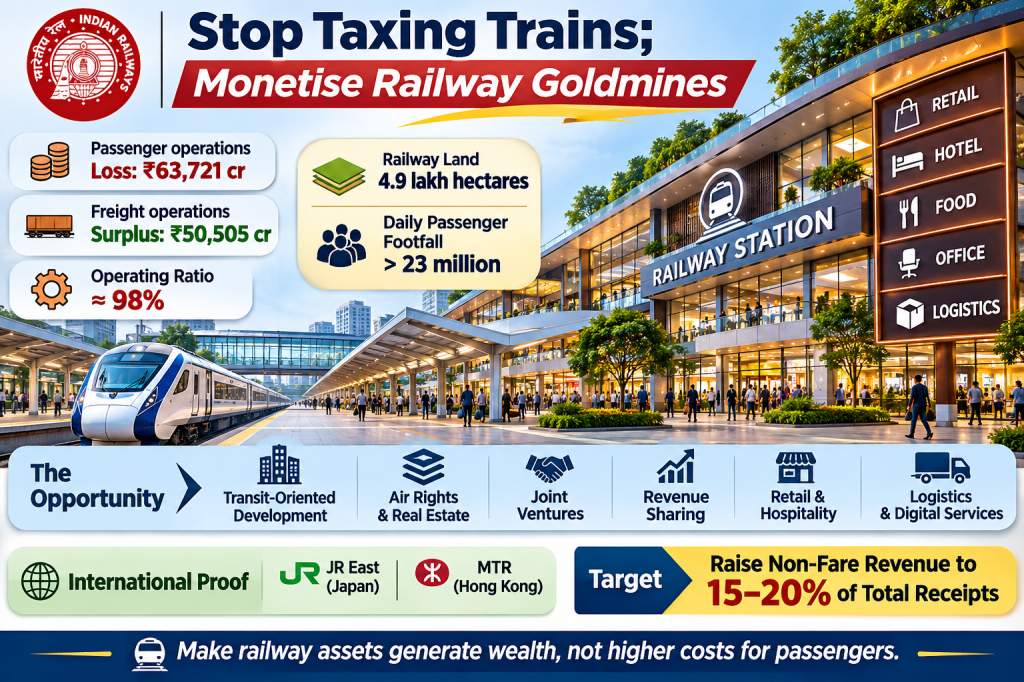
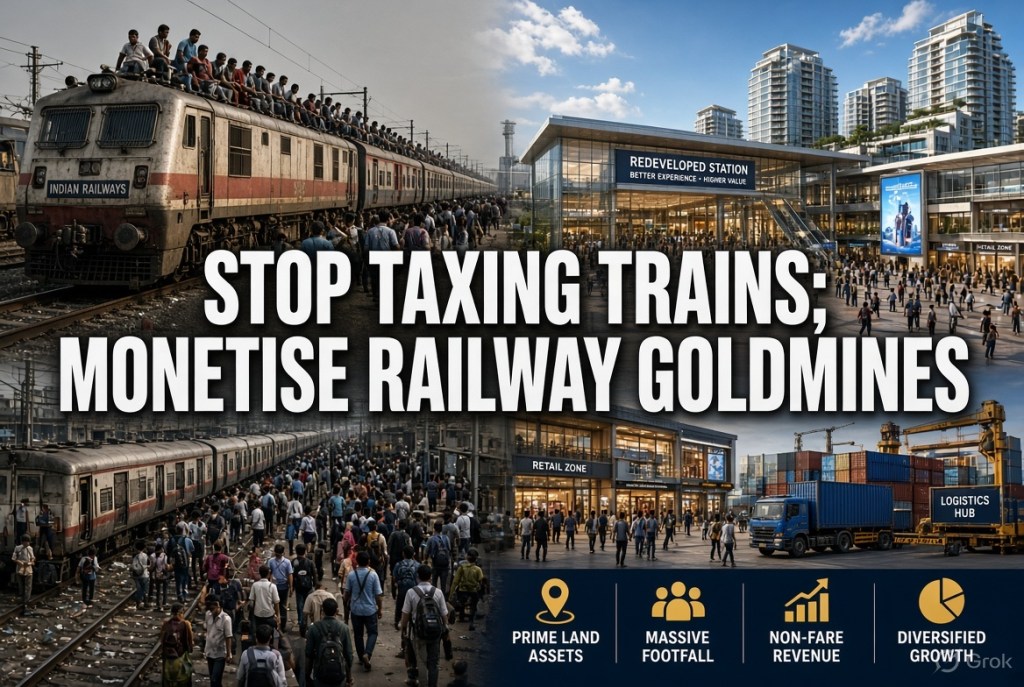
Indian Railways is sitting on a commercial goldmine while repeatedly reaching into the pockets of passengers and freight operators to balance its books. Fare revisions, Tatkal surcharges, premium pricing and higher freight tariffs may generate incremental receipts, but they cannot constitute a sustainable revenue strategy for an institution controlling some of India’s most valuable urban land, millions of daily passenger journeys and an enormous commercial ecosystem. Airports across the world have transformed terminals into retail, hospitality and business destinations. International railway operators have similarly converted stations into economic hubs. Indian Railways, however, continues to view much of its commercial potential through the narrow lens of transportation. The strategic question is no longer how much more it can charge for a journey, but how much wealth it can generate from the assets and economic activity surrounding that journey.
The financial contradiction is becoming increasingly difficult to ignore. In FY2024–25, passenger operations reportedly incurred losses of approximately ₹63,721 crore, while freight generated a surplus of around ₹50,505 crore. Passenger services recover substantially less than their operating costs, leaving freight customers to shoulder a significant cross-subsidy. This arrangement makes rail freight relatively expensive, weakens its competitiveness against road transport and risks undermining the very surplus that supports passenger services. With the Operating Ratio hovering around 98%, almost every rupee earned is absorbed by working expenses, leaving limited financial flexibility for investment and modernisation. Socially necessary passenger subsidies are legitimate public policy choices, but they should be transparently funded through the Union Budget rather than concealed within freight tariffs. A national transport system cannot become financially sustainable by making one category of customer perpetually subsidise another.
The conventional strategy of extracting additional revenue through Tatkal, Premium Tatkal, dynamic pricing and periodic fare increases has also reached its economic limits. Such measures redistribute the cost of scarce capacity; they do not create additional economic value. The experience with FlexiFare demonstrated that aggressive price escalation can discourage occupancy, particularly when premium train fares approach airline ticket prices. A more rational approach would prioritise predictable pricing, capacity utilisation and sustainable occupancy. The emerging Vande Bharat Sleeper pricing architecture offers an opportunity to explore this balance, particularly through a larger AC3 capacity base. Reported FY2024–25 figures indicate that AC3 generated an operational surplus of approximately ₹3,645 crore, while Sleeper class incurred losses of around ₹19,158 crore. These figures underline the importance of understanding the economics of individual services, but they should not become an argument for abandoning affordable travel. The larger lesson is that operational efficiency and rational pricing must complement—not substitute for—revenue diversification.
The greatest untapped opportunity lies beneath the wheels of the railway network: its land. Indian Railways controls approximately 4.9 lakh hectares, including valuable parcels in major urban centres. Yet non-fare revenue reportedly contributes only around 4% of total receipts, compared with 40–50% or more from non-aeronautical activities at several major airports. International experience demonstrates what is possible. Japan’s JR East derives a substantial share of its business from retail, real estate, hotels and services integrated with railway stations. Hong Kong’s MTR has developed the Rail + Property model, capturing part of the land-value appreciation created by improved connectivity. Its stations function as commercial destinations, while property development contributes significantly to the economics of the transport network. These models establish a powerful principle: connectivity creates land value, and the institution investing in connectivity should have a structured mechanism to capture a reasonable share of that value.
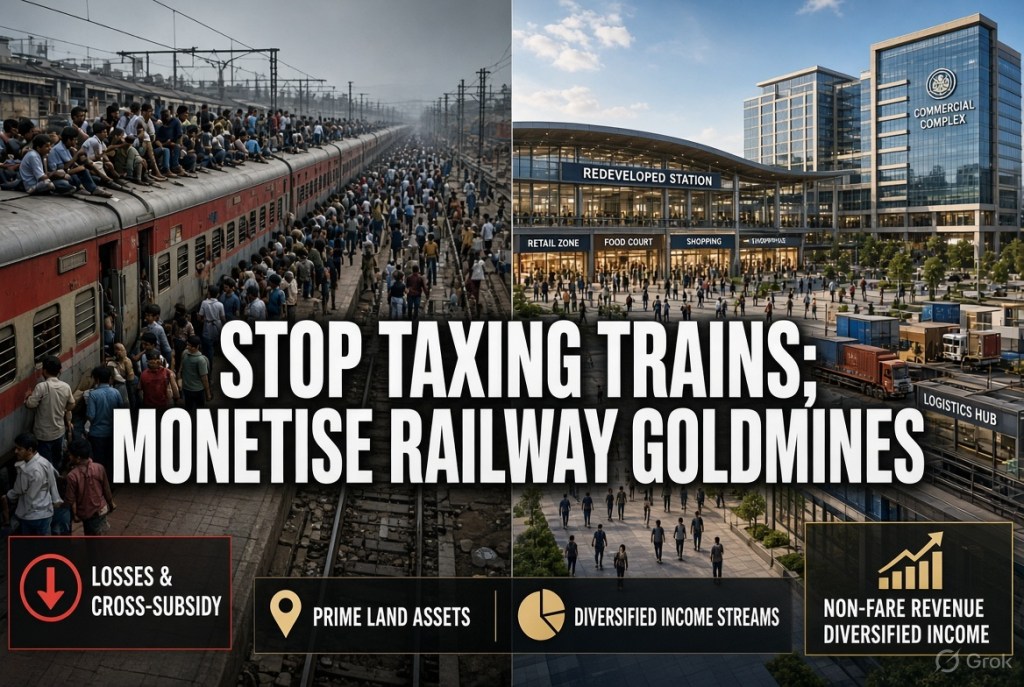
India’s challenge is not the absence of assets, but the inability to unlock them at scale. The Rail Land Development Authority was established to commercialise railway land, yet progress has been constrained by encroachments, disputed titles, fragmented municipal records, zoning restrictions and prolonged interdepartmental clearances. Operational requirements and the irregular geometry of several parcels further complicate development. More importantly, the institutional approach remains excessively focused on leasing or auctioning land for immediate receipts rather than treating it as productive capital capable of generating recurring returns. Large upfront lease premiums may improve short-term finances, but they can surrender long-term appreciation created by public investment. Earlier station redevelopment PPP experiences have also exposed the limitations of transferring complex commercial risks through rigid contractual arrangements. Station modernisation through EPC contracts is necessary, but infrastructure creation alone cannot capture the wider economic value generated around it. Indian Railways must evolve from being merely a landowner into a sophisticated urban development and asset-management institution.
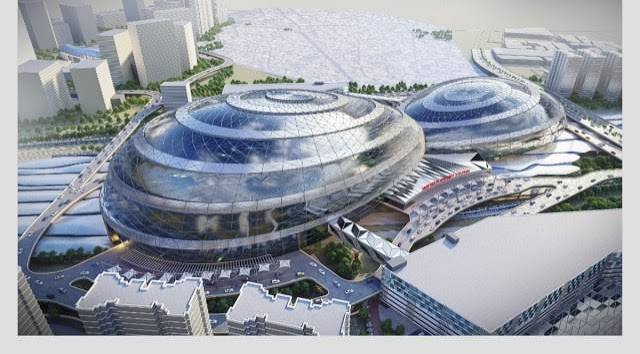
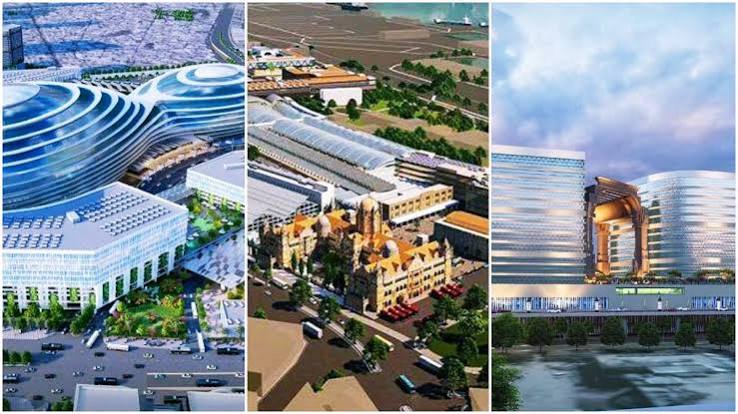
A structural solution requires a professionally managed framework for railway land value capture. A dedicated Railway Land Value Capture Corporation, working with state governments, urban development authorities and credible private developers, could identify, aggregate and develop commercially viable assets. Major stations should be planned as integrated Transit-Oriented Development hubs, combining transport facilities with offices, retail, hotels, residential spaces and logistics infrastructure. Joint Special Purpose Vehicles can facilitate coordinated planning, utility integration, appropriate increases in permissible Floor Space Index and transparent revenue sharing. Air rights above tracks, yards and station concourses deserve particular attention in land-constrained cities such as Delhi, Mumbai and Bengaluru. Instead of relying exclusively on upfront lease premiums, long-term revenue-sharing arrangements, equity participation and suitable REIT structures could generate predictable annuity income while retaining public ownership of strategic assets. A carefully assessed pipeline of 20–30 commercially viable urban locations could provide a credible starting point, supported by clear land titles, independent valuation and time-bound approvals.
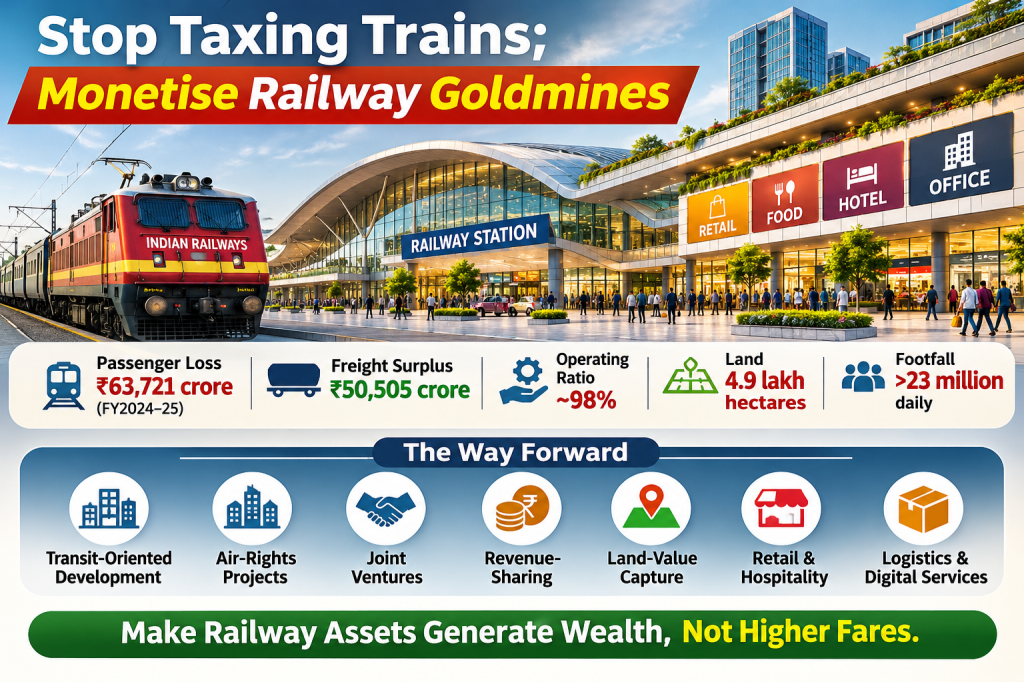
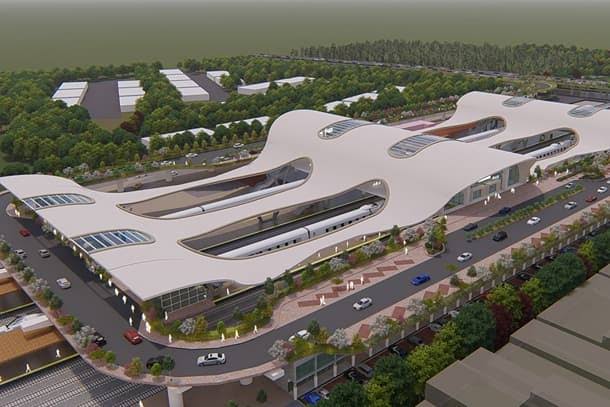
The second major opportunity is the commercial ecosystem surrounding railway passengers. With daily passenger footfall exceeding 23 million, Indian Railways commands a marketplace unmatched by most public institutions. Retail concessions, food courts, advertising, parking, hospitality, warehousing, parcel services, last-mile logistics and digital commerce can generate recurring income without increasing the cost of travel. IRCTC’s digital reach and ticketing infrastructure offer additional possibilities through legitimate travel-related services, payments and commercial partnerships, subject to competition, data privacy and consumer protection safeguards. The Amrit Bharat Station Scheme should therefore move beyond architectural renovation and incorporate commercially viable station master plans. Every major station must balance passenger convenience, universal accessibility, public spaces and commercial activity. The objective is not indiscriminate privatisation or the commercialisation of every public space; it is to make public assets productive while safeguarding affordability, transparency and passenger interests.
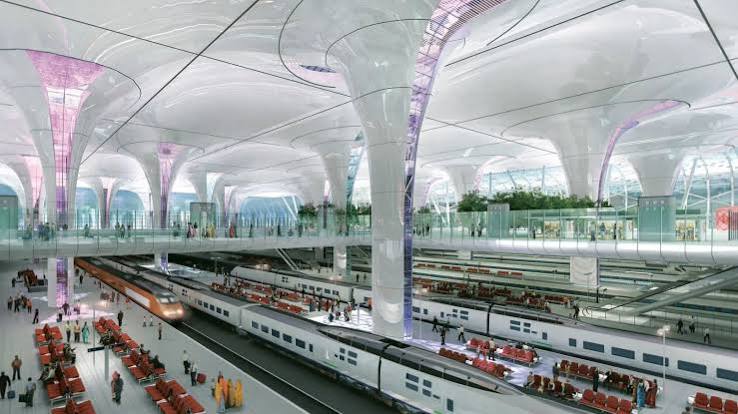
Ultimately, Indian Railways must abandon the assumption that financial sustainability can be achieved primarily by charging passengers more and freight operators higher tariffs. Both are customers of a national infrastructure institution, not inexhaustible revenue sources. Freight pricing must become competitive to recover market share, while passenger subsidies should be transparent and fiscally supported. Non-fare revenue must emerge as a core strategic business vertical, backed by professional management, measurable targets, transparent contracts and independent performance audits. A medium-term ambition of raising its contribution towards 15–20% of total receipts could provide a meaningful direction, subject to realistic project pipelines and implementation capacity. The next railway revolution need not be another premium train or another fare category. It must be the transformation of stations into economic centres, land into productive capital and passenger footfall into commercial opportunity. Japan and Hong Kong have demonstrated that mobility can generate wealth beyond the ticket. India must now make its railway empire earn from everything surrounding the journey—not merely from the journey itself.
VST ARJASRIKANTH.IN FOR MORE INSIGHTS

