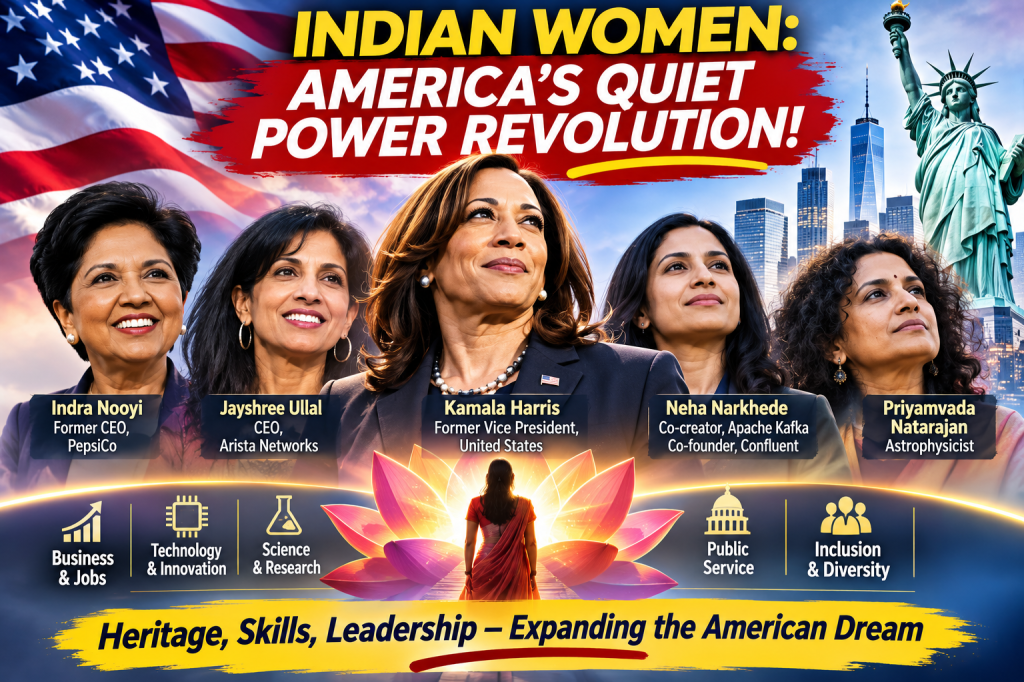
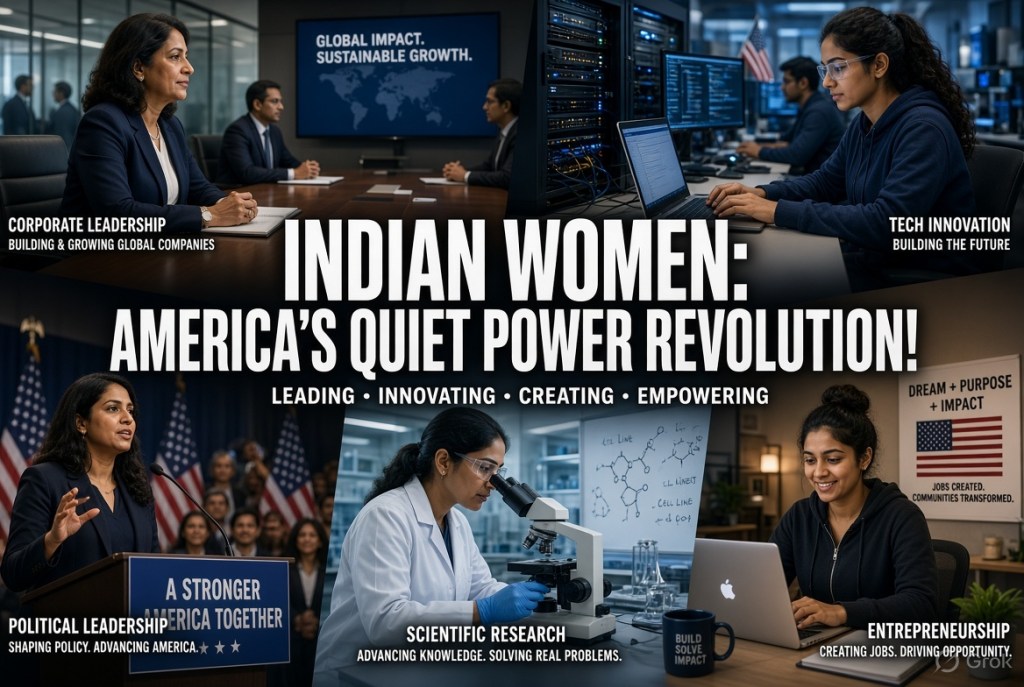
The contribution of Indian-origin women to American society is one of the most compelling stories of contemporary globalisation, yet it remains insufficiently recognised. From Silicon Valley boardrooms and scientific laboratories to universities, political institutions, hospitals and entrepreneurial ventures, they are increasingly shaping the institutions that drive American prosperity. Their achievements extend far beyond individual career success. They create businesses, generate employment, advance scientific discovery, influence public policy, strengthen democratic representation and enrich America’s multicultural identity. What makes their journeys particularly remarkable is their ability to negotiate multiple identities without surrendering professional ambition or cultural inheritance. They have demonstrated that integration need not mean assimilation, and that diversity, when supported by opportunity and institutional openness, can become a formidable economic and intellectual asset. The Indian-origin woman is no longer merely participating in the American Dream; she is helping redefine its meaning, possibilities and future.

An illuminating perspective emerges from Kamini Ramani’s Lotus Leadership: A Modern Playbook of Ancient Wisdom, published in September 2026. Drawing upon more than 100 interviews and profiling over 30 women leaders, the book explores how cultural inheritance can become a source of contemporary leadership strength. Its five-petal framework examines the integration of traditionally feminine and masculine attributes, intellectual curiosity, supportive partnerships, a broader understanding of abundance and the confident ownership of power. The underlying proposition challenges the conventional assumption that professional success requires women to imitate established masculine models of authority. Indian women often navigate contrasting cultural expectations: the intellectual strength associated with Saraswati, the prosperity symbolised by Lakshmi and the resilience embodied by Parvati, alongside social conventions that sometimes encourage accommodation and restraint. Their achievement lies in retaining empathy without surrendering authority, embracing ambition without abandoning collaboration, and exercising power without losing perspective. This synthesis offers an alternative leadership vocabulary increasingly relevant to complex, diverse and interconnected organisations.
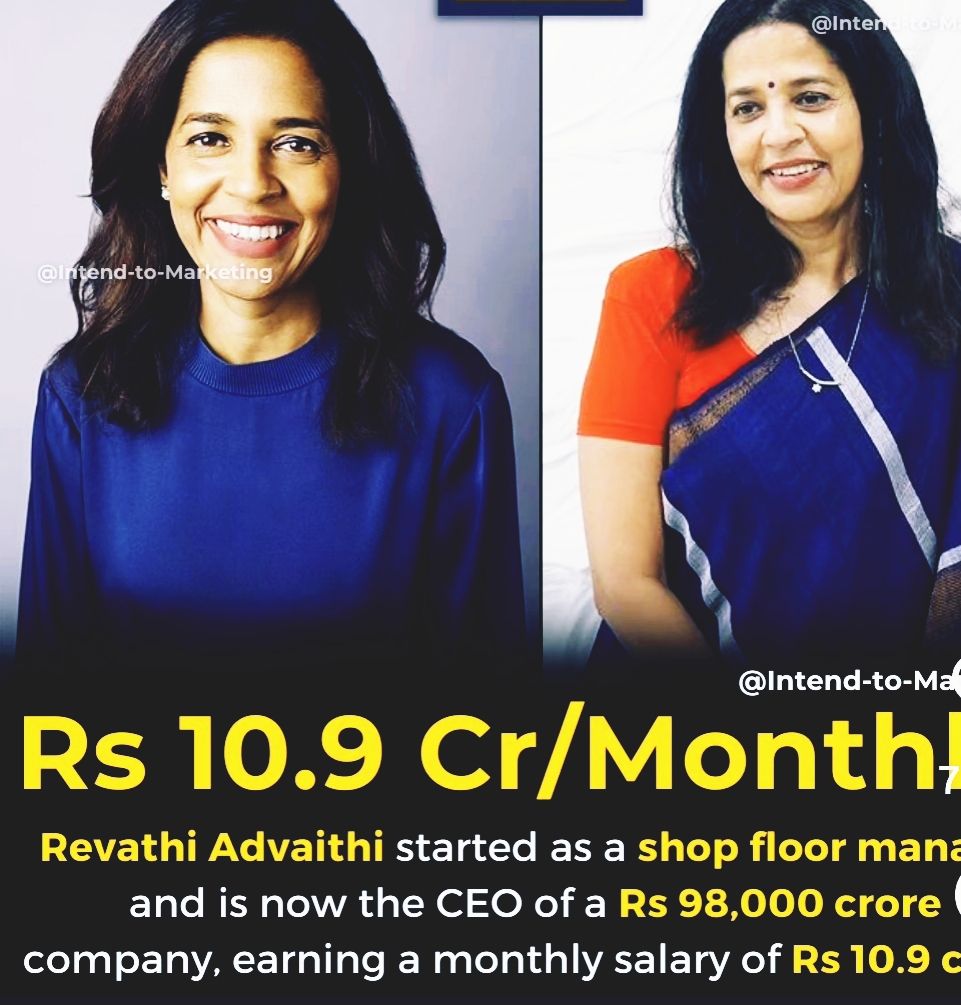
Corporate America provides some of the most visible illustrations of this transformation. Indra Nooyi, former Chairman and CEO of PepsiCo, demonstrated how strategic ambition could be combined with environmental sustainability, healthier products and social responsibility through her Performance with Purpose philosophy. Jayshree Ullal, CEO of Arista Networks, has helped shape advanced networking infrastructure central to cloud computing and modern digital enterprises. Revathi Advaithi, CEO of Flex, has contributed to global manufacturing, supply-chain resilience and industrial innovation. Sonia Syngal, former CEO of Gap Inc., also demonstrated the growing influence of Indian-origin women in American corporate leadership. These executives have operated in fiercely competitive environments where strategic decisions affect employees, shareholders, consumers and international markets. Their significance is not simply that women have occupied powerful positions; it is that they have demonstrated the capacity to transform institutions, manage complexity and deliver organisational performance. They have expanded the definition of corporate leadership from commanding authority to creating sustainable value.

The entrepreneurial and technological contributions are equally consequential. Neha Narkhede, co-creator of Apache Kafka and co-founder of Confluent, helped develop technology underpinning real-time data streaming across financial services, commerce and digital infrastructure. Neerja Sethi, co-founder of Syntel, demonstrated how entrepreneurial vision could build a globally competitive technology services enterprise. Payal Kadakia, founder of ClassPass, transformed access to fitness and wellness services through a digital marketplace. Sana Javeri Kadri, founder of Diaspora Co., has connected American consumers with traceable Indian spices while building stronger relationships with producers. These ventures illustrate a crucial economic truth: innovation is not confined to laboratories or billion-dollar corporations. It also emerges from identifying everyday problems, challenging established business models and creating scalable solutions. Women entrepreneurs contribute to employment generation, investment, competition and consumer choice. They are not merely beneficiaries of America’s innovation ecosystem; they are expanding its boundaries and creating opportunities for others to participate in it.
Their influence extends into the political and democratic architecture of the United States. Kamala Harris, the first woman, first Black American and first person of South Asian descent to serve as Vice President, represented a historic milestone in American political representation. Nikki Haley, former Governor of South Carolina and US Ambassador to the United Nations, demonstrated the capacity of Indian-origin women to influence executive governance and international diplomacy. Pramila Jayapal, a prominent member of the House of Representatives, has contributed to legislative debates on immigration, healthcare and civil rights. Aruna Miller, Lieutenant Governor of Maryland, represents another important achievement in immigrant participation in state governance. Their political journeys have broadened the understanding of American identity and democratic inclusion. Yet representation must mean more than symbolic visibility. Its deeper significance lies in bringing diverse experiences into policymaking, legislative scrutiny, public administration and debates that shape the everyday lives of American citizens. Their presence demonstrates that immigrant heritage and national commitment can reinforce, rather than contradict, each other.

In science, academia, medicine and research, Indian-origin women are strengthening America’s intellectual capital. Astrophysicist Priyamvada Natarajan has advanced research into dark matter, black holes and the evolution of the universe. NASA scientist Madhulika Guhathakurta has made significant contributions to solar physics, the Sun’s corona and space-weather research. Scholar Gayatri Chakravorty Spivak has influenced international debates on literature, postcolonial thought and social inequality. Across healthcare, biotechnology, universities and public health institutions, countless other professionals contribute through research, clinical practice, teaching and institutional leadership. Their work may not command the public visibility enjoyed by corporate executives or political personalities, but its contribution is foundational. Scientific discovery expands human knowledge; education develops future generations; and healthcare innovation improves the quality and longevity of life. These are not peripheral contributions to national development. They are among the principal foundations of America’s technological competitiveness, social resilience and global intellectual influence.

However, celebrating exceptional achievements must not obscure the inequalities that remain. Indian-origin women continue to encounter overlapping barriers arising from gender, ethnicity, immigration status and cultural expectations. The glass ceiling restricts access to senior leadership, while the so-called bamboo ceiling can limit entry into influential professional networks and strategic decision-making. Unequal promotion opportunities, compensation disparities and underrepresentation on corporate boards remain concerns. Immigration-related restrictions can disrupt careers, particularly for skilled women whose employment authorisation depends on a spouse’s visa status. Childcare, eldercare and unequal domestic responsibilities create additional pressures. Moreover, the extraordinary success of a relatively privileged group of executives and entrepreneurs should not conceal the economic insecurity experienced by many less advantaged immigrant women. Educational access, professional networks, financial resources and social mobility remain unevenly distributed. The real measure of progress, therefore, cannot be the number of exceptional women who break through existing barriers, but whether American institutions systematically dismantle those barriers for the generations that follow.

The next phase must convert individual excellence into collective institutional progress. Corporations should strengthen sponsorship and mentorship, ensure transparent promotion processes, expand women’s representation in boardrooms and create measurable pathways to executive leadership. Venture capital institutions must widen funding access for women entrepreneurs, particularly in artificial intelligence, biotechnology, clean energy and advanced manufacturing. Immigration policies should minimise avoidable career discontinuity for skilled migrant women whose expertise contributes to the American economy. The Indian-American community, meanwhile, must evolve professional associations into platforms for mentoring, entrepreneurship, civic participation and leadership development. Successful women must consciously open doors for those who lack privileged networks or established connections. Ultimately, the contribution of Indian-origin women cannot be measured merely through the number of CEOs, scientists, politicians or entrepreneurs they produce. It must also be measured through the institutions they strengthen, opportunities they create, knowledge they advance and inequalities they help dismantle. The lotus offers a powerful metaphor: rooted in one cultural inheritance, flourishing in another national environment and enriching the society in which it grows. Indian-origin women are not simply succeeding in America. They are helping America become more innovative, inclusive, competitive and intellectually powerful.
VST ARJASRIKANTH.IN FOR MORE INSIGHTS

