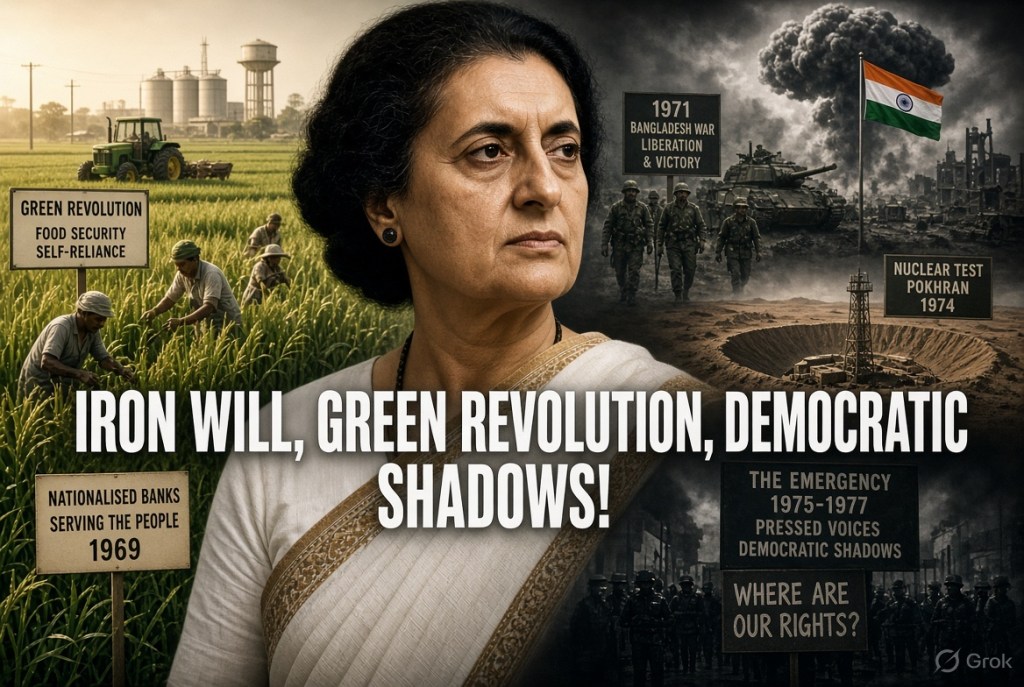
November 19, the birth anniversary of Indira Gandhi, observed as National Integration Day or Quami Ekta Diwas, invites India to revisit one of the most consequential and controversial leaders in its modern history. Few political personalities have shaped the country’s economic direction, geopolitical identity, agricultural transformation and political culture as profoundly as she did. Her legacy transcends the years she occupied the Prime Minister’s office, reflecting both the possibilities of decisive political leadership and the dangers of excessive executive power. She embodied an extraordinary paradox: a leader who strengthened India’s sovereignty, transformed its strategic confidence and expanded its developmental ambitions, yet presided over a period when democratic freedoms and institutional independence suffered unprecedented setbacks. Remembering her requires neither uncritical admiration nor convenient condemnation, but an honest assessment of both dimensions.
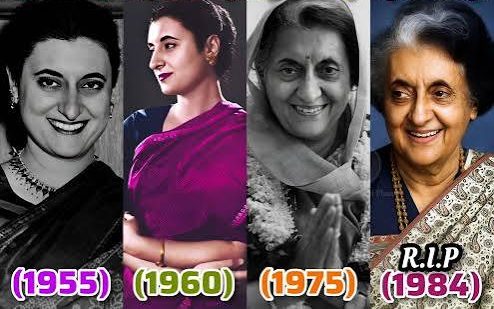
When Indira Gandhi assumed office in 1966, India confronted food shortages, successive droughts, economic uncertainty and considerable dependence on external food assistance. Her government’s commitment to agricultural modernisation helped accelerate the Green Revolution through high-yielding seeds, irrigation expansion, fertiliser availability, institutional credit and scientific agricultural practices. The transformation gradually shifted India from chronic food insecurity towards greater self-sufficiency, strengthening national dignity and strategic independence. This was not merely an agricultural breakthrough; it fundamentally altered the relationship between food production, national security and economic sovereignty. Equally significant was the nationalisation of 14 major commercial banks in 1969, which expanded institutional banking into rural India and redirected credit towards agriculture, small industries and underserved communities. The abolition of privy purses in 1971 further challenged inherited privileges and reinforced the principle that citizenship in a democratic republic must rest on equality rather than historical entitlement.
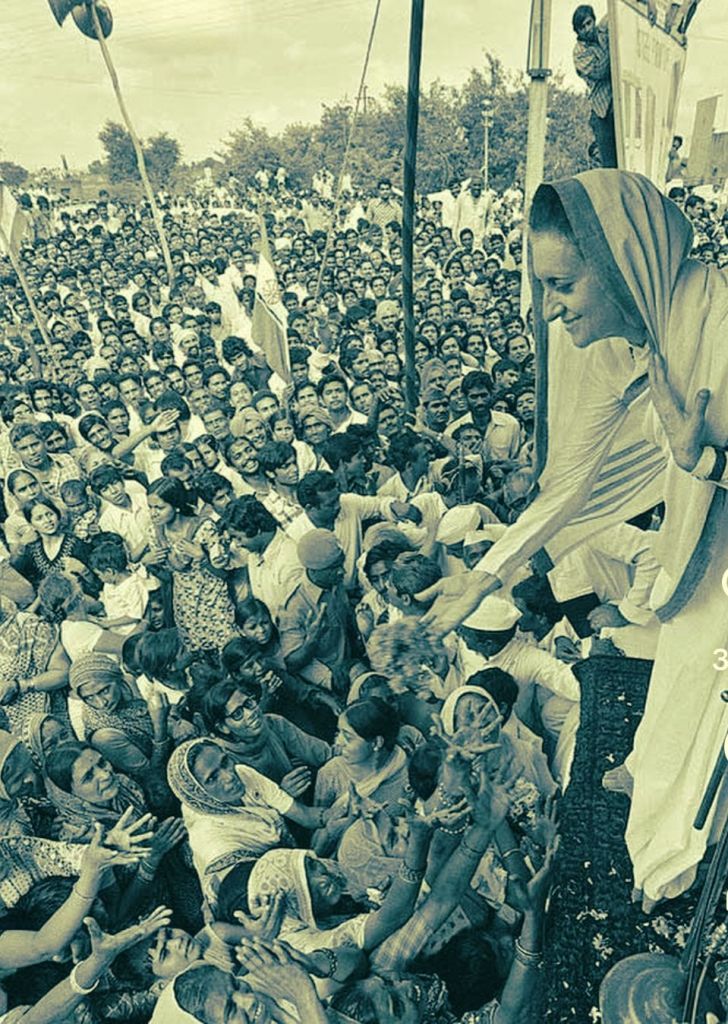
Her defining geopolitical achievement emerged in 1971, when the Bangladesh Liberation War transformed South Asia’s strategic landscape. Nearly ten million refugees fleeing repression in East Pakistan entered India, creating an enormous humanitarian, economic and security challenge. Indira Gandhi combined diplomatic preparation, military readiness and strategic calculation at a moment of considerable international pressure. The Indo-Soviet Treaty of Peace, Friendship and Cooperation strengthened India’s diplomatic position, while the decisive military intervention culminated in Pakistan’s surrender and the emergence of Bangladesh. India demonstrated that it could shape regional outcomes rather than remain a passive participant in international power politics. Her leadership established a powerful precedent for strategic autonomy. The 1974 Pokhran-I nuclear test, codenamed Smiling Buddha, reinforced the country’s determination to develop indigenous scientific and strategic capabilities. Support for space research, atomic energy and technological institutions also contributed to the foundations of India’s subsequent scientific advancement.
However, the achievements of the Indira Gandhi era cannot obscure its most serious democratic failure: the National Emergency imposed in June 1975. For 21 months, fundamental freedoms were curtailed, opposition leaders imprisoned, the press censored and institutional accountability severely weakened. Forced sterilisation campaigns, demolitions and the growing influence of unelected political actors exposed the consequences of concentrating authority around one individual and her immediate circle. Parliamentary oversight, judicial independence and internal democracy within the Congress party suffered. The Emergency remains a defining warning in India’s constitutional history: electoral legitimacy does not confer unlimited political authority. Her assassination on 31 October 1984, following the June military operation at the Golden Temple, Operation Blue Star, added another tragic chapter. The subsequent anti-Sikh violence exposed the devastating consequences of political failure, communal hostility and inadequate protection of citizens. These episodes remind us that national security and political authority must always operate within constitutional and humanitarian boundaries.
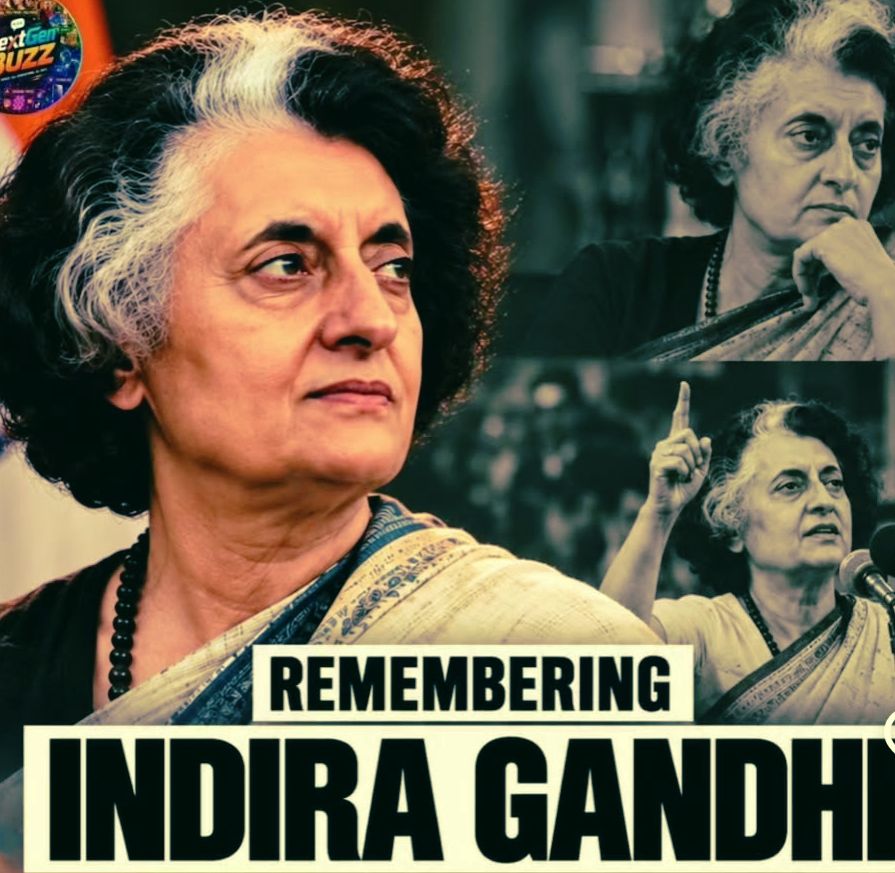
Historical assessment must also recognise the extraordinary pressures surrounding her political tenure. India experienced inflation, unemployment, oil-price shocks and external economic vulnerabilities. The political movements in Gujarat and Bihar challenged governmental legitimacy, while regional aspirations, insurgencies and geopolitical rivalries complicated national governance. Indira Gandhi confronted the established Congress leadership, overcame internal resistance and transformed the party’s organisational and electoral character. Her political instincts were formidable, and her capacity to communicate a national vision helped consolidate mass political support. Yet, political adversity cannot become a justification for institutional subordination. Her experience demonstrates that the strength of a democratic leader is measured not simply by the ability to command, defeat opponents or impose decisions, but by the capacity to accommodate dissent, respect constitutional limitations and preserve institutions beyond personal political interests.
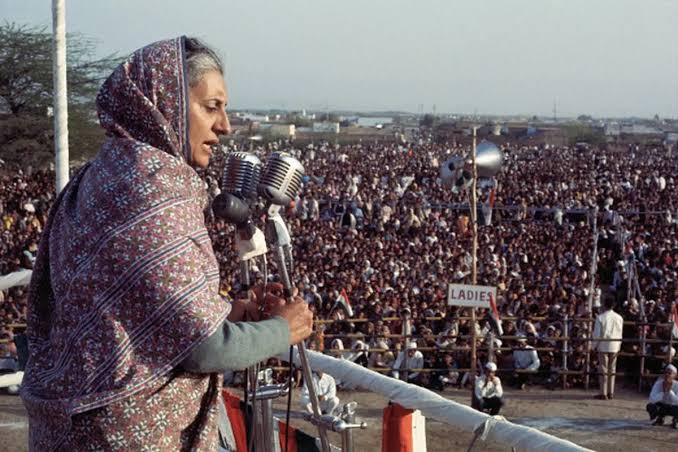
The contemporary relevance of her legacy is particularly striking as India navigates geopolitical competition, technological disruption, economic restructuring and changing global power equations. Her emphasis on strategic autonomy finds resonance in India’s contemporary multi-alignment diplomacy and pursuit of indigenous defence, energy and technological capabilities. Her commitment to expanding institutional credit has acquired new dimensions through financial inclusion, digital banking and Direct Benefit Transfers. The Green Revolution, meanwhile, offers lessons for a second agricultural transformation centred on climate-resilient farming, water conservation, precision agriculture, food processing and sustainable rural livelihoods. But her political experience also carries an equally important message: welfare must create pathways to economic opportunity, national security must coexist with social reconciliation, and administrative efficiency must never become an argument for weakening independent institutions.
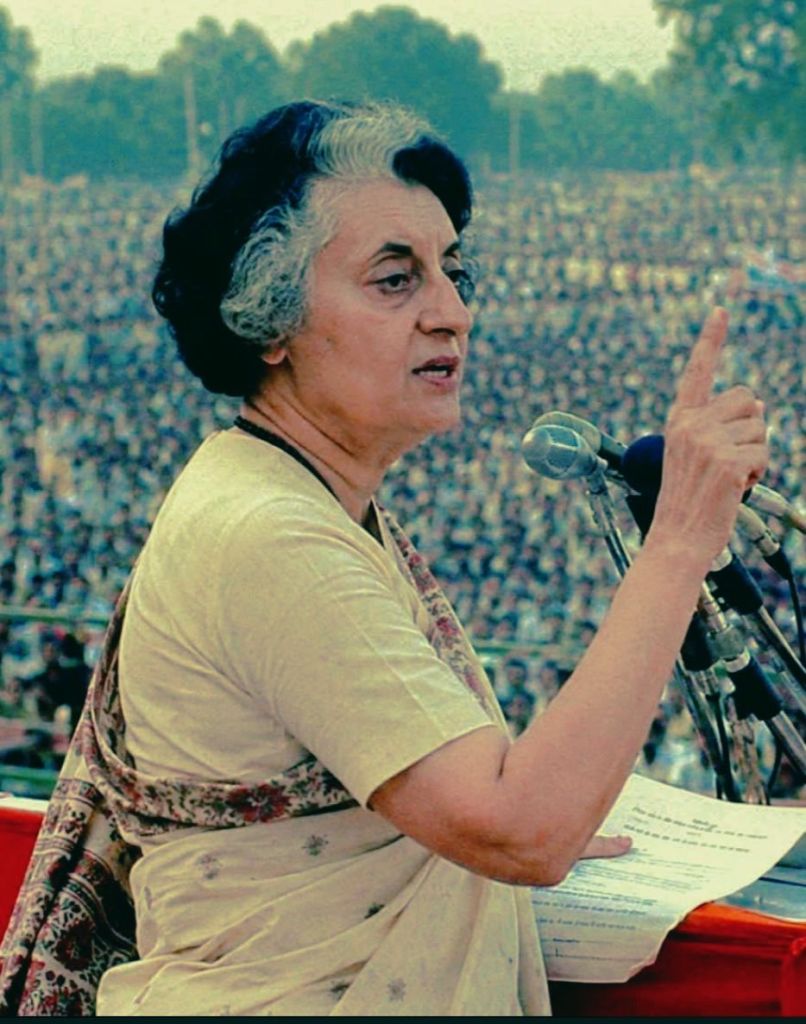
National Integration Day should therefore invite reflection on a deeper constitutional proposition: India’s unity cannot be sustained through administrative authority, political slogans or security interventions alone. It depends on public trust, social justice, equitable development, respect for regional identities and a meaningful partnership between the Union and the states. Cooperative federalism, judicial independence, a free press, transparent political finance and democratic accountability are not institutional inconveniences; they are the foundations of national resilience. The developmental ambition associated with Indira Gandhi deserves critical examination and selective preservation, while the democratic excesses of her tenure must remain enduring lessons. A diverse republic becomes stronger not by suppressing differences, but by creating institutions through which differences can be negotiated peacefully and aspirations accommodated democratically.
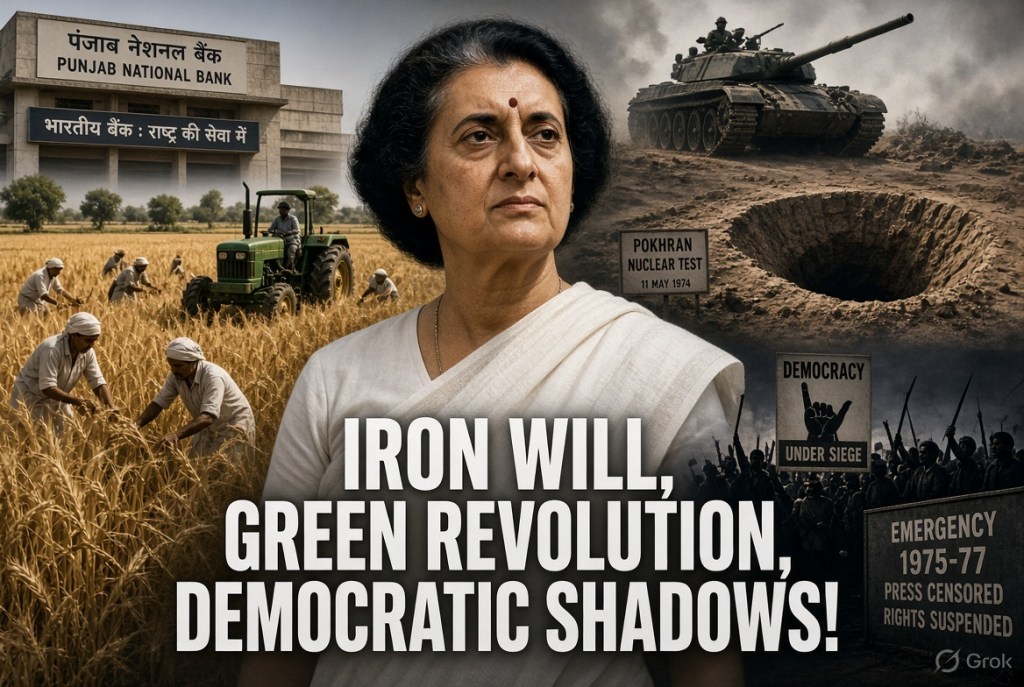
Ultimately, remembering Indira Gandhi on November 19 must be an exercise in historical honesty rather than political nostalgia. She helped transform India’s agricultural security, expanded access to banking, reshaped South Asia’s geopolitical map and advanced the country’s scientific and strategic ambitions. She also presided over the Emergency, leaving behind a profound institutional and constitutional warning. Both realities constitute her legacy. Her life demonstrates that strong leadership can accelerate national transformation, but unchecked power can undermine the very democratic foundations it claims to protect. The most meaningful tribute is therefore not to reproduce her political methods, but to retain her courage in defending national interests, her ambition in pursuing development and her determination to overcome adversity—while ensuring that constitutional morality, democratic freedoms, pluralism and social harmony remain non-negotiable. A strong India needs strong leaders, but stronger institutions.
VST ARJASRIKANTH.IN FOR MORE INSIGHTS

