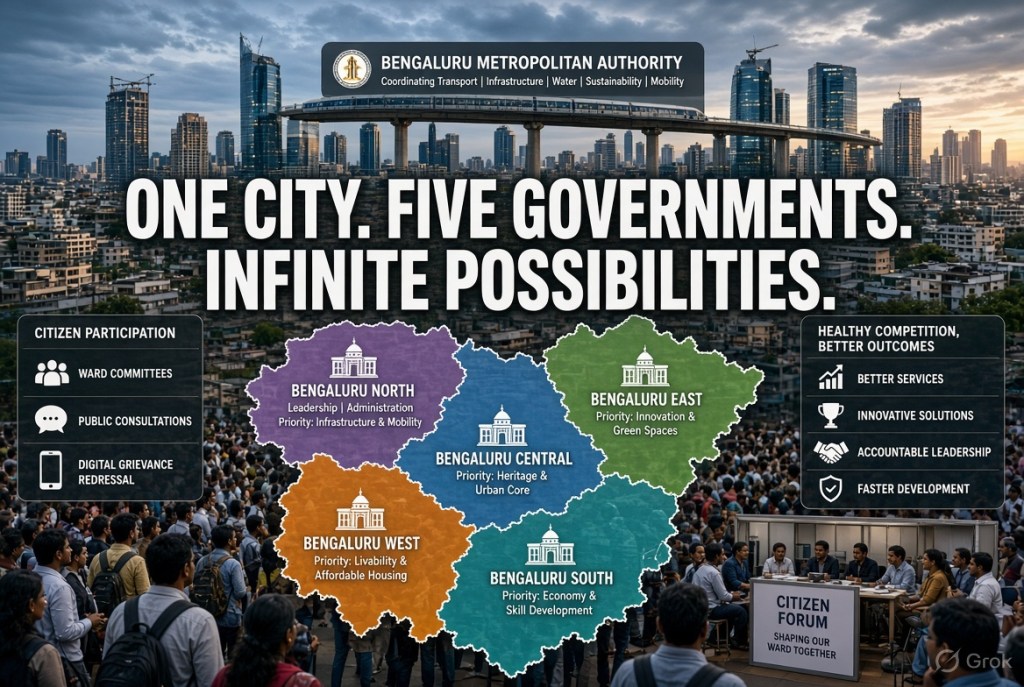
From Metropolitan Centralisation to a Federation of Empowered Urban GovernmentsIndia’s metropolitan governance is approaching an institutional crossroads. The traditional approach of merging expanding municipalities, townships and peripheral villages into one gigantic municipal corporation was historically justified by the need for integrated planning, coordinated infrastructure and economies of scale. However, the governance requirements of a metropolitan population running into millions have fundamentally changed. What was once an administrative solution to urban fragmentation has increasingly become a source of bureaucratic concentration, political distance and delayed decision-making. A single Mayor, Commissioner and municipal establishment cannot adequately understand and respond to the diverse aspirations of an expanding metropolitan population. The next phase of urban governance must therefore reverse the logic of excessive centralisation. While economic integration requires larger metropolitan regions, democratic governance requires smaller, empowered administrative units. Bengaluru’s emerging five-corporation model, alongside the proposed restructuring of its police administration into five commissionerates, provides an opportunity to introduce a fundamentally different philosophy: one metropolitan economy governed through multiple politically empowered, financially autonomous and administratively accountable urban regions.
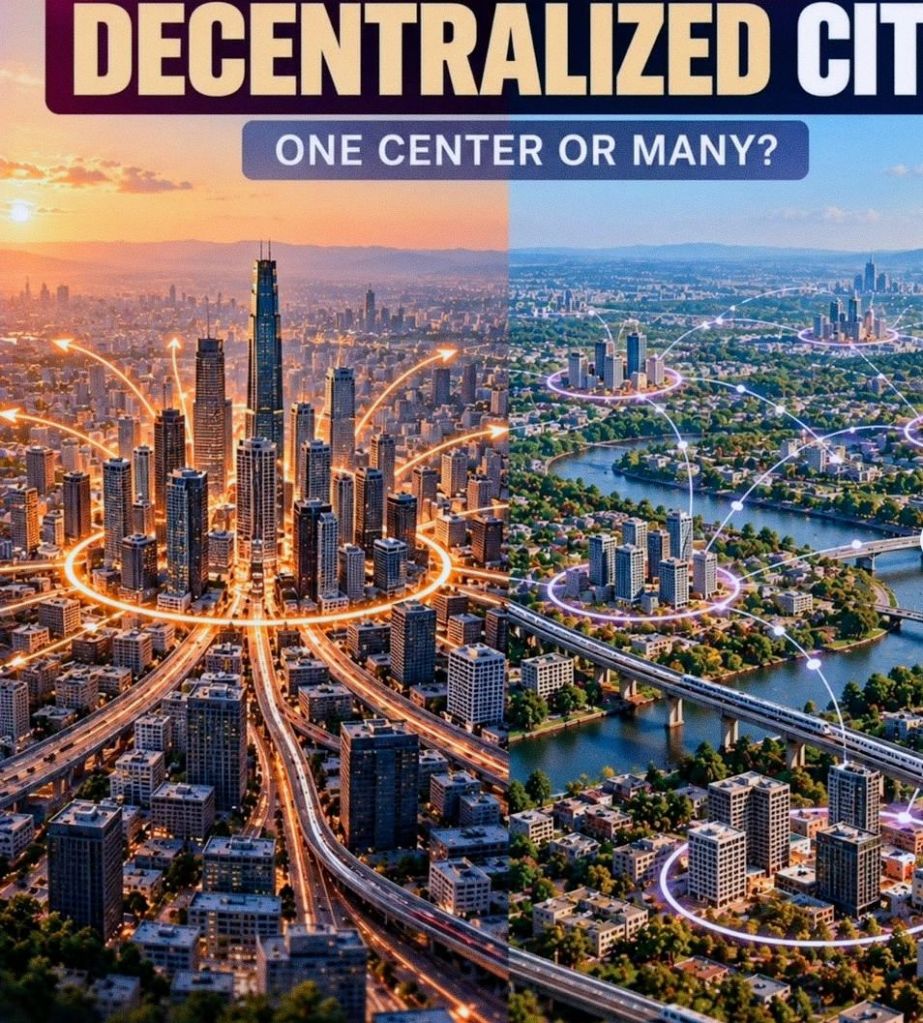
Bengaluru offers an important illustration of this institutional evolution. The expansion of municipal administration in 2007 brought several surrounding municipal councils, a town municipal council and more than a hundred villages under the Bruhat Bengaluru Mahanagara Palike (BBMP). This consolidation created a metropolitan jurisdiction of approximately 700–800 square kilometres and established a unified framework for managing an expanding urban economy. However, Bengaluru has since transformed into a metropolitan region with a population exceeding 1.5 crore, characterised by enormous geographical expansion, technological growth, commercial concentration and rapidly urbanising peripheral settlements. The governance demands of its established commercial districts are fundamentally different from those of its technology corridors, emerging residential clusters and industrial peripheries. A centralised municipal administration inevitably struggles to distribute attention, resources and institutional capacity across such diverse territories. The proposed restructuring under the Greater Bengaluru Authority recognises an important reality: metropolitan growth cannot indefinitely be governed through one administrative headquarters. The challenge now is to ensure that this restructuring becomes a genuine transfer of authority rather than merely a redistribution of administrative offices.
The fundamental principle must be that a metropolitan city is not one homogeneous geographical or economic entity. It is a federation of distinct urban ecosystems, each possessing different demographic characteristics, economic opportunities, infrastructure deficiencies and social priorities. Bengaluru Central, East, West, North and South represent different development trajectories and governance requirements. One region may require sophisticated traffic management, commercial infrastructure and public transport integration; another may urgently need affordable housing, drainage, sanitation and drinking water; yet another may offer opportunities for industrial development, educational institutions, logistics and employment generation. Each region should therefore have an empowered elected Mayor, a dedicated Commissioner, a representative municipal council and a professional administrative establishment. Their responsibilities must extend beyond conventional municipal functions to local economic development, public health, environmental protection, urban mobility, education support, cultural promotion and community welfare. Such institutions should become genuine centres of regional development, capable of identifying local problems, mobilising resources and delivering measurable improvements in citizens’ quality of life.
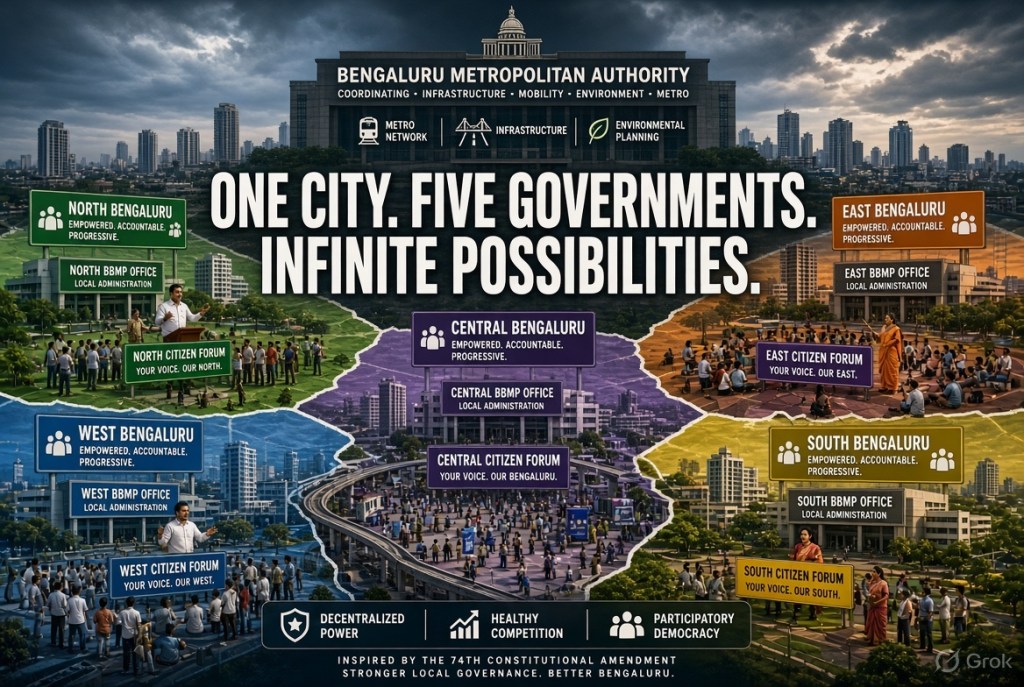
The most consequential dimension of this reform, however, is political decentralisation. Administrative division without political empowerment will produce little more than five bureaucratic establishments replacing one. Each metropolitan region must emerge as an independent centre of democratic participation, public representation and accountable political leadership within the constitutional framework. Citizens should be able to elect their regional representatives, communicate directly with their leadership and hold decision-makers responsible for the everyday conditions of their neighbourhoods. Roads, drinking water, sanitation, public safety, schools, healthcare, parks, local employment and environmental quality must become measurable political responsibilities. Regional political leadership should have clearly delegated powers, defined administrative jurisdictions and authority over approved development priorities. This will create five distinct centres of political activity, leadership development and democratic competition. It will also bring governance closer to citizens, particularly those living in peripheral settlements who often remain invisible in the priorities of metropolitan headquarters. The objective is not to fragment political authority but to distribute democratic responsibility. Five regions must mean five centres of political accountability, not five extensions of one centralised bureaucracy.
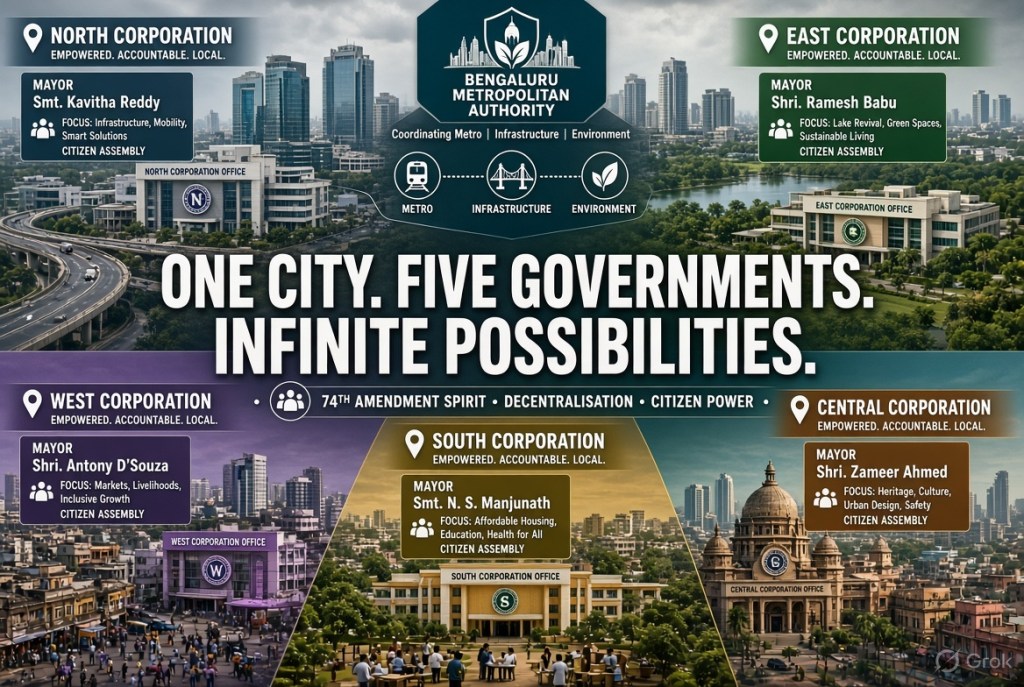
Financial decentralisation will ultimately determine the credibility and sustainability of this transformation. Every regional corporation should progressively develop its own revenue capacity through property taxation, municipal assets, user charges, parking management, commercial development, local economic activity and appropriately structured public-private partnerships. Predictable financial devolution must accompany administrative and political authority. Each region should prepare its own annual budget, publish expenditure priorities, undertake independent audits and establish measurable service-delivery benchmarks. The ability to generate revenue and manage expenditure will encourage innovation, financial discipline and constructive competition among regional governments. Regions should compete to attract investment, create employment, improve infrastructure, develop public spaces and deliver efficient public services. Nevertheless, financial autonomy must not create prosperous urban islands surrounded by neglected territories. A metropolitan fiscal equalisation mechanism should redistribute resources transparently to address differences in revenue capacity, infrastructure deficits and social vulnerability. The governing principle must be autonomy with accountability, competition with cooperation and economic efficiency with social justice. Metropolitan prosperity cannot be measured by the performance of its wealthiest districts alone; it must be reflected in the quality of life across every region.
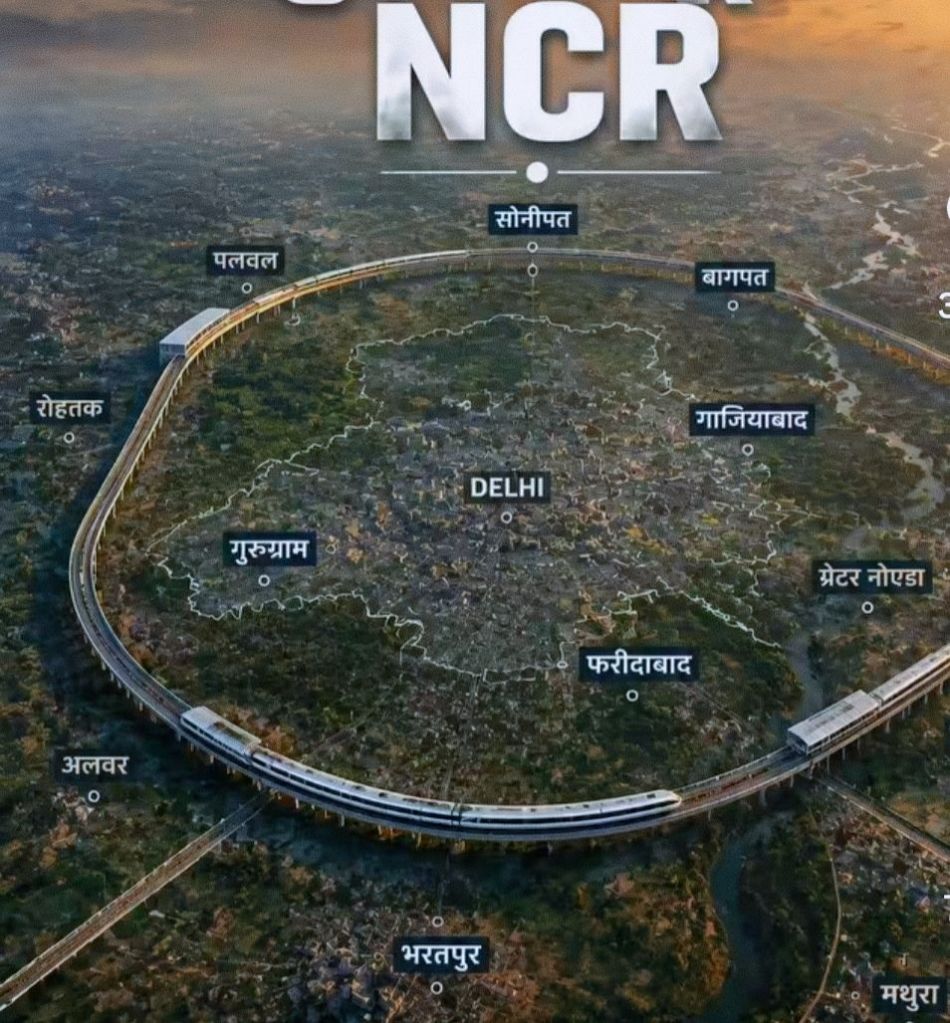
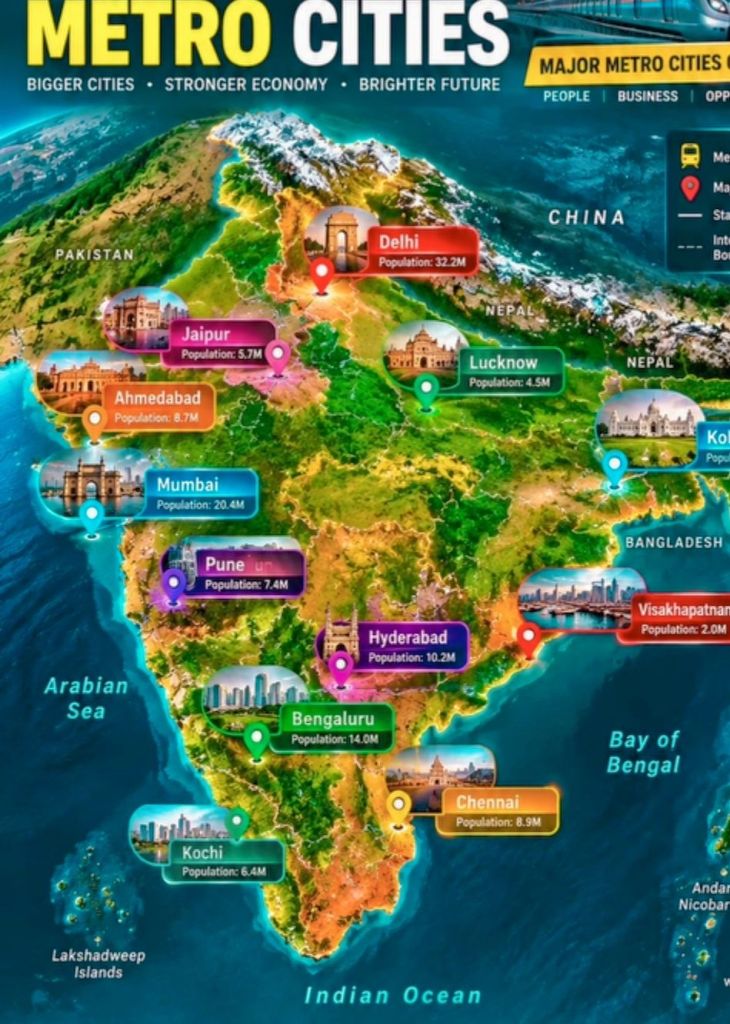
This philosophy has wider implications for India’s metropolitan future. Mumbai could examine stronger regional governments across its island city, eastern and western suburbs and expanding northern corridors within an integrated metropolitan framework. Delhi, with its complex arrangement of municipal corporations, district administrations and multiple governmental jurisdictions, requires a carefully designed institutional architecture that respects its constitutional and administrative complexities. Kolkata could strengthen regional institutions across its metropolitan municipalities, while Hyderabad could explore decentralised governance for its rapidly expanding western, eastern, northern and southern urban corridors. The number of regional governments need not be five everywhere. Their boundaries should emerge from population distribution, geographical realities, economic activity, infrastructure networks and administrative viability. What matters is the underlying principle: metropolitan integration should not translate into metropolitan monopolisation of power. Each region must possess the institutional capacity to formulate local priorities, implement development programmes and respond quickly to citizens. A common metropolitan framework should integrate these regional governments without extinguishing their autonomy.
Policing and essential urban services must also be redesigned around this principle of coordinated decentralisation. Bengaluru’s proposed five police commissionerates could improve neighbourhood-level policing, reduce supervisory burdens and bring police leadership closer to citizens. However, organised crime, cybercrime, intelligence, major investigations and traffic networks transcend municipal boundaries. Consequently, regional police leadership should enjoy operational autonomy while specialised metropolitan functions retain unified coordination and command mechanisms. The same distinction must guide water supply, electricity, Metro rail, arterial roads, drainage, solid waste management and environmental protection. These networks require metropolitan planning and technical integration, whereas neighbourhood-level delivery demands regional responsiveness. A Greater Metropolitan Authority should therefore function as a strategic coordinating institution responsible for integrated master planning, major infrastructure, environmental standards and inter-regional cooperation. Regional corporations should manage local development and public services. The citizen must experience a seamless government, not a confusing collection of institutions disputing jurisdiction. Decentralisation must simplify governance, not institutionalise fragmentation.
The philosophical foundation for this transformation already exists in India’s federal democratic structure. The Union and State governments function through constitutionally defined responsibilities, distinct leadership and financial arrangements while remaining part of one sovereign national framework. A similar philosophy can inspire metropolitan governance through empowered regional governments operating within a common metropolitan federation. The 74th Constitutional Amendment provides an important foundation for urban local self-government, democratic decentralisation and municipal empowerment. What remains necessary is the political determination to translate its principles into meaningful functional, administrative and fiscal devolution. Bengaluru can become the laboratory for this new governance architecture, with other metropolitan cities adapting the model to their own circumstances. Ultimately, the future of Indian urbanisation will not be determined merely by flyovers, expressways, skyscrapers or investment announcements. It will be determined by the ability of cities to deliver cleaner environments, safer neighbourhoods, accessible healthcare, efficient mobility, employment opportunities and dignified living conditions. The metropolitan authority must coordinate, not dominate; empower, not control; and integrate, not monopolise. India must move from ONE GIANT CITY GOVERNMENT to FIVE EMPOWERED GOVERNMENTS WITHIN ONE METROPOLITAN ECONOMY. The future belongs not to bigger bureaucracies, but to smaller, stronger, financially empowered and democratically accountable governments working together.
VST ARJASRIKANTH.IN FOR MORE INSIGHTS

