The dramatic resignation of Jensen Huang, the legendary co-founder and long-serving CEO of NVIDIA, on November 12, 2026, has exposed an extraordinary paradox at the heart of the artificial intelligence revolution. The man who helped build the technological infrastructure powering the next industrial transformation has himself become the subject of a crisis rooted in human relationships, executive judgement and institutional vulnerability. Reports of an extramarital relationship with Alice Huang, a former executive associated with Singapore-based Megaspeed International, brought intense scrutiny to his leadership. The controversy acquired an additional geopolitical dimension amid allegations of possible Chinese intelligence connections and concerns surrounding the movement of advanced AI chips. Reports also surfaced of a separate relationship with a subordinate. Huang’s departure, following the controversy and the board’s review, has transformed a personal crisis into a defining corporate governance moment. The irony is extraordinary: the architect of artificial intelligence could not escape the consequences of human frailty.
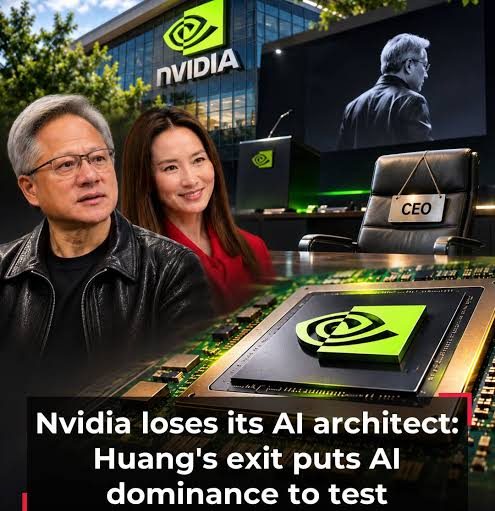
NVIDIA is not an ordinary technology company. Its advanced processors power generative AI, scientific research, autonomous systems, cloud computing and increasingly critical national infrastructure. Its commercial success has placed it at the centre of global economic competition and technological geopolitics. Jensen Huang became one of the most influential corporate personalities of the modern era, representing the extraordinary possibilities of technological ambition. Yet this episode demonstrates that intellectual brilliance, entrepreneurial courage and professional achievement do not automatically confer personal wisdom. Artificial intelligence can analyse enormous datasets, detect anomalies, forecast risks and optimise complex decisions. It cannot independently ensure that the individuals controlling its development exercise sound judgement. The distinction between technological intelligence and human wisdom has never been more consequential. The most sophisticated algorithm cannot compensate for a leader who fails to recognise the risks created by personal conduct.
The involvement of Alice Huang has brought an uncomfortable dimension to the relationship between gender, influence and power. Women have historically been underrepresented in formal centres of corporate authority, but influence does not always depend on occupying the corner office or controlling institutional resources. Access, relationships, information and professional networks can all shape decision-making environments. The reported relationship between Alice Huang and Jensen Huang has therefore raised questions about executive vulnerability and the potential intersection of private relationships with corporate and geopolitical interests. However, allegations must remain distinct from established facts. Singapore’s authorities stated that there was insufficient evidence to establish that Alice Huang had committed the offences under investigation, although they said she had provided inaccurate information to investigators and issued her a stern warning. They also clarified that their investigation was not an espionage inquiry. It would therefore be irresponsible to portray her as having engineered Huang’s resignation or to treat allegations of espionage as proven. The real lesson concerns the vulnerabilities created when personal access intersects with institutional power.

Perhaps the most significant insight lies in the psychology of leadership. Three decades of extraordinary success can create an environment in which authority becomes deeply personalised and professional boundaries increasingly dependent on individual discretion. Founders who transform industries often acquire immense institutional influence, public admiration and considerable freedom of action. But prolonged dominance can also produce an illusion of invulnerability. When surrounded by loyal advisers, unquestioning employees and professional networks that rarely challenge authority, even accomplished leaders can underestimate the consequences of personal decisions. The downfall of senior executives in companies such as Intel, McDonald’s and BP has demonstrated that financial performance cannot substitute for ethical conduct. Leadership is not merely the capacity to generate shareholder value; it is the responsibility to protect institutional credibility. A reputation constructed over decades can be damaged by decisions made in moments.

The gender dimension deserves a more sophisticated interpretation than the simplistic narrative of a woman bringing down a powerful man. Women should not be celebrated merely because their presence becomes associated with a male executive’s downfall. Their real empowerment lies in professional competence, institutional authority, economic independence and the ability to shape the future. NVIDIA’s appointment of its experienced Chief Financial Officer, Colette Kress, as interim CEO offers a more meaningful illustration. At a moment of institutional uncertainty, a woman executive has been entrusted with the responsibility of maintaining confidence in one of the world’s most strategically important corporations. This is the real measure of women’s power: not their association with controversy, but their capacity to lead, innovate, govern and deliver results. The future of corporate leadership must increasingly be determined by competence rather than gender, inherited hierarchies or personality cults.

The crisis also raises fundamental questions about corporate governance. How can a corporation of NVIDIA’s strategic importance remain sufficiently resilient when its public identity and institutional authority are so closely associated with one individual? Founder-led enterprises often benefit from exceptional vision and decisive leadership, but they must also develop systems capable of functioning independently of their founders. Independent board oversight, credible succession planning, conflict-of-interest disclosures, ethical conduct policies and confidential whistleblower mechanisms are essential safeguards. Relationships involving senior executives and employees must be governed by clear disclosure and accountability standards, particularly where power imbalances exist. In technology companies handling sensitive intellectual property and strategically important products, personal conduct can have implications extending beyond workplace ethics. Corporate governance must therefore protect not only shareholders and employees, but also the integrity of critical technology ecosystems.

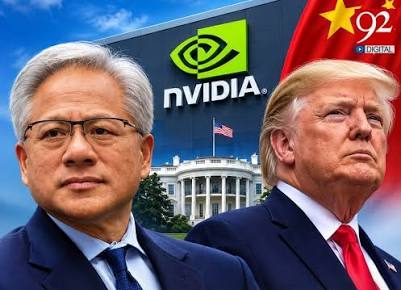
The geopolitical implications make the episode even more consequential. Advanced semiconductors are no longer merely commercial products; they are strategic assets in the competition between the United States and China. High-performance chips determine the pace of artificial intelligence development, advanced military applications, cybersecurity capabilities and technological independence. Allegations concerning possible diversion of NVIDIA hardware through international commercial networks have consequently attracted national security scrutiny. Yet the distinction between suspected activity, regulatory violations and proven espionage remains essential. Singapore’s investigation into Megaspeed and related individuals continues, while its authorities have stated that they lacked sufficient evidence to establish offences by Alice Huang. The controversy nevertheless exposes a serious governance challenge: export-control compliance, supply-chain transparency, customer verification and executive accountability must operate together. Cybersecurity systems cannot fully protect strategic technology if institutional oversight fails at the human level.
Ultimately, the NVIDIA episode is larger than the resignation of a celebrated technology entrepreneur or the controversy surrounding an individual relationship. It is a reminder that the future of artificial intelligence will depend not merely on computing power, investment and innovation, but on the character and accountability of those who control them. Human beings remain the ultimate architects, operators and governors of technological systems. Their ambitions can create extraordinary progress, but their vulnerabilities can expose institutions to extraordinary risks. The empowerment of women must be measured through equal opportunity, professional achievement and leadership, not sensationalised narratives of influence. The governance of technology must similarly be measured through transparency, integrity and institutional resilience, not simply market capitalisation. AI may be rewriting the rules of intelligence, but it cannot rewrite the rules of human responsibility. The machine can outthink the individual; it cannot make the individual wise.
VST ARJASRIKANTH.IN FOR MORE INSIGHTS

