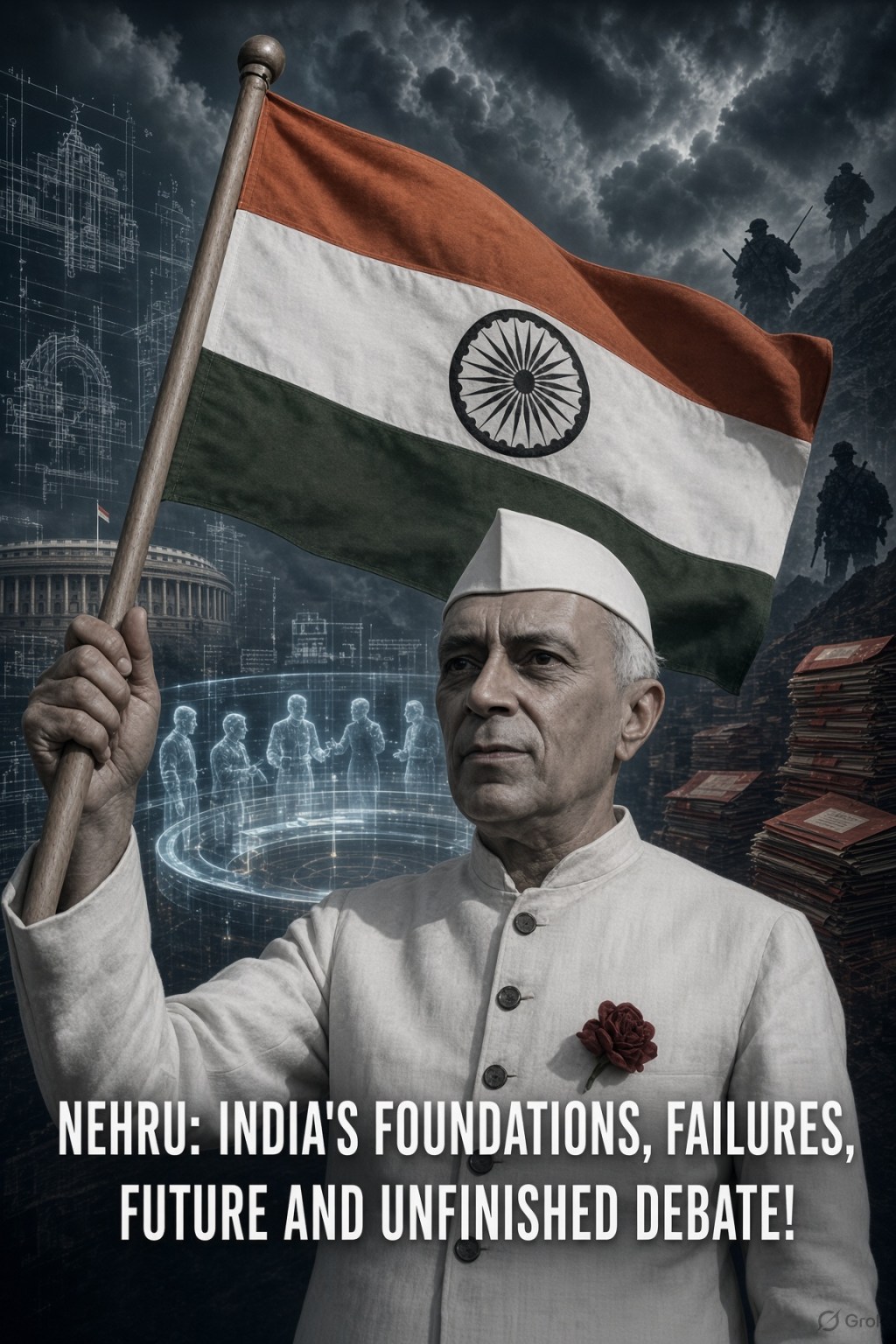
The remembrance of Pandit Jawaharlal Nehru demands something increasingly rare in contemporary political discourse: intellectual honesty. India’s first Prime Minister was neither an infallible architect of national greatness nor the sole author of every failure inherited by subsequent generations. He was a consequential statesman who shaped the political, economic and institutional direction of a newly independent republic. On 15 August 1947, India emerged from colonial rule carrying the devastating wounds of Partition, mass displacement, poverty, illiteracy, communal tensions and economic backwardness. Integrating princely states, operationalising constitutional democracy, establishing administrative institutions and creating a shared national identity were formidable challenges. Nehru’s seventeen years in office witnessed the consolidation of parliamentary democracy, universal adult franchise and constitutional governance. At a time when several postcolonial nations experienced coups, military dictatorships and political instability, India’s democratic experiment survived. This was no ordinary accomplishment. The real historical question is not whether Nehru was perfect, but whether the foundations established during his leadership helped India become a functioning democratic republic. The evidence demands serious recognition.
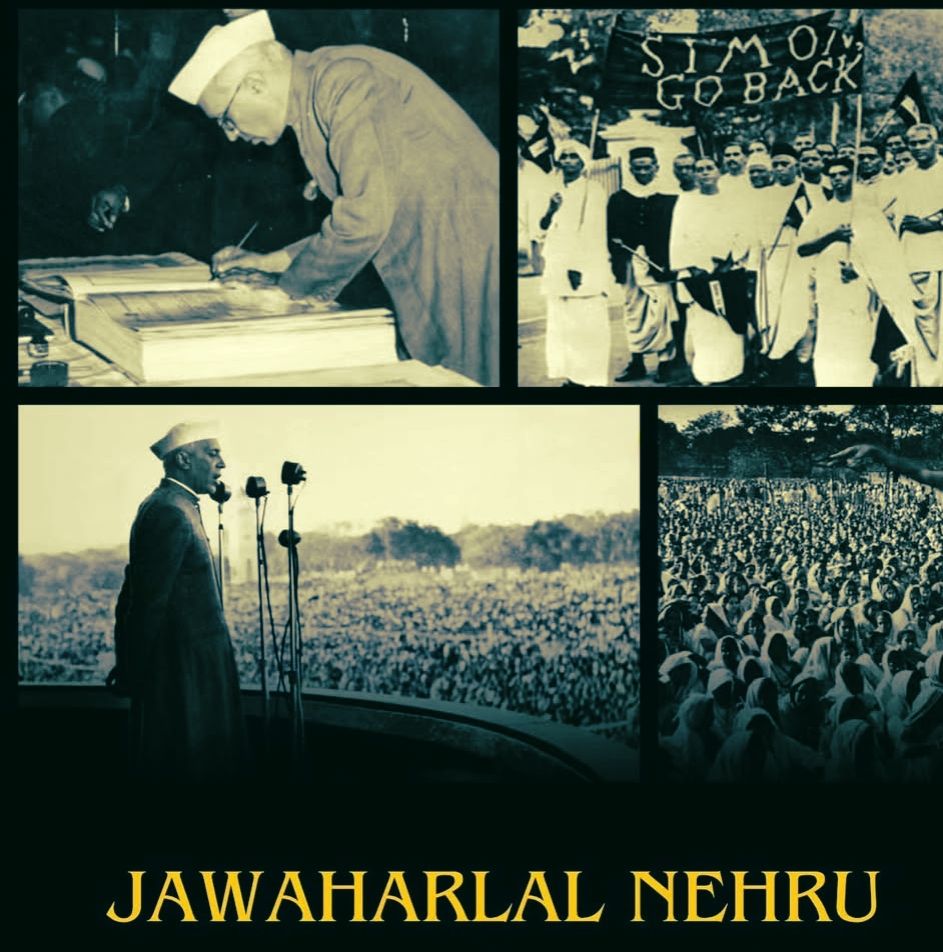
Nehru’s economic philosophy reflected the belief that political freedom without industrial and economic sovereignty would remain fundamentally incomplete. Five-Year Plans, public sector enterprises, heavy industries, scientific infrastructure and multipurpose irrigation projects represented an ambitious attempt to overcome centuries of economic stagnation. Bhilai, Rourkela and Durgapur steel plants, together with Bhakra-Nangal and Hirakud, symbolised the developmental confidence of a young nation. His description of dams as the ‘Temples of Modern India’ captured the spirit of an emerging industrial economy. Yet the same developmental model gradually produced excessive state control, bureaucratic discretion, restrictive licensing, protectionism and an inefficient public-sector environment. The Licence-Permit Raj constrained competition and entrepreneurship, while inadequate attention to productivity and market incentives weakened economic dynamism. The 1991 reforms became a historic correction. The uncomfortable truth is that India needed both the foundational public investment of its early decades and the subsequent economic liberalisation that dismantled many of its restrictions. Neither state domination nor unregulated markets offer a sufficient development philosophy. The challenge is to combine public purpose with private enterprise, competition, innovation and social responsibility.
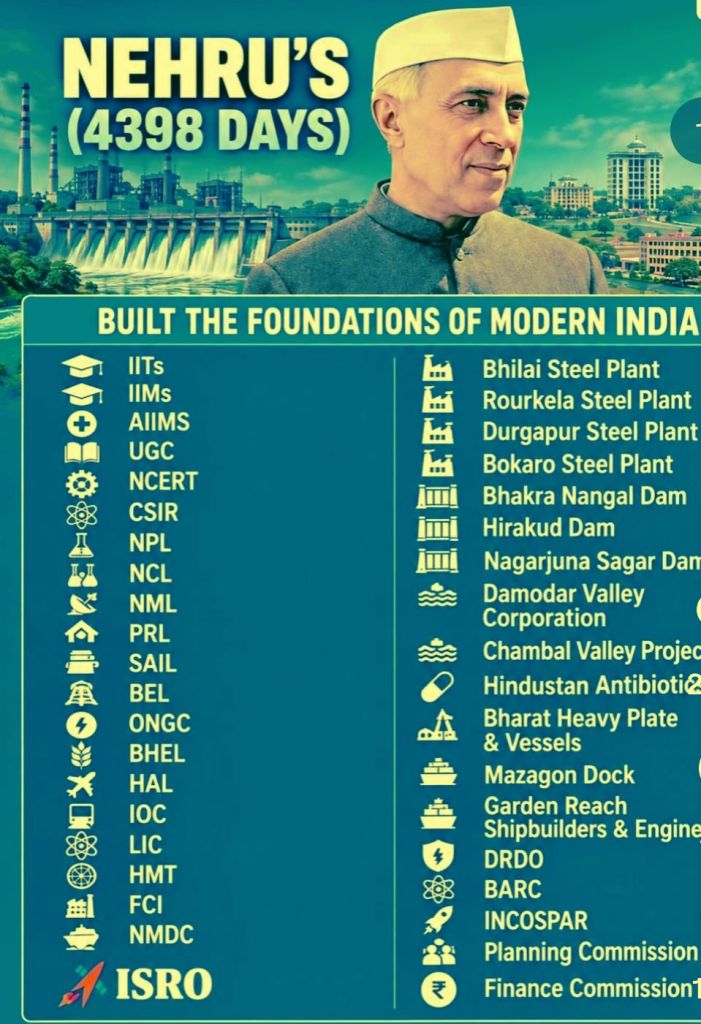
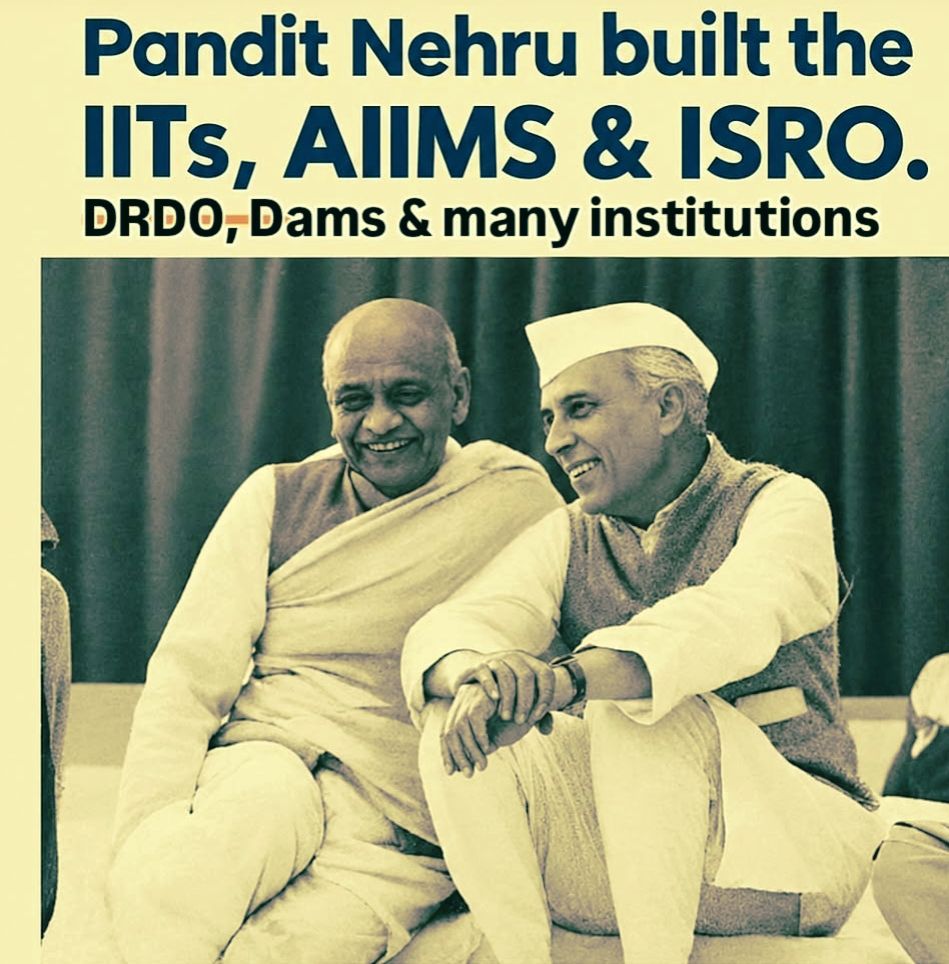
Perhaps Nehru’s most consequential long-term investment was in scientific institutions and technological self-confidence. He recognised that a poor country could not transform itself merely through political rhetoric or dependence on imported expertise. The establishment and strengthening of the IIT system, CSIR laboratories, the Atomic Energy Commission in 1948 and scientific research institutions reflected a commitment to building indigenous intellectual capacity. His support for Homi Bhabha and the emerging scientific community helped create an ecosystem that subsequent generations expanded. India’s achievements in nuclear technology, space exploration, pharmaceuticals, information technology and advanced engineering are part of this cumulative institutional journey. Chandrayaan, the expanding startup economy and emerging artificial intelligence capabilities demonstrate how far the country has travelled. However, historical achievements must not become excuses for present complacency. India’s research expenditure remains inadequate relative to its ambitions, university research requires substantial strengthening, and innovation must extend beyond a handful of elite institutions. Scientific temper also demands freedom of inquiry, evidence-based policymaking and the courage to question established assumptions. A nation aspiring to global technological leadership cannot simultaneously discourage intellectual curiosity. The true legacy of scientific institution-building is the freedom and capacity to innovate beyond the vision of the original founders.
Nehru’s foreign policy was an ambitious assertion of India’s right to make independent international choices during the Cold War. Non-alignment sought to prevent newly independent countries from becoming subordinate to competing superpowers. It helped establish India’s diplomatic identity and gave emerging Asian and African nations a collective international voice. Its contemporary expression is visible in India’s multi-alignment, strategic partnerships and engagement with the United States, Russia, Europe, Japan and the Global South. Yet the 1962 war with China remains a serious indictment of the strategic assumptions and preparedness of Nehru’s government. Diplomatic idealism, inadequate military preparedness and failures of strategic assessment exposed the dangers of underestimating geopolitical realities. Friendship cannot substitute for intelligence, diplomacy cannot compensate for military weakness, and moral authority cannot independently guarantee national security. This remains one of the most important lessons of his premiership. Strategic autonomy today must rest upon credible defence capabilities, technological sovereignty, economic resilience, energy security and diplomatic flexibility. A confident India must engage with the world without becoming dependent upon any single power.
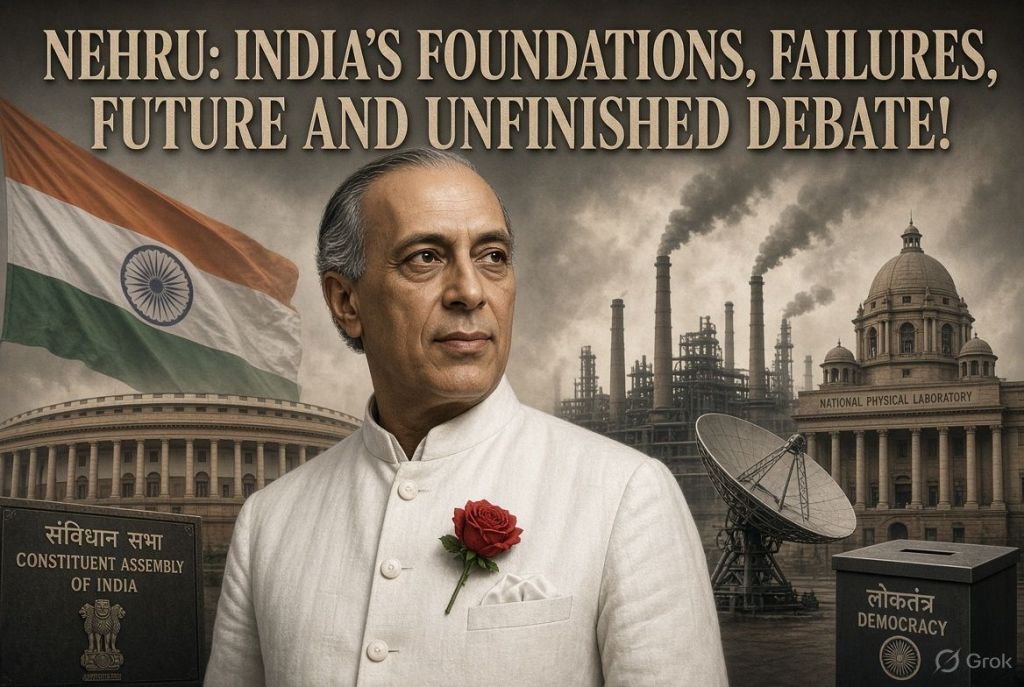
Nehru’s aspiration for independent foreign policy deserves recognition; the failures of its strategic execution deserve equally serious examination.
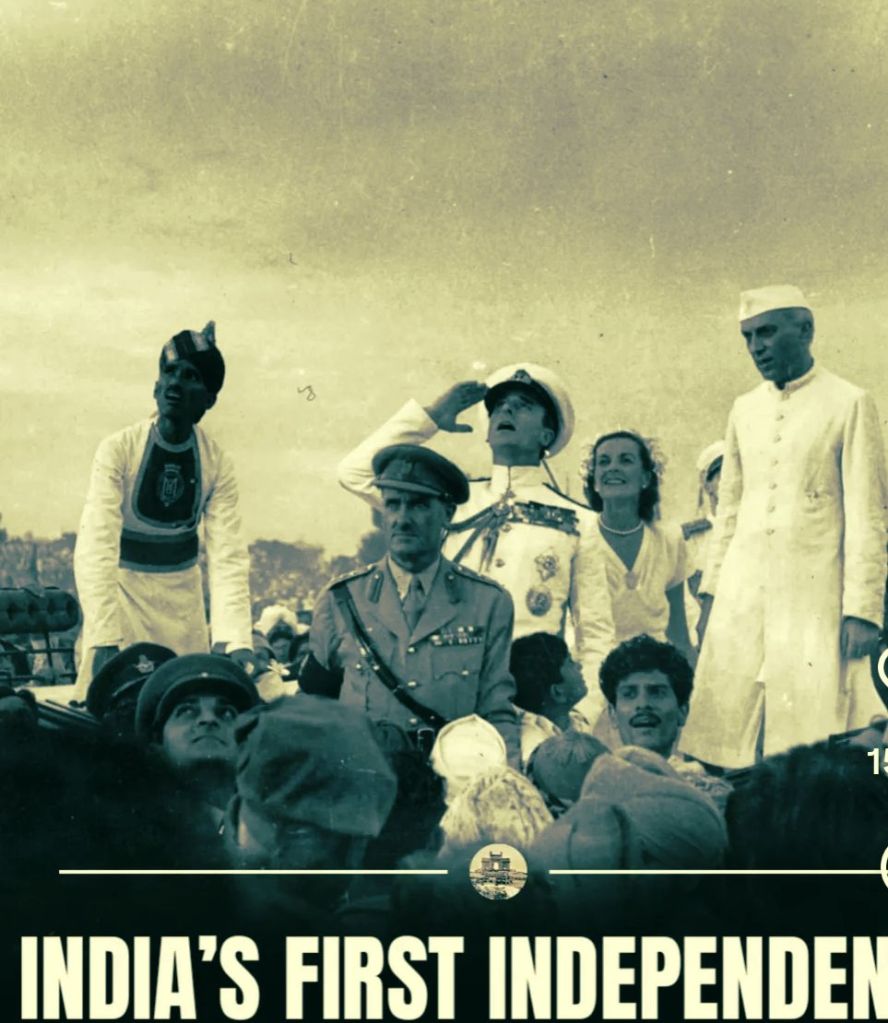
Nehru’s commitment to secularism and a composite national identity was rooted in the conviction that a country emerging from Partition could not afford to make citizenship dependent upon religious identity. His conception of the Indian State sought to protect equal citizenship and prevent political authority from becoming the exclusive instrument of any religious community. His support for Hindu personal-law reforms reflected an effort to modernise social institutions, although the uneven pace of reform left difficult questions unresolved. Contemporary debates concerning secularism, religious freedom, cultural identity and the Uniform Civil Code demonstrate that the challenge of reconciling constitutional equality with social diversity remains alive. India’s civilisational strength does not require uniformity of belief or cultural expression. It requires a constitutional framework in which differences can coexist with equal dignity and mutual respect. However, secularism must not become selective political convenience, just as cultural nationalism must not become a justification for unequal citizenship. Economic progress without social cohesion is fragile. The future of India depends upon fraternity, institutional fairness and the ability of citizens to recognise one another as equal participants in a common national project.
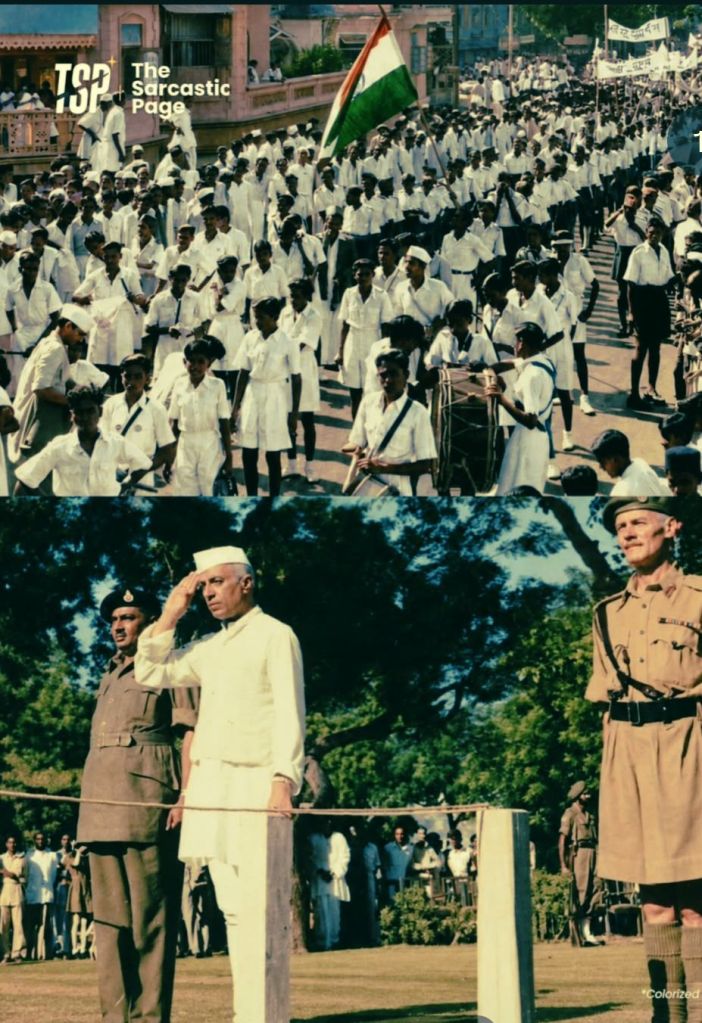
A serious historical assessment must also confront the concentration of political authority during Nehru’s tenure, the weaknesses of the early economic model, inadequate attention to defence modernisation and the strategic miscalculations preceding the 1962 conflict. His government’s record cannot be insulated from scrutiny merely because it operated during the difficult years of independence. Equally, subsequent governments cannot escape responsibility by attributing every inherited problem to the country’s first Prime Minister. Historical accountability must be proportionate, evidence-based and contextual. There is a difference between criticism and caricature, just as there is a difference between appreciation and political worship. The tendency to glorify one historical personality while diminishing another impoverishes public understanding. India’s freedom struggle, democratic consolidation, social reform and developmental progress were collective achievements involving countless leaders, administrators, scientists, entrepreneurs, soldiers and ordinary citizens. Nehru was a central participant in this national enterprise, not its exclusive proprietor. Mature historical thinking requires us to acknowledge his achievements without exaggeration and confront his mistakes without vindictiveness.
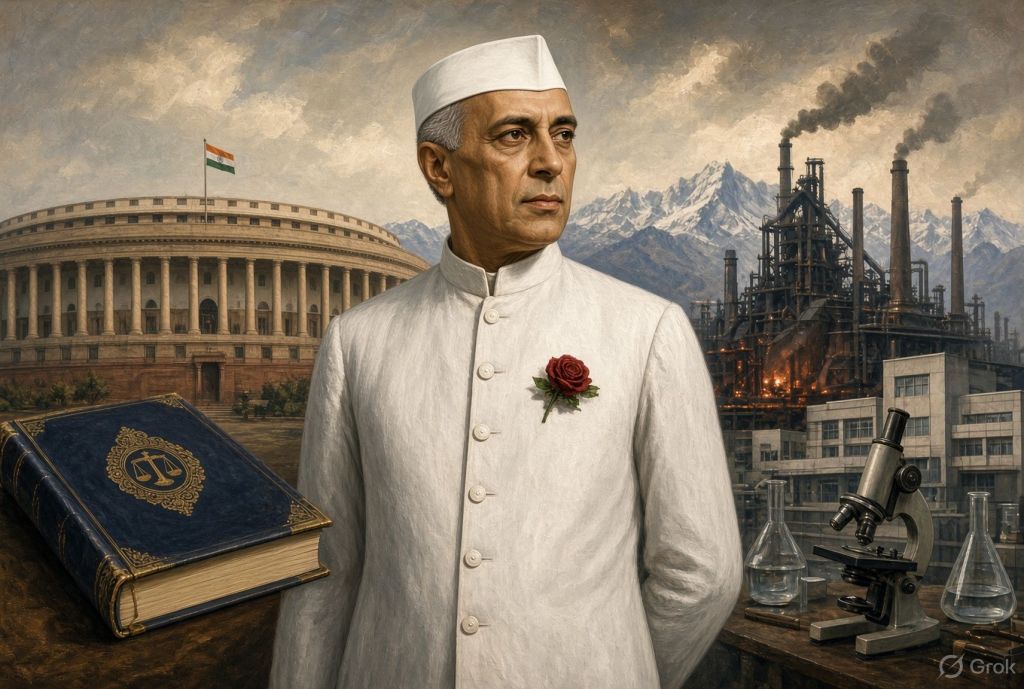
The most interesting paradox of Nehru’s legacy is that modern India has evolved beyond many of his policies while continuing to benefit from several institutions established during his leadership. Economic liberalisation challenged the original planning model; successive governments transformed industrial policy, strengthened defence capabilities, expanded infrastructure and accelerated digital governance. India’s international position has also changed dramatically. Yet parliamentary institutions, scientific establishments, technical education, industrial infrastructure and diplomatic traditions created or strengthened during the formative decades remain significant national assets. This is how institutional legacies should be judged: not by whether they remain unchanged, but by whether they provide the capacity for future generations to reform, innovate and outperform their predecessors. No leader should possess a permanent monopoly over national history. Nor should contemporary political competition determine which historical contributions deserve recognition. India’s development is a cumulative enterprise in which continuity, correction and transformation are equally important. The country is stronger when it learns from every generation rather than attempting to erase inconvenient chapters of its own journey.
As India approaches 2047, the centenary of independence, the more consequential question is not whether the country should be Nehruvian or anti-Nehruvian. It is whether we can build an India more prosperous, secure, scientifically advanced, socially cohesive and institutionally accountable than the India inherited in 1947. That requires world-class education, productive agriculture, competitive manufacturing, technological innovation, entrepreneurship, strong defence, administrative integrity and opportunities for every section of society. It also requires democratic institutions that are independent, public discourse that is informed, and political leadership capable of placing national interest above partisan advantage. Remembering Nehru should not mean accepting his entire philosophy; criticising him should not mean denying his contribution. The ultimate test of a statesman is not how many statues are erected, how many speeches invoke his name or how many political opponents condemn him. It is whether the nation becomes capable of achieving what was once considered impossible. History belongs neither to his admirers nor to his adversaries. It belongs to India.
VST ARJASRIKANTH.IN FOR MORE INSIGHTS

