The credibility of an electoral democracy does not begin on polling day; it begins with the integrity, accuracy and continuous maintenance of its electoral rolls. A voter list is neither a static administrative document nor a political instrument to be defended or questioned according to electoral convenience. It is a statutory record that must reflect changing demographic realities while safeguarding every eligible citizen’s right to participate in the democratic process. Article 324 of the Constitution entrusts the Election Commission of India (ECI) with the superintendence, direction and control of elections. The Representation of the People Act, 1950, particularly Sections 21, 22 and 23, establishes the statutory framework for preparing, revising, correcting and updating electoral rolls. Electoral revision, therefore, is not an extraordinary political intervention but an essential constitutional and administrative responsibility. The real question is not whether electoral rolls should be revised, but whether revision is conducted transparently, impartially and strictly in accordance with law.
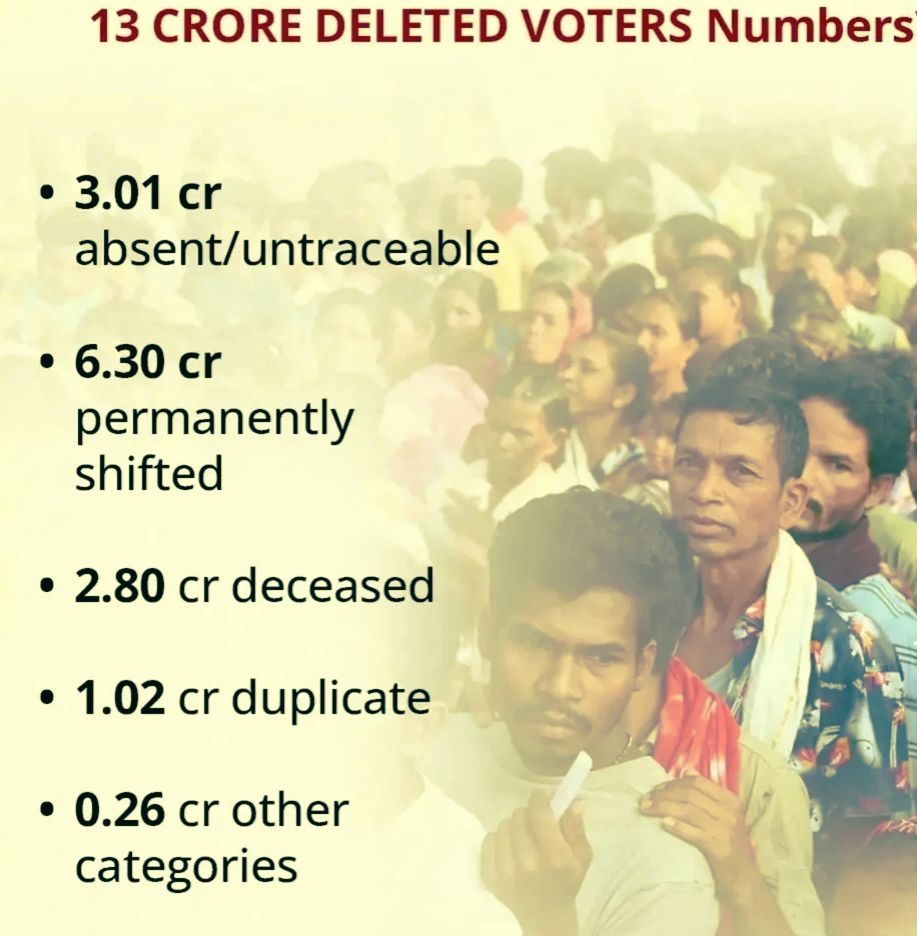
The distinction between Summary Revision, Intensive Revision and Special Intensive Revision (SIR) is important for understanding the administrative purpose and methodology of electoral verification. Society is continuously changing, and electoral records must keep pace. Citizens attain the age of 18, families relocate, women change their ordinary residence after marriage, employees migrate for employment, overseas residents return, voters die and duplicate registrations sometimes emerge. Urbanisation, industrialisation, economic mobility and changing settlement patterns further alter constituency demographics. Continuous updating and periodic intensive verification are therefore indispensable to electoral administration. The nomenclature of an exercise does not, by itself, determine its constitutional validity. Equally, invoking statutory authority cannot exempt any revision from judicial scrutiny, procedural safeguards or public accountability. The legitimacy of SIR must ultimately rest on its legal foundation, transparent methodology, proportionality and demonstrable safeguards against wrongful exclusion.
At the operational level, the polling booth constitutes the foundation of India’s electoral registration architecture. Constituencies are organised into polling stations, each supported by a defined electoral roll. Booth Level Officers (BLOs) perform the critical field-level functions of household verification, identification of discrepancies, facilitation of enrolment and reporting of changes. Their responsibilities include identifying deceased electors, duplicate entries, permanently shifted residents, incorrect addresses, spelling errors and eligible first-time voters. Booth Level Agents (BLAs), appointed by recognised political parties, provide an additional participatory mechanism for scrutiny. They can identify omissions, flag questionable entries and assist in filing applications and objections through prescribed procedures. This institutional arrangement introduces multiparty participation into electoral verification. It is an important democratic safeguard because the preparation of electoral rolls should not operate as an exclusively bureaucratic exercise. Citizen participation, political scrutiny and administrative verification must complement one another without compromising statutory authority or professional independence.

However, identifying a discrepancy and exercising the legal authority to decide an elector’s eligibility are fundamentally different responsibilities. A BLO’s familiarity with local residents is valuable evidence, but it does not confer unrestricted authority to delete names. Similarly, a BLA’s recommendation is an input into the verification process, not a binding administrative decision. The Electoral Registration Officer (ERO), supported by the Assistant ERO and the prescribed administrative machinery, exercises the statutory authority relating to inclusion, correction, transposition and deletion. The Returning Officer (RO), meanwhile, performs distinct responsibilities under the election framework; these institutional functions should not be casually conflated. Applications for inclusion are ordinarily submitted through Form 6, while Form 7 provides the mechanism for objections to inclusion and requests for deletion. Every proposed adverse change must comply with applicable procedural requirements, including verification, notice, consideration of evidence and an opportunity to be heard wherever prescribed. Institutional accountability demands a clear separation between field-level reporting, political-party participation and statutory adjudication.
The argument that intensive revision is unnecessary because electoral rolls have already been published ignores both demographic mobility and the statutory requirement of electoral uniqueness. Sections 17 and 18 of the Representation of the People Act, 1950, prohibit registration in more than one constituency or more than once in the same constituency. Sections 19 and 20 prescribe eligibility based on age and ordinary residence, while Sections 21, 22 and 23 provide the framework for preparation, revision, correction and inclusion. Importantly, temporary absence from one’s ordinary residence does not automatically extinguish electoral eligibility. The objective of revision must therefore be two-dimensional: eliminating ineligible, duplicate or erroneous entries while ensuring that every eligible citizen is correctly registered. An exercise that concentrates exclusively on deletions while overlooking omissions is administratively incomplete and democratically unacceptable. Equally, indiscriminate retention of demonstrably invalid entries undermines electoral credibility. Accuracy and inclusion are complementary objectives, not competing political propositions.
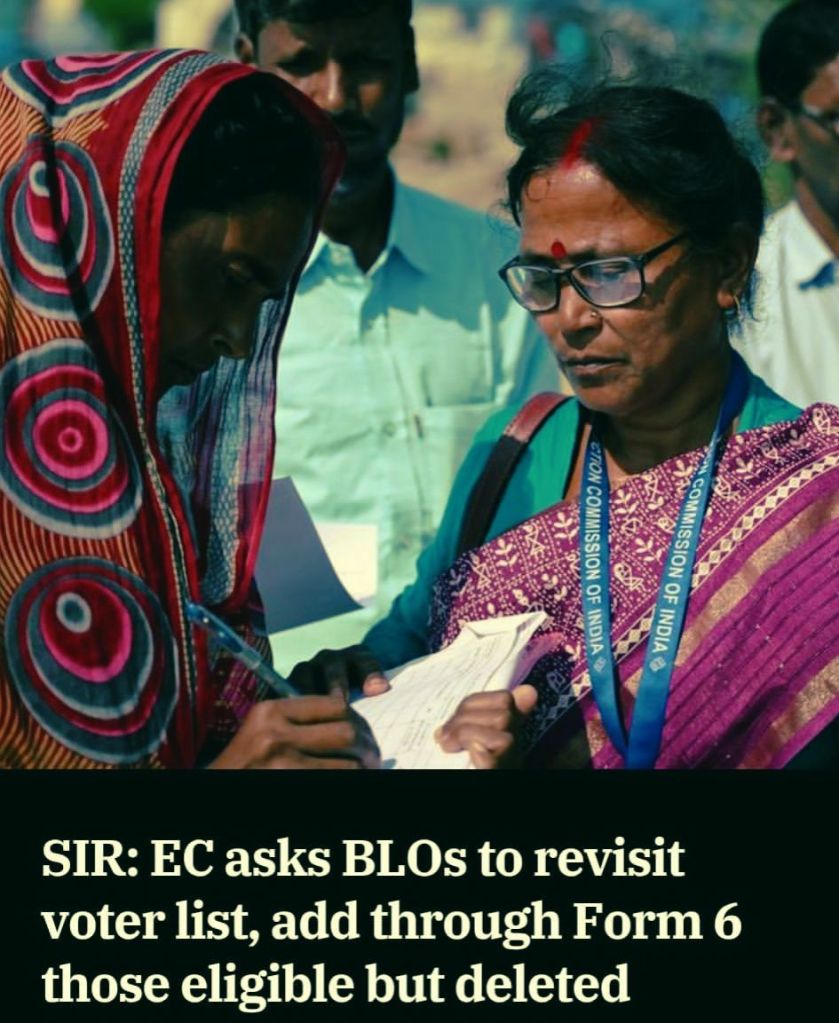
India’s geographical, historical and demographic circumstances add complexity to electoral verification, particularly in sensitive international border regions such as West Bengal along the Bangladesh frontier. Partition, colonial-era administrative decisions, refugee movements, migration, cross-border family connections and changing livelihood patterns have produced complicated settlement histories. These realities make accurate determination of ordinary residence, citizenship eligibility and duplicate registration particularly important. Allegations of cross-border migration or individuals attempting electoral registration on both sides of an international boundary warrant serious examination through credible evidence and lawful investigation. However, historical sensitivities and security concerns cannot become grounds for collective suspicion or arbitrary exclusion. Border residents, legitimate migrants and Indian citizens must not be treated as ineligible merely because of their geographical location, language, community or historical circumstances. Citizenship and electoral eligibility must be determined individually under applicable law. The ECI’s responsibility is to protect the integrity of the Republic without compromising the constitutional commitment to equal democratic participation.
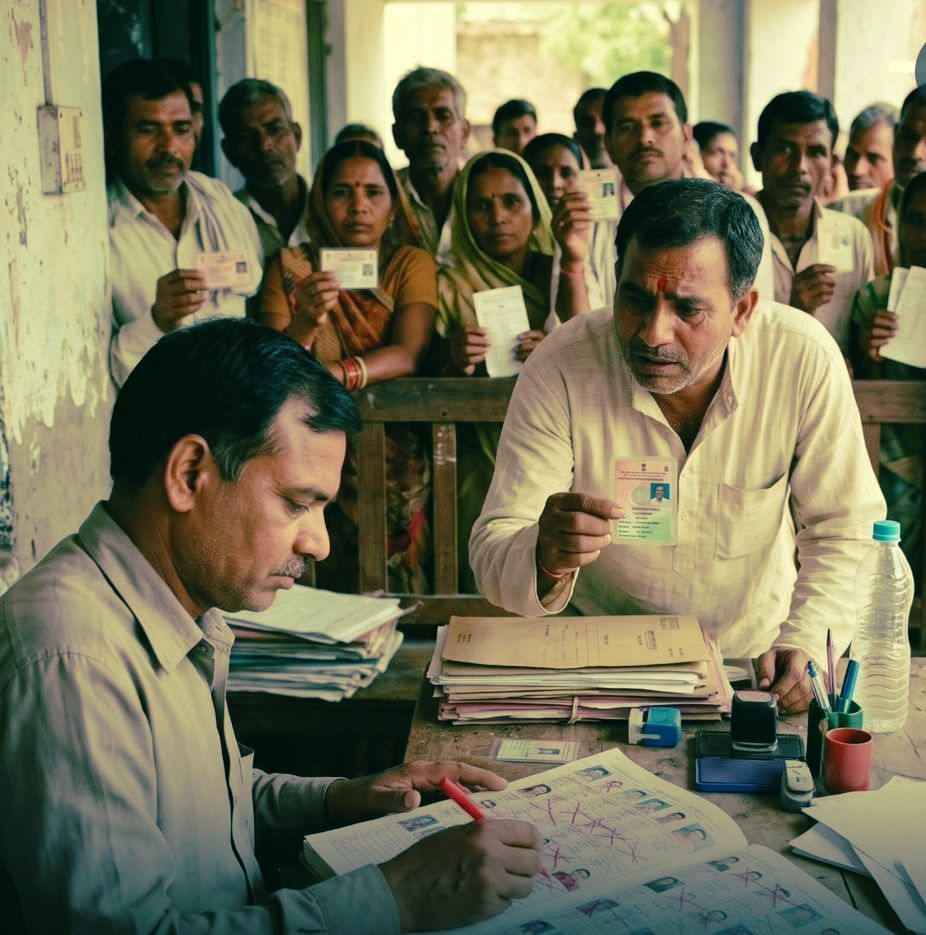
The operational burden on the electoral machinery also deserves greater recognition than it receives in political debates and television discussions. BLOs undertake extensive field visits, household verification, reconciliation of records, identification of discrepancies and coordination with political representatives. Their findings are processed through the constituency-level electoral registration machinery, involving documentation, prescribed procedures and statutory accountability. These responsibilities demand considerable professional diligence. An erroneous inclusion can compromise the integrity of electoral rolls, while an erroneous deletion can deprive an eligible citizen of the opportunity to exercise the constitutional franchise. The administrative system must consequently be protected from political intimidation, institutional complacency and arbitrary performance pressures. BLOs should not become convenient scapegoats for systemic shortcomings, while EROs must remain accountable for decisions taken under their statutory authority. The ECI must provide adequate manpower, training, technological support, accessible grievance mechanisms and clear operational instructions. Administrative credibility rests on documentary evidence, impartiality, transparency and demonstrable compliance with due process.
The political controversy surrounding SIR, including objections raised by Rahul Gandhi and other opposition leaders, must be examined through institutional evidence rather than political rhetoric. Questioning the Election Commission is legitimate in a democracy; equally, dismissing every revision exercise as electoral manipulation without examining its methodology and safeguards is irresponsible. The ECI, however, cannot expect unquestioning public acceptance merely by invoking Article 324. Transparency is its strongest institutional defence. Draft rolls must be accessible; proposed deletions must carry recorded reasons; affected electors must receive prescribed notice and reasonable opportunities to respond; and claims and objections must be decided within reasonable timelines. Political parties must ensure meaningful BLA participation, verify electoral records and retain documentary acknowledgements. Ultimately, electoral integrity cannot be measured merely by the number of names deleted or added, but by the accuracy, fairness and verifiability of every consequential decision. India needs clean electoral rolls, politically independent administration and uncompromising protection against wrongful exclusion. The constitutional principle is clear: revision is necessary, accuracy is mandatory, inclusion is indispensable and due process is non-negotiable. Democracy must never permit either questionable entries or genuine voters to become casualties of political convenience.
VST ARJASRIKANTH.IN FOR MORE INSIGHTS

