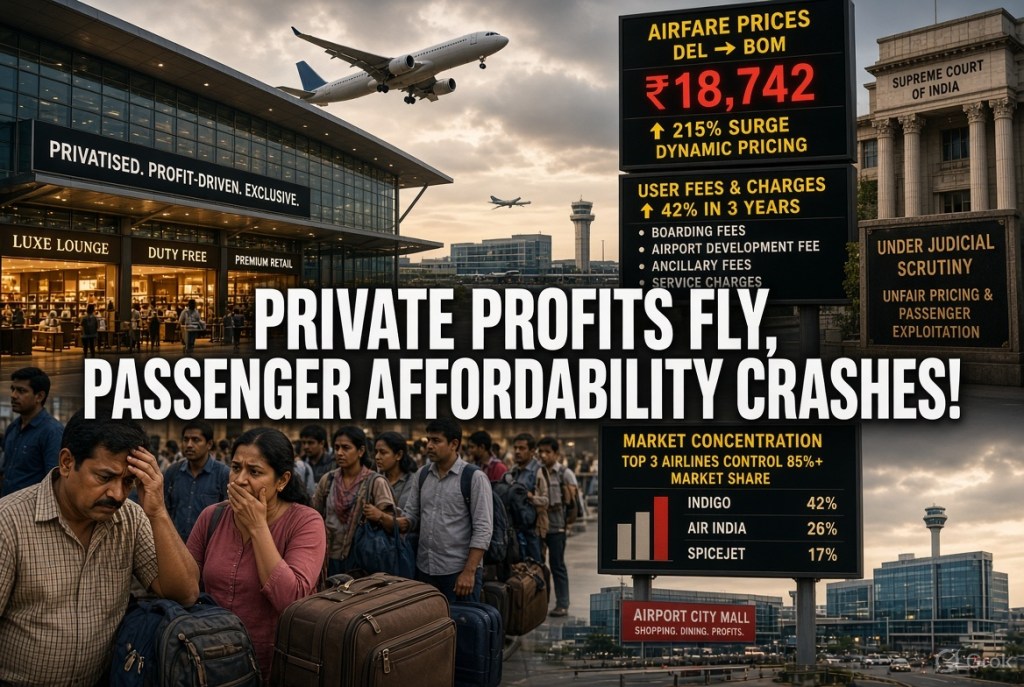
Private capital builds the airport, commercial operators monetise every square foot, airlines price every available seat, regulators negotiate the fine print and governments promise reform. But the ultimate shock absorber of this entire aviation economy is the ordinary passenger. Welcome to the business model where profits are privatised, inefficiencies are transferred and affordability is grounded!
Indian aviation is witnessing a fundamental contradiction between infrastructure expansion and passenger affordability. Airports are being modernised through private investment, airlines operate through increasingly concentrated markets, and governments promote public-private partnerships as instruments of efficiency and growth. Yet, the economics of this arrangement raise an uncomfortable question: who ultimately finances the system? The recent Supreme Court proceedings on domestic airfare surge pricing have exposed this tension. On November 2, 2026, the Court declined urgent interim relief in a pending PIL seeking protection against alleged festive-season airfare increases of up to 700%. The reported observation, “Don’t travel by air. Next case,” triggered public debate. Importantly, the Court did not dismiss the underlying PIL, which remains listed for November 16. The larger issue transcends one judicial observation: can air travel remain accessible when every commercial, operational and institutional cost is ultimately reflected in the passenger’s bill?
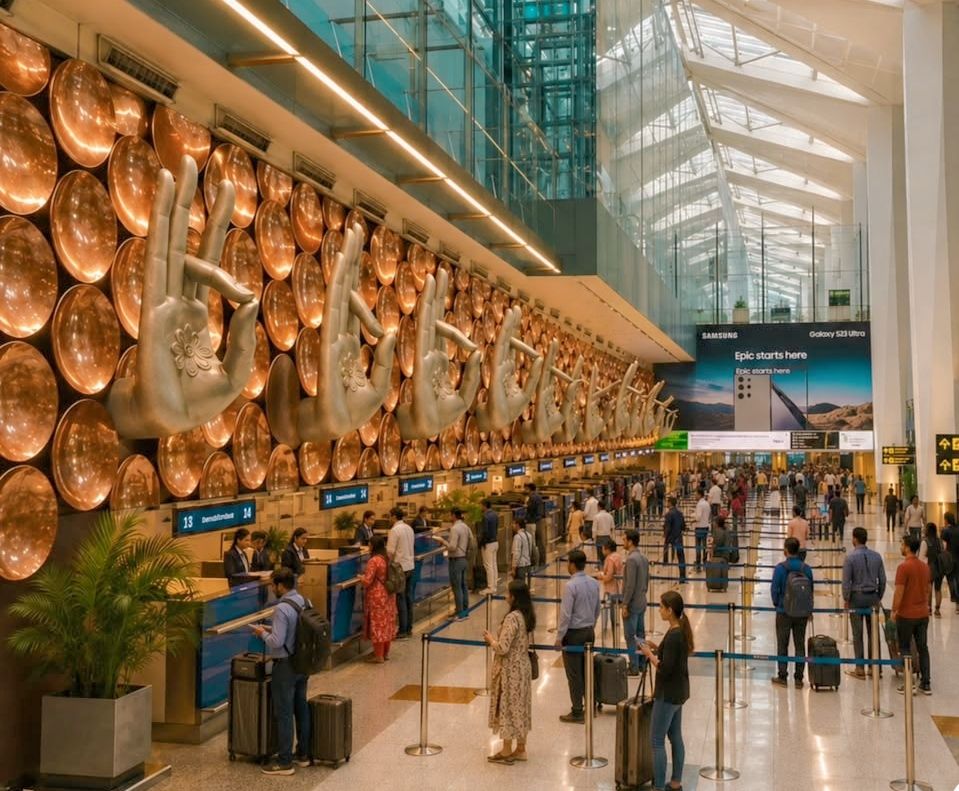
Consider the economics of airport modernisation. Mumbai’s ongoing airport development programme reportedly involves investments of approximately ₹4,500–4,725 crore across terminal redevelopment, airside infrastructure and associated improvements. Reconstructing terminals, expanding taxiways, improving aircraft parking facilities and upgrading passenger infrastructure require enormous capital. Private investment is essential, and investors are entitled to reasonable returns. However, describing such expenditure as private investment does not mean that private investors necessarily bear its entire economic cost. Airport operators recover revenue through regulated aeronautical tariffs, user development fees, passenger-related charges and commercial activities. These revenue streams collectively contribute to capital recovery and operating returns. Consequently, the distinction between who initially invests and who ultimately pays becomes critical. When infrastructure expenditure is recovered through passenger-linked tariffs over several years, the passenger effectively becomes a significant financier of privately operated public infrastructure.
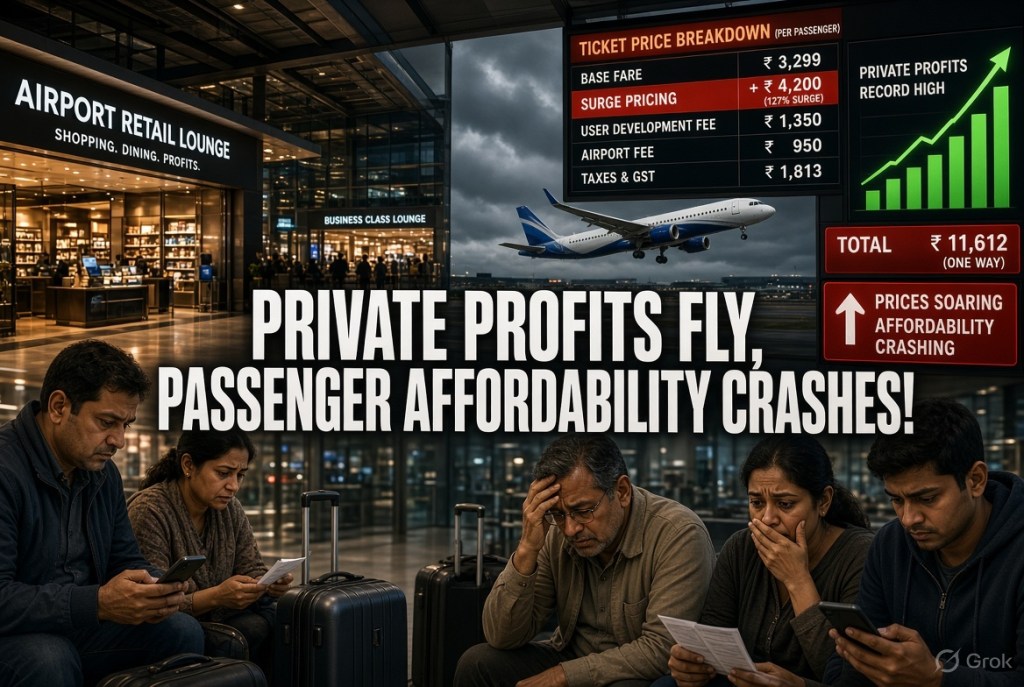
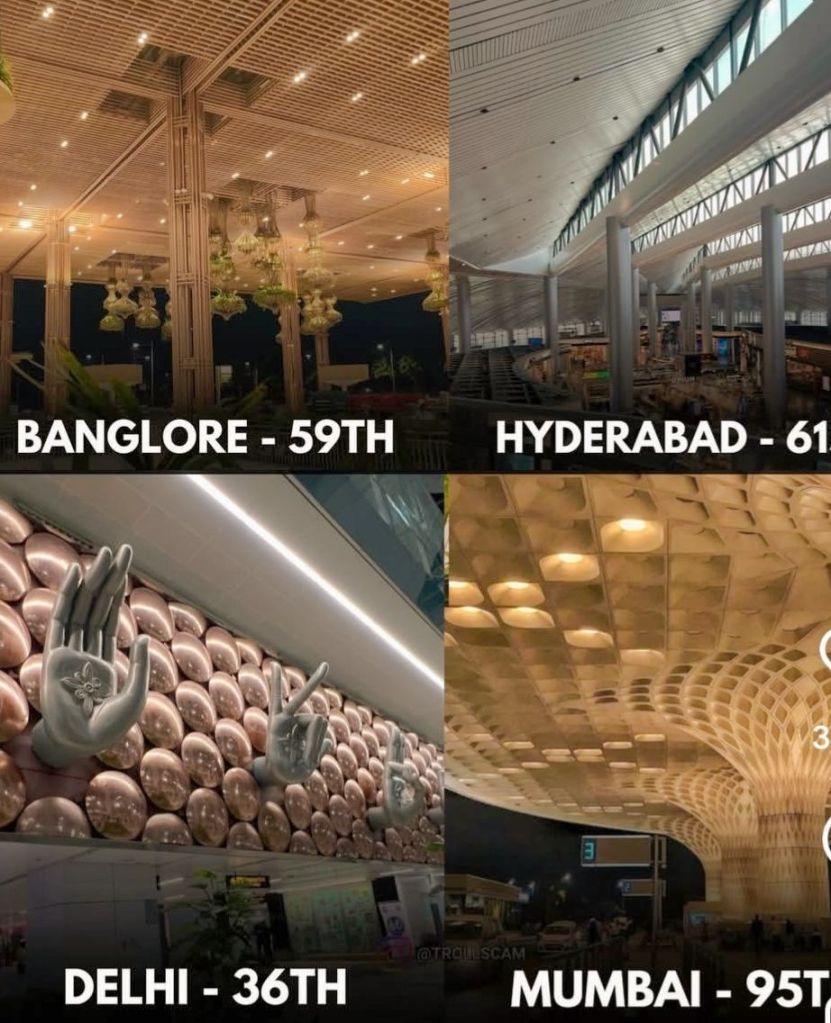
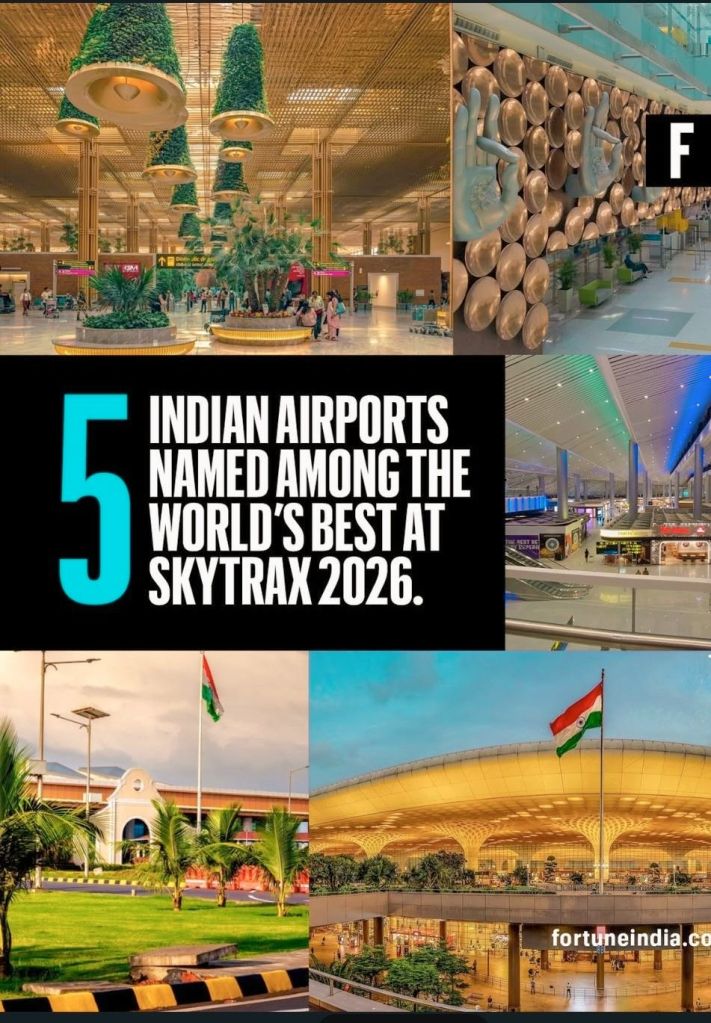
The most interesting dimension of airport privatisation, however, is the increasing importance of non-aeronautical revenue. Modern airports are not simply transportation facilities; they are commercial ecosystems encompassing duty-free retail, restaurants, luxury outlets, advertising, parking, commercial leasing and real estate. Mumbai airport’s reported FY25 financial figures illustrate this transformation: operating revenue of ₹4,517 crore, EBITDA of ₹1,703 crore and passenger traffic of 55.1 million. Approximately 62% of its revenue reportedly comes from non-aeronautical activities. This is economically significant. Passengers generate the footfall that sustains these commercial enterprises, while airport operators monetise the same ecosystem through multiple revenue channels. Under the reported PPP arrangement, 38.7% of gross revenue is shared with the Airports Authority of India, alongside the government’s reported 26% equity participation. Nevertheless, the private operator retains majority ownership and substantial commercial benefits. The policy question is whether the totality of commercial earnings is adequately reflected when passenger tariffs are determined. If passengers generate the footfall, contribute to the charges and finance infrastructure recovery, why should affordability become secondary to commercial monetisation?
The burden becomes more visible when individual passenger charges are examined. The supplied Mumbai airport tariff schedule indicates a domestic User Development Fee of ₹175 for departure and ₹75 for arrival, ( likely to be revised to over Rs. 700) apart from applicable taxes and other ticket charges. International passengers face considerably higher fees. Individually, these amounts may appear manageable; multiplied across millions of passengers, they represent substantial revenue. More concerning are proposals seeking steep increases in regulated airport charges to support infrastructure expenditure and recover regulatory assets. Such proposals require rigorous scrutiny. Capital expenditure must be justified, efficiently incurred and transparently allocated. Non-aeronautical earnings, concession revenues, commercial rentals and revenue-sharing obligations must be considered together. Otherwise, there is a danger of passengers being charged repeatedly for the same infrastructure ecosystem: first through their contribution to commercial revenues, then through airport fees and finally through higher airline ticket prices. Private investment should create infrastructure efficiency, not an automatic entitlement to unlimited passenger-funded cost recovery.
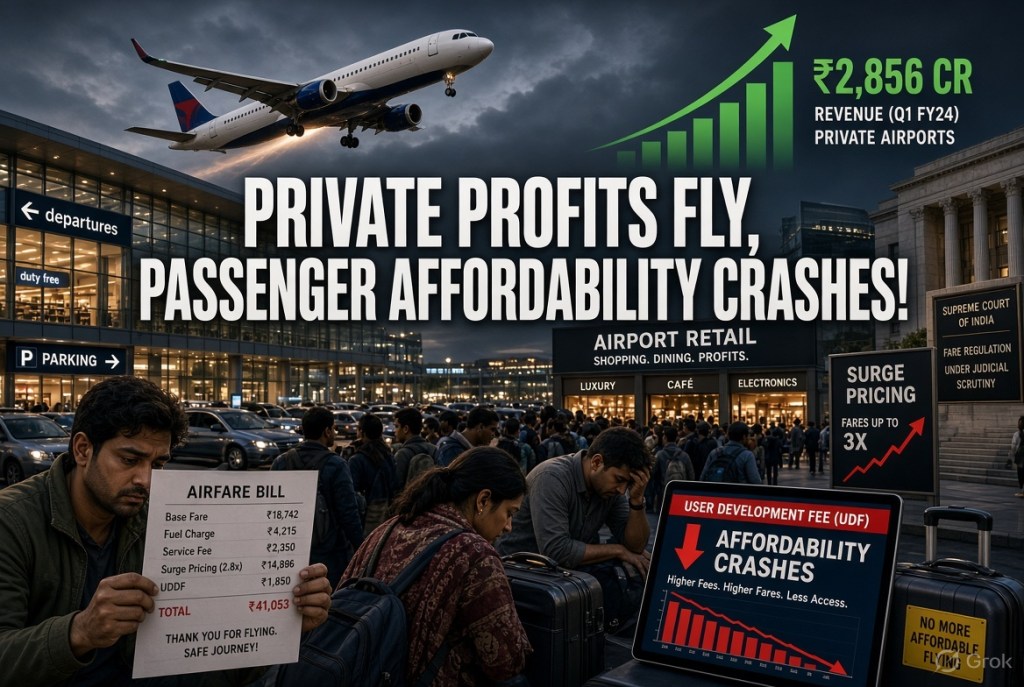
The airline industry introduces another layer of economic vulnerability. In markets dominated by a limited number of carriers, competition becomes weaker and passenger choice progressively narrower. When alternative airlines or routes are unavailable, demand becomes relatively inelastic, particularly during festivals, emergencies and time-sensitive travel. Airlines can then exercise substantial pricing power. Operational inefficiencies—including poor fleet utilisation, aircraft grounding, maintenance delays, scheduling failures, inadequate technology and management shortcomings—can further increase costs. In a competitive market, inefficient businesses must absorb the consequences through lower margins, lost customers or organisational restructuring. But where market concentration restricts consumer choice, the burden can migrate towards passengers through higher fares, ancillary charges and deteriorating service. The passenger also pays an invisible price through missed connections, disrupted appointments, additional accommodation and lost working hours. The fundamental principle of commercial accountability must remain intact: operational inefficiency cannot become a permanent justification for extracting more money from consumers.
This brings us to the governance deficit. Airport operators seek higher tariffs to recover investments; airlines defend dynamic pricing as a commercial necessity; regulators balance financial viability against consumer interests; and governments promote connectivity while promising affordability. When these responsibilities are not effectively coordinated, the passenger becomes the adjustment variable in the entire system. The Supreme Court’s refusal of urgent interim relief must be understood in its procedural context rather than interpreted as judicial approval of unrestricted pricing. The newly notified Bharatiya Vayuyan Niyam, 2026, reportedly effective from January 1, 2027, empowers the government to issue fare-related directions in extraordinary situations. The November 16 hearing is therefore significant in examining whether the new framework provides meaningful safeguards. However, statutory powers alone cannot guarantee consumer protection. What matters is whether the executive exercises them effectively, whether regulators possess credible monitoring mechanisms and whether commercial operators are held accountable for practices that undermine affordability. A citizen approaching the judiciary should not be left feeling that the only available economic remedy is to stop flying.
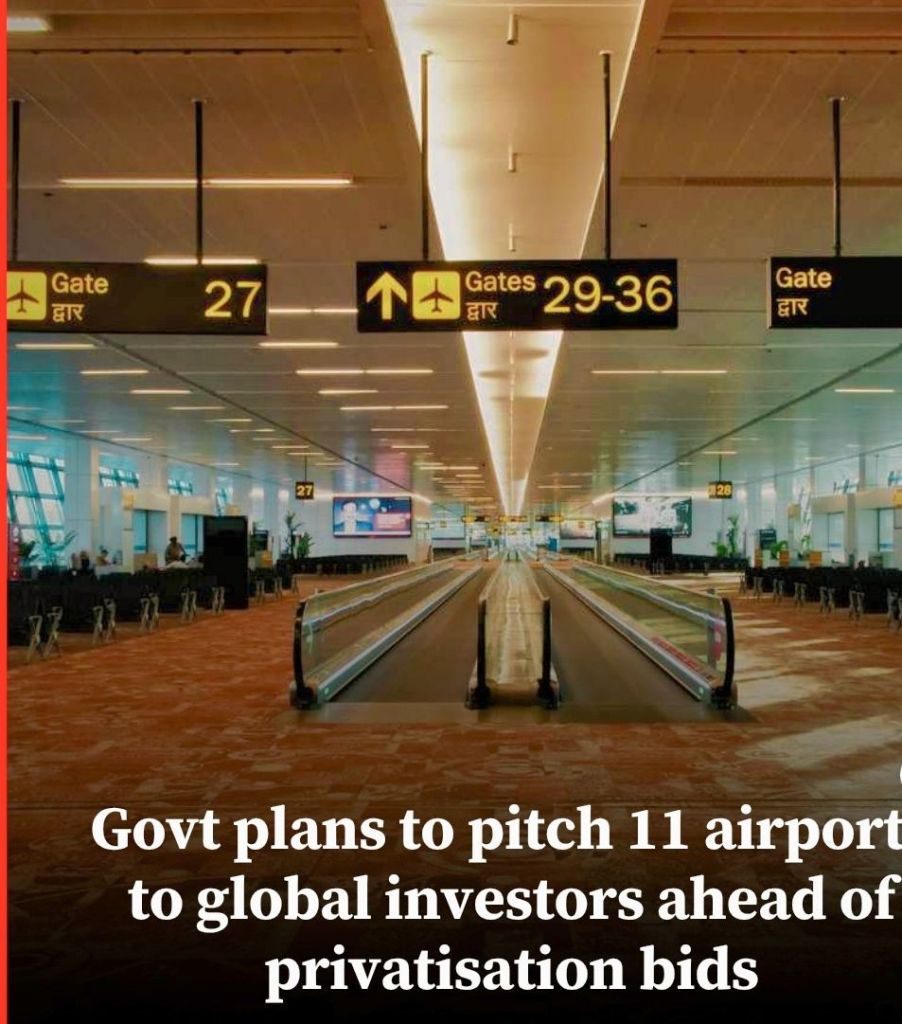
India needs an integrated aviation regulatory framework that balances private investment, commercial viability, competition and public interest. Airport tariff determination should transparently account for aeronautical and non-aeronautical earnings, capital expenditure, concession income and revenue-sharing obligations. Independent cost audits should establish whether infrastructure investments are necessary, efficiently executed and fairly allocated. Competition authorities must closely examine market concentration, route dominance and anti-competitive conduct. Extraordinary fare increases during festivals and emergencies require transparent scrutiny, with clearly defined intervention triggers. Airlines should face enforceable compensation obligations for preventable operational failures, cancellations and service deficiencies. Consumer grievance redress must be accessible and time-bound. Equally important, airport operators should not be allowed to treat commercial revenue growth and passenger tariff increases as unrelated financial exercises. The objective is not to discourage privatisation, undermine investor confidence or impose arbitrary price controls. It is to ensure that private returns are accompanied by public accountability and that commercial freedom operates within a framework of fair competition and consumer protection.

Ultimately, India’s aviation ambition cannot be measured merely by the number of modernised airports, billions of rupees invested or millions of passengers handled. It must also be measured by how affordably an ordinary citizen can access air connectivity. An airport may be privately developed, an airline commercially operated and a regulator institutionally independent, but the passenger remains the common financier across the entire value chain. The passenger pays airport charges, generates commercial footfall, absorbs airline inefficiencies and bears the consequences of delayed governance and regulatory intervention. This is the central contradiction of aviation economics: private investment seeks guaranteed recovery, commercial operators pursue maximum yields, and institutional inefficiencies repeatedly find their way into the consumer’s wallet. The solution is not to stop flying; it is to stop making flying unaffordable. Privatise investment, democratise competition, regulate commercial excesses and institutionalise accountability. Let aviation become an engine of national connectivity, not an organised cost-transfer mechanism in which the passenger is perpetually grounded financially while the entire industry continues to fly!
VST ARJASRIAKNTH.IN FOR MORE INSIGHTS

