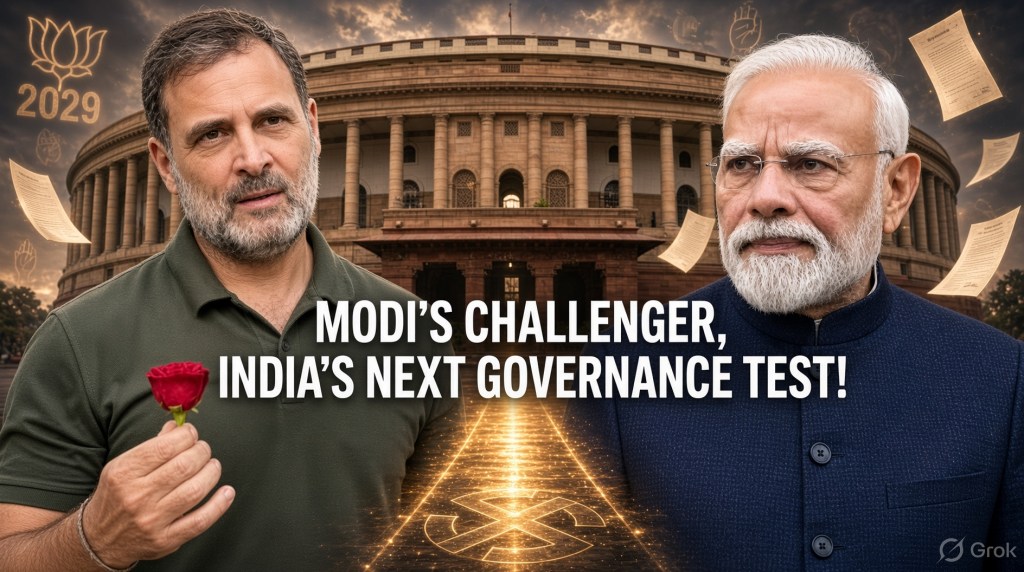
From Modi-centric confrontation to independent political identity; from electoral arithmetic to organisational strength; from dynastic inheritance to institutional credibility — Rahul Gandhi’s ultimate challenge is not simply to challenge the ruling establishment, but to convince 1.4 billion Indians that he possesses the vision, competence and leadership to govern the nation.
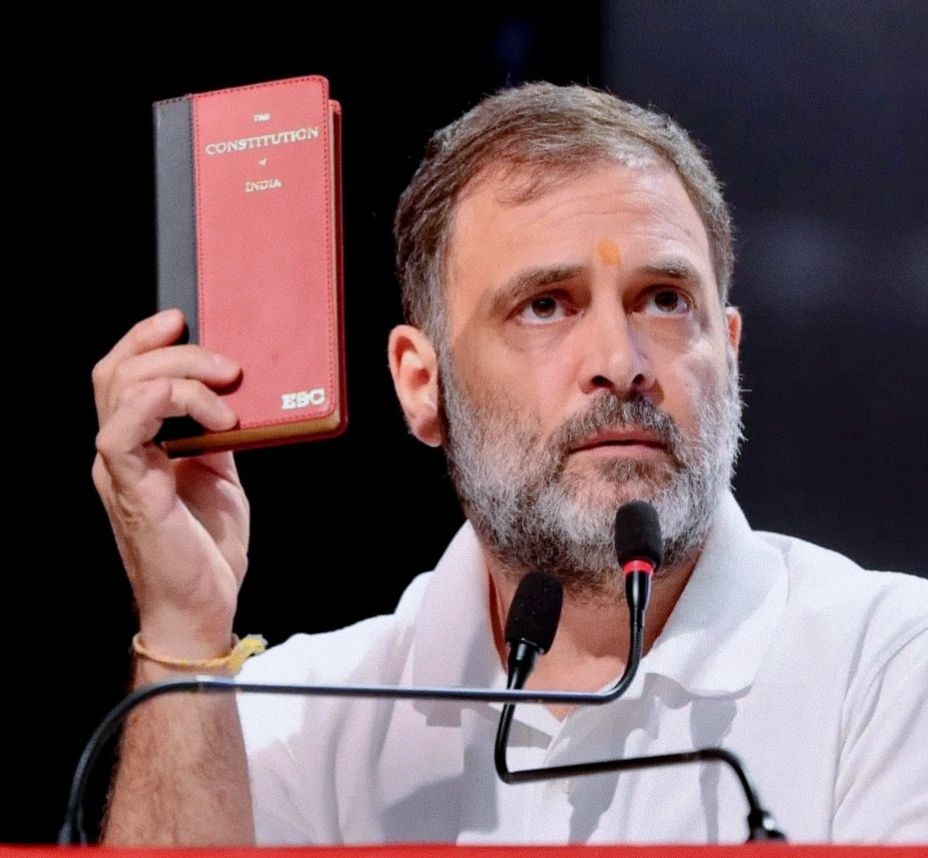
Indian politics presents an extraordinary paradox in Rahul Gandhi’s political evolution. Once routinely reduced to the political caricature of “Pappu”, he has gradually established himself as one of the most consequential opposition figures in contemporary India. His Bharat Jodo Yatras, parliamentary interventions and sustained engagement with social and economic issues have helped revive Congress’s political visibility. The 2024 Lok Sabha election, in which Congress secured 99 seats against 52 in 2019 and 44 in 2014, marked a significant parliamentary recovery. The BJP’s failure to secure an independent parliamentary majority also demonstrated that political dominance is not synonymous with electoral invincibility. However, a weakened incumbent is not automatically replaced by a strengthened alternative. Congress continues to confront serious organisational limitations, uneven regional influence and a considerable electoral gap. Rahul’s 2029 challenge is therefore to convert political relevance into governing credibility, parliamentary strength into electoral momentum and personal leadership into institutional confidence. His political future cannot remain defined by his contest with Narendra Modi. He must establish an independent national agenda that makes voters consider him a credible alternative.
The first transformation must be psychological and strategic: Rahul must escape the Modi-centric political mirror. An opposition leader who spends most of his political energy responding to the Prime Minister risks allowing the incumbent to determine the opposition’s agenda, vocabulary and political rhythm. Personal attacks, counter-caricatures and reactive communication may generate temporary attention, but they do not necessarily establish governing competence. The central question confronting Rahul is not merely why the BJP should be voted out, but why Congress should be trusted to govern. This requires a coherent national development proposition encompassing employment, education, manufacturing, agricultural productivity, technological innovation, institutional accountability and national security. His political communication must evolve from criticism to conviction, from slogans to solutions and from political symbolism to measurable commitments. India needs to see a prospective Prime Minister who can articulate national priorities, reconcile competing interests and translate political promises into administrative outcomes. Political opposition creates visibility; the capacity to offer a better future creates credibility.
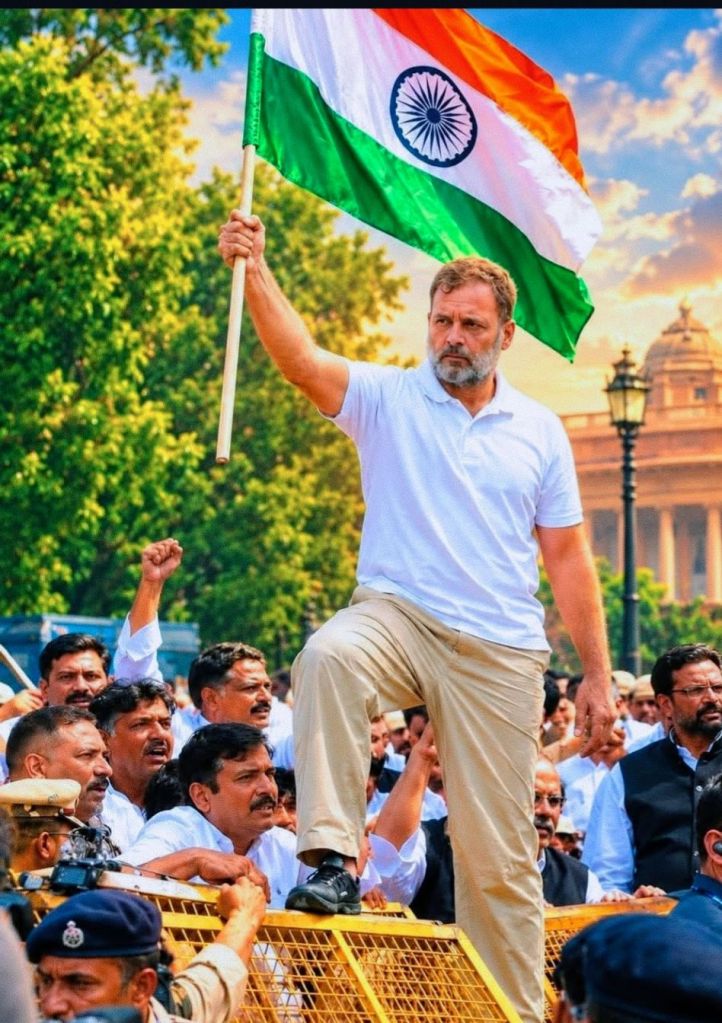
The second transformation must occur within Congress itself. India’s elections are not won merely through television debates, parliamentary speeches, social media campaigns or spectacular public rallies. They are won through functioning district organisations, credible local leadership, disciplined booth-level mobilisation and sustained engagement with voters. Congress’s organisational weakness remains one of its greatest structural disadvantages. The revival of district committees and the proposed mandal-level organisational architecture will have little meaning unless they produce measurable electoral outcomes. Rahul should introduce a three-year organisational accountability framework covering constituency preparedness, membership expansion, local leadership development, voter engagement and booth management. Every parliamentary constituency must have an identifiable leadership team, a credible local face and clearly assigned responsibilities. More importantly, Congress must overcome the culture of political proximity and dynastic loyalty determining organisational advancement. Young leaders, women, professionals and representatives of disadvantaged communities must receive genuine opportunities to lead. A party aspiring to govern India must first demonstrate that it can govern its own organisational structures through merit, accountability and internal democracy.
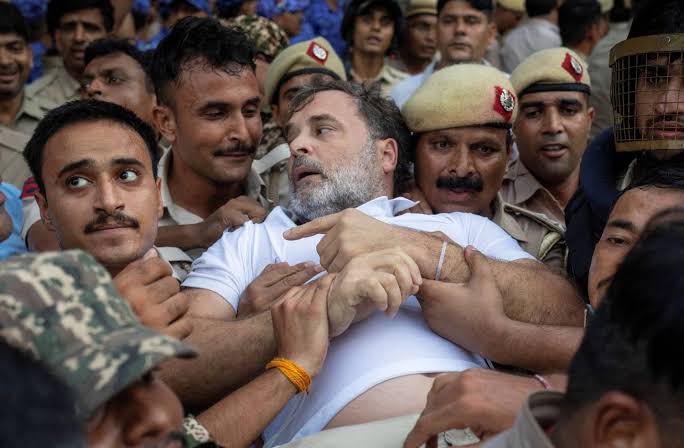
The third challenge concerns the INDIA alliance, whose future cannot depend exclusively on the common objective of defeating the BJP. Electoral coalitions require more than shared political opposition; they require trust, negotiation, ideological accommodation and a credible understanding of governance. The 2024 Uttar Pradesh experience demonstrated the importance of negotiated seat-sharing and regional political cooperation. Congress’s improved performance in the state was achieved through its partnership with the Samajwadi Party, illustrating that coalition arithmetic can sometimes deliver what individual party expansion cannot. Rahul must recognise that alliance leadership is earned through consultation rather than unilateral projection. Prematurely declaring himself the undisputed Prime Ministerial face could create unnecessary friction with influential regional leaders. A permanent coordination mechanism, mutually accepted seat-sharing arrangements, dispute-resolution procedures and a common minimum governance programme should be established well before 2029. Regional parties must retain their legitimate political space, while Congress must demonstrate its ability to provide national direction. The ultimate test of coalition maturity is not the ability to share election platforms but the capacity to distribute responsibilities and govern collectively after winning a mandate.
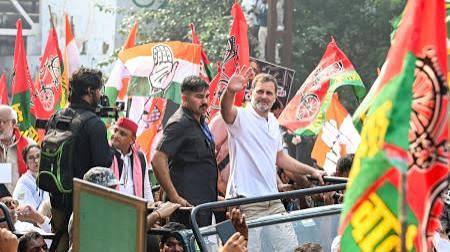
The fourth transformation must be from protest politics to policy politics. Rahul’s interventions on unemployment, examination irregularities, electoral processes, institutional independence and social justice have helped bring important questions into national debate. His Bharat Jodo initiatives have also strengthened his engagement with sections of society beyond Congress’s traditional support base. Nevertheless, protest is an instrument of democratic accountability, not a substitute for a governing philosophy. If recruitment examinations are compromised, what specific institutional reforms will prevent recurrence? If unemployment is a national concern, what is the credible roadmap for productive employment? If constitutional institutions require protection, what legislative and administrative safeguards will guarantee their independence? Parliament must become a platform for alternative legislation, detailed policy proposals and constructive scrutiny. Rahul should encourage expert consultations, publish policy frameworks and demonstrate the administrative understanding required to implement reforms. The ability to diagnose national problems must be accompanied by the ability to design practical solutions and execute them effectively.
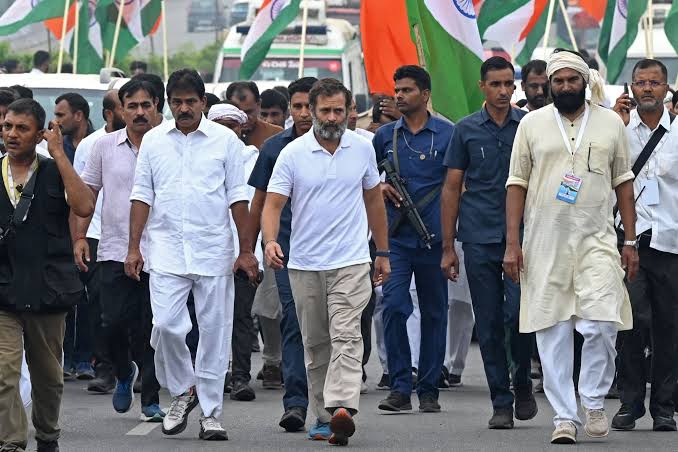
The fifth opportunity is to establish a credible Shadow Cabinet or National Governance Council for India 2029. Identifiable leaders should take responsibility for finance, defence, external affairs, agriculture, education, employment, technology, infrastructure, social justice and internal security. They should regularly examine government decisions, publish alternative policy papers, engage with domain experts and communicate the proposed government’s priorities. Such an arrangement would demonstrate that Congress possesses leadership beyond the Gandhi family and is preparing collectively for the responsibilities of national governance. Rahul must surround himself with capable individuals who can question his assumptions rather than merely endorse his positions. India requires economic understanding, diplomatic judgement, institutional experience and administrative execution. Equally important is the economic and national security argument. India’s future depends on manufacturing competitiveness, private investment, artificial intelligence, semiconductor capabilities, energy security, research and technological innovation. Rahul must explain how his economic model would encourage enterprise, maintain fiscal discipline, expand social protection and generate productive employment. Strategic competition with China, cross-border terrorism, relations with the United States and developments in West Asia also demand consistency and geopolitical realism. Social justice must translate into education, representation, entrepreneurship and economic mobility, rather than remain confined to electoral mobilisation.
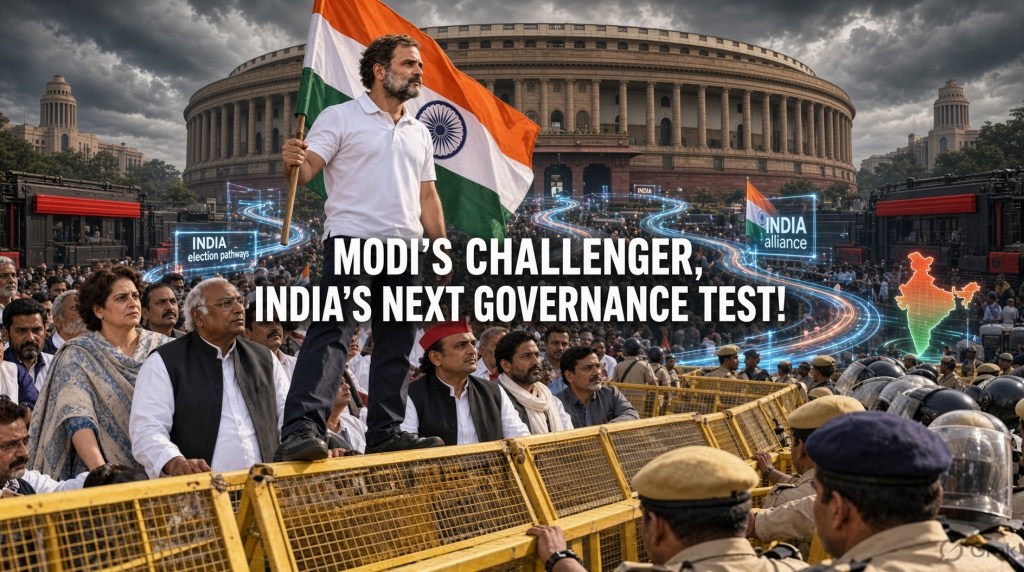
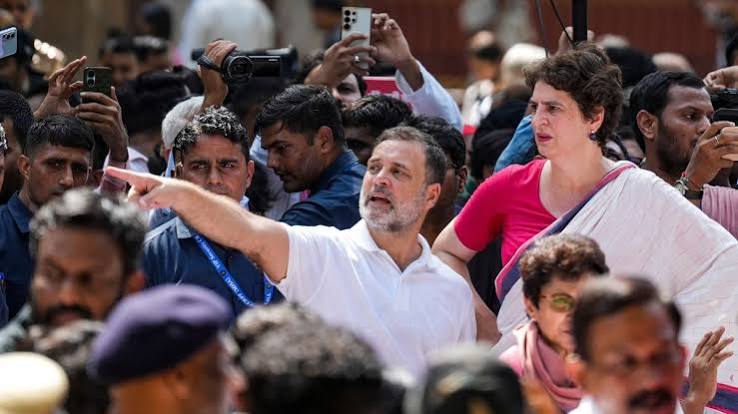
The sixth and final strategic test will be the forthcoming state elections and the organisational preparation leading to 2029. These contests must become practical examinations of Congress’s ability to expand its independent political footprint while strengthening the INDIA alliance. Uttar Pradesh, Bihar, Maharashtra, Madhya Pradesh and other consequential states require sustained attention to constituency-level leadership, electoral alliances and grassroots mobilisation. Congress cannot indefinitely depend on regional allies in states where it has failed to develop an independent organisation. Priyanka Gandhi Vadra could contribute significantly through campaign coordination, political communication and election management, provided responsibilities are clearly defined and institutional structures remain stronger than individual personalities. Candidate selection must be transparent, performance-oriented and sensitive to local political realities. Leadership promotion must reward demonstrated electoral capability rather than personal proximity. Congress must also reconcile its centralised decision-making culture with its stated commitment to democratic institutions. The forthcoming electoral cycle should establish whether the party can win independently where it possesses organisational strength and cooperate intelligently where alliances offer greater electoral value. These elections should be treated not merely as isolated political battles, but as rehearsals for national governance.
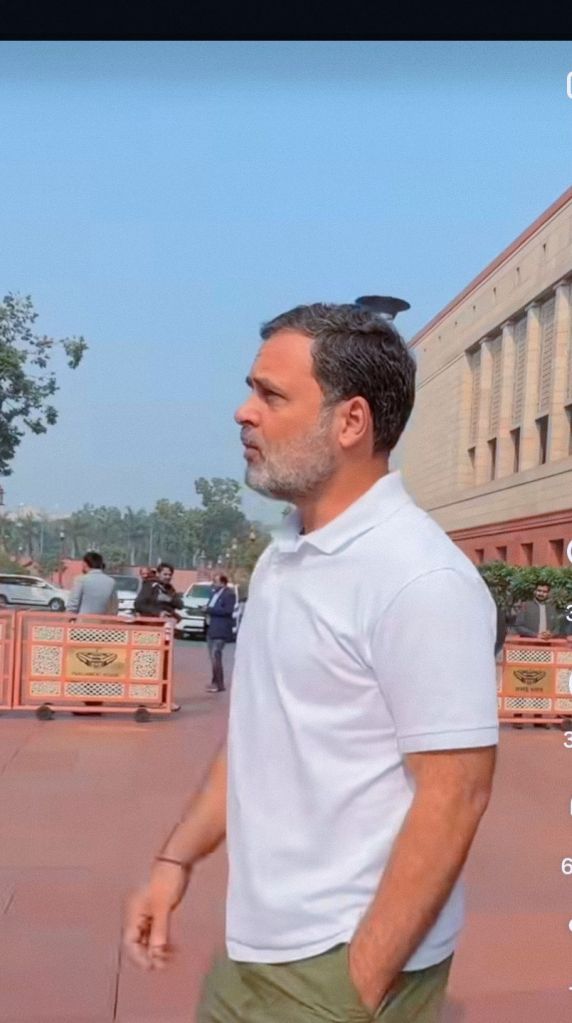
The ultimate verdict is that Rahul Gandhi’s 2029 opportunity is real, but it is conditional. The 2024 election demonstrated that the BJP can be challenged through effective alliances, social coalitions and focused political messaging. It also established that Congress can recover parliamentary ground. Neither development guarantees a national mandate. Rahul must move from personality-driven politics to institution-driven leadership, from street mobilisation to policy alternatives, from electoral arithmetic to organisational capacity, from unilateral alliance projection to coalition statesmanship and from criticism of economic management to a credible national development model. He does not need to imitate Narendra Modi; he needs to offer India a distinctly different and demonstrably competent model of leadership. His greatest political danger is not the BJP’s criticism but the possibility of remaining permanently relevant as an opposition voice without becoming electorally persuasive as a prospective Prime Minister. The 2029 election will ultimately judge not who protests most loudly, but who inspires the greatest confidence in India’s future. Rahul Gandhi must stop preparing merely to defeat Narendra Modi and start demonstrating that he is prepared to govern India. That is the difference between political relevance and national leadership.
VST ARJASRIKANTH.IN FOR MORE INSIGHTS

