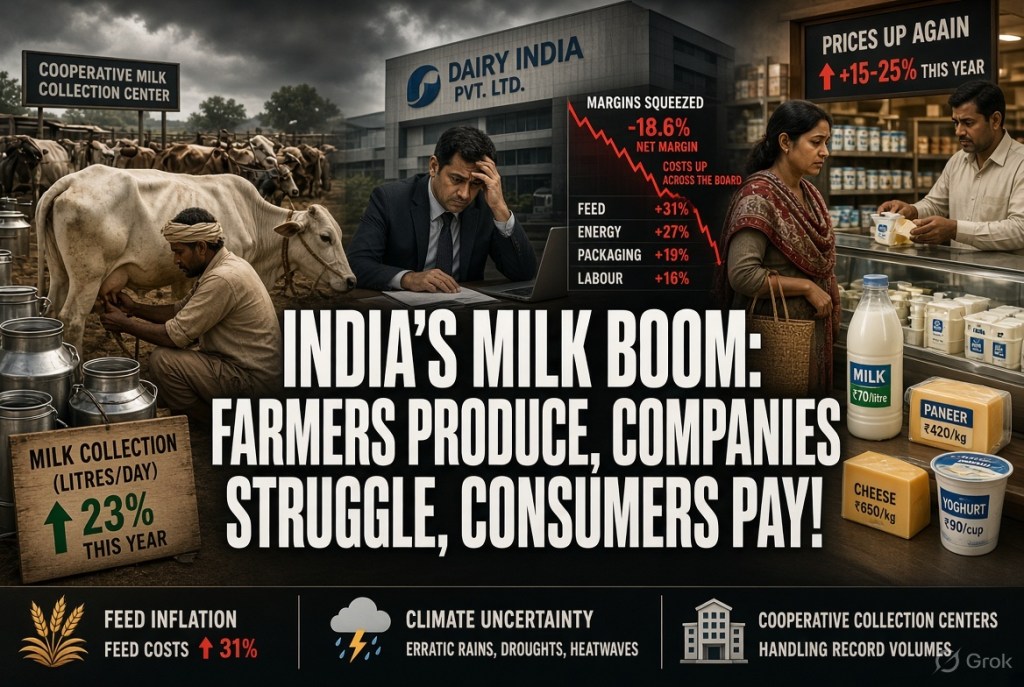
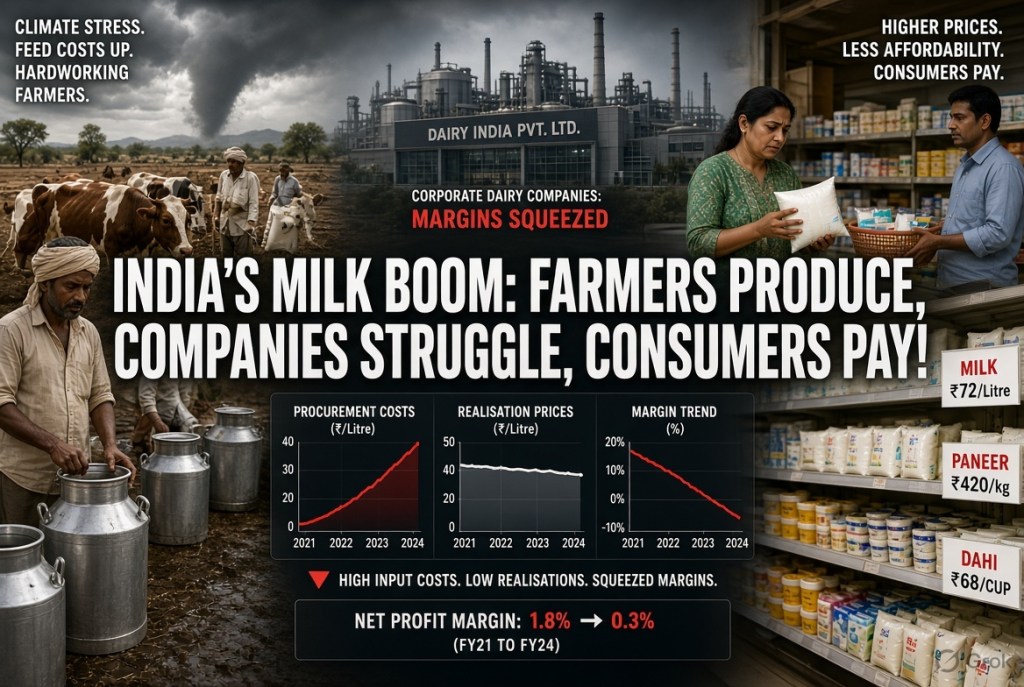
India’s dairy industry is undergoing a structural economic realignment that challenges the conventional belief that seasonal milk abundance will automatically moderate procurement prices and restore corporate margins. Despite rising milk collection and expectations of a winter flush, procurement costs have remained elevated, compelling organised dairies to increase consumer prices. This is no longer merely a temporary episode of input-cost inflation; it signals a possible reset in the economics of milk production, processing and distribution. The industry is transitioning from a volume-driven growth model towards one where procurement efficiency, product differentiation, pricing power and supply-chain resilience will determine competitiveness. The emerging paradox is striking: India produces more milk, yet the cost of securing each litre is rising. Farmers seek remunerative prices, companies struggle to protect margins, and consumers face increasingly expensive nutrition.
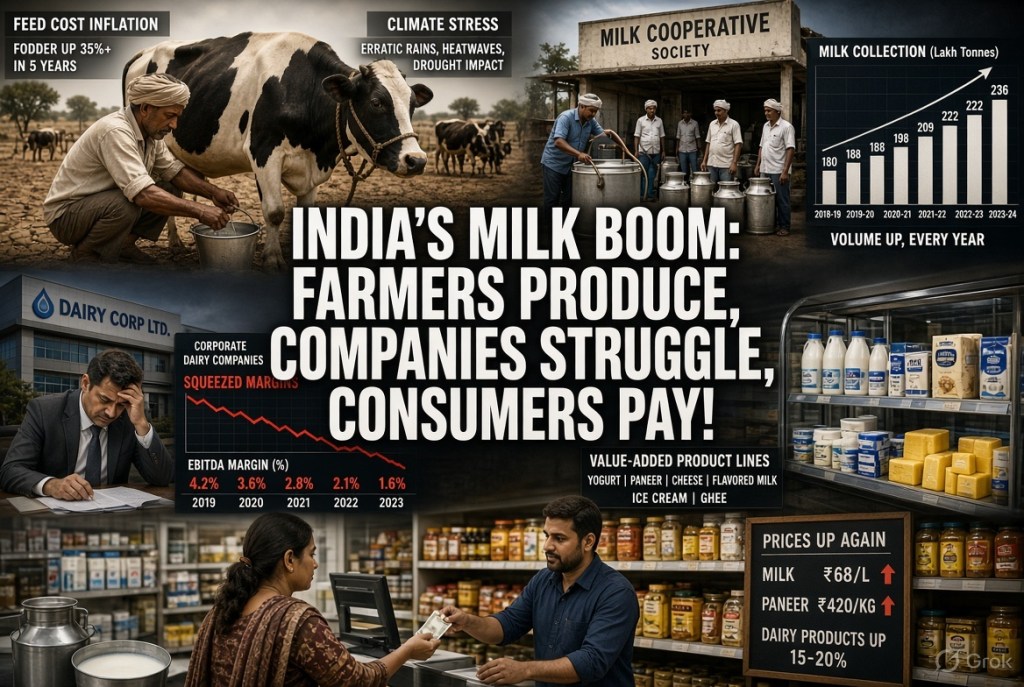
The scale of the opportunity is substantial. India’s dairy market is estimated at ₹13–14 lakh crore, of which approximately ₹4.5–5.5 lakh crore is organised. With annual industry growth estimated at 4–5%, the sector offers considerable scope for cooperatives, branded enterprises and technology-driven processors. Yet recent corporate results reveal that revenue growth does not necessarily translate into profitability. Dodla Dairy reported 17.4% revenue growth to ₹1,196 crore, while EBITDA margins declined from 9.1% to 5.4%, amid an approximately 16% increase in farmer procurement prices to ₹43.20 per litre. Heritage Foods recorded 19% revenue growth to ₹1,320 crore, but net profit fell 39% to ₹31 crore, with milk procurement costs rising 11% to ₹47.73 per litre. In contrast, MilkyMist reported 42% revenue growth to ₹1,089 crore, expanding EBITDA margins from 14% to 15.2%, while net profit nearly tripled to ₹78 crore. These figures, as reported in the underlying analysis, illustrate a critical distinction: volume expansion creates scale, but pricing power, product mix and operational efficiency determine whether that scale generates sustainable returns.
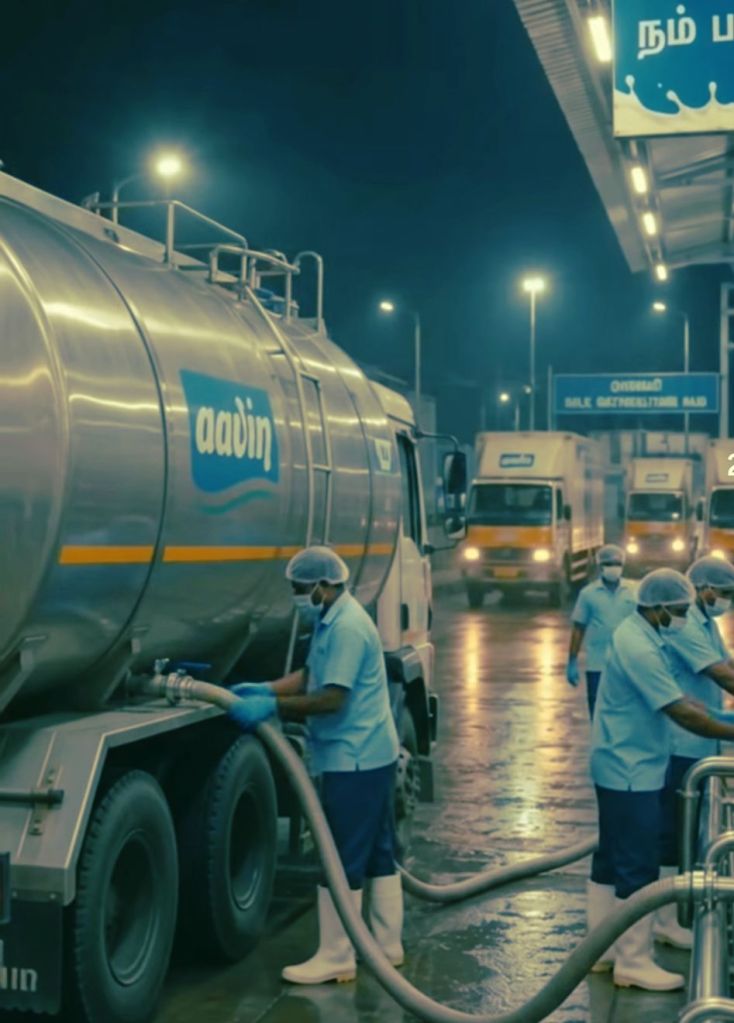
Three structural forces appear to be weakening the traditional seasonal correction. First, cattle-feed inflation has increased the cost of maintaining productive livestock. Feed prices are reported to have risen 15–20% year-on-year, while maize faces competing demand from ethanol production and compressed biogas initiatives. Second, changing consumer preferences towards cow milk have influenced procurement economics. The expected cost advantage of shifting from buffalo to cow rearing has not necessarily materialised when milk is assessed on total solids and nutritional composition. Third, cooperative procurement interventions have raised competitive benchmarks. Aavin in Tamil Nadu reportedly increased farmer payments by around ₹6 per litre, while Karnataka approved an ₹8 increase associated with Nandini, taking the cited procurement-linked price from ₹46 to ₹54 per litre, including ₹7 directed towards farmers. Such decisions reflect the need to retain milk supplies and protect farmer livelihoods. Climate variability, drought and rainfall deficiencies add another layer of uncertainty. The result is a higher and potentially more persistent procurement-cost floor.
Consumer pricing reveals a difficult asymmetry. Milk is an essential household commodity, making price increases commercially and politically sensitive. Consequently, dairies cannot always transfer higher procurement costs immediately without risking consumer resistance. Dodla introduced a ₹2.50-per-litre increase in September, Heritage implemented an average increase of approximately 8%, and MilkyMist announced increases of around 10%, with their full impact expected to emerge in subsequent results. Yet the reverse process may be less pronounced. Heritage management has indicated that retail milk prices historically do not decline easily after an increase. MilkyMist suggested that a ₹5–10 reduction in procurement costs might translate into only a ₹2–5 reduction for consumers. For Heritage, even a ₹0.50-per-litre decline in procurement costs could reportedly improve monthly profitability by approximately ₹3 crore. This raises an important economic question: when input costs rise, consumers share the burden; when costs fall, how much of the benefit returns to them?
Value-added products are increasingly becoming the industry’s principal margin-management strategy. Paneer, cheese, yoghurt, premium curd, ghee, butter and protein-enriched products offer differentiation and potentially stronger margins than commoditised liquid milk. MilkyMist’s expansion in branded paneer, reported 168% quarterly growth in yoghurt revenue and growing protein portfolio illustrate this shift. Protein products reportedly account for approximately 12% of sales, compared with 7% a year earlier, while quick commerce contributes 21% of revenue. Gross margins on certain premium products are reported to exceed 50%. Heritage derives approximately 42.5% of revenue from value-added products, while Dodla has a significant curd and curd-based portfolio. However, premiumisation creates a supply-side paradox: producing one kilogram of paneer requires approximately six litres of milk. If every processor moves aggressively towards the same products, competition for raw milk may intensify.
MilkyMist’s cheddar facility, reportedly operating at around 20% capacity, offers an opportunity to convert available milk into products that can be matured and marketed over time, reducing dependence on immediate commodity sales.
Regulation and product credibility will shape the next phase of competition. Proposed FSSAI restrictions on marketing non-dairy analogue products under the name paneer could strengthen genuine milk-based manufacturers, improve consumer information and create a more level competitive environment. MilkyMist estimates that organised players’ share of the branded paneer market could increase from approximately 10% to 25–30%. Such projections, however, will depend on implementation, consumer behaviour and market response. Premiumisation must also be accompanied by rigorous compliance. Regulatory scrutiny of certain MilkyMist products, including Greek yoghurt, over allegedly misleading claims and product-information deficiencies illustrates why nutritional declarations, protein claims and digital marketing require accuracy and transparency. Meanwhile, Dodla’s reported joint venture with UK-based Meadows, involving ₹1 crore for a 40% stake, points towards another growth avenue: supplying specialised dairy ingredients to institutional and food-processing customers.
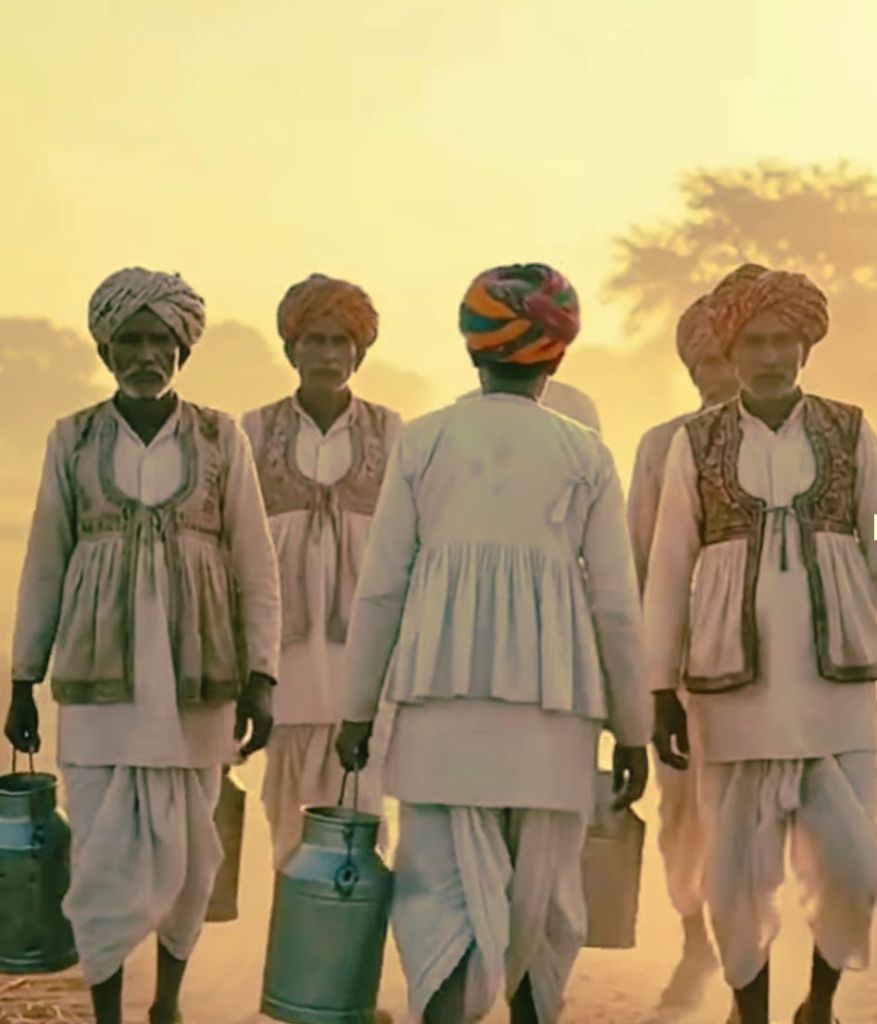
The near-term financial outlook may improve as recent consumer-price increases progressively flow into company revenues. Dodla believes procurement costs may have peaked, while Heritage and MilkyMist have adopted more cautious assessments. Nevertheless, assuming that a seasonal flush will restore historical procurement economics may be premature. Feed inflation, climate uncertainty, competing agricultural demand and cooperative procurement policies could sustain a higher cost structure. The industry’s future will depend on consumers’ ability to absorb price increases, the resilience of household milk consumption, the competitive position of organised brands and the capacity of value-added portfolios to generate margins without intensifying raw-milk scarcity. The central challenge is no longer simply to collect more milk, but to create greater economic value from every litre while preserving affordability.
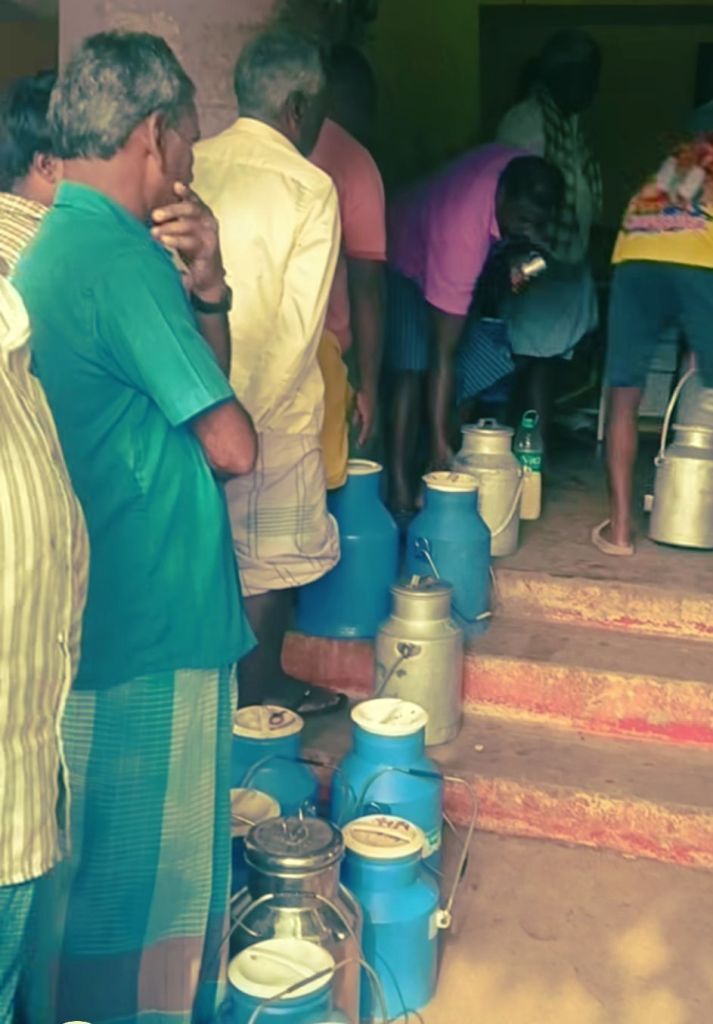
India’s dairy revolution is entering a decisive new chapter. The competitive battlefield is shifting from procurement volumes and distribution networks towards farmer partnerships, supply-chain efficiency, technology, product innovation and consumer trust. Cooperatives will continue to influence procurement prices, while private enterprises must strengthen productivity and develop differentiated offerings. Yet the industry’s long-term sustainability rests on balancing three essential interests: remunerative returns for farmers, viable margins for processors and affordable nutrition for consumers. Milk is simultaneously a livelihood, an industrial input and an essential food. Treating it exclusively as a commercial commodity would undermine its wider social significance. India’s real dairy challenge is not merely to make consumers pay more, but to build an ecosystem in which farmers earn better, enterprises remain competitive and nutritious milk does not become a luxury.
VST ARJASRIKANTH.IN FOR MORE INSIGHTS

