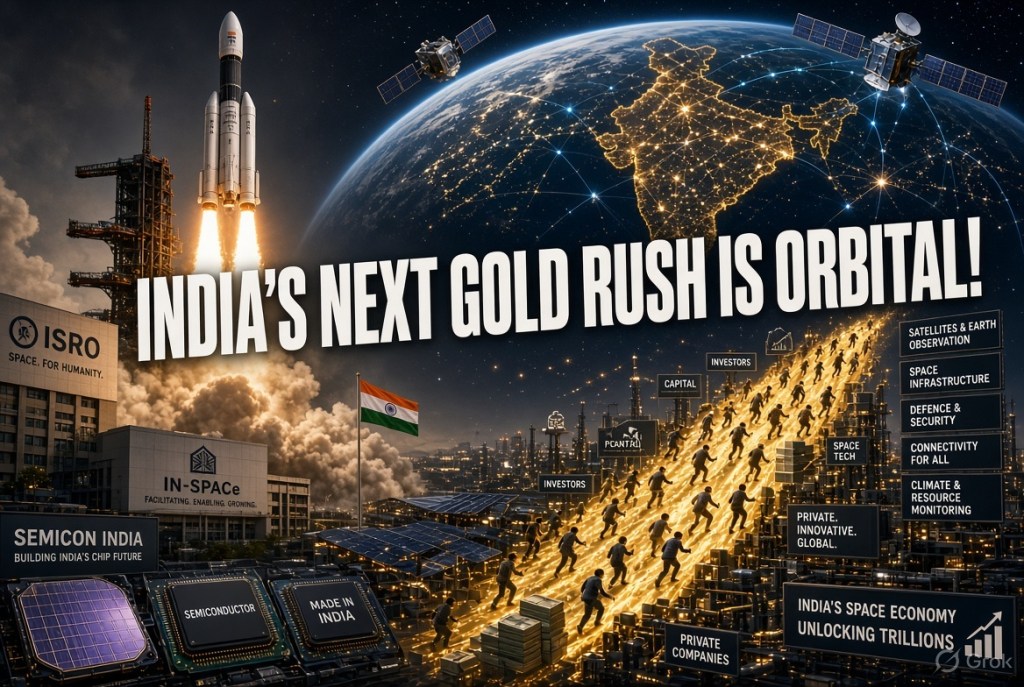
India’s space programme is approaching a defining economic inflection point. What began as a state-led scientific mission driven by national ambition, technological self-reliance and strategic necessity is evolving into a commercially driven industrial ecosystem. Space is no longer confined to launching satellites or exploring distant planets; it is becoming critical infrastructure for telecommunications, artificial intelligence, navigation, defence, precision agriculture, climate intelligence, advanced materials and industrial manufacturing. The global space economy, estimated at approximately $550 billion, is projected to exceed $1 trillion by 2035. Against this backdrop, India’s domestic space economy, currently valued at around $9 billion, represents only a modest share of the global opportunity. The ambition to reach $44 billion by 2033 and $100 billion by 2040 is therefore not merely an industry-growth target. It is a strategic opportunity for India to emerge as a global supplier of space infrastructure, technology, services and innovation.
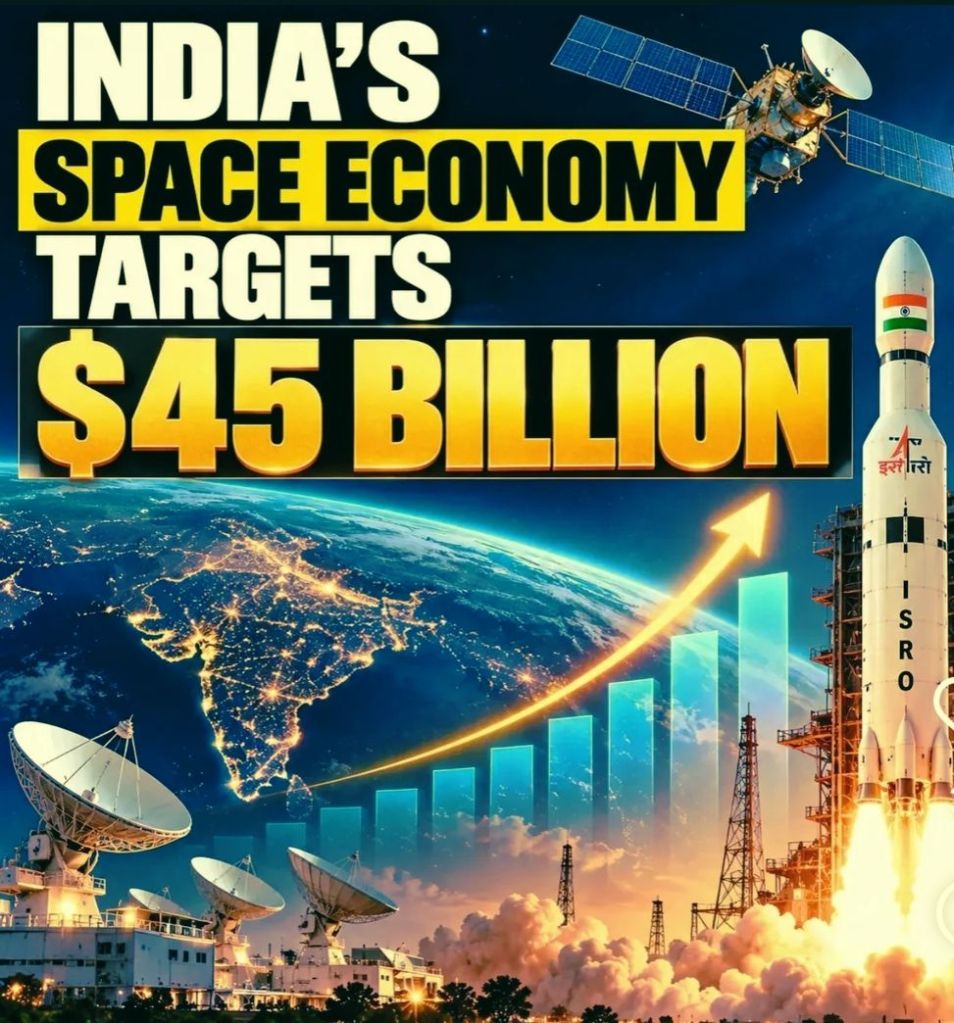
The transformation is being accelerated by a fundamental institutional shift. The Indian Space Policy 2023, the establishment of IN-SPACe and greater private-sector participation have begun opening an ecosystem historically dominated by government institutions. More than 450 SpaceTech startups are reportedly active across satellite manufacturing, launch vehicles, propulsion, Earth observation and downstream applications. Private investment has also expanded significantly, while the ₹1,000 crore dedicated space venture capital fund provides an additional financing avenue. The economic multiplier associated with the sector makes this transition particularly important: space technology generates value far beyond the launch industry, creating opportunities across manufacturing, software, electronics, data analytics and specialised services. India needs precisely such a high-productivity, knowledge-intensive industrial ecosystem to move beyond conventional manufacturing and establish globally competitive technology enterprises.
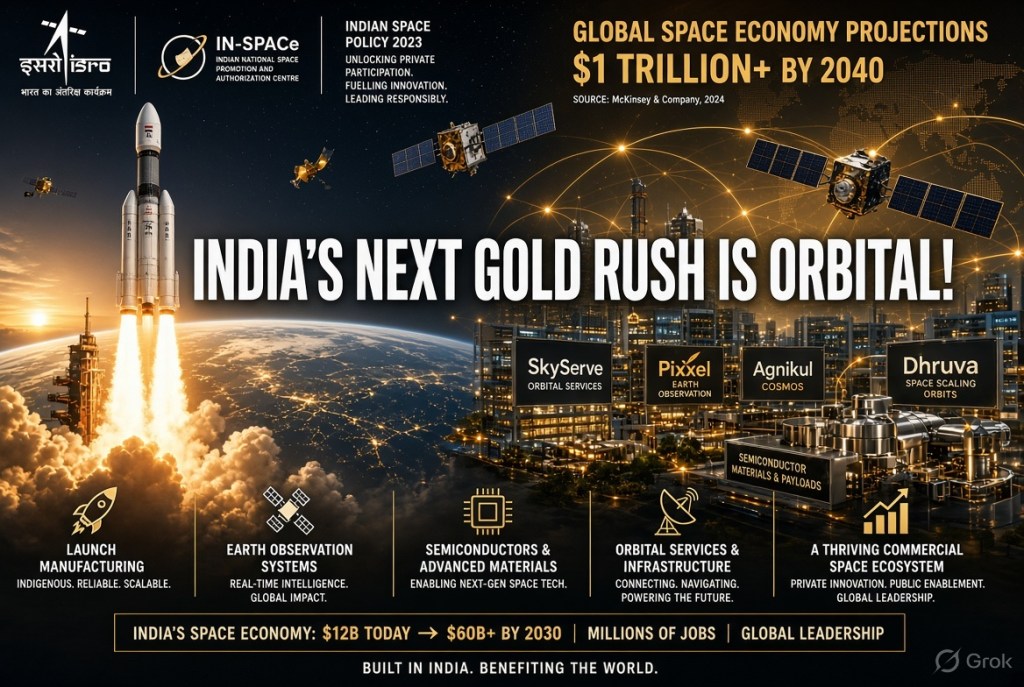
Commercial opportunities extend across the entire space value chain. Upstream activities include launch vehicles, propulsion systems, satellite components, ground infrastructure and small-satellite manufacturing. The development of the SSLV launch complex at Kulasekarapattinam in Tamil Nadu could strengthen India’s capabilities in specialised small-satellite launches. However, the downstream economy may ultimately create an even wider market. Satellite imagery can improve agricultural productivity through crop monitoring, support urban planning, strengthen disaster forecasting, optimise logistics and guide climate-resilient infrastructure. Satellite broadband can connect remote communities, while navigation and space-based communications increasingly support transportation, financial systems and national security. Liberalised foreign investment provisions, including automatic-route investment of up to 100% in specified activities, can facilitate integration with international supply chains. India must therefore move beyond counting successful launches towards manufacturing, exporting and commercially monetising the technologies, infrastructure and data generated by space missions.
Perhaps the most fascinating frontier is the emergence of space as a manufacturing environment rather than merely a destination for exploration. Microgravity offers possibilities for producing advanced materials and biological products under conditions difficult to replicate on Earth. Experiments involving compound semiconductor crystals illustrate this potential. Certain emerging ventures envisage producing specialised crystal seeds in orbit through controlled thermal processes and returning them to Earth for further wafer fabrication. Proponents anticipate improvements in material quality and energy efficiency, potentially benefiting semiconductors used in high-performance computing, telecommunications, electric vehicles, quantum technologies and data centres. However, projected performance gains and commercial economics require rigorous independent validation before being treated as established industrial outcomes. Space-based pharmaceutical research, advanced materials and specialised manufacturing could open additional markets. The larger insight is profound: space may not manufacture the final product, but it could produce critical inputs that make terrestrial industries more efficient and technologically competitive.
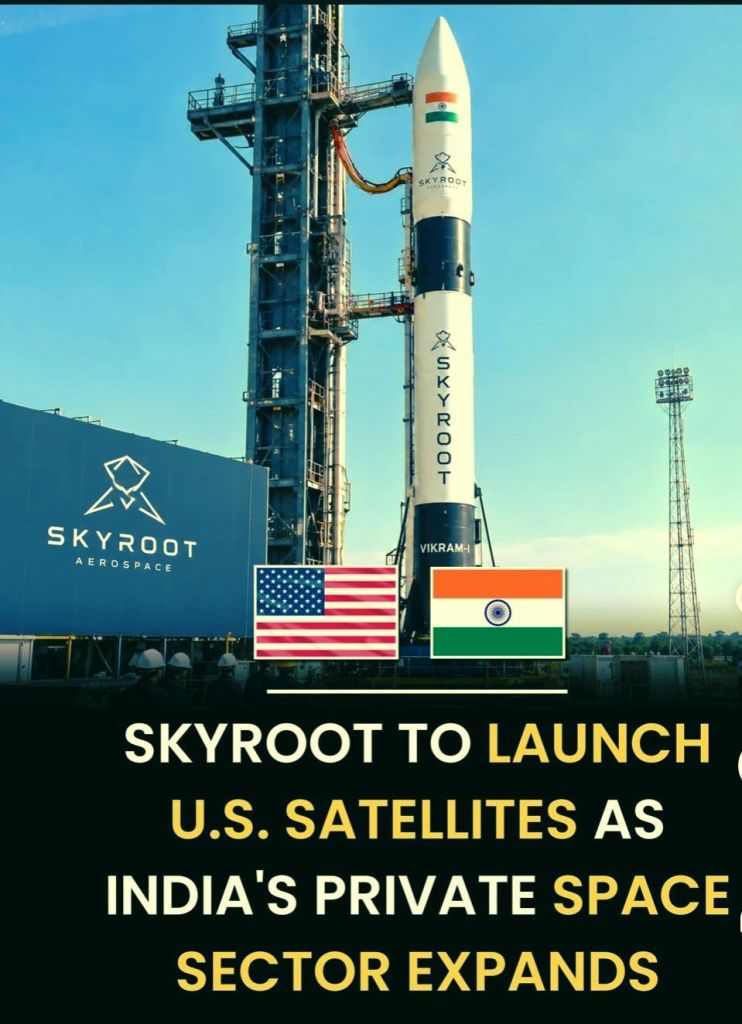
India enters this emerging contest with several strategic advantages. Its reputation for frugal engineering, demonstrated through missions such as Chandrayaan-3, offers a compelling cost proposition. A mature scientific establishment, substantial engineering talent, expanding digital infrastructure and growing manufacturing capabilities provide a foundation for commercial expansion. International collaborations, including the NASA-ISRO NISAR mission and India’s association with the Artemis Accords, strengthen scientific cooperation and technological diplomacy. Yet structural vulnerabilities remain. Dependence on imported radiation-hardened electronics, advanced sensors and high-end semiconductor components exposes domestic manufacturers to supply-chain disruptions. Long development cycles, uncertain revenue streams and capital-intensive infrastructure discourage conventional investors. The shortage of patient, late-stage capital is particularly consequential: a successful prototype does not automatically become a commercially viable enterprise. India must strengthen domestic component manufacturing, research institutions and specialised talent pipelines while ensuring that promising startups can scale without losing their technological capabilities abroad.

Commercialisation also raises difficult questions about regulation, sustainability and strategic competition. India needs a comprehensive statutory framework governing licensing, liability, insurance, commercial disputes and accountability for private space activities. Policy announcements alone cannot provide the legal certainty required for investments involving substantial capital and international obligations. Orbital congestion and space debris pose another serious challenge. Uncontrolled satellite deployment could increase collision risks and threaten the long-term sustainability of low-Earth orbit. The possibility of cascading collisions, commonly associated with the Kessler Syndrome, makes responsible satellite design, end-of-life disposal and coordinated debris mitigation essential. Furthermore, satellite technologies have both civilian and strategic applications, creating legitimate national-security concerns. India must balance commercial freedom with security safeguards, international cooperation and the peaceful, sustainable use of outer space.
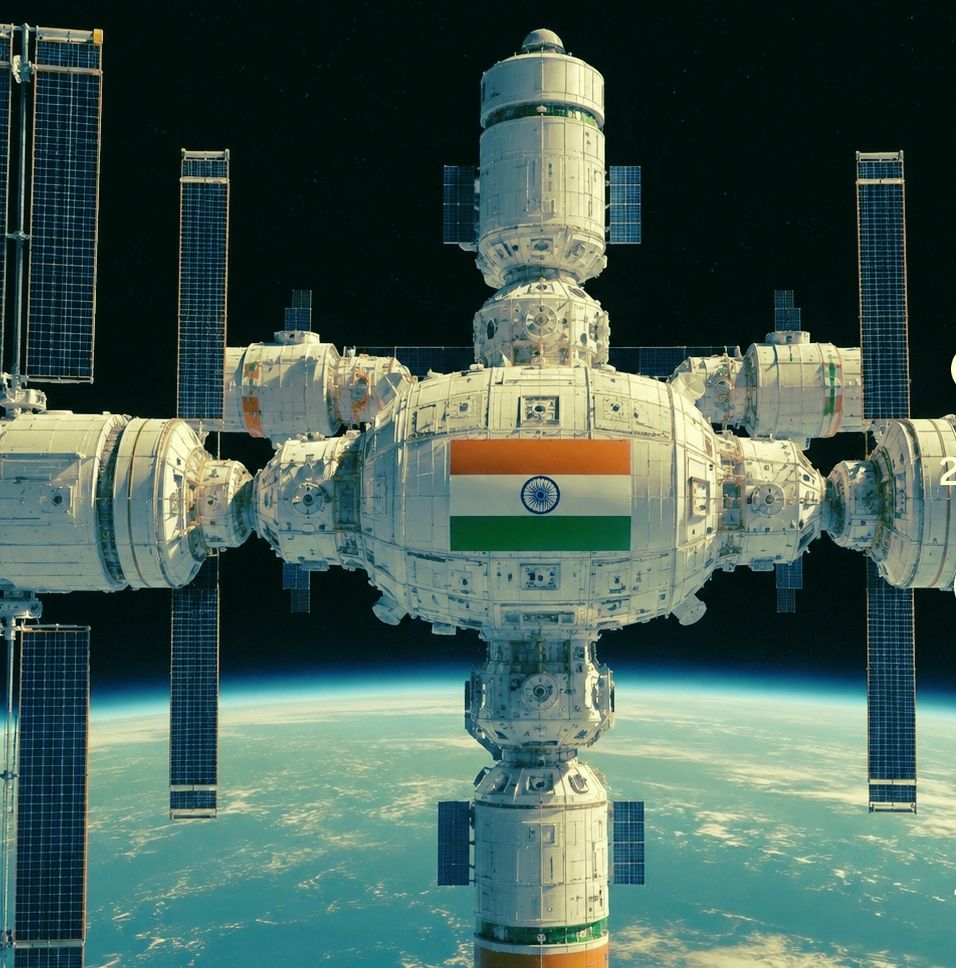
The way forward requires India to graduate from being a successful space-exploration nation into a competitive space-industrial economy. A comprehensive National Space Activities Act should establish transparent licensing, liability and insurance provisions. Government procurement should evolve into an assured-demand mechanism through multi-year contracts for indigenous satellites, launch services and space-derived data. The experience of NASA’s Commercial Orbital Transportation Services programme demonstrates how governments can accelerate private innovation by becoming reliable anchor customers. ISRO’s technology-transfer initiatives and private-sector participation in launch-vehicle production offer a foundation for this transition. Shared access to testing facilities, launch infrastructure and specialised laboratories would reduce entry barriers for startups. Equally important are domestic semiconductor capabilities, stronger component supply chains, university-industry partnerships and financing mechanisms that support deep-tech enterprises beyond their initial venture-capital stage. Space applications must also become integral to agriculture, healthcare, education, disaster management and urban governance, creating a strong domestic market alongside export opportunities.
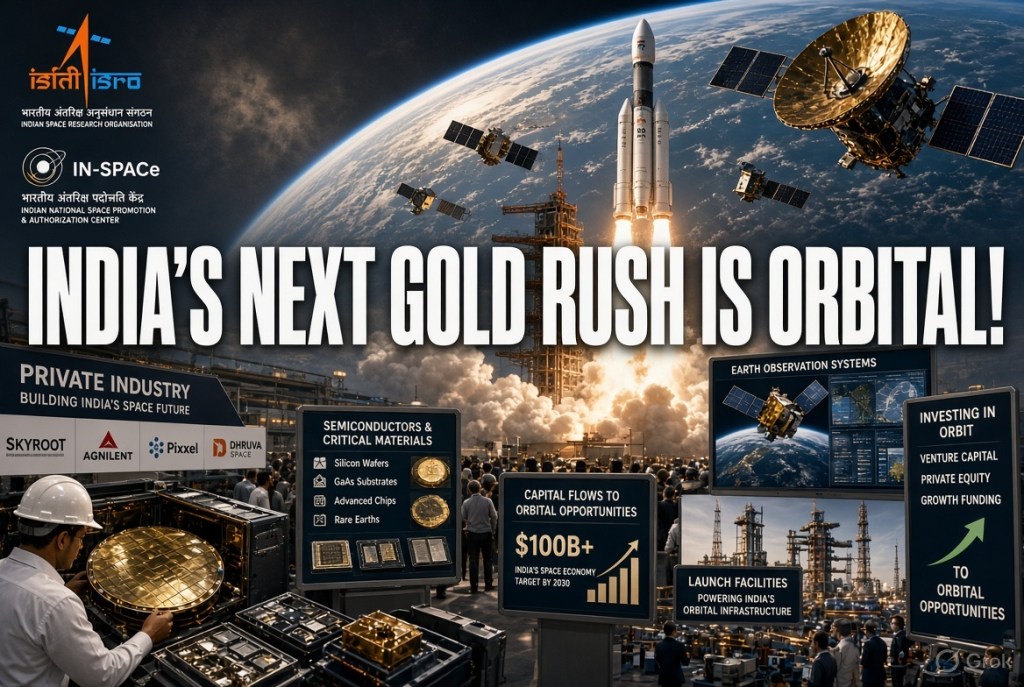
Ultimately, the space economy represents far more than another emerging industrial sector; it offers an opportunity to influence the architecture of the future global economy. Countries that control satellite networks, navigation infrastructure, advanced materials, launch capabilities and space-based data will shape tomorrow’s technology, commerce and strategic relationships. India’s ambition must extend beyond celebrating spectacular missions or increasing its share of global launches. It must build an integrated ecosystem in which startups become global enterprises, research laboratories evolve into industrial platforms, public investment catalyses private innovation and space-derived technologies raise productivity across the economy. The journey from a $9 billion industry towards a $100 billion ambition will require regulatory certainty, technological sovereignty, global partnerships and disciplined commercial execution. The next economic gold rush may not happen on Earth. India must ensure that when the world’s industries reach for the stars, Indian technology is not merely watching the launch—it is powering the journey.
VST ARJASRIKANTH.IN FOR MORE INSIGHTS

