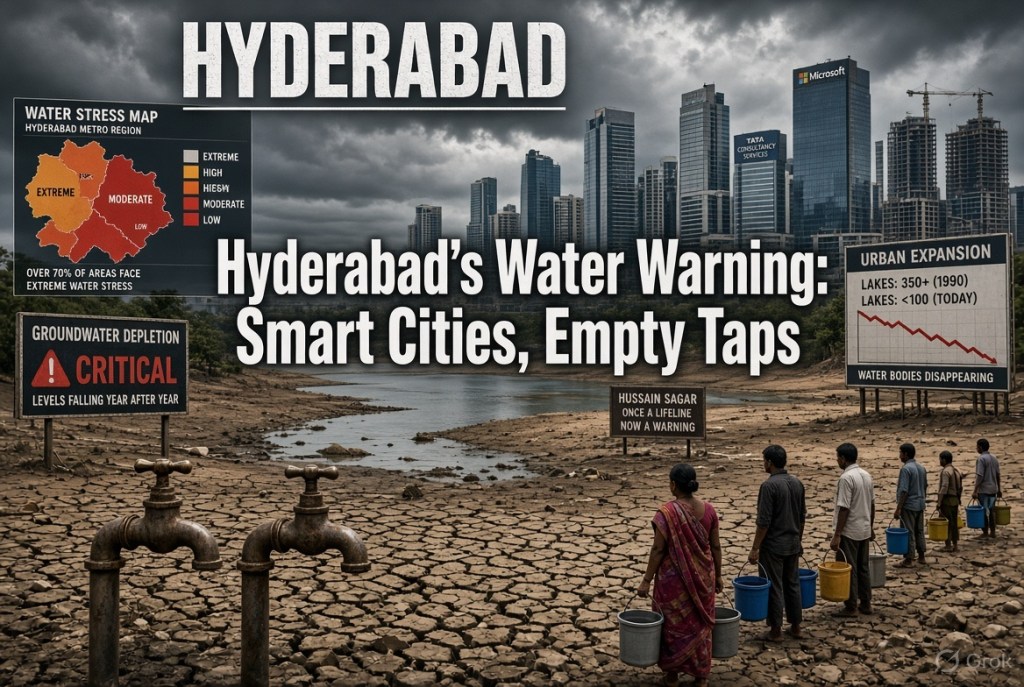
Hyderabad’s water crisis is more than a metropolitan inconvenience; it is a stress test of India’s urban development model. A city celebrated for its technology corridor, expanding skyline and economic dynamism cannot sustain its ambitions if the water supporting its households, industries and public services becomes increasingly uncertain. Reservoir depletion, groundwater stress, intermittent municipal supplies and dependence on private tankers expose a fundamental contradiction: India’s cities are expanding economically faster than they are securing their ecological foundations. Hyderabad’s predicament is therefore not merely a local supply challenge. It is a warning that urban prosperity without water security is inherently fragile, and that the next major metropolitan emergency may emerge not from financial instability or technological disruption, but from the depletion of a resource essential to everyday life.
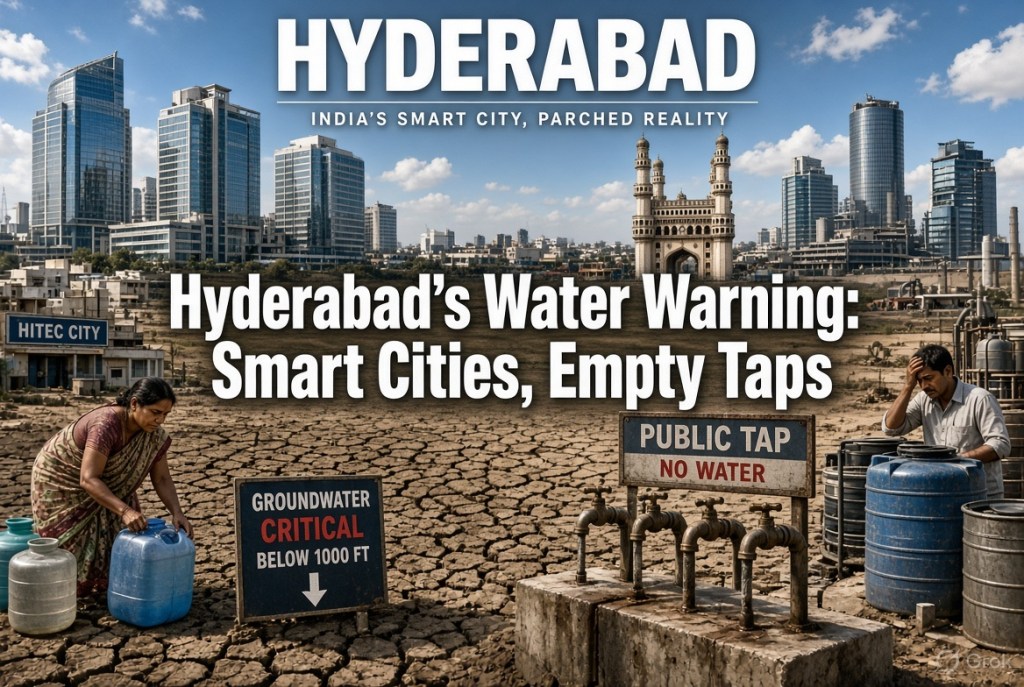
The immediate pressures may include deficient rainfall, reduced reservoir inflows and inadequate groundwater recharge. Yet attributing an urban water crisis solely to an unfavourable monsoon would be administratively convenient and analytically incomplete. Climate variability becomes a crisis when it encounters accumulated planning failures: unrestrained urban expansion, excessive groundwater extraction, disappearing water bodies, inadequate wastewater recycling and fragmented institutional responsibility. Reservoir shortages reveal the consequences of insufficient preparation rather than merely the unpredictability of nature. A drought may originate in climatic conditions, but its social and economic severity is shaped by governance. Cities that plan only around average rainfall will remain vulnerable to extremes; resilient cities must prepare for uncertainty through diversified supplies, reliable data, demand management and enforceable conservation policies.
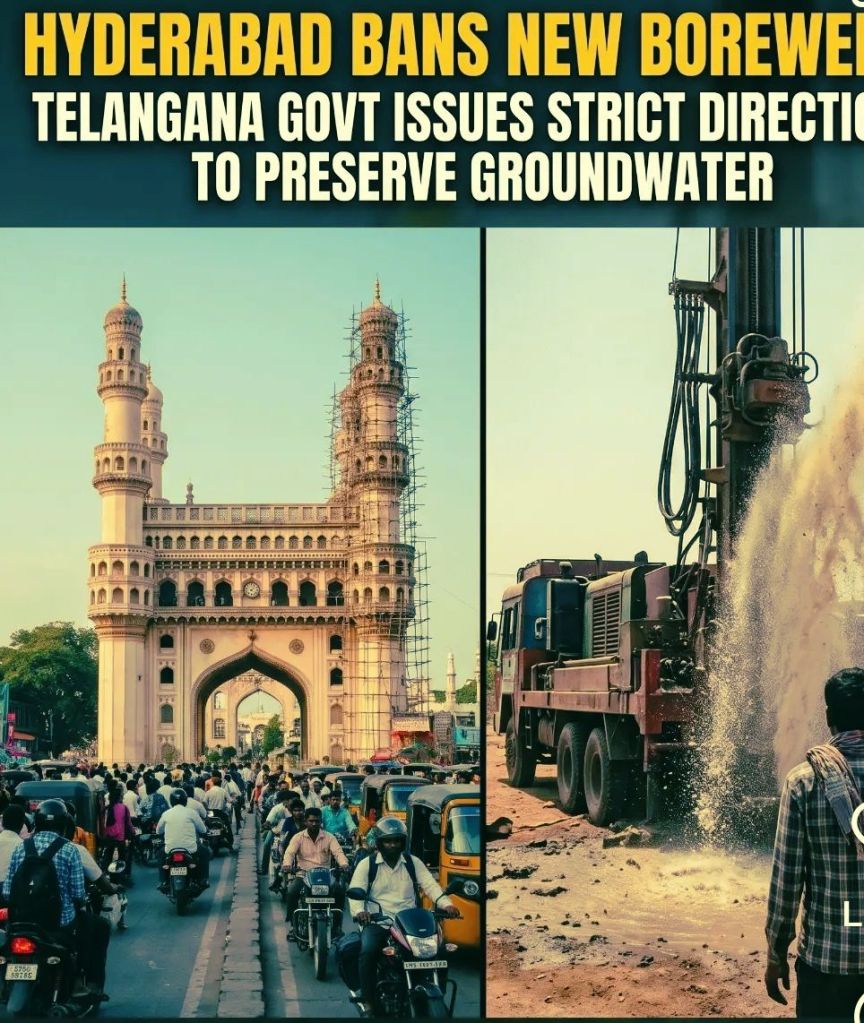
Hyderabad’s physical geography further complicates the challenge. Much of the surrounding region consists of hard crystalline rock, where groundwater availability depends significantly on weathered and fractured formations. Rainfall alone does not guarantee recharge: functioning lakes, permeable surfaces, protected drainage channels and scientifically designed harvesting systems are equally important. Yet expanding residential layouts, commercial developments and transport infrastructure place growing pressure on the landscapes that absorb and channel rainwater. Borewells offer households an immediate alternative to unreliable piped supplies, but uncontrolled extraction can deepen depletion and make future access progressively more expensive. The result is a damaging cycle in which falling groundwater levels encourage deeper extraction, while the natural systems needed to replenish aquifers continue to deteriorate. Water security consequently demands not just additional supply, but the restoration of the ecological infrastructure that sustains it.
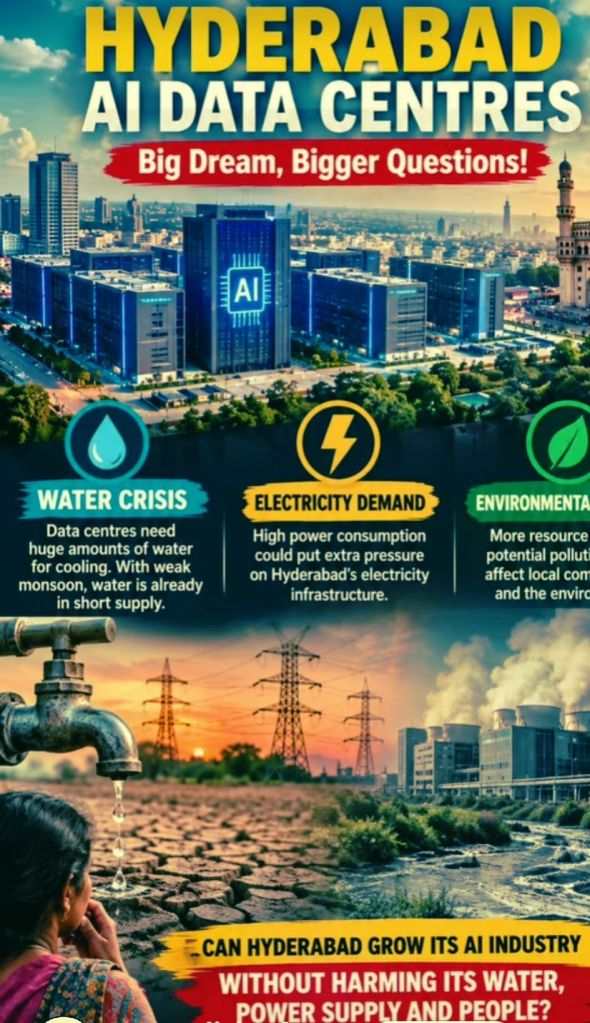
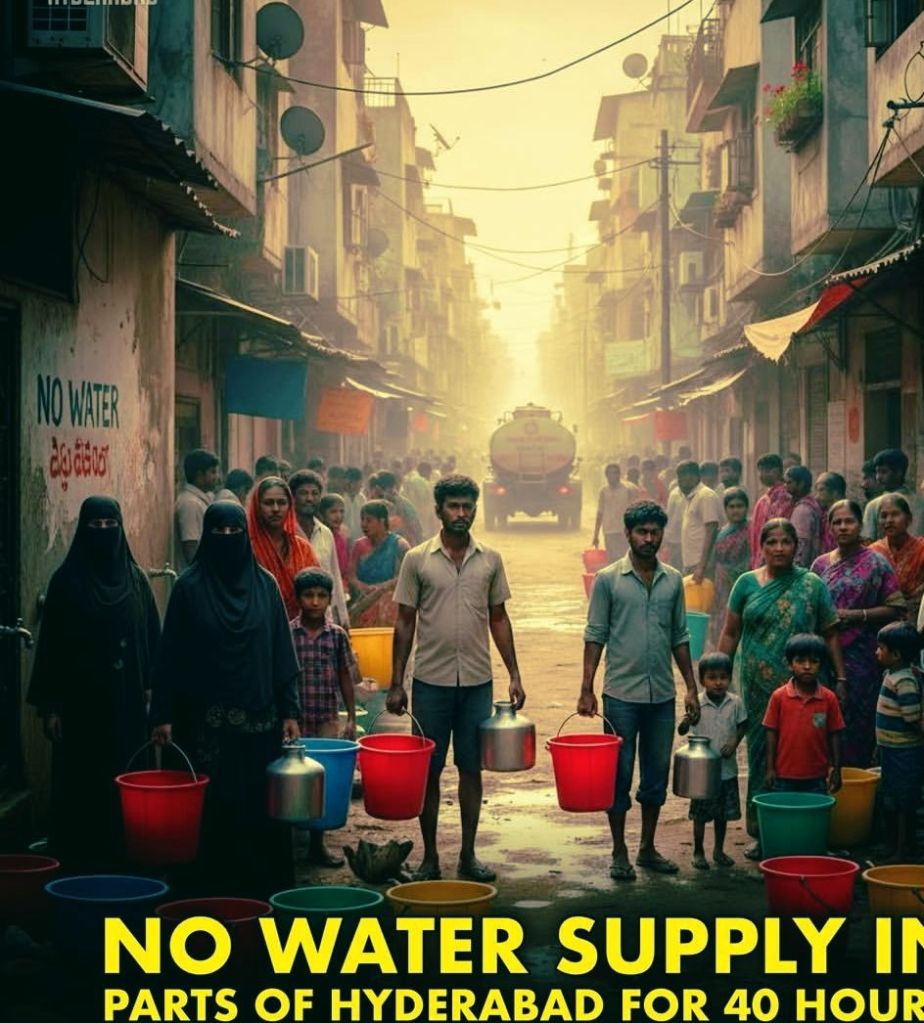
The burden of scarcity is also distributed unequally. Affluent residential communities can often purchase tanker water, install storage facilities and invest in recycling systems, while low-income households and informal settlements have fewer alternatives. Uncertain supplies increase the time and money required to secure water, complicate sanitation and expose vulnerable families to potential quality risks. Hospitals, schools, hotels, industries and construction sites face operational disruption, while rising household expenditure can reduce disposable income. Dependence on private tankers may also create opportunities for opaque pricing and unequal access. This is not simply a question of aggregate availability; it is a question of distributive justice. A city cannot claim inclusive growth when the ability to pay increasingly determines the reliability of access to an essential resource. Equitable water allocation must therefore become a central measure of metropolitan governance.
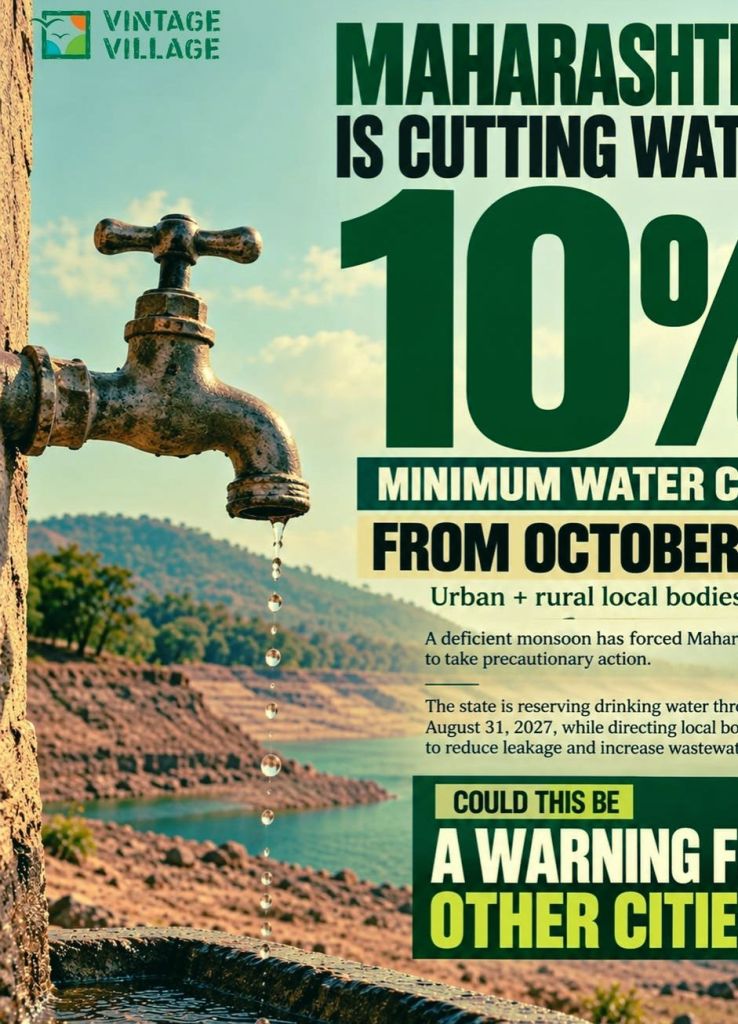
The warning extends well beyond Hyderabad. Bengaluru faces pressures arising from rapid growth, groundwater extraction and dependence on external water sources. Delhi confronts seasonal demand, uneven distribution and persistent water-quality challenges. Chennai remains exposed to rainfall variability and reservoir dependence, while Mumbai’s substantial monsoon rainfall does not eliminate the risks associated with catchment degradation, storage, distribution and unequal access. These cities have different hydrological conditions and cannot be treated as identical cases. Nevertheless, they share a critical vulnerability: demand is expanding while natural water systems and institutional capacity are under pressure. Emergency responses may temporarily bridge shortages, but repeated crises reveal the limitations of reactive administration. Hyderabad is not proof that every Indian metropolis will run dry; it demonstrates why no city should assume that economic scale, infrastructure investment or historical rainfall will automatically guarantee future water security.
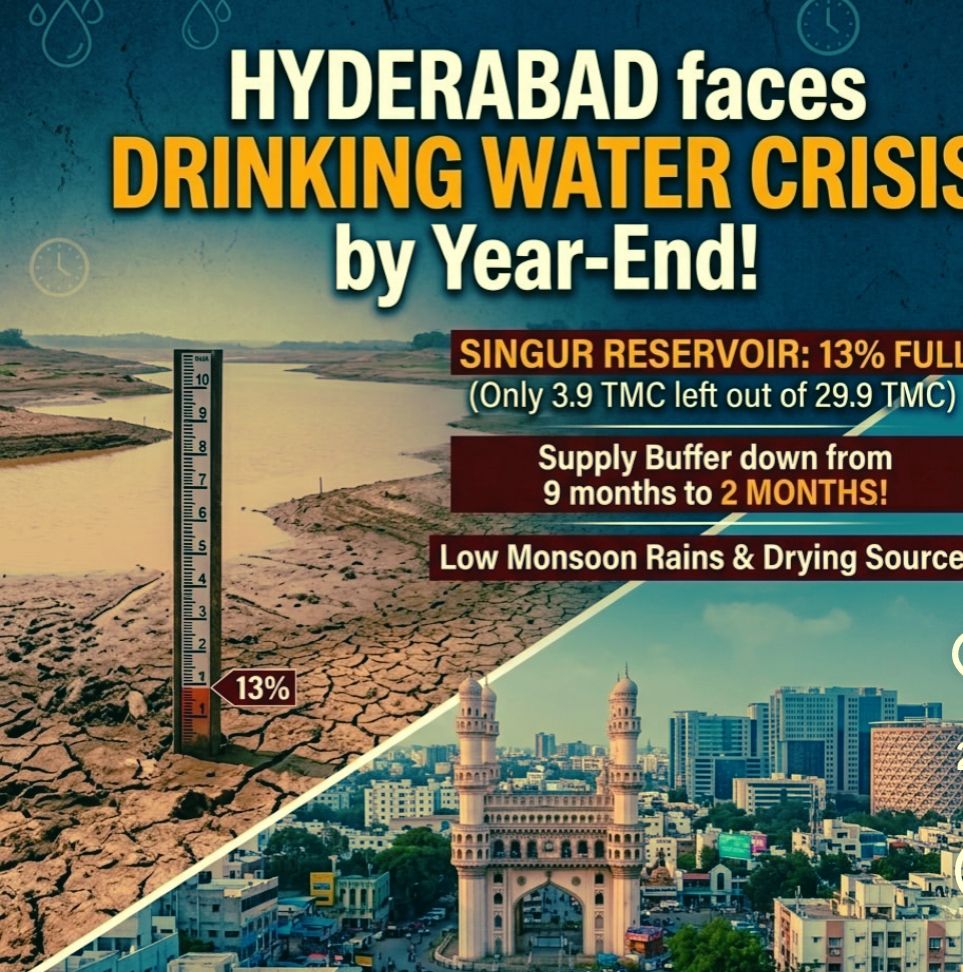
The immediate response must combine emergency management with practical conservation. Authorities should publish credible reservoir and supply information, communicate distribution schedules, monitor tanker operations and prioritise essential institutions and vulnerable communities. Leakage detection, pressure management and timely repairs can preserve supplies that would otherwise be lost. Treated wastewater should increasingly substitute for freshwater in construction, industrial processes, landscaping and other suitable non-potable applications. Rainwater-harvesting systems must be inspected for actual performance rather than accepted as formal compliance. Groundwater extraction requires transparent monitoring, scientifically appropriate controls and enforceable recharge obligations. Lakes, tanks and traditional water structures should be restored wherever feasible, with their catchments and connecting drainage channels protected against encroachment and pollution. Tankers may provide temporary relief, but they are neither a sustainable water strategy nor a substitute for accountable public provision.
The deeper solution requires integrated institutions and a measurable metropolitan water-security framework. Water planning must connect municipal supply, groundwater, wastewater, land use, industry and the wider river basin rather than leave them confined to administrative silos. Every major city should prepare water budgets that assess dependable supply, seasonal demand, ecological requirements and drought scenarios. Publicly accountable targets should cover leakage reduction, wastewater reuse, groundwater monitoring, lake restoration and equitable service delivery. Digital sensors and predictive analytics can improve operational decisions, but technology cannot compensate for weak enforcement, poor coordination or unclear responsibility. Urban planning must also protect wetlands, preserve open spaces, restore natural drainage and reduce unnecessary impermeable surfaces. These are not decorative environmental measures; they are essential components of long-term infrastructure. The strongest water policy is one that reduces the likelihood of an emergency before the emergency becomes visible.
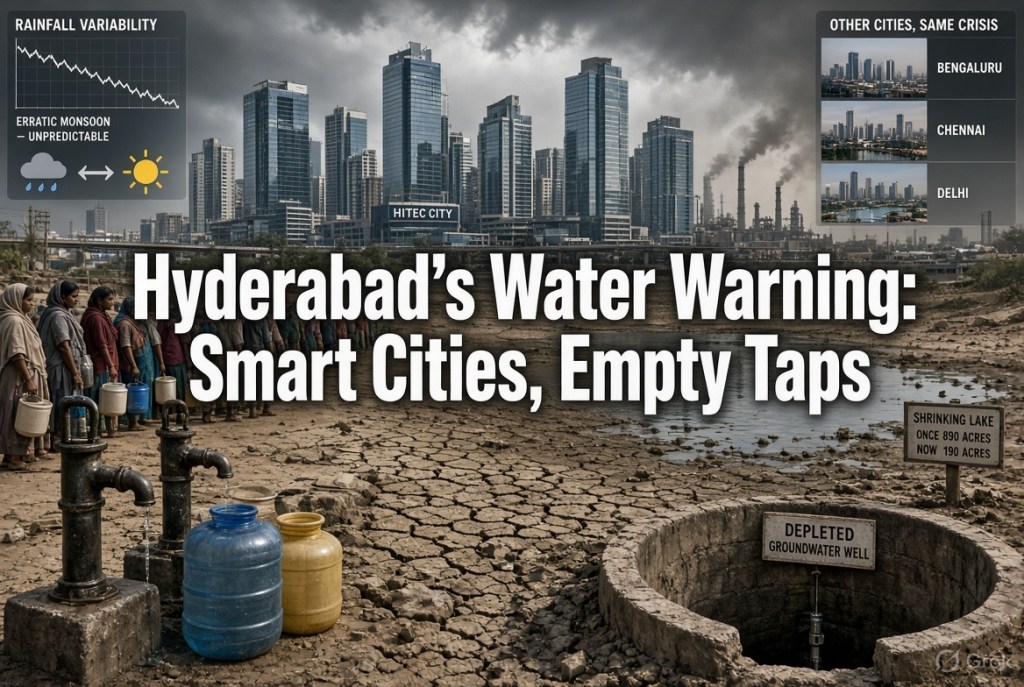
Ultimately, Hyderabad challenges India to redefine what constitutes a smart, competitive and liveable city. Urban success cannot be measured only through investment, property values, transport networks and digital connectivity if households remain uncertain about their next supply of water. Resilience requires dependable services, ecological stewardship, affordability and institutions capable of anticipating risk rather than merely responding to it. Governments must treat water as a strategic resource requiring year-round planning, transparent allocation and shared responsibility among public agencies, businesses and citizens. The choice is stark: continue treating scarcity as a recurring summer inconvenience, or recognise it as a structural governance challenge demanding urgent reform. Hyderabad has issued the warning; other metropolitan leaders still have time to respond. The next urban crisis may not begin with a market crash or a technology failure—it may begin when millions turn on their taps and nothing comes out.
VISIT ARJASRIKANTH.IN FOR MORE INSIGHTS

