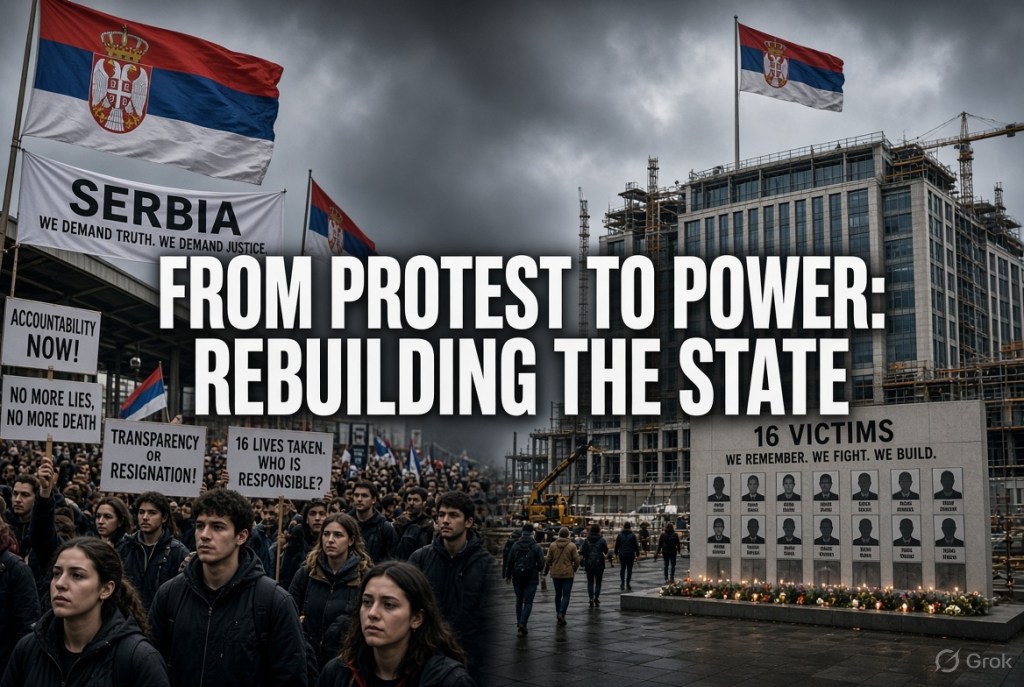
The true significance of a student-led movement lies not merely in its capacity to dislodge an entrenched political establishment, but in its ambition to replace personality-centred politics with an enduring architecture of public accountability. Serbia’s student mobilisation illustrates how civic resistance can evolve from street protests into an electoral challenge while attempting to preserve its grassroots character. Triggered by the November 2024 railway-station canopy collapse in Novi Sad, which killed 16 people, the movement transformed public grief into a broader demand for transparency, institutional integrity and political responsibility. Its defining question is whether moral outrage can become a credible governing philosophy. The real test is not simply whether students can challenge those in power, but whether they can reconstruct institutions without reproducing the political habits they oppose.
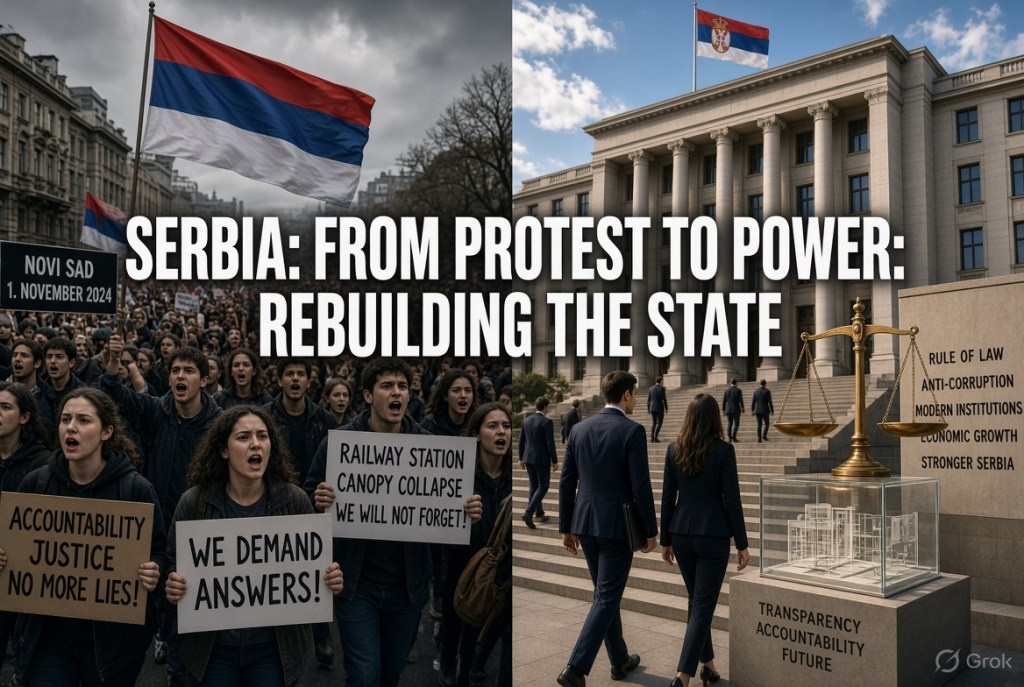
The movement’s origins are significant because infrastructure failure became a catalyst for a wider crisis of public trust. The Novi Sad tragedy raised questions about oversight, accountability and the integrity of public projects, turning a specific disaster into a symbol of perceived institutional shortcomings. The issue was no longer confined to engineering standards or administrative procedures; it concerned the relationship between the state and its citizens. When public institutions appear unable to explain failures transparently or establish responsibility convincingly, technical shortcomings can acquire profound political meaning. Serbia’s mobilisation therefore illustrates a central principle of democratic governance: citizens do not merely expect governments to deliver infrastructure and services; they expect decisions to be explainable, public resources to be protected and failures to be investigated impartially. Protest becomes transformative when these expectations are translated into institutional demands.

Bangladesh’s 2024 uprising offers a powerful comparison. What began as opposition to public-sector employment quotas expanded into a nationwide movement that culminated in Sheikh Hasina’s departure from office. The episode demonstrated the disruptive potential of student mobilisation, but it also exposed the distinction between removing an incumbent government and constructing a durable democratic settlement. Serbia’s electoral pathway represents a different strategic ambition: translating sustained civic mobilisation into parliamentary representation. Neither route guarantees institutional renewal. A political rupture can open space for reform, while electoral participation can confer democratic legitimacy; both must ultimately produce accountable administration and credible institutions. The essential lesson is that the fall of a government is an event, whereas the reconstruction of public trust is a long-term institutional process. Movements must prepare for both.
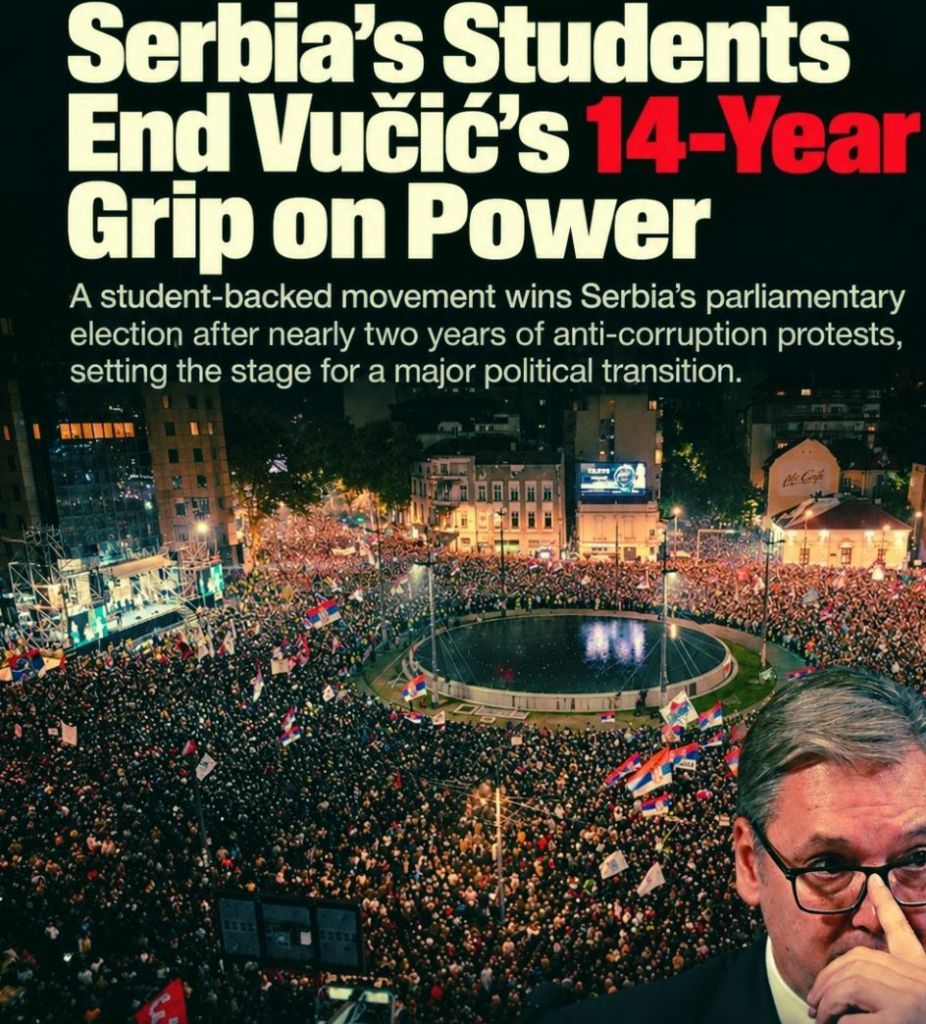
Sri Lanka’s 2022 Aragalaya reinforces this distinction. Amid economic collapse, shortages and widespread public anger, mass mobilisation helped force President Gotabaya Rajapaksa to resign. Yet the protest movement did not automatically acquire governing authority, and established constitutional mechanisms and political actors shaped the transition. This exposed a recurring weakness in popular movements: the ability to mobilise citizens does not necessarily confer the organisational capacity to govern. Serbia’s experiment raises the same fundamental challenge. Can a movement establish a credible political vehicle while remaining independent of the patronage networks and personality cults it criticises? Collective deliberation, civic participation and transparent candidate selection may offer part of the answer. However, these methods become meaningful only when they influence legislation, public appointments, budgets and administrative conduct. Street legitimacy must eventually be converted into institutional performance.
France’s May 1968 revolt provides another instructive contrast. Student occupations and demonstrations expanded into a general strike involving millions of workers, shaking the political and social order without allowing the movement itself to capture parliamentary power. Its influence endured through changes in cultural debate, education, labour relations and social attitudes. Serbia’s student-backed electoral experiment seeks to bridge the distance between changing public consciousness and exercising formal political authority. Yet entering parliament creates a new set of contradictions. Citizens united by opposition to corruption may disagree sharply over taxation, welfare, economic liberalisation and foreign policy. A protest platform can sustain unity through a shared grievance; a governing programme must reconcile competing priorities. Electoral victory provides a mandate to govern, not a licence to assume that society has reached consensus on every substantive question.
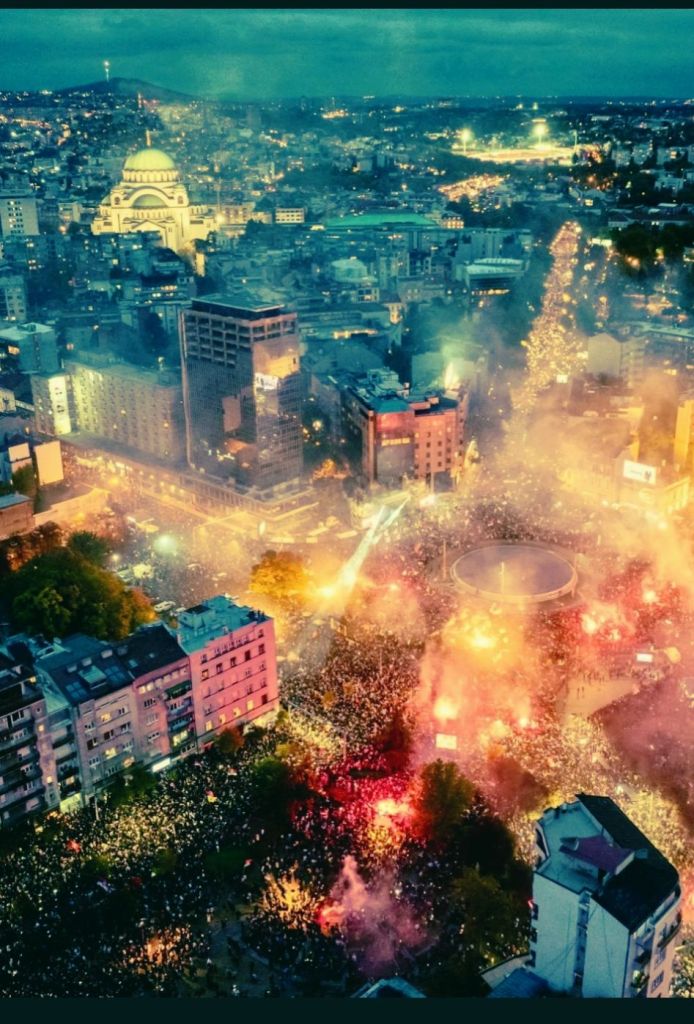
The Serbian movement’s most distinctive aspiration is to separate political leadership from individual personality. Collective deliberation, open assemblies and transparent candidate selection can reduce dependence on charismatic leaders and help distribute responsibility. A common agenda centred on public accountability, independent institutions and transparent procurement can unite people across ideological differences. But leaderlessness is not the same as effective organisation. Parliamentary government requires identifiable representatives, clear responsibilities, disciplined procedures and mechanisms for resolving disagreements. It also demands the capacity to recruit qualified professionals and make difficult decisions under pressure. The movement’s credibility will depend on whether it can retain meaningful citizen participation without allowing collective decision-making to become indecision. A movement may thrive through moral clarity; a government must additionally demonstrate administrative competence, policy coherence and the ability to deliver measurable results.
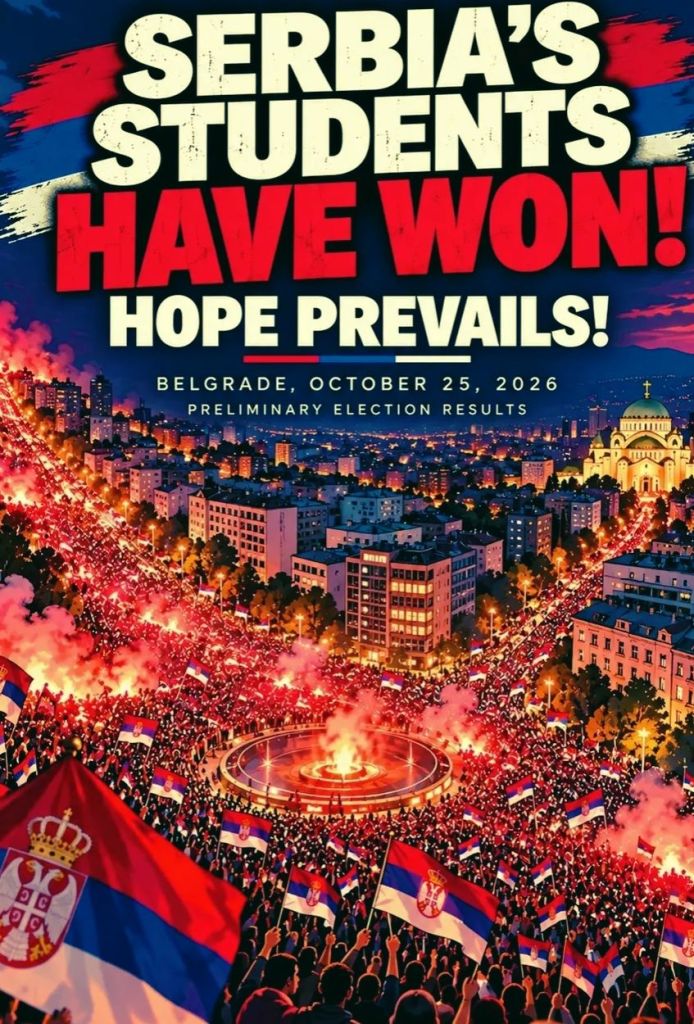
The greatest paradox emerges when resistance becomes responsibility. The decentralised structures that protect a movement from internal domination may complicate executive decision-making, while the urgency of government can encourage the concentration of authority that the movement originally opposed. Serbia must reconcile participatory democracy with professional administration, parliamentary accountability and clear executive responsibility. Its international relationships, including ties with the European Union and Russia and the unresolved Kosovo question, further complicate the task. An anti-corruption consensus cannot, by itself, resolve strategic disagreements. Reform also requires restraint: investigations must follow evidence, recruitment must be fair, procurement must be transparent, and oversight institutions must remain independent. Indiscriminate purges could weaken the state, while excessive compromise could dilute reform. The challenge is to change institutional incentives and safeguards, rather than merely replace the individuals who occupy positions of power.
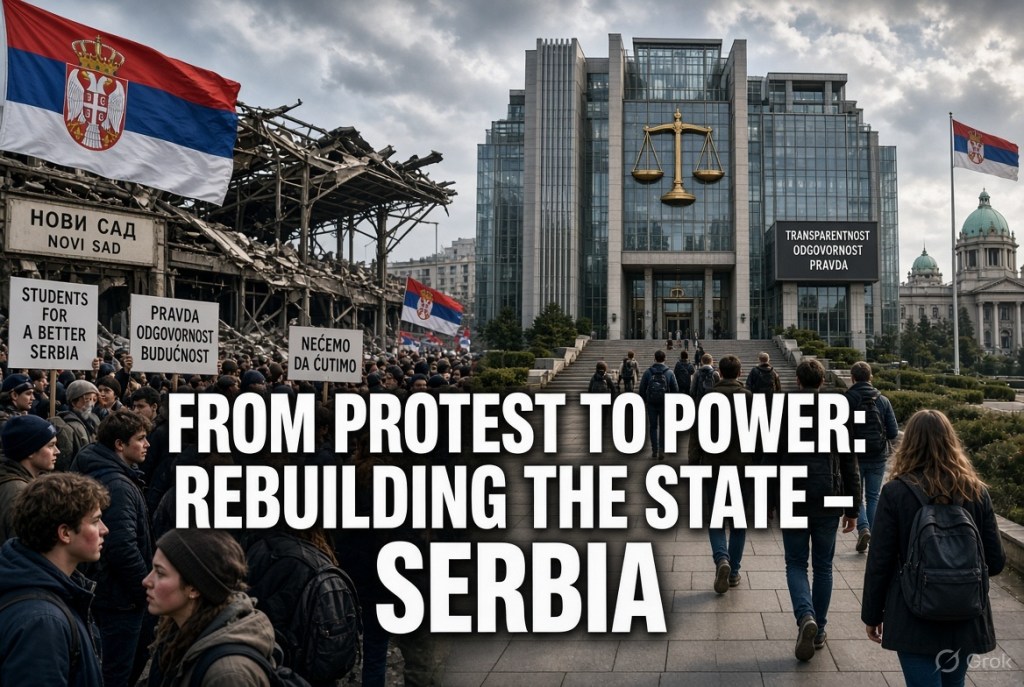
Serbia’s wider lesson is that protest becomes genuinely transformative only when it develops an institutional destination. Bangladesh demonstrated the power of mass mobilisation to precipitate political change; Sri Lanka revealed the difficulty of converting public revolt into governing authority; France illustrated how a movement can reshape society without capturing the state. Serbia’s experiment seeks to bridge these different trajectories by turning civic resistance into electoral representation while retaining public accountability as its organising principle. Its ultimate success cannot be measured simply by the defeat of an established political force or the entry of students into parliament. It must be judged by whether institutions become more transparent, public services more effective, corruption more difficult to conceal and citizens more capable of holding leaders accountable. The real revolution begins the morning after victory—when yesterday’s protesters must prove that tomorrow’s government can be different.
VISIT ARJASRIKANTH.IN FOR MORE INSIGHTS

