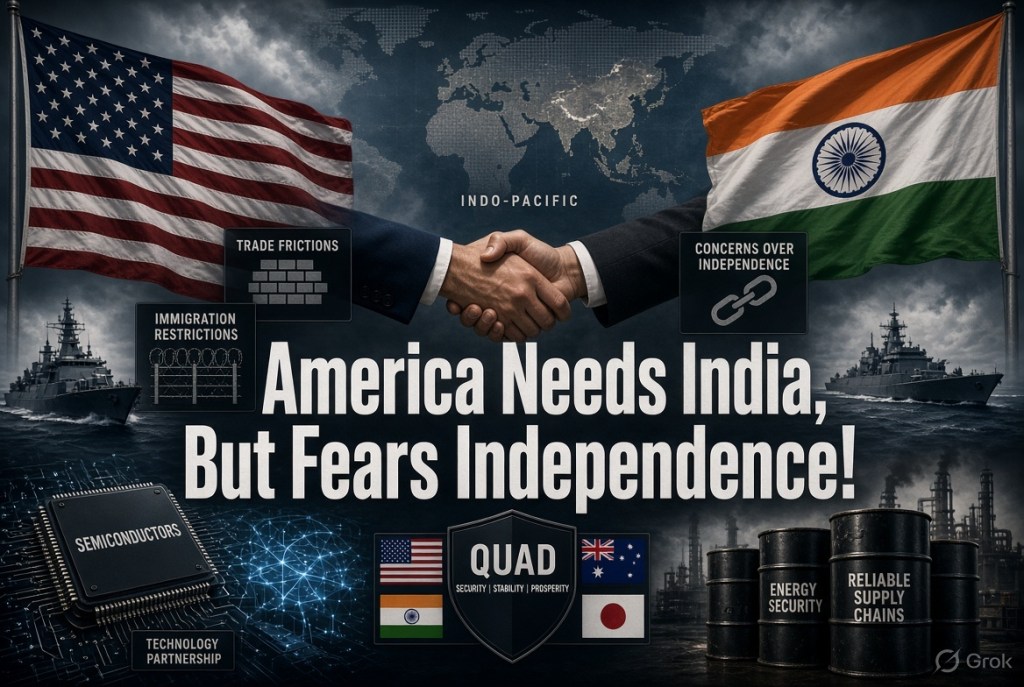
America’s evolving relationship with India exposes one of the defining paradoxes of twenty-first-century geopolitics: India has become too consequential for Washington to alienate, yet too independent to control. The strategic engagement surrounding US Secretary of State Marco Rubio’s reported October 2026 visit, including attention to Reliance Industries’ Jamnagar refinery, illustrates how India’s economic and industrial capabilities increasingly intersect with American geopolitical interests. Defence cooperation, the Quad, critical minerals, advanced technology and supply-chain diversification reinforce India’s importance. Yet trade pressures, immigration restrictions and disagreements over Russian oil expose the transactional instincts of American foreign policy. This is neither an uncomplicated strategic partnership nor a temporary diplomatic convenience. It is a negotiation between an established superpower seeking to preserve influence and a rising power determined to expand its options. Washington increasingly recognises India’s indispensability; the decisive question is whether that recognition will translate into respect for India’s sovereign choices.
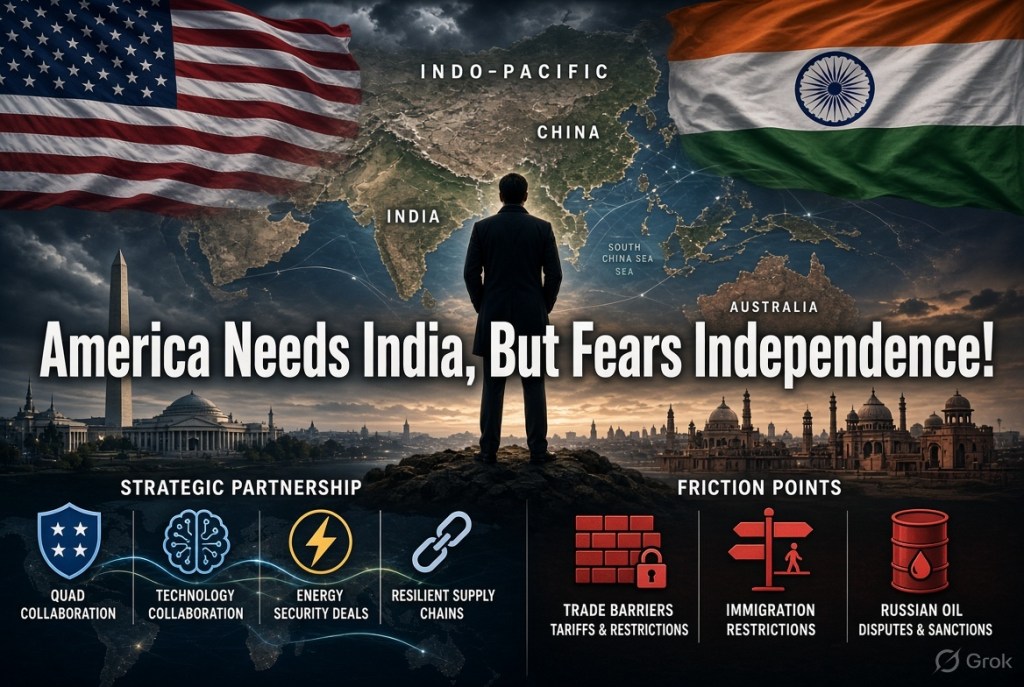
The proposed bilateral trade agreement brings this contradiction into sharp focus. India seeks competitive access for its manufacturers, particularly in textiles, apparel and footwear, while protecting legitimate domestic economic interests. Washington seeks wider access to the Indian market and stronger commercial commitments. Beneath the tariff negotiations lies a larger contest over who captures the benefits of economic integration. India must compete with manufacturing economies such as Vietnam and Bangladesh while attracting investment, expanding exports and generating employment at home. Unpredictable tariffs, discretionary penalties and prolonged negotiations undermine the certainty businesses require for long-term investment. A strategic partnership cannot indefinitely depend on political goodwill, temporary exemptions or last-minute concessions. Both governments must pursue transparent, reciprocal and durable trade arrangements. India must also recognise that diplomatic leverage has limited value unless converted into manufacturing capacity, technological upgrading, stronger logistics and measurable economic gains. Trade must become an engine of shared prosperity, not an instrument of strategic intimidation.
The Quad offers a more substantive foundation for cooperation because it connects strategic intent with practical outcomes. Maritime domain awareness, critical-mineral security, resilient supply chains and Indo-Pacific infrastructure can strengthen regional stability without requiring India to enter a formal military alliance. Initiatives associated with maritime information-sharing and the Indo-Pacific Partnership for Maritime Domain Awareness illustrate the potential for operational cooperation. Nevertheless, Washington’s priorities will not always coincide with New Delhi’s. The United States seeks to maintain a favourable balance of power in Asia while retaining flexibility in managing its competition with China. India, meanwhile, seeks a stable Indo-Pacific in which no single power can dictate regional choices. The distinction matters: India is not merely an instrument of American China policy but a major power with its own security interests and regional responsibilities. The Quad will achieve lasting significance only when its members treat one another as contributors to a shared strategic framework rather than participants assigned unequal roles.

Energy diplomacy reveals the growing intersection of Indian industrial capacity and American geopolitical calculations. Jamnagar’s sophisticated refining infrastructure enables the processing of diverse crude grades and the production of valuable petroleum products at exceptional scale. American interest in alternative crude supplies, including Venezuelan heavy crude, places Indian refining capabilities within a wider contest over energy markets and supply-chain resilience. Engagement with major Indian energy companies therefore has significance beyond corporate commerce. India can diversify sourcing, strengthen commercial flexibility and negotiate with multiple suppliers; the United States can deepen commercial relationships with a capable refining partner. However, sanctions, shipping, insurance, payment mechanisms and commercial viability remain decisive constraints. India must not confuse commercial cooperation with an obligation to align automatically with Washington’s geopolitical preferences. Energy security is a sovereign economic necessity, not a test of diplomatic loyalty. Cooperation will be most durable when it rests on viable commercial terms and respects the independent decision-making of both countries.
Immigration policy presents another contradiction. Indian professionals and the diaspora have contributed significantly to American technology, entrepreneurship, research and investment, creating a human bridge between the two economies. Tighter H-1B restrictions and sharply increased visa costs, where applicable, can weaken this ecosystem by raising uncertainty for employers and skilled workers. American policymakers may justify such measures through domestic labour-market priorities, but the wider consequences deserve scrutiny. Companies may reconsider workforce deployment, professionals may explore alternative destinations, and the United States may surrender some of its advantage in attracting global talent. India should respond not through retaliatory rhetoric but by accelerating investment in artificial intelligence, research, advanced manufacturing, universities and globally competitive innovation ecosystems. The objective is not to weaken Indo-American technological links; it is to ensure that these links remain mutually beneficial rather than structurally dependent on one country’s changing domestic politics.
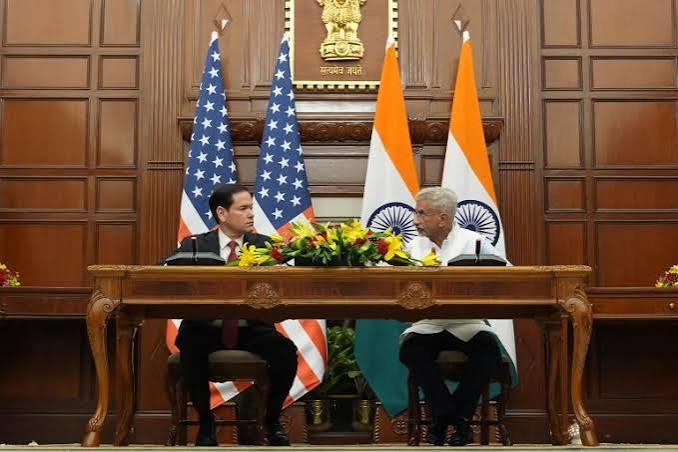
Pakistan remains a sensitive test of strategic trust. American assurances that engagement with Islamabad will not disadvantage India may offer reassurance, but New Delhi must assess policy through concrete actions rather than diplomatic language alone. Washington has its own interests in counterterrorism, nuclear security and regional stability; India has legitimate security concerns shaped by its direct experience. Neither relationship should be reduced to a zero-sum equation, but neither should India assume that American priorities will automatically mirror its own. At the same time, India’s reported diplomatic efforts concerning a Black Sea ceasefire illustrate its ambition to contribute independently to international de-escalation. Practical proposals concerning energy infrastructure, shipping and maritime security can demonstrate that strategic autonomy means more than maintaining distance from competing powers. It means retaining the capacity to engage different parties, advance workable solutions and defend national interests without becoming an extension of another country’s foreign policy.
The deeper challenge is psychological as much as geopolitical: can Washington accept that India’s rise is an independent historical development rather than a strategic asset to be managed? Defence cooperation, technology partnerships and investment can generate considerable mutual benefits, but they cannot compensate indefinitely for distrust or coercive economic practices. The United States must recognise that India will make its own decisions on energy, trade, regional security and international partnerships. India, in turn, must strengthen its competitiveness, institutional capacity and negotiating consistency, while avoiding the assumption that strategic importance makes it immune to pressure. Disagreements should not become loyalty tests, and concessions should not be mistaken for permanent alignment. Mutual respect requires predictable rules, reciprocal obligations and an honest recognition of legitimate differences. The strongest partnership is not one in which both countries agree on everything, but one in which disagreement does not destroy cooperation.
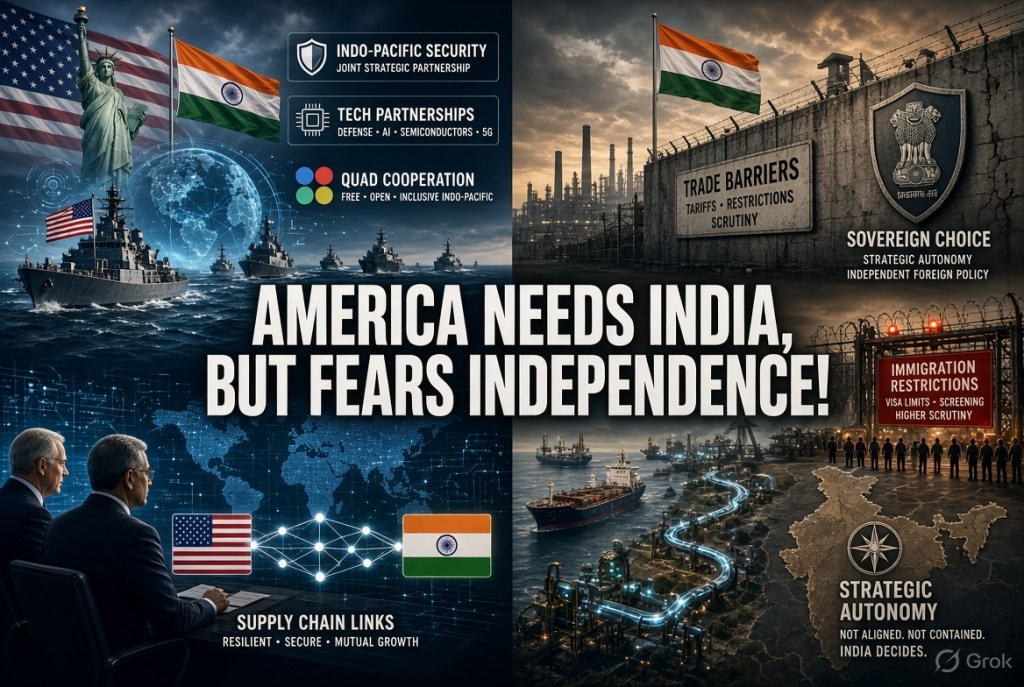
October 2026 offers an opportunity to move beyond diplomatic symbolism towards institutional certainty. India and the United States possess complementary strengths in capital, technology, defence, energy, manufacturing and human talent. Yet unresolved trade disputes, immigration uncertainty and competing geopolitical interests could erode the promise of strategic convergence. The way forward lies in a credible trade agreement, predictable professional mobility, sustained Quad cooperation and commercially sound energy partnerships. India must neither seek to replace America nor accept dependence upon it. Its objective should be to cooperate confidently with Washington while preserving productive relationships across the international system. For the United States, the strategic dividend of partnership will depend on recognising India as a decision-maker rather than a subordinate. The ultimate test is not how frequently America praises India, but whether it respects India when New Delhi chooses differently. That is where strategic necessity must mature into genuine partnership.
VISIT ARJASRIKANTH.IN FOR MORE INSIGHTS

