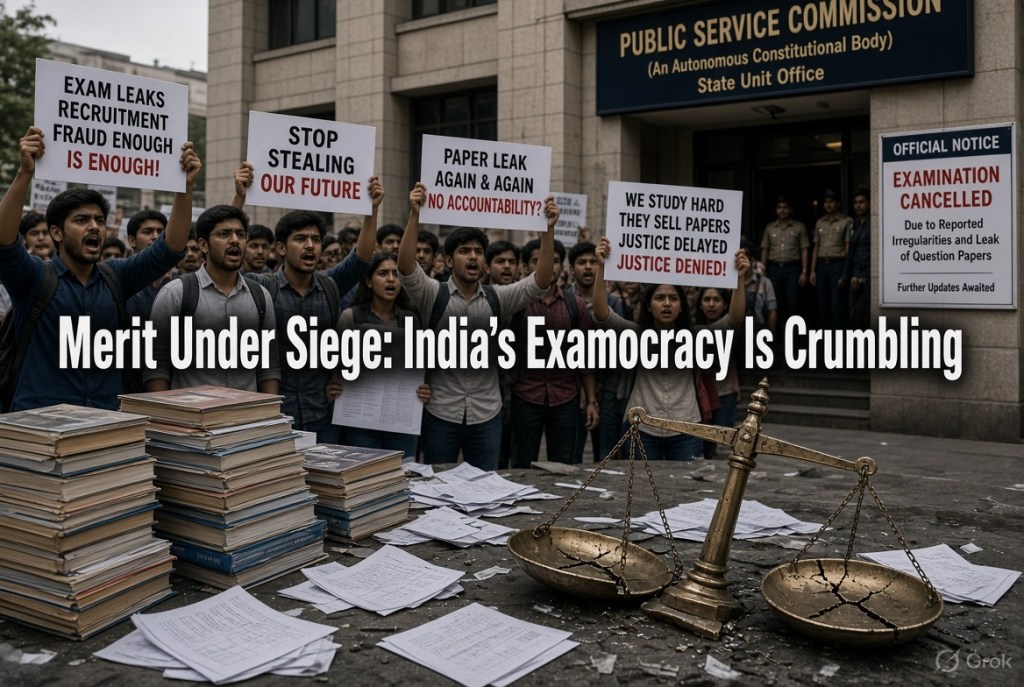
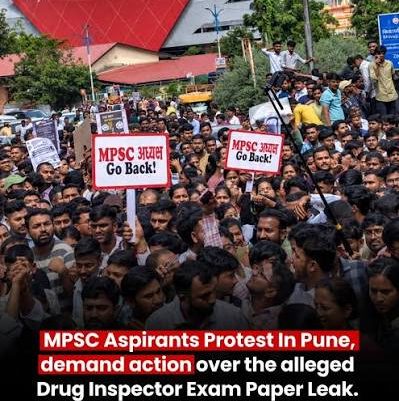
India’s Public Service Commissions were conceived as constitutional guardians of merit, entrusted with ensuring that public employment remains accessible to citizens on the basis of ability rather than influence, wealth or political connections. Yet recurring allegations of question-paper leaks, examination fraud, bribery, nepotism, opaque evaluations and administrative manipulation have raised an uncomfortable question: are institutions established to protect merit becoming vulnerable to the very forces they were designed to resist? The recent 11-day agitation in Pune over the alleged Maharashtra Public Service Commission (MPSC) Food and Drug Administration examination leak has once again exposed this troubling fault line. Students demanded cancellation of the examination, accountability for institutional leadership and comprehensive reforms. The reported government decision to cancel the examination and institute inquiries may address the immediate controversy, but the deeper national question remains: who protects the dreams of millions of young Indians when the institutions entrusted with selecting public servants fail to command confidence?
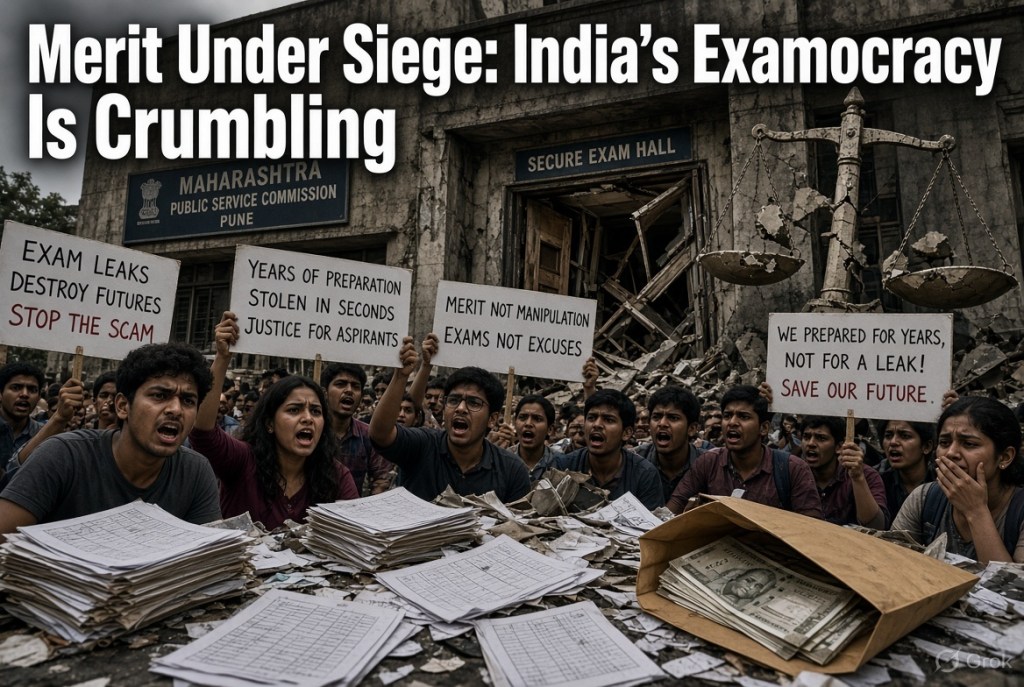
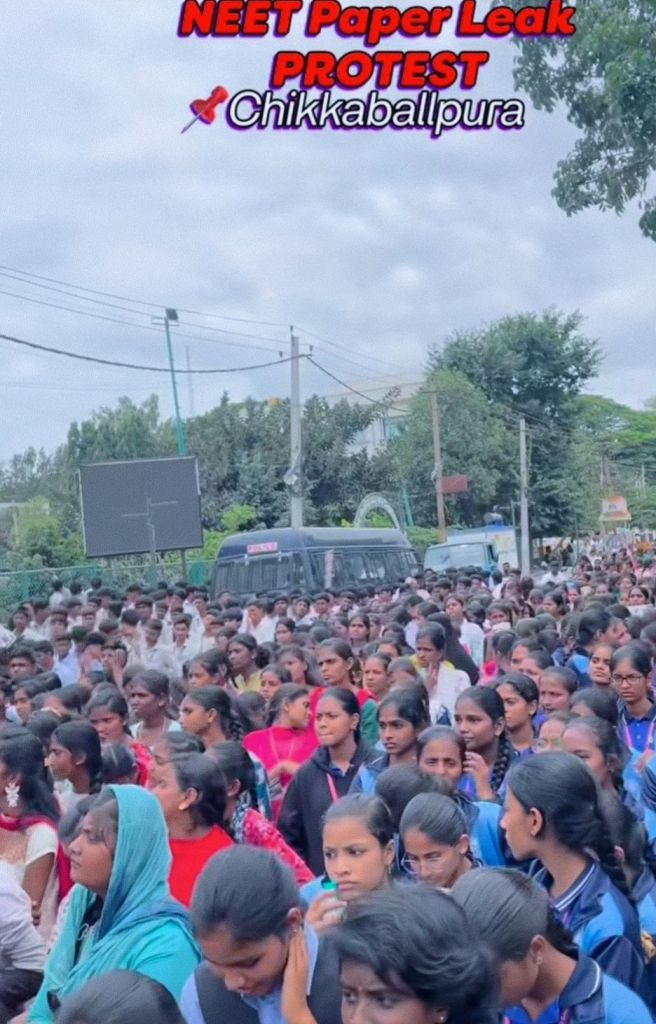
The crisis cannot be understood as an isolated Maharashtra episode. Across India, allegations and investigations involving different recruitment bodies and examination systems have repeatedly raised concerns about the security, fairness and credibility of competitive selection. Controversies associated with state public service commissions, including recruitment examinations in Jharkhand and other states, alongside national examination disputes involving NEET and other high-stakes tests, demonstrate the breadth of public anxiety. These cases differ in their facts, legal status and institutional arrangements; allegations in one cannot automatically be treated as proof against another. Nevertheless, their cumulative impact is significant. Every substantiated leak, unexplained irregularity or prolonged investigation reinforces the perception that competitive examinations may not always provide the level playing field they promise. The danger is not merely that an examination might be compromised, but that an entire generation begins to doubt whether honest preparation remains a reliable route to public employment.

The economics of examination fraud make the problem particularly disturbing. A question-paper leak is rarely just a piece of information escaping from a secure room. Where organised malpractice is established, it can involve intermediaries, financial transactions, compromised personnel, insecure vendors, logistical coordination and networks connecting those with privileged access to those willing to purchase an unfair advantage. Information becomes a commodity, influence becomes a service and merit becomes a market in which some candidates may be forced to compete against illicit purchasing power. Corruption can also operate through less visible vulnerabilities: unexplained marks, inconsistent evaluation, opaque interviews, manipulated records or selective access to information. Such practices must be distinguished from unproven allegations, but they demand serious scrutiny wherever credible evidence emerges. The central investigative question should therefore extend beyond who allegedly leaked a paper to how the system permitted the breach, who benefited, which safeguards failed and why early warning signals did not trigger timely intervention.
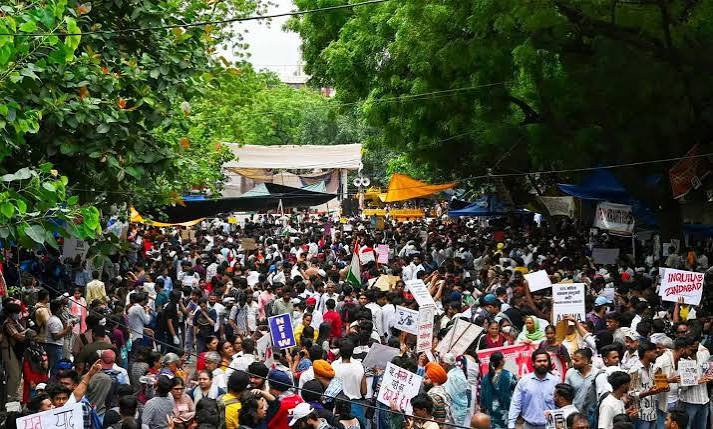
Behind every examination number is a human story that administrative files cannot adequately capture. Young aspirants spend years preparing for civil services and other government positions, often sacrificing employment, personal ambitions and family resources. Parents may borrow money to finance coaching, accommodation and examination expenses, while candidates organise their lives around age limits, eligibility conditions and uncertain recruitment calendars. When an examination is cancelled because of institutional failure, the government can announce another test, but it cannot restore the months or years already lost. Candidates approaching the upper age limit may lose their final opportunity; financially vulnerable families may be unable to sustain another preparation cycle. The psychological consequences can be equally severe, as repeated uncertainty erodes confidence and creates a sense of helplessness. The state must recognise that examination integrity is not a technical convenience. It is a public obligation to ensure that citizens who comply with the rules are not made to bear the consequences of failures they neither caused nor could prevent.
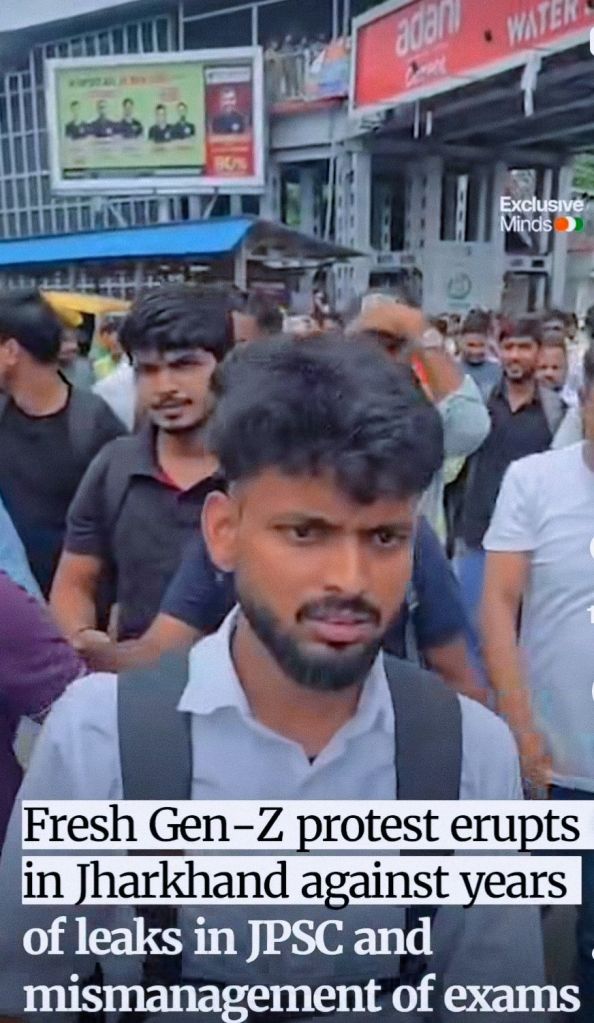
The Maharashtra agitation also highlights the limitations of reactive governance. Cancelling a compromised examination, appointing an inquiry committee and asking a senior official to step aside may be necessary immediate measures, but they do not constitute institutional transformation. The real test lies in the quality and independence of the investigation, the identification of individual and supervisory responsibility, and the implementation of recommendations within a defined timeframe. Accountability must be evidence-based: an officeholder should neither be presumed guilty because an irregularity occurred nor shielded from scrutiny merely because the institution enjoys constitutional protection. Articles 315–323 of the Constitution establish the framework for Public Service Commissions, while Article 317 provides specific safeguards and procedures concerning the removal and suspension of their members. Institutional independence and accountability must coexist. Independence cannot become immunity, just as public outrage cannot justify bypassing the law. A credible system must investigate fairly, publish findings where legally permissible and distinguish criminal culpability from administrative negligence and structural weakness.
The most urgent reform is to secure the entire examination lifecycle rather than concentrating exclusively on the question paper. Question setting, printing, encryption, transportation, distribution, examination-centre management, answer-sheet custody, scanning, evaluation, data storage and publication must operate within auditable controls. Independent security assessments, tamper-evident custody records, restricted access, digital audit trails and forensic investigation should become standard safeguards appropriate to each examination. Recruitment bodies should publish predictable calendars, disclose answer keys and marks under predetermined rules, establish time-bound grievance mechanisms and commission periodic independent audits. Statistical analysis can identify unusual evaluation patterns, but technology cannot replace ethical leadership, competent supervision and credible enforcement. Whistleblowers who report irregularities must be protected against retaliation, and procurement arrangements with examination vendors must be subject to rigorous scrutiny. Where evidence demonstrates organised criminal activity, investigations and prosecution should pursue the entire network rather than stopping with convenient individual targets. Prevention, detection, accountability and candidate protection must function as one integrated system.
India’s demographic dividend cannot be realised if the institutions governing access to public employment become sources of uncertainty. The country cannot simultaneously encourage young people to acquire qualifications, prepare for public service and invest their hopes in merit while allowing unresolved recruitment controversies to undermine their confidence. State governments must examine the performance of their respective commissions, identify recurring vulnerabilities and establish measurable standards for security, transparency, complaint resolution and recruitment timelines. National institutions should facilitate the sharing of best practices without erasing the constitutional and administrative autonomy of state commissions. Equally important, every inquiry must lead to an action-taken report, and every major recruitment failure must produce lessons that are implemented rather than forgotten after public attention fades. The measure of reform is not the number of committees appointed, statements issued or examinations cancelled; it is whether the next examination is demonstrably safer, fairer and more predictable than the last.
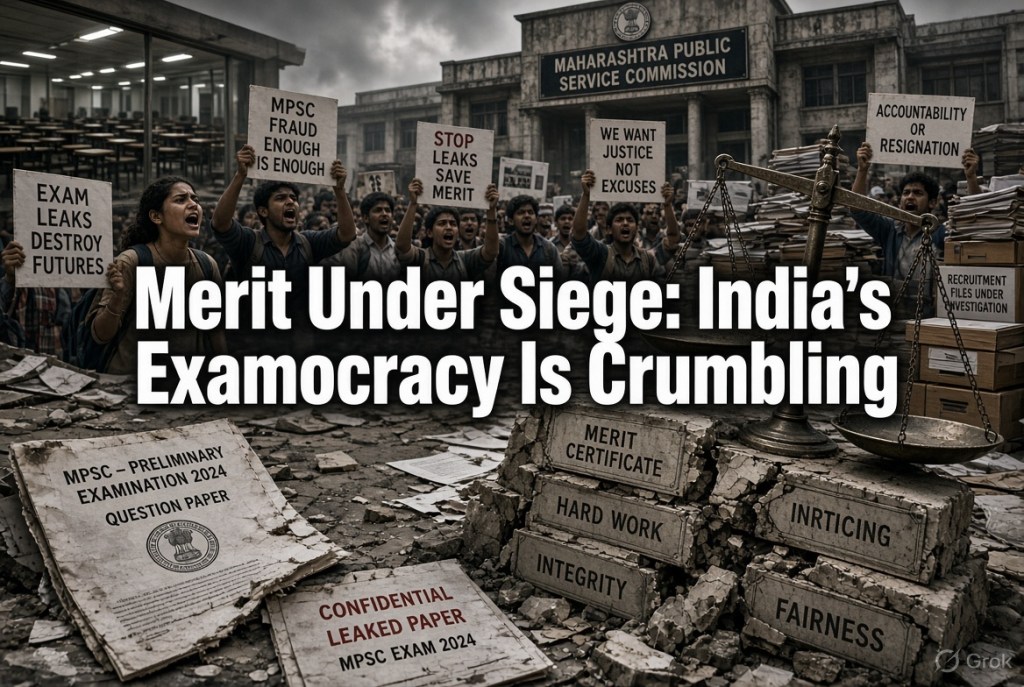
Ultimately, a Public Service Commission does far more than fill vacancies. It certifies the promise that public authority can be earned through ability, diligence and equal opportunity. When that promise becomes doubtful, the damage reaches beyond individual candidates to the credibility of governance itself. The Pune protest should therefore be seen not merely as an episode of student agitation but as a warning against the normalisation of institutional failure. The answer is neither indiscriminate condemnation of every commission nor complacent acceptance of repeated controversies. It is uncompromising, evidence-based accountability backed by structural reform. India’s young people do not ask the state to guarantee their success; they ask it to guarantee that the rules are fair and that the examination is honest. A nation that allows its merit gates to be captured risks losing not only its brightest aspirants but also their faith in the Republic. The ultimate question is brutally simple: when the guardians of merit fail, who guards the dreams of the meritorious?
VISIT ARJASRIKANTH.IN FOR MORE INSIGHTS!!!

