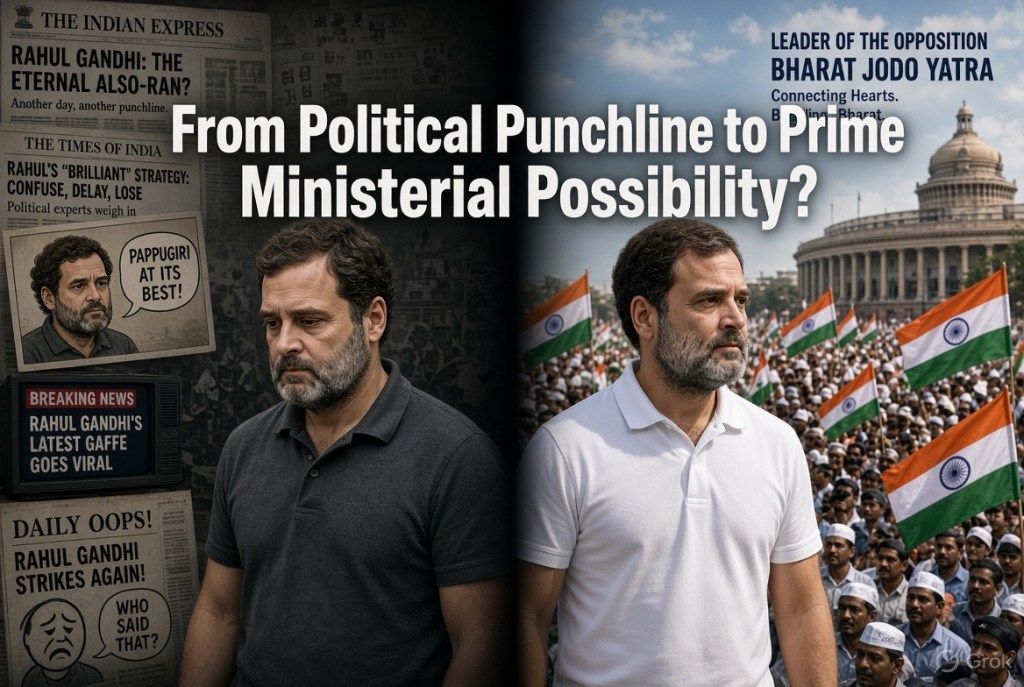
Indian politics presents a compelling paradox: a leader repeatedly ridiculed by his opponents is also treated as a consequential challenger by the very political establishment that seeks to diminish him. The “Pappu” caricature was designed to portray Rahul Gandhi as politically inexperienced and incapable of matching Narendra Modi’s electoral authority. Yet persistent political attacks on Rahul and the Gandhi family suggest that their influence cannot simply be dismissed. This does not establish that Rahul is on the verge of replacing Modi; it reveals the distinction between rhetorical ridicule and strategic competition. The real question is no longer whether Rahul can command headlines, mobilise supporters or occupy the Opposition’s national stage. It is whether he can transform visibility into votes, votes into parliamentary strength and parliamentary strength into a credible proposition for governing India. Political relevance is not electoral victory, and opposition space is not a mandate.
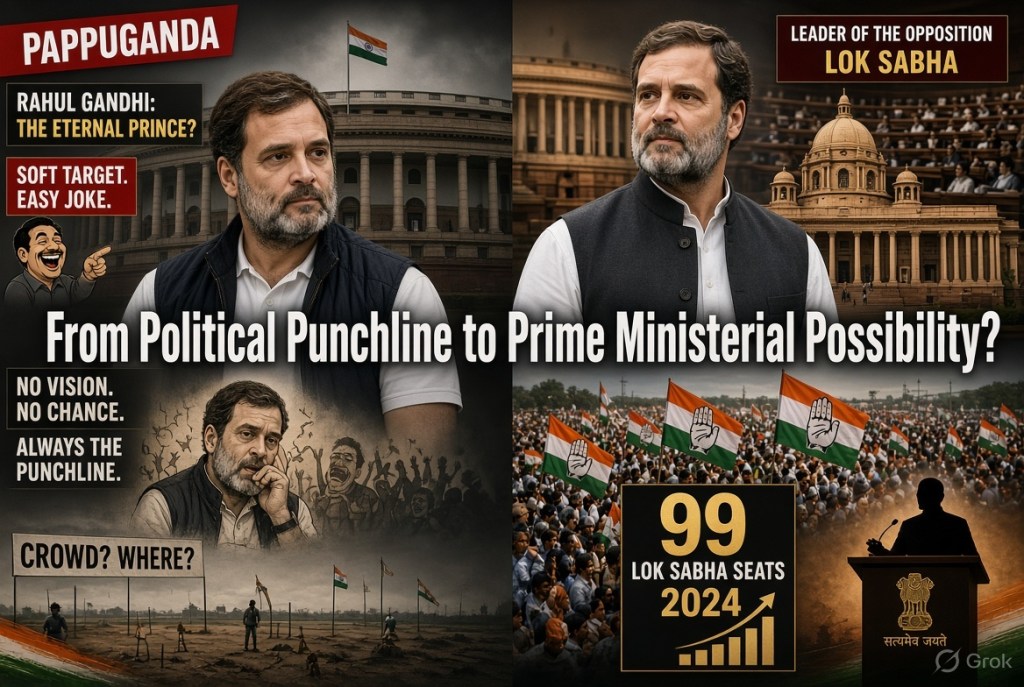
The electoral arithmetic reveals both Rahul’s opportunity and his formidable limitations. Congress increased its Lok Sabha tally from 44 seats in 2014 to 52 in 2019 and 99 in 2024, marking a substantial recovery from its earlier decline. Its national vote share, however, has remained broadly around 19–21 per cent across recent general elections. The BJP, meanwhile, has consolidated a substantially larger national support base, benefiting from Modi’s leadership, organisational reach and an expansive political narrative. That advantage cannot be neutralised through anti-incumbency rhetoric alone. Nevertheless, India’s first-past-the-post system means that vote distribution, constituency-level competition and alliance coordination can matter as much as national vote share. In 2024, the BJP emerged as the largest party but lost its single-party parliamentary majority. This demonstrates that electoral dominance is not invulnerable. Rahul’s realistic pathway may therefore depend on narrowing the vote gap, strengthening Congress in competitive states and helping construct a coalition capable of converting fragmented opposition support into parliamentary seats.
The deeper contradiction lies between personal appeal and organisational capacity. Rahul’s Bharat Jodo Yatras projected endurance, accessibility and engagement with ordinary citizens, challenging the caricature of political unseriousness. As Leader of the Opposition, he has also acquired an institutional platform to question the government on employment, examination irregularities, social justice and democratic accountability. Yet national visibility cannot compensate for weak district committees, factional disputes, ineffective candidate selection or inadequate booth-level mobilisation. Electoral setbacks in states such as Haryana and Maharashtra, alongside the challenges confronting Congress in Bihar, demonstrate that a compelling national message does not automatically translate into state-level victories. Local leadership, caste and community equations, regional parties, campaign management and candidate credibility all shape outcomes. Rahul may influence the national political narrative, but Congress must rebuild the organisational machinery that delivers votes. The decisive measure of his leadership will be whether the party becomes stronger in constituencies where elections are actually won, not merely in arenas where political arguments are loudly contested.
Street mobilisation remains a legitimate instrument of democratic politics. Demonstrations can expose grievances concerning unemployment, examination failures, institutional impartiality and electoral procedures, compelling governments to respond. However, protest is a means of political pressure, not a substitute for electoral organisation or a governing majority. Rahul’s challenge is to connect dissent with a clearly articulated destination. If institutions are weakening, what specific reforms would restore their independence? If young people face insecure employment and repeated examination failures, what policies would improve their prospects? If economic power is becoming concentrated, how would competition be strengthened without discouraging productive investment? Opposition politics becomes transformative when it translates public frustration into practical solutions, measurable commitments and a coherent national programme. Perpetual agitation may consolidate an existing support base, but it cannot by itself persuade undecided voters that an alternative government would perform better. The political test is whether Rahul can move from articulating what is wrong to demonstrating how he would make it right.
Electoral integrity and institutional reform demand particular precision. Rahul should present a credible framework for transparent appointments, institutional independence, impartial electoral-roll verification and effective grievance redressal. Allegations of electoral manipulation must be examined through evidence and lawful procedures; neither claims about electronic voting machines nor accusations against election officials should be treated as established facts merely because political actors repeat them. Equally, legitimate voter verification must protect eligibility without encouraging collective suspicion against particular communities. Similar standards should govern proposals concerning investigative agencies, the judiciary and constitutional institutions: transparent procedures, professional independence, accountability and safeguards against political interference. Replacing one set of officeholders with another is not institutional reform. The objective must be to establish rules that remain credible regardless of which party holds power. Rahul’s strongest democratic argument would be a reform agenda capable of earning public confidence even among citizens who disagree with Congress politically.
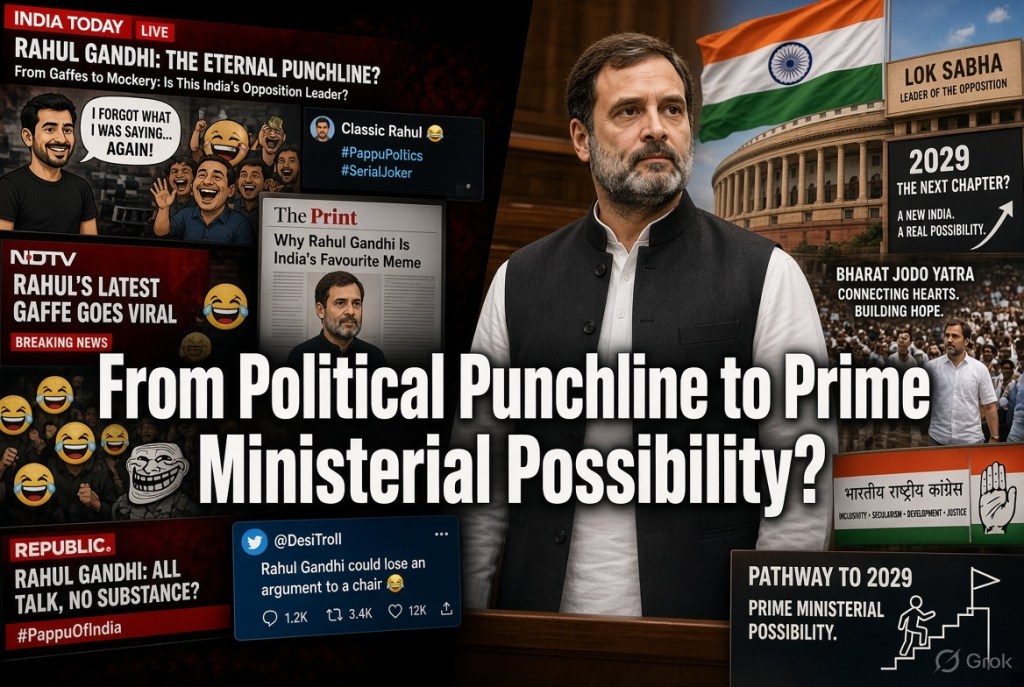
Economic management and foreign policy will be equally decisive. Voters need more than criticism of Modi; they need clarity on how a Rahul-led government would manage relations with the United States, strategic competition with China, cross-border terrorism involving Pakistan and the changing geopolitical environment of West Asia. Domestic economic policy demands the same seriousness. India requires productive investment, energy security, technological capability, competitive manufacturing and employment at a scale commensurate with its young population. Artificial intelligence and emerging technologies offer opportunities, but only with investment in research, infrastructure, skills and education. Rahul must explain how he would attract private capital while preventing monopolistic practices, improve competition without treating business as an adversary, and finance welfare commitments responsibly. Education reform must address profiteering and corruption while improving learning outcomes and employability. Rural employment and food-security programmes require transparent funding, efficient delivery and measurable impact. A political slogan may expose a problem; only a credible economic model can persuade voters that it will be solved.
Social justice could provide Rahul with a durable political framework, provided it extends beyond electoral mobilisation. A caste census must be accompanied by transparent methodology, appropriate data protection and a reasoned explanation of how the findings would inform public policy. Minority empowerment must translate into education, economic opportunity, security and equal citizenship rather than remain confined to symbolic representation. Congress must also demonstrate that it possesses the intellectual and managerial capacity to govern a complex economy and society. A shadow-cabinet-style structure, with designated policy leaders for finance, defence, foreign affairs, education, employment, technology and social welfare, could strengthen accountability and showcase preparedness well before 2029. Such a team would enable sustained policy debate, expose weaknesses early and offer voters identifiable alternatives. But it would succeed only if supported by internal democracy, disciplined coordination and a leadership culture that values expertise over factional loyalty. Congress must look and function like a potential government, not merely a coalition of leaders united by opposition to the incumbent.
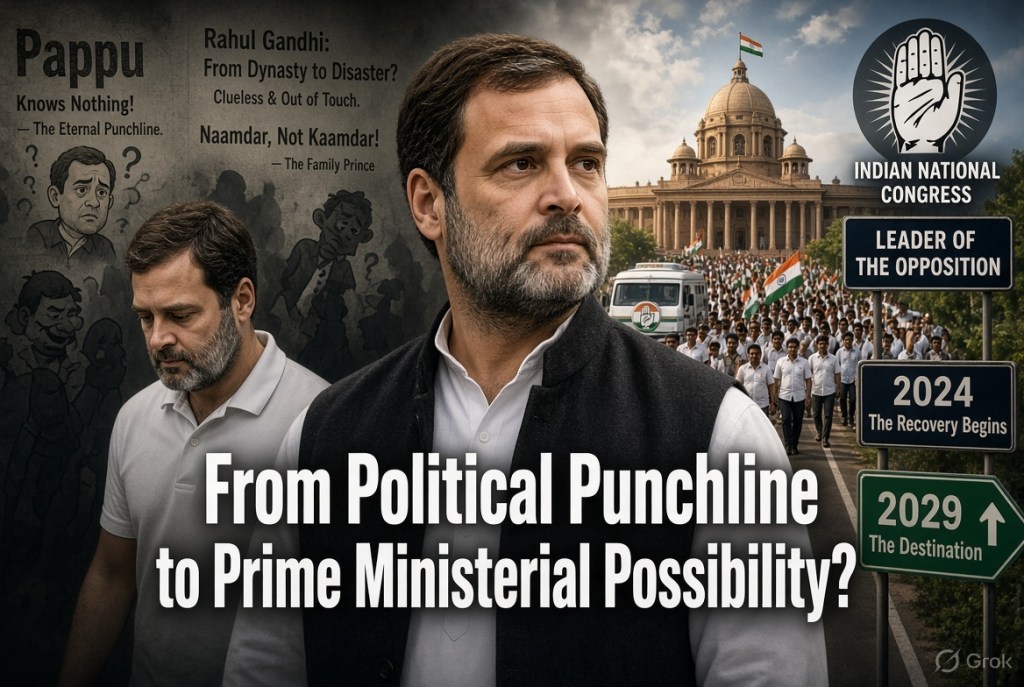
Rahul Gandhi’s decisive test before 2029 is therefore not whether Modi’s popularity declines, opposition rallies grow larger or social media announces another political turning point. It is whether Congress can convert its national vote base into a durable electoral organisation, negotiate workable alliances without surrendering its identity and present a governing programme that reaches beyond its existing supporters. Coalition politics may offer a more realistic route to power than an immediate single-party majority, but coalition-building requires electoral credibility, policy coherence and trusted partners. Rahul must publish detailed proposals, establish measurable organisational targets, identify capable policy leaders and explain how his government would confront difficult trade-offs. Modi cannot be defeated through reverse caricature, just as Congress’s weaknesses cannot be concealed by personal charisma. India needs an Opposition that scrutinises power rigorously and demonstrates its own readiness to govern. The ultimate question is not whether Rahul Gandhi can remain Modi’s most visible adversary. It is whether he can convince India that he is its most credible alternative.
VISIT ARJASRIKANTH.IN FOR MORE INSIGHTS

