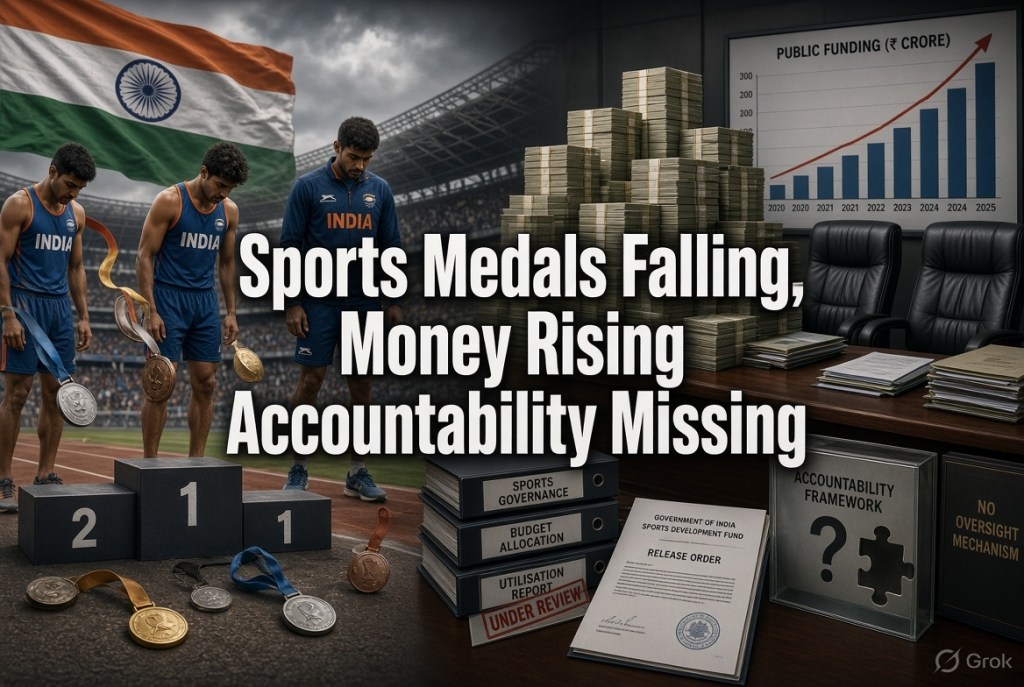
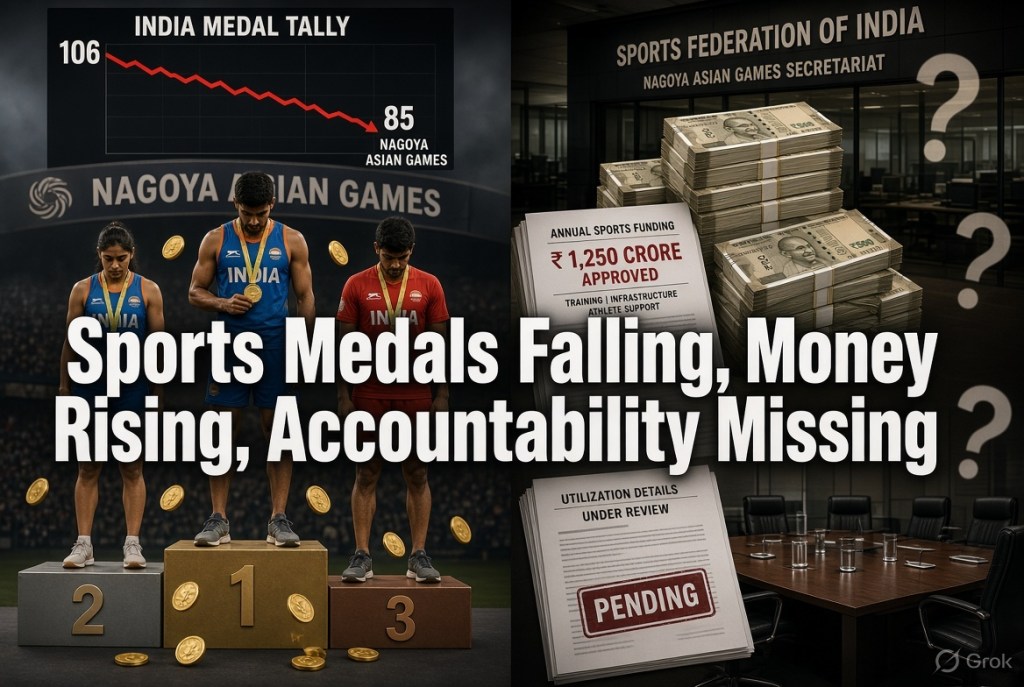
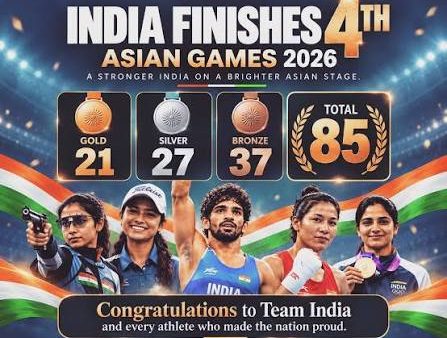
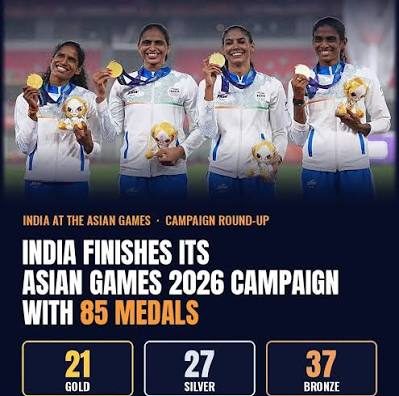
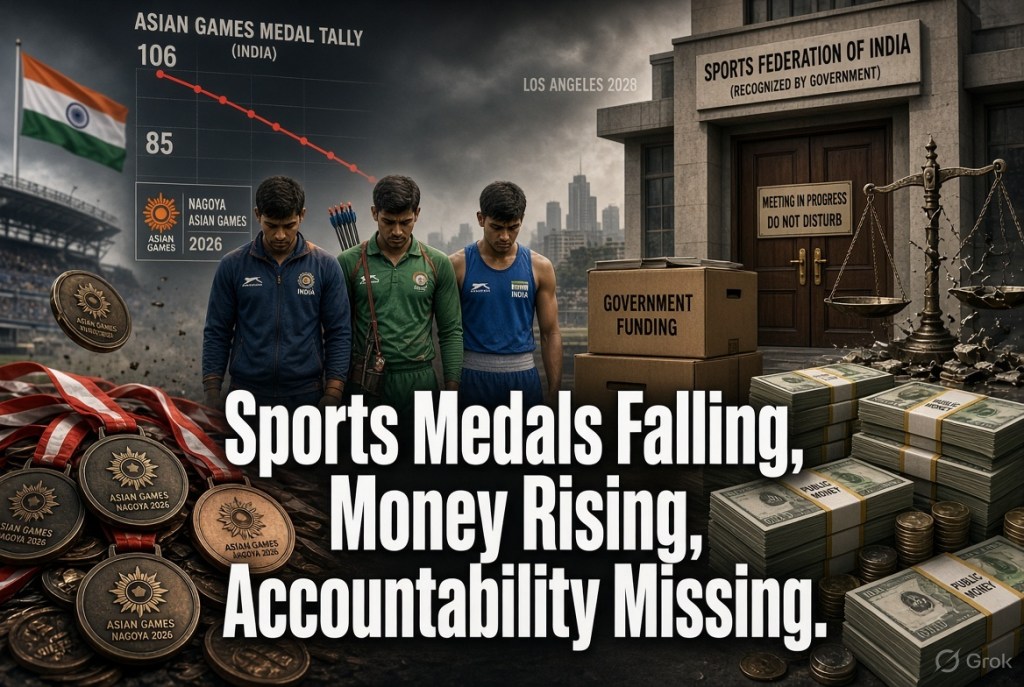
India’s performance at the Nagoya Asian Games poses an uncomfortable question that ceremonial congratulations, infrastructure announcements and official explanations cannot indefinitely suppress: when public investment rises but competitive returns decline, who is accountable? The fall from 106 medals at Hangzhou in 2023 to 85 at Nagoya in 2026, alongside athletics gold medals plunging from six to one, exposes a potentially serious disconnect between expenditure and excellence. With approximately ₹702.86 crore spent through the Annual Competition and Training Calendar and another ₹97.84 crore channelled through the Target Olympic Podium Scheme (TOPS), the debate cannot be reduced to demands for more money. It must examine whether India’s sporting institutions possess the managerial competence, scientific discipline and performance culture necessary to transform public resources into international success. Medal tallies are visible indicators; the institutional capabilities behind them determine whether success can be sustained. The real crisis is not merely fewer medals, but the absence of sufficiently transparent answers about performance.
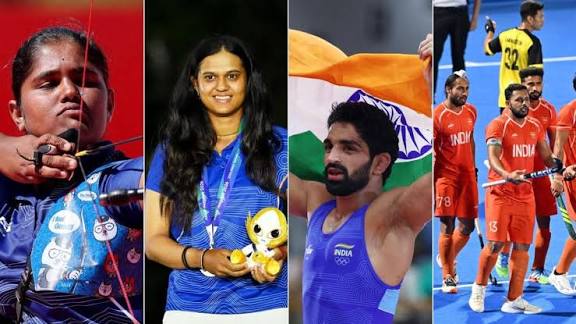
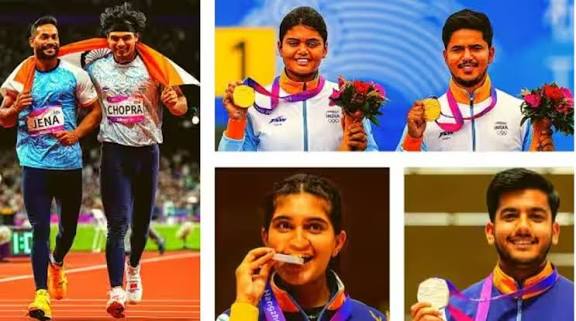
Yet an intellectually honest assessment must distinguish systemic underperformance from genuine sporting progress. India’s overall decline conceals notable achievements across individual disciplines. The country swept gold medals in men’s and women’s cricket, kabaddi and hockey, while women’s hockey ended a 44-year wait for Asian Games gold. Archery secured five gold medals, boxing produced its best-ever Asian Games gold-medal haul with three, and wrestling won six medals, its strongest performance since 1962. Athletics, despite its dramatic decline in gold medals, delivered 24 medals, five national records and 12 personal bests. These results challenge the convenient argument that Indian athletes lack ability or ambition. Instead, they suggest an uneven sporting ecosystem in which certain disciplines benefit from stronger coaching, established competitive pathways and professional management, while others struggle to convert talent into podium-topping performances. The challenge is therefore not to condemn Indian sport indiscriminately, but to understand why comparable public ambition produces such different outcomes across disciplines.
National Sports Federations (NSFs) must consequently confront the limits of administrative autonomy. At the October 15 review conclave, Sports Minister Mansukh Mandaviya reportedly questioned how long Mirabai Chanu alone would continue delivering medals and demanded that federations develop ten more athletes of comparable calibre. His intervention highlights a fundamental institutional weakness: excessive dependence on exceptional individuals instead of systems capable of repeatedly producing champions. An outstanding athlete can conceal years of deficiencies; a succession of outstanding athletes demonstrates institutional strength. Where promising competitors encounter inconsistent coaching, inadequate support, preventable injuries or delayed administrative decisions, responsibility cannot simply be transferred to those competing on the field. Reports that inadequate nominations of women support staff delayed the finalisation of parts of the contingent, if substantiated, would illustrate how avoidable administrative failures can undermine preparation. Federations seeking public support must demonstrate that their governance, selection, logistics and athlete-development systems are as professionally organised as the international performances they promise.
The apparent disconnect between sports science and competitive decision-making deserves equally rigorous scrutiny. Injuries and withdrawals involving athletes such as Jyothi Yarraji, Yashas Palaksha and Praveen Chithravel have raised questions about fitness assessments, rehabilitation and return-to-competition decisions. An injury alone does not establish negligence; elite sport inevitably carries medical risks. Nevertheless, recurring late-stage setbacks warrant independent, evidence-based examination. India cannot aspire to Olympic excellence if medical decisions become subordinate to selection pressures, medal expectations or institutional prestige. Discipline-specific fitness protocols, coordinated by the National Centre for Sports Science and Research, and systematic uploading of assessments to the National Sports Repository System could strengthen oversight. But digital records are not substitutes for professional independence. Qualified medical experts must be empowered to recommend withdrawal where participation presents unacceptable risks. Sports psychologists, nutritionists, physiotherapists and performance analysts should be integral to year-round elite programmes, not emergency additions before major competitions. Scientific preparation must be embedded in everyday decision-making, with responsibility clearly assigned when established protocols are ignored.
Public expenditure makes institutional accountability unavoidable, but simplistic cost-per-medal calculations would be equally misleading. Athletics reportedly received nearly ₹55 crore and returned one gold medal, yet its 24-medal contribution, national records and personal bests demonstrate why gold medals alone cannot measure programme effectiveness. Investments in coaching, talent development and sports science may take years to generate results. The appropriate test is whether each federation can demonstrate credible progress against clearly defined objectives. Funding assessments should incorporate competitive performance, athlete welfare, coaching quality, talent-pipeline development, international exposure and transparent utilisation of resources. Federations repeatedly missing targets without convincing explanations should face corrective supervision and, where justified, tighter funding conditions. Successful programmes and emerging disciplines should receive sustained support. Above all, public money must not become an institutional entitlement protected by influence, history or proximity to decision-makers. Accountability should neither punish honest sporting setbacks nor excuse administrative failure; it must distinguish the two through evidence.
The National Sports Governance Act, 2025, and its implementation framework offer an opportunity to professionalise sports administration, strengthen oversight and improve dispute resolution. However, legislation cannot transform institutions merely by appearing in official notifications. Effective implementation requires meaningful representation for former international athletes, independent financial scrutiny, transparent selection procedures and enforceable conflict-of-interest safeguards. Federation-wise public scorecards should disclose expenditure, coaching vacancies, athlete welfare indicators, talent-pipeline conversion and performance trends. A defined proportion of assistance could be linked to independently verified benchmarks, with progressively stronger conditions for persistent non-compliance. Such arrangements must preserve due process and guard against arbitrary ministerial interference: accountability should be rules-based, not politically selective. Any statutory compliance deadline must produce substantive governance reform rather than another round of paperwork. The objective is not to make federations administrative extensions of government, but to ensure that autonomous bodies exercise their independence responsibly and remain answerable for the resources entrusted to them.

The revamped Khelo India Scheme, with its stated outlay of ₹36,441 crore for 2026–31, could reshape India’s talent pipeline through emerging-athlete programmes, feeder schools and structured progression towards TOPS. But expanding athlete identification without proportionately increasing qualified coaches, sports scientists, rehabilitation facilities and regional academies risks creating a larger system that remains inadequately supported. India needs dependable pathways from school competitions to grassroots academies, national camps and sustained international exposure. Continuous performance tracking should identify not only emerging talent but also athletes who stagnate or leave the system, and why. The 65 Khelo India alumni reportedly included in the Nagoya contingent provide an encouraging starting point; the decisive question is how many become consistent international performers. Psychological preparation, nutrition and injury prevention must be accessible regardless of geography or family income. Talent identification must become a measurable national mission, supported by evidence and continuity, rather than a slogan revived at every review meeting.
India’s sporting future will ultimately be determined not by the size of its budget but by the quality of its institutions. Los Angeles 2028 is approaching, while ambitions to enter the top three at the 2030 Asian Games and host the 2036 Olympics demand a more disciplined sporting culture. Governments must provide resources and policy continuity; federations must deliver professional management; coaches and scientists must prepare athletes systematically; and independent oversight must ensure that public money serves sporting excellence. The Nagoya outcome should neither erase genuine achievements nor disappear beneath selective celebrations. It should trigger a federation-wise performance audit, published corrective action plans, measurable targets and enforceable timelines. India possesses talent, ambition, infrastructure and financial commitment. What remains essential is the institutional courage to identify failure, assign responsibility and reform entrenched practices. Athletes are judged by seconds, centimetres and decisive moments. Sports administrators must be judged by the systems they build, the opportunities they create and the results they can credibly explain.
VISIT ARJASRIKANTH.IN FOR MORE INSIGHTS

