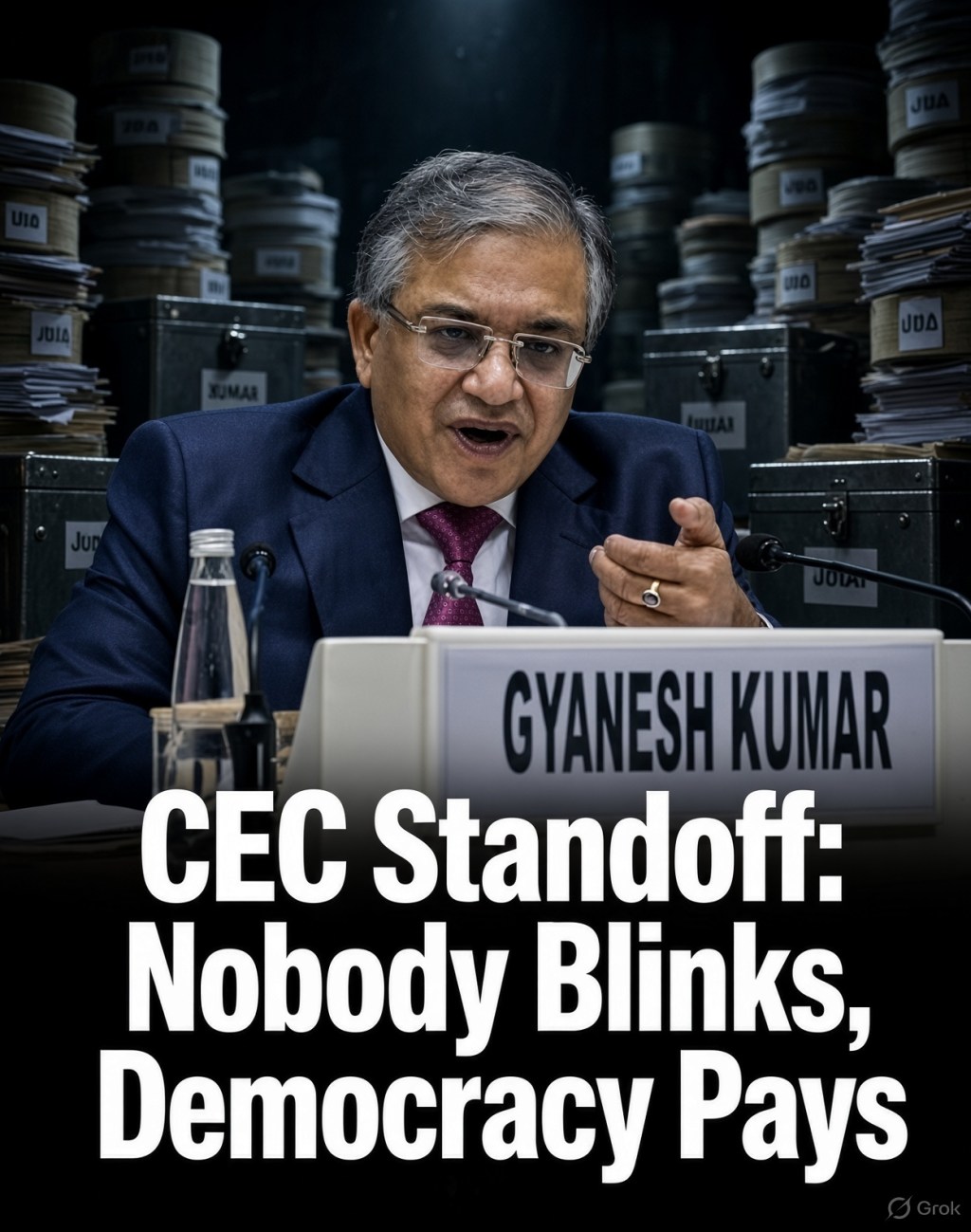
When neither the government can afford to surrender nor the Opposition can afford to retreat, a constitutional controversy becomes a political stalemate, with democratic credibility caught in the crossfire. The confrontation surrounding Chief Election Commissioner Gyanesh Kumar and the Special Intensive Revision (SIR) of electoral rolls has evolved beyond an administrative disagreement into a test of institutional independence, political endurance and public confidence. The government faces a dilemma: accepting his resignation could be portrayed as capitulation to street pressure, while defending him without adequately addressing concerns about electoral procedures risks prolonging the controversy. The Opposition faces an equally difficult choice: retreating without securing accountability could dissipate its mobilisation, while sustaining agitation without tangible outcomes could exhaust public support. This is the quintessential Catch-22 of Indian politics: each side fears that the first to blink will lose, even as the institution at the centre of the dispute risks losing public trust.
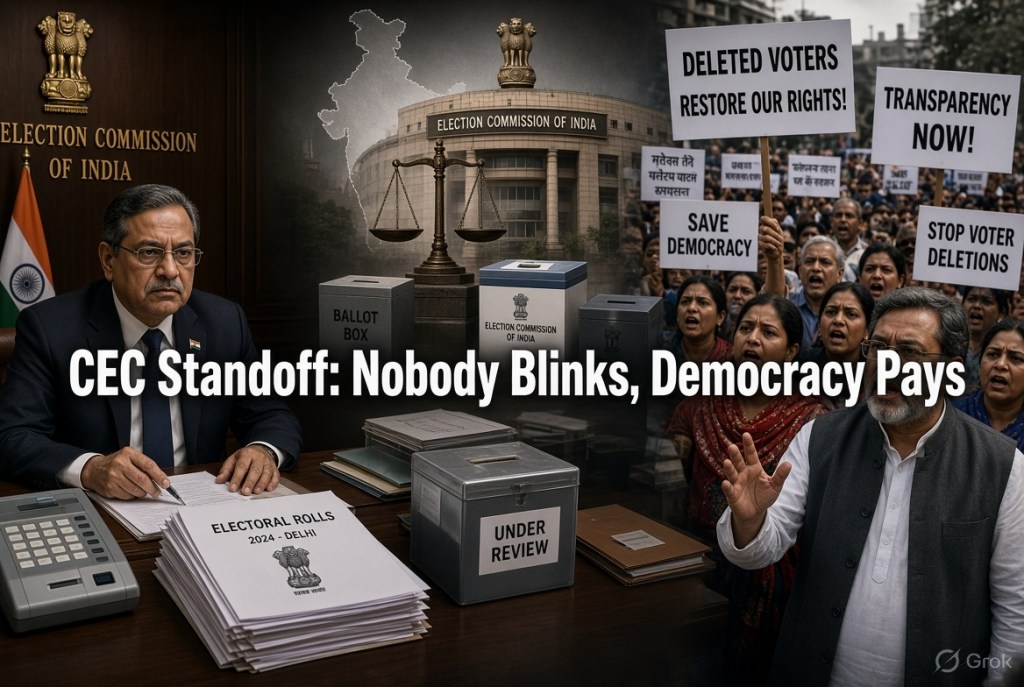
The controversy has intensified amid reported objections by fellow Election Commissioners to aspects of the Commission’s internal functioning and opposition allegations that the SIR exercise threatens electoral fairness through the deletion of eligible voters. The Election Commission of India has maintained that important decisions were taken collectively, while the BJP rejects allegations of electoral manipulation. These positions must be distinguished from any judicial determination of wrongdoing. Nevertheless, the dispute raises questions that extend beyond party politics: how are disagreements within a constitutional institution handled, how are decisions affecting millions of voters explained, and what safeguards ensure that eligible citizens are not inadvertently excluded? Youth-led demonstrations, opposition mobilisation and public scrutiny have amplified these questions. The central challenge is not simply whether the CEC retains his position, but whether the Commission can demonstrate that its procedures are lawful, transparent, consistent and open to effective scrutiny.
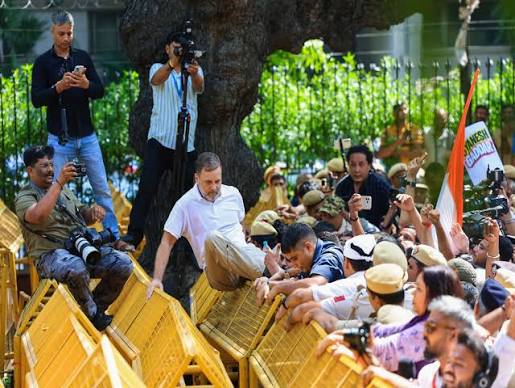
If Kumar resigns, the immediate political interpretation could be as consequential as the formal decision itself. Having defended the CEC against demands for his removal, the government could find its position portrayed as a retreat under pressure. Opposition leaders, including Rahul Gandhi and parties in the INDIA bloc, could claim that sustained demonstrations, parliamentary confrontation and youth mobilisation had compelled accountability. Such a claim might strengthen their political narrative, but resignation alone would not establish that electoral manipulation occurred or that every allegation was justified. Political accountability and legal proof are not interchangeable. Yet political symbolism matters: a departure following prolonged agitation could encourage movements to believe that sustained public pressure can force institutional change. Whether that becomes a healthy democratic precedent or an invitation to increasingly confrontational politics would depend on the evidence, the process followed and the reforms that result.
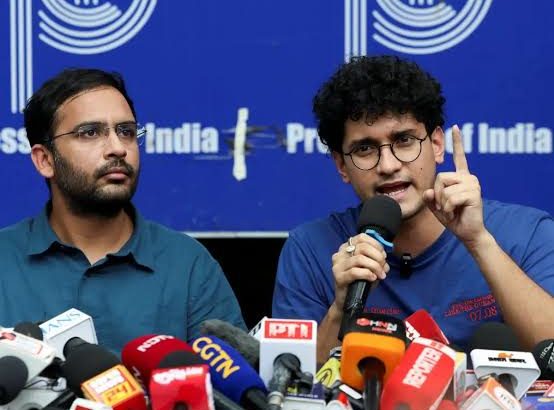
The consequences could extend well beyond one office. Youth participation in the controversy may strengthen the expectation that electoral institutions must answer difficult questions rather than rely solely on constitutional status. Opposition parties might also find common ground across ideological differences. However, mobilisation is easier to sustain around a personality than around a detailed programme of institutional reform. If resignation becomes the sole objective, the movement risks mistaking a change of personnel for a solution. The more consequential tests would be whether disputed voter deletions are independently reviewed, correction mechanisms are accessible, affected citizens receive timely remedies, and transparent procedures are established for future revisions. Without such outcomes, an apparent political victory could prove temporary, leaving the underlying questions of electoral integrity unresolved.
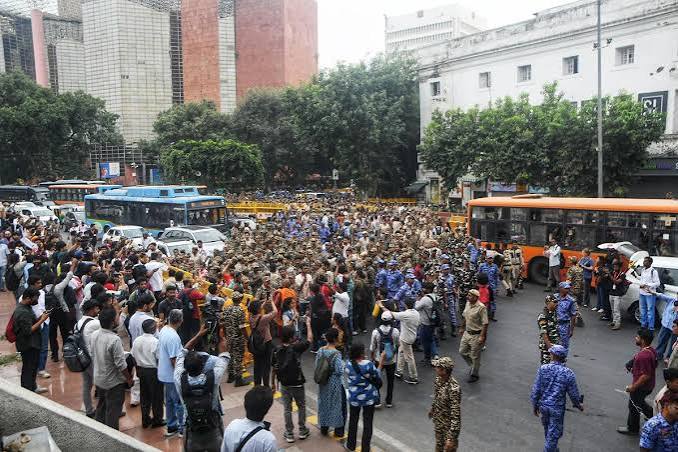
If Kumar refuses to resign and the government continues to defend him, the constitutional argument becomes more complicated. The CEC enjoys protection against removal through ordinary executive action; Article 324(5) prescribes a demanding parliamentary process for removal on grounds and through procedures comparable to those applicable to a Supreme Court judge. This safeguard exists to protect electoral administration from arbitrary political interference. However, constitutional independence cannot mean freedom from scrutiny. On 15 October 2026, the Supreme Court issued notices to the CEC and the two Election Commissioners in response to petitions challenging aspects of the SIR process and the Commission’s functioning. Judicial scrutiny provides an institutional avenue for resolving contested claims through evidence rather than political assertion. The government can defend the CEC’s constitutional tenure while supporting transparent explanations and lawful review; these positions are not mutually exclusive.
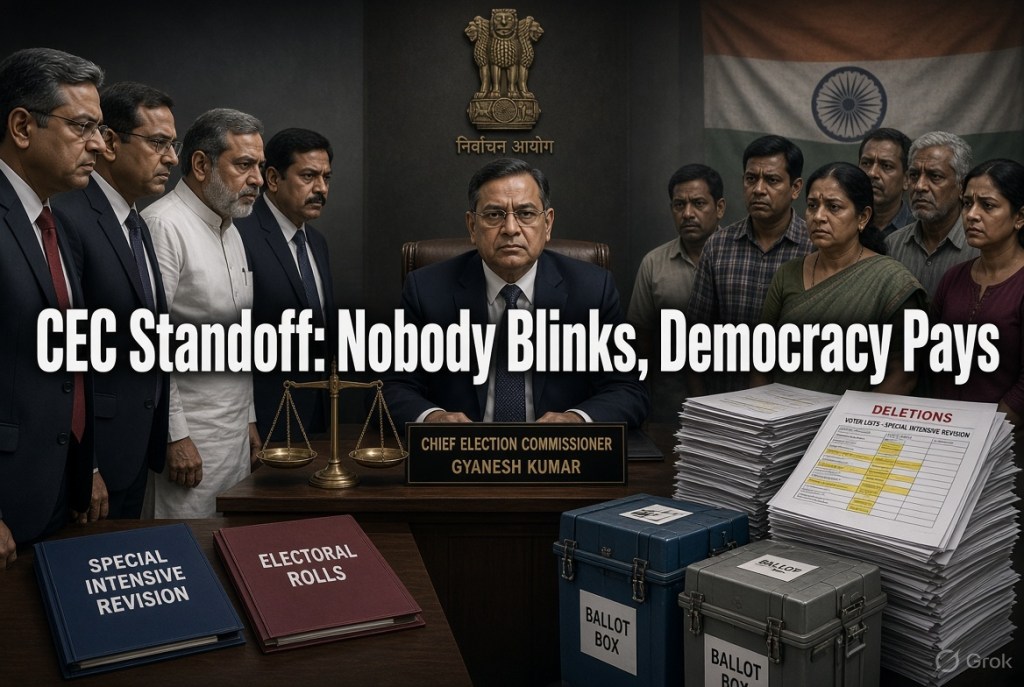
The government’s strategic contradiction is therefore sharper than a simple contest of political will. If it appears to sacrifice an independent constitutional authority to street pressure, it risks weakening the principle that institutions must operate without fear of political coercion. If its defence is perceived as unconditional protection, it risks reinforcing suspicions that constitutional safeguards are being used to shield officials from accountability. The distinction is crucial: protecting an office from arbitrary removal is not the same as certifying every decision taken by its occupant. Equally, demanding accountability does not establish guilt. The appropriate response is to insist on verifiable records, transparent procedures and impartial examination of disputed decisions. Institutional credibility is sustained not by the absence of criticism, but by the ability to answer criticism convincingly. The Opposition faces a parallel test. Retreating without securing meaningful answers could allow the government to portray its campaign as unsustainable.
Continuing mobilisation without measurable progress could exhaust supporters and widen differences within the opposition coalition. The recent resort to judicial proceedings offers an opportunity to move beyond political confrontation towards documented scrutiny. Opposition parties must demonstrate precisely which procedures they challenge, how eligible voters may have been affected, and what corrective measures they seek. Their most durable achievement would not necessarily be the resignation of one individual, but enforceable safeguards that protect every eligible voter, irrespective of political affiliation, religion, social status or geographical location. Equally, the government and the ECI must recognise that restoring confidence requires more than rebutting allegations; it requires making the integrity of the process demonstrable.
Ultimately, neither resignation nor refusal to resign can, by itself, resolve the underlying constitutional question. A departure might alter the political narrative without repairing procedural weaknesses; continued tenure might preserve institutional continuity without restoring public confidence. The way forward lies in transparent disclosure of disputed decisions, independent scrutiny where warranted, accessible correction mechanisms for excluded voters, meaningful deliberation within the Election Commission and effective judicial remedies. The controversy must be judged on evidence, not on the intensity of demonstrations or the strength of political rhetoric. The government cannot easily afford to bow down, and the Opposition cannot easily afford to back down—but democracy cannot remain hostage to a contest over who blinks first. The ultimate measure of accountability is whether every eligible citizen can exercise the right to vote and whether the institution entrusted with conducting elections commands confidence across political divisions. That is the constitutional test no political stalemate should be allowed to obscure.
VISIT ARJASRIKANTH.IN FOR MORE INSIGHTS

