
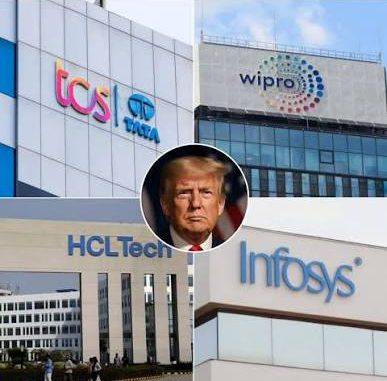
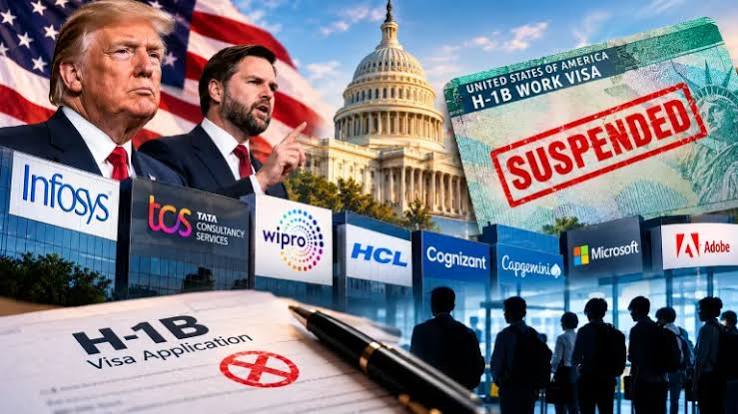
The reported suspension of Permanent Labour Certification (PERM) processing for eight major technology companies by the United States Department of Labor on October 8, 2026, signals a potentially consequential shift in the politics of skilled immigration. Cognizant, Infosys, Tata Consultancy Services (TCS), Wipro, HCLTech, Capgemini, Microsoft and Adobe reportedly face restrictions that could complicate employment-based green-card applications. Although immediate financial consequences may remain limited, the implications for individual professionals, corporate investment and global talent mobility could be significant. The central paradox is striking: policies designed to protect American employment may encourage multinational businesses to relocate increasingly sophisticated technological functions to India.
PERM is a crucial stage in the employment-based permanent-residency process, generally requiring employers to demonstrate that suitably qualified, available American workers cannot be found for a particular position and that hiring a foreign worker will not adversely affect similarly employed US workers. The reported suspension introduces uncertainty into applications involving the named companies, although its precise legal scope must be established through the relevant orders. Allegations of immigration-programme abuse should not automatically be interpreted as proven misconduct by every affected employer. Regulatory enforcement requires credible evidence, procedural fairness and proportionality. Without transparent, company-specific findings, broad restrictions risk creating uncertainty beyond the conduct actually under investigation.
The corporate exposure, however, differs considerably from the vulnerability of individual employees. Indian IT companies have increasingly adapted to immigration constraints by reducing their reliance on employer-sponsored permanent-residency applications and expanding offshore delivery. Figures cited in the underlying reports indicate that TCS filed just two PERM applications in US financial year 2026, compared with 513 in 2025 and 1,804 in 2024. Indian technology companies reportedly accounted for fewer than 1,400 of 117,849 PERM certifications during the cited period. Such figures suggest limited immediate exposure across the sector. Yet aggregate statistics obscure individual hardship: a company can absorb a regulatory disruption far more easily than a professional whose long-term future depends on one immigration pathway.

For Indian professionals approaching the six-year H-1B limit, interrupted immigration processing can turn career progression into a legal and personal dilemma. Certain extensions beyond six years depend on qualifying employment-based immigration milestones, including appropriately timed labour-certification or immigrant-petition filings, or an approved I-140 petition. The consequences vary according to each worker’s circumstances and the applicable rules. Crucially, a suspension does not automatically cancel existing H-1B status or invalidate every previously approved PERM certification. Nevertheless, affected workers may confront difficult choices involving employer changes, alternative immigration pathways, relocation or returning home. Years of professional contribution can become entangled in uncertainty that disrupts family stability, children’s education, housing decisions and career planning.
These individual anxieties are amplified by the extraordinary backlog confronting Indian employment-based green-card applicants. Country-specific numerical limits, visa demand and processing constraints already produce waiting periods extending decades in certain categories. Any additional interruption can deepen uncertainty and weaken confidence in the promise that sustained lawful employment offers a predictable route towards permanent settlement. Employers also face a strategic disadvantage: experienced engineers, cybersecurity specialists, architects and product developers may reconsider remaining in the United States when their professional futures become difficult to plan. Their relocation could benefit India, Europe, Canada and other technology centres. Yet the distribution of that talent will depend on comparative opportunities, not simply on dissatisfaction with American immigration policy.
The Indian IT industry is unlikely to collapse under such restrictions because its business model has evolved substantially beyond deploying engineers at American client sites. Offshore software development and technology services underpin much of the sector’s international competitiveness, while the United States remains its largest destination market. This structure provides resilience but also creates exposure to American regulatory decisions, client spending and pricing pressures. Greater local recruitment in the United States may preserve customer relationships, but higher labour costs could compress margins. The more important transformation lies in India’s Global Capability Centres, which increasingly undertake engineering, analytics, cybersecurity, research and product development. Restrictions on individual mobility could accelerate the transfer of high-value functions, provided companies can access the right talent and infrastructure in India.
That opportunity, however, will not materialise automatically. India must move beyond its historic identity as a supplier of skilled labour towards becoming an owner and originator of technology. Domestic firms should invest in proprietary platforms, artificial intelligence, reusable software, specialised industry solutions and intellectual property. They must create leadership opportunities that allow Indian professionals to design products, shape research agendas and make strategic decisions rather than merely execute instructions developed elsewhere. Stronger research ecosystems, predictable regulation, competitive compensation and credible intellectual-property protection are essential. Indian companies should diversify into European and Asia-Pacific markets, strengthen compliance systems and expand local recruitment where commercially necessary. The government should seek clarity from Washington, provide reliable guidance to affected professionals and pursue constructive dialogue on skilled mobility and services-market access.
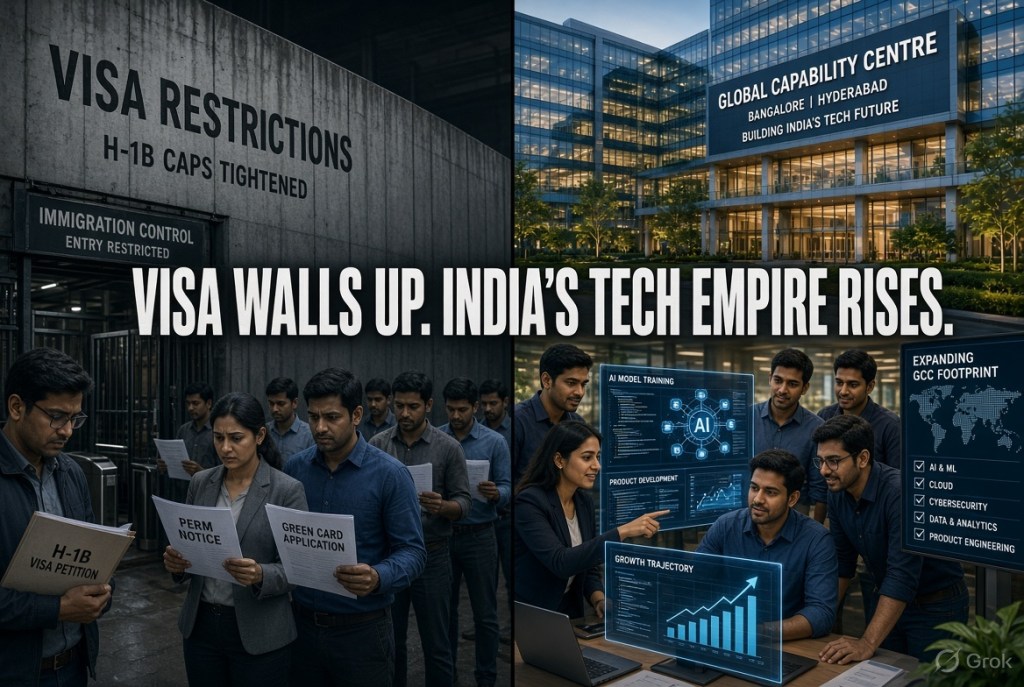
The reported restrictions remain subject to their actual legal terms, possible challenges and subsequent developments. Any stated 180-day duration, extension or investigative authority must be verified against the operative orders rather than assumed to determine the final outcome. Neither predictions of industry collapse nor assurances of complete immunity are warranted. The strategic lesson is broader: dependence on a single market, immigration pathway or labour-intensive delivery model creates structural vulnerability. India should preserve its vital American commercial relationships while accelerating indigenous innovation, advanced research and product ownership. If returning talent and expanding capability centres become catalysts for that transition, a policy intended to constrain Indian professionals could inadvertently strengthen India’s technological position. The defining question is no longer merely how many Indian engineers America admits, but how much of the world’s future technology India can create, own and export.
VISIT ARJASRIKANTH.IN FOR MORE INSIGHTS

