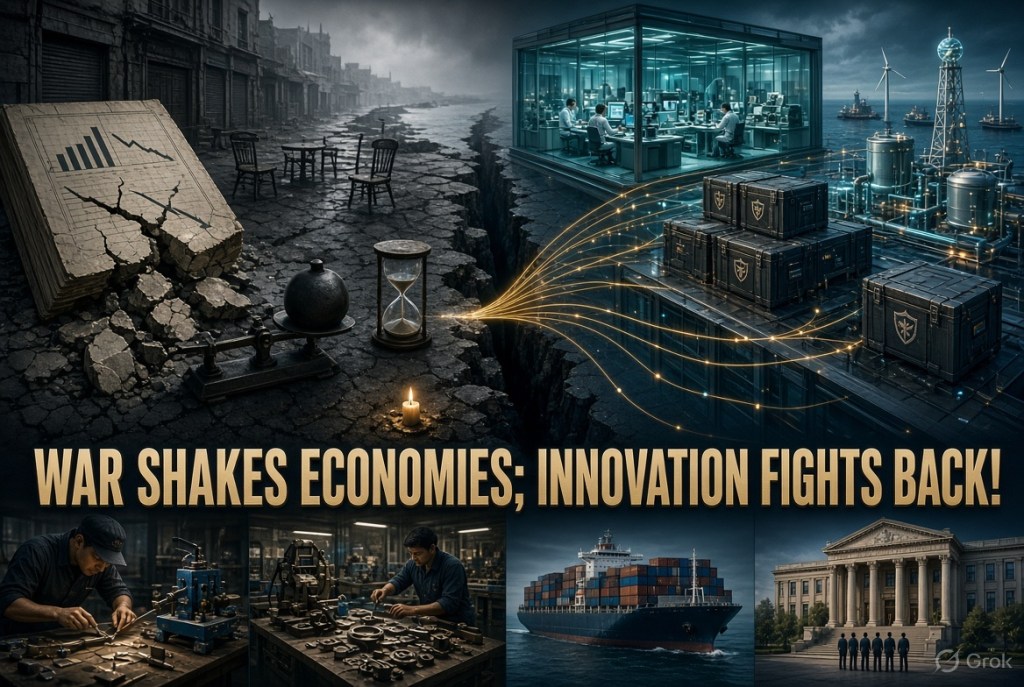
Can an economy absorb a war-related economic shock equivalent to a substantial share of annual output, withstand prolonged geopolitical uncertainty and still demonstrate a credible path to recovery? Israel’s experience since October 2023 offers a remarkable case study in economic resilience, technological competitiveness and institutional adaptability. Yet resilience must not be confused with immunity. An economy can preserve its international commercial connections, sustain sophisticated industries and attract investment while accumulating fiscal liabilities, losing productive working hours and weakening the foundations of future growth. Israel’s experience is neither proof that war creates prosperity nor a conventional economic miracle. It reveals how innovation, institutional credibility and global integration can cushion extraordinary disruption, while exposing the profound difference between recovering economic output and restoring national well-being.
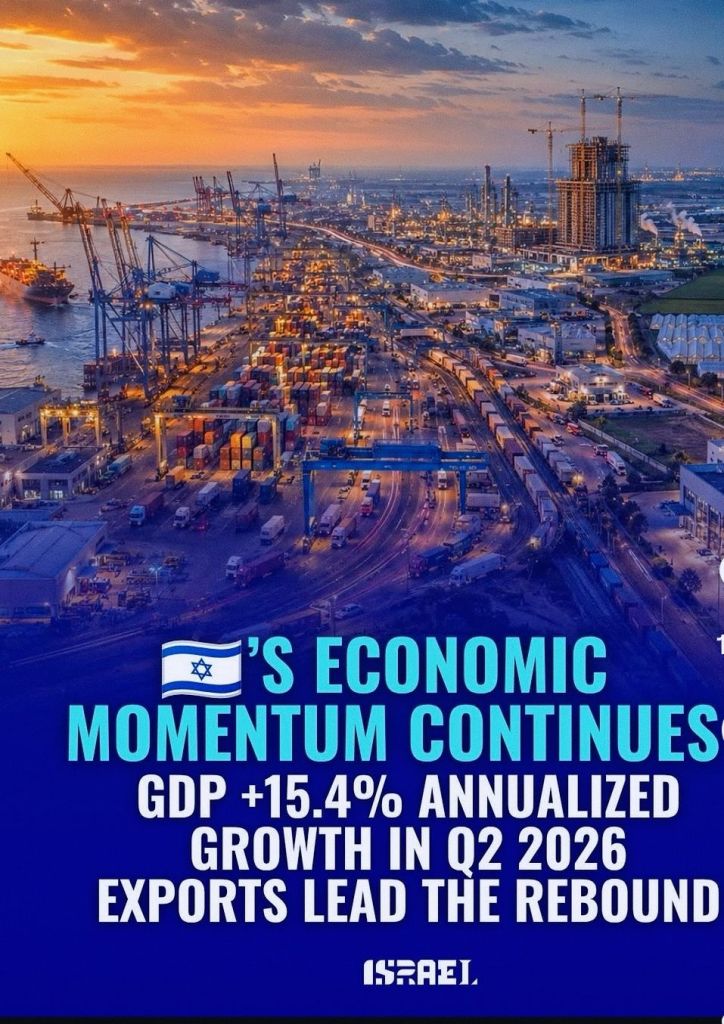
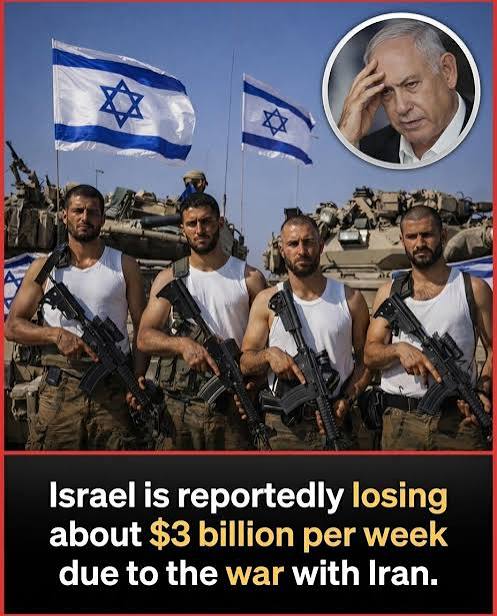
The scale of the shock is considerable. According to the Bank of Israel’s 2025 annual report, the cumulative loss of output from the beginning of the war through the end of 2025 amounted to approximately NIS 177 billion, equivalent to 8.6 per cent of annual GDP. The economy nevertheless grew by around 2.9 per cent in 2025. The Bank of Israel initially projected 5.2 per cent growth for 2026, while the International Monetary Fund subsequently lowered its forecast to 3.5 per cent amid renewed regional hostilities. These differing projections underline how heavily the outlook depends on security developments, labour availability and investor confidence. The real achievement is not that war has become economically affordable, but that the economy has retained the capacity to recover despite extraordinary losses. Growth forecasts, however, cannot capture the full cost of destroyed assets, deferred investment, disrupted education and prolonged uncertainty.
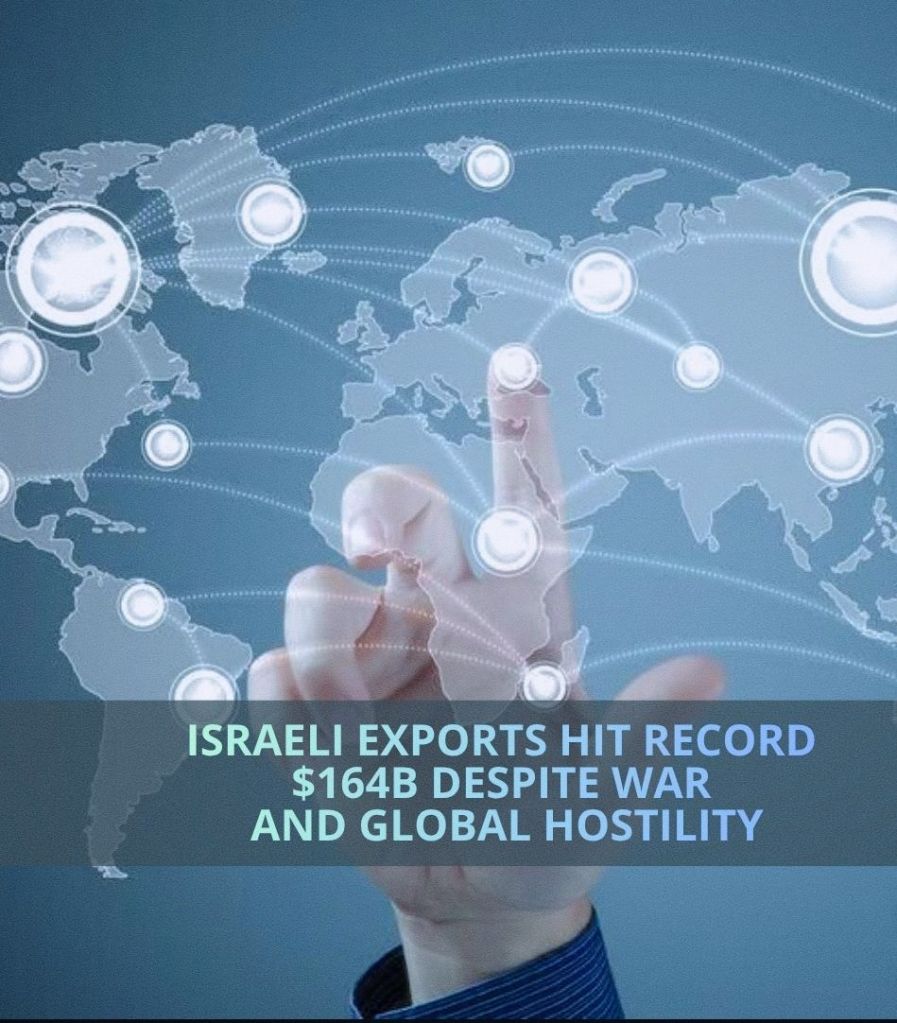
Israel’s strongest structural advantage is its innovation-intensive economy. High-technology businesses connect domestic talent and intellectual property with international markets, allowing software, cybersecurity, communications and specialised engineering services to generate export revenues beyond the limits of a relatively small domestic market. This international orientation provides a valuable economic buffer when tourism, construction and local consumption weaken. Unlike businesses that depend almost entirely on domestic customers, technology exporters can serve geographically diversified markets and maintain commercial relationships across borders. The deeper lesson is that knowledge, research and specialised skills can become strategic economic assets. In a world of geopolitical disruption, intellectual capital can travel further than physical infrastructure. Yet technology is not a self-sustaining shield: it depends on skilled workers, research investment, reliable institutions and the confidence to build businesses over a long horizon.
That dependence on human capital creates a serious vulnerability. Military mobilisation, labour shortages and prolonged uncertainty can divert engineers, scientists, entrepreneurs and researchers from productive work. Skilled professionals may also reconsider where they wish to live, invest and raise families. Even a modest deterioration in talent retention can gradually weaken research capacity, company formation and productivity. The consequences may not immediately appear in headline GDP figures; they can emerge later through slower innovation, fewer start-ups and reduced international competitiveness. Capital can finance a laboratory, but capital alone cannot recreate its accumulated knowledge, collaborative networks and experienced teams. Israel’s long-term economic resilience therefore depends on retaining and attracting talent, sustaining university-industry collaboration and ensuring that the civilian economy remains a compelling place to innovate. An innovation economy cannot run indefinitely on yesterday’s breakthroughs while tomorrow’s talent looks elsewhere.

Defence manufacturing presents one of the most striking intersections between conflict and commercial opportunity. Israel’s Ministry of Defence reported record defence exports of US$19.2 billion in 2025, nearly 30 per cent above the previous year’s figure. Air-defence systems, missiles, surveillance technologies and other military capabilities feature prominently in international demand. Operational experience may influence foreign procurement decisions, but export growth must be understood within its strategic and ethical context. For India, defence cooperation with Israel can support technology transfer, joint development, domestic manufacturing and stronger maintenance capabilities. The objective should be to build indigenous expertise rather than simply purchase sophisticated equipment. Equally, export receipts are not a comprehensive measure of national prosperity: they cannot automatically offset human suffering, infrastructure destruction, disrupted livelihoods or the opportunity cost of sustained military expenditure. A defence industry can become commercially stronger even as the wider economy bears a heavy social cost.
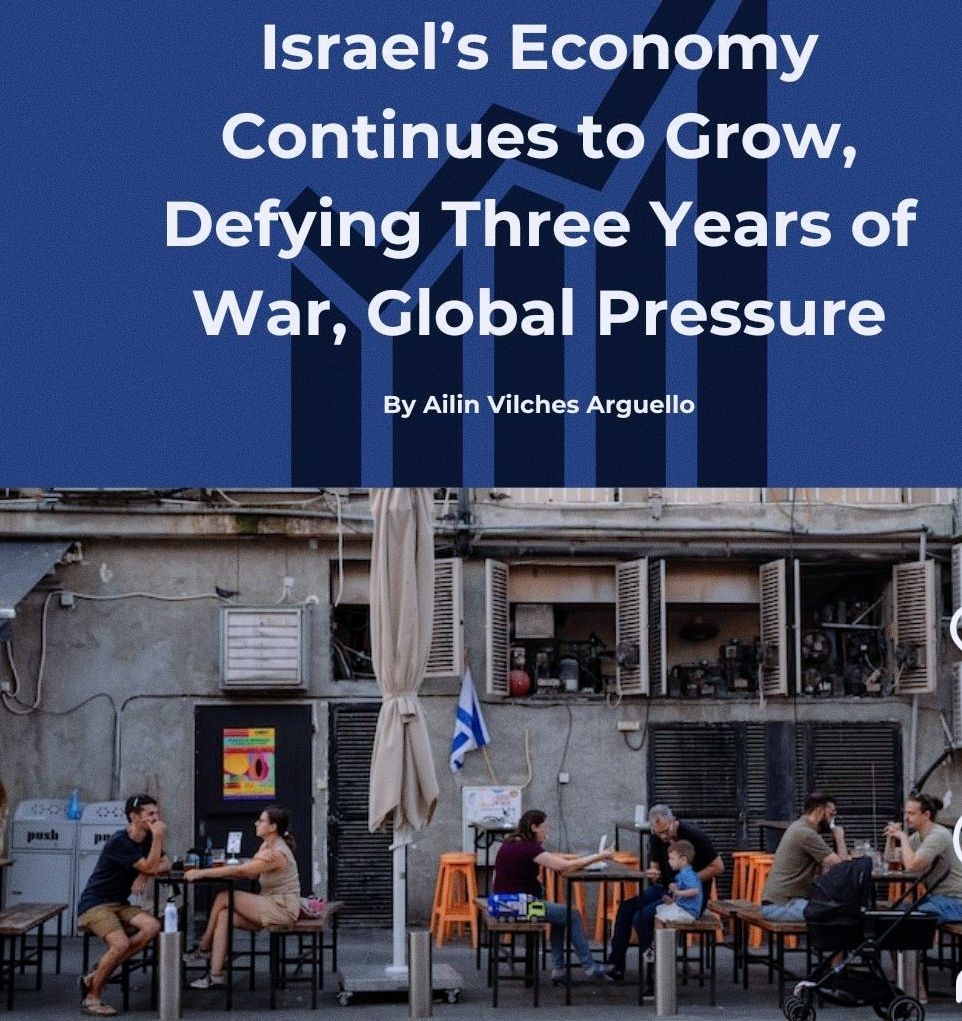
The distribution of recovery is equally important. Tourism, hospitality, transport and construction face pressures that advanced technology firms may be better positioned to absorb. Security concerns discourage visitors, while restrictions on the availability of non-Israeli workers and military reserve mobilisation constrain labour supply. The Bank of Israel has identified labour shortages as a significant factor weighing on economic activity, alongside investment that remained below its prewar level at the end of 2025. These pressures affect small businesses, lower-paid workers and households whose incomes depend on local economic activity. A technology-led rebound can therefore coexist with uneven employment recovery and financial distress among businesses outside export-oriented sectors. National output may recover before household security does. If prosperity returns to the balance sheet but not to the neighbourhood, the recovery remains incomplete.
Macroeconomic credibility provides another layer of resilience, but it cannot remove the fiscal arithmetic of prolonged conflict. Credible monetary institutions, access to international capital and functioning financial markets help a country manage uncertainty without losing investor confidence. Nevertheless, elevated defence expenditure can widen budget deficits, increase public debt and compete with civilian priorities such as education, healthcare, transport and research. The IMF has warned that continuing hostilities, labour constraints and high defence spending weigh on Israel’s medium-term outlook. Domestic natural-gas resources also offer a measure of energy security, although they cannot insulate the economy from every external shock. The crucial policy question is whether emergency expenditure is accompanied by a credible fiscal strategy that preserves productive investment. An economy may return to growth while quietly eroding the financial flexibility required to confront its next crisis.

For India, Israel’s experience offers lessons in preparedness rather than a model to imitate. Indigenous research, skilled employment, university-industry partnerships, diversified exports, competitive defence manufacturing, reliable energy systems and credible institutions can strengthen the ability to absorb external shocks. Equally important are resilient civilian supply chains, broad-based employment and fiscal discipline that prevents emergency spending from permanently displacing development priorities. Israel demonstrates that technological sophistication and global integration can help preserve economic capacity under extraordinary pressure; it also demonstrates that resilience has limits and that growth forecasts remain conditional on geopolitical developments. Ultimately, the purpose of economic resilience is not merely to recover after destruction, but to protect the foundations of future prosperity. Surviving the economics of war is resilience; building a prosperous future that does not depend on perpetual insecurity is the real victory.
VISIT ARJASRIKANTH.IN FOR MORE INSIGHTS

