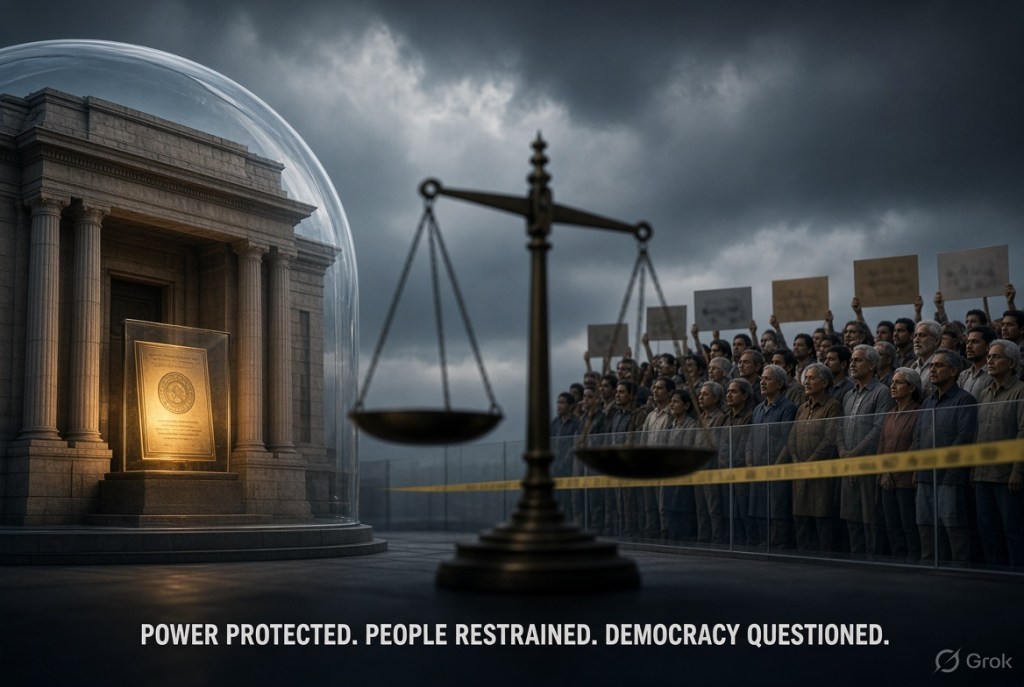
Democracies do not always erode through dramatic constitutional ruptures, spectacular coups or the formal suspension of fundamental rights. Sometimes, institutional balance shifts incrementally, through the routine exercise of administrative discretion—by determining which official decisions may be investigated, which public assemblies may proceed, and how readily the citizen can challenge the state. The distinction between constitutional authority and arbitrary power is often found not in the existence of legal powers, but in the safeguards governing their exercise. Two provisions of India’s legal framework illuminate this tension with particular force: Section 17A of the Prevention of Corruption Act, 1988, which regulates the initiation of investigations into specified decisions of public servants, and Section 163 of the Bharatiya Nagarik Suraksha Sanhita (BNSS), 2023, which empowers Executive Magistrates to issue preventive orders in urgent situations involving apprehended danger. One concerns accountability within the institutional architecture of government; the other concerns the regulation of collective action in public spaces. Their purposes are distinct, but their constitutional implications converge around a fundamental question: who scrutinises the exercise of state power, and what prevents discretion from becoming self-protective?

Section 17A, introduced by the 2018 amendment to the Prevention of Corruption Act, requires prior approval before an enquiry, inquiry or investigation into an alleged offence relating to a recommendation made or decision taken by a public servant in the discharge of official functions. The underlying rationale is legitimate and important. Public administration necessarily involves uncertainty, competing priorities and decisions whose outcomes cannot always be predicted. If every unsuccessful policy, commercial transaction or administrative judgment could trigger criminal proceedings, officials might become excessively risk-averse, delaying decisions and undermining institutional effectiveness. A system that punishes honest judgment merely because it produces an adverse outcome would discourage initiative and distort governance. Yet, the protection of bona fide decision-making must not become a mechanism for insulating potentially corrupt conduct from scrutiny. The constitutional difficulty arises when permission to investigate depends upon an authority institutionally connected to the governmental system from which the impugned decision emerged. Even where approval is granted in good faith, the arrangement raises questions about perceived impartiality, institutional incentives and the separation between the interests of the administration and the public interest in accountability. The challenge is to distinguish legitimate protection against harassment from procedural barriers that may frustrate the investigation of credible allegations.
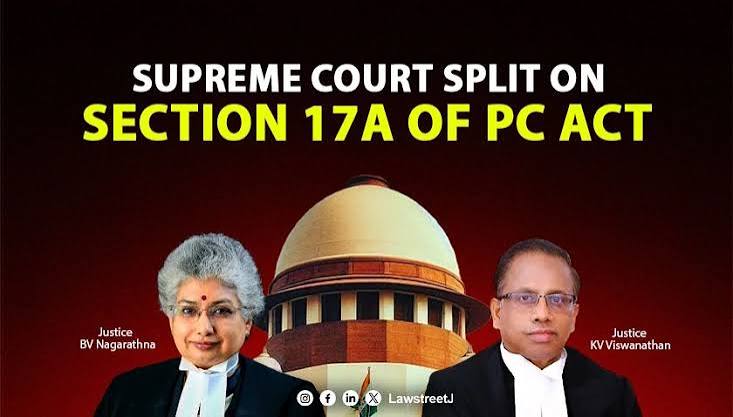
The Supreme Court’s jurisprudence offers an essential constitutional framework for examining this distinction. In Vineet Narain v. Union of India (1997), the Court addressed institutional obstacles to independent investigation and struck down the Single Directive insofar as it imposed prior approval requirements for investigations against senior civil servants. In Subramanian Swamy v. Director, CBI (2014), it invalidated Section 6A of the Delhi Special Police Establishment Act, which afforded senior public servants a similar protective distinction, holding that the provision violated Article 14’s guarantee of equality before the law. These decisions reinforce the principle that public office cannot, by itself, justify unequal access to the machinery of criminal investigation. However, Section 17A presents its own statutory question: its protection is linked to the nature of the official act rather than simply the rank of the public servant. Its constitutional assessment must therefore address both the legitimate need to protect administrative judgment and the risk of executive influence over investigative independence. The reported split verdict in Centre for Public Interest Litigation v. Union of India in January 2026 has brought these competing considerations into sharper relief. The reported disagreement between Justices B.V. Nagarathna and K.V. Viswanathan underscores the tension between preventing arbitrary protection and designing independent safeguards. The authoritative judgment and subsequent proceedings must determine the precise legal position; a split verdict, by itself, does not resolve the constitutional controversy.
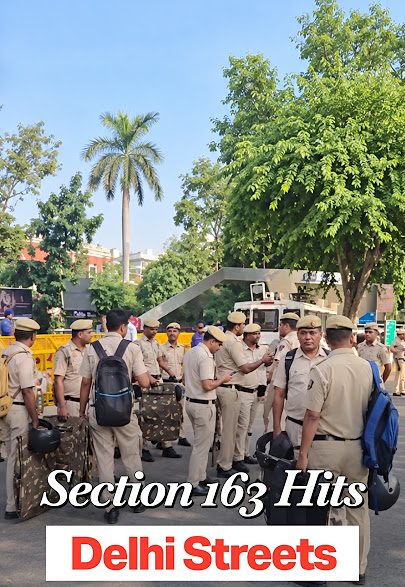
Section 163 of the BNSS, which replaced Section 144 of the Code of Criminal Procedure from 1 July 2024, raises a different but equally important question about the boundaries of executive discretion. It empowers Executive Magistrates to issue written orders in urgent cases involving apprehended danger, nuisance or threats to public tranquillity. Such preventive authority is indispensable to responsible administration. The state cannot always wait for violence to occur before protecting life, preventing communal disturbances or securing vulnerable public spaces. Effective policing often requires timely intervention based on credible information about an imminent threat. Nevertheless, preventive jurisdiction must remain preventive in purpose, not punitive in effect. The constitutional distinction between anticipating violence and anticipating inconvenience is crucial. Where restrictions on assembly rest on specific, credible and time-sensitive risks, they may be justified. Where generalised apprehensions replace demonstrable necessity, peaceful dissent is treated as inherently disruptive, or sweeping prohibitions become routine substitutes for targeted measures, preventive authority risks extending beyond its legitimate purpose. The relevant constitutional inquiry is therefore not whether the state may act before violence occurs, but whether the grounds, scope, duration and consequences of its intervention satisfy the requirements of legality, necessity and proportionality.

Considered together, the provisions expose a potential asymmetry in the operation of administrative power. Within government, a prior-approval requirement may delay the investigation of official decisions suspected of corruption. Outside government, a preventive order may rapidly constrain citizens seeking to question public policy or demand accountability. The former concerns access to investigative scrutiny; the latter concerns the exercise of expressive and associational freedoms. They are neither legally equivalent nor interchangeable, and their mere coexistence does not establish institutional bias. Nevertheless, their selective application could produce a troubling imbalance: substantial procedural protection for decisions taken in the name of administration, accompanied by restrictive regulation of the public’s ability to challenge those decisions. The danger is not that every delayed investigation constitutes a cover-up, or that every prohibitory order reflects an intention to suppress dissent. Such conclusions would require evidence in each case. The deeper concern is whether the state applies consistent standards of justification. If official conduct receives the benefit of institutional doubt while peaceful citizens encounter restrictions founded on insufficiently particularised apprehensions, the appearance and substance of equal accountability may both suffer. Conversely, a system that exposes officials to politically motivated investigations while arbitrarily restricting public protest would be equally inconsistent with constitutional fairness.
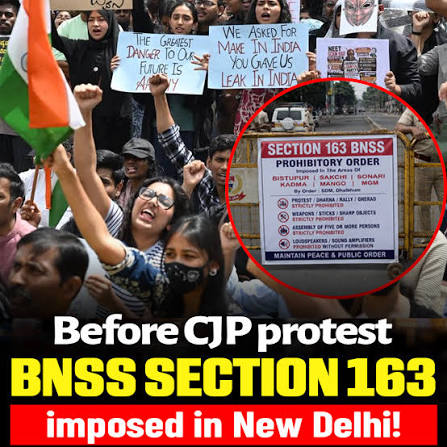
The answer lies not in abolishing administrative discretion, but in strengthening the institutional discipline surrounding it. Under Section 17A, prior approval should operate through transparent procedures, clearly articulated reasons, enforceable timelines and safeguards against conflicts of interest. Independent screening mechanisms, including an appropriately empowered role for institutions such as the Lokpal or Lokayuktas where legally permissible, could help reconcile protection for honest officers with the public interest in investigating credible allegations. The objective should be neither automatic prosecution nor automatic protection, but impartial consideration based on legally relevant criteria. Under Section 163, authorities should identify the specific danger apprehended, demonstrate why intervention is necessary, consider less restrictive alternatives and tailor restrictions to the actual risk. Orders should be reasoned, limited in scope and duration, and open to meaningful judicial review. Peaceful assembly must not be conflated with violence, and public-order management should distinguish between demonstrable threats and mere administrative inconvenience. Restrictions on telecommunications, where contemplated, must additionally comply with the applicable statutory framework and procedural safeguards. Across both domains, transparency, proportionality and review are not impediments to effective administration; they are the conditions that make administrative authority constitutionally defensible.
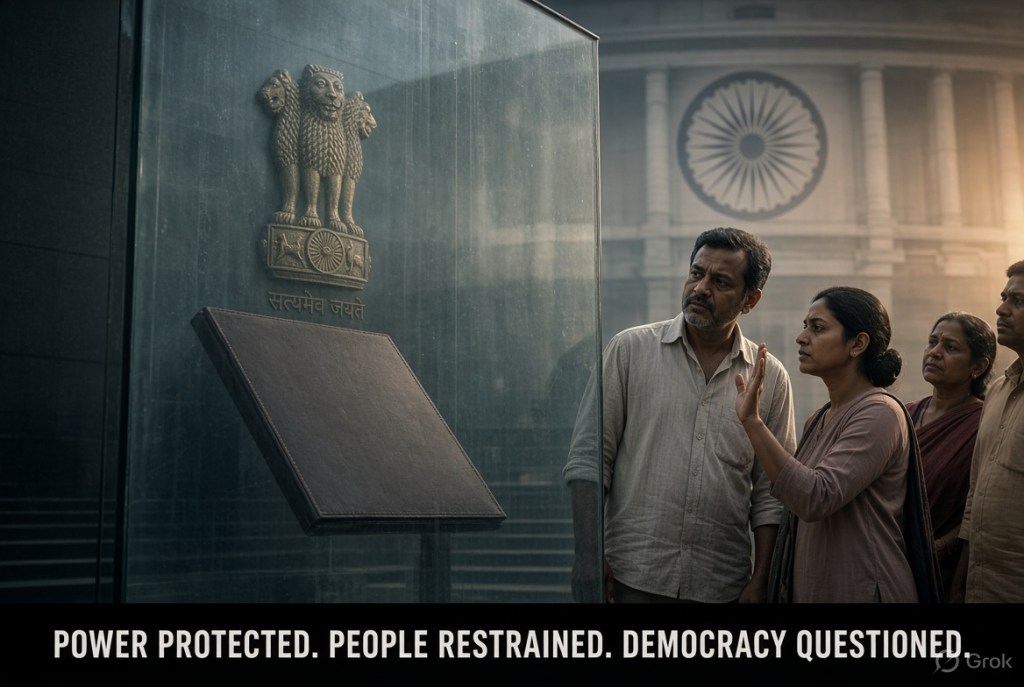
Ultimately, constitutional government is measured not by the breadth of the powers it confers, but by the quality of the safeguards through which those powers are exercised. The executive must be capable of making difficult decisions without fear of malicious prosecution, and the police and magistracy must be capable of preventing genuine threats without waiting for violence to materialise. Equally, investigative institutions must be able to examine credible allegations without inappropriate interference, and citizens must be able to assemble, criticise and dissent without facing unjustified restrictions. These are not competing claims upon the republic; they are complementary requirements of the rule of law. Section 17A and Section 163 must therefore be assessed not through assumptions about the motives of every approving authority or magistrate, but through the fairness, consistency and accountability of their operation. The constitutional challenge is to prevent discretion from becoming self-protection in one sphere and disproportionate control in another. A mature republic does not choose between administrative efficiency and democratic freedom; it builds institutions capable of protecting both. The decisive question is not whether the state has discretion, but whether that discretion remains answerable to law, independent scrutiny and the constitutional rights of the citizen.
VISIT ARJASRIKANTH.IN FOR MORE INSIGHTS

