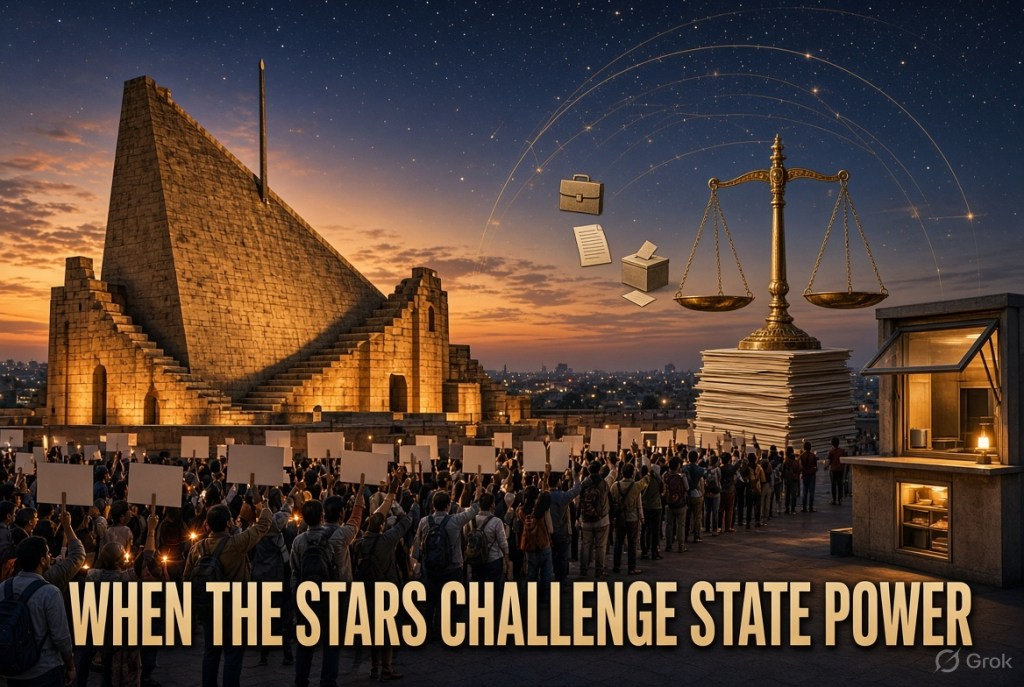
What connects an eighteenth-century astronomer calculating celestial movements, Anna Hazare challenging corruption, Olympic wrestlers demanding accountability, and Generation Z questioning electoral institutions? The answer is Jantar Mantar, where an architectural instrument once designed to measure the heavens has acquired an extraordinary political metaphor: measuring the distance between constitutional promises and governmental performance. Few places in India embody such a transformation. Conceived under Maharaja Sawai Jai Singh II as a centre of astronomical observation, Jantar Mantar has become inseparable from the vocabulary of public protest. Its adjoining demonstration ground represents something more profound than urban geography: the emergence of citizens who increasingly refuse to remain spectators in the republic they have the constitutional right to shape.
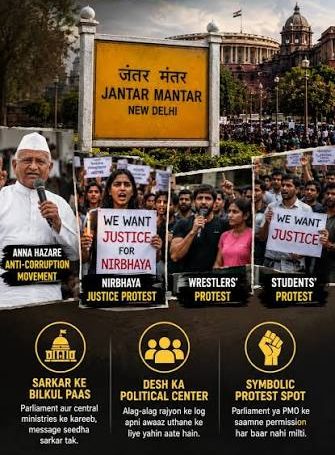
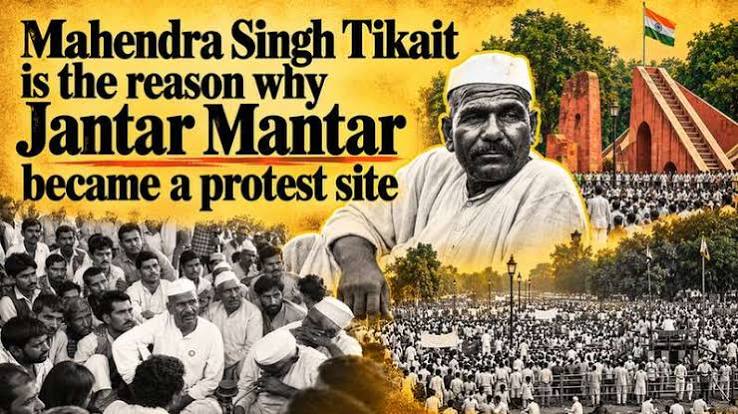
The transformation of Jantar Mantar must be understood through the changing political geography of New Delhi. For decades after Independence, the Boat Club lawns near India Gate and the ceremonial avenues around Rajpath served as prominent stages for mass mobilisation. The formidable farmers’ gathering led by Mahendra Singh Tikait in 1988 demonstrated how collective action could disrupt the administrative routines of the national capital. Concerns over security, congestion and the functioning of central Delhi subsequently encouraged restrictions on large demonstrations around these locations. By the early 1990s, Jantar Mantar Road had emerged as an alternative venue, sufficiently close to political power to attract attention while offering greater scope for managing public assemblies. What began as an administrative accommodation gradually acquired constitutional significance. The state attempted to organise the geography of dissent; citizens transformed that geography into an enduring address of democratic accountability.
Jantar Mantar’s historical significance, however, cannot be measured by crowd sizes, television cameras or the intensity of political slogans. Its importance lies in its capacity to convert dispersed grievances into national conversations. In 2011, Anna Hazare’s anti-corruption movement helped mobilise public pressure for an effective Lokpal, contributing to the political momentum that culminated in the Lokpal and Lokayuktas Act, 2013. Following the 2012 Nirbhaya assault, demonstrations across Delhi intensified demands for women’s safety, police accountability and criminal justice reform, contributing to the wider public pressure surrounding the Criminal Law (Amendment) Act, 2013. In 2023, wrestlers including Vinesh Phogat, Sakshi Malik and Bajrang Punia brought allegations of sexual harassment and demands for accountability in sports administration into national debate. These movements differed in their constituencies and objectives, but shared a powerful democratic principle: when institutional channels appear inadequate, peaceful collective action can force neglected questions into public view.
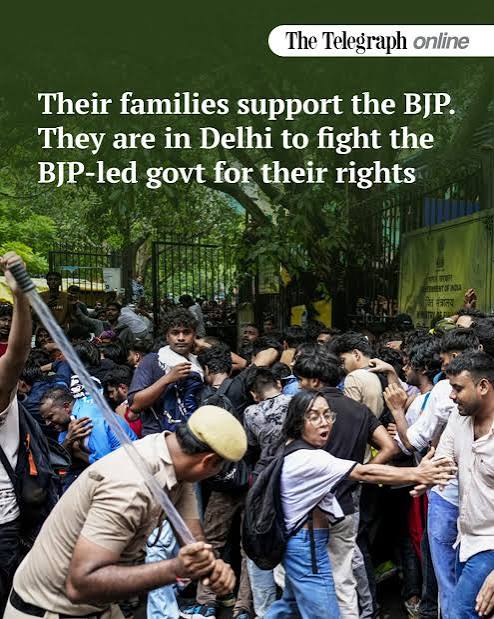
The arrival of digitally connected youth has introduced a more disruptive vocabulary into this tradition. Hashtags, viral videos, satire and unconventional political identities have weakened the monopoly of traditional intermediaries over public mobilisation. The Cockroach Janta Party, with its irreverent symbolism, illustrates how political humour can become a vehicle for challenging established hierarchies. Beneath the spectacle, however, lie serious anxieties about examination irregularities, paper leaks, recruitment uncertainty and shrinking confidence in institutional fairness. For young Indians, these concerns extend beyond individual examinations or employment notifications. They challenge the implicit social contract that education, merit and perseverance should provide a credible pathway to opportunity. When that promise appears unreliable, frustration becomes a question of governance. Jantar Mantar provides this digitally generated discontent with a physical address, converting online outrage into visible, collective and politically consequential expression.
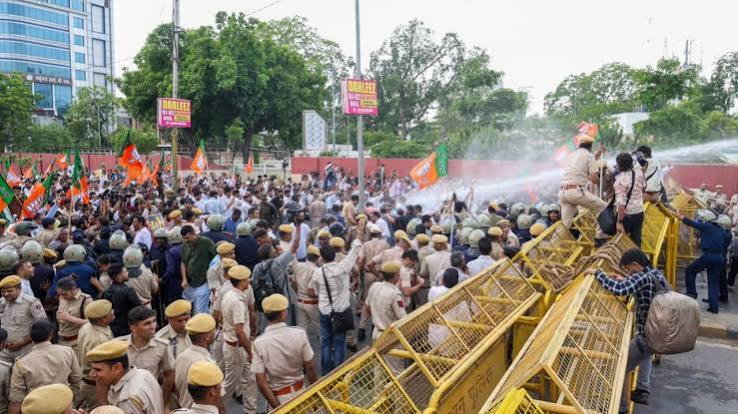
The proposed mobilisation of October 10, 2026, brings this tradition into the sensitive domain of electoral legitimacy. Organisers and participating groups are challenging the Special Intensive Revision of electoral rolls and demanding the resignation of Chief Election Commissioner Gyanesh Kumar. Such allegations must neither be accepted uncritically nor dismissed reflexively; they require evidence, transparent scrutiny and appropriate legal remedies. Electoral-roll revision is a legitimate administrative responsibility, but its credibility depends on accurate verification, adequate notice, accessible appeals and safeguards against wrongful exclusion. The essential question is not simply how many names are removed or retained, but whether every eligible citizen has a fair and practical opportunity to vote. When electoral administration becomes the subject of public distrust, institutional confidence cannot be restored through official assurances alone. It requires verifiable procedures and explanations capable of withstanding independent examination.
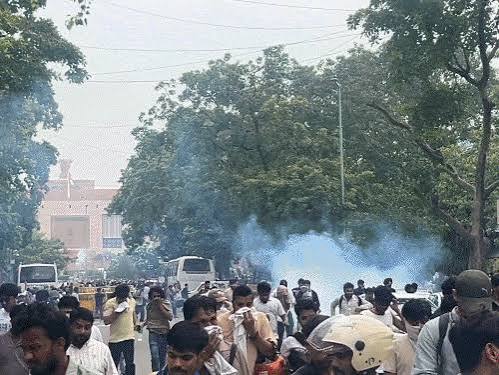
Here lies Jantar Mantar’s enduring paradox: the more effectively a protest venue attracts national attention, the stronger the administrative impulse to regulate it. Security threats, traffic congestion and the protection of vital public institutions are legitimate concerns. Yet regulation becomes democratically counterproductive when a designated protest ground retains its name but loses its practical capacity to host meaningful dissent. Articles 19(1)(a) and 19(1)(b) of the Constitution protect freedom of speech and peaceful assembly, subject to constitutionally permissible restrictions. These rights do not authorise violence, intimidation or unlimited obstruction; equally, administrative convenience cannot automatically override peaceful expression. The appropriate balance requires transparent permission procedures, proportionate policing, advance coordination and reasonable access to locations within sight and sound of the institutions being challenged. A confident democracy does not seek to eliminate public friction. It develops constitutional mechanisms to manage disagreement without criminalising criticism or paralysing civic life.
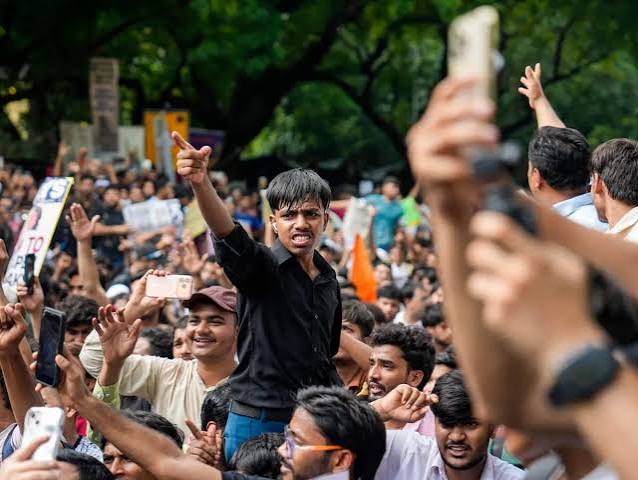
The future of Jantar Mantar should therefore be measured not merely by how efficiently authorities manage demonstrations, but by how effectively democratic institutions respond to the grievances behind them. Applications for peaceful assemblies should be decided within clear timelines, restrictions supported by written reasons and review mechanisms made accessible. Organisers must equally protect public safety, preserve emergency access and reject violence. More ambitiously, major demonstrations could trigger structured institutional engagement through public hearings, published responses, parliamentary scrutiny where appropriate and time-bound examination of substantiated complaints. Such mechanisms would transform protest from a recurring confrontation into a constructive instrument of governance. The objective is not to guarantee that every demand is accepted; it is to ensure that every legitimate grievance receives fair consideration. Democratic maturity is demonstrated not by the absence of dissent, but by the capacity to respond to dissent through evidence, dialogue and accountable decision-making.
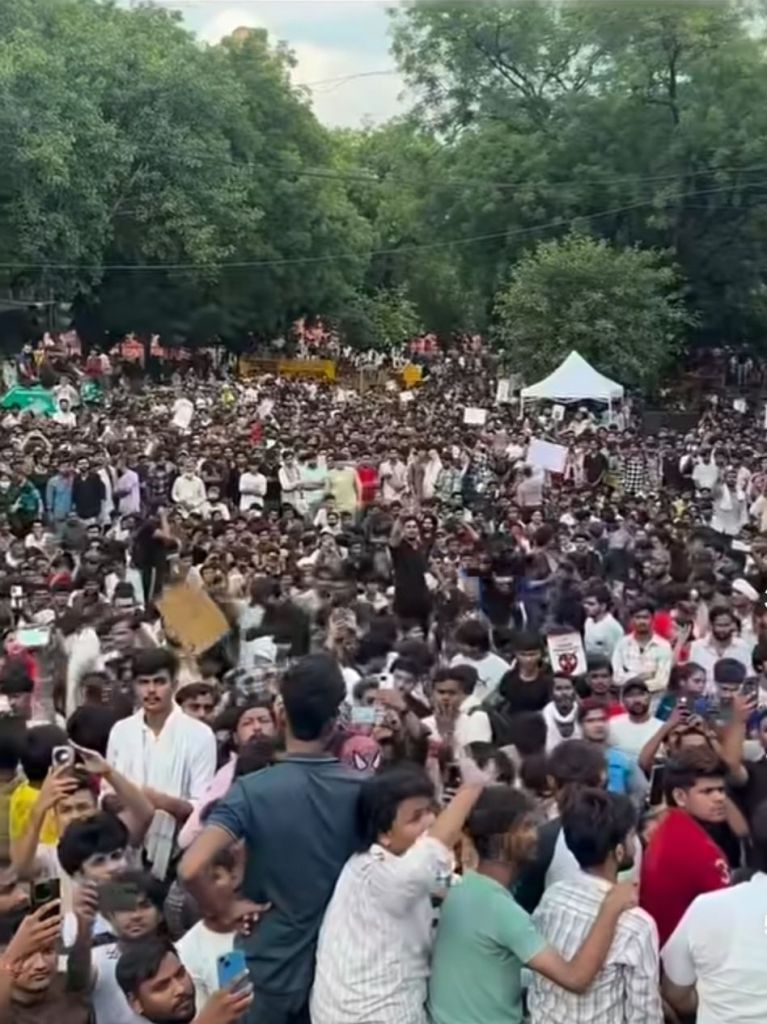
The ultimate irony of Jantar Mantar is that a place conceived to interpret celestial movements has become a stage for citizens demanding that earthly power explain itself. Its astronomical instruments once enabled observers to understand the heavens with greater precision; its adjoining protest ground now enables citizens to scrutinise the institutions that govern their lives. This transformation captures a central truth of the Indian Republic: constitutional authority cannot derive enduring legitimacy from ceremony, administrative control or electoral victory alone. It must remain answerable to the people whose consent sustains it. Jantar Mantar’s greatest monument is therefore not merely its historic masonry, but the citizen who stands before authority and insists on being heard. From stars to slogans, from celestial calculations to constitutional confrontation, this extraordinary site has become an instrument for measuring democracy itself—and exposing the distance between power as exercised and accountability as promised.
VISIT ARAJSRIKANTH.IN FOR MORE INSIGHTS

