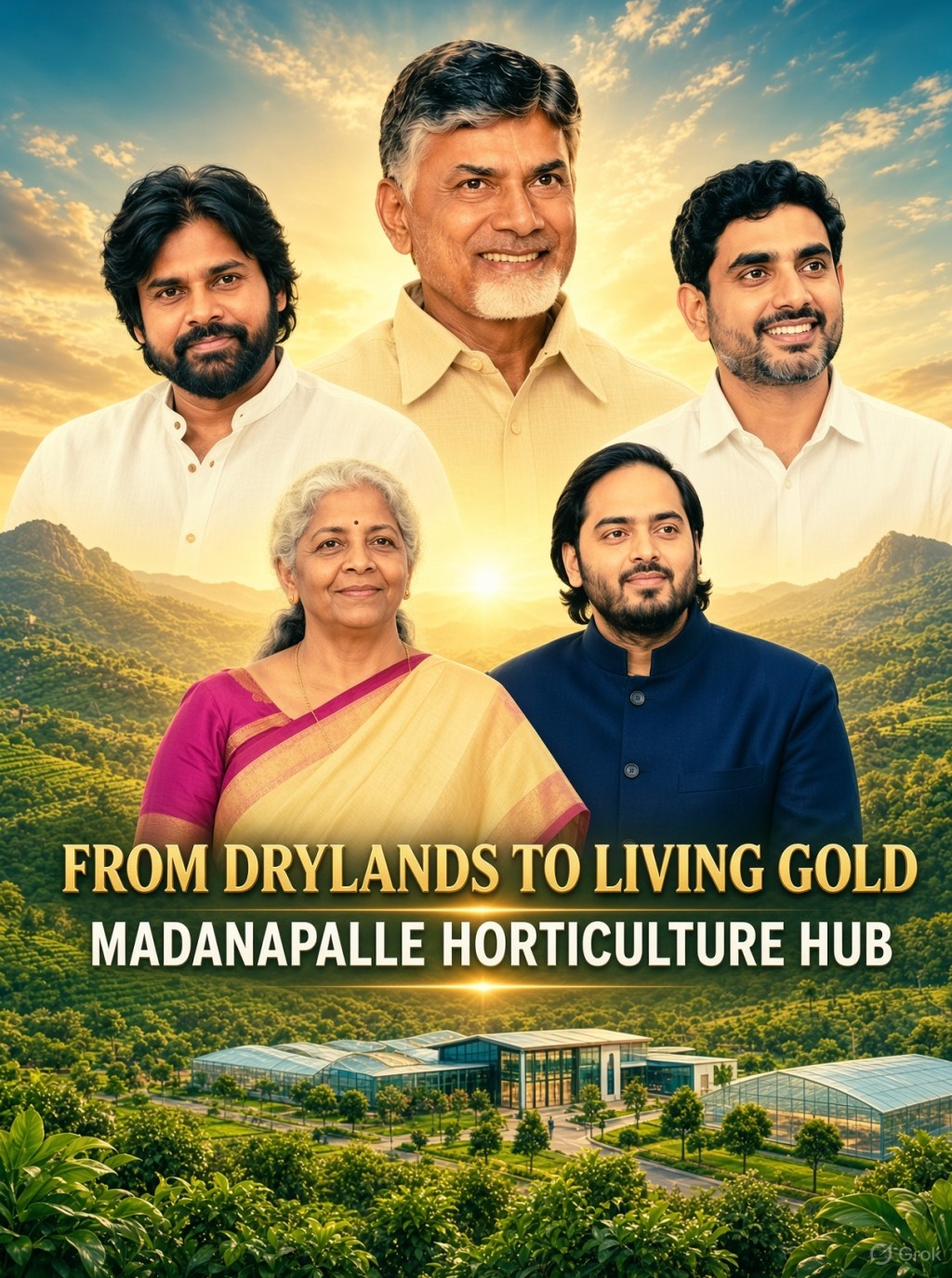
Andhra Pradesh may be on the threshold of an agricultural transformation whose significance extends far beyond conventional crop production. The proposed ₹1 lakh-crore Global Horticulture Hub at Madanapalle represents a strategic attempt to reverse the economic narrative of Rayalaseema—traditionally associated with drought, water scarcity, migration and low-value agriculture—by converting climatic constraints into a platform for high-value horticulture, technology and exports. The larger proposition is intellectually important: agricultural prosperity need not be determined by the abundance of water or the scale of landholdings; it can increasingly be determined by the value generated per hectare, the sophistication of the value chain and access to global markets. If Rayalaseema can convert semi-arid agriculture into an international fruit economy, Andhra Pradesh should now ask an equally ambitious question: what can Kadiyam do for India’s emerging green economy?
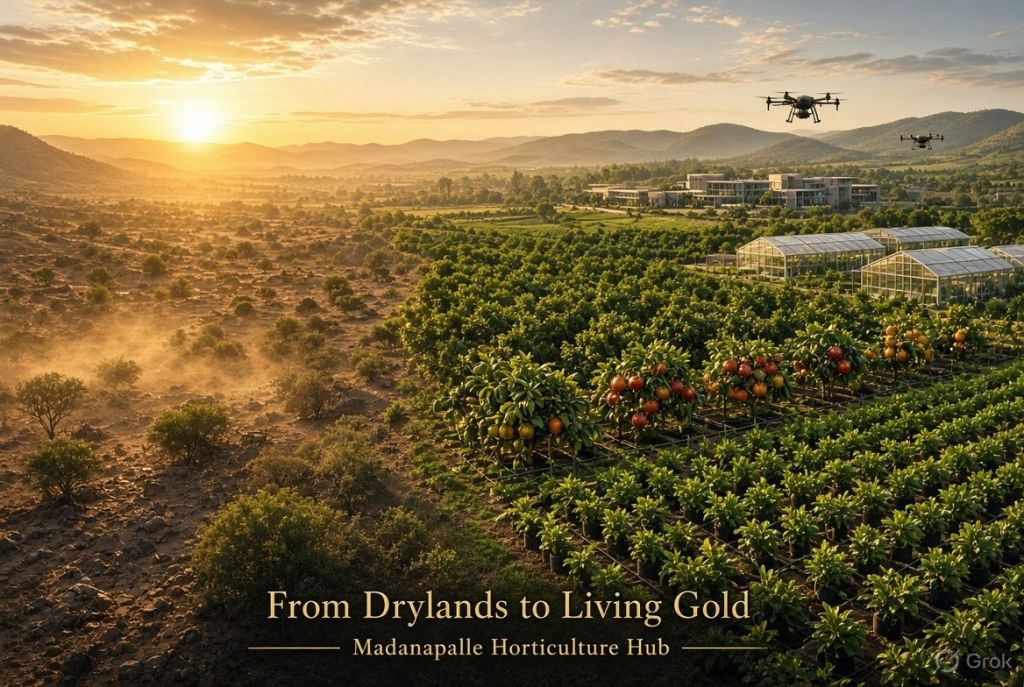
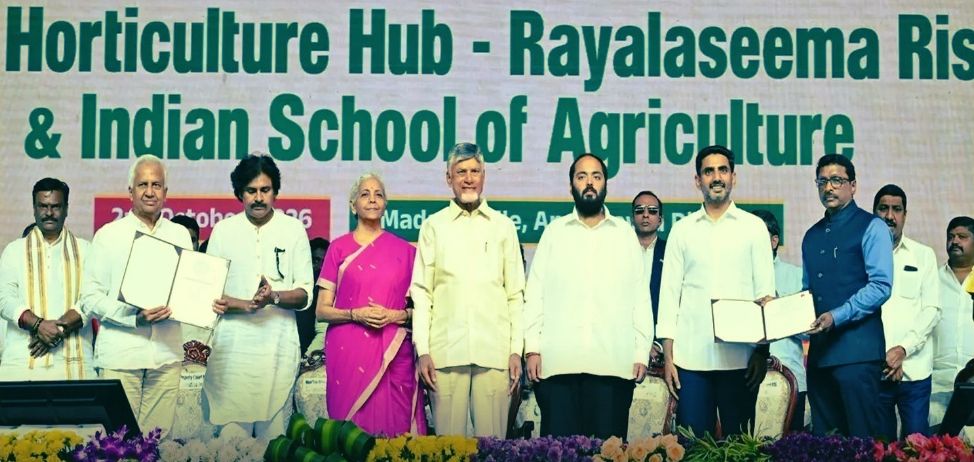
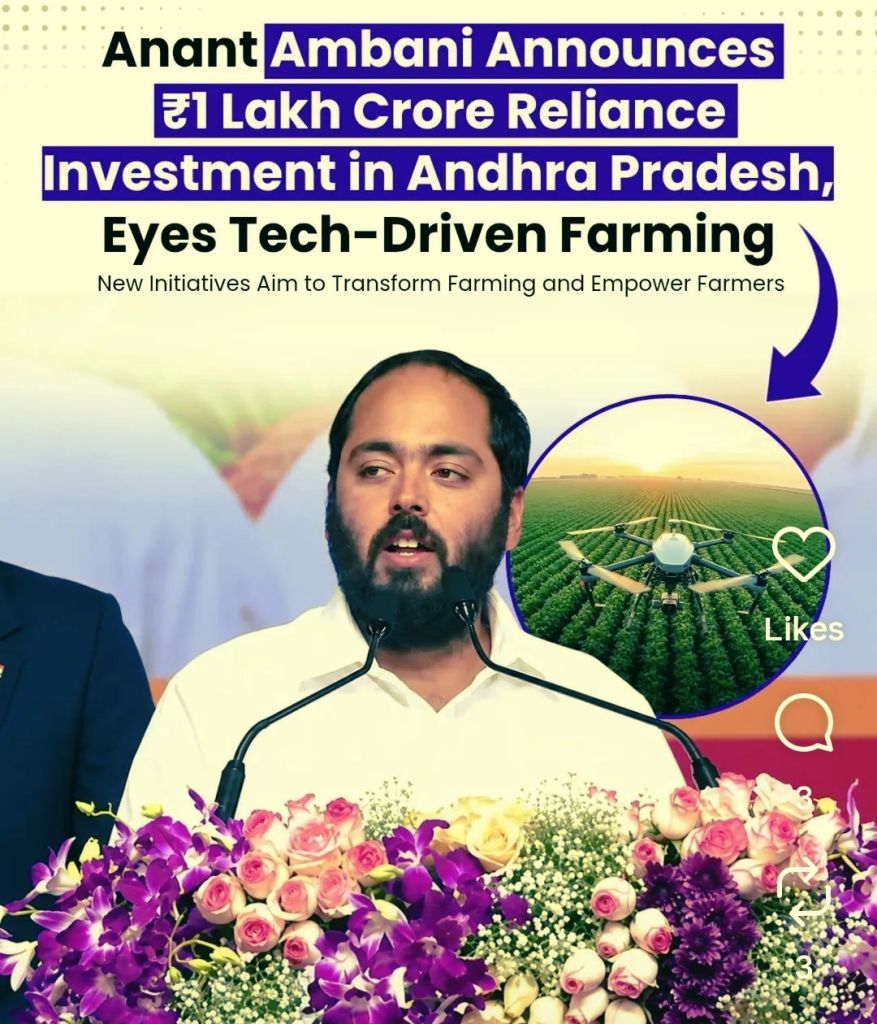
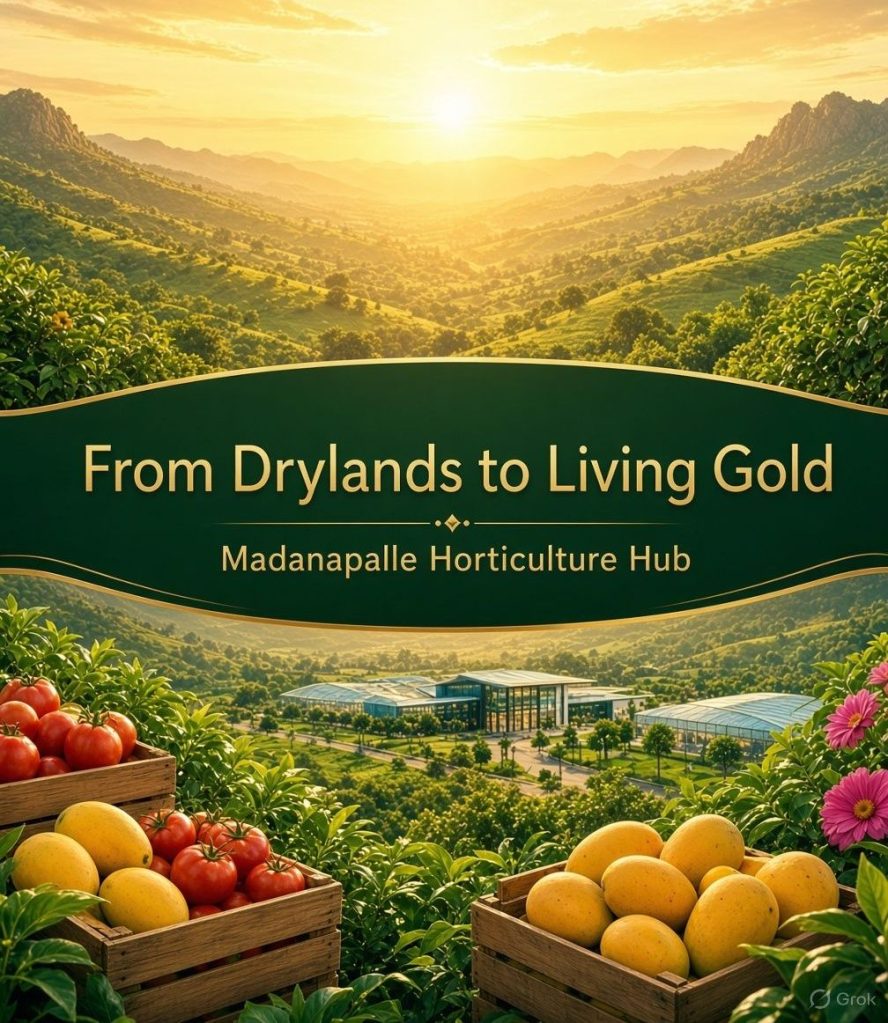
The Madanapalle initiative, launched on October 2, 2026, envisages ₹40,352 crore of public investment and approximately ₹60,000 crore of private investment, covering ten districts, 201 clusters, 303 mandals and 5,869 villages. Its objective of expanding horticultural cultivation from 8.41 lakh hectares to 14.41 lakh hectares, while increasing production from 222 lakh MT to 435 lakh MT, is significant not merely because of its scale but because of the architecture behind it. Irrigation, research, precision cultivation, post-harvest management, processing, cold chains, logistics and exports are being conceived as parts of one integrated system. The real paradigm shift is therefore from farming as production to horticulture as an industrial value chain. The proposed Indian School of Agriculture at Madanapalle, with emphasis on AI, precision agriculture, smart irrigation, post-harvest technologies and agribusiness, could provide the intellectual infrastructure required to make that transition sustainable and globally competitive.
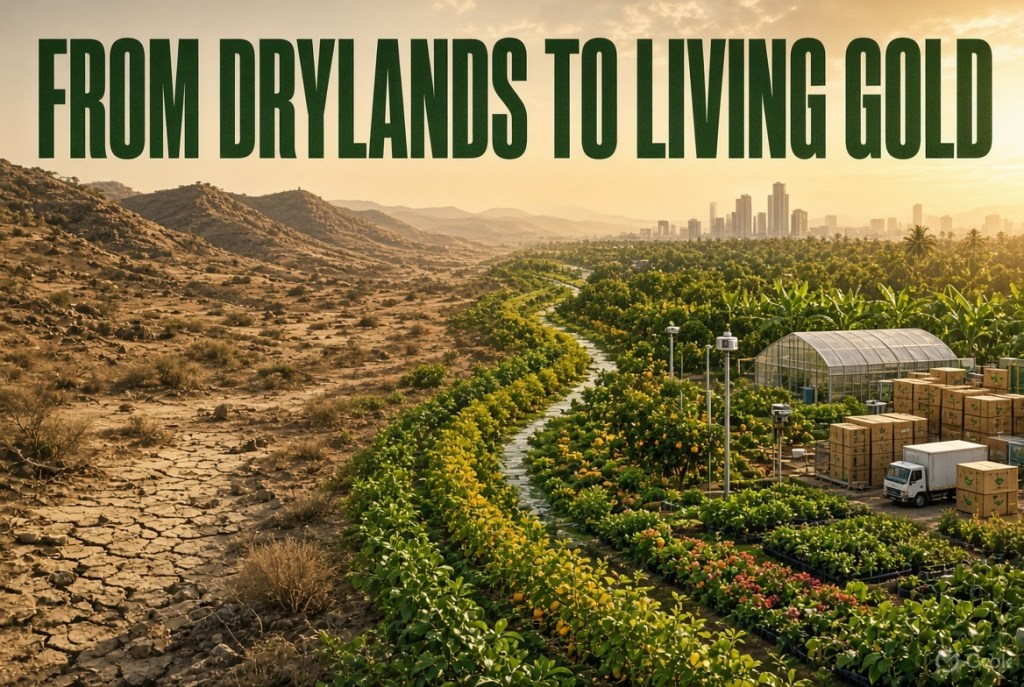
The deeper significance of this experiment lies in its treatment of geography. Rayalaseema’s historical disadvantage—semi-arid conditions—can become an economic advantage when matched with crops and technologies suited to its agro-climatic character. Mango, pomegranate, avocado, berries, dragon fruit, dates, citrus and other high-value crops can potentially create far greater economic density than traditional low-value cultivation when supported by micro-irrigation, protected cultivation, scientific agronomy, processing and international market access. The lesson is larger than horticulture: the future of agriculture may belong not to regions that produce the most, but to regions that organise production most intelligently. Andhra Pradesh is therefore attempting to move from the economics of acreage to the economics of value, where climate, technology, entrepreneurship and markets are deliberately aligned.
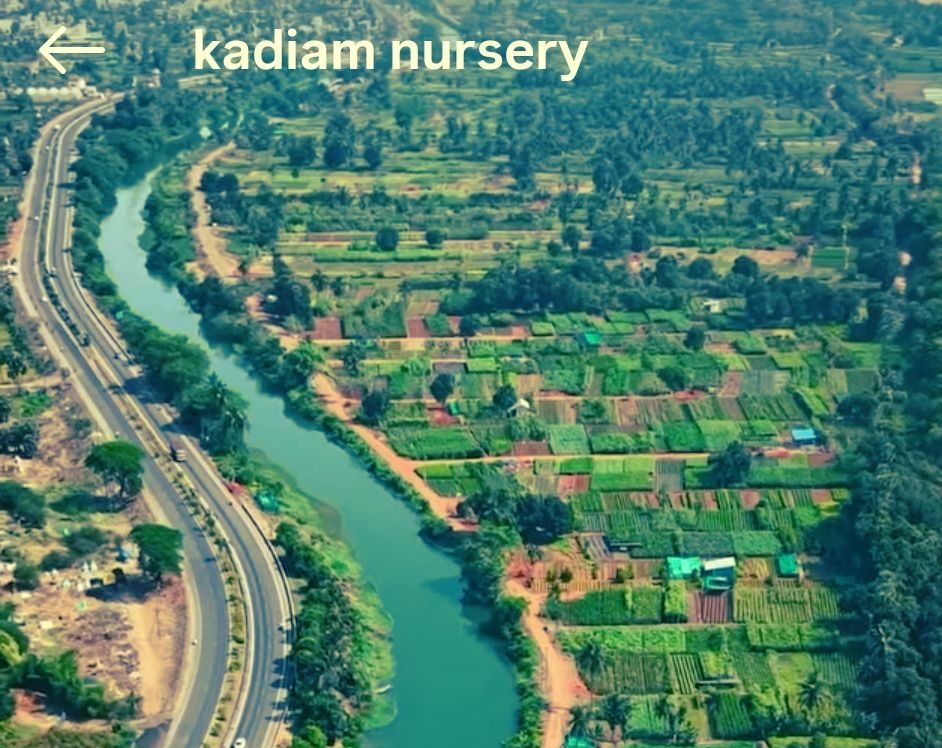
And then there is Kadiyam—a remarkable agricultural ecosystem that has grown almost organically along the Godavari near Rajahmundry. Across roughly 5,000 acres, more than 2,500 nurseries and thousands of plant varieties have created an extraordinary concentration of horticultural knowledge, entrepreneurship and employment. Ornamental plants, fruit plants, avenue trees, landscaping material and other planting stock have made Kadiyam an indispensable source for India’s expanding green infrastructure. Its real asset, however, is not merely land or plant inventory. It is accumulated biological knowledge: generations of nursery entrepreneurs who understand propagation, acclimatisation, plant behaviour, seasonal cycles, transplantation and customer requirements. In an era when many countries are attempting to build climate-resilient cities and restore degraded landscapes, this accumulated knowledge constitutes an economic asset with enormous potential.
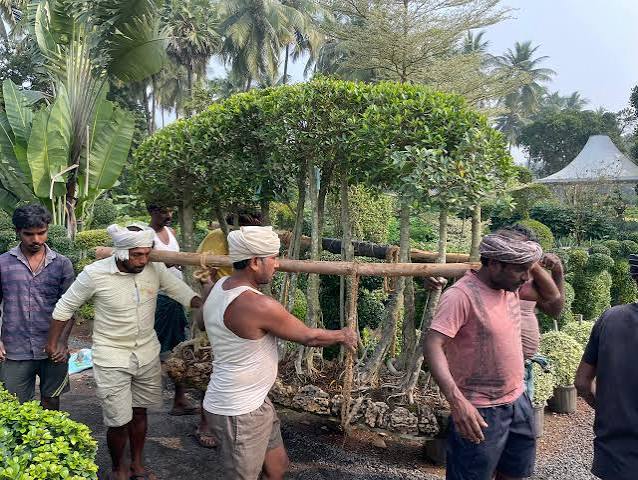
Kadiyam’s paradox is that it has already mastered production but has not yet fully captured the global value of what it produces. Plants move from the cluster to markets across India, but the Kadiyam brand itself has limited international visibility. Small and medium nursery operators can also face difficulties relating to phytosanitary certification, testing, packaging, quality standardisation, export documentation, logistics, digital marketing and international market intelligence. The opportunity, therefore, is not simply to increase nursery production; it is to industrialise the value chain around living plants. Unlike a conventional commodity, a plant carries biological value, ecological value and future economic value. Every tree exported today can eventually become part of an urban forest, a landscaped airport, a highway corridor, a corporate campus, a restoration project or a climate-resilient public space.
Andhra Pradesh could respond through a dedicated Kadiyam Green Gold Mission, conceived as an integrated export-oriented nursery cluster and potentially one of India’s first large-scale organised plant-export ecosystems. A Kadiyam Global Horticulture Export Centre could bring together APEDA, the National Horticulture Board, plant-quarantine authorities, customs, research institutions, logistics companies, financial institutions and nursery associations. A genuine single-window platform could integrate registration, certification, laboratory testing, phytosanitary clearances, packaging, customs documentation, export finance and market intelligence. Equally important would be the creation of common infrastructure—modern propagation facilities, cold-chain and specialised transport systems, quality laboratories, quarantine facilities, standardised packaging centres and a digital marketplace. The objective should be to move the nursery entrepreneur from dependence on intermediaries towards direct access to global buyers.
The opportunity also extends beyond the export of individual plants. Kadiyam could evolve into a global centre for instant landscaping, mature-tree transplantation, urban forestry, biodiversity restoration, botanical design and climate-smart landscaping. Its expertise could serve airports, highways, industrial corridors, townships, ports, smart cities and ecological restoration projects in India and overseas. Technology can provide the bridge between traditional nursery wisdom and global competitiveness: AI-enabled inventory management, IoT-based irrigation, drone monitoring, tissue culture, automated nurseries, protected cultivation, digital traceability and sustainable growing media could transform Kadiyam into a genuine green-technology cluster. A knowledge partnership between the emerging agricultural ecosystem at Madanapalle and Kadiyam could be especially powerful—connecting Rayalaseema’s scientific and technological ambition with the Godavari region’s entrepreneurial nursery expertise.
The most compelling dimension, however, is the possibility of creating a new definition of agricultural wealth. Rayalaseema could emerge as Andhra Pradesh’s fruit economy, while Kadiyam could become its green infrastructure economy. One converts semi-arid land into high-value horticultural exports; the other converts biological knowledge into plants, landscapes, ecological services and potentially foreign exchange. Together they suggest a new agricultural strategy for Andhra Pradesh: from crops to value chains, from production to branding, from domestic distribution to international trade, and from agricultural output to ecological capital. The ultimate question is therefore not how many more plants Kadiyam can grow. It is whether Andhra Pradesh can build the institutions, infrastructure, standards, technology and global brand required to make Kadiyam India’s first internationally scaled Green Gold export hub. If that transformation succeeds, every sapling leaving Kadiyam could carry three forms of value into the world—foreign exchange, employment and a greener planet.
VISIT ARJASRIKANTH.IN FOR MORE INSIGHTS

