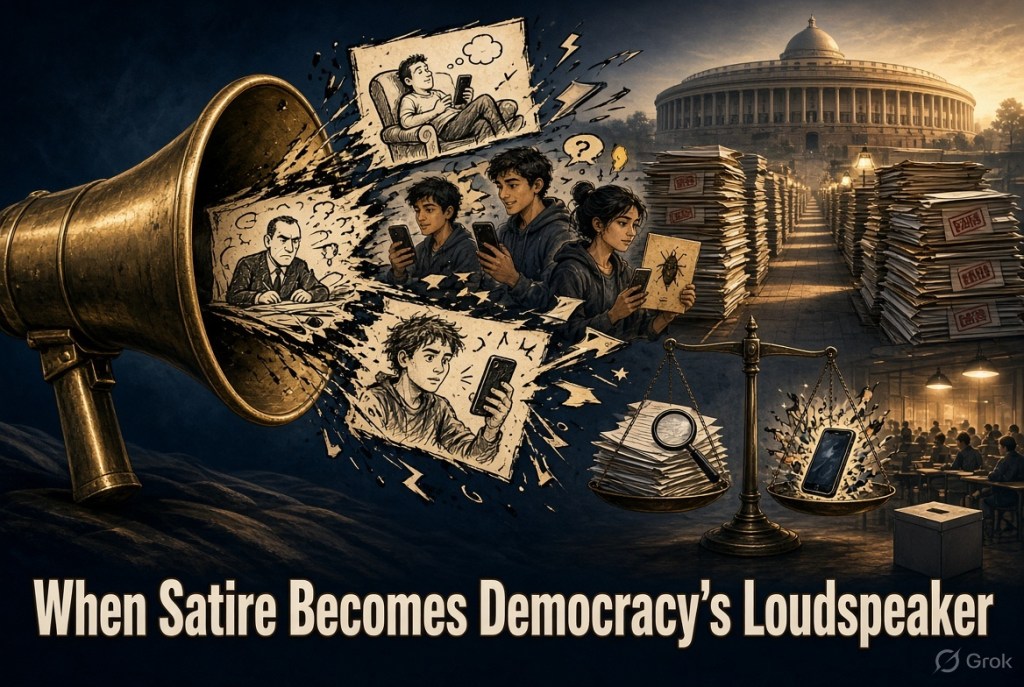
India’s democratic anxiety today is increasingly moving beyond the familiar contest between political parties and towards a more fundamental question: how much distance can institutions create between themselves and the citizens they are meant to serve? Three forces are converging—economic asymmetry in political representation, bureaucratic risk-aversion and the conversion of public discourse into an attention economy. The extraordinary rise of the satirical Cockroach Janta Party (CJP) is therefore significant less as conventional politics than as a cultural symptom. The movement appropriated the word “cockroach” after remarks made by Chief Justice of India Surya Kant in May 2026. The CJI subsequently clarified that his observations were directed at individuals he said had entered professions through fake or bogus degrees, rather than unemployed youth generally. The transformation of a controversial judicial metaphor into a youth identity is itself a striking example of how digital citizens can reclaim language once directed at them.
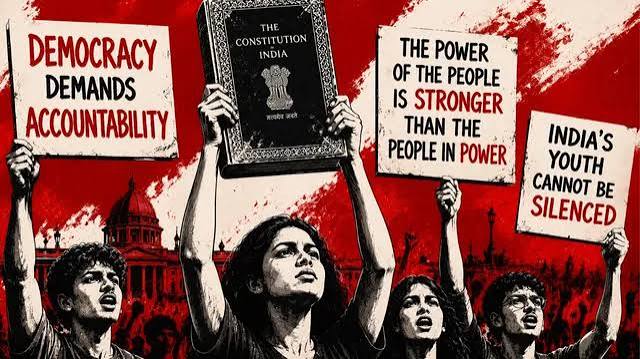
The second anxiety concerns the social composition of political power. The Association for Democratic Reforms’ analysis of the 2024 Lok Sabha winners found that 504 of 543 MPs—93%—were crorepatis, while 251, or 46%, had declared criminal cases and 170, or 31%, had declared serious criminal cases. These figures do not establish that wealth produces poor governance, nor do declared criminal cases amount to convictions. But they illuminate a representational question that deserves serious democratic examination: does the lived economic experience of political representatives increasingly diverge from that of ordinary citizens? Democracy does not require representatives to possess identical life histories. Yet when political institutions become socially distant from the population they govern, an accountability gap can emerge. The issue is therefore not simply who wins elections, but whether citizens continue to recognise their own aspirations, anxieties and everyday realities in the architecture of political power.
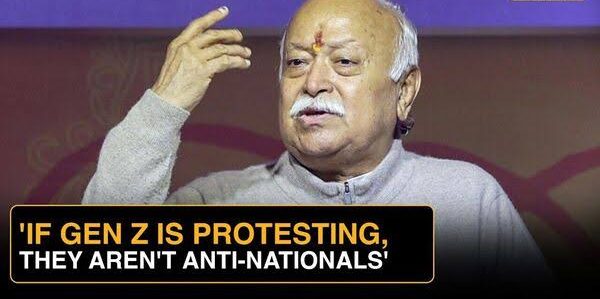
This leads to a larger transformation in the meaning of governance itself. Healthcare, education, employment, infrastructure and welfare increasingly reach citizens through budgets, contracts, platforms, subsidies, loans and digital transactions. Markets are indispensable to economic development, but a citizen cannot be reduced to a consumer and the State cannot be reduced to a service-delivery corporation. When every social problem is translated into expenditure, credit, compensation or a dashboard indicator, the deeper vocabulary of public capability can disappear. A government may announce thousands of crores, launch hundreds of schemes and generate millions of transactions, yet the citizen ultimately asks a simpler question: has my life become more secure, capable and dignified? The administrative test should therefore move beyond expenditure and compliance towards outcomes—better schools, productive employment, accessible healthcare, reliable infrastructure, social mobility and institutional trust. Development is not the movement of money; it is the conversion of public resources into human capability.
Bureaucracy adds another dimension to this democratic distance. The cynical phrase “I Am Safe” as shorthand for the administrative mindset should not be generalised to the entire civil service, but it captures a genuine institutional risk: when the personal cost of an incorrect decision appears greater than the institutional cost of indecision, delay becomes rational. An officer who takes a good-faith decision may face audit, inquiry or retrospective scrutiny; an officer who keeps a file moving through procedure can often defend the delay by pointing to rules. Over time, this can produce what might be called administrative cowardice by design—not necessarily corruption, but a system in which responsibility migrates upward, difficult decisions remain perpetually under examination and meetings substitute for outcomes. A confident State therefore requires two protections simultaneously: strict accountability for bad faith and corruption, and reasonable institutional protection for honest decisions taken in good faith.
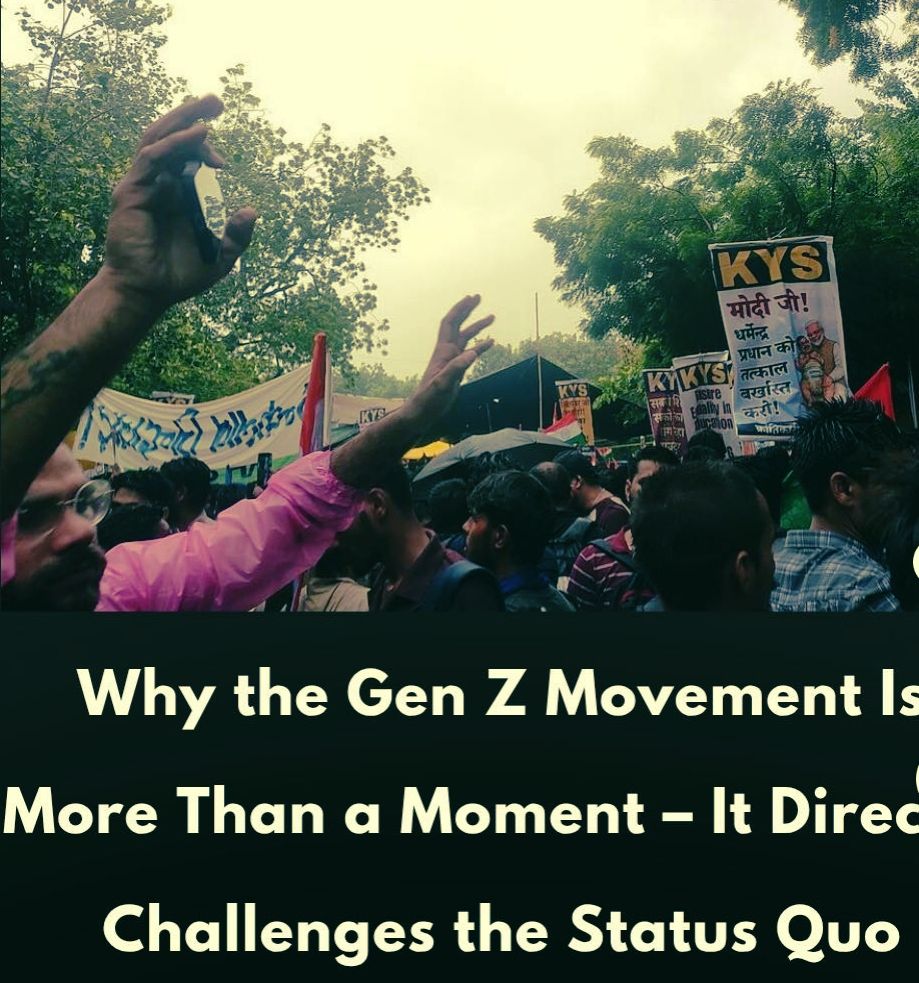
The digital revolution has now shattered the traditional monopoly over political communication. Governments can communicate achievements instantly, but citizens can expose failures with equal speed. Political communication has consequently become an attention marketplace in which outrage, humour, repetition and virality can outperform institutional explanation. Evidence from digital political advertising during the Bihar Assembly election illustrates the scale of the transformation: an analysis of 55 major advertisers spending more than ₹1 lakh found that 23 were official party or candidate campaigns while 32 were third-party or surrogate actors; the latter generated substantially more impressions. The Election Commission has responded by requiring pre-certification of political advertisements on electronic and social media during elections and disclosure of authentic candidate social-media accounts. The democratic challenge is therefore no longer simply misinformation. It is the governance of an entire ecosystem in which persuasion can be outsourced, amplified and obscured behind apparently independent digital voices.
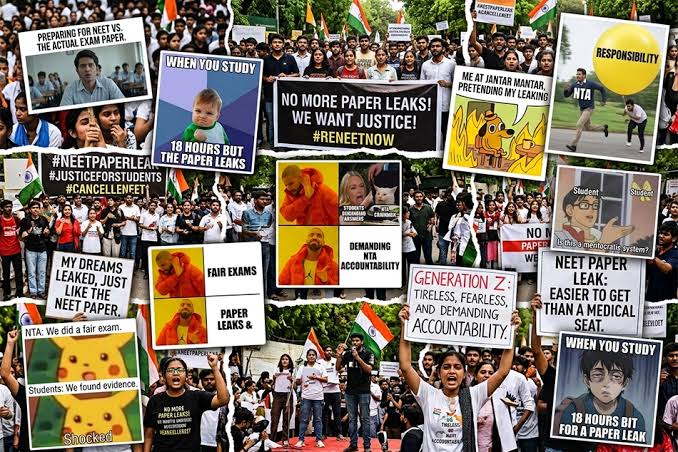
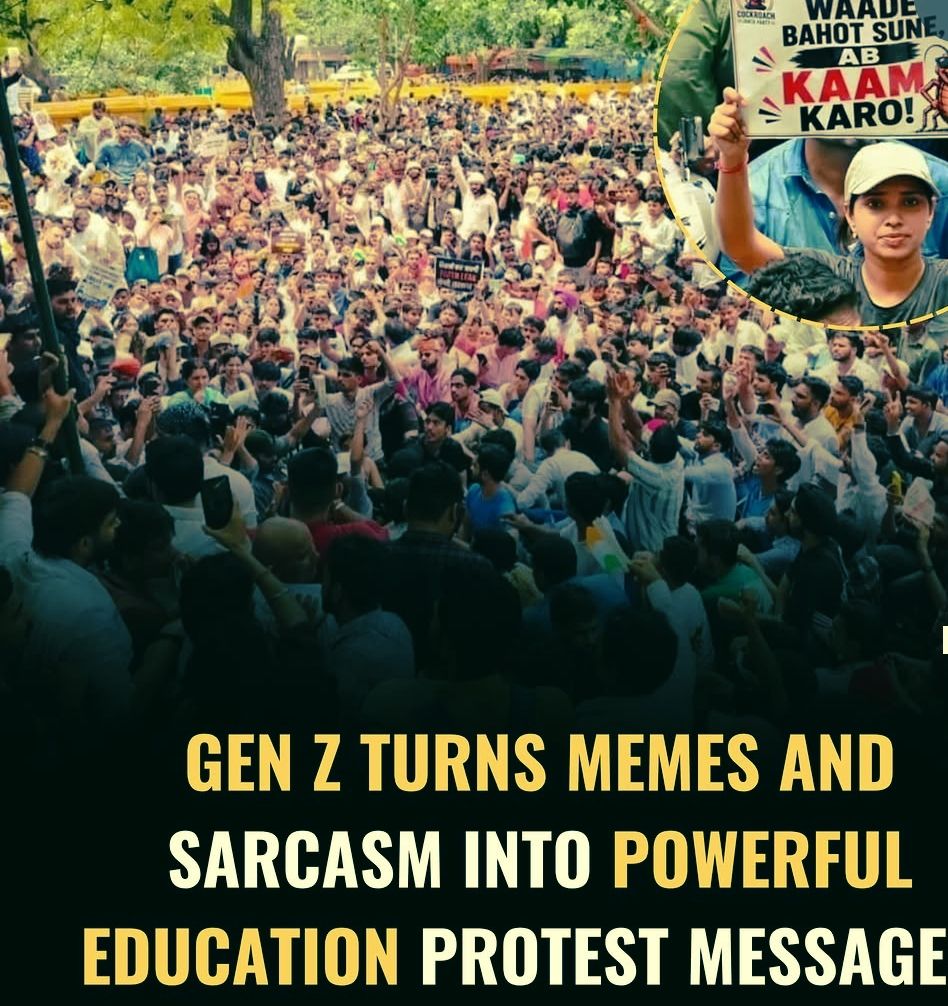
Then came the cockroach moment. Reuters reported that within five days of its launch in May 2026, CJP had accumulated nearly 15 million Instagram followers, presenting itself as a satirical youth movement focused on concerns including unemployment, inflation and political marginalisation. Its unusual power came from converting humiliation into humour and humour into mobilisation. The movement subsequently connected satire with concrete grievances around examinations, youth employment and institutional accountability. The NEET-UG controversy provided one major point of mobilisation, and Education Minister Dharmendra Pradhan resigned on July 25 amid large student protests; his resignation was reported as a principal demand of protesters at the CJP site at Jantar Mantar. Whatever interpretation one places on the movement, its emergence demonstrates a new form of democratic participation: citizens who may not trust conventional political language can nevertheless use memes, satire and digital networks to force institutional questions into public view.

The Election Commission controversy demonstrates why this new politics cannot be dismissed as merely theatrical. An Indian Express investigation reported that Election Commissioners Sukhbir Singh Sandhu and Vivek Joshi had formally raised objections at least 14 times over ten months concerning aspects of electoral-roll management and decisions they said were taken without their knowledge. The Commission has disputed suggestions of an institutional rupture and maintained that decisions, including SIR-related decisions, had the approval of all three commissioners. The Supreme Court has now agreed to hear a petition challenging aspects of the CEC’s functioning and the legality of SIR. This is precisely where democratic maturity matters: neither unquestioning institutional faith nor unverified allegations should determine public judgment. Electoral legitimacy ultimately depends on transparent procedures, accessible records, reasoned decisions, internal accountability and credible judicial review.
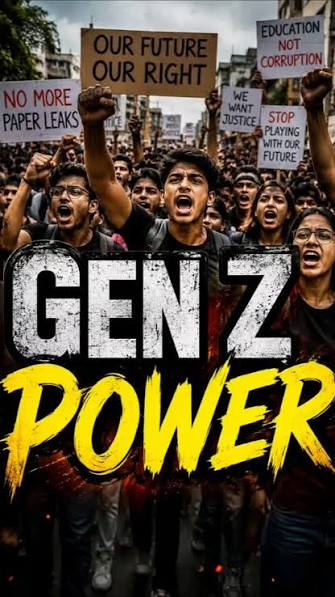
The larger story, therefore, is not that Gen Z has discovered a perfect new politics, nor that established institutions have become obsolete. It is that the accountability contract between citizen and State is being renegotiated in real time. Citizens now possess unprecedented tools to document, ridicule, organise and scrutinise; institutions possess unprecedented tools to communicate, monitor and respond. The danger is that both may become trapped in permanent outrage, where every disagreement becomes a conspiracy and every criticism becomes an attack on the institution itself. Democracy cannot survive as an endless viral trial. It requires evidence, due process, independent institutions, professional journalism and consequences for demonstrable wrongdoing. The CJP phenomenon matters because it reveals something deeper than its slogans: a generation increasingly unwilling to remain merely an audience. The ultimate test of Indian democracy will not be whether the “cockroaches” disappear, but whether institutions understand why citizens felt compelled to speak through satire—and whether governance can become sufficiently transparent, responsive and accountable that satire is no longer the only language powerful enough to make authority listen.
VISIT ARJASRIKANTH.IN FOR MORE INSIGHTS

