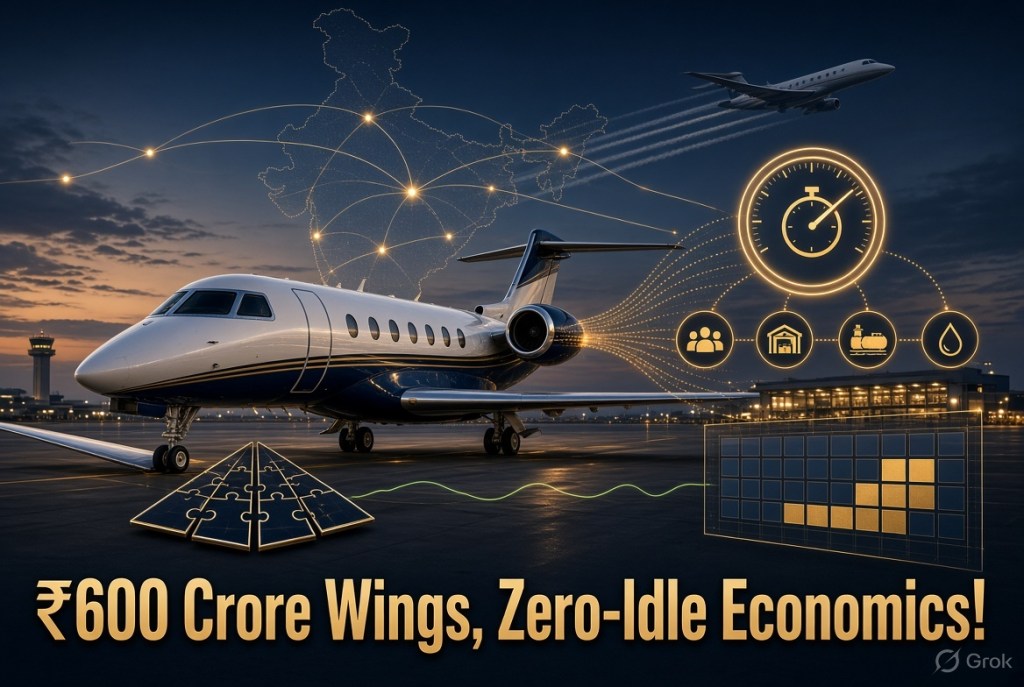
A private jet is often presented as the ultimate symbol of wealth—a machine that converts money into time, privacy and mobility. But beneath the glamour lies a remarkably unforgiving economic reality. An aircraft costing ₹16 crore or ₹20 crore at the lower end and ₹550–600 crore at the ultra-long-range end is not merely a luxury asset; it is a capital-intensive operating system that consumes resources continuously. Pilots, engineers, insurance, hangarage, training, maintenance, navigation, handling, fuel and engine reserves do not disappear when the aircraft is parked. Depreciation continues silently. The central paradox is therefore profound: the richer the owner, the easier it may be to buy the aircraft; but the more sophisticated the owner must become to justify owning it. In private aviation, wealth buys access, but utilisation determines economics.
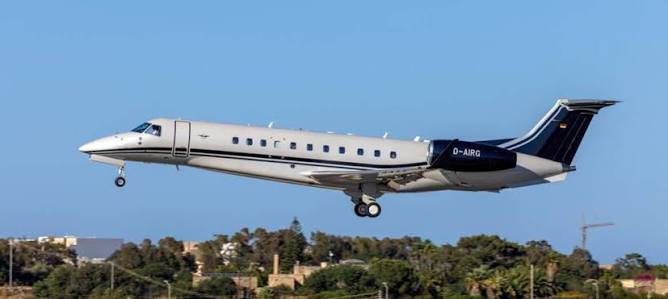
India provides an especially revealing laboratory for this paradox. Its private-aviation ecosystem remains considerably smaller than that of the United States, where business aviation is supported by an extensive airport network, mature corporate aviation departments, fractional ownership, specialised operators and developed financing markets. India’s comparatively limited ecosystem cannot simply be explained by the number of wealthy individuals. It reflects the interaction of airport congestion, scarce general-aviation infrastructure, taxation, financing constraints, regulatory requirements, limited MRO capacity and a relatively shallow secondary market. Scarcity creates pricing power, but scarcity without scale can simultaneously create inefficiency. An aircraft may command a premium precisely because few are available, while remaining economically underproductive because it spends too much time waiting for its next passenger.
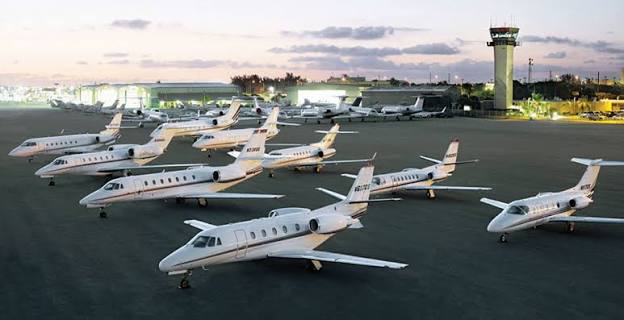
The most interesting feature of the Indian market is therefore not ownership but structure. Commercial aviation arrangements through NSOPs, aircraft-management companies, leasing structures, corporate ownership and shared ownership can fundamentally alter the economics compared with purely personal ownership. The distinction matters because a privately owned aircraft used for a few hundred hours a year carries almost the entire fixed-cost burden of an extraordinarily expensive asset. Commercial utilisation allows that burden to be distributed across multiple customers. Thus, the private jet is gradually evolving from an object of personal consumption into a platform for mobility services. India’s policy push towards aircraft leasing and financing at GIFT IFSC is significant in this context: the Government and IFSCA have been explicitly developing GIFT IFSC as an emerging hub for aviation finance and aircraft leasing.
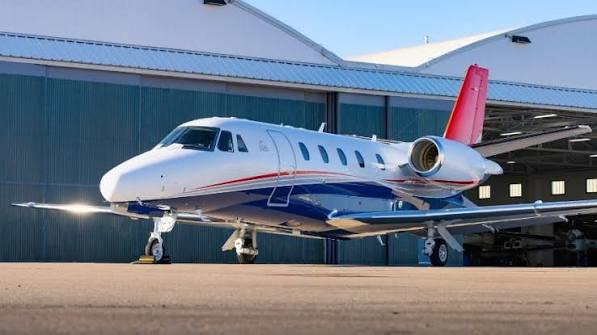
The mathematics becomes even more revealing after the aircraft is purchased. A mid- or large-size jet can generate annual operating costs running into ₹22–25 crore under substantial utilisation. Fuel can consume several crore rupees; pilot compensation and recurrent training add materially; maintenance creates both routine expenditure and potentially enormous periodic liabilities; insurance reflects aircraft value and operating risk; while hangarage, parking, handling and navigation charges accumulate relentlessly. Engine reserves deserve particular attention because an apparently profitable aircraft can encounter a major overhaul obligation that dramatically alters its annual economics. The intelligent metric is therefore not the purchase price but cost per productive flying hour. A ₹300-crore aircraft flying efficiently may be economically more rational than a ₹100-crore aircraft sitting idle. In aviation, utilisation is not an operational statistic; it is the central financial variable.
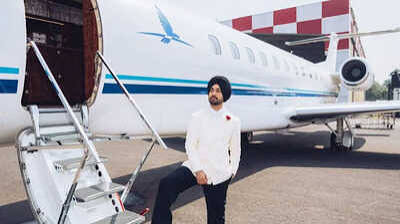
This is precisely why India’s emerging charter, subscription and fractional-ownership models deserve attention. A four- or five-member ownership consortium can spread fixed costs across several users. Corporate block-hour commitments can provide predictable revenue. Government and institutional contracts can establish baseline utilisation. Air ambulances, executive travel, wedding aviation and specialised regional connectivity can create additional demand. Subscription models potentially convert an unpredictable luxury purchase into a contracted mobility service. The economics become particularly compelling when the operator can combine different demand cycles rather than depend upon a single owner. The aircraft then begins to resemble a hotel room, container ship or high-value industrial machine: its financial value depends increasingly on occupancy, utilisation and yield, rather than merely on ownership.
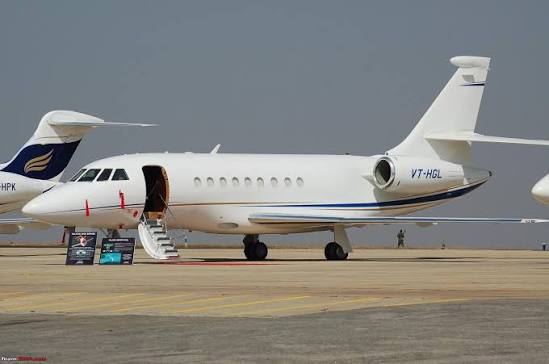
But the private-aviation business has a silent destroyer of profitability: the empty leg. A Delhi–Mumbai charter may appear lucrative when viewed only through the passenger fare. Yet if the aircraft must reposition empty from another city, or return without passengers, fuel, crew time, maintenance exposure, airport charges and depreciation continue without corresponding revenue. The economics are therefore closer to logistics than luxury. An empty private jet is analogous to an empty truck, container or hotel room—but considerably more expensive. This makes transparent digital marketplaces potentially transformative. If customers can see aircraft location, actual availability, repositioning requirements, hourly economics and total trip cost, information asymmetry can be reduced and otherwise wasted capacity monetised. The future competitive advantage may therefore belong not merely to aircraft owners, but to those who can algorithmically minimise empty flying.
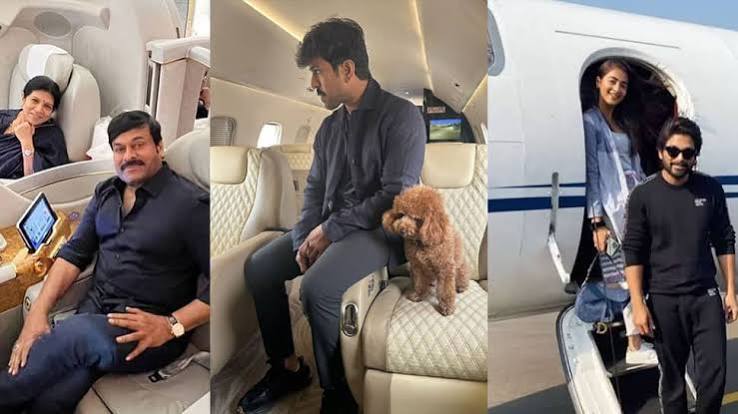
Infrastructure presents the next constraint. Delhi and Mumbai concentrate wealth, corporate headquarters and premium demand, yet their airports also face intense capacity pressures. The answer cannot simply be more private aircraft competing for metropolitan slots. India needs a broader general-aviation architecture: regional airports, dedicated business-aviation terminals, hangar capacity, predictable slot management, sophisticated MRO facilities and stronger financing mechanisms. Aircraft leasing at GIFT IFSC represents one part of this larger architecture. Government policy has explicitly sought to strengthen India’s domestic aircraft-leasing and financing capabilities, reducing dependence on overseas financial centres. The larger opportunity is therefore ecosystem creation: financing, leasing, maintenance, insurance, operations, technology and regional connectivity must develop together.
Then comes the environmental balance sheet, which private aviation can no longer treat as an externality. Transport & Environment estimates that private jets generate 5–14 times the pollution per passenger compared with commercial aircraft, reflecting their low passenger loads and operational patterns. Its 2026 analysis continues to emphasise the disproportionate climate intensity of private aviation. For India, the emerging debate is not simply about whether private aviation should expand, but how its environmental costs should increasingly enter commercial calculations. More efficient aircraft, sustainable aviation fuel, transparent emissions accounting and potentially differentiated environmental pricing could become part of the industry’s future economics. The contradiction is striking: private aviation sells time as its greatest luxury, while society increasingly demands that the same industry account for the environmental cost of consuming that time through carbon-intensive mobility.
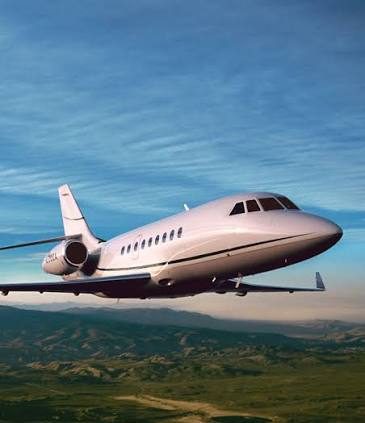
The deeper transformation, therefore, is not about how many Indians will eventually own private jets. It is about whether India can convert private aviation from an elite ownership phenomenon into a high-productivity mobility ecosystem. The aircraft of tomorrow may be owned by several investors, operated by an NSOP, financed through a sophisticated leasing structure, contracted by a corporation for 100 hours, used occasionally for medical evacuation, and repositioned through a digital marketplace that monetises otherwise-empty sectors. The ultimate sophistication will not be measured by the size of the cabin or the price of the aircraft. It will be measured by asset utilisation, financial transparency, operational reliability and productive hours in the sky. The most expensive private jet is not necessarily the one with the highest purchase price. It is the one sitting silently on the ground, burning capital without creating value. In the new economics of private aviation, the greatest luxury may no longer be owning the aircraft—it may be keeping it economically airborne.
VISIT ARJASRIAKNTH.IN FOR MORE INSIGHTS

