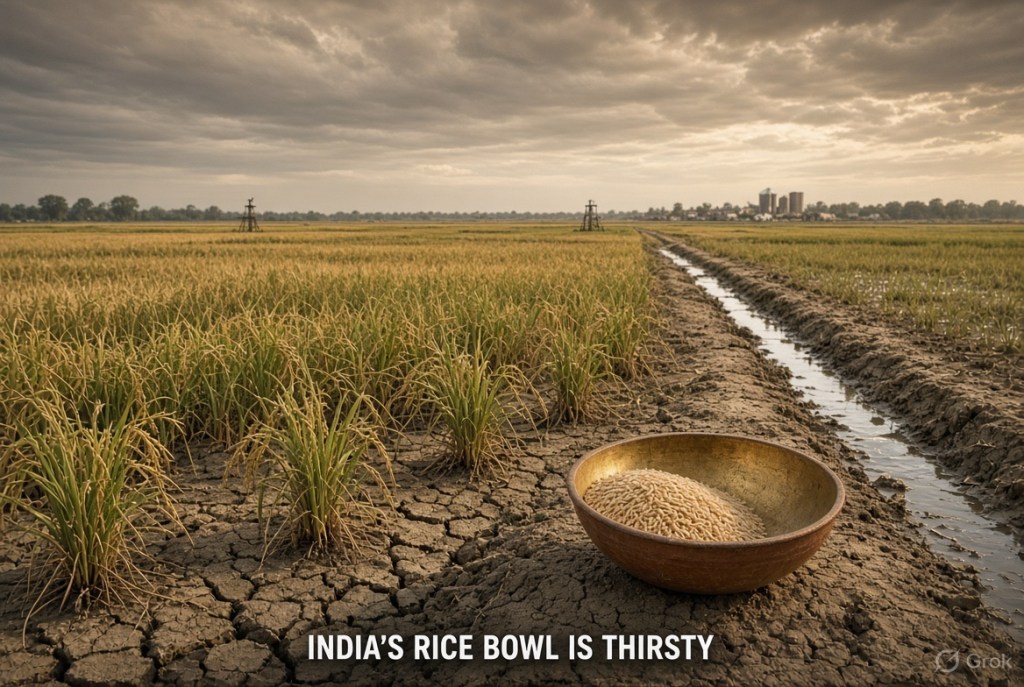
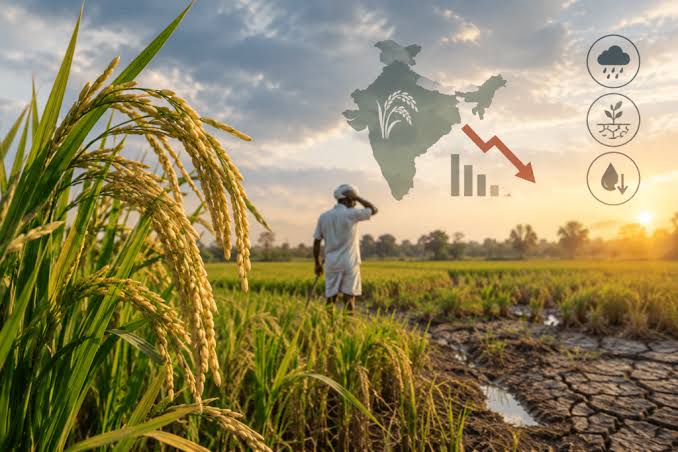
India’s rice economy is approaching a paradox that could become one of the country’s most consequential food-policy challenges: a nation can possess enormous grain stocks and still face a rice affordability problem. Production is projected to decline from last year’s record 154 million tonnes to around 144 million tonnes—a contraction of nearly 6.5% and potentially the first annual decline in about a decade. For the world’s largest rice producer and exporter, this is not merely an agricultural statistic. Rice sits at the intersection of household consumption, food inflation, rural incomes, livestock feed, groundwater management, exports and social welfare. The immediate concern may be a smaller harvest, but the deeper question is whether India’s rice economy has become structurally dependent on an ecological model that is becoming progressively harder to sustain.
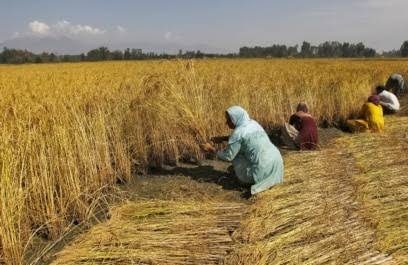
The immediate shock is climatic, but climate is exposing rather than creating the underlying vulnerability. With national monsoon rainfall reportedly around 15% below normal since June 1 and deficits much sharper in some important rice-growing states, summer-sown rice acreage has fallen to approximately 42.68 million hectares, nearly 4% below the previous year. Rice is particularly exposed because more than four-fifths of India’s production comes from the Kharif season. The problem is therefore not simply that the monsoon has underperformed in one season. It is that India’s agricultural system still assumes that rainfall will arrive with sufficient predictability to support a crop whose water requirements are substantial. Climate variability is increasingly turning that assumption into a liability.
The water equation is perhaps the most uncomfortable part of the story. Conventional transplanted rice cultivation often involves prolonged field flooding, placing considerable pressure on freshwater resources. Punjab and other rice-growing regions have already experienced serious groundwater depletion, creating a peculiar contradiction: India is drawing down underground water reserves to sustain a crop whose principal growing season is itself dependent on an increasingly erratic monsoon. The question, therefore, cannot simply be “How much rice can India produce?” It must become “How much water must India consume to produce each additional tonne of rice?” A production strategy that maximises tonnes while silently exhausting aquifers may appear successful in agricultural statistics while accumulating an ecological deficit that eventually becomes an economic crisis.
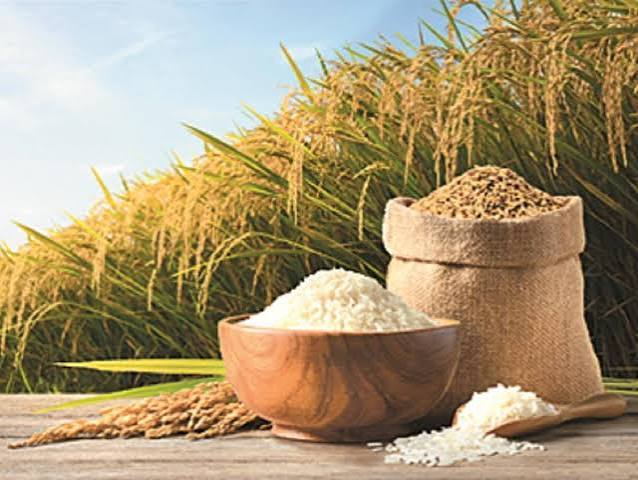
India’s enormous rice inventory provides a powerful short-term buffer, but stocks should not be confused with unlimited market supply. Government-held grain serves multiple purposes, including food distribution and market intervention; some stocks are held as paddy requiring milling, while varieties such as basmati, non-basmati, parboiled and broken rice serve different consumer and industrial markets. The approximately 60-million-tonne stockpile therefore provides insurance against physical shortage, but it cannot automatically neutralise every price pressure. The same grain ecosystem is also being pulled in competing directions by welfare requirements, exports, industrial use and ethanol production. A tonne of rice cannot simultaneously satisfy every policy objective. The real challenge is managing scarcity—not merely counting inventory.
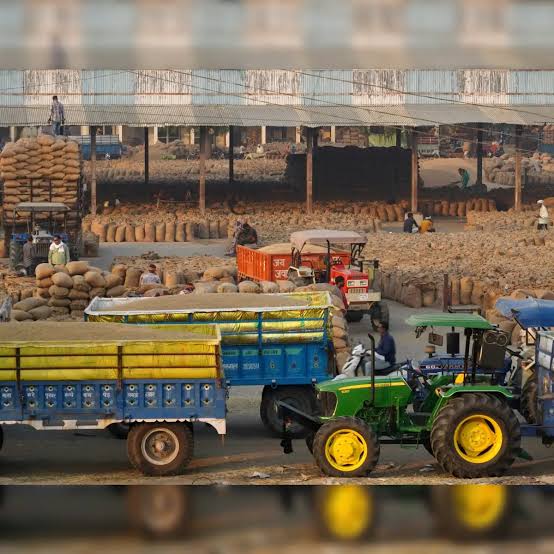
This distinction becomes particularly important for households. Reports of non-basmati rice prices rising by more than 10% in some markets, with sharper increases for varieties such as Sona Masuri and Swarna, demonstrate how quickly agricultural stress can enter the household budget. For affluent consumers, a higher rice bill may be inconvenient; for low-income families, it can force difficult substitutions between food categories. Food security therefore cannot be defined merely as the absence of famine or the presence of government stocks. Affordability is itself a dimension of food security. A country may possess sufficient physical grain while households simultaneously experience declining purchasing power because retail prices rise faster than incomes.
The shock can also travel beyond the rice market. Broken rice is an important feed ingredient, particularly for poultry and other livestock systems. Higher prices can therefore raise production costs for farmers and processors, eventually transmitting inflation into eggs, poultry and potentially other animal products. This is the hidden multiplier in staple-food inflation: one commodity does not remain confined to one grocery shelf. Its price can travel through feed markets, transport, processing and retail distribution. In an economy already vulnerable to volatility in vegetables, edible oils and other food items, a rice-price shock can complicate the broader inflation-management challenge while simultaneously squeezing both consumers and agricultural producers.
India’s position in the global rice market adds another layer of complexity. The country accounts for more than a quarter of internationally traded rice, meaning domestic policy decisions can influence food availability and prices far beyond its borders. Export restrictions have historically been used to protect domestic consumers, while subsequent easing has reshaped global supply conditions. A smaller Indian harvest could tighten international availability at a time when competing exporters such as Thailand and Vietnam are also experiencing firmer market conditions. India consequently faces a delicate policy triangle: consumer affordability, farmer remuneration and export reliability. Overprotecting domestic consumers can weaken producer incentives and disrupt global markets; prioritising exports can create domestic price pressures. Neither extreme provides a durable solution.
The deeper answer lies not in repeatedly opening government warehouses or imposing emergency export restrictions, but in changing the economics and technology of rice cultivation. Direct Seeded Rice can reduce labour and water requirements, while Alternate Wetting and Drying can reduce unnecessary continuous flooding. Climate-resilient varieties, including drought-tolerant and flood-tolerant strains, can provide additional protection against increasingly volatile weather. But technology will remain marginal unless incentives change with it. If procurement systems, MSP expectations, irrigation investments and market structures continue encouraging paddy cultivation in ecologically stressed regions, farmers cannot reasonably be expected to diversify simply because policymakers want them to. Pulses, millets, oilseeds and other less water-intensive crops need credible procurement, remunerative returns and dependable markets. Crop diversification will happen when the alternative becomes economically rational, not merely environmentally desirable.
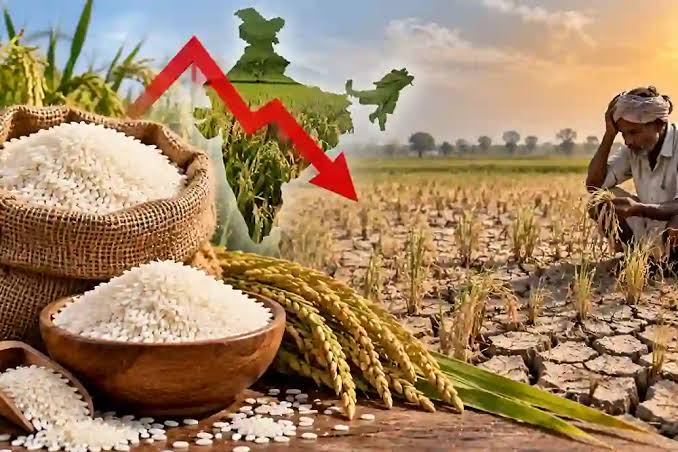
India’s rice challenge is therefore not fundamentally about whether the next harvest produces 144 million tonnes or returns to 154 million tonnes. It is about whether the country can sustain the ecological and economic foundations that make those numbers possible. Buffer stocks can manage immediate shortages; calibrated trade policy can moderate international pressures; better technology can reduce water consumption; and crop diversification can protect aquifers. But the decisive reform is to align farmer incentives with water realities. India may have enough rice to protect itself from hunger today, yet insufficient water to produce tomorrow’s rice in the same manner. The rice bowl is not empty—but the water beneath it is disappearing. The next agricultural revolution will therefore not be measured simply in tonnes harvested, but in whether India can keep its people fed without consuming the ecological capital required to feed them tomorrow.
VISIT ARJASRIKANTH.IN FOR MORE INSIGHTS

