
India is developing a strange new civic condition: every incident becomes a national headline, but almost nothing becomes a national lesson. A hospital fire in Adilabad, sexual violence in Bihar, a student death at IIT Bombay, the killing of a forest ranger in Rajasthan, or allegations of exploitation can travel across the country within minutes. Social media has demolished the geographical boundaries of outrage. A tragedy that once remained confined to a district can now become a national conversation before investigators have completed the first round of evidence collection. This has transformed public accountability, but it has also created an uncomfortable paradox: our ability to react instantly is expanding far faster than our ability to reform systematically. India is becoming extraordinarily efficient at discovering its failures—and disturbingly inefficient at learning from them.
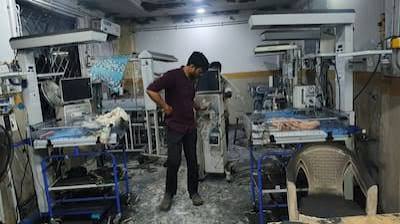
The Adilabad RIMS neonatal-unit fire captures this contradiction with painful clarity. Three new-borns were reported dead after a fire in the Special New-born Care Unit, with officials investigating whether an air-conditioning malfunction or electrical short circuit triggered the blaze. Reports said parents and hospital staff broke glass panes to rescue babies as smoke filled the unit, while nurses and other staff were injured during the rescue. The immediate question is understandably: who was responsible? But the more important governance question is larger: why was a neonatal unit vulnerable to a failure that should have been anticipated by institutional safety systems? Fire audits, electrical redundancy, evacuation protocols, equipment maintenance, emergency drills and independent safety certification matter more than the temporary intensity of public anger. An inquiry can establish responsibility; only redesign can prevent repetition.
The Jamui incident demonstrates the darker side of a society in which every smartphone is simultaneously a camera, broadcasting station and courtroom. A video showing the alleged assault and molestation of two minors in Bihar’s Jamui district circulated widely, prompting police action, arrests and an SIT investigation; authorities have also sought to restrict circulation of the footage. Digital visibility can unquestionably help expose crimes and accelerate investigation. But the same technology can transform a victim into permanent online content. The physical crime may last minutes; its digital afterlife can last years. India therefore faces a new form of secondary victimisation: the public can become witness, investigator, commentator and distributor simultaneously. The challenge is to use digital evidence for justice without converting another person’s trauma into entertainment.
The deeper concern is the growth of instant intolerance across social and institutional life. From sexual violence to road rage, from campus confrontations to neighbourhood disputes, disagreement increasingly demands an immediate villain and an immediate punishment. Social-media algorithms reward emotional intensity because anger generates engagement; careful investigation, procedural fairness and institutional patience rarely do. Consequently, justice is increasingly experienced as a viral event rather than a constitutional process. A crowd wants an answer tonight, television wants a confrontation within minutes, social media wants a culprit immediately, while an investigation requires evidence, corroboration and time. The danger is not that citizens care too much about injustice; it is that the speed of public emotion can begin to outrun the speed of verified fact.
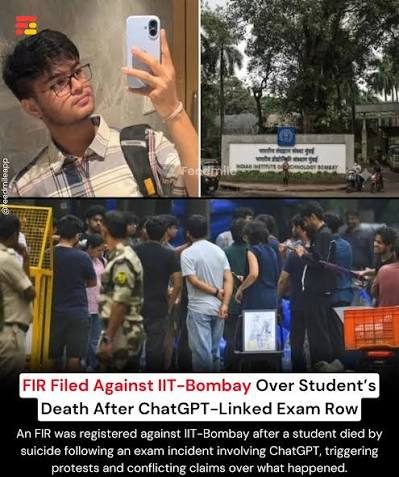
The IIT Bombay student death illustrates how quickly tragedy can become a battlefield of competing interpretations. The Mumbai Crime Branch is investigating the circumstances surrounding the death of student Sahil Wakode and is examining CCTV footage, digital evidence and statements from students and faculty. Public discussion has included allegations concerning academic pressure and caste discrimination, but these matters require investigation rather than premature conclusions. The larger institutional question nevertheless deserves attention: how should high-pressure educational institutions identify distress, handle complaints, protect students and examine allegations without allowing either institutional defensiveness or social-media pressure to replace due process? The objective cannot be to choose between protecting institutions and protecting students. A credible institution must be capable of doing both.

The Rajasthan forest-ranger killing reveals another dimension of institutional vulnerability. Forest Ranger Pratap Singh Chundawat was reportedly killed in Pratapgarh after pursuing a dumper allegedly involved in illegal mining; police registered cases including murder and offences connected with illegal mining and obstruction of government work. Whatever the eventual judicial findings, the institutional question is stark: can individual frontline officers be expected to confront organised economic activity without adequate intelligence, mobility, communications, protective equipment and coordinated enforcement? When the state places an individual officer between powerful illegal interests and public resources, personal courage cannot become a substitute for institutional capacity. A government that expects frontline enforcement must also build a system that protects the frontline.
Other cases involving minors, sexual violence and alleged exploitation reveal a different structural problem: power asymmetry creates silence. Where victims are economically dependent, socially vulnerable or confronted by influential individuals, the existence of a law does not automatically create the ability to invoke it. Allegations emerging through medical evidence or investigations can expose crimes that may otherwise remain hidden, but they also remind us that many crimes survive not because perpetrators are invisible but because victims lack the power, confidence or institutional access to speak. This is why policing, forensic capability, child-protection systems, victim support, legal aid and witness protection are not peripheral components of justice. They are the infrastructure that allows the law to become real.

These incidents should therefore not be treated as a random catalogue of September tragedies. They form a larger mosaic of infrastructure failure, institutional vulnerability, digital amplification, power asymmetry and declining tolerance for procedural delay. India does not have an information deficit; it has a learning deficit. We know about failures almost instantly. What we lack is a national mechanism that asks, after every major incident: What failed? Was this failure previously identified? Which other institutions face the same risk? Who must act? By when? Has the corrective action actually been completed? The mature response to tragedy is not another headline, hashtag or television confrontation. It is institutional memory. India’s real challenge is therefore not to become better at producing outrage, but better at converting outrage into audits, redesign, accountability, prevention and resilience. Otherwise, the country may become exceptionally well-informed about yesterday’s failures while remaining dangerously unprepared for tomorrow’s.
VISIT ARJASRIKANTH.IN FOR MORE INISHGTS

