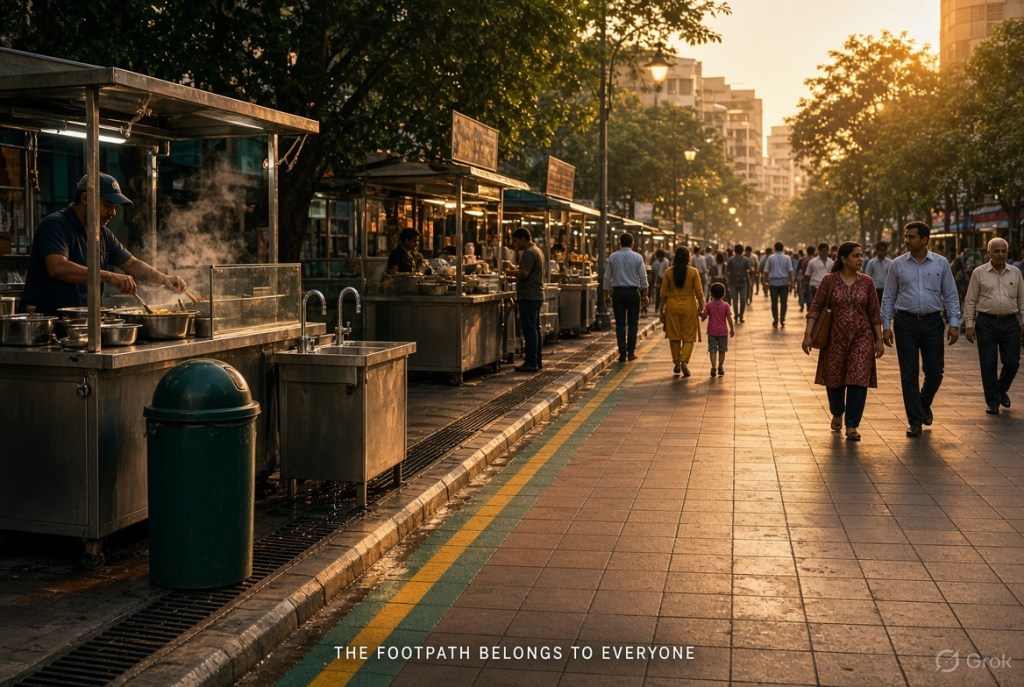
India’s street is becoming the site of a peculiar urban contradiction: the city wants the footpath spotless, the road uncluttered and the skyline modern—but it simultaneously depends upon an informal economy that makes urban life affordable, accessible and remarkably resilient. Street vendors feed millions of workers, students, drivers, domestic employees and commuters every day, often at prices beyond the reach of formal establishments. Yet the administrative vocabulary surrounding them is frequently dominated by words such as “encroachment,” “obstruction,” “unauthorised” and “removal.” This produces a dangerous conceptual error. A vendor is treated as a physical object occupying public space rather than as an economic actor operating within a larger urban system. The paradox is obvious: the city wants the consumption without necessarily accepting the people who make that consumption affordable. What appears to be a battle over footpaths is, in reality, a battle over who has the right to occupy the economic geography of the city.
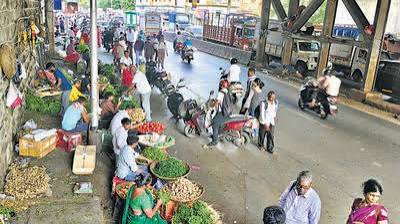
The more uncomfortable truth is that food safety is often being treated as a policing problem when it is fundamentally an infrastructure problem. Unsafe water, inadequate drainage, overflowing waste bins, dust, insects, contaminated utensils, poor handwashing facilities and inadequate temperature control can transform perfectly ordinary food into a public-health risk. Cooked rice, dairy products, gravies, chutneys and other perishable foods are especially vulnerable when exposed for long periods without appropriate storage. But it is intellectually convenient to blame the vendor because the vendor is visible. Infrastructure failure is less visible. A person cannot maintain commercial-kitchen standards without reliable water, drainage, waste disposal, storage and sanitation. Demanding restaurant-level hygiene from a roadside entrepreneur while providing none of the infrastructure available to a restaurant is not rigorous regulation; it is regulatory asymmetry. The state cannot outsource the entire responsibility for food safety to the poorest participant in the food chain.
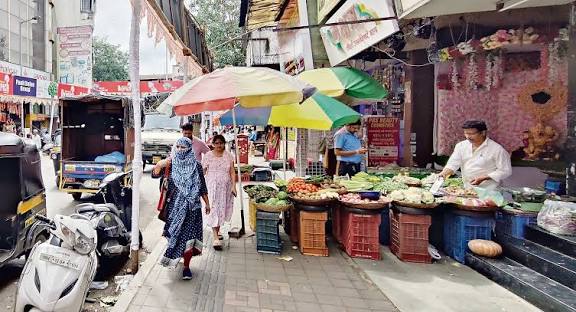
There is also an economics lesson hidden beneath the humble tea stall and food cart. Informal vending survives partly because its fixed costs are exceptionally low. A vendor may avoid commercial rent, elaborate interiors and large utility bills, allowing a meal or snack to remain inexpensive. Push that entrepreneur suddenly into a conventional shop and the economic equation changes. Rent, electricity, water charges, licences, taxes, maintenance and compliance costs begin accumulating. The price rises; demand may fall; margins narrow; and the vendor who was once economically viable can become commercially invisible. Formalisation, therefore, cannot simply mean converting informal livelihoods into miniature versions of formal businesses. Formalisation without economic design can become displacement wearing a regulatory uniform. The objective should be to provide security, hygiene, identity, access to credit and predictable regulation while preserving the cost advantages that make street commerce socially valuable.
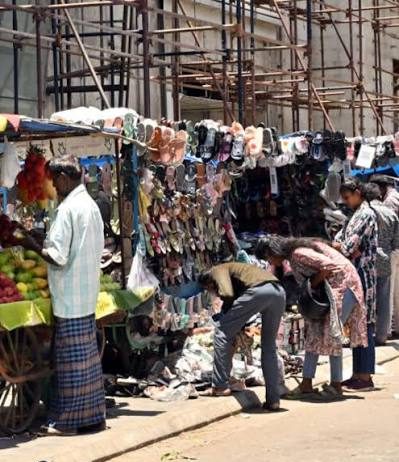
Enforcement without alternatives also produces a predictable phenomenon: livelihood migration. When a familiar vending location disappears overnight, the vendor does not necessarily disappear. The person moves closer to home, shifts operating hours, carries prepared food in containers, supplies customers through informal networks, or relocates to another congested street. What appears in official statistics as “removal of encroachment” may therefore represent nothing more than geographical redistribution of the same economic activity. The city celebrates a cleaner stretch of pavement while another neighbourhood inherits the displaced vending. Worse, the disruption can push families deeper into debt because the location itself is an economic asset built through years of customer relationships. The central administrative question should therefore not be merely, “How do we remove this vendor?” but “What happens to this livelihood after removal?” Good governance measures the second-order consequences of enforcement, not merely the visual success of the first action.
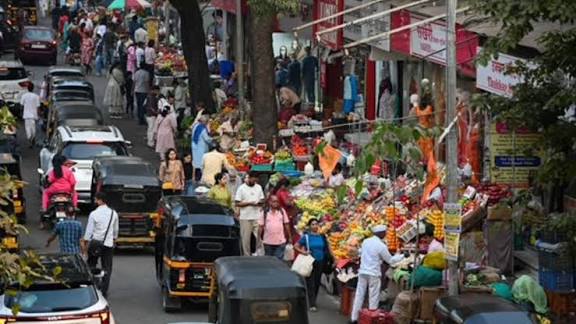
Yet defending vending cannot mean romanticising congestion. The pedestrian has an equally legitimate claim to the city. Millions depend on walking to reach buses, metro stations, schools, markets, offices and homes. A footpath blocked by stalls, parked vehicles, construction material or poorly designed street furniture effectively transfers public space from pedestrians to competing uses. People are then pushed onto carriageways, increasing exposure to traffic and creating a genuine safety hazard. The choice, therefore, cannot be between “vendors” and “pedestrians.” Both are legitimate users of urban space. The failure lies in designing streets as though every activity must fight for whatever space remains after roads and parking have been accommodated. The answer is not to remove people from the street; it is to design the street intelligently enough to accommodate people.
That requires an infrastructure-first regulatory philosophy. Cities should identify and legally designate vending zones, provide potable water, drainage, waste collection, handwashing stations, sanitation facilities and appropriate electricity and storage wherever required. Food vendors should receive practical training in hand hygiene, separation of raw and cooked food, cleaning, temperature management and safe storage. Registration should be simple, affordable and predictable. Inspections should focus on measurable risks rather than arbitrary harassment. Technology can assist through digital registration, location mapping, complaint mechanisms and transparent inspection records. Most importantly, responsibility must be distributed. Vendors must meet hygiene standards, but municipalities must provide the physical conditions necessary to meet them. Compliance becomes credible only when the state builds the platform upon which compliance is possible.
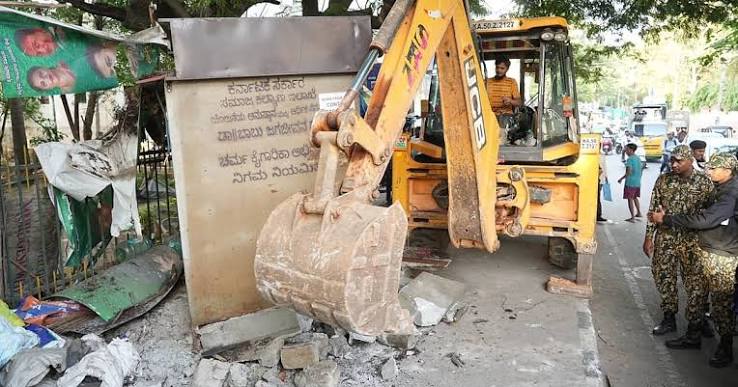
The same design philosophy should govern the footpath itself. A modern Indian street cannot remain a leftover space between buildings and traffic lanes. It is critical public infrastructure. Commercial streets need continuous pedestrian corridors, accessible crossings, proper drainage, tactile pathways, lighting and protection from indiscriminate parking. Vending can then be organised into designated bays without interrupting pedestrian movement. In especially congested areas, time-based vending windows, pedestrian-priority periods or controlled vehicle access can create additional capacity. Street design should recognise that commerce is not necessarily the enemy of mobility; badly designed commerce is. The objective should not be cosmetic “beautification” in which people disappear from the visual field. It should be functional urbanism, where walking, vending, mobility, sanitation and economic activity are deliberately planned as components of one street ecosystem.
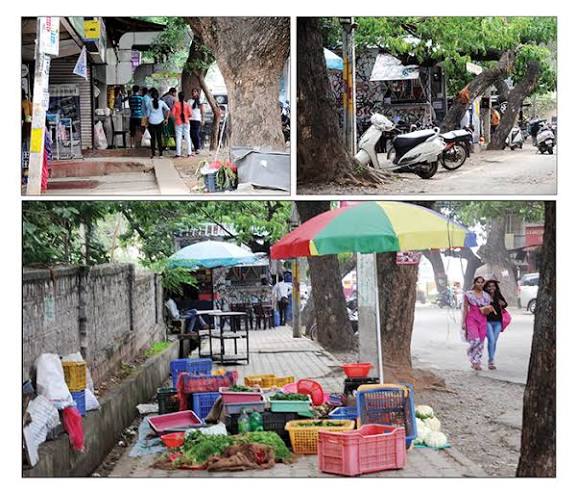
India already has important institutional foundations for this transformation, including the legal framework governing street vending and food-safety regulation. The challenge is implementation that moves beyond periodic eviction drives and certificate-driven compliance. International examples demonstrate that purpose-built hawker centres and organised vending environments can combine sanitation, waste management and commercial viability, but Indian cities cannot simply import foreign models. Their density, informal networks, climate, street morphology and social composition are different. The larger principle, however, is universal: regulate the activity, not the existence of the poor. The success of urban governance should ultimately be measured not by the number of stalls demolished or penalties collected, but by whether food becomes safer, footpaths become continuous, streets become cleaner, pedestrians become safer and livelihoods become more secure. The truly modern Indian city will not be the one in which the footpath is empty. It will be the one in which the footpath works—for the pedestrian, the vendor, the commuter, the worker and the city itself. The future of the Indian street is not eviction. It is intelligent coexistence engineered into concrete, drainage, design and law.
VISIT ARJASRIKANTH.IN FOR MORE INSIGHTS

