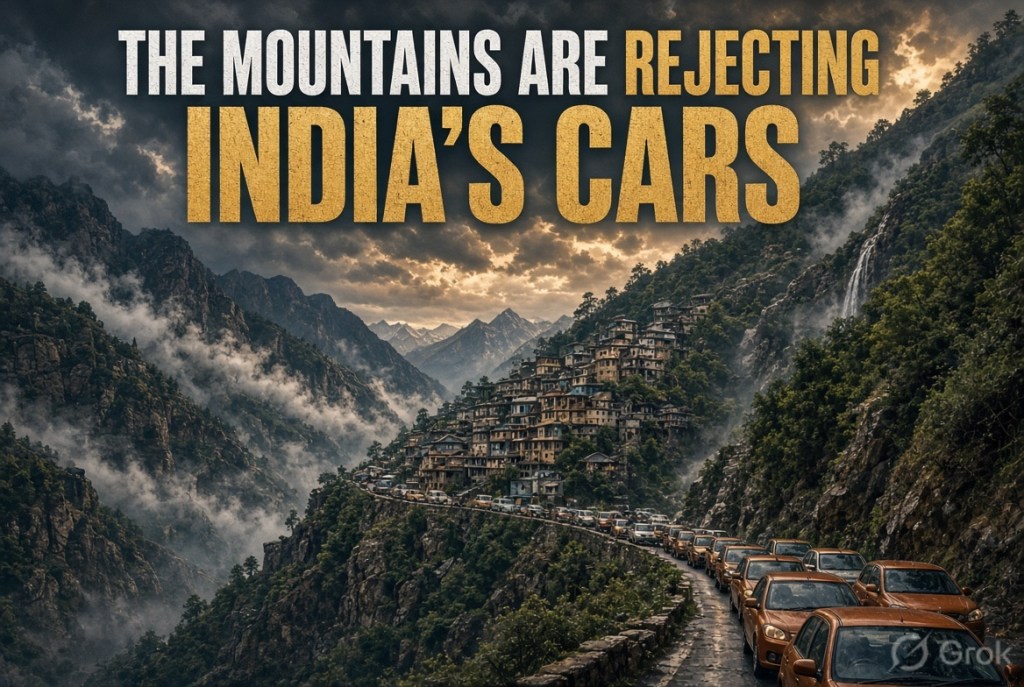
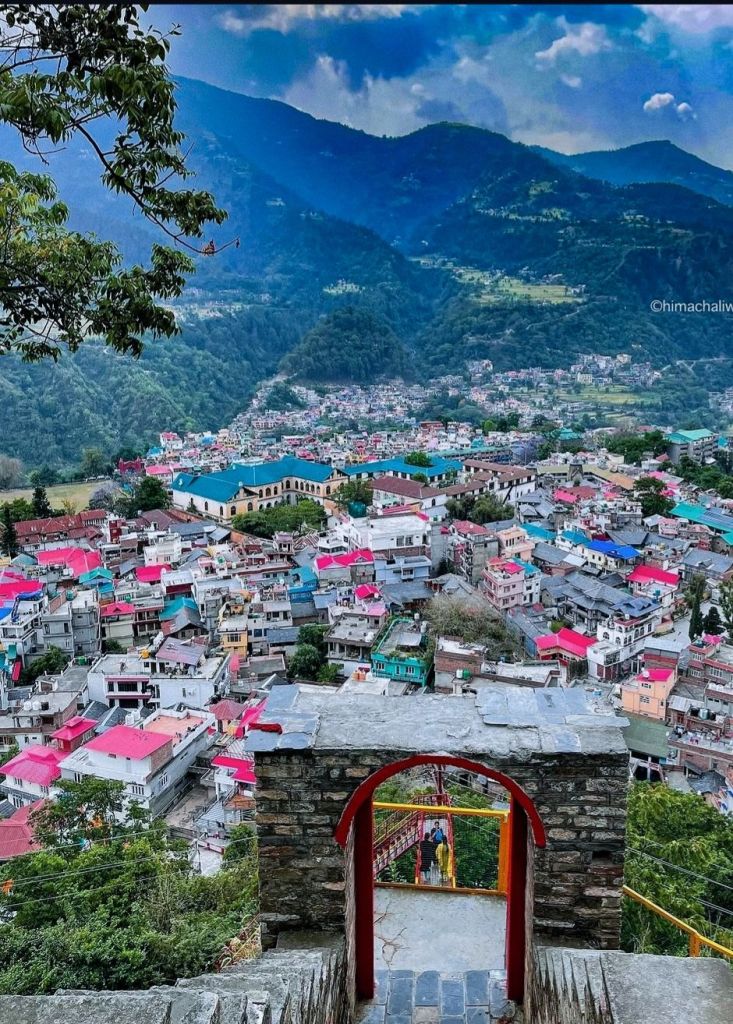
India’s hill cities are approaching an uncomfortable truth: they do not merely suffer from an infrastructure deficit; they are confronting a geographical impossibility. Shimla, Shillong, Darjeeling, Ooty, Nainital, Munnar and Kodaikanal were shaped for populations and mobility patterns radically smaller than those imposed upon them today. Yet India continues to apply the development grammar of the plains to terrain that fundamentally rejects it—more roads, more buildings, more vehicles, more hotels and more tourists. The contradiction is becoming dangerous. Tourism creates employment and revenue while simultaneously degrading the landscape that creates the tourism economy. The mountain is being asked to carry an urban civilisation that has forgotten one fundamental rule: unlike cities, mountains cannot be expanded.

Water exposes this contradiction with brutal clarity. Darjeeling’s North and South Lakes, fed by 22 streams, form an important component of the town’s water system, yet demand can reach around 6.4 million gallons a day while dry-season availability reportedly falls to barely 1.2 million gallons—a deficit of more than 80 per cent. A ₹204.8-crore AMRUT water project sanctioned in 2018 also missed its original completion target amid implementation and clearance difficulties. The lesson is larger than Darjeeling. A hotel room is effectively a water-consuming infrastructure commitment. Every new building creates permanent demand for a resource whose supply depends on rainfall, springs, aquifers and fragile watersheds. In a mountain city, the water budget must precede the building budget. Urbanisation that exceeds hydrological capacity is not development; it is deferred scarcity.
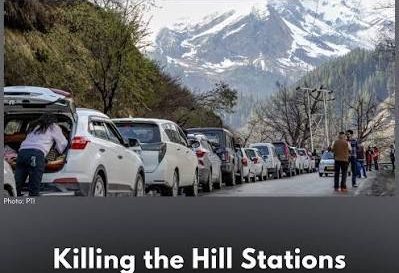
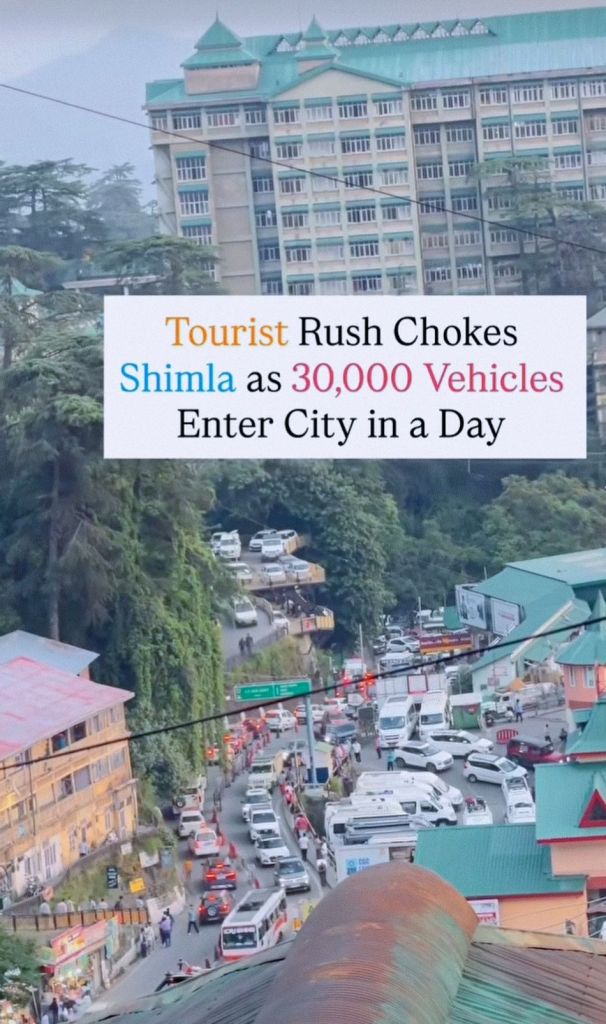
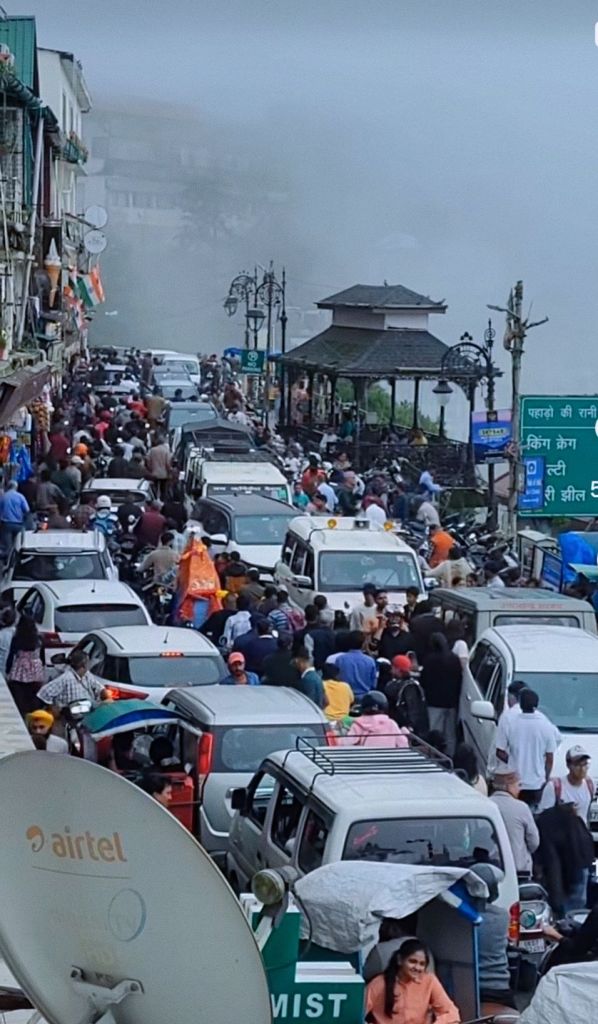
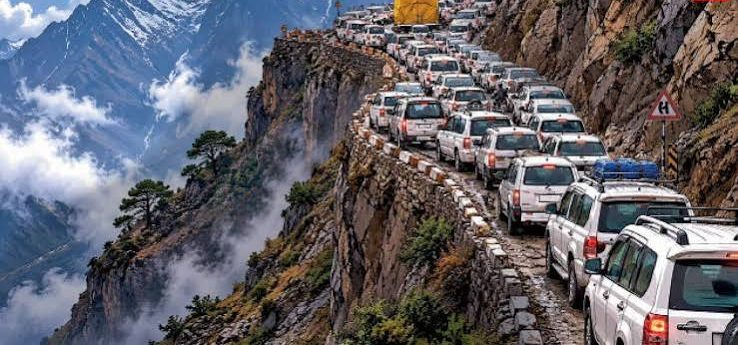
Mobility reveals the same structural absurdity. Roads conceived for modest colonial-era populations are now expected to absorb unprecedented tourist flows and private vehicles. Wayanad and Idukki together attracted around 61 lakh domestic tourists in 2025, while Munnar experiences severe congestion even on ordinary days. Shimla, Manali, Nainital and Darjeeling routinely face peak-season gridlocks lasting hours. Shillong is perhaps the clearest mathematical warning: around 80 per cent of its roads are narrower than 7.5 metres, while vehicle registrations have reportedly been increasing at roughly 17.5 per cent annually. The arithmetic is merciless. The mountain has finite road space; the vehicle fleet has potentially infinite appetite. Congestion is therefore not simply a traffic-management failure. It is the physical manifestation of demand exceeding geographical capacity.
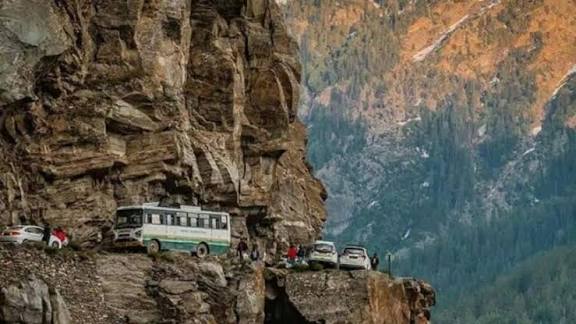
Parking makes the governance failure even more visible. On a mountain road, a parked car is not an innocent object; it is a temporary seizure of scarce public infrastructure. Double parking, roadside commerce and vehicles occupying footpaths can destroy a substantial share of effective road capacity. Yet motorists are only the final actors in a larger institutional chain. Where parking is absent, cars occupy public space. Where public transport is inadequate, households become automobile-dependent. Where enforcement is inconsistent, regulations become negotiable. Hill cities need a new mobility compact: structured parking, strict enforcement, reliable public transport, pedestrian priority and, where appropriate, proof-of-parking requirements before new vehicle registration. Road space should be priced according to scarcity. If a mountain road is among the city’s most valuable assets, using it as free long-term parking is economically irrational.
The environmental consequences are more consequential than the traffic jams. Hill cutting, blasting, road widening and unregulated construction interfere with slopes whose stability depends upon complex geological and hydrological balances. At Laxmi Dungri along NH-53, extensive hill cutting has contributed to recurring monsoon rockfalls, necessitating a ₹17.32-crore slope-protection intervention. Waste compounds the problem: plastic, food packaging and disposable material accumulate along trails, viewpoints and riverbanks where ecosystems have limited absorptive capacity. The conventional tourism dashboard—hotel occupancy, visitor arrivals and revenue—is therefore dangerously incomplete. The real tourism balance sheet must include water consumed, waste generated, slope disturbed, carbon emitted and public infrastructure consumed by every additional visitor. What appears profitable to the tourism industry can become expensive to the public exchequer.
The most serious policy vacuum is the absence of enforceable carrying capacity. India continues to view hill tourism predominantly as a demand opportunity rather than as a finite ecological system. Every additional hotel room is treated as investment; every additional tourist as revenue; every additional road as connectivity. But beyond a threshold, the marginal tourist imposes greater costs than benefits. Carrying-capacity assessments in destinations such as Munnar and Wayanad have repeatedly demonstrated the institutional difficulty of translating scientific limits into political decisions. This must change. Visitor numbers, construction density, water consumption, waste generation and vehicle entry should increasingly be monitored through measurable indicators and linked to legally enforceable thresholds. When capacity is reached, policy must be capable of saying no—not because tourism is unwelcome, but because the destination itself has become the scarce resource.
Technology can transform mountain governance from post-disaster repair to predictive management. GIS-based suitability mapping can identify terrain where slope, elevation, erosion and landslide vulnerability make construction inappropriate. Drones can detect unauthorised construction and drainage obstruction. InSAR satellite technology can identify subtle ground movement before visible failure occurs. The deployment of InSAR monitoring along sections of the Char Dham route, together with geological expertise, points toward an important future: infrastructure should be continuously monitored rather than inspected only after catastrophe. Construction protocols should also become sequential and risk-based—cut, stabilise, monitor through a monsoon, validate and only then build permanently. Mountain engineering cannot follow the plains’ philosophy of building first and repairing later.
Mobility itself must escape the tyranny of the automobile. Ropeways deserve serious evaluation where horizontal road expansion is physically constrained, including potential corridors around Kodaikanal and other high-demand destinations. Udhagamandalam is similarly exploring alternative mobility solutions. Matheran demonstrates another principle through the transition toward e-rickshaws: cleaner mobility can coexist with improved livelihoods. But electrification alone is not the answer. An electric car still occupies the same road and parking space as a petrol car. The objective must therefore be fewer vehicles, greater passenger throughput and more space for pedestrians. Hill cities should also decentralise employment, institutions and tourism infrastructure into planned satellite settlements. Shillong’s New Shillong Township offers the possibility of developing a genuine secondary urban centre. India needs a National Mountain Urbanism Mission integrating water budgets, carrying capacity, slope stability, drainage, waste, parking, mobility, emergency evacuation and climate resilience. The ultimate lesson is simple but revolutionary: the smartest hill city may not be the one that moves vehicles faster, but the one that makes fewer vehicles necessary. Mountains do not negotiate with bad planning. They eventually send the bill—in traffic, water scarcity, landslides and disaster.
VISIT ARAJSRIKANTH.IN FOR MORE INSIGHTS

