
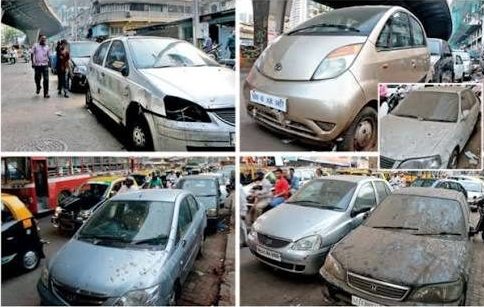
The abandoned hatchback rusting silently on City street appears insignificant. It is neither moving nor causing an accident, yet it occupies something far more valuable than its scrap value: public space. That dead car is a small but revealing symbol of a much larger urban pathology—the conversion of roads, footpaths and neighbourhood spaces into unpaid storage yards for private vehicles. India’s estimated 12 million End-of-Life Vehicles (ELVs) could approach 50 million by 2030. The challenge is therefore no longer merely automobile recycling. It is about who owns urban space, who pays for its occupation and whether Indian cities possess the institutional capacity to govern mass motorisation. India has mastered the art of putting millions of vehicles on its roads; it has not yet mastered what happens when those vehicles stop moving.

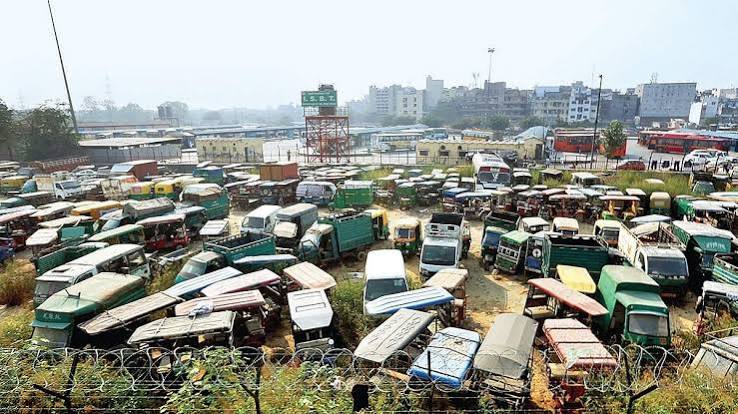
The arithmetic is brutal. A typical car can occupy around 90 square feet. Multiplied across millions of vehicles, that becomes an extraordinary claim on scarce urban land. An abandoned vehicle narrows a carriageway, blocks pedestrian movement, obstructs drainage, complicates street cleaning and creates dangerous blind spots. Several such vehicles can effectively erase an entire lane. The paradox is almost absurd: cities spend thousands of crores expanding roads to increase traffic capacity while simultaneously permitting obsolete vehicles to permanently consume that capacity. Congestion, therefore, is no longer simply a problem of moving vehicles. It is increasingly a problem of storing vehicles. The modern Indian city is paying twice—first to build road space and then to surrender it for free parking, abandoned vehicles and long-term private storage.
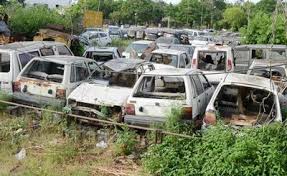
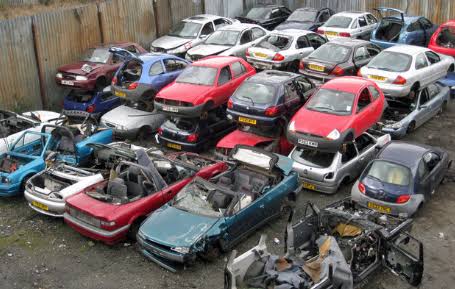
The formal scrappage numbers expose an even deeper governance deficit. Between August 2022 and July 2025, only around 350,000 of an estimated 12 million ELVs were processed through authorised channels—barely 3 per cent. More than 95 per cent are still believed to move through informal networks. The informal sector is not inherently the villain; it possesses enormous employment, collection and recycling capabilities and has historically performed functions the formal system failed to provide. The real policy failure is that India has built a sophisticated automobile industry without building an equally sophisticated end-of-life ecosystem. We can manufacture, finance, insure, register and track millions of vehicles, yet their final journey frequently disappears into an opaque chain of dismantling and scrap trading. That is not merely an environmental problem. It is a missing chapter in the governance of the automobile lifecycle.

Fragmented policy architecture makes the problem harder. VAHAN, Extended Producer Responsibility and the formal vehicle-scrapping ecosystem must function as parts of a single lifecycle-management system rather than disconnected administrative silos. The End-of-Life Vehicle Rules, 2025, seek to strengthen producer responsibility, but implementation reveals an important economic principle: regulation cannot succeed without a functioning market ecosystem underneath it. In FY2026, the automobile industry reportedly achieved only 2.42 lakh vehicle-equivalent scrappage against a requirement of 7.62 lakh—missing the target by roughly 70 per cent. If compliance obligations outpace the capacity of collection, dismantling and recycling infrastructure, regulation risks becoming a paperwork exercise rather than an environmental solution. The objective must therefore be measurable material recovery, traceable disposal and circularity—not merely certificates and targets.

The economics of scrappage cannot be ignored. Governments often assume that owners will surrender old vehicles because they have become economically obsolete. But an old car may still possess residual utility, sentimental value or resale potential. Conversely, owners may confront fitness-testing expenses, documentation requirements, transport costs and uncertainty about authorised facilities. When the formal route is complicated while an informal scrap dealer offers immediate cash and doorstep collection, informality becomes the rational choice. Enforcement alone cannot solve this equation. Responsible disposal must become easier, faster, more transparent and financially attractive than illegal or informal disposal. A modern scrappage system should therefore offer predictable valuation, digital documentation, convenient collection and immediate certification. Environmental compliance succeeds when responsible behaviour is also economically rational.
India must simultaneously confront an even more fundamental urban question: why should public roads function as private garages? Japan’s proof-of-parking principle offers a useful conceptual lesson: vehicle ownership carries responsibility for securing storage. India need not mechanically copy Japan, but severely congested metropolitan zones could explore parking-availability requirements for new registrations, particularly for additional household vehicles. Singapore offers another lesson: road space has an economic value. Congestion pricing, regulated parking and differential charges for premium public space recognise that scarce urban land cannot be treated as an unlimited free resource. India’s objective should not be to punish car ownership. It should be to end the fiction that every vehicle owner is automatically entitled to indefinite, cost-free occupation of public land. Private assets should not acquire permanent public parking rights merely because they have wheels.
India’s digital infrastructure now makes intelligent enforcement possible. VAHAN, High-Security Registration Plates, FASTag and increasingly integrated mobility databases create the foundations of a national vehicle identity trail. An apparently abandoned car should not remain anonymous for months. Municipal authorities could combine automated number-plate recognition, geofencing and VAHAN records to identify vehicles that appear abandoned or illegally stored, issue digital notices and initiate removal subject to due process. A verified owner could be required to remove, relocate, repair or surrender the vehicle within a prescribed period. Technology, however, must remain an instrument of accountable governance, with transparent notices, privacy safeguards, appeal mechanisms and clear responsibility between municipal, transport and police authorities. The objective is not surveillance; it is traceability of ownership and accountability for public-space occupation.
The intelligent solution must combine the carrot with the stick. A national “Scrap and Reward” programme could offer parking-fee concessions, public-transport credits, targeted financial incentives or other benefits for surrendering qualifying ELVs to Registered Vehicle Scrapping Facilities. Formal facilities must simultaneously expand geographically so that legal scrappage becomes as convenient as the informal alternative. Automobile manufacturers should face progressively stronger lifecycle responsibilities covering design, material selection, collection, dismantling, recycling and recovery, while transitional rules should realistically reflect the maturity of India’s recycling infrastructure. Ultimately, India’s ELV crisis is a test of urban civilisation. A city that allows dead cars to occupy streets while pedestrians fight for footpaths has misplaced its priorities. The abandoned hatchback is governance failure cast in steel and rubber. A vehicle’s life does not end when its engine stops; the city must decide where that vehicle goes next. Public space is not a free garage—and tomorrow’s smart city cannot become today’s scrapyard.
VISIT ARJASRIKANTH.IN FOR MORE INSIGHTS

