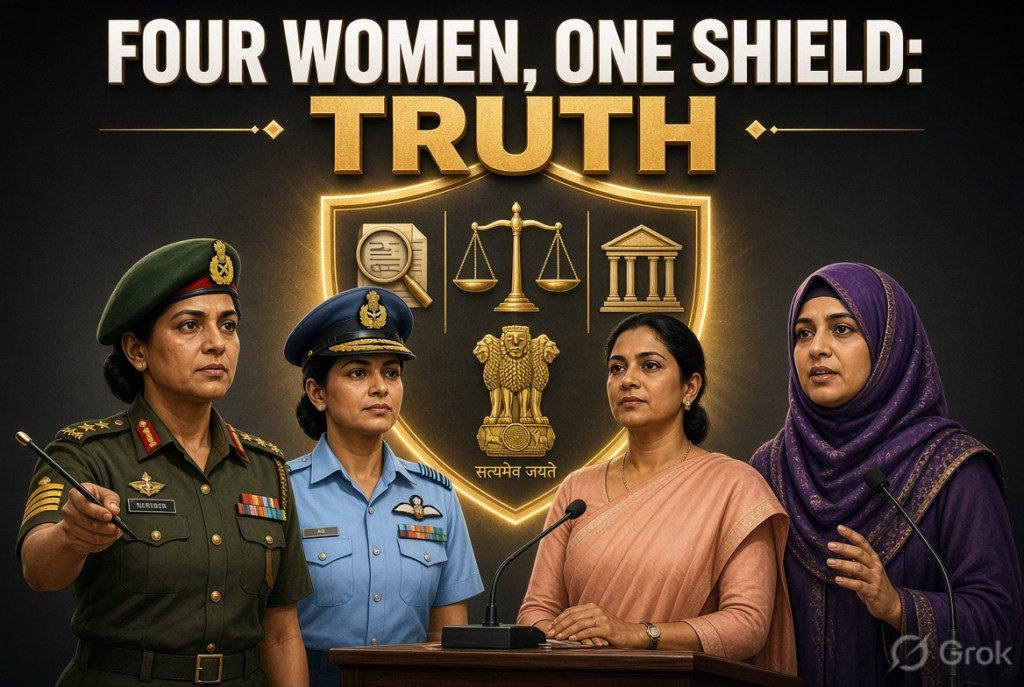
India is discovering a profound truth about national strength: the defence of a nation does not end at its borders. It extends into every institution where truth confronts misinformation, merit confronts manipulation and public trust confronts cynicism. Four women exemplify this wider architecture of national service—Colonel Sofiya Qureshi of the Indian Army, Wing Commander Vyomika Singh of the Indian Air Force, Smt. A. Tamim Ansariya, IAS, Commissioner of School Education, Government of Andhra Pradesh, and Smt. S. Bharani, IFS, Vice-Chairman & Managing Director, Sports Authority of Andhra Pradesh. Their uniforms, mandates and battlefields are different, but their institutional responsibility is remarkably similar: to defend credibility, uphold due process and ensure that righteousness is not defeated by noise. Their stories demonstrate that modern nation-building requires not only physical courage, but also administrative courage—the courage to examine facts, resist pressure and stand firmly behind what is demonstrably right.
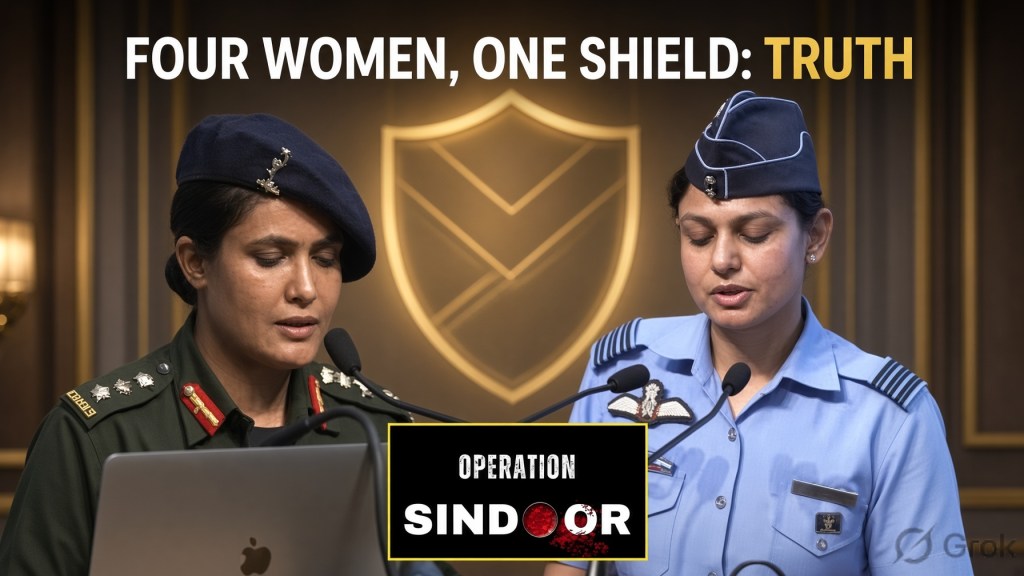
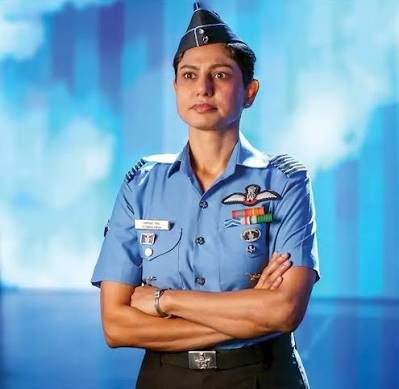
On 7 May 2025, Colonel Sofiya Qureshi and Wing Commander Vyomika Singh emerged as the public faces of India’s military response during the official briefing on Operation Sindoor. Their presence carried significance beyond symbolism. Colonel Qureshi, an officer of the Army’s Corps of Signals, had earlier created history by becoming the first woman to lead an Indian Army contingent in the multinational Exercise Force 18. Wing Commander Singh, an accomplished helicopter pilot, represented the operational capability and professional confidence of the Indian Air Force. Their composed presentation conveyed an important institutional message: women officers are no longer merely participants within India’s defence architecture; they are trusted with responsibilities at its most sensitive and consequential levels. Their authority came not from symbolism, but from professional competence, experience and the confidence of the institutions they represented.
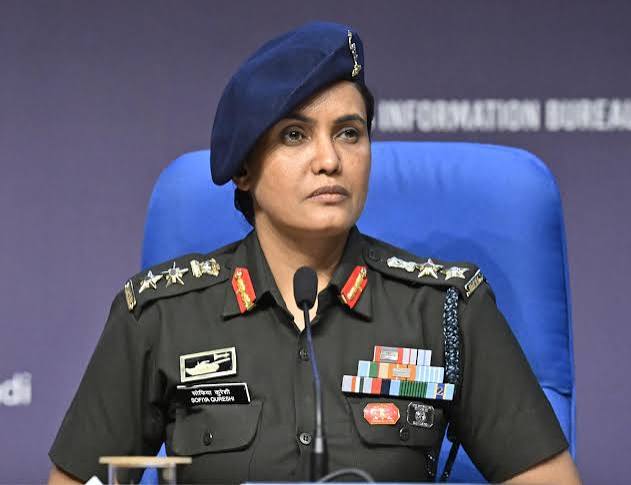
The deeper significance of that moment lay in the image of two women from different backgrounds standing together as representatives of one India. There was no elaborate speech required to explain unity in diversity; the image itself communicated it. More importantly, their briefing illustrated a new dimension of national security—the information battlefield. In the digital age, misinformation can travel faster than official truth, while speculation can acquire the appearance of fact before institutions have an opportunity to respond. Physical borders require soldiers, aircraft and technology; information borders require credibility, discipline and authenticated communication. The lesson is equally applicable to civilian governance. Whenever institutions communicate with clarity, evidence and confidence, they deny misinformation the oxygen on which it thrives. National security therefore increasingly depends on an invisible shield: institutional trust.
That shield extends directly into the recruitment and education systems of Andhra Pradesh. Smt. A. Tamim Ansariya, IAS, Commissioner of School Education, represents another form of national service—the defence of opportunity. Every teacher recruitment examination, every reservation calculation, every eligibility decision and every merit list affects thousands of young people who have invested years of preparation, financial resources, personal sacrifice and emotional hope. Recruitment administration is therefore not merely a clerical exercise. It is a constitutional trust. When rules are applied consistently, records are authenticated and merit is determined through transparent procedures, government protects something much larger than a selection process: it protects the citizen’s belief that the State will reward legitimate effort rather than influence, manipulation or manufactured claims.
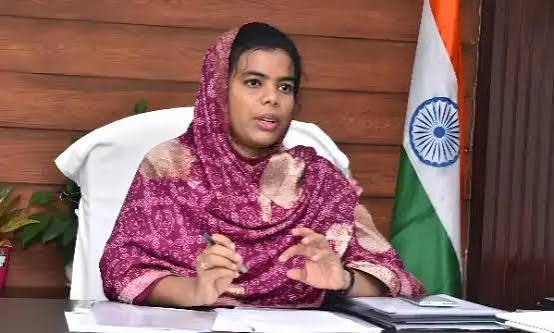
The greatest threat to such systems today is the emergence of the social-media court, where allegations can become convictions without investigation. A message becomes a rumour; a rumour becomes an allegation; an allegation becomes a presumption; and the presumption is then circulated as if it were a judicial finding. This inversion of due process is deeply dangerous. Every credible complaint must be examined, every questionable document must be verified and every irregularity must be acted upon. But neither WhatsApp forwards nor anonymous social-media campaigns can replace statutory procedure. Merit must rest on notified rules, authenticated records, eligibility conditions, reservation provisions and evidence. The administrator’s responsibility is therefore twofold: to investigate wrongdoing without fear and to protect genuine candidates from being condemned without proof. That balance is the essence of institutional integrity.

Smt. S. Bharani, IFS, Vice-Chairman & Managing Director of the Sports Authority of Andhra Pradesh, occupies another important frontier—the defence of sporting merit. Sports reservations and sports-linked opportunities exist because exceptional performance demands recognition. Behind every genuine sports certificate may lie years of discipline, injuries, travel, financial sacrifice, coaching and relentless training. If fraudulent or doubtful certificates enter the system, the damage extends far beyond government records. The genuine athlete becomes the invisible casualty. Strengthening certificate verification, scrutinising questionable claims and ensuring that only authenticated sporting achievements receive institutional benefits are therefore not bureaucratic obstacles; they are essential safeguards for young athletes. A sports quota without verification becomes vulnerable to manipulation. A verified sports quota becomes a powerful instrument of social mobility, rewarding performance and encouraging thousands of young people to pursue excellence.

These four women consequently represent four different battlefields of the same national struggle. Colonel Qureshi protects the nation’s security architecture; Wing Commander Singh represents the operational courage of the Air Force; Smt. Ansariya protects the integrity of educational opportunity; and Smt. Bharani protects the credibility of sporting merit. Two operate on the conventional frontiers of national defence, while two defend the internal architecture of opportunity and institutional fairness. Yet all confront the same deeper enemies: misinformation, manipulation, fear, pressure and erosion of public trust. Their collective lesson is that women’s empowerment is not achieved merely by placing women in positions of visibility. It is achieved when institutions entrust women with difficult responsibilities and allow competence, evidence and performance to define their authority.
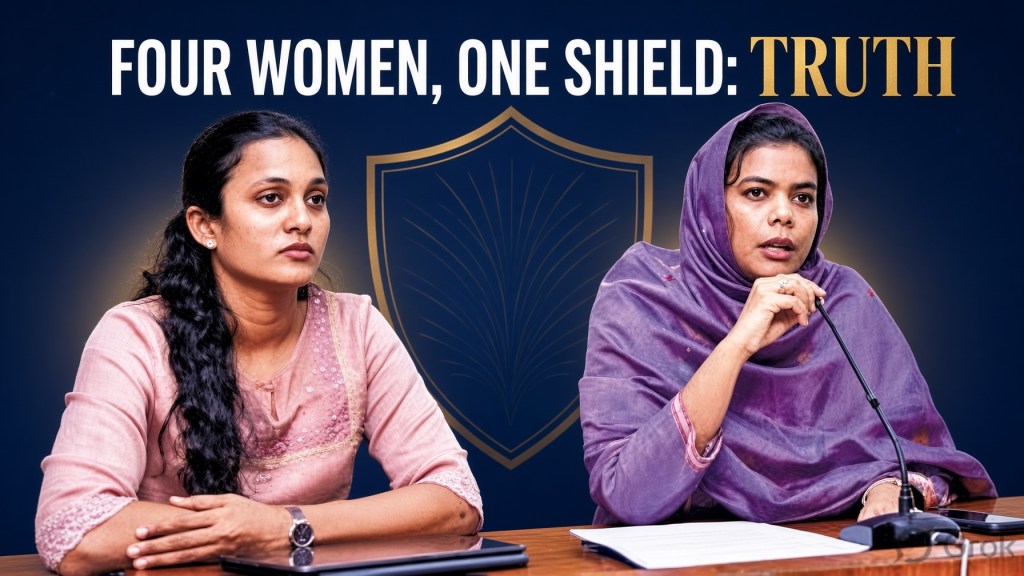
For the youth of Andhra Pradesh, their example carries an especially powerful message: your future must not be decided by social-media speculation. If a complaint exists, investigate it. If a document appears doubtful, verify it. If a rule has been violated, take action. But never allow the volume of online outrage to substitute for evidence. India therefore needs an institutional firewall built around transparent rules, authenticated databases, digital verification, publicly accessible criteria, time-bound grievance mechanisms and reasoned official communication. Every genuine grievance deserves examination; every genuine candidate deserves protection; every institution deserves credibility. These four women symbolise a new architecture of Nari Shakti in national service—olive green at the frontier, blue in the skies, administrative authority in education and institutional vigilance in sport. They are India’s lionesses not because they roar, but because they stand firm when institutions need courage. Borders are protected by soldiers; skies by aviators; merit by honest administrators; and institutions by fearless officers. A nation becomes stronger when its daughters refuse to look away from difficult questions. Their service reminds us that courage has many uniforms—and sometimes the strongest shield of a nation is the integrity of its women.
VISIT ARJASRIKANTH.IN FOR MORE INSIGHTS


2 responses to ““Four Lionesses, Four Frontiers: From the Battlefield to the Ballot of Merit, India’s Daughters Are Fighting the Same War””
Transparency,Credibility,Trust and Acceptance reflect a lot
LikeLike
LikeLike