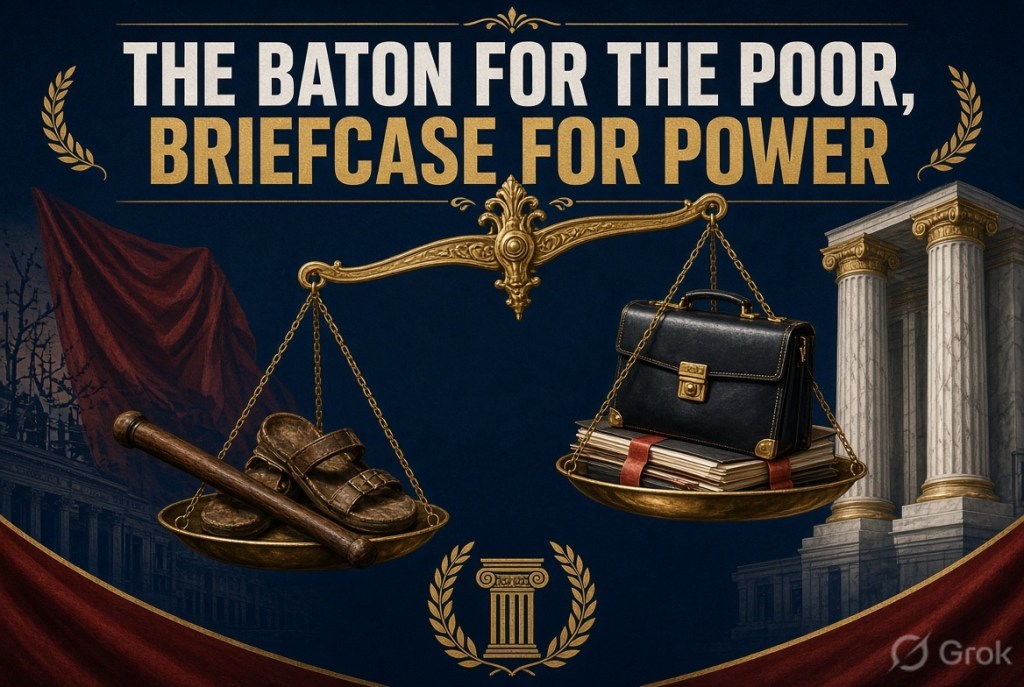
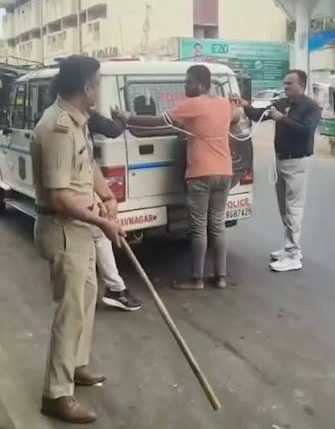
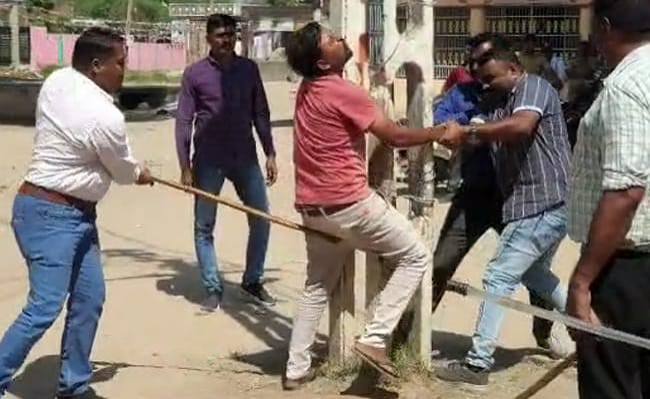
There is something profoundly unsettling about a democracy where the poorest suspect can be beaten before a camera while the most powerful accused can disappear behind lawyers, procedural complexity and years of litigation. The spectacle of police publicly flogging suspects and broadcasting their humiliation on social media is not merely a story of police excess; it exposes a deeper asymmetry in India’s justice architecture. Punishment becomes most visible where vulnerability is greatest, while accountability can become least visible where wealth, influence and institutional sophistication are greatest. The baton is public; the courtroom is procedural; the victim’s anger is immediate; justice itself becomes distant. This creates the dangerous illusion that the State is toughest where citizens are weakest, while becoming increasingly negotiable where defendants possess resources.
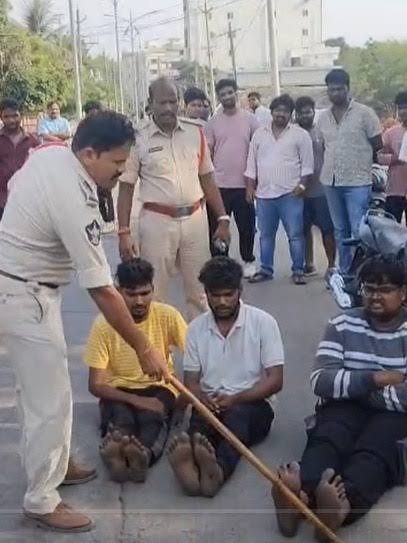
The recent controversy surrounding the public beating of an alleged murderer in Gujarat illustrates this institutional fault line. However grave the alleged offence, an accused remains an accused until conviction. The justification that physical punishment is necessary to “set an example” is precisely what a constitutional democracy must reject. Police officers are investigators, not judges; their mandate is to establish facts, collect evidence, arrest lawfully where justified and present the case before an independent judiciary. The moment police begin inflicting punishment before trial, investigation and adjudication collapse into a single exercise of coercive power. Deterrence cannot be manufactured through humiliation. If the State permits punishment before proof, it does not strengthen justice; it replaces the rule of law with the rule of the strongest uniform.
The popularity of such spectacles, however, cannot simply be dismissed as public ignorance or bloodlust. India’s citizens confront a justice system burdened by delay, adjournments, overcrowded prisons, investigative weaknesses and prolonged trials. When legitimate justice appears painfully slow, instant punishment acquires emotional legitimacy. A video of a policeman striking an alleged offender creates the powerful visual impression that someone is finally acting. But instant retribution is not instant justice. It is the substitution of visible state violence for invisible judicial process. The danger is particularly acute in the age of social media, where outrage travels faster than evidence and humiliation can become permanent long before a court establishes guilt or innocence.
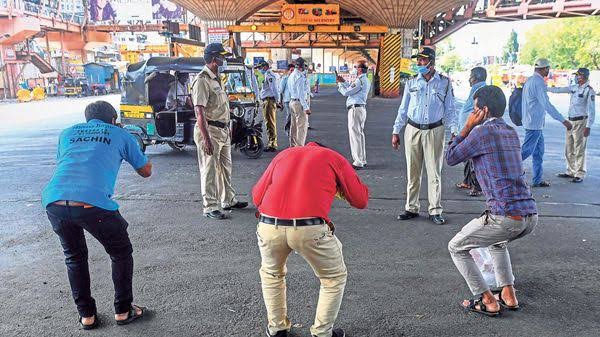
The inequality becomes sharper when the accused occupies different social and economic worlds. A petty thief, street-level drug seller or impoverished offender is physically accessible to the police and easily converted into a public spectacle. A sophisticated financial offender, organised trafficker or politically connected accused may operate through companies, intermediaries, layered transactions, expensive legal teams and prolonged procedural strategies. This does not mean that every wealthy accused escapes justice or every poor accused is innocent. The deeper concern is unequal capacity to navigate the justice system. Wealth can purchase expertise, time, documentation and procedural resilience. Poverty often encounters the criminal justice system at its most coercive points—the police station, lock-up and prison. Equality before law becomes meaningless if citizens possess radically unequal capacity to defend that equality.
India’s undertrial crisis makes this contradiction even more disturbing. For a person unable to furnish bail, legal innocence can coexist with prolonged deprivation of liberty. The presumption of innocence remains formally intact while its practical meaning becomes increasingly fragile. The wealthy can often purchase time; the poor can lose it. The wealthy can sustain prolonged litigation; the poor may spend years awaiting trial. Liberty then acquires an economic dimension that the Constitution never intended. A criminal justice system that punishes poverty through prolonged incarceration risks creating precisely the inequality that constitutional democracy is designed to prevent. Justice cannot mean merely equal laws; it must also mean reasonably equal access to the machinery through which those laws are enforced.
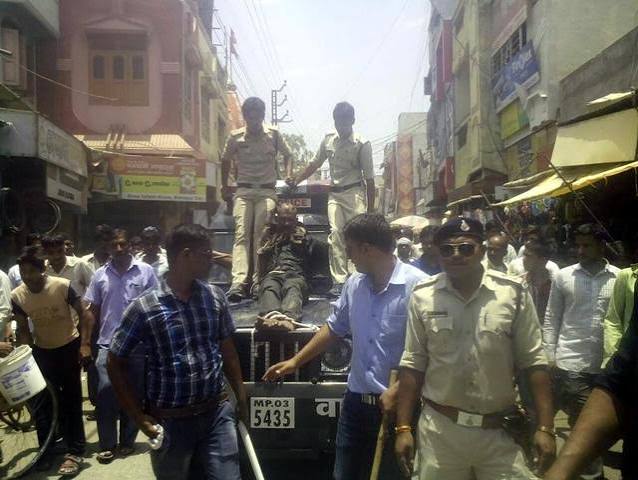
The drug economy reveals another dimension of the same failure. India’s geographical position exposes it to international trafficking routes, while domestic addiction creates a serious public-health challenge. Yet enforcement can disproportionately capture the most visible and replaceable actors—the user, courier or street-level seller—while financiers, organisers, corrupt intermediaries and transnational networks remain considerably harder to reach. Publicly humiliating a courier may produce a dramatic image of enforcement, but it does not dismantle the financial and logistical architecture of organised crime. Serious policing should follow the money, identify the network, secure evidence and prosecute the command structure. The objective must be to destroy the ecosystem rather than merely punish its most disposable human components.
Social media has now transformed this institutional problem into a visual economy of punishment. A handcuffed suspect, a public parade or a beating can become viral content within minutes, generating immediate political and public approval. The police receive a public-relations dividend: toughness becomes visible, fear becomes performative and institutional power becomes instantly communicable. But the same camera that can expose abuse can also amplify it. A viral video is not a verdict; public anger is not evidence; humiliation is not deterrence; and police power is not judicial authority. Article 21’s protection of life and personal liberty, together with the constitutional commitment to dignity and the safeguards associated with the Supreme Court’s D.K. Basu jurisprudence, establishes a basic principle: an accused person does not surrender constitutional dignity at the police station. Rights matter most when public sympathy is weakest.
The answer, therefore, cannot be limited to punishing individual officers after a video becomes viral. Institutional incentives must change. Allegations of custodial violence or public assault should trigger prompt, independent departmental and criminal scrutiny. CCTV coverage, body-worn cameras, effective complaints mechanisms, medical safeguards and documented custodial procedures should become routine. Police training must reward evidence-based investigation rather than intimidation. Judicial capacity must simultaneously expand so that prolonged delay does not create an appetite for extrajudicial punishment. Drug enforcement should target organised networks while integrating prevention, treatment and rehabilitation. Social-media protocols should prohibit the conversion of unconvicted persons into instruments of official humiliation. Most importantly, India must confront the larger inequality beneath the spectacle: the poor should not face the State through the baton while the powerful face it through the briefcase.
The ultimate test of a republic is not how ruthlessly it can punish the unpopular. It is whether it can restrain its own power when confronted with the most unpopular accused. If the poor are beaten in public while the powerful negotiate justice through private procedural complexity, the crisis is larger than police brutality; it is a crisis of institutional equality. A constitutional State must be strong enough to fight crime and restrained enough to respect rights. It must prosecute the guilty without manufacturing guilt, punish conviction without prejudging accusation, and pursue powerful offenders with the same determination shown against the powerless. India does not need a louder baton. It needs a more credible justice architecture—one in which neither poverty nor wealth determines the quality of justice, where accountability is visible at every level, and where human dignity survives precisely when society is demanding its removal. The true strength of the State is not demonstrated by the force it can unleash, but by the force it possesses and deliberately chooses to restrain.
VISIT ARJASRIKANTH.IN FOR MORE INSIGHTS


One response to ““THE BATON, THE BAIL AND THE BILLIONAIRE: INDIA’S TWO-TIER JUSTICE SPECTACLE””
Really a matter of great concern
LikeLike