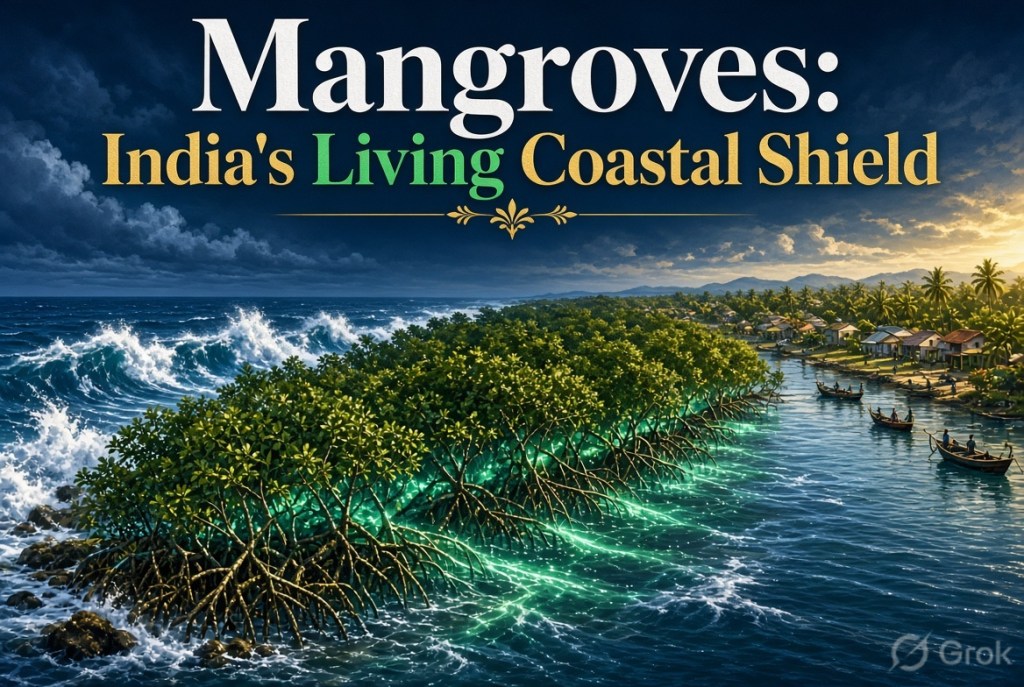
India’s coastline is rapidly transforming from a geographic asset into a strategic climate frontier. Cyclones, storm surges, shoreline erosion, saline intrusion, extreme rainfall and sea-level rise are no longer isolated environmental events; they are converging into a systemic threat to settlements, ports, fisheries, agriculture, tourism and critical infrastructure. In this emerging risk landscape, mangrove greenbelts—or “sea green buffer belts”—must be reclassified from conservation landscapes into strategic climate-resilience infrastructure. India’s 7,516-kilometre coastline supports enormous economic and demographic activity, while the country’s mangrove cover stands at about 4,991.68 sq km according to ISFR 2023. The central policy question is therefore changing. It is no longer whether mangroves deserve protection because they are ecologically valuable; it is whether India can afford to ignore one of its most cost-effective forms of natural coastal defence. A mangrove is not merely a tree at the edge of the sea. It is living infrastructure that grows, regenerates, stores carbon, protects land and supports livelihoods simultaneously.
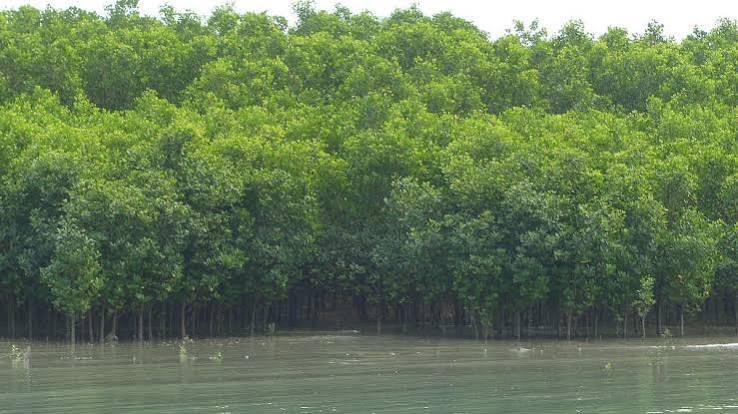
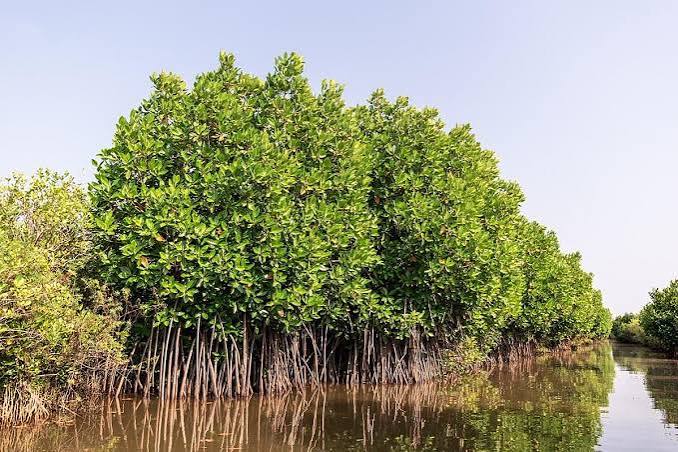
The engineering logic of mangroves is extraordinary. Their tangled root systems slow currents, trap sediment, stabilise shorelines and progressively dissipate the energy of waves and storm surges before they reach human settlements. Research has demonstrated substantial wave attenuation even across relatively narrow mangrove belts, with wider and healthier forests providing significantly greater protection. Yet their strategic value cannot be measured through wave reduction alone. Mangrove ecosystems function simultaneously as natural breakwaters, erosion-control systems, blue-carbon reservoirs, fisheries nurseries, water filters and biodiversity corridors. Their economic value therefore extends far beyond the land on which they stand. A conventional seawall has to be designed, financed, constructed, inspected and repeatedly repaired. A functioning mangrove ecosystem, by contrast, can continue delivering multiple public benefits through ecological processes. This does not make concrete infrastructure obsolete; it changes the hierarchy of choices. Before governments spend heavily on defensive engineering, they should first ask: what natural infrastructure can reduce the hazard before the concrete has to confront it?
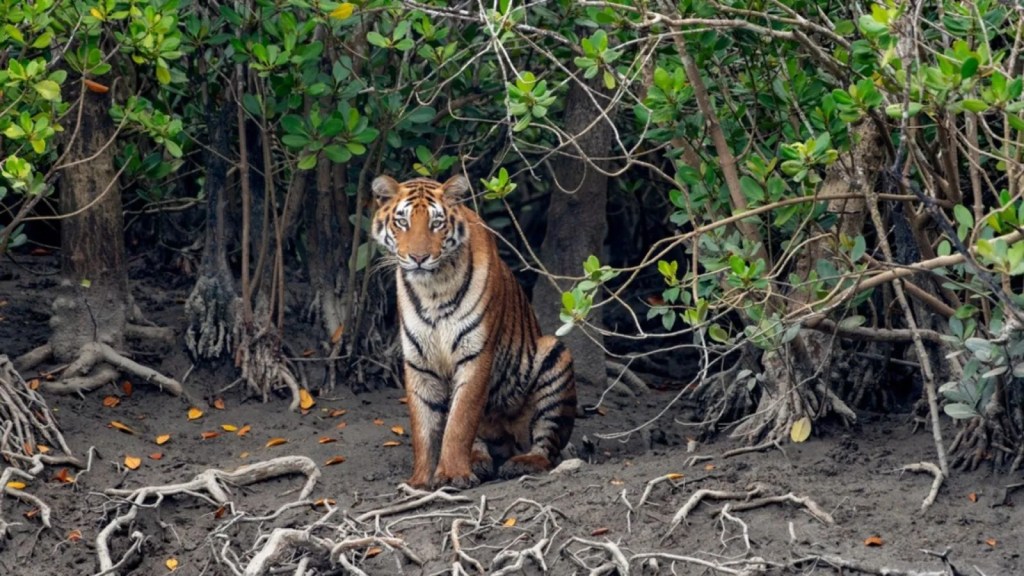
The case of Andhra Pradesh demonstrates why this approach deserves national attention. The Krishna and Godavari deltaic systems contain extraordinarily productive but increasingly vulnerable coastal landscapes, while erosion and extreme weather threaten settlements and livelihoods. The proposed Great Green Wall of Andhra Pradesh offers a potentially important model because it moves beyond isolated plantation activity towards a multi-layered coastal resilience architecture. The seaward edge would use mangroves and shelterbelts to absorb tidal and storm energy; canal bunds and roads could carry windbreak plantations; and community buffers could combine agroforestry with local plantations. Such an approach recognises that climate risks move across administrative boundaries. A cyclone does not distinguish between the jurisdictions of the Forest, Fisheries, Revenue, Rural Development, Disaster Management or Irrigation Departments. Climate resilience therefore requires landscape governance rather than departmental governance, with coastal ecology, livelihoods, disaster preparedness and infrastructure planning brought into one integrated framework.
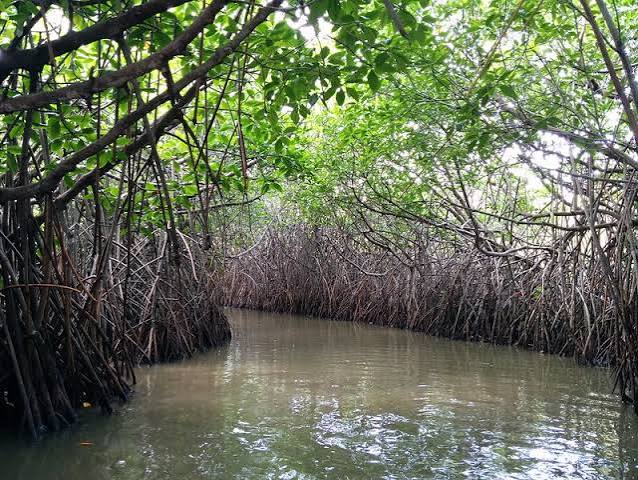
However, India must resist the temptation to convert mangrove restoration into another numerical plantation campaign. A million seedlings planted in the wrong hydrological conditions are not a million mangroves. Mangrove ecosystems depend upon tidal connectivity, sediment availability, salinity, elevation, freshwater flows and species-specific ecological conditions. Ecological Mangrove Restoration therefore offers a more sophisticated pathway: restore natural hydrology first, remove barriers where appropriate, rebuild sediment processes and allow native vegetation to regenerate wherever ecological conditions permit. Permeable structures made from locally appropriate materials can sometimes slow water movement and trap sediment, creating conditions for natural regeneration. Monitoring must consequently move beyond counting saplings. Governments should measure survival rates, canopy development, native-species diversity, sediment accretion, shoreline movement, carbon storage and biodiversity recovery. The performance indicator should be ecosystem functionality, not plantation expenditure.
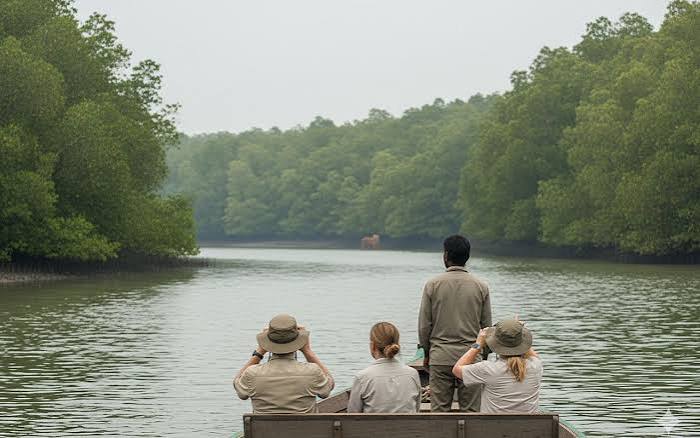
The deeper transformation, however, must be social. Mangrove conservation cannot succeed indefinitely through government enforcement alone. The coastline must acquire local custodians. Tamil Nadu’s village mangrove councils and Kerala’s community-based conservation initiatives demonstrate the potential of placing local institutions inside the decision-making architecture. Coastal communities possess generations of knowledge about tides, fishing grounds, erosion, salinity and ecological change. Their participation can make restoration more responsive and dramatically improve long-term stewardship. Panchayats, fisher cooperatives, women’s groups, schools, self-help groups and local civil-society organisations should therefore become partners in coastal restoration. Communities should have predictable access to restoration finance and legitimate livelihood opportunities through nursery management, fisheries enhancement, ecotourism, restoration employment and ecosystem services. The strongest mangrove belt is not simply the one with the deepest roots; it is the one with the strongest social roots.
India should simultaneously abandon the artificial divide between “green” and “grey” infrastructure. Mangroves cannot replace engineered protection everywhere, particularly in densely populated urban and industrial locations facing extreme hazards. Nor can seawalls substitute for functioning ecosystems. The superior model is green-grey infrastructure, where mangroves absorb and dissipate wave energy while appropriately designed dikes, embankments, drainage systems and revetments provide secondary protection. This combination can reduce pressure on hard infrastructure while increasing resilience under extreme climate scenarios. It also demands a new approach to project appraisal. A port, coastal highway, industrial corridor or urban development should not be assessed solely through construction cost and immediate economic returns. Its appraisal should include the natural capital it destroys or preserves, the disaster losses it creates or avoids, and the ecosystem services it generates or eliminates. Mangroves must enter the balance sheet of infrastructure economics.
This requires a stronger regulatory and financial architecture. Existing coastal regulation recognises mangroves as ecologically sensitive ecosystems and provides protective provisions, but future planning must increasingly become risk-based rather than merely distance-based. Buffer requirements should reflect erosion rates, projected sea-level rise, storm-surge modelling, tidal dynamics, settlement density and critical infrastructure exposure. Major coastal projects should undergo natural-capital accounting and climate-resilience assessments before approval. At the same time, initiatives such as MISHTI, TN-SHORE and emerging blue-carbon programmes provide foundations for scaling restoration. Mangrove conservation should become eligible for a wider financing ecosystem encompassing climate funds, carbon markets, green bonds, disaster-risk financing and corporate environmental investments. If mangroves reduce future disaster losses, generate carbon benefits and sustain fisheries, restoration should be treated as preventive public investment—not discretionary environmental expenditure.
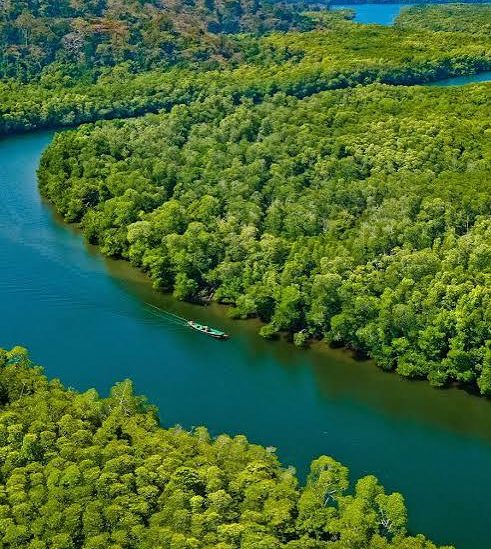
The ultimate challenge is philosophical. India has traditionally approached the coast through the logic of defence: build embankments, erect seawalls and hold the sea back. Climate change requires a more intelligent proposition—learn to live with the coast rather than simply fight against it. Mangroves embody that philosophy. They absorb wave energy without consuming electricity, store carbon without mechanical infrastructure, nurture fisheries without industrial inputs and protect shorelines while supporting biodiversity. But they need space, sediment, tidal movement and community stewardship. The future measure of coastal resilience should therefore not be kilometres of concrete constructed, but kilometres of living coastline protected and restored. India’s smartest seawall may not be a wall at all. It may be a forest rooted in tidal mud, strengthened by science, financed as infrastructure, governed by communities and valued in economic terms. In the climate age, the most sophisticated coastal defence may be the one that breathes, grows and protects us while nature does the engineering.
VISIT ARJASRIKANTH.IN FOR MORE INSIGHTS

