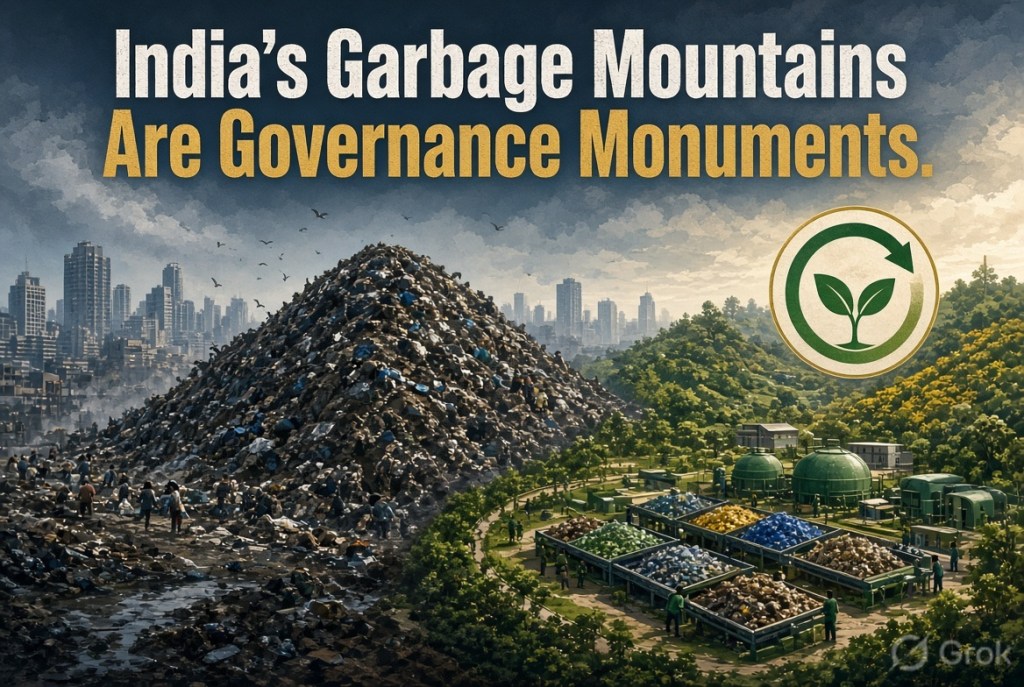
India’s garbage crisis has crossed the boundary of municipal inconvenience and entered the territory of governance, public health, climate risk and social justice. The mountains of waste at Ghazipur, Pirana and Deonar are not merely accumulations of discarded material; they are monuments to a development model that has modernised consumption without modernising disposal. India generates roughly 170,000 tonnes of municipal solid waste every day, yet the central question is not how much waste Indians generate but how little of it is converted into value. A nation aspiring to become a global manufacturing and economic powerhouse cannot continue treating garbage as something to be collected, transported and hidden beyond the city limits. The garbage mountain is ultimately a physical manifestation of an institutional mindset: out of sight, out of responsibility.
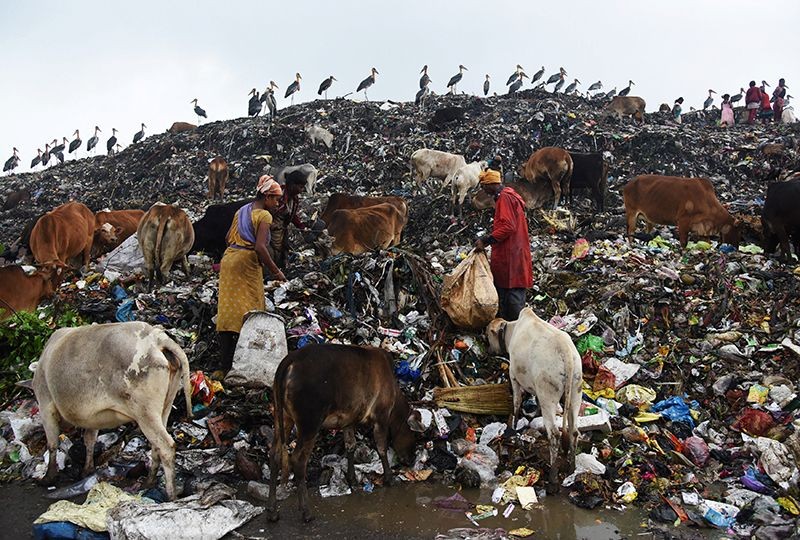
The arithmetic exposes the fundamental dysfunction. Collection rates frequently exceed 90 per cent, creating an impressive headline of municipal efficiency. But collection is not processing. Nearly 40 per cent of collected waste reportedly does not enter formal processing, meaning the celebrated garbage truck often performs little more than a sophisticated disappearing act—removing waste from the citizen’s doorstep and relocating it to the city’s periphery. Municipal spending reinforces this distorted hierarchy: approximately 60–70 per cent is consumed by sweeping and collection, another 20–30 per cent by transportation, leaving a relatively small fraction for recycling, composting, treatment and scientific disposal. India has therefore become exceptionally good at moving waste but remarkably poor at transforming it. The policy metric must shift from tonnes collected to tonnes recovered, recycled, composted, treated and ultimately diverted from landfills.
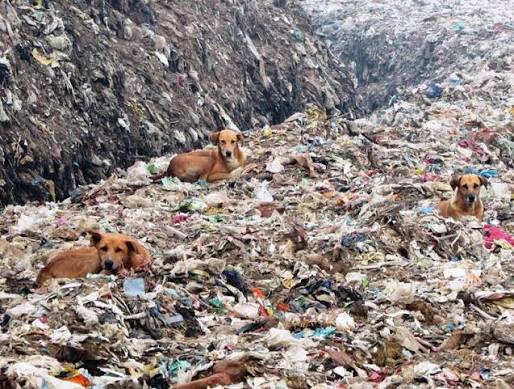
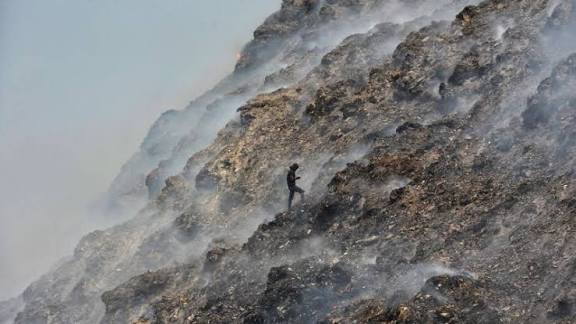
The most dangerous component of the garbage mountain is frequently invisible. Between 40 and 60 per cent of municipal waste is organic, and when food and biological waste is buried under oxygen-starved conditions, it generates methane while producing contaminated leachate capable of threatening soil and groundwater. Major dumpsites such as Ghazipur, Bhalswa and Kanjurmarg have emerged as significant methane-emission hotspots. Fires, toxic smoke, foul odours and leachate transform these locations into chronic environmental-health hazards rather than temporary waste facilities. More troubling is the geography of exposure. Affluent citizens can relocate, install filtration systems or purchase distance from pollution; low-income communities living around waste sites cannot. The garbage economy therefore reproduces an uncomfortable equation: those who have the least economic power frequently bear the greatest environmental cost. Waste management is consequently not merely an urban-service issue—it is an equity issue.
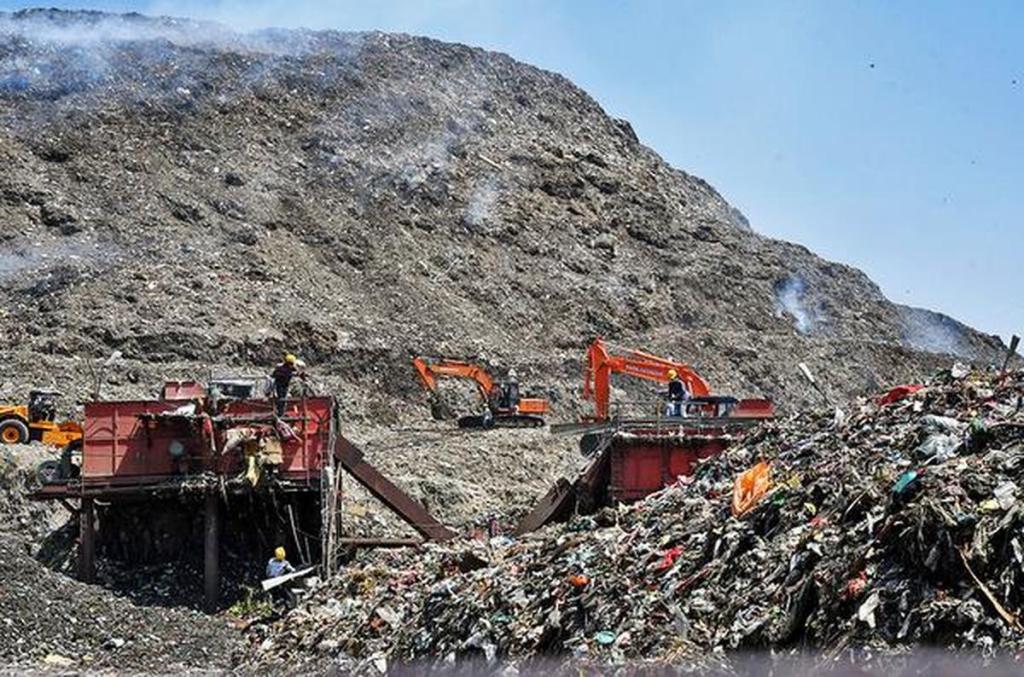
Ghazipur, reportedly rising to around 65 metres and receiving approximately 2,000 tonnes of waste daily despite having reached capacity years ago, has become a metaphor for this institutional failure. Pirana in Ahmedabad and Deonar in Mumbai tell variations of the same story. These sites demonstrate what happens when temporary disposal infrastructure becomes permanent geography. Generations grow up beside mountains that were never supposed to become mountains. The public-health consequences are difficult to separate from the social consequences: polluted air, recurring fires, contaminated surroundings and degraded land disproportionately affect communities with limited political voice. The contradiction is profound. India can build expressways, airports, digital platforms and world-class commercial districts, yet some of its citizens continue to live beside landscapes created by decades of administrative postponement. A garbage mountain is yesterday’s consumption converted into tomorrow’s inequality.
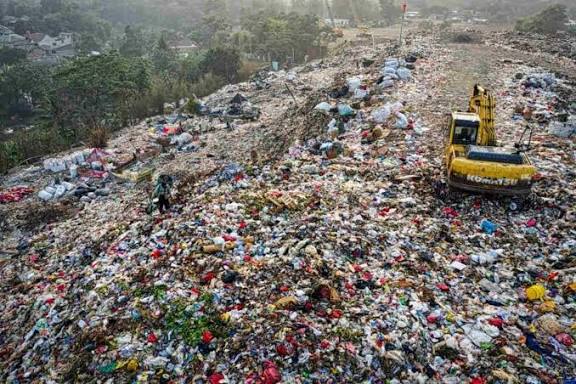
The seductive promise of waste-to-energy exposes another misconception: sophisticated machinery cannot compensate for unsophisticated waste management. Indian municipal waste is often wet, organic and poorly segregated, resulting in low calorific value and making incineration more difficult and expensive. Mixed waste fed into thermal plants can create operational problems and raises concerns about emissions and hazardous pollutants. The lesson is straightforward: technology cannot burn its way out of a governance failure. Waste-to-energy has a legitimate role for appropriate residual waste, but it cannot become an excuse for avoiding segregation, recycling and waste prevention. The correct hierarchy is not “collect, transport and incinerate”; it is reduce, reuse, segregate, recover, recycle, treat—and dispose only what remains. The sophistication of a waste system should therefore be judged not by the size of its machinery but by the quantity of waste it prevents from reaching the landfill.
India’s policy architecture is beginning to recognise this reality. The Dumpsite Remediation Accelerator Programme, targeting major legacy dumpsites, and the Solid Waste Management Rules, 2026, with stronger emphasis on source segregation, bulk-waste-generator responsibility, digital tracking, environmental compensation, landfill restrictions and biomining, represent a significant conceptual shift. The direction is unmistakably towards a circular economy. But India has repeatedly demonstrated that notification is easier than implementation. A regulation becomes transformative only when municipal institutions possess the capacity, incentives and political courage to enforce it. The challenge is therefore not simply writing better rules; it is constructing a system in which non-compliance becomes difficult, data manipulation becomes visible and measurable outcomes determine administrative performance.
This makes data and accountability central to the next generation of waste governance. If national collection figures approach 97 per cent while ground-level audits reveal substantial gaps, the credibility of the entire system becomes questionable. Reporting tonnes collected creates an incentive to maximise movement rather than treatment. Municipalities should instead be assessed on processing rates, landfill diversion, recovery of materials, compost quality, methane reduction, reclaimed land and citizen health outcomes. Digital tracking should follow waste from its point of generation to its final destination, preventing the traditional mystery of the disappearing garbage truck. Artificial intelligence, sensors, GPS-enabled vehicles and data analytics can identify illegal dumping, route manipulation and discrepancies between reported and actual processing. But technology is merely an instrument. The decisive factor remains institutional accountability.
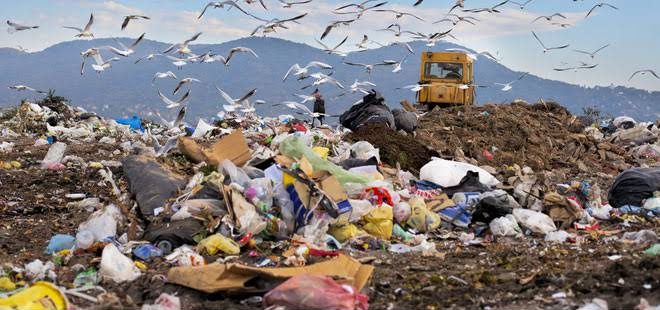
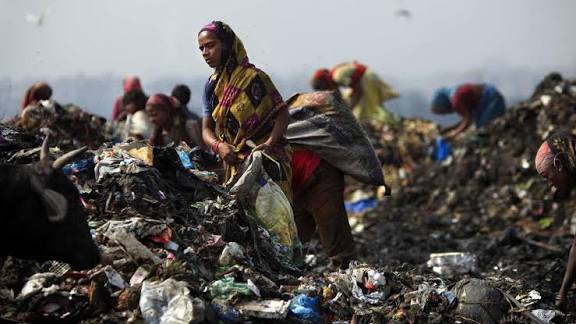
The real transformation must begin where the garbage is created: the household, institution, market and factory. Wet waste should be processed through decentralised composting or bio methanation; dry waste should enter material-recovery and recycling systems; hazardous and sanitary waste must remain separately managed; and only residual, genuinely non-recoverable material should reach engineered landfills. Informal waste workers, who already perform an enormous recycling function, should be integrated into formal value chains with dignity, safety and economic recognition. International experience—from Europe’s waste hierarchy to the disciplined segregation systems of Japan and South Korea—demonstrates that landfill dependence can be reduced when prevention, recovery and recycling become institutional habits. India does not need to copy another country mechanically; it needs to combine its technological capacity, informal recycling economy and administrative scale into an Indian circular-economy model.
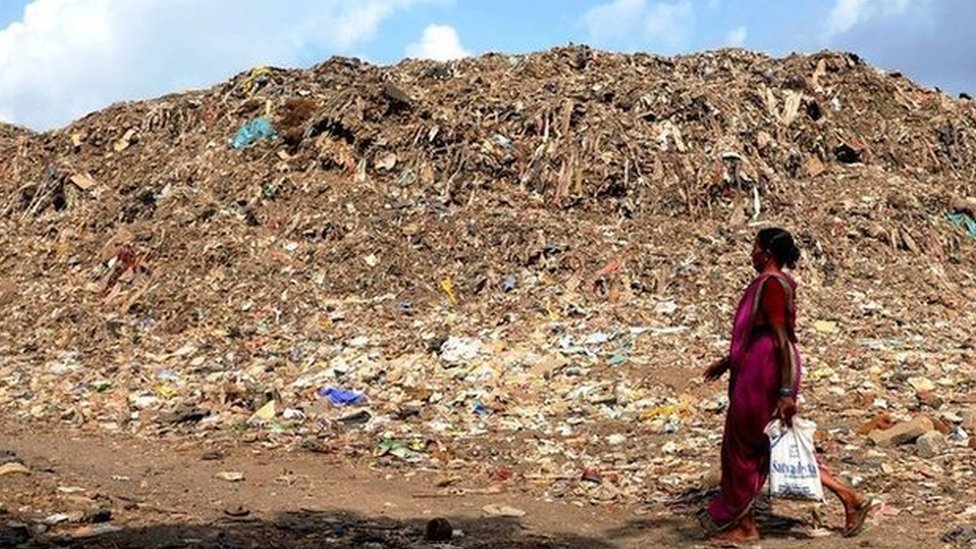
The ultimate test of India’s waste revolution is not whether Ghazipur, Deonar or Pirana disappear from satellite imagery. It is whether the communities living beside them experience cleaner air, safer water, healthier children and reclaimed land. Legacy-waste remediation is indispensable, but clearing yesterday’s garbage while generating tomorrow’s mountains would merely produce an expensive illusion of progress. The household must become the first processing centre; the municipality must become an outcome manager; industry must become responsible for its material footprint; and citizens must become participants rather than passive waste generators. India does not merely have a garbage problem—it has a value-and-accountability problem. We value collection over conversion, disposal over prevention and statistics over outcomes. The real ambition should therefore be far more radical than cleaning existing garbage mountains. It should be to create a country in which future generations look at those mountains as archaeological evidence of an obsolete civilisation. A developed India will not be the nation that hides its waste most efficiently. It will be the nation that produces less, recovers more, wastes intelligently—and refuses to make human dignity the final dumping ground.
VISIT ARJASRIKANTH.IN FOR MORE INSIGHTS


One response to ““INDIA’S GARBAGE MOUNTAINS ARE NOT GROWING—OUR GOVERNANCE IS SHRINKING””
absolutely correct sir
LikeLike