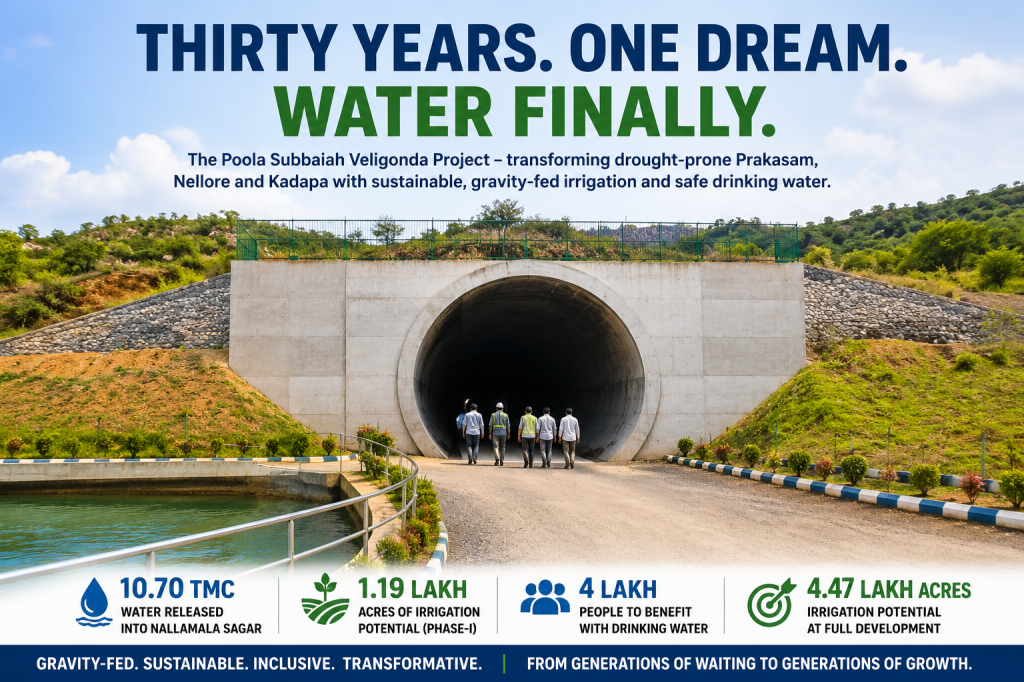
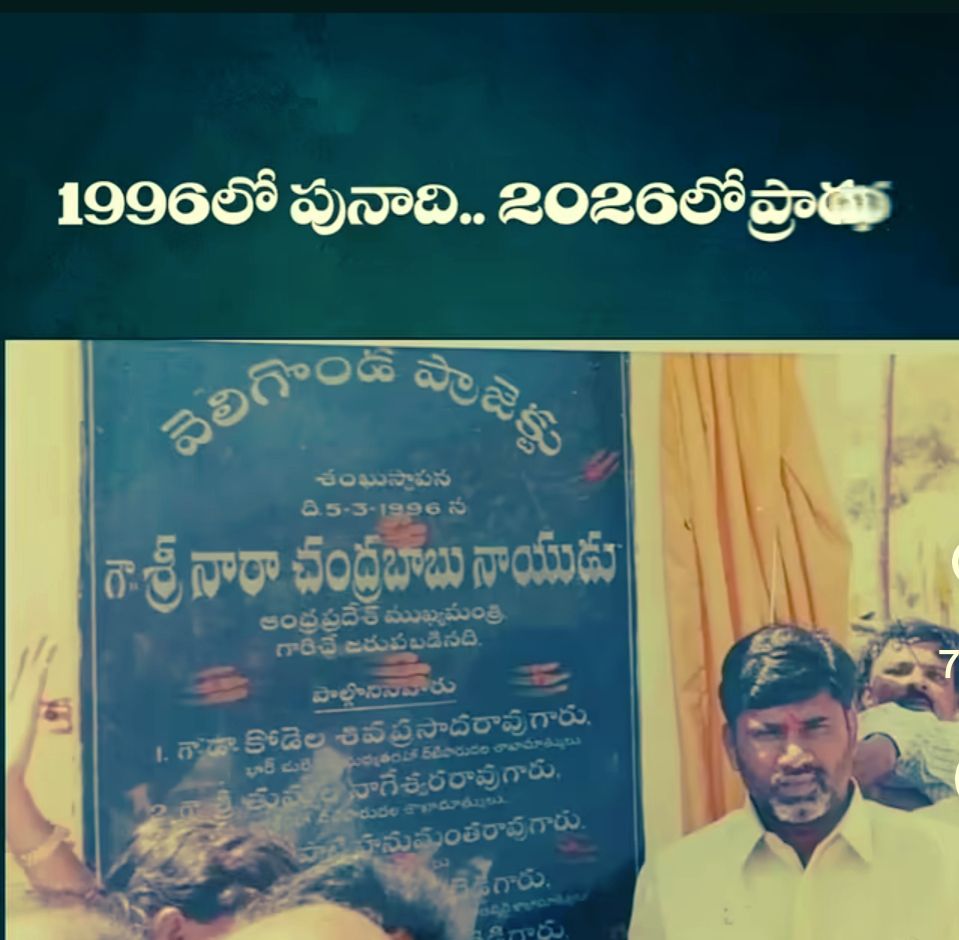
There are infrastructure projects whose success can be measured in kilometres of tunnels, million cubic metres of storage and thousands of crores invested. Then there are projects whose true scale must be measured in years of waiting, generations of deprivation and the hopes of millions. The Poola Subbaiah Veligonda Project belongs unmistakably to the latter category. When its foundation stone was laid by Chief Minister N. Chandrababu Naidu on 5 March 1996, the drought-prone uplands of Prakasam, Nellore and Kadapa were already living with chronic water insecurity. Thirty years later, the inauguration of Phase-I on 31 August 2026 represents far more than the commissioning of another irrigation project. It marks the arrival of a long-promised public good after an extraordinary institutional journey of political transitions, financial constraints, engineering difficulties, contractual complications and changing administrative priorities. Veligonda is therefore simultaneously an engineering achievement, a governance case study and a reminder of the enormous human cost of delayed infrastructure.
The urgency of Veligonda becomes evident when viewed through the geography and sociology of the region. Western Prakasam and adjoining areas have historically suffered from erratic rainfall, recurring drought, declining groundwater tables and dependence on increasingly unreliable borewells. In parts of western Prakasam, groundwater fluorosis added a serious public-health dimension to the water crisis. Water scarcity was consequently never merely an agricultural problem; it influenced household incomes, migration, indebtedness, health and the overall trajectory of rural development. Veligonda sought to break this structural cycle by conveying surplus Krishna floodwaters from the Srisailam reservoir through the Nallamala landscape and into the Nallamala Sagar reservoir. Its twin underground tunnels and largely gravity-based conveyance system are particularly significant because they reduce dependence on continuous energy-intensive pumping. The deeper idea behind the project is therefore not simply irrigation, but hydrological security as the foundation of social and economic security.
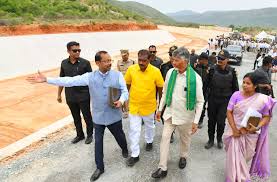
Yet Veligonda’s three-decade history demonstrates why large public projects cannot be judged merely by the date on which they are conceived or inaugurated. The intervening years reveal the consequences of discontinuous political attention, financing constraints, changing designs, contractual complications and administrative fragmentation. The project received a major push during the Jalayagnam period under Y.S. Rajasekhara Reddy, when its architecture was strengthened around twin tunnels, Nallamala Sagar, feeder systems and an extensive canal network. Subsequent administrations continued the process, while political parties have understandably contested the question of credit and contribution. Such debates are inevitable in a democracy, but they should not obscure the larger lesson. Public infrastructure is cumulative statecraft, not private political property. Engineers, administrators, contractors, successive governments and, above all, taxpayers collectively create the conditions for completion. The ultimate beneficiary is the citizen, and the ultimate responsibility of every government is to preserve institutional continuity rather than allow projects to become casualties of political discontinuity.
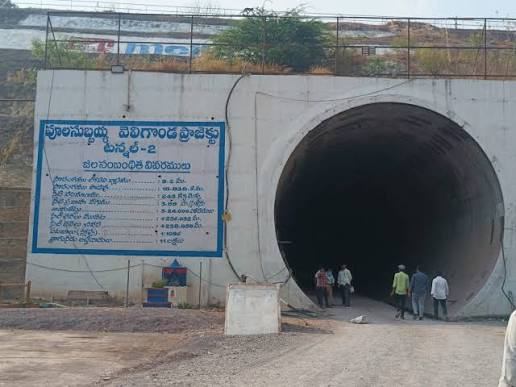
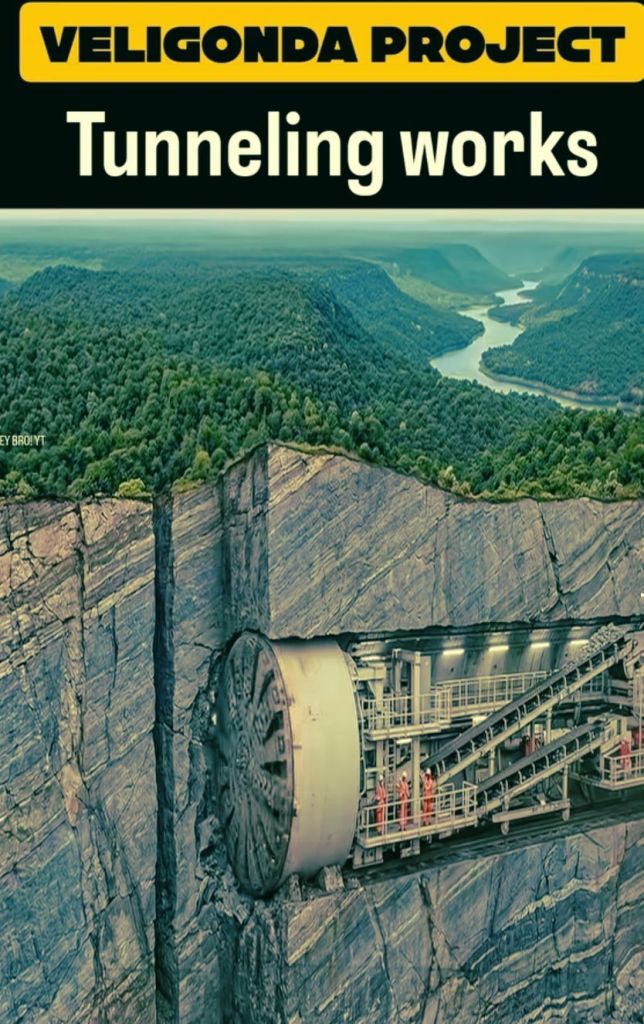
The engineering dimensions make the Veligonda story even more remarkable. Constructing long underground tunnels through difficult geological formations beneath the Nallamala region presented challenges that could not be resolved merely through administrative instructions. Hard rock strata, tunnelling equipment failures and other technical complications repeatedly affected progress. At the same time, the ecological sensitivity of the Nallamala landscape imposed legitimate constraints on construction methods. This illustrates a broader truth about infrastructure in contemporary India: the State must simultaneously negotiate engineering feasibility, environmental responsibility, financial prudence and social necessity. The reported escalation of costs—from an initial estimate of about ₹980 crore to expenditure exceeding ₹10,000 crore—also demonstrates the hidden economic burden of delay. Inflation, redesign, prolonged contracts, financing costs and repeated mobilisation can transform a project that was once financially manageable into a substantially more expensive undertaking. The lesson for future infrastructure policy is unequivocal: speed is not merely an administrative virtue; it is an economic asset.
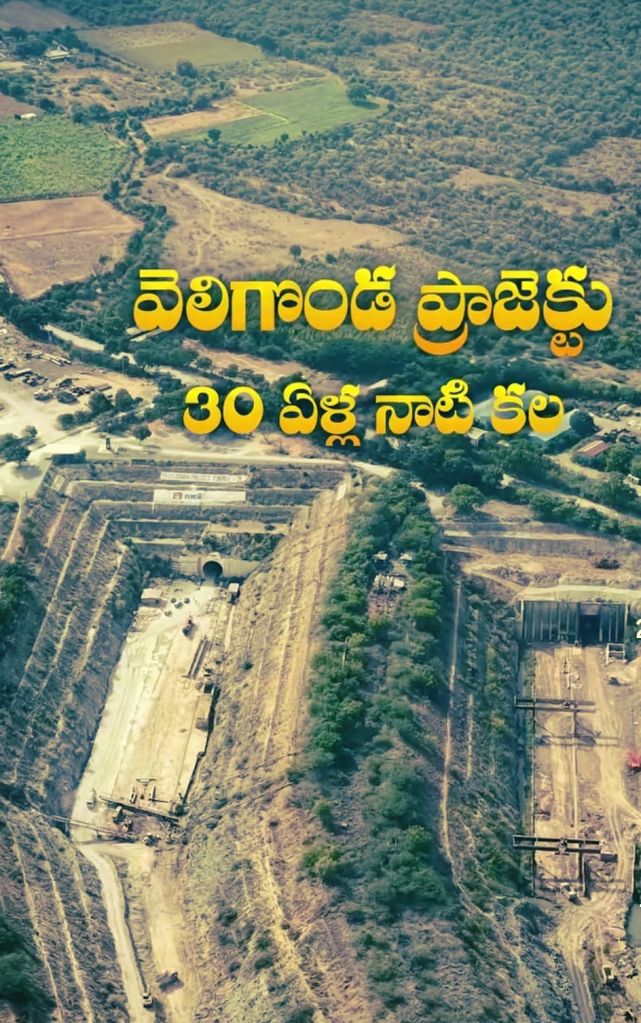
The Phase-I commissioning consequently deserves to be viewed through the lens of outcomes rather than ceremony. The release of 10.70 TMC of Krishna water into Nallamala Sagar creates the immediate potential to irrigate approximately 1.19 lakh acres and provide drinking water to nearly four lakh people. But these numbers represent only the beginning of Veligonda’s larger promise. At full development, the project is envisaged to utilise around 43.50 TMC, support irrigation over approximately 4.47 lakh acres, and provide drinking water to millions across 30 mandals and 1,657 habitations. Its prospective impact extends across major parts of Prakasam, Nellore and Kadapa. The economic multiplier could be considerable: assured irrigation can enable crop diversification, improve land productivity, reduce dependence on groundwater, strengthen rural purchasing power and stimulate agro-based economic activity. Reliable water can also create conditions for industrial and employment opportunities in emerging economic centres. In this sense, Veligonda should be understood not simply as a water project but as regional economic infrastructure.
However, no assessment of Veligonda can be intellectually honest without confronting the human cost of creating Nallamala Sagar. Thousands of families across submerged villages have had to surrender homes, agricultural land, community networks and established livelihoods in the name of a larger public purpose. Significant compensation has been disbursed, but reports of pending payments and deficiencies in rehabilitation infrastructure demonstrate that construction completion cannot be equated with social completion. A displaced family does not rebuild its life merely because compensation has been sanctioned. It needs a house, roads, drinking water, schools, healthcare, connectivity, livelihood opportunities and social security. Rehabilitation must therefore evolve from a compensation-centred model to a livelihood-restoration model. Beneficiary lists should be periodically updated; legitimate claims arising from changes in family structures should be recognised; and rehabilitation colonies should receive functional civic infrastructure before relocation becomes irreversible. The moral test of Veligonda is simple: the people who sacrificed for the project must not be left behind by the prosperity it creates.
The unfinished agenda now demands a transition from construction management to water-governance management. The remaining Phase-II canal, distributary and field-level networks must be completed with clear milestones and transparent public monitoring. Tail-end farmers deserve particular protection because the historical experience of irrigation systems shows that physical connectivity does not automatically guarantee equitable water distribution. Micro-irrigation through drip and sprinkler systems can significantly improve water-use efficiency, while empowered Water User Associations can bring farmers into the management of distribution and maintenance. Modern SCADA systems, reservoir telemetry, flow monitoring and structural-health sensors could transform Veligonda into a digitally monitored irrigation system. The project’s gravity-flow advantage should be preserved as a core sustainability feature. Water accounting must become rigorous: every TMC entering the system should be tracked, every major loss identified and every command-area outcome measured. The objective should be not simply to deliver water, but to maximise economic value and social equity per unit of water.
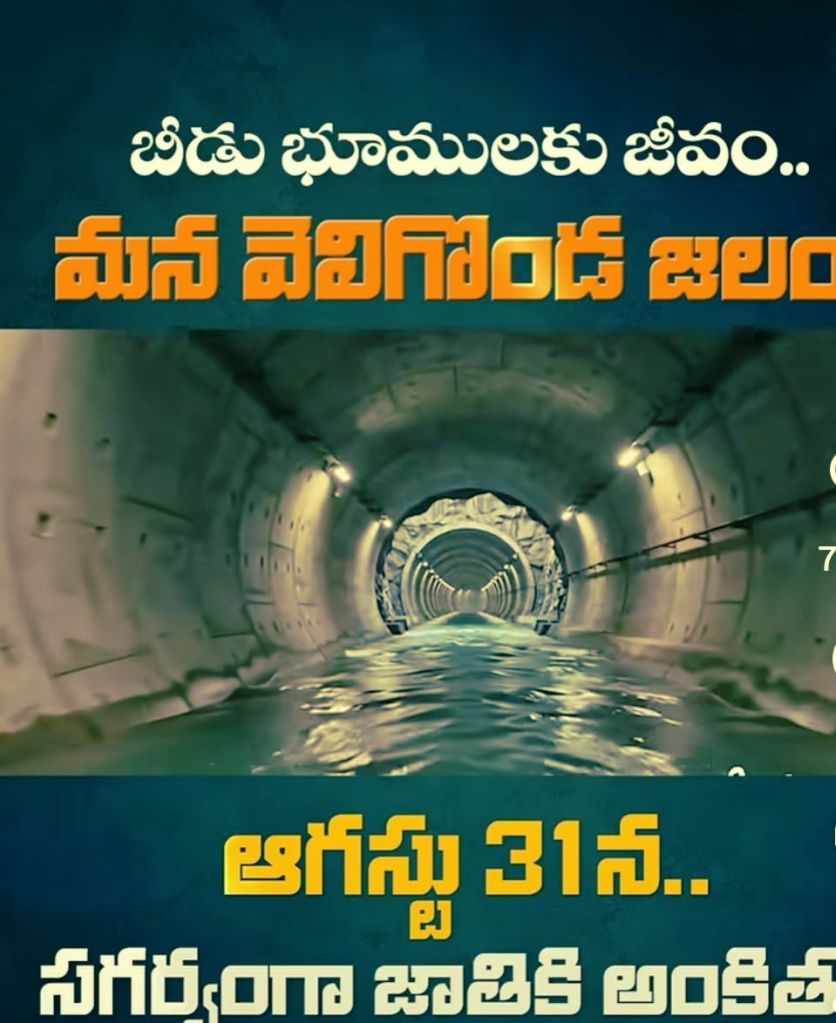
Veligonda ultimately offers Andhra Pradesh and India a profound lesson in democratic governance: the State’s credibility is measured not by how loudly promises are announced, but by how faithfully they are delivered—and how quickly citizens receive their benefits. Thirty years is an extraordinary period for a public project; children who were born when the foundation stone was laid have grown into adults while waiting for the water their parents were promised. The 2026 milestone should therefore be celebrated without romanticising the delay. Its greatest significance lies in transforming a long-standing political promise into physical infrastructure capable of changing lives. But the final measure of success will come years from now—not at the inauguration platform, but in villages where farmers cultivate assured crops, families drink safe water, migration declines, groundwater pressure eases and rural economies acquire new momentum. The tunnels may have taken three decades to carry water across the Nallamala hills. The responsibility now is to ensure that the water travels much faster—from reservoir to field, from field to income, from income to dignity, and from dignity to a better future for an entire generation.
VISIT ARJASRIKANTH.IN FOR MORE INSIGHTS

